Loudspeakers
M Acoustics Platon Review: An Aluminum Loudspeaker That Does Not Sound Like One
A detailed look at the M Acoustics Platon, a floorstanding loudspeaker with a leather-damped aluminum cabinet, an AMT tweeter, and a channel-specific design that rewards careful setup.
Introduction
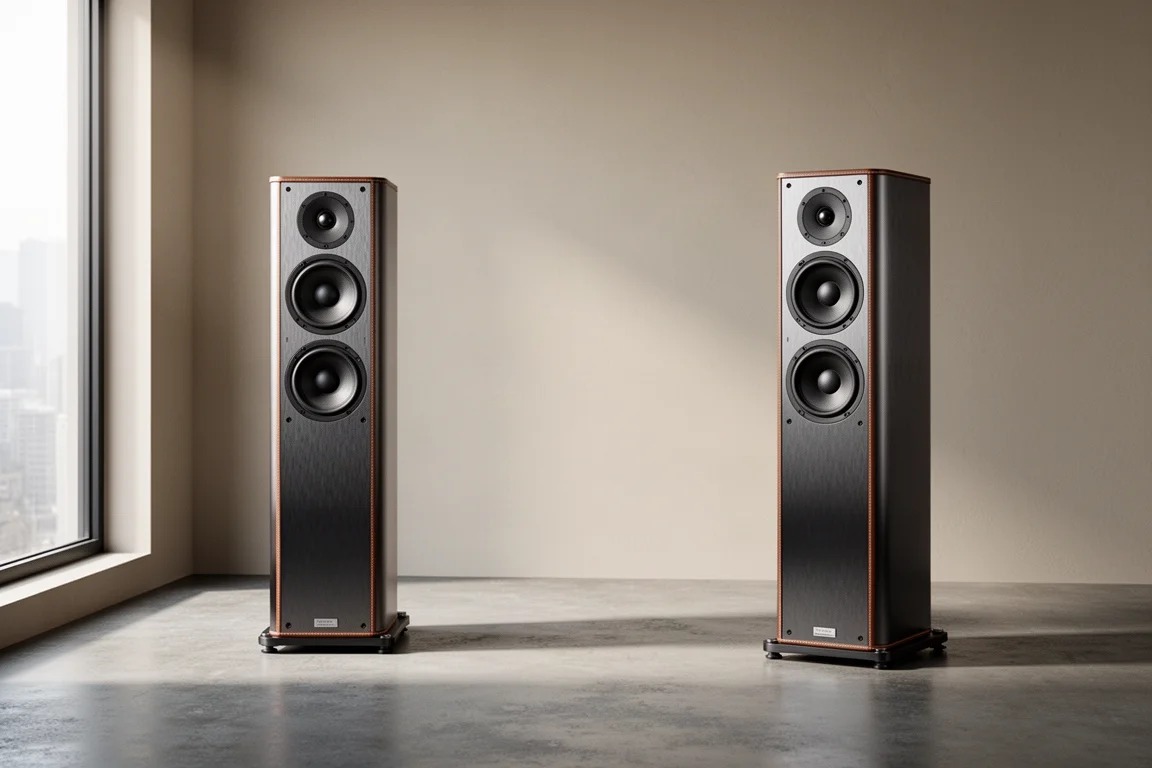
The M Acoustics Platon is a floorstanding loudspeaker built around a cabinet that is anything but conventional. Instead of accepting the resonance of an aluminum enclosure as a given, the design combines aluminum with leather and other damping materials layered inside the cabinet, an approach intended to imitate the resonance of an extremely hard, hard-to-source tonewood. The result does not sound like a typical aluminum speaker.
With a sensitivity rating of 91 dB, an AMT (air motion transformer) tweeter, and a deliberate left and right channel distinction, the Platon asks for careful setup and rewards thoughtful system matching. In a well-chosen system it presents music with unusual spaciousness, deep layering, and enough refinement that long listening sessions stay comfortable rather than tiring.
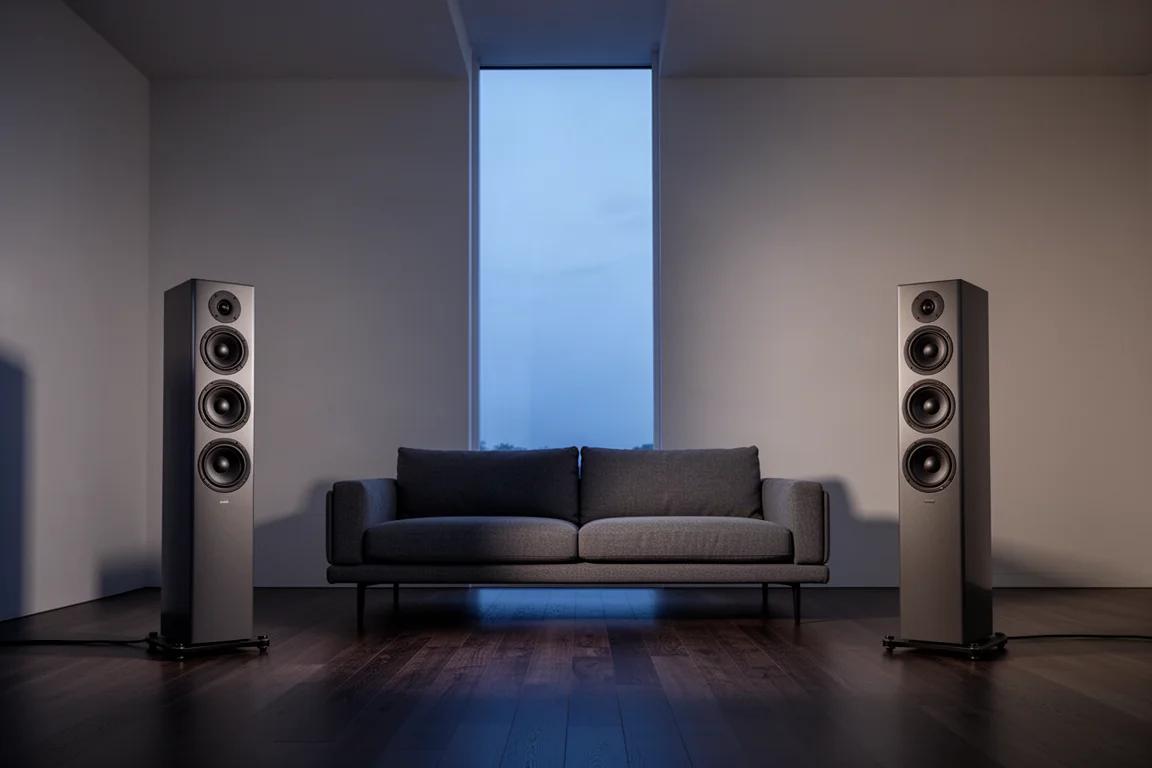
That character shows up most clearly with acoustic material. Strings keep their attack and decay structure intact, instruments remain separated even in busy passages, and vocals carry a sweetness and detail that makes every breath and nuance audible without adding harshness.
Who This Product Is For
The Platon suits listeners who put a premium on an airy top end, a wide and deep soundstage, and the sensation that the speakers disappear into the room. It is a strong candidate for anyone who listens to a lot of acoustic, vocal, and string-led music and wants an emotional connection to the performance rather than a purely analytical readout.
It is less suited to buyers who expect deep low-frequency extension straight out of the box. The Platon’s bass is well controlled and textured, but its extension does not reach the lowest octave, so listeners who want that foundation should plan for a subwoofer or the optional VC2 bass module, which extends the low end and is aimed at larger rooms.
Design and Cabinet Construction
The cabinet material is the most interesting part of the story. Aluminum is used for its rigidity, but the designer did not want the sound that usually comes with it, so leather and other damping materials are married into the cabinet structure to shift the resonance closer to that of a hard tonewood. That is why the Platon does not exhibit the familiar aluminum character, and why it sits somewhere between wood and metal without quite belonging to either.
The tweeter is an AMT design, a type known for an open and airy top end. Combined with the cabinet approach, it produces a presentation that stays musical as the volume rises instead of turning brittle.

One practical detail matters more than most owners expect: the Platon is channel specific. The inner port and the outer port are tuned differently, and the rear of each cabinet identifies left and right. Reversing the two audibly changes the sound, so correct placement is not optional.
Main Strengths: Sound and Presentation
The first thing that stands out is air and space. The top end is open and spacious, and that quality holds up when the volume goes up, which is not always true of airy-sounding designs that turn shouty under pressure. Detail stays readily available and the speaker remains easy to listen to.
Imaging is the second strength. Instruments are placed precisely, with clear separation and layering, so a grand piano sits convincingly behind and to one side of a vocalist rather than blurring into the mix. Dynamics are clean, and the presentation never sounds crowded.
Finally, the Platon is easy to live with over long sessions. The cabinet’s contribution to the sound is subtle enough that the speakers themselves seem to vanish, leaving the performance rather than the hardware. The mid bass is nicely judged, and the overall balance leans toward the body of the music without losing the openness that defines it.
System Matching and Amplifier Pairing
The Platon is transparent enough that upstream gear matters. Paired with analytical, accuracy-first electronics, it can lean brittle and thin, with very fast attack and decay and detail for days. Some listeners want exactly that, but it is not the only option.
Warmer, more powerful amplification tends to be a better fit. A warm-leaning amplifier with strong bass control and good texture through the midrange and upper mid bass balances the Platon’s airy top end and adds body, while a tube preamplifier that leans warm can lend strings and voices an elastic, vintage-like quality and a little extra smoothness while keeping the soundstage intact.
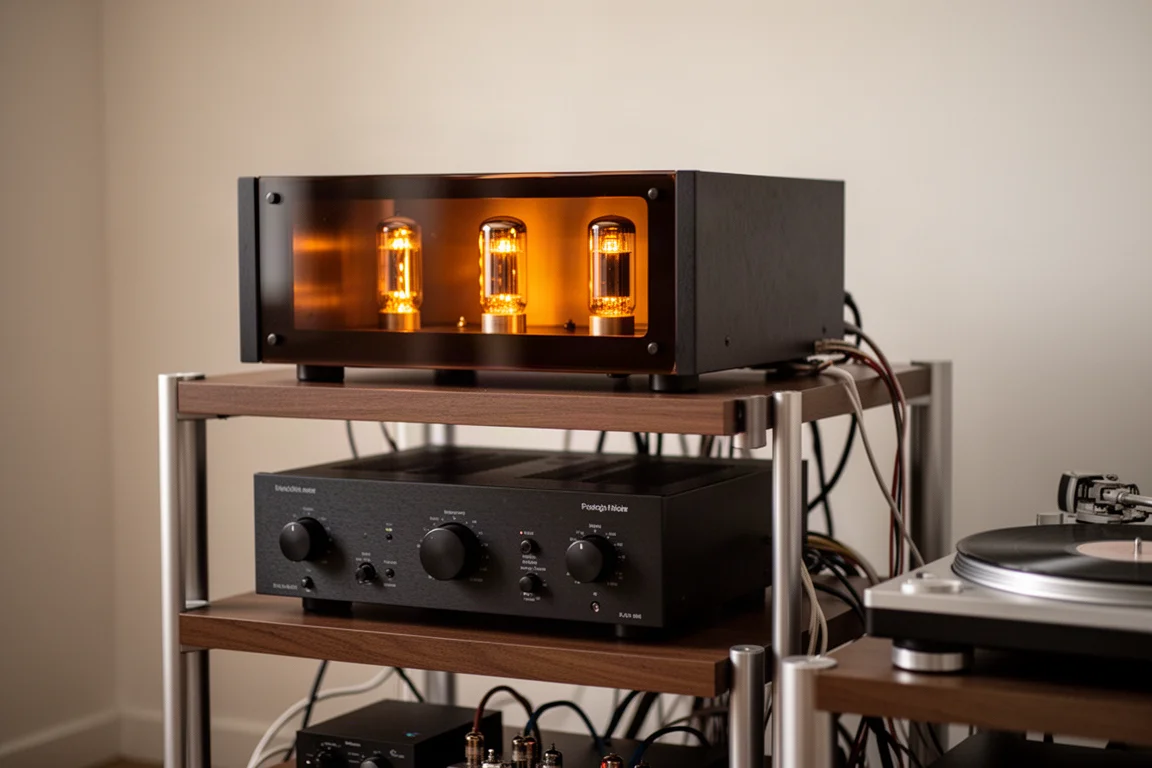
A sensitivity of 91 dB means the Platon does not demand enormous power, though headroom still helps. Where the lowest octave is missing, a subwoofer or the VC2 module fills it in. For late-night listening, a streamer with a loudness contour function is a practical way to keep bass and treble balanced at low volumes, since human hearing perceives the extremes less linearly as level drops.
Things to Consider Before Buying
Setup discipline is the biggest consideration. Get the left and right channels correct, give the ports room to work, and take time with positioning, because this design responds to placement more than most passive loudspeakers.
Second, think about the rest of the system. If your electronics are strongly analytical, expect a leaner and faster presentation. If you want warmth and texture, plan for amplification and a preamplifier that supply it.
Third, consider the room. In a smaller space the Platon performs impressively on its own, while larger rooms are where the VC2 bass module becomes relevant.
Finally, cabinet material preference is personal. Listeners who simply prefer wood-based enclosures should hear the Platon before deciding, because its resonance is deliberately its own thing rather than a variation on a familiar theme.
Buying Advice
Approach the Platon as a system decision rather than a single purchase. Budget for amplification that leans warm and controls bass well, and if your listening room is large or your music depends on the lowest octaves, factor in the VC2 module or a subwoofer from the start.
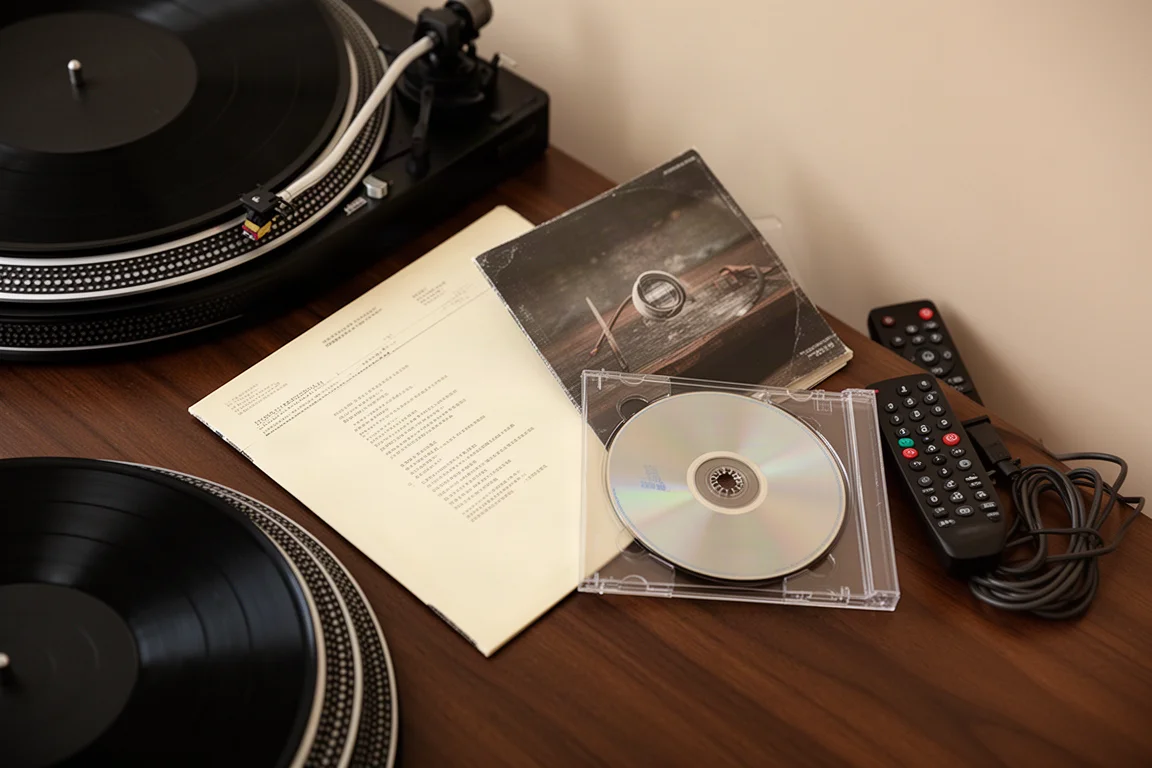
It also helps to plan the room layout before the speakers arrive. The Platon is channel specific and its ports are tuned, so a little space behind each cabinet and a symmetric arrangement will get you much closer to what the design is capable of. Pair it with gear that complements rather than exaggerates its character, and the result is a system that stays engaging across long listening sessions.
Conclusion
The M Acoustics Platon is a distinctive loudspeaker: an aluminum cabinet tuned away from aluminum sound, an AMT tweeter that stays composed at volume, and imaging precise enough to place every instrument in the mix. Give it a warm, capable system and a properly arranged room, and it delivers the spacious, detailed, emotionally engaging presentation that makes it worth shortlisting.
Product link
View more details for M Acoustics Platon
This product is mentioned in the review. Check the specifications, options, and compatibility before buying.
View more details for M Acoustics PlatonFurther reading
Related Reviews
Loudspeakers
Borresen X2 Review: Deep Bass and a Warm Balance From a Slim Floorstander
A close look at the Borresen X2 loudspeaker: ribbon tweeter and carbon fiber drivers, bass below 30 Hz without a subwoofer, and how it behaves with solid state, integrated and tube amplification.
Loudspeakers
Borresen X3 Review: A Danish Floorstander Built Around Soundstaging
The Borresen X3 pairs a true ribbon tweeter and a slim Danish cabinet with remarkable imaging, fast transients, and a few practical trade-offs worth knowing before you buy.
Loudspeakers
Bowers & Wilkins 705 S3 vs Wharfedale Linton vs Zu Audio DWX: Three Standmount Speakers Compared
A three-way standmount loudspeaker comparison covering the detail-led Bowers & Wilkins 705 S3, the value-focused Wharfedale Linton, and the dynamic Zu Audio DWX.