Audio Software
Lyrsonic Review: Bit-Perfect Apple Music Playback With Couch Remote Control
Lyrsonic adds remote control to bit-perfect Apple Music playback from an iPad to a USB DAC. Here is what it solves, what it does not, and who should buy it.
Introduction
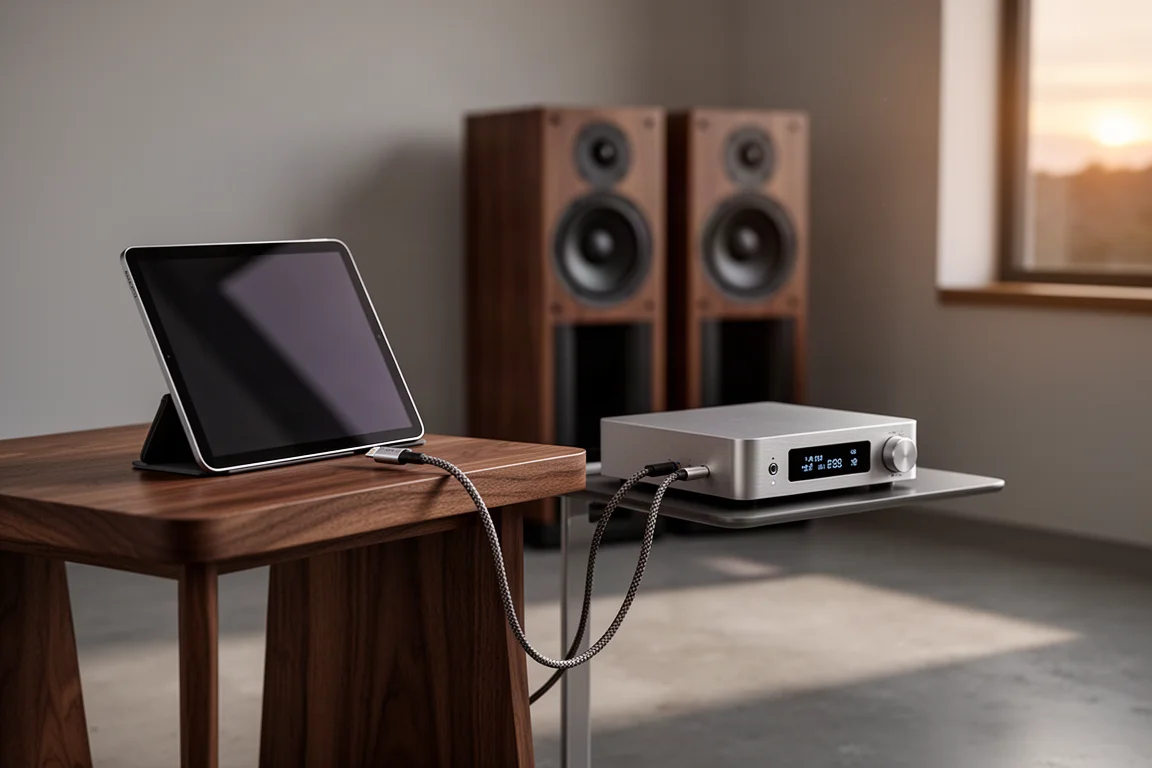
Apple Music has offered lossless and high-res lossless tiers for several years now, but getting those data-heavy streams into a home hi-fi system intact is still awkward. Bit-perfect playback means the audio reaches your DAC exactly as it left Apple’s servers, with no resampling and no lossy compression applied along the way. A 44.1 kHz stream arrives at 44.1 kHz, and a 192 kHz stream arrives at 192 kHz at the same DAC.
Without careful hardware selection or manual reconfiguration, something in the chain will usually mangle those streams. Lyrsonic, a $12 app for iOS and iPadOS, does not change how Apple handles high-res audio, but it is the most practical workaround available. Its latest update also adds an Apple TV app, which turns a television into a large control surface for the same bit-perfect playback path.
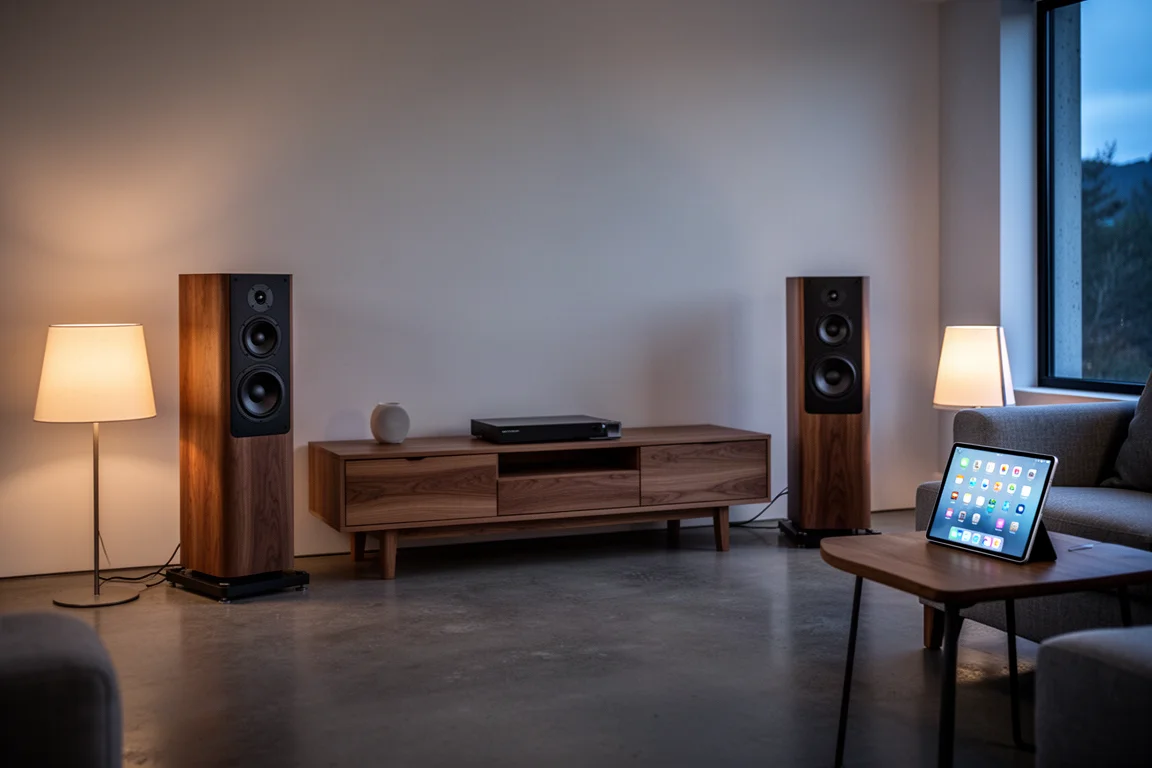
The pitch is straightforward: control Apple Music playback from the couch while keeping the audio path untouched. That combination has been difficult and expensive to achieve in a home system, which is why the app is worth a closer look.
Who Lyrsonic Is For
Lyrsonic makes the most sense for Apple Music subscribers who already own an iPad and a USB DAC. It puts hardware you may already have to work, and it breathes new life into an iPad that might otherwise be sitting in a drawer.
The reason the app exists is worth understanding before buying. AirPlay 2 does not instruct a network endpoint to pull a stream directly from Apple’s servers. Instead it routes audio through your iPhone or iPad on its way to the endpoint, and in most cases that device re-encodes the stream as 256 AAC regardless of what you select in Apple Music’s settings panel. On macOS, Apple Music output is tied to Core Audio’s fixed sample rate, which has to be set manually in the Audio MIDI Setup app: at 44.1 kHz, 192 kHz streams are downsampled, and at 192 kHz, 44.1 kHz tracks are upsampled. A Mac running Apple Music also cannot be remote controlled from the couch without screen casting or screen sharing. The Apple TV caps its HDMI output at 48 kHz, and many TV operating systems resample all incoming digital audio to 48 kHz before sending it out over HDMI ARC.
Taken together, that leaves the iPad and iPhone as effectively the only Apple devices that send Apple Music streams at their native sample rates over USB without fuss or intervention. Lyrsonic is built around that fact.
Main Strengths: Bit-Perfect Playback and Real Remote Control
Setup starts with the Lyrsonic app installed on an iPad that is connected by USB to a DAC. On startup, the app synchronizes with your Apple Music library, and its interface mirrors the native Apple Music layout closely, though not identically. Browsing happens inside Lyrsonic rather than in the native Apple Music app.
The second step is installing Lyrsonic on an iPhone. The two apps discover each other automatically across the local Wi-Fi network, and you select the iPad as the playback device using the link button at the bottom center of the screen, usually from the iPhone. From there the iPhone can browse the catalog, manage the queue, and play or pause, including the emergency track skip that used to require walking over to the iPad.
What matters most is where the audio actually travels. The iPad handles the streaming and the USB transmission, pulling tracks directly from Apple’s servers at their native resolution. The iPhone never touches the audio stream, transmitting control signals and nothing else. That cleanly separates the playback engine from the user interface. Sample rate switching happens automatically on the fly: 44.1, 48, 96 and 192 kHz all reach the DAC unchanged, with no upsampling and no downsampling.
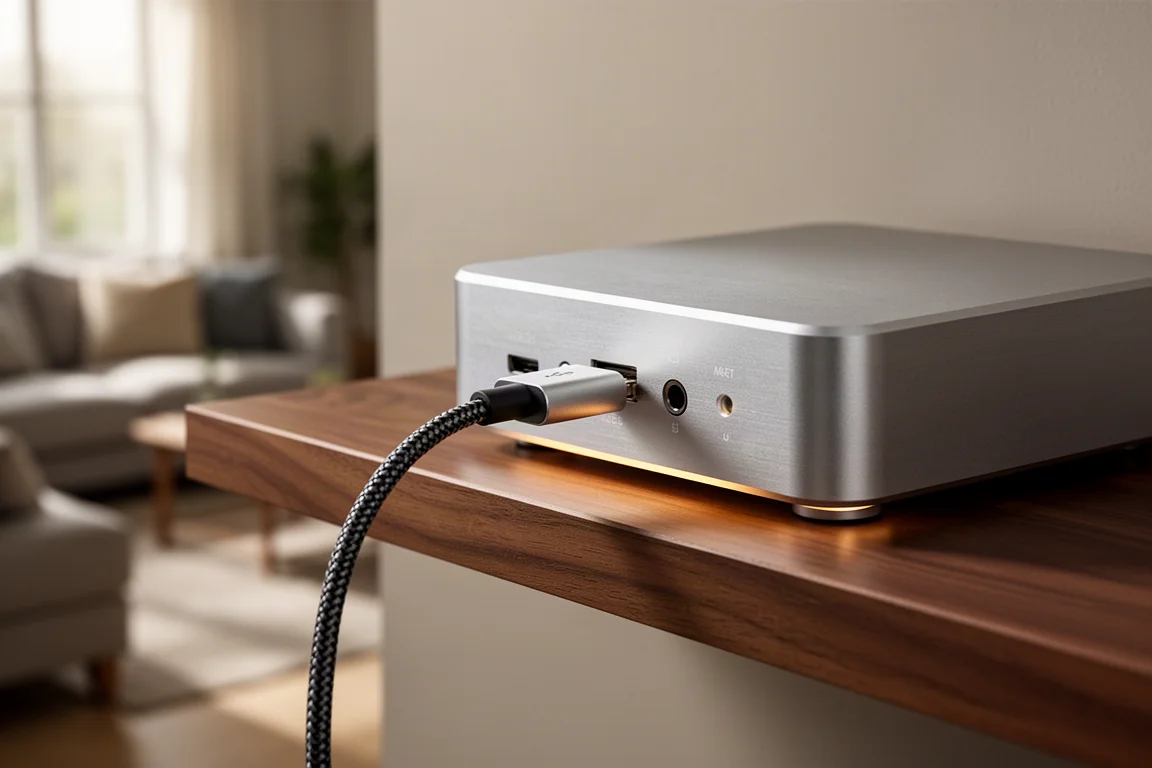
Confirming that this is really happening is easy if your DAC displays incoming sample rates on its front panel. As a reference point, Neil Young’s Rust Never Sleeps is hosted at 192 kHz, and every track from that album arrives at the DAC at 192 kHz, with no resampling to 48 kHz of the kind you would get with an Android tablet, an Android TV device or an Apple TV. Just remember to engage lossless or high-res lossless in the iPad’s settings menu.
How the Apple TV App Fits In
The Apple TV version of Lyrsonic is not used as a playback device. It works strictly as a remote control, which is the sensible design given the 48 kHz ceiling on the Apple TV’s HDMI output. You select the iPad as your playback endpoint using the link button, which sits in the upper right corner of the Apple TV app, and the same selection can be made on the iPhone.
With Lyrsonic running on the iPad tethered to the DAC, browsing and playback control happen through the Apple TV remote. Press play and the Apple TV sends a message to the iPad, which pulls down the stream and sends it out over USB to the DAC. The audio stream never touches the Apple TV or its HDMI cable. Music travels straight from Apple’s servers to the iPad and out to the DAC at full native resolution, while the Apple TV handles only control commands.
Both the iPad and the Apple TV can show a now playing screen at the same time, and both are larger than the front panel display of any streaming product. Control can be passed back to the iPhone at any point, and the iPad’s display can be switched off to save battery while playback continues uninterrupted. For listeners who prefer operating their hi-fi with a physical remote, this is a comfortable workflow.
Things to Consider Before Buying
The core requirement is an iPad tethered by USB to a DAC. That iPad becomes the playback engine, so the app cannot deliver its main benefit without one in the chain.
The Apple TV app is a control surface only. It is not an endpoint, and it does not route audio. Platform-level behaviour also remains unchanged: AirPlay 2 still re-encodes in most cases, macOS Apple Music is still tied to a fixed Core Audio sample rate that you set yourself, and TV operating systems still resample incoming digital audio to 48 kHz for HDMI ARC.
A minor quirk remains in the app. The recently played section still requires an app restart to refresh. Earlier issues, such as occasional playback pauses and audio leakage, appear to have been fixed.
Alternatives do exist, and they cost considerably more. EverSolo products support Apple Music high-res playback, with remote control handled by casting the front panel through EverSolo’s app. FiiO takes a similar approach with its portrait-oriented streaming units, though its screen casting functionality is laggy. These third-party streamers start at around $700, which is a very different proposition from a $12 app paired with an iPad you may already own.
Buying Advice
If you subscribe to Apple Music and already own an iPad and a USB DAC, Lyrsonic is a low-risk purchase. It restores couch control without compromising the audio path, and it costs about as much as a single CD.
A DAC that shows incoming sample rates on its front panel makes the whole setup easier to trust, because it confirms what is actually arriving rather than leaving you to operate on faith. If you do not own an iPad, or you would rather run a dedicated streamer, the hardware alternatives cost several times more and their remote control experience is less direct.
The quickest way to judge fit is to download the app and test it against your own library and DAC. At this price the experiment costs less than most single albums, and for the right listener the benefit is a permanent one.
Conclusion
Lyrsonic does not fix Apple’s platform-level handling of high-res Apple Music, and it does not pretend to. What it does is solve the practical problem that has kept those streams out of reach for many listeners. It delivers bit-perfect playback from an iPad to a USB DAC while adding the remote control Apple never built, and the Apple TV app extends that control to the biggest screen in the house. For Apple Music subscribers with an iPad and a DAC already on the shelf, that combination is hard to argue with at $12.
Product link
View more details for Lyrsonic
This product is mentioned in the review. Check the specifications, options, and compatibility before buying.
View more details for LyrsonicFurther reading
Related Reviews

Audio Software
Neumann Rhyme Review: A New Way to Trust Headphones for Spatial Mixing
Neumann Rhyme is a headphone-only monitoring plugin that recreates a calibrated speaker environment for the NDH20 and NDH30. Here is how it works and who it is for.

Hi-Fi Speakers
Acoustic Energy AE1 40th Anniversary Review: A Modern Take on a British Classic
A compact standmount that revives a 1980s favorite with all-new parts, a warm mid-centric balance, and a price of £1,499 per pair.
Studio Monitors
ADAM Audio A8H Review: A Three-Way Studio Monitor That Also Knows How to Have Fun
A three-way active studio monitor with an 8-inch woofer, a handmade AMT tweeter, and two distinct tunings, the ADAM Audio A8H aims to satisfy both critical work and everyday listening.