Headphone Amplifiers
Luxsin X9 Review: A Desktop Headphone Amplifier With Unusual Depth
The Luxsin X9 combines a headphone amplifier, DAC and preamplifier with parametric EQ, headphone target profiles, crossfeed and stereo width controls at around $1,000.
Introduction
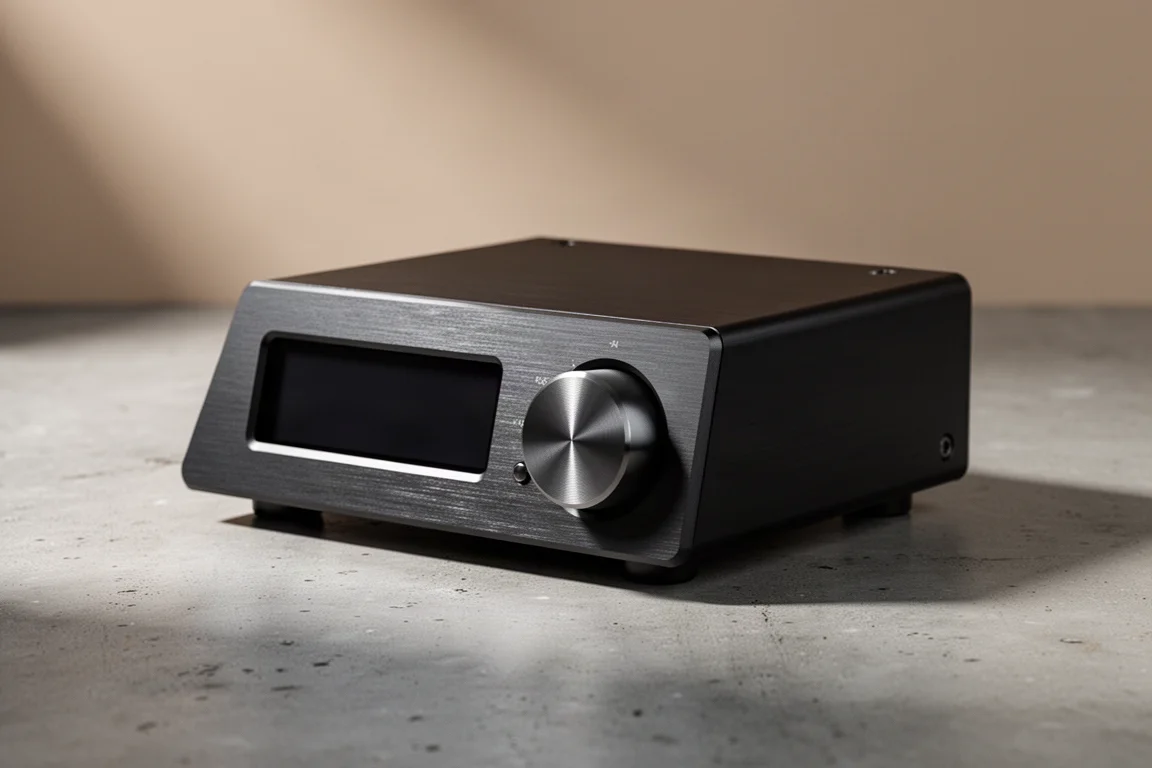
The Luxsin X9 is the first product from Luxsin, a sister brand of Eversolo, and it is positioned as a desktop headphone amplifier that also works as a DAC and a preamplifier. At around the $1,000 mark, it carries over the interface approach, control app and feature philosophy of Eversolo’s integrated models, but turns the focus toward headphone listening at a desk rather than network streaming.
Inside, the X9 uses AKM’s AK4499EX DAC chip and an R2R volume control, the same type of attenuator approach found on Eversolo’s larger integrated units. A front-panel display covers channel balance, digital filters, gain settings and a choice of display layouts, including VU meter styles. An HDMI ARC input makes it straightforward to route television audio through the same component.

The result is one desktop box that handles headphone amplification, digital-to-analog conversion, preamplifier duties and subwoofer integration, with an unusually deep set of tone and spatial controls layered on top.
Who This Product Is For
The X9 makes most sense for listeners who spend their time at a desk and would rather own one capable component than three separate ones. It is designed to drive a wide range of headphones, and it detects the impedance of whatever is plugged in so that the gain is matched automatically on the 4.4mm and 6.35mm outputs. That removes the low, medium and high gain decision that most amplifiers still ask for, and it means swapping between very different headphones stays simple.
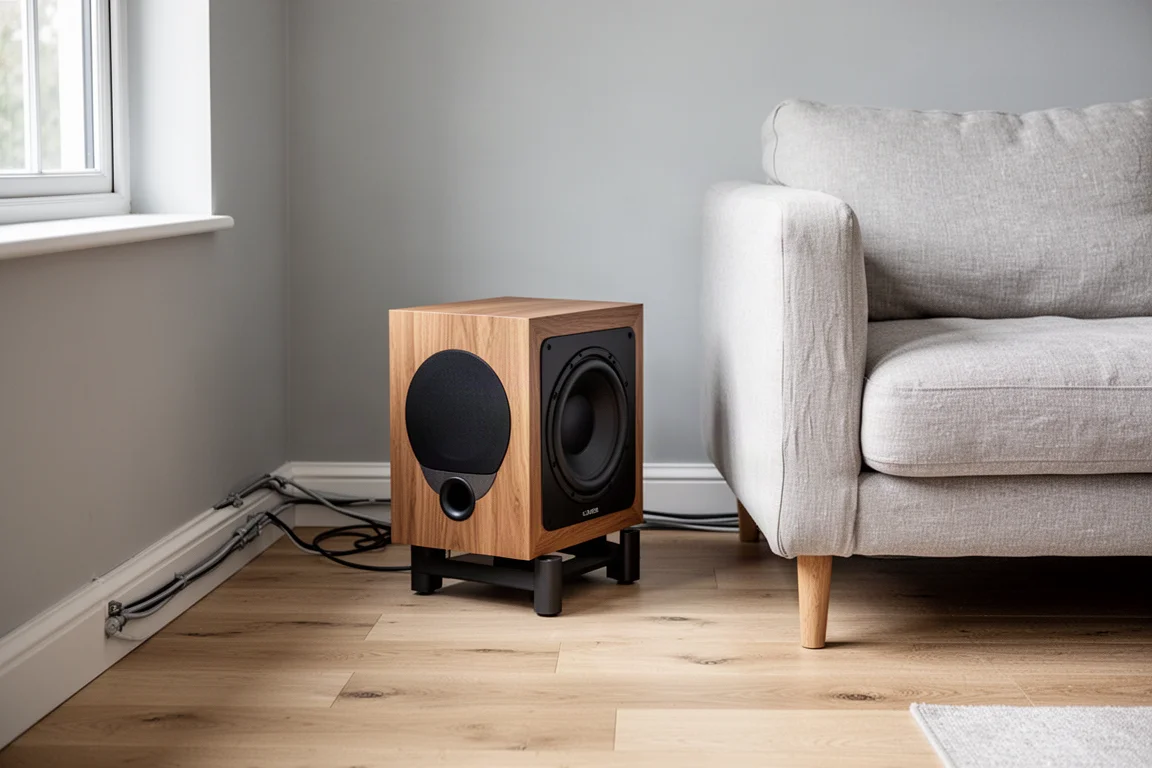
It also suits anyone running a stereo or desktop speaker system. The preamplifier section is genuinely usable rather than an afterthought, with a neutral and resolving character, and there are both XLR and RCA analog outputs. Subwoofer outputs are included as well, along with adjustable cutoff frequency, gain, low-pass slope and output type, so a subwoofer can be blended into a desktop setup or a larger stereo system without extra hardware.
Finally, it is aimed at listeners who like to shape their sound. If you enjoy experimenting with equalisation and spatial presentation rather than accepting a fixed house sound, this is where the X9 separates itself from most amplifiers at its price.
Main Strengths: A Neutral, Linear Foundation
The starting point is deliberately uncoloured. Bass, midrange and treble track closely together, with no obvious emphasis in any region, which gives a clean and even canvas. That neutrality is the point: the amplifier is not trying to impose a signature, so the character of the headphones themselves comes through clearly.
On top of that sits the parametric EQ carried over from Eversolo, and it is a serious tool rather than a preset list. Even more useful is the headphone target response library, which currently lists around 2,500 headphone models, with more being added on request. You can select a matching target response from the app or on the front display, or enter your own parametric EQ values manually if your headphones are not listed yet.
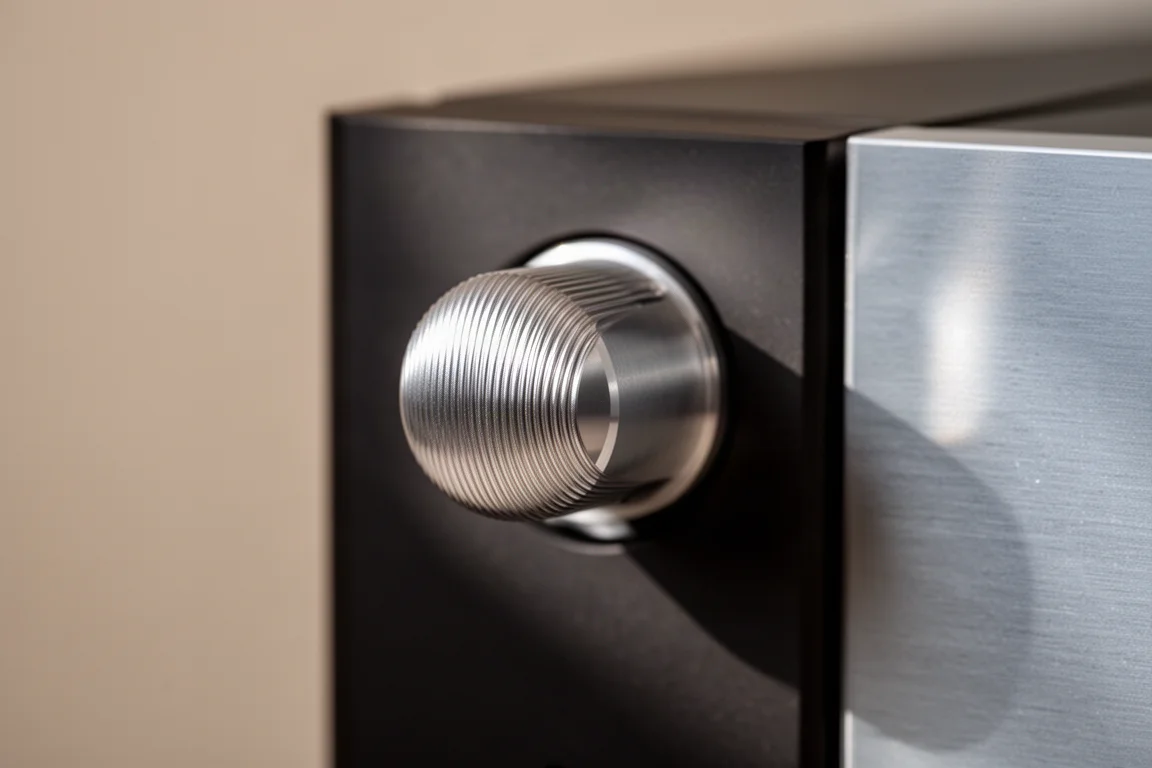
Power delivery is designed to handle most headphones on the market, and no headphone tested here caused any difficulty. Combined with the automatic impedance detection, the volume knob behaves predictably across different loads, giving sensible increments rather than forcing you to guess a gain setting.
Crossfeed and Stereo Width Controls
Two features stand out more than the rest. The first is crossfeed, which mimics a stereo speaker arrangement where each ear picks up a little of the opposite channel. Three crossfeed settings are available, and the practical effect is that images move in front of the listener instead of sitting around the top of the head. Open-back headphones gain extra scale, while fully closed-back designs take on a spacious, open quality that can be mistaken for an open-back pair.
The second is stereo width adjustment, which runs from 0 to 100. At 100 the presentation becomes wide and diffuse, which suits some tracks but can feel excessive; between roughly 60 and 80 is a natural sweet spot for most material. Lower values tighten the image into a more intimate, almost mono presentation, and the transition between the extremes is easy to hear as you move the slider.
Both controls reward a little patience. They are not set-and-forget options, and the best position varies by headphone and by track, but the range of adjustment is wide enough to be genuinely useful rather than decorative.
Connectivity, Subwoofer Integration, and Build Quality
Digital inputs cover USB, HDMI ARC, coaxial and optical. On the analog side, the input is RCA only, with no XLR input, while the analog outputs include both XLR and RCA. Subwoofer outputs round out the connections, and their cutoff frequency, gain, low-pass slope and output type can all be adjusted to integrate a subwoofer cleanly.
Control is handled either through the companion app or through a browser by entering the unit’s IP address, which is the more convenient route at a desk. The interface is quick, responsive and easy to learn, and the front display covers channel balance, filters, gain and display options. The browser layout is not specifically tailored to desktop screens and appears oversized on a monitor, which is a small annoyance rather than a limitation.
Build quality is a clear strength at this price. The chassis is CNC machined and feels substantial in the hand, with a heft that suggests it will hold up over time. The front panel is angled slightly upward so the display and VU meter can be read comfortably from a seated position, a thoughtful detail on a component that will almost never sit at eye level.
Things to Consider Before Buying
Automatic impedance detection currently applies to the 4.4mm and 6.35mm outputs. The XLR output does not yet support it, so gain has to be set manually in the settings menu when using that connection.
There is no XLR analog input, only RCA, which matters if your source relies on balanced output.
The browser-based control page is functional but not optimised for desktop displays, and it takes up more screen space than it needs to.
The depth of the feature set is a strength, but it does mean some time spent learning the menus, the EQ system and the spatial controls before everything feels natural.
Buying Advice
If you want one desktop component that covers headphone amplification, digital-to-analog conversion and preamplifier duties, and you want to shape the sound rather than accept a fixed tuning, the X9 delivers a great deal for around $1,000. Compared with Eversolo’s DMP-A10, it offers the same style of R2R volume control at roughly half the price for listeners who do not need built-in streaming.
If streaming is a core requirement, Eversolo’s integrated streamers remain the more direct answer. If you plan to use the XLR output regularly, expect to set gain manually until that output supports the automatic detection found on the other headphone connections.

Closed-back headphone owners have the most to gain here. The crossfeed implementation alone changes how those headphones present space, and it is the kind of improvement that is difficult to replicate with software elsewhere in the chain.
Conclusion
The Luxsin X9 is a remarkably complete desktop amplifier for a first product from a new brand. Its neutral foundation, deep parametric EQ, headphone target response library, crossfeed and stereo width controls add up to a level of flexibility that is rare at this price, and the auto impedance detection and subwoofer integration make it easy to live with day to day.
The trade-offs are specific rather than fundamental: no XLR analog input, no auto gain detection on the XLR output yet, and a browser interface that could be better suited to desktop screens. For listeners who want a single, well-built box that adapts to their headphones and their speakers, those are reasonable compromises.
Product link
View more details for Luxsin X9
This product is mentioned in the review. Check the specifications, options, and compatibility before buying.
View more details for Luxsin X9Further reading
Related Reviews
Headphone Amplifiers
Creative Labs Sound Blaster X5 Review: A Flexible USB DAC and Headphone Amp
The Sound Blaster X5 pairs a fully balanced dual-DAC headphone amp with DSP, mixing, recording, and console audio in one compact USB-powered enclosure.
Headphone Amplifiers
Fosi Audio K5 Review: A Tiny Budget DAC Amp for Travel, Gaming, and Hotel Listening
A compact USB-C DAC amp with tone controls, optical and coaxial inputs, and a clean mid-forward sound that suits efficient headphones and IEMs.
Headphone Amplifiers
Fosi Audio SK01 Review: A Tiny Headphone Amp That Doubles as a Three-Band EQ
A compact $72 audio box with treble, mid-range, and bass controls, a loudness button, and a capable headphone stage. Here is where it earns its place.