Home Heating
Luna Heater Review: A Small Ceramic Heater That Falls Short of Big Claims
We tested the heavily advertised Luna Heater in a real room to see whether it can heat large spaces in minutes. The short answer: no.
Introduction
The Luna Heater has been impossible to miss in recent weeks, thanks to a wave of aggressive advertising claiming it can heat large rooms within minutes. Marketing copy describes ceramic heating technology inspired by jet engine physics, a live demonstration where a room jumped from 10 to 23 degrees in under 90 seconds, and coverage of rooms up to 1,000 square feet. Those are extraordinary claims for a heater that plugs directly into a wall socket, so we bought one, ran it in a real room, and even opened it up to see what is actually inside.
What the Luna Heater Is
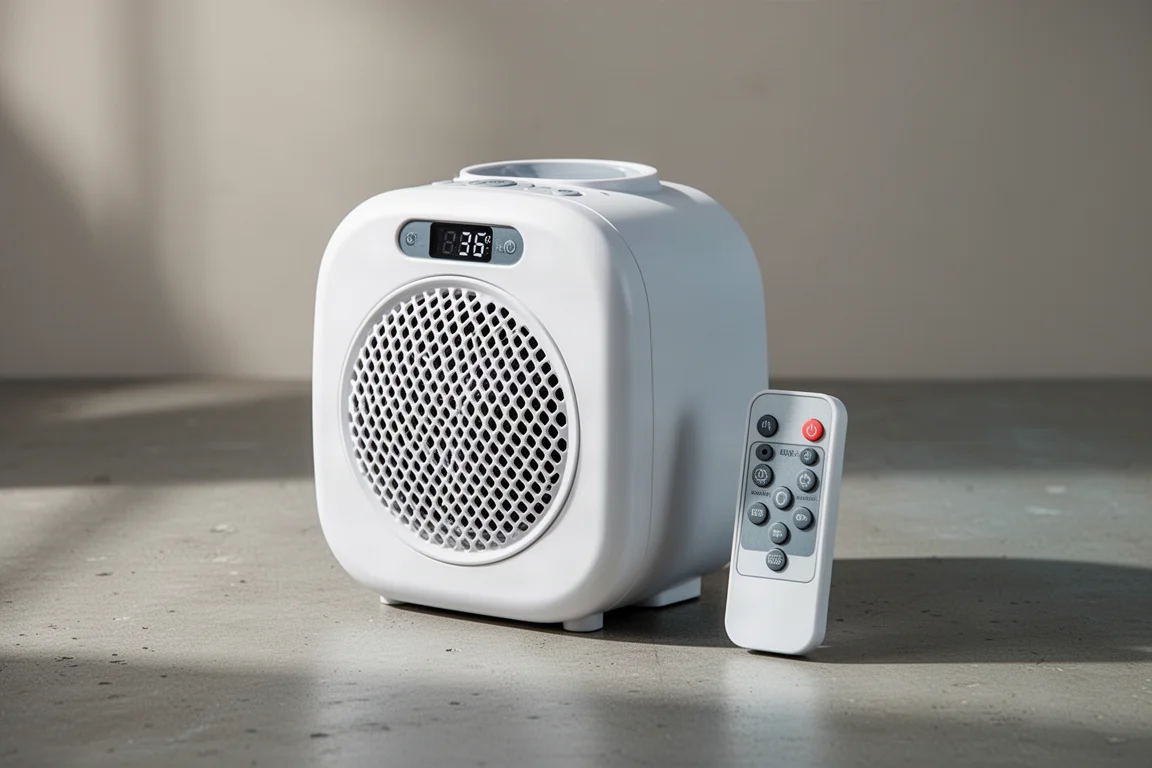
This is a compact plug-in ceramic fan heater. The ceramic designation refers to the heating element inside, and the unit slots straight into a wall socket with no cables needed. It ships with a small remote control that turns it on and off, adjusts the target temperature, changes the fan speed, and sets a run timer of up to around 12 hours before it switches off automatically.
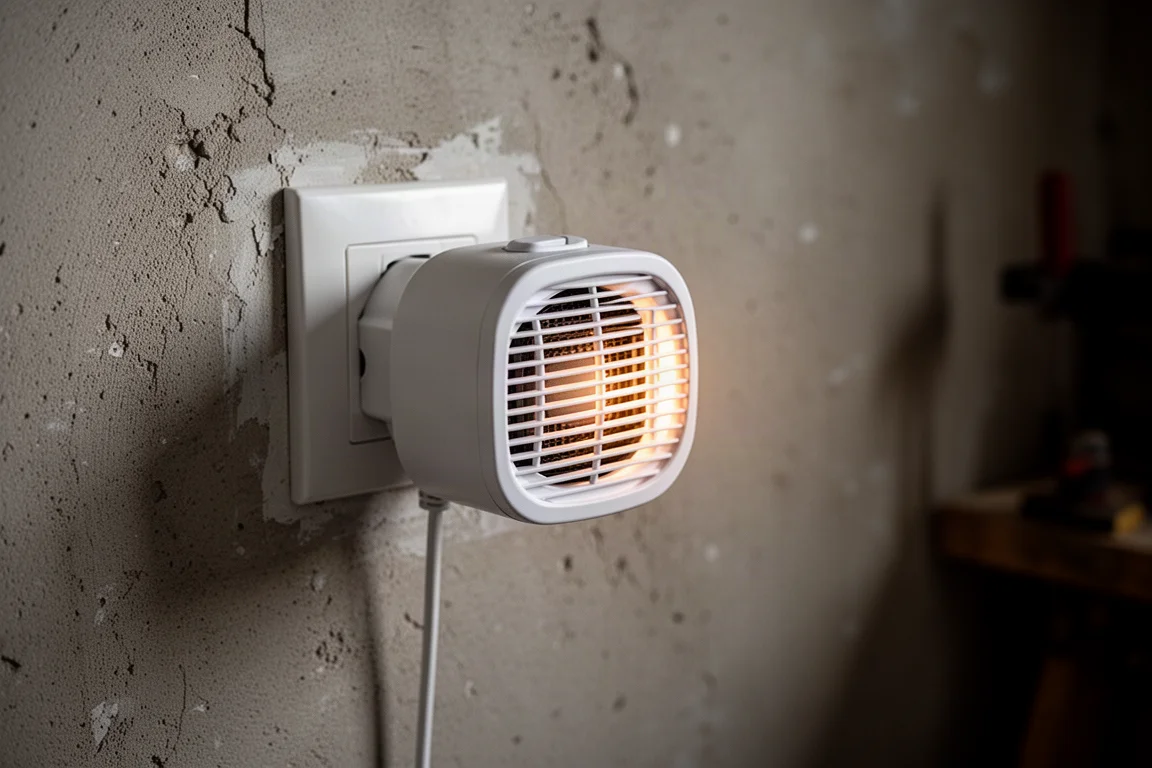
The first thing worth confirming is that it does genuinely work as a heater. The fan audibly blows, and holding a hand in front of the outlet produces real warmth. That much is honest. The problem lies not in what the product is, but in what the advertising says it can do.
What the Marketing Claims
The advertising makes bold statements: a heating principle supposedly borrowed from major jet engines, a 10 to 23 degree room temperature jump in under 90 seconds, coverage for bedrooms, living rooms, kitchens and workplaces up to 1,000 square feet, and energy use of only 10% of a standard heating system. The sales site adds urgency with limited-time discounts, and paid around £50 plus £5 postage in our case.
Some perspective helps here. A 1,000 square foot space is roughly 90 square metres, closer to a large hall than a room. No heater of this size could plausibly affect a space that big. Independent review platforms also tell a different story from the glowing testimonials on the sales site, with far less flattering feedback on Trustpilot.
How It Performed in a Real Room Test
To test the headline claim sensibly, we gave the heater far more leeway than the advertising does. Instead of demanding a 90-second miracle, we let it run for 10 to 15 minutes in a workshop of about 40 square metres, starting at roughly 12.5 degrees Celsius, with the thermometer deliberately placed close to the heater.
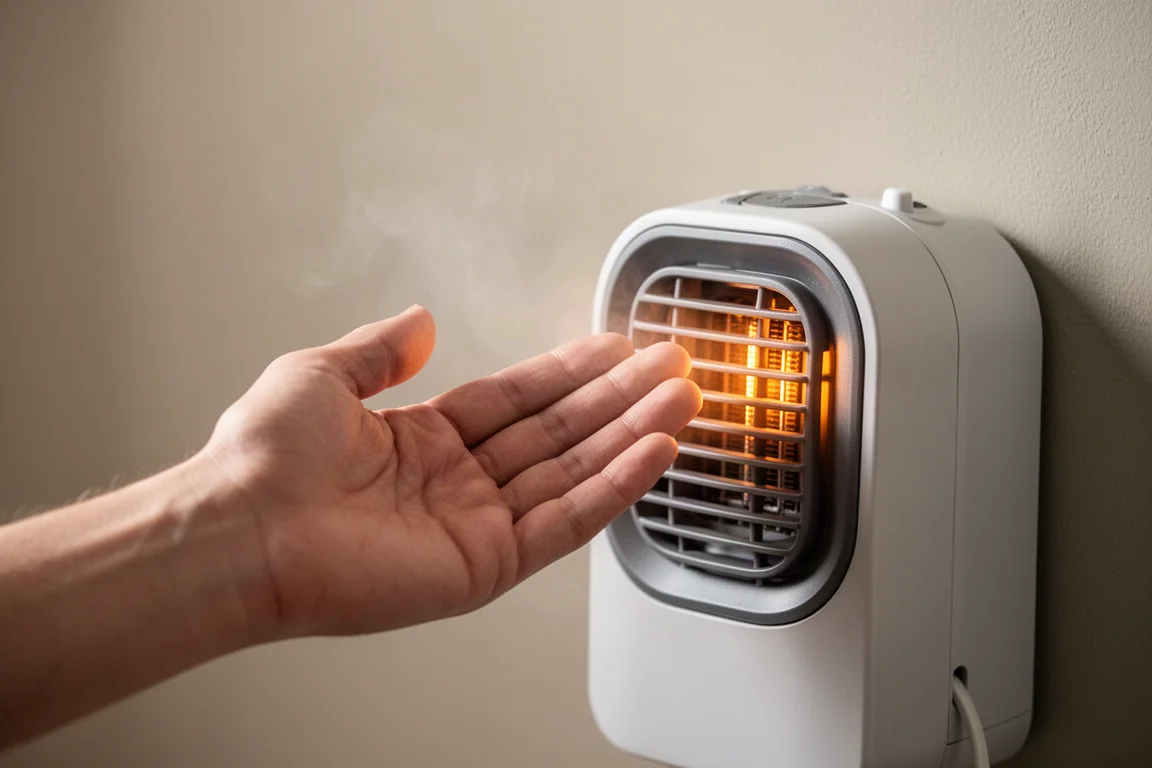
The result: no measurable change at all. Describing the output, the warmth feels similar to holding your hand about eight inches above a toaster. Noticeable up close, but nothing that will shift a room’s temperature. This is a personal-warmth device, not a room heater. It could plausibly keep your legs warm under a desk in an air-conditioned office, but running it all day will not warm a proper room.
What Is Actually Inside
Opening the casing reveals three main components. The fan is a small 12-volt unit that looks strikingly like a computer cooling fan. There is a compact circuit board with what appears to be a receiver for the remote control, plus a couple of capacitors.
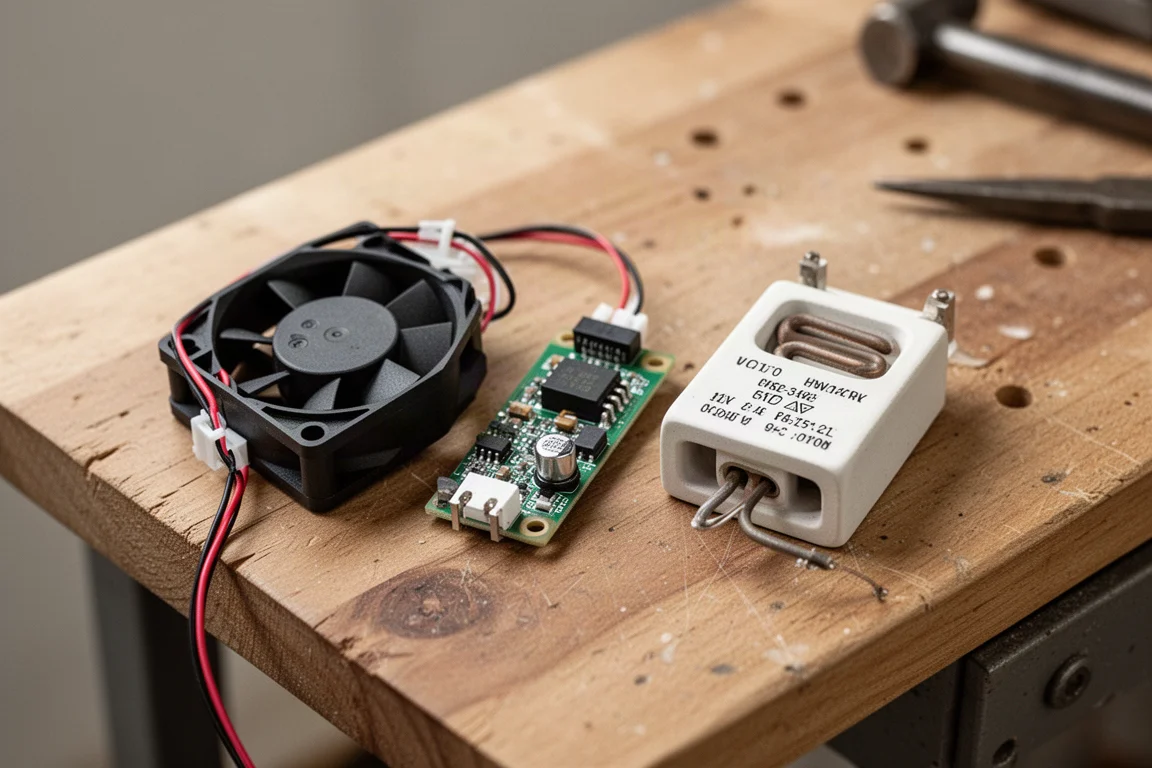
The heating element is marked 220 volts, 600 watts, with four small ceramic elements wired in parallel. That 600W rating is the heart of the problem. It is simply not enough output to meaningfully heat a room of any normal household size, let alone the 1,000 square feet claimed in the advertising. Claims about heating a whole house with several of these units do not hold up either.
Things to Consider Before Buying
If you are tempted by this kind of heater, weigh a few points first:
- The claimed room coverage and heating speed are not supported by real-world testing.
- A 600W element suits personal, close-range warmth only.
- It is not a device we would leave running unattended overnight in a child’s bedroom.
- The same hardware is widely available from generic sellers at a fraction of the advertised price.
Buying Advice: Cheaper Alternatives Exist
Here is the practical takeaway. The identical heaters are sold by multiple different sellers on eBay, with the cheapest found at around £16 with free postage. That is a fraction of the £55 total paid through the advertising site. Even at £16, set expectations correctly: for that money and that size, you are buying a small fan-driven personal heater, nothing more.
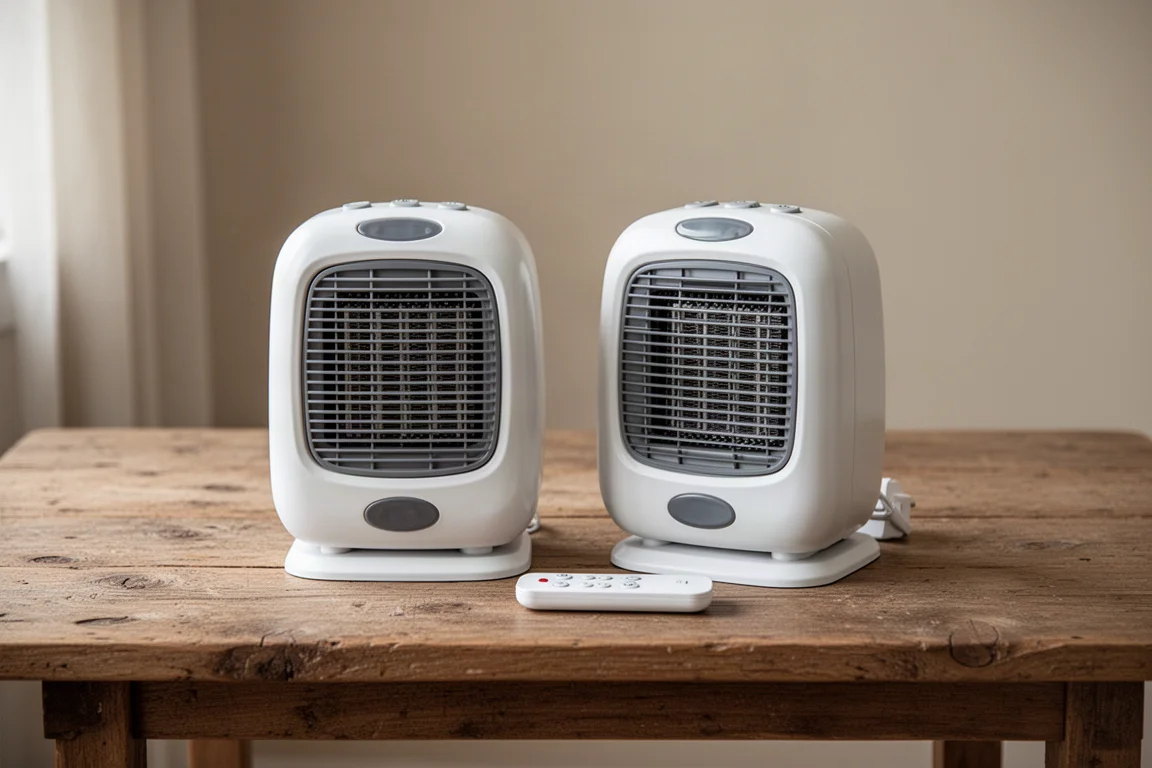
If you want a small heater for close-range use under a desk or beside a chair, a generic listing does the same job for less. If you want to actually heat a room, look at proper rated heating solutions instead.
Conclusion
The Luna Heater is a real heater, but the marketing around it is not real. It will not heat a large room in minutes, will not cover 1,000 square feet, and will not cut energy use to a tenth of a standard system. As a modest personal warmer it functions fine, but it is dramatically overpriced through its official site when near-identical units sell for much less elsewhere. Skip the hype, and if you genuinely need one, buy cheap and buy clear-eyed.
Product link
View more details for Luna Heater
This product is mentioned in the review. Check the specifications, options, and compatibility before buying.
View more details for Luna HeaterFurther reading
Related Reviews
Home Heating
Best Space Heaters for Winter: 7 Picks for Every Room and Budget
From smart tower heaters and a walnut fireplace to a 125,000 BTU propane shop heater, seven practical ways to stay warm this winter.
Home Heating
Best Space Heaters Tested: 11 Heaters Ranked for Safety, Noise, and Heat Performance
We compare 11 space heaters from $20 to $550 on safety, noise, heat delivery, power draw, and real-world room warming to find which ones are actually worth buying.
Home Heating
Best Space Heaters Tested: Which Ones Actually Heat, Stay Quiet, and Keep You Safe?
Twelve space heaters from $23 to $440 go head to head on heat delivery, noise, safety, and power draw. Here is how they ranked.