Camping Lanterns
LuminAID PackLite Titan Review: A Solar Camping Lantern Tested for Months
A practical look at the LuminAID PackLite Titan solar lantern, covering its ten light modes, measured runtime, solar charging times, waterproofing, and the trade-offs to know before buying.
Introduction
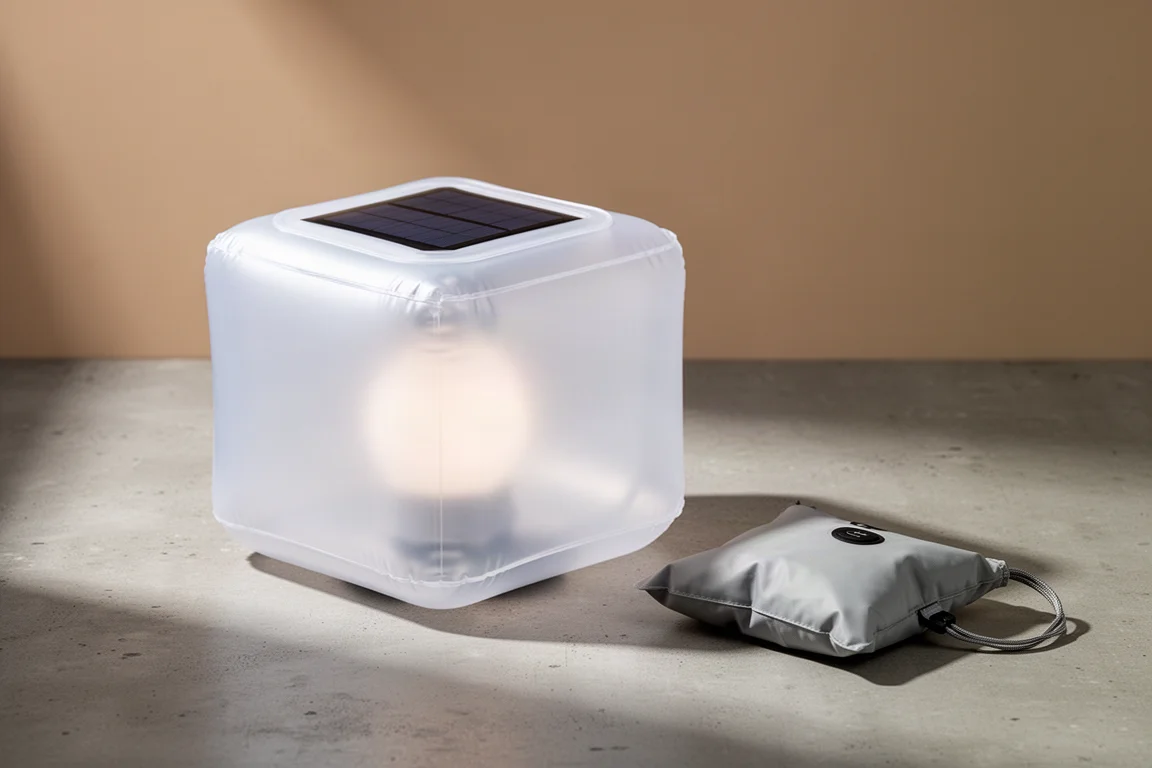
The LuminAID PackLite Titan is an inflatable solar lantern built for camping, emergency kits, and anywhere reliable light matters more than a wall outlet. It combines a 4,000 mAh battery, a square solar panel, and a body that expands with a quarter turn and collapses flat when you are finished with it. The published figures are ambitious: a 300 square foot lighting area, up to 100 hours of runtime, and enough stored energy for two to three phone charges.
Over four months of use, the lantern went through brightness measurements, runtime tests, solar charging trials, heavy rain, a full submersion, and a few drops. Some claims held up better than others. This article walks through what the lantern does well, where the numbers fall short, and who should consider buying it.
Who This Product Is For
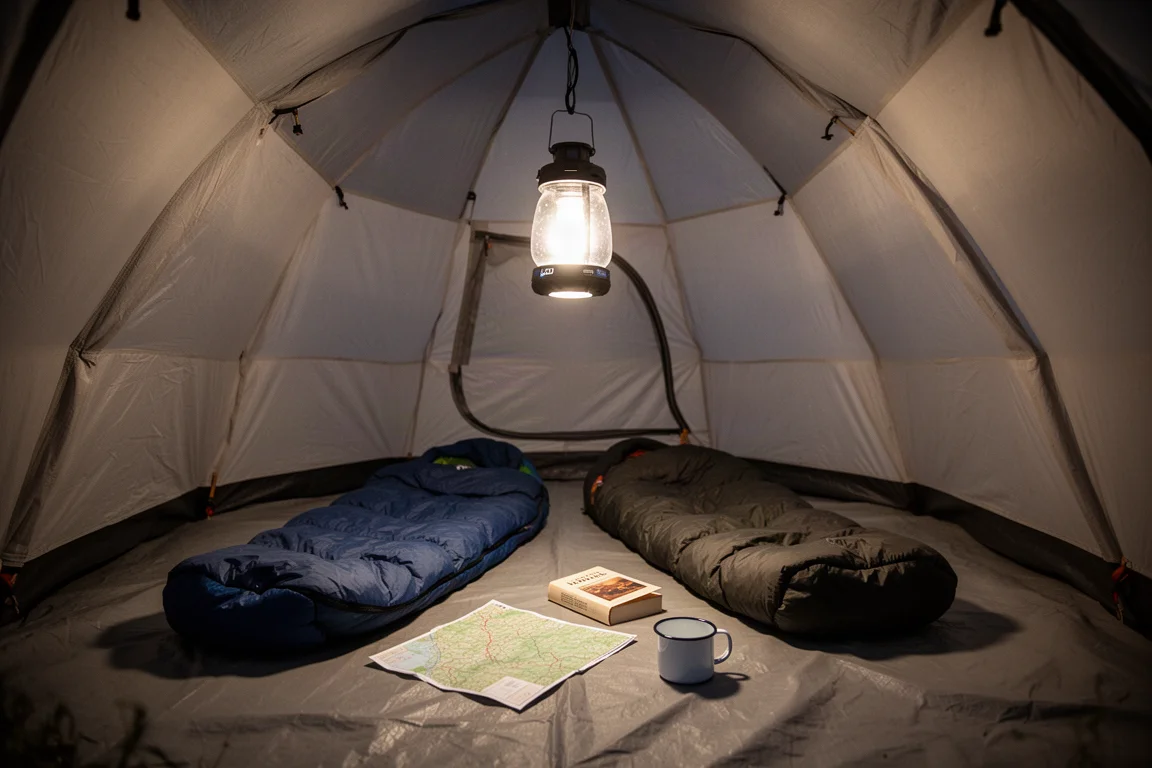
The PackLite Titan suits campers who want one light source to cover a whole tent. On its brightest setting it lit a six-person tent comfortably, with enough even coverage to read a book or play cards, and the output is strong enough to fill larger eight and ten-person tents as well. The dimmest white mode behaves more like a night light, which makes it a good match for lying in bed without glare.
It also works well as an emergency light. The solar panel means it can recharge without an outlet, the IP67 rating covers rain and accidental dunkings, and the red modes preserve night vision when you need light without waking anyone else up.
The lantern is less suited to anyone who wants a warm, cozy glow. The white output is cool, measured at roughly 5,900 to 6,500 Kelvin, and the frosted globe softens it without warming it. Buyers who mainly want to top up multiple phones or larger devices should also look elsewhere, because the battery delivers about one full phone charge rather than the published two to three.
Main Strengths
The strongest parts of this lantern show up every time you use it: how quickly it sets up, how many lighting options it offers, and how long it keeps running at low output.
Twist-to-Inflate Design and Weather Sealing
Inflation takes about two seconds. Unplug the valve cap at the bottom, hold the base and the top, and twist roughly 90 degrees along the marked lines. The lantern expands into a cube, and the same motion in reverse collapses it flat. There is no breath inflation involved, which keeps setup fast and avoids the moisture that comes with blowing into a lantern.
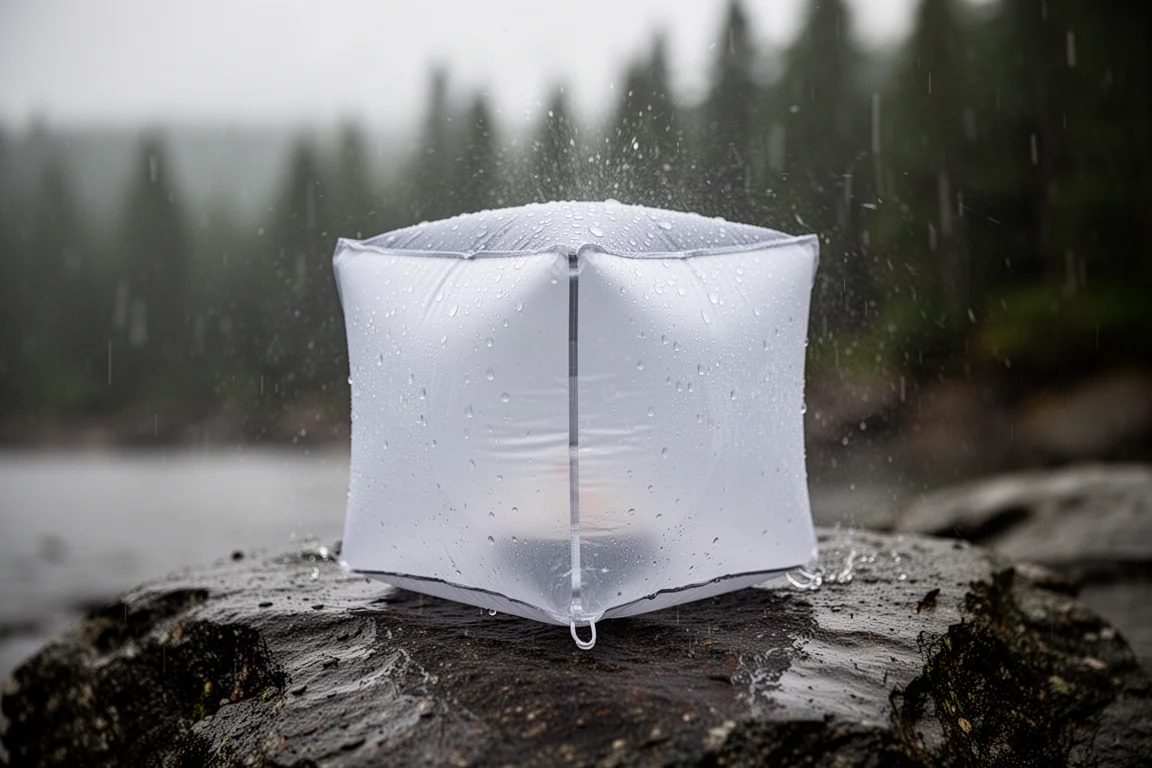
Durability is a genuine strength. The valve is a single opening at the bottom, so a puncture does not stop the lantern from inflating or holding its shape. Thirty minutes of heavy rain left it working, with only slight dampness around the inner port cap. A separate 30 minute submersion test ended with the lantern still lit and every white and red function working, and no water inside the ports. Note that the lantern is buoyant, so keeping it under water requires weighing it down.
Drops from hand height and down a small slope left it working with no visible scratches. The square profile also means it does not roll away when knocked over, a small but real advantage over rounder lantern designs.
Ten Light Modes Across White and Red
The Titan offers ten modes in total, five white and five red. The white sequence runs turbo, high, medium, low, and flashing SOS. Measured output came in at 316 lumens for turbo, 191 for high, 99 for medium, and about 1 lumen for low, which lines up closely with the published specifications.
Red output is roughly ten times dimmer than white in every mode, which is exactly the point. Red light preserves night vision and does not blast you awake, so the dimmest red setting works well as a middle-of-the-night light.
Control comes down to three buttons: power, a red and white switch, and a battery check. Because color is selected before switching on, the lantern remembers whether you last used red or white. It does not remember brightness, so it always starts at turbo for the color you chose. Selecting red before powering on solves the blinding issue at night.
The buttons sit flush with the top surface, which makes them hard to find in the dark. A simple approach is to feel for the raised power port cap, since the buttons sit directly beside it.
Runtime, Shine Area, and Solar Charging
The headline claim is up to 100 hours of runtime. In testing, the lantern ran for almost exactly five hours on turbo from a full charge. On the lowest white mode it ran for about 250 hours, dimming gradually from around the 243 hour mark before going flat. That goes well beyond the published figure.
Shine area is where the numbers are more modest. A 300 square foot lighting area would need a shine radius of about 9.8 feet. Measured radius came in at roughly 8.2 feet, which works out to about 211 square feet, roughly two thirds of the claim. In practice that is still plenty of light: it covers a six-person tent easily and can fill eight and ten-person tents.
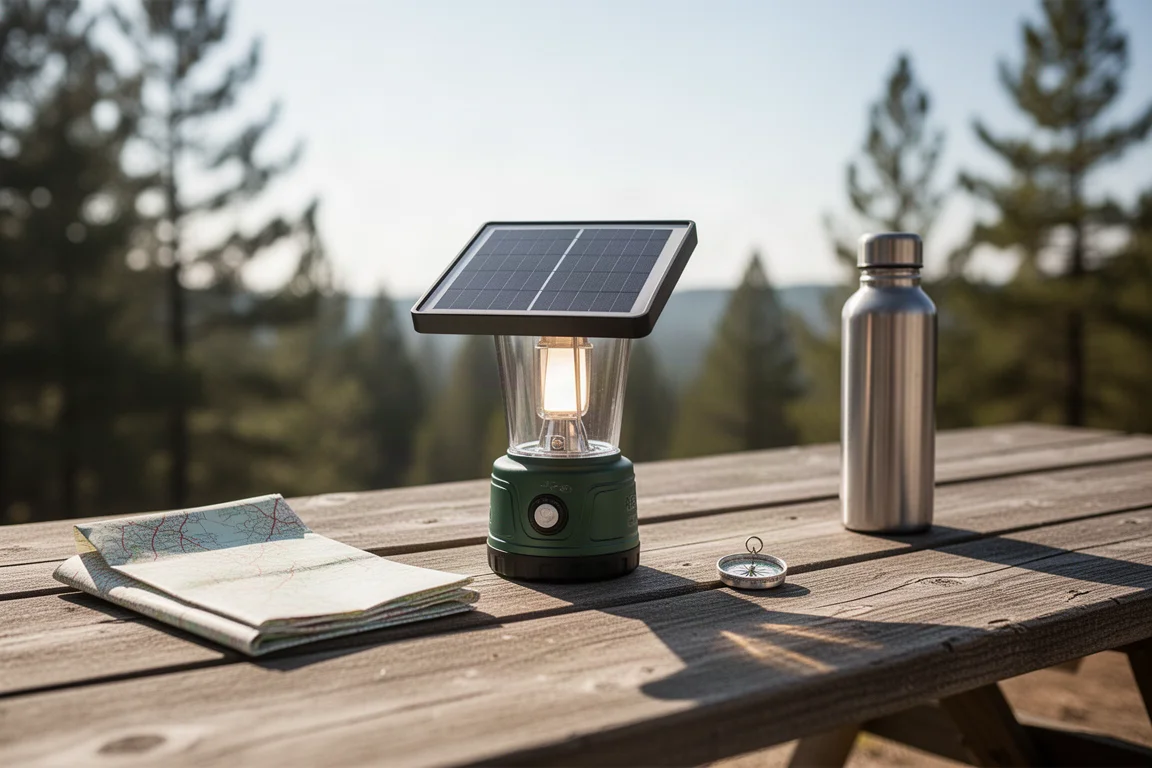
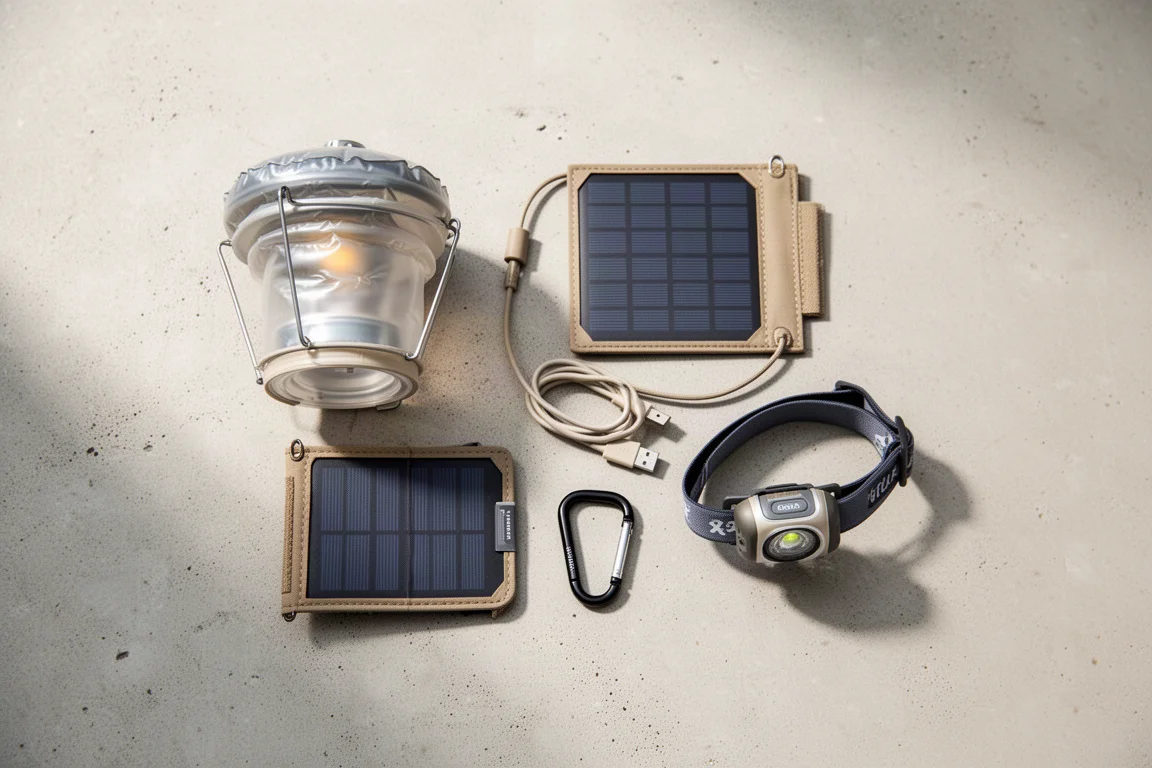
Solar charging is slower than the published estimate of 16 to 20 hours of sunlight. A full day outdoors, from 7 AM to 7 PM on a mixed day, added around 25 percent charge, which is about 1 hour 15 minutes of turbo runtime or roughly 60 hours on the night light mode. Reaching a full charge took about four average days, two to three days in strong sun, and five to six days in cloudier conditions. The panel measures 4 by 4 inches, larger than the panels on several comparable inflatable lanterns.
USB charging is much quicker. Two hours plugged in delivers the maximum runtime, and charging beyond that does not extend it.
USB Output and Battery Readout
The 4,000 mAh battery can also charge a phone through the USB output port, with a button press to start the flow. Charging an iPhone 12 from 17 percent took about two hours and 20 minutes to reach 97 percent, and an attempt the next day added only 2 percent more. Total output came to roughly one full phone charge.
The four-light battery indicator gives a rough sense of remaining capacity, but it is less dependable while charging. Plugging in a nearly drained lantern can send the indicator straight to four lights, and the small red charging light stays on for as long as the cable is connected. Neither shows when charging is complete, so it is simplest to follow the two hour USB guideline.
Things to Consider Before Buying
A few details are worth knowing before you commit.
The box may not include a charging cable. The lantern arrived in a simple plastic sleeve with instructions and nothing else, though any USB to micro USB cable works for charging.
The warranty runs for one year, which is short for a piece of camping gear that may sit in a pack for months at a time.
The solar panel needs patience. Several days of daylight are required for a full charge, so the lantern is best treated as something you top up regularly rather than something you can rely on after a single afternoon in the sun.
The strap loop may not fit every attachment point. The hook-and-loop strap was a tight fit on a standard tent ceiling loop, although the lantern also has carabiner loops on both sides for hanging.
For size and weight: the inflated lantern measures about 5.75 inches on each side, or 14.6 centimeters, and weighs about 11.9 ounces, or 338 grams. Deflated, it packs down to roughly 1.1 inches thick.
Buying Advice
The PackLite Titan earns its place in a camping kit when you want one lantern that can light a large tent, run for days at low output, and survive rain, submersion, and drops. The ten light modes and the red night light are genuinely useful rather than filler, and the two second inflation makes it easy to live with.
It is a sensible purchase for tent campers, emergency kits, and anyone who wants solar charging as a backup to USB. Buyers who mainly want to charge multiple phones, or who prefer a warm-toned ambient light, will likely be happier with something else. It is also worth planning around the slow solar charging and the one year warranty rather than expecting either to be a strength.
Conclusion
The LuminAID PackLite Titan delivers on the parts that matter most in daily use: fast setup, a wide spread of light modes, and runtime on the low setting that far exceeds the published figure. Its weakest points are honest ones. Solar charging takes several days, the battery indicator is unreliable while charging, and the lighting area lands closer to 211 square feet than the claimed 300. For campers who want a durable, waterproof lantern that can light a whole tent, those trade-offs are easy to accept.
Product link
View more details for LuminAID PackLite Titan
This product is mentioned in the review. Check the specifications, options, and compatibility before buying.
View more details for LuminAID PackLite TitanFurther reading
Related Reviews
Camping Lanterns
Barebones Railroad Lantern Review: A Vintage-Style Lantern That Beats Its Own Specs
A detailed look at the Barebones Railroad Lantern, covering measured brightness and runtime, charging behavior, weather resistance, and what to know before buying.
Camping Lanterns
Best Rechargeable LED Camping Lanterns 2026: 12 Lanterns Compared
Twelve rechargeable LED camping lanterns measured for brightness, run time, features, ease of use, durability, and portability, with clear picks for every kind of camper.
Camping Lanterns
BioLite AlpenGlow 500 Review: A Versatile Rechargeable Camping Lantern
A rechargeable camping lantern with thirteen lighting modes, a 6,400 mAh power bank, and long measured runtimes, plus the warranty and safety trade-offs worth weighing first.