Camping Lanterns
LuminAID PackLite Max vs PackLite Titan: Which Inflatable Solar Lantern Fits Your Camp
A close look at two inflatable solar lanterns, covering light output, runtime, charging behaviour, water resistance, and which one earns its place in a pack.
Introduction
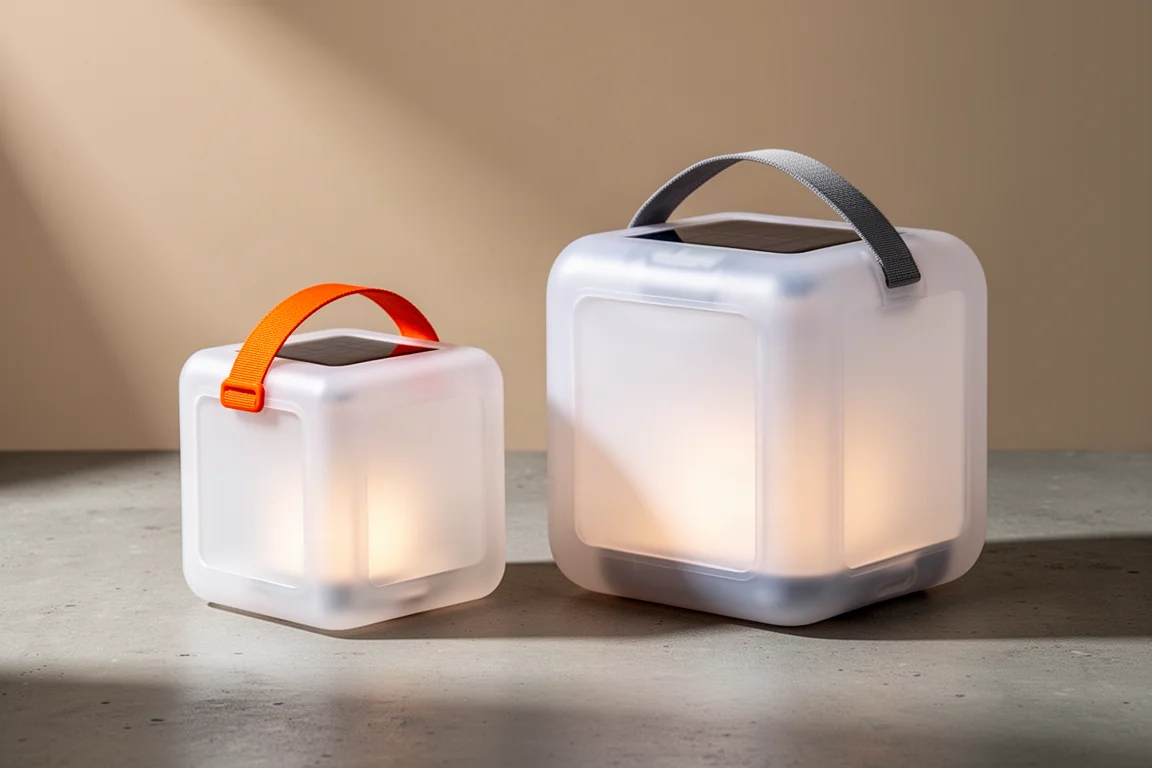
Inflatable solar lanterns solve a specific set of problems. They pack flat, they run without a wall socket, and they tolerate weather that would finish off a cheaper light. The LuminAID PackLite Max and the larger LuminAID PackLite Titan both follow that formula, and both were tested across the same ground: light modes and output, runtime, charging behaviour, water exposure, drop survival, and packed size.
The Max is the smaller, lighter, and less expensive of the two. The Titan costs more and weighs more, but it wins on nearly every performance measure. Which one belongs in your kit depends on how you camp and how much you value runtime over pack weight.
What to Look For in an Inflatable Solar Lantern
A handful of details separate a lantern you will keep using for years from one that stays in a drawer.
Inflation method matters more than it first appears. Breath inflation works, but it takes longer and leaves condensation from your breath inside the body of the lantern. A twist-and-compress design avoids both problems.
Light modes and light colour come next. Because these lanterns have no memory setting, they always start on their brightest mode, so a dim or coloured start-up option is genuinely useful at night. Cool white light in the 5,900 to 6,500 Kelvin range reads as harsh inside a tent, and a frosted outer layer makes a real difference to how comfortable it feels.
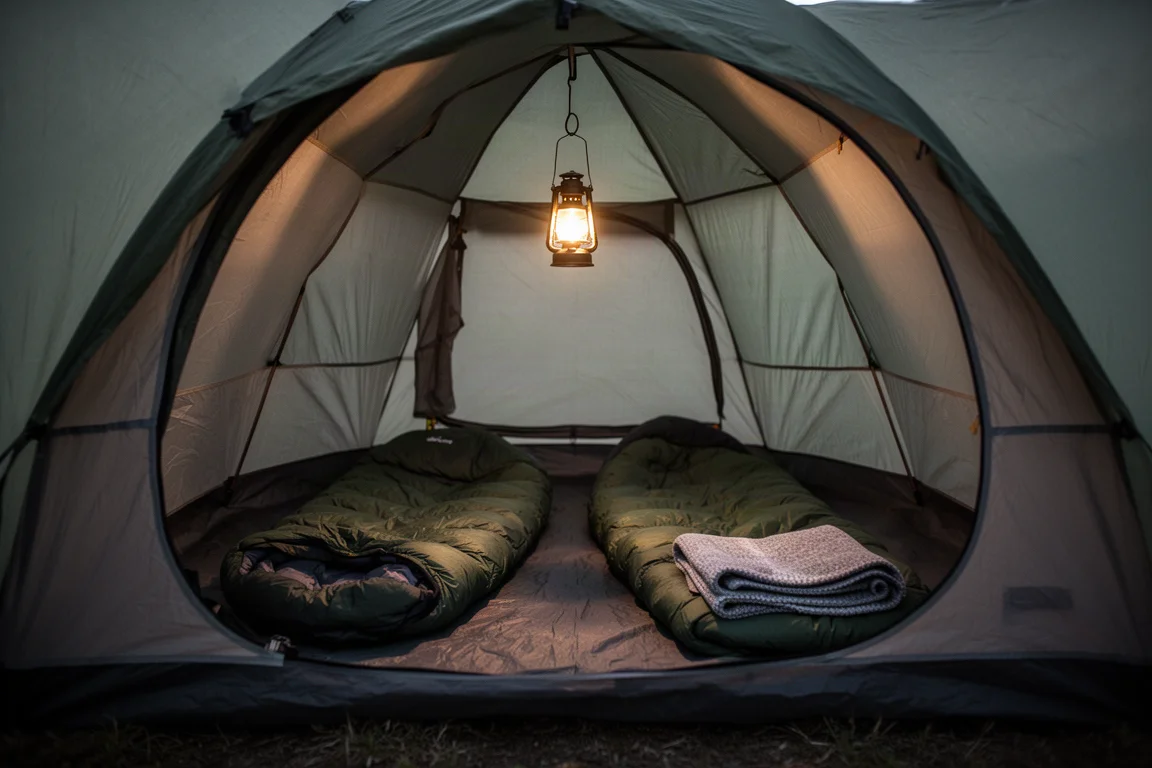
Output and runtime should be judged together. A very bright turbo mode is only useful in short bursts, while a genuinely dim low mode can run for days as a night light.
Lighting area needs checking against real tent sizes rather than the headline number, and charging behaviour deserves attention because battery indicator lights do not always reflect the true state of charge. Finally, weigh the IP rating, the packed size, and whether the USB output is large enough to be useful as a power bank.
LuminAID PackLite Max: Bright Output in a Compact Cube
The PackLite Max runs five white light modes: turbo, high, medium, low, and a flashing mode for emergencies. Measured output came in at about 196 lumens on turbo, 110 on high, 56 on medium, and 21 on low, with the flashing mode reading close to the low setting. Those numbers sit slightly above the published figures rather than below them, so the light delivers at least what the specifications promise.
Runtime is a more mixed picture. Turbo lasted 4 hours and 40 minutes in testing, which lines up well with the published 3 to 5 hour range. On low, the lantern ran for 39 hours against a published 44 to 50 hours, and the medium, low, and flashing modes all finished roughly 10 to 20 percent short of their stated figures.
Lighting area also falls short of the claim. LuminAID lists 200 square feet, while the measured shine radius was about 6 feet, or 1.84 metres, which works out to roughly 144 square feet. In practice that is still generous. A six-person Sundome tent at about 93 square feet, an eight-person Coleman Montana at 103.5 square feet, and a ten-person tent all sit comfortably inside the Max’s reach, and reading at the edge of a six-person tent is easy on turbo.
The light itself is a cool white, around 5,900 to 6,500 Kelvin, and it is on the harsh side. The frosted outer layer softens it noticeably and makes the lantern far more pleasant to sit under. Medium and low are the comfortable settings for relaxing, although low is too dim to read by.
Charging the PackLite Max: USB, Solar, and the Battery Indicator
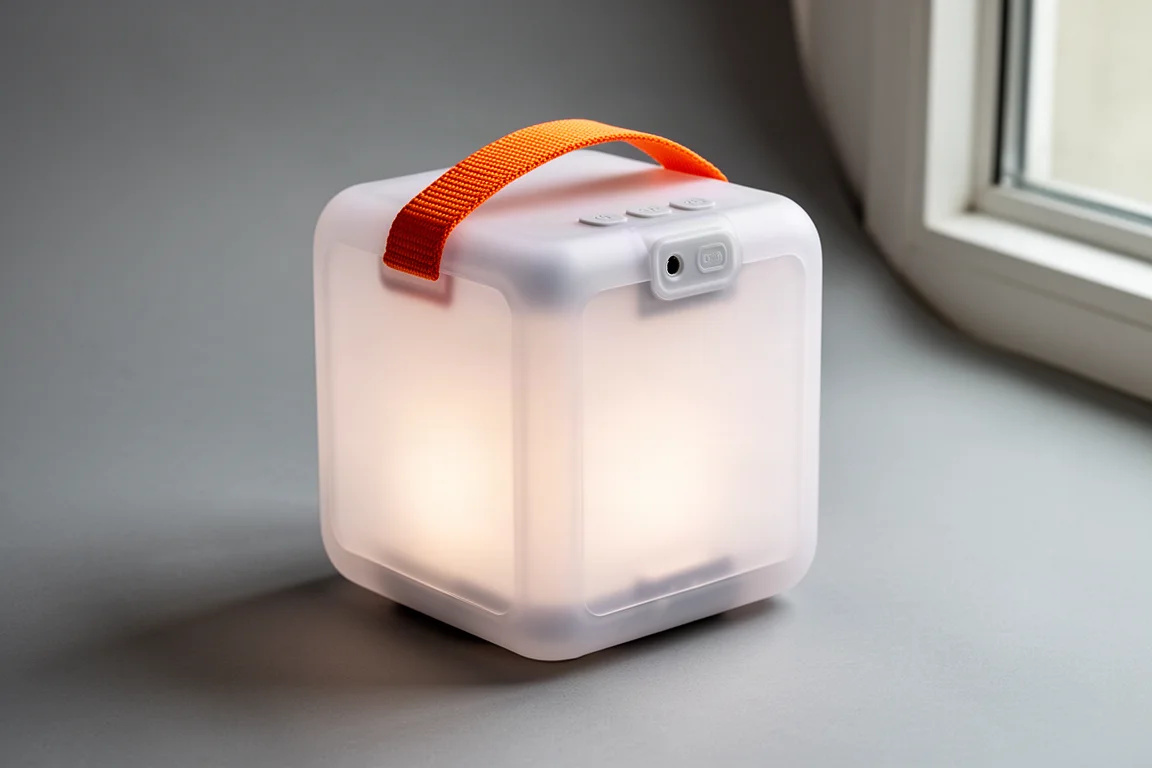
Charging and battery feedback are the Max’s weakest area. A protruding port cap at the top hides two ports: a micro-USB input for charging the lantern and a full-size USB output for charging a phone or other small device. The battery indicator uses four green lights, best read as roughly 25 percent each. They are temperamental. During testing the display flipped between three and four bars without warning, dropping to three, returning to four, holding there, and dropping again.
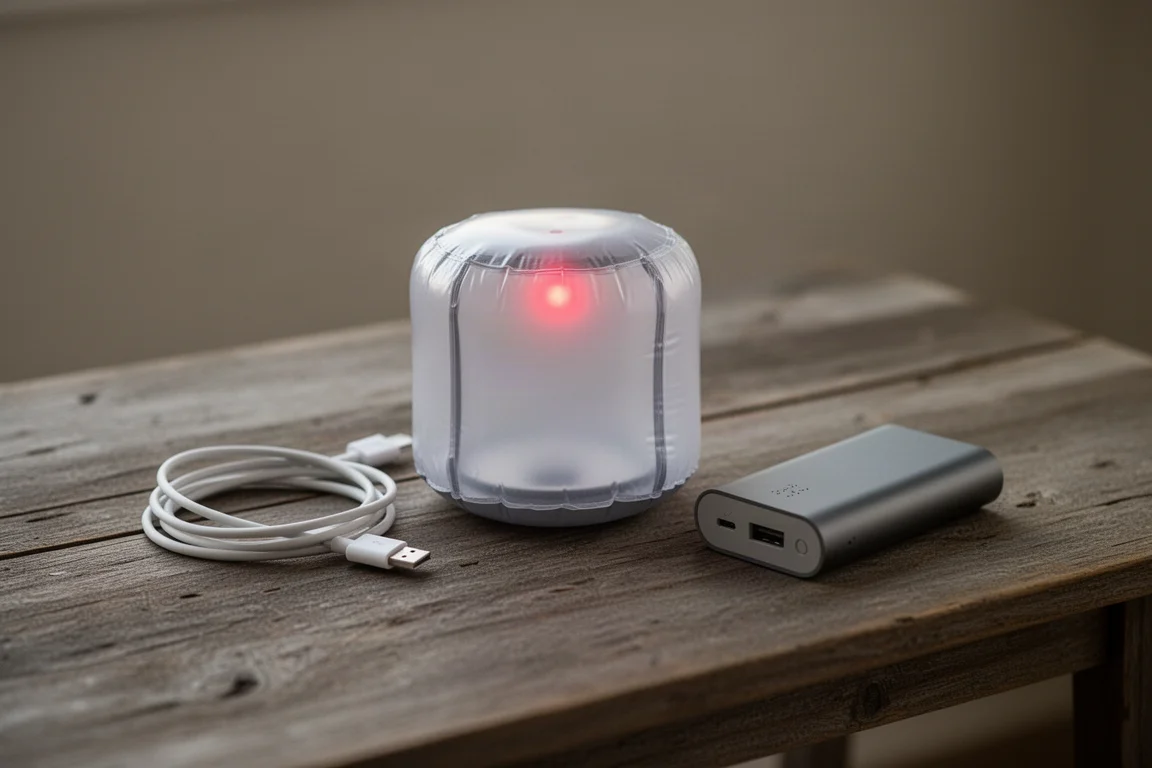
Charging through USB is quick if you know when to stop. A red light near the battery indicator confirms that the lantern is charging. After plugging in, the indicator jumped straight to two lights, reached three after ten minutes, and showed four after twenty, yet unplugging at the 25 minute mark produced only 3 hours and 10 minutes of turbo runtime. A full charge takes about 1.5 hours, and anything beyond that adds nothing. Fast charging is a genuine plus: 30 minutes on the cable gives roughly two-thirds of the battery capacity.
The USB output is useful but modest. Charging an iPhone 12 from 20 percent to 68 percent took 58 minutes, a gain of about 48 percent. With a 2,000 mAh battery against the phone’s 2,815 mAh, a complete phone charge is not realistic. The upside is that roughly four hours of light remained on the dimmest setting afterwards, so the lantern does not leave you in the dark.
Solar charging is slower but workable. A full day of average sun, from 7am to 7pm with a mix of cloud and brightness, added about 30 percent to the battery, which translates to about 1.5 hours on the 196 lumen turbo setting or roughly 12 hours on the 21 lumen low setting. A full solar charge takes about three average days, six or more in cloudy or rainy weather, and as little as one to two days in strong sun. The published estimate of about 14 hours refers to consistently strong sunlight.
PackLite Max in the Field: Water Resistance, Durability, and Pack Size
The Max carries an IP67 rating, which covers immersion in up to one metre of water for 30 minutes. It handled a 30 minute heavy rain test without trouble, and the port compartment at the top, the most exposed part of the design, stayed completely dry. A full 30 minute submersion left every function working and the ports almost dry, with a single drop of water on the outer rim. The lantern is buoyant enough that keeping it under a metre of water takes deliberate effort.
Drop testing was equally undramatic. Dropped from hand height, the lantern stayed lit and picked up no visible scratches, and a tumble down a slope that ended against a rock left it working normally. The air inside does most of the cushioning work.
For portability, the Max weighs 7.7 ounces, or 218 grams, and measures about 5.9 inches, or 15 centimetres, on each side when inflated, making it close to a perfect cube. Deflated, it packs down to roughly one inch, or 2.5 centimetres. Deflating takes a little technique: squeeze the sides and top, then twist the lantern 90 degrees so the fabric tucks in neatly before closing the valve. Pushing the valve back into the body also gives the lantern a flat surface to stand on. The orange hand strap has three connection points, so it can be tightened around the body for storage or used to hang the lantern from a tent loop.
LuminAID PackLite Titan: More Modes, More Capacity, More Range
The Titan takes the same idea and executes it at a larger scale, fixing most of the Max’s compromises along the way. Inflation is the clearest example: twist the body open, then twist and compress it, and the lantern is full in two to three seconds, against 10 to 15 seconds of breath inflation for the Max. Nothing is exhaled into the body, so no condensation forms inside.
Light modes double. Alongside the five white modes, the Titan adds five red modes, which matters because neither lantern remembers its last setting. Waking in the middle of the night and pressing the button on the Max fires up the blinding turbo white output; on the Titan you can switch to red first.
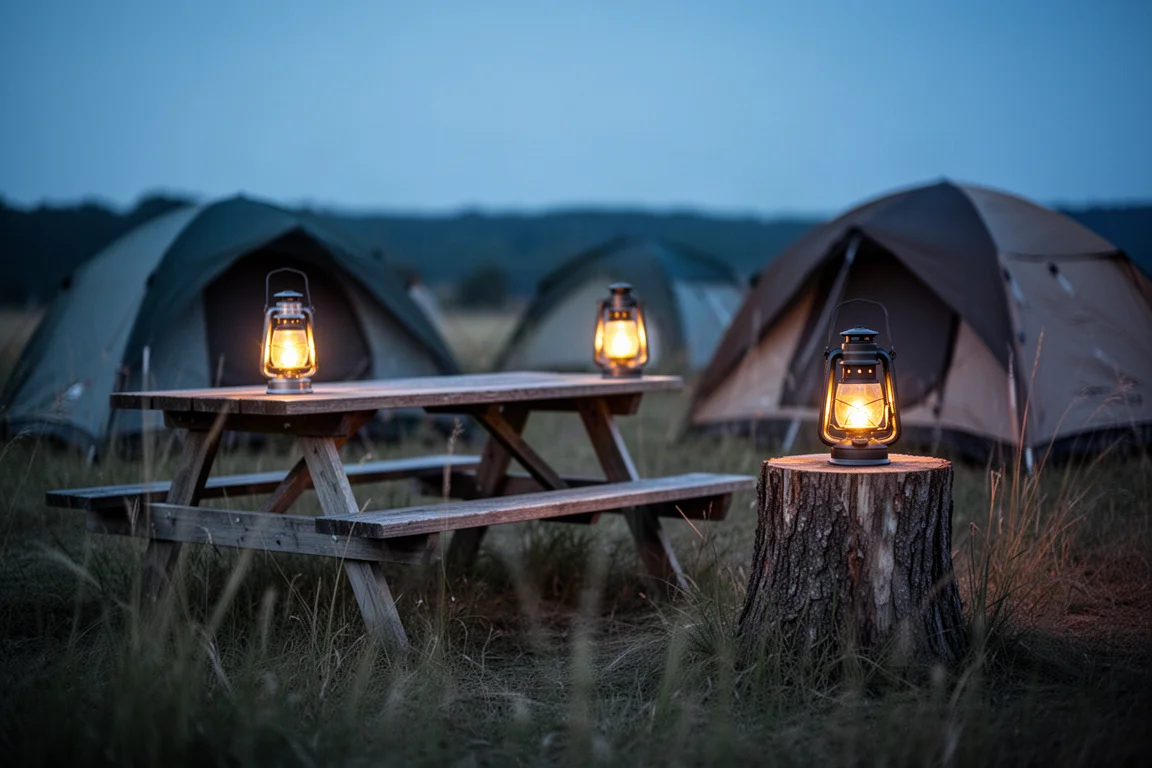
Capacity and output scale up too. The battery holds 4,000 mAh, double the Max, and charged an iPhone 12 to 82 percent. Maximum brightness is 360 lumens against the Max’s 196. The dimmest setting drops to just one lumen, and that is where the Titan pulls ahead dramatically: the published figure is 100 hours, and the measured runtime was around 250 hours, against 39 hours for the Max on its 21 lumen low setting.
The Titan also covers a larger area, with a published 211 square feet, enough for a small campsite rather than a single tent. It charges in about 30 percent more time despite double the battery capacity, and its solar panel is two thirds larger, so a day in the sun returns more charge. The body is puncture resistant, so small holes do not stop it inflating, and the flashing mode includes an SOS Morse code pattern. The hand strap uses Velcro rather than a plastic snap. The trade-offs are weight and price: the Titan is about 50 percent heavier and roughly 60 percent more expensive.
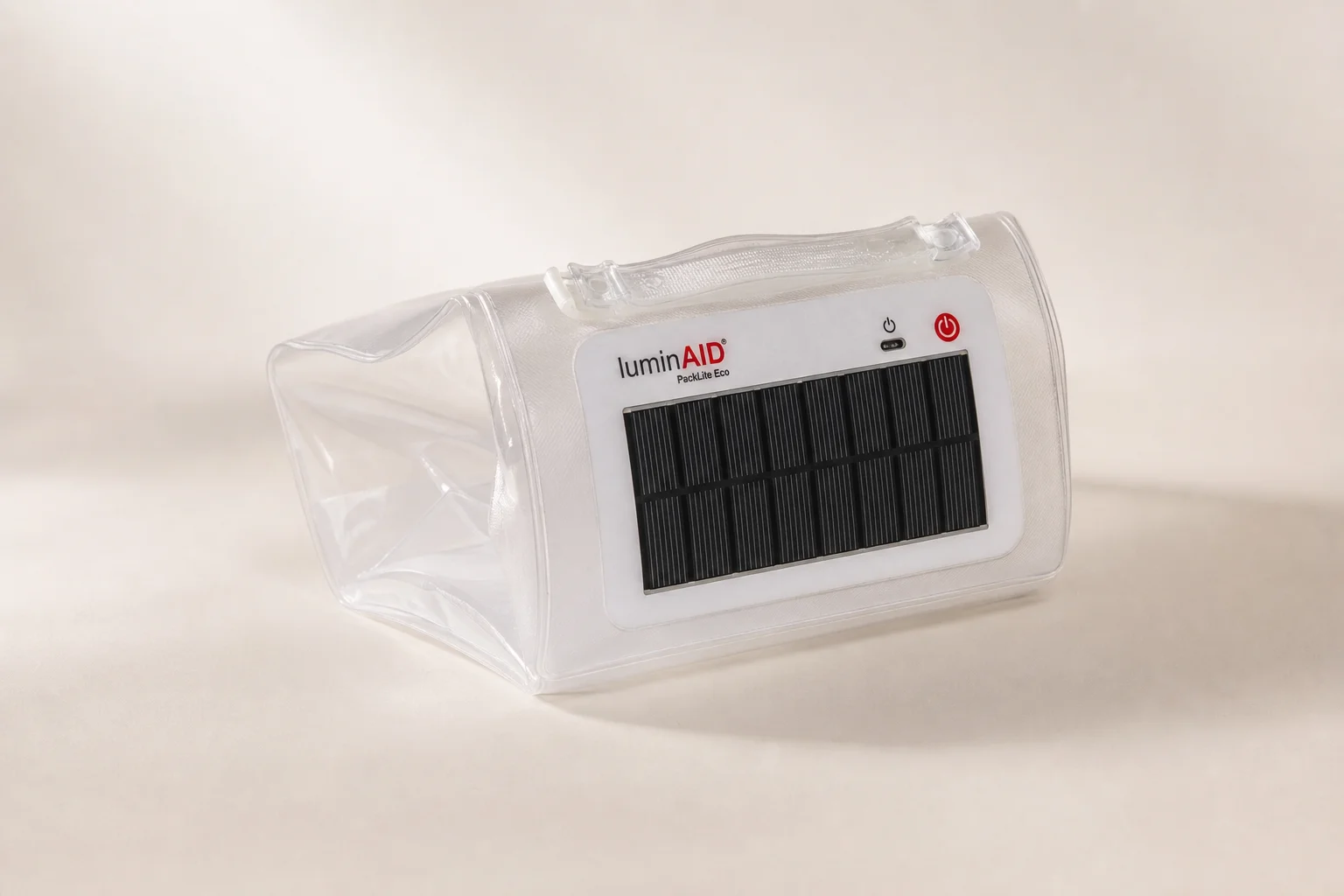
PackLite Max vs PackLite Titan: Where the Differences Matter
Set side by side, the two lanterns split along a few clear lines.
Inflation: the Titan fills by twisting in two to three seconds, while the Max needs breath inflation and takes 10 to 15 seconds, leaving moisture inside.
Modes: five white modes on the Max, five white plus five red on the Titan, and neither has a memory setting.
Output and runtime: 196 lumens and 39 measured hours on low for the Max, against 360 lumens and roughly 250 measured hours on the Titan’s one lumen dim setting.
Lighting area: about 144 measured square feet for the Max, against a published 211 square feet for the Titan.
Charging: the Titan takes about 30 percent longer to charge from a battery twice the size, and its solar panel is two thirds bigger.
Durability: the Titan is puncture resistant, the Max is not. Both are built for wet conditions, and the Max’s IP67 rating held up in both rain and submersion testing.
The practical read is that the Max covers a narrower range, from 21 to 196 lumens, so its dimmest mode is still fairly bright for a night light. The Titan spans 1 to 360 lumens, which is what makes its long runtime possible. Against that, the Titan is about 50 percent heavier and roughly 60 percent more expensive, and those two numbers are the only reasons to hesitate.
Buying Advice: Which Lantern Suits Your Camp
Choose the PackLite Max if weight, pack size, and price matter most. At 7.7 ounces and about an inch thick when deflated, it disappears into a pack, and it lights a full ten-person tent on turbo. It is a strong fit for tent camping, emergency kits, and anyone who wants a compact light with a small power bank attached. The compromises are real, though: breath inflation, a 2,000 mAh battery that will not fully charge a modern phone, an inconsistent battery indicator, and a low mode that is useful but not dim enough to run for days.
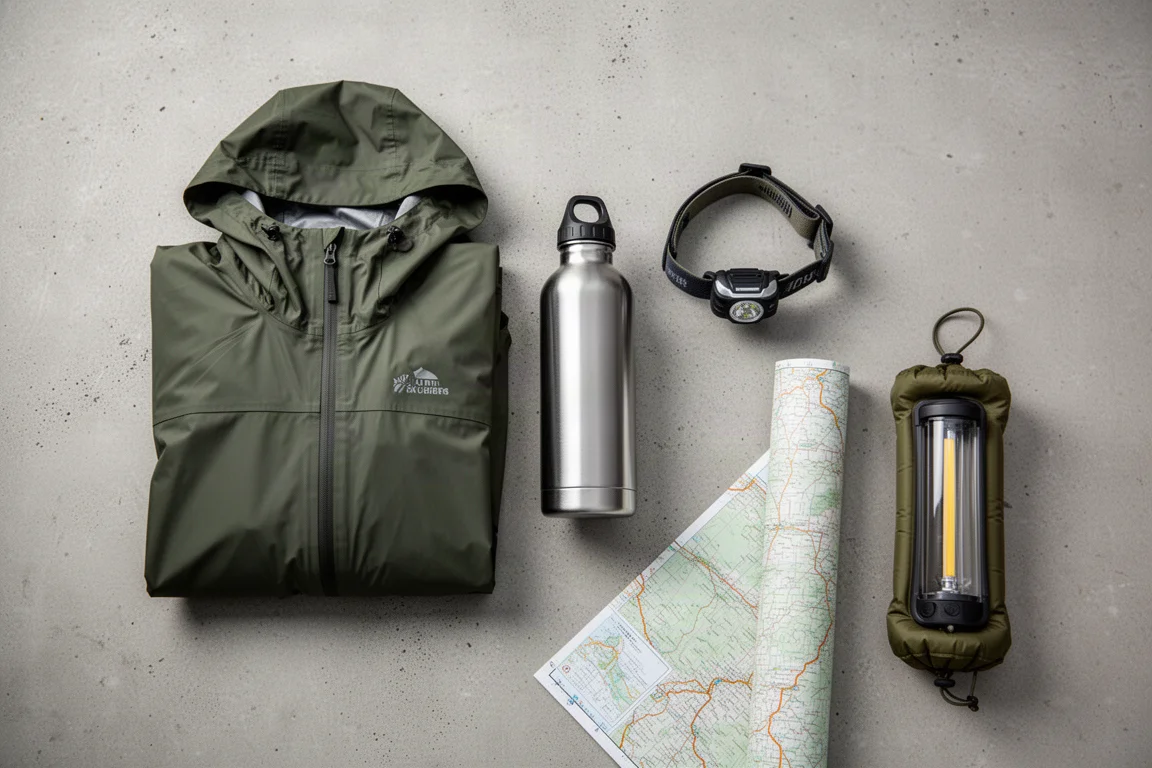
Choose the PackLite Titan if you want the stronger performer and do not mind carrying more. It inflates without breath, offers red light for night-time use, roughly doubles the brightness and the battery capacity, covers a larger area, and runs for an extraordinary length of time on its dimmest setting. The weight penalty is about 50 percent, and the price is roughly 60 percent higher than the Max.
If neither weight nor price is a deciding factor, the Titan is the more capable lantern on nearly every measure. The Max remains the better pick when every ounce and every dollar counts, and it is still a capable tent light in its own right.
Conclusion
The PackLite Max and PackLite Titan share a design philosophy: an inflatable body that packs flat, survives rain and drops, and charges from either a cable or the sun. The Titan is the stronger performer, with double the modes, double the battery, far longer runtime at its dimmest setting, and a puncture resistant body, at the cost of about 50 percent more weight and roughly 60 percent more money. The Max keeps the essentials in a lighter, cheaper package, and its measured light output is honest about what it delivers. Match the lantern to how you camp, and either one will earn its place in the kit.
Further reading
Related Reviews
Camping Lanterns
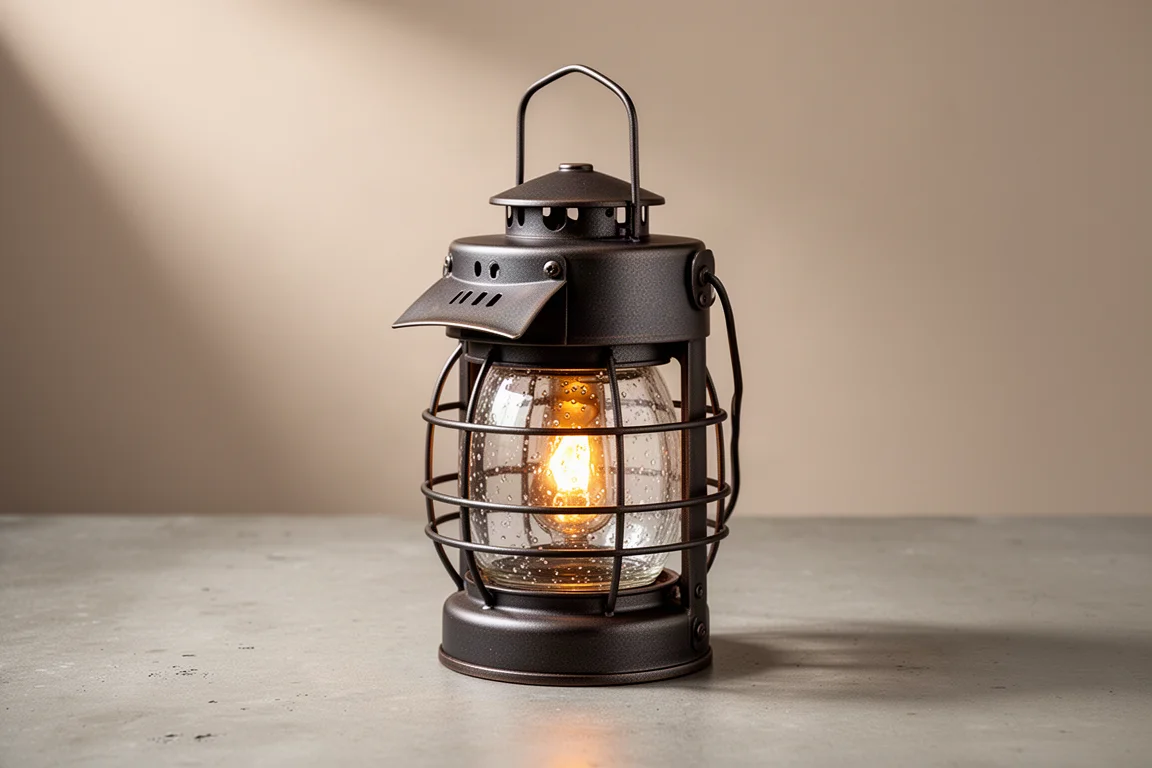
Barebones Railroad Lantern Review: A Vintage-Style Lantern That Beats Its Own Specs
A detailed look at the Barebones Railroad Lantern, covering measured brightness and runtime, charging behavior, weather resistance, and what to know before buying.
Camping Lanterns
Best Rechargeable LED Camping Lanterns 2026: 12 Lanterns Compared
Twelve rechargeable LED camping lanterns measured for brightness, run time, features, ease of use, durability, and portability, with clear picks for every kind of camper.
Camping Lanterns
BioLite AlpenGlow 500 Review: A Versatile Rechargeable Camping Lantern
A rechargeable camping lantern with thirteen lighting modes, a 6,400 mAh power bank, and long measured runtimes, plus the warranty and safety trade-offs worth weighing first.