Cycling
Lotus 110 vs Modern Aero and TT Bikes: What a Wind Tunnel Actually Shows
A controlled wind tunnel comparison of the Lotus 110, the Orbea Orca Aero, and the Canyon Speedmax at 45 km/h and 55 km/h, with rider-on and bike-only data.
Introduction
Aerodynamic claims are easy to make and hard to check. A controlled wind tunnel session can cut through the noise, because it removes traffic, wind gusts, road surface, and rider behaviour from the equation and leaves only drag.
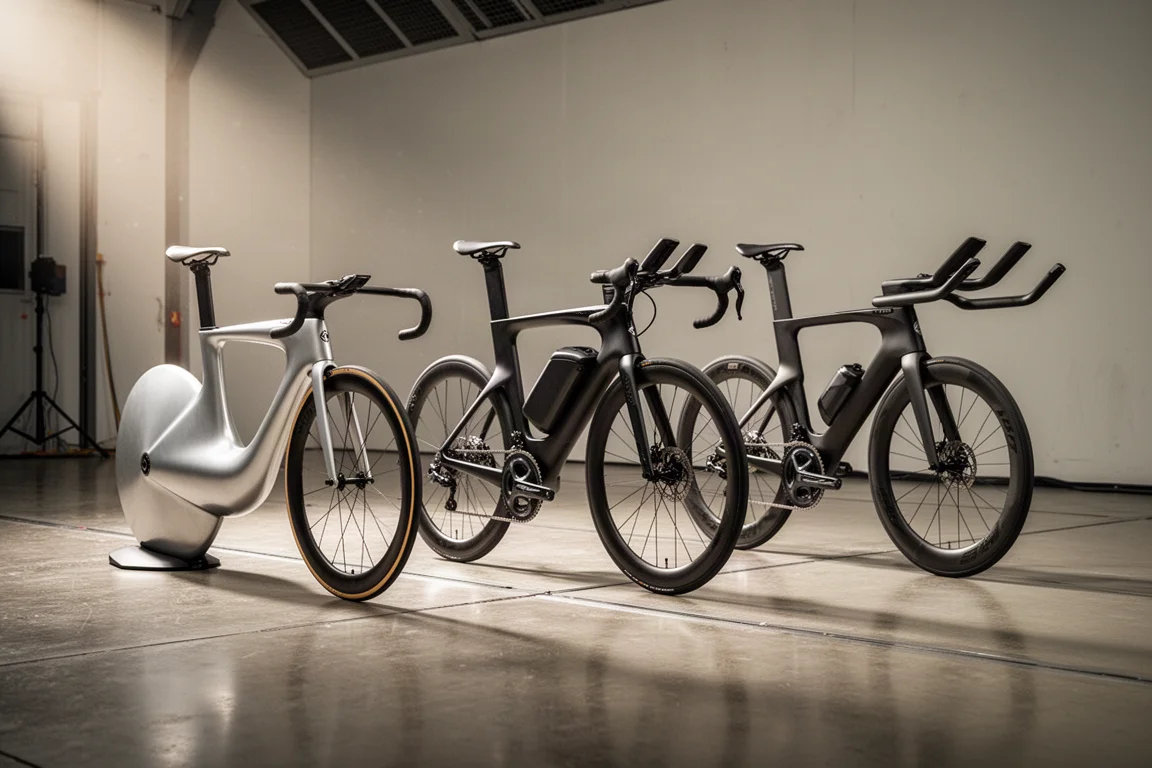
That is exactly what happened here: a nearly thirty-year-old Lotus 110 was run head to head against a modern Orbea Orca Aero road bike and a current Canyon Speedmax time trial bike, first with no rider aboard, then with a rider in a representative position for each machine. Every run was repeated at 45 km/h and at 55 km/h, with a yaw sweep as well so the results reflect the slightly off-axis airflow riders actually meet on the road.
The results are more interesting than a simple ranking, because the picture changes depending on whether you are measuring frames or people.
How We Tested These Bikes
The session began with bike-only runs, which serve two purposes: they compare the frames with nothing else in the way, and they confirm the tunnel is behaving consistently before a rider is added to the picture.
Two speeds were used. 45 km/h is a standard time trial reference speed, and 55 km/h matches the average speed of Boardman’s record Tour de France time trial, a useful upper bound for what the fastest riders can sustain. Each bike was also swept through a range of yaw angles rather than tested head-on only, because aero performance in still air and aero performance in the real world are not the same thing.
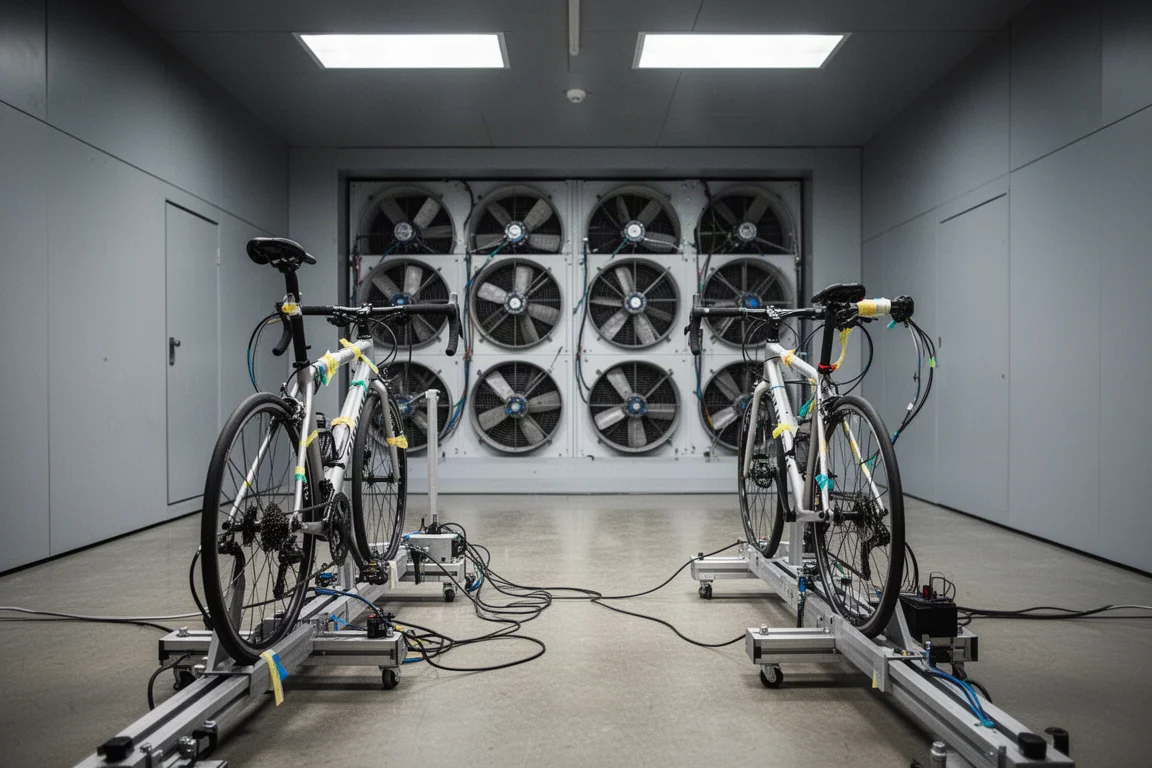
One important limitation applies throughout. The tunnel measures aerodynamic drag only. It does not measure rolling resistance, which matters a great deal here because the Lotus 110 runs on older tubular tyres that are considerably slower than the modern rubber fitted to the Orbea Orca Aero. Everything below is a pure drag comparison.
Lotus 110: A Nearly Thirty-Year-Old Benchmark
The headline bike-only number is startling. At 45 km/h, across the yaw sweep, the Lotus 110 was only half a watt away from the modern Orbea Orca Aero road bike. Half a watt is effectively nothing.
The reason is visible on the bike. The Lotus frame itself is remarkably clean, with very little frontal area and a smooth profile, so there is not much for the air to catch on the main structure.
Where it gives ground is the front end. Cables are exposed, the base bars are round rather than airfoil shaped, and the machine is best understood as a retrofitted design: a track bike adapted for road time trialling with brakes and gears added, which compromises the original shape. Swap in a modern aero bar and the picture would change quickly.
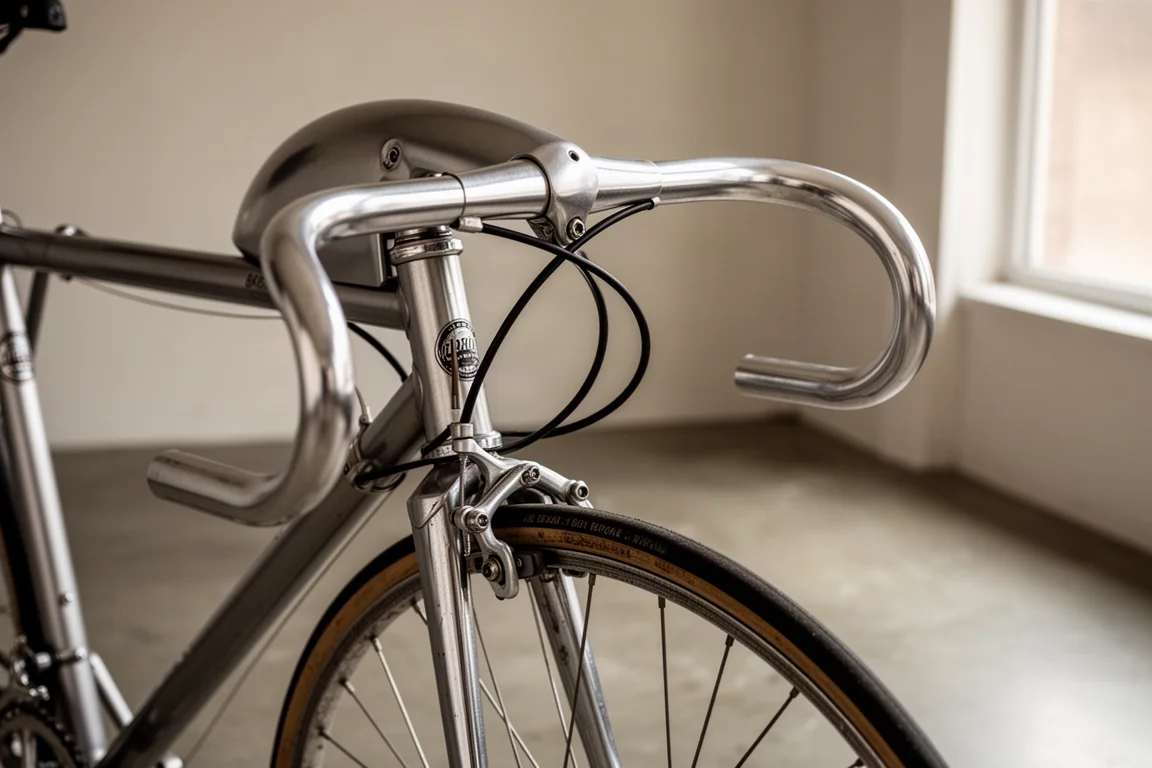
To be clear about what this bike is: it is a compromise by design, and the aerodynamic penalty it carries is concentrated in the cockpit rather than the frame.
Orbea Orca Aero: The Modern Road Baseline
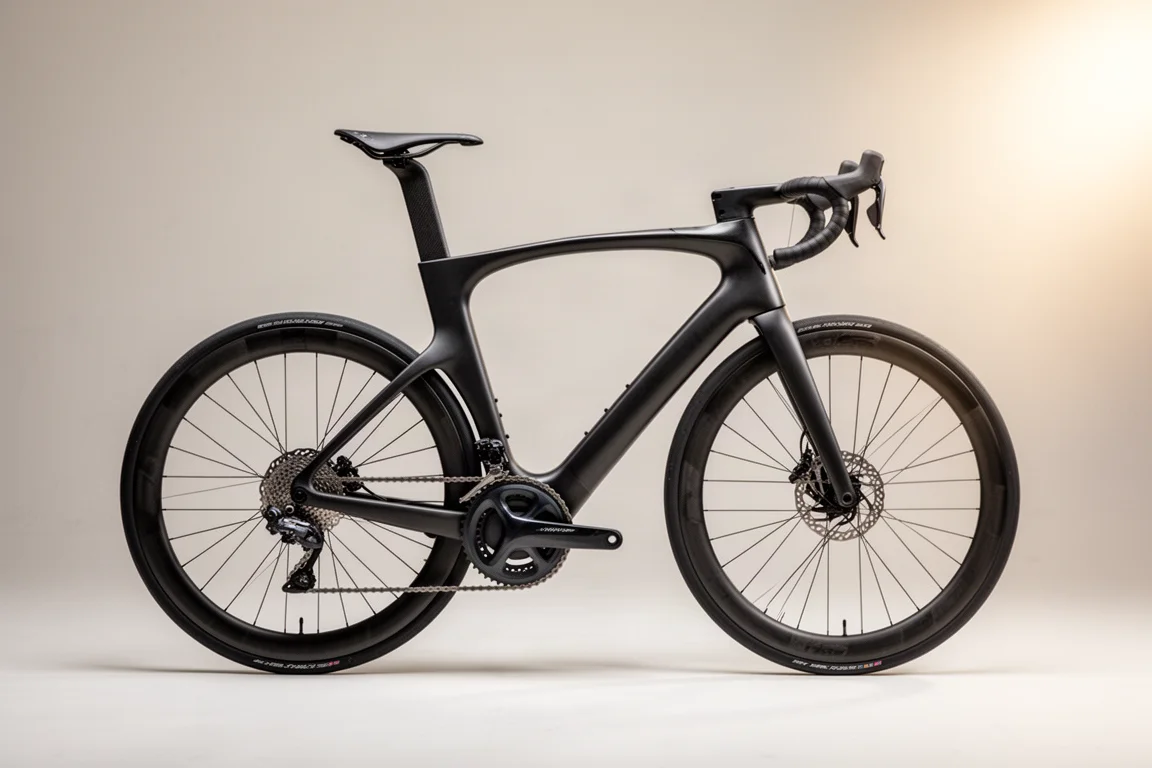
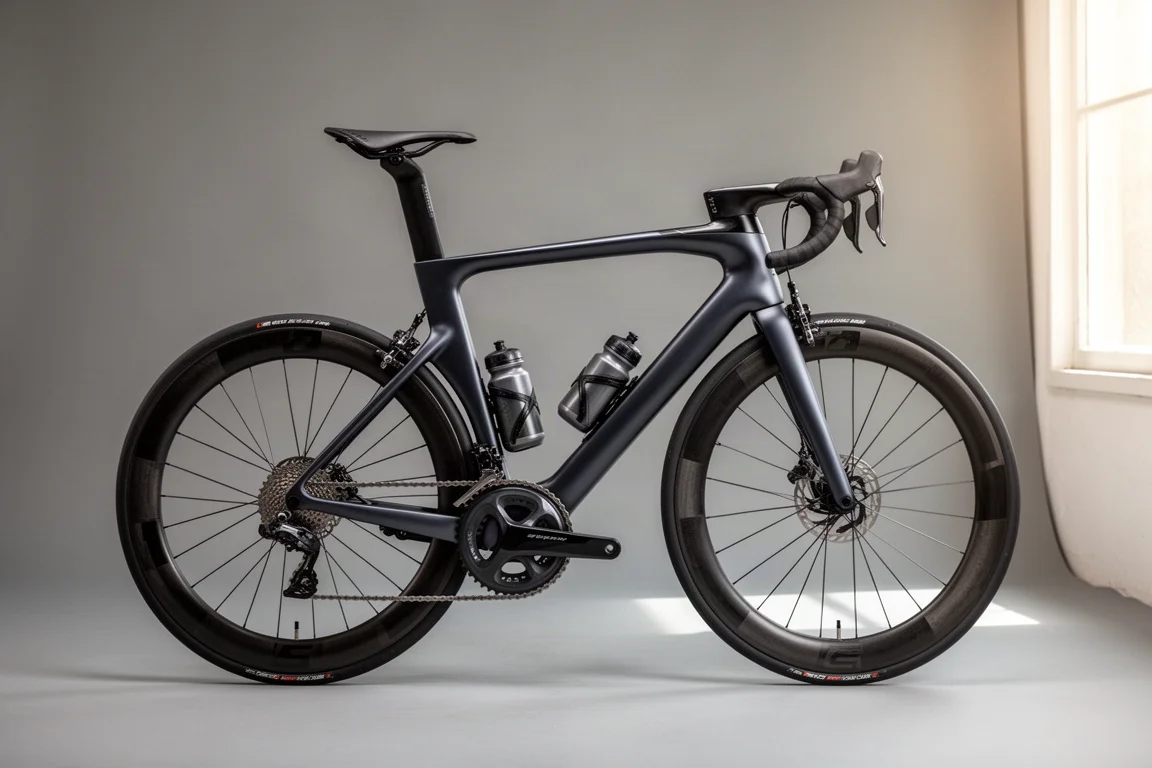
The Orbea Orca Aero is the reference point for what a fast modern road bike can do. It is very tidy aerodynamically, with integrated storage and fairing details that help it along, and almost nothing on the frame is left to catch the wind.
Bike only, it was essentially level with the Lotus, which is a compliment to both machines rather than a criticism of either.
Once a rider was added, the road bike’s disadvantage became obvious. With the rider in an aero hoods position, the Lotus and its retro aero position was 16.3 watts better at 45 km/h. Compared with the Canyon Speedmax in a modern time trial position, the road bike was 41.6 watts down at the same speed. At 55 km/h, the Canyon’s advantage over the road bike grew to 69.8 watts, which is worth one to two minutes over a ten mile time trial.
The gap is not a failing of the bike. It reflects the position it puts a rider in, and the fact that hoods simply do not offer the frontal area reduction that aero bars do.
Canyon Speedmax: The Modern Time Trial Benchmark
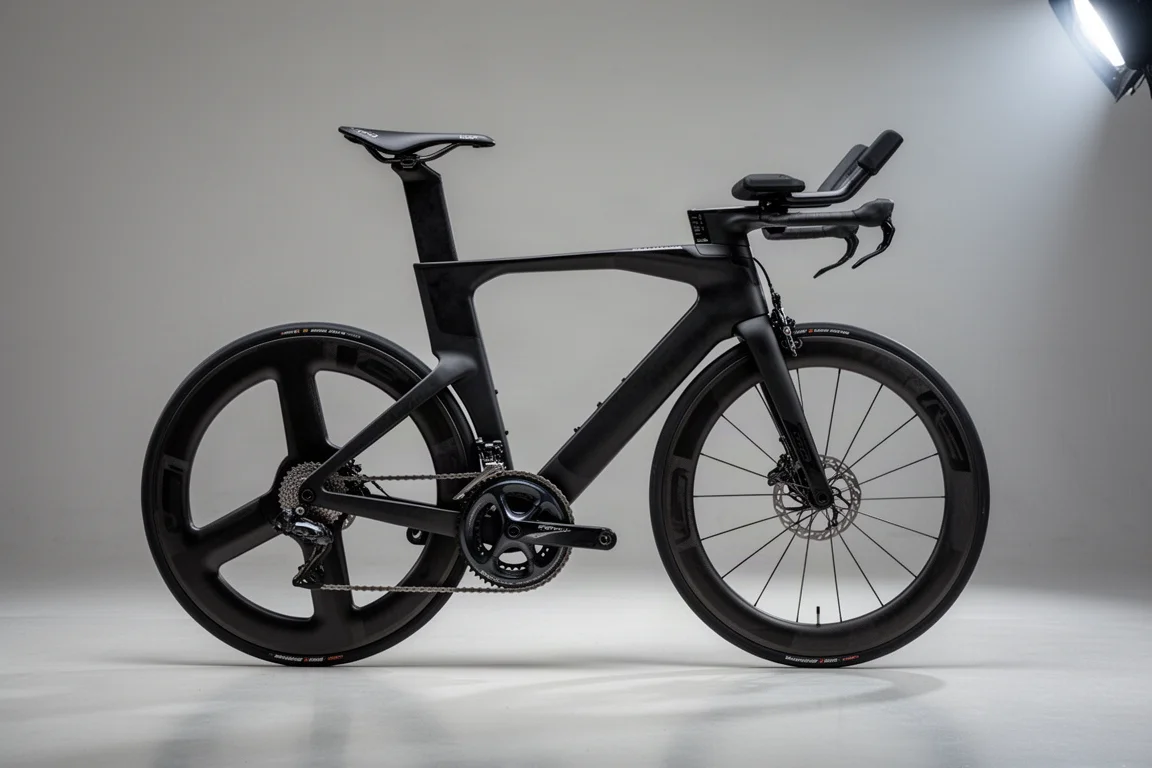
The Canyon Speedmax carries a reputation as one of the fastest time trial bikes available, and the numbers back it up. It is also UCI legal, unlike the Lotus.
Bike only, the Speedmax was 3.4 watts quicker than the Lotus 110 at 45 km/h across the yaw sweep, and roughly four watts quicker than the Orbea road bike. That is a small margin, and an understandable one: aero extensions add frontal area when nobody is sitting on them, so a time trial bike is not automatically faster with no rider aboard.
With a rider in position, it is a different story. On top of the 16.3 watts the Lotus already had over the road bike, the Speedmax added a further 25.3 watts of advantage over the Lotus at 45 km/h, giving 41.6 watts over the road bike in total. At 55 km/h the gap between the Speedmax and the Orbea reached 69.8 watts.
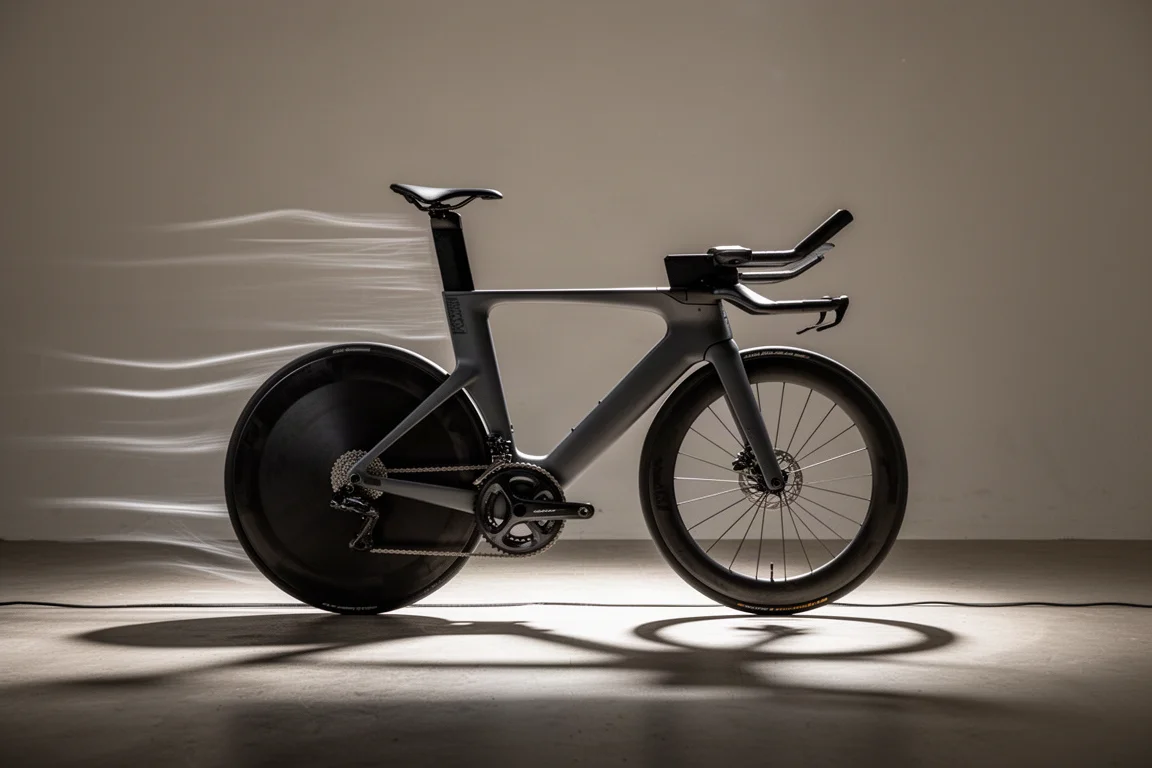
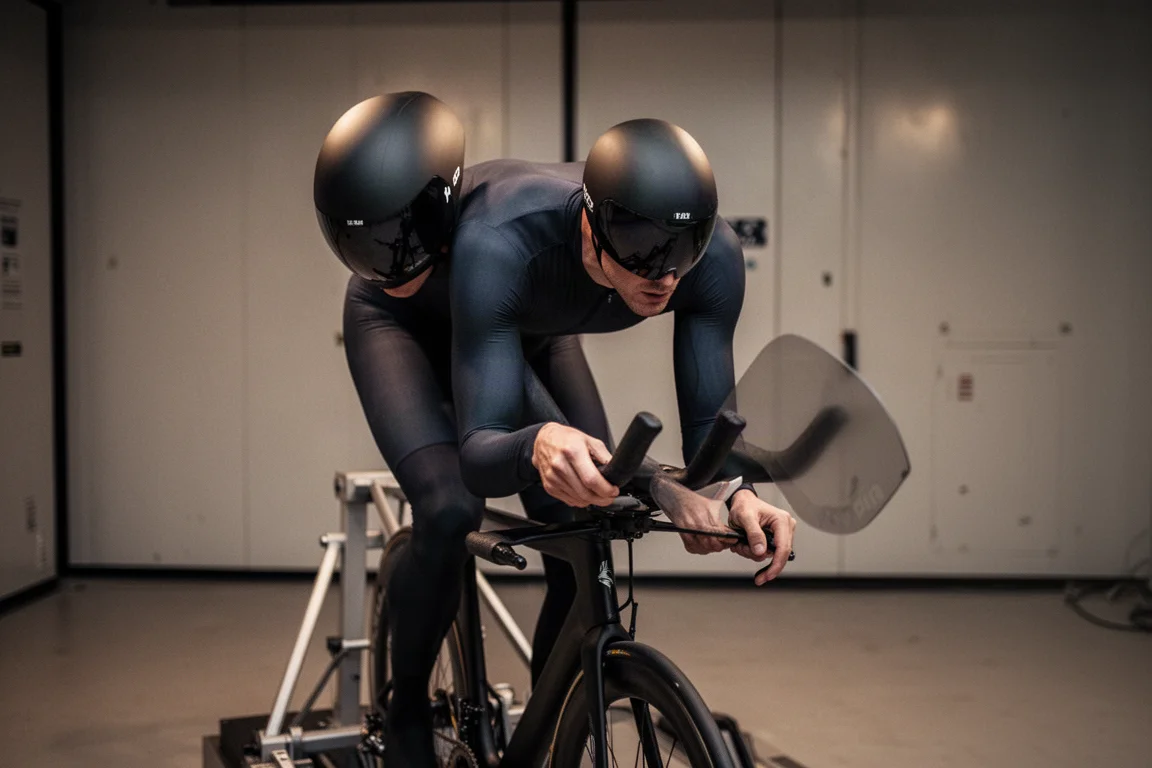
Those bars exist to do exactly one job: narrow the rider, and rider position dominates once a person is on the bike. This is the clearest demonstration of that principle in the whole test.
What the Numbers Mean and How to Choose
There is one significant caveat that sits on top of every number above, and it concerns sustainability of position rather than raw drag.
The modern time trial position used on the Speedmax is one a rider can hold for a long ride. The 1990s-style position the Lotus encourages is very low at the front and heavily stretched, and holding it is genuinely hard work. Outside the tunnel, that difference would widen the gap between the two machines considerably, because power output drops when a position cannot be maintained. The wind tunnel numbers capture aerodynamics alone, not the power a rider can actually deliver.
The second caveat is rolling resistance. The Lotus 110 runs on older tubular tyres that are slower than the tyres on the modern road bike, and that penalty did not appear in these results at all. Add it back in and the real-world picture shifts further in favour of the newer machines.
So how should a buyer read this? If the appeal of the Lotus 110 is the history, the engineering story, or the simple fact that a nearly thirty-year-old frame can still match a modern aero road bike with no rider aboard, that appeal is entirely justified by the data. If the goal is the fastest possible time trial performance with a rider on board, the modern frame, the modern cockpit, and above all the modern position are worth far more than any single component. The Speedmax sits at the top of this particular pile, the Orca Aero is a highly competent road bike whose limits appear only when compared against dedicated time trial machinery, and the Lotus remains a remarkable piece of design that is held back by the era it was built in.
Conclusion
The frame-only results are close enough to be genuinely surprising: half a watt separated a nearly thirty-year-old Lotus 110 from a modern aero road bike. Once a rider is added, the order becomes predictable again. Position and cockpit design decide the outcome, and the Canyon Speedmax ends up 69.8 watts ahead of the road bike at 55 km/h in this test.
Choose based on what you are actually buying. A modern time trial bike buys you speed in a position you can hold. A modern aero road bike buys you that same frame efficiency in a machine you can ride anywhere, at the cost of roughly 40 watts in a time trial context. The Lotus buys you history, and rather better aerodynamics than its age suggests.
Further reading
Related Reviews
Cycling
2026 Bike of the Year and the Cycling Gear Worth Watching
A drop bar roundup for 2026 covering the Ridley Kanzo Fast 2.0, Shimano Dura-Ace Di2 R9300, Trek Checkpoint ALR Gen 3, Specialized Tarmac SL9, Garmin Fenix 9 and Insta360 X6.

Cycling
Best All-Road Bikes 2026: Six Versatile Endurance Road Bikes Worth Considering
A practical look at six all-road and endurance road bikes, from lightweight carbon speed machines to steel all-rounders and comfort-focused mile eaters.
Cycling
Best All-Road Bikes 2026: 8 Endurance Bikes for Road and Light Gravel
Eight all-road bikes that blur the line between endurance road and light gravel, compared on tire clearance, ride character, practicality, and value.