Ultralight Shelters
Liteway Equipment PyraOmm Tarp and Half Mesh Inner Review: A Sub-750g Four-Season Shelter
A close look at the Liteway Equipment PyraOmm tarp and half mesh inner: how this two-piece pyramid shelter pitches, where it performs, and the compromises worth weighing before buying.
Introduction
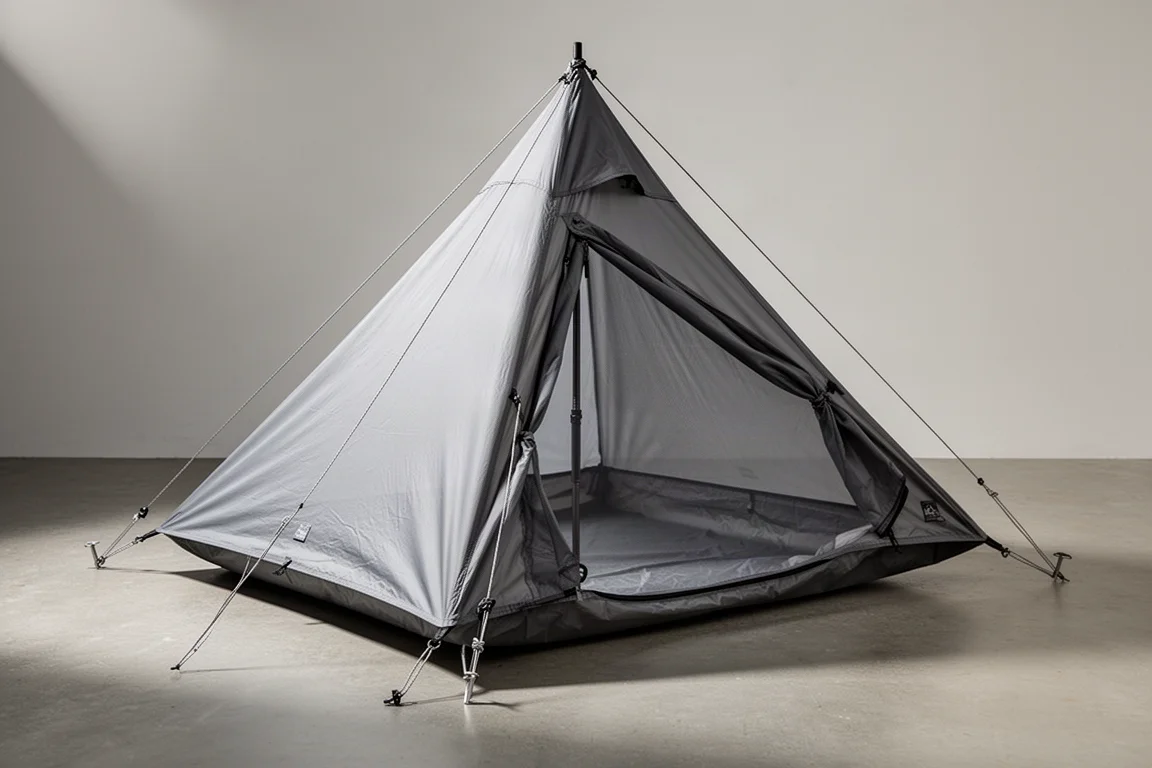
Ultralight shelter design is largely a process of subtraction, and the Liteway Equipment PyraOmm system pushes that idea about as far as it can reasonably go. The kit pairs a pyramid tarp with a clip-in mesh inner, and the two pieces together weigh less than 750 grams. That figure is worth pausing on: it covers a shelter that can be pitched in four seasons and in genuinely demanding weather, not just a summer bivy for fair skies.
Liteway Equipment is based in Ukraine, and its shelters are used in the Carpathian mountains in conditions that test fabric, stitching and tensioning properly. The design language follows from that: a low, taut pyramid with no poles of its own, a stripped-back interior, and hardware chosen for weight rather than convenience.
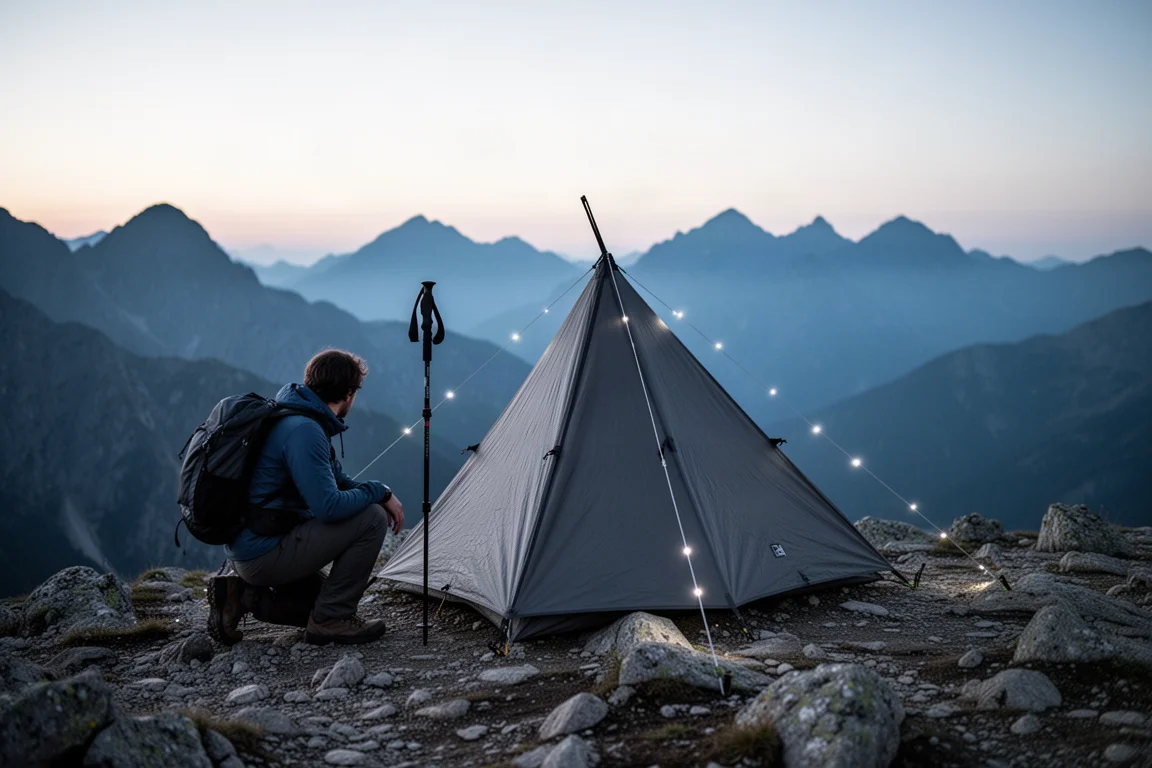
This article looks at both halves of the system, the PyraOmm tarp and the half mesh inner that clips inside it. Both were used across a 30-day thru-hike on the GR11 through the Pyrenees, in a mix of alpine, coastal and wet mountain weather, which is a fair test of how the design behaves away from a showroom floor.
How the PyraOmm System Sets Up
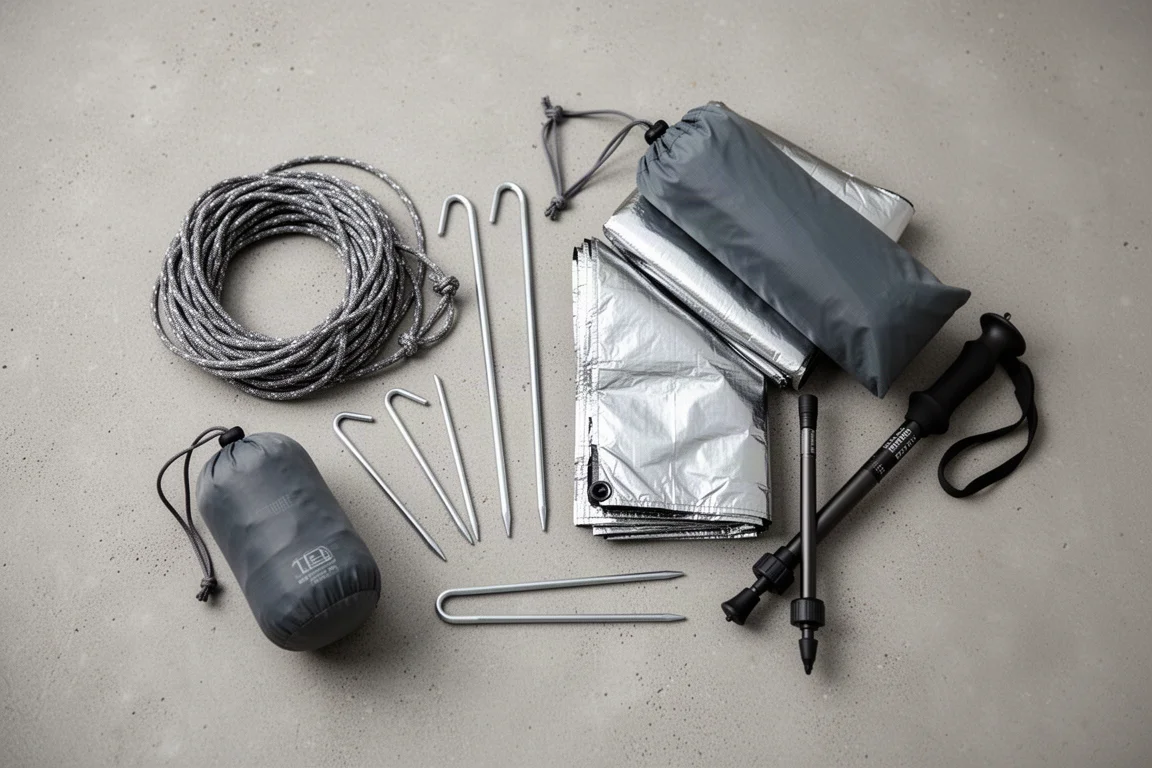
The PyraOmm has no dedicated poles. It pitches on a trekking pole, or on a suitable tree branch if one happens to be in the right place, which is the single biggest reason the whole system stays under 750 grams. Six stakes is the practical minimum: four corners plus the main entrance, with the remaining attachment points used to tune the pitch.
Tensioning is handled by a simple paracord-and-plastic-tensioner arrangement that grips back on itself, so lines can be tightened by hand without knots or extra hardware. The tarp goes up first, then the mesh inner clips into place. Ten reflective guy lines are supplied, along with line lock clips on the extra tabs around the perimeter, which are useful on uneven ground where one wall needs to be pulled out further than the others.
The PyraOmm Tarp: The Shelter Shell
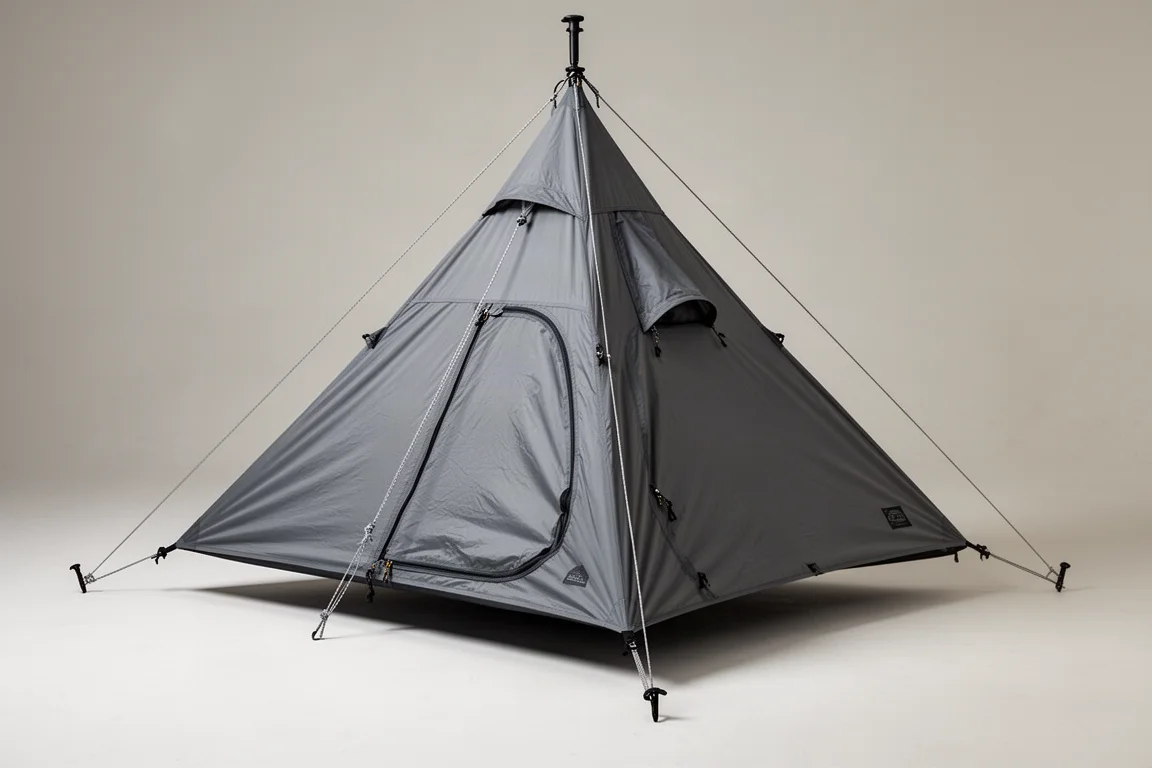
The tarp is the core of the system. It is a two-door pyramid with a 4 square metre footprint, measuring roughly 164 cm by 272 cm with a peak height of about 130 cm, which is comfortable for a taller solo hiker. The fabric is a 20 denier ripstop silpoly rated to 2,000 mm, with a silicone PU coating on both faces: waterproof, but not breathable in the way a membrane is. The two entrances use YKK zips with an AquaGuard finish on the outside, and there is one closable vent on each side, held shut with a Velcro tab.
The grey colourway is the one to consider if staying inconspicuous matters, since it blends into alpine terrain well. The range is offered in more than one size, so interior volume can be traded against weight in either direction.
The PyraOmm Half Mesh Inner: Interior Layer
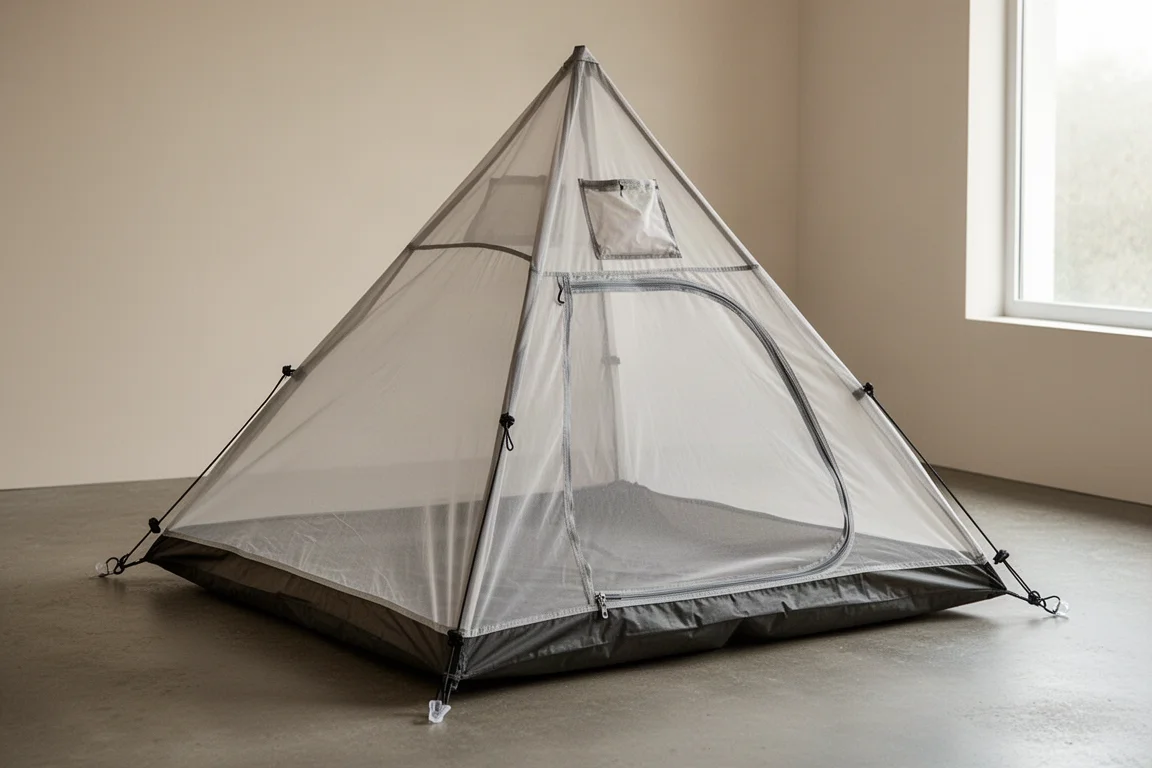
The half mesh inner is what turns the tarp into a liveable shelter. It attaches with bungee cords and small plastic clips at four corners, plus a fifth clip at the apex that connects underneath the trekking pole, where an HDPE gridstop panel protects the top of the fabric. It has a single door, so it has to be oriented to line up with whichever door you intend to use on the tarp.
Inside, the mesh meets a bathtub floor with roughly 8 to 10 cm of raised edge, which keeps sleeping bags and loose kit away from ground moisture. A small mesh pocket near the apex holds a headlamp, phone or other small items. Because the inner covers a little over half of the floor, the remainder stays free as vestibule space for a stove, dirty kit and boots. A full mesh version is also offered for those who want the entire interior enclosed.
Space, Doors, and Ventilation
For a shelter this light, the usable space is generous. The 4 square metre footprint accommodates a solo hiker with room to organise gear, and the two doors on the tarp give good cross ventilation and a choice of exit depending on wind direction. The vents on each side can be left open in rain without trouble, and closed when the weather turns.
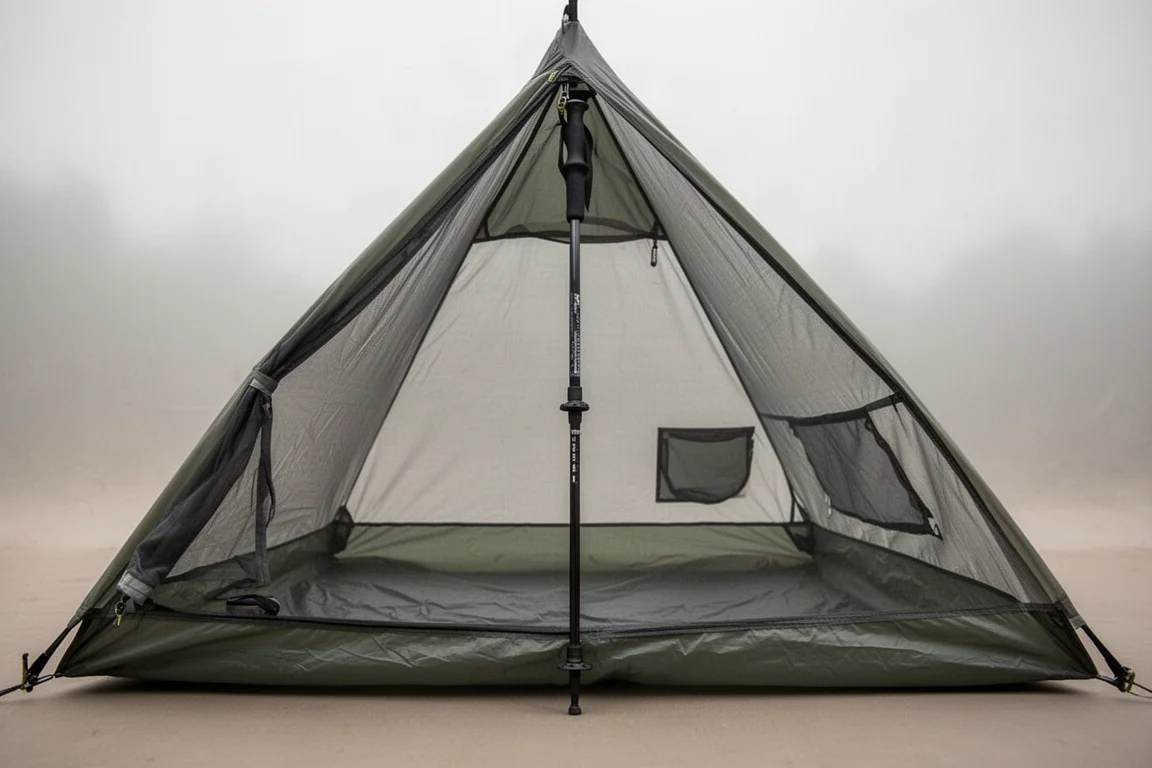
Two details matter more than the headline numbers. The first is pole length: a 129 cm trekking pole did not quite reach the height the shelter is capable of, and adding 5 to 8 cm under the tip, with a rock or a stuff sack, made a noticeable difference to headroom. If your poles are short, plan for that. The second is the trekking pole standing through the middle of the interior, which is the main compromise of the design. Pitching on two poles to either side was possible but awkward in practice, and the company has since released an adapter that moves the pole support off to one side for anyone who wants the floor clear.
Condensation and Single-Wall Living
Single-wall shelters behave differently from double-wall tents, and the honest expectation here is more condensation. In practice it was never a problem for one person, but two occupants brushing against the walls will notice it more. One night was spent in the shelter with a second person: it was very cosy rather than roomy, and the half mesh leaves correspondingly less vestibule space for two people’s kit.
The trade-off is worth understanding before buying. Single-wall tarps of this type work best in cold, dry alpine environments, where condensation is limited and the weight saving is most valuable. In consistently wet regions, a double-wall tent generally copes better with moisture. This shelter stayed dry through rain, and it dries quickly once shaken out and left in the sun.
Weather Performance and Where It Works Best
The PyraOmm system is presented as a four-season shelter, and it holds up to that description. It has handled rain without leaking and stays stable in wind, and there is real confidence in using it in snow, with the sensible addition of a groundsheet underneath. For a thru-hike across mixed mountain terrain, the appeal is that one shelter covers coastal, alpine and wet-weather days without changing anything except how tightly it is pitched.
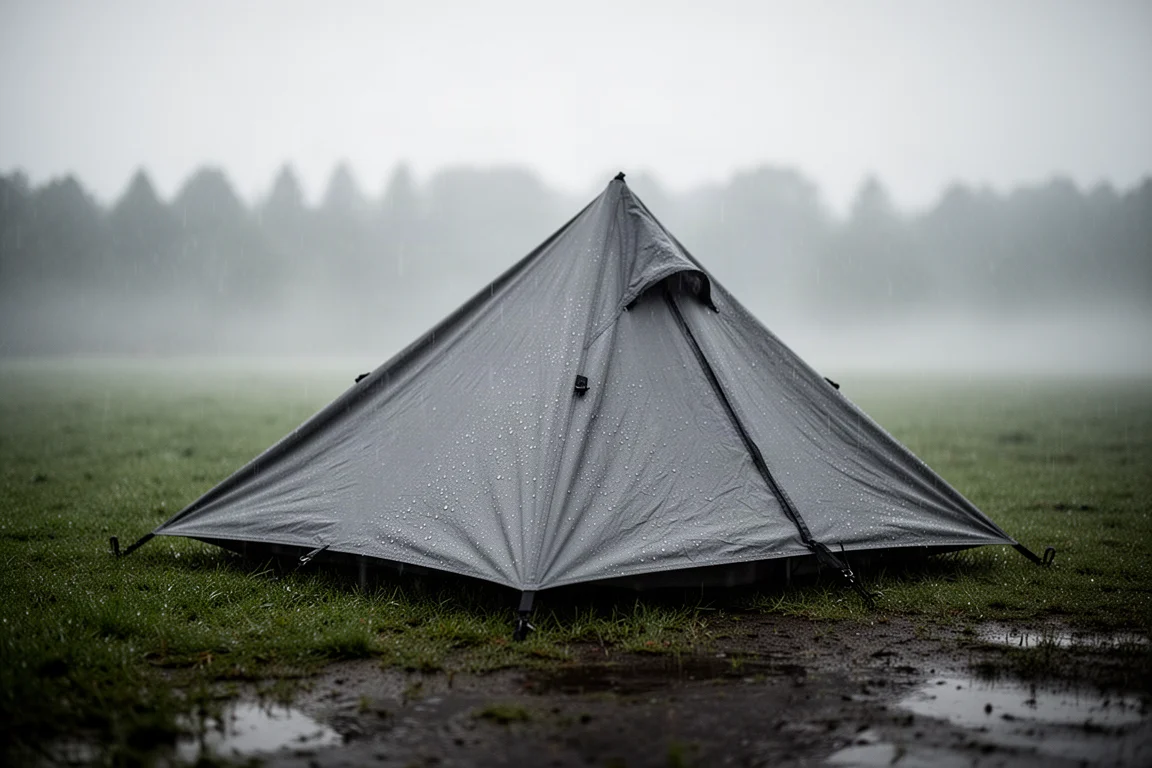
The environments that suit it least are the persistently damp ones. Where rain is the dominant condition for weeks at a time, the moisture management of a double-wall design is usually the better answer. Where weather is varied and weight matters, the PyraOmm is an easy shelter to live with.
Fabric, Zips, and Long-Term Care
The materials are chosen for weight first and durability second. The 20 denier silpoly is abrasion resistant to a point, but it is a fine fabric and rewards careful handling rather than being thrown around. It absorbs a small amount of moisture, mostly beading and running off, and dries within about ten minutes in the sun. The YKK AquaGuard zips have stayed watertight, and the reflective guy lines are a genuinely useful detail for finding the shelter in the dark.
The half mesh is very fine. It is light but also stronger than it looks, though a snagged zip did leave a couple of tiny holes. Those have not grown, but the lesson is to keep zips and mesh clear of each other. Underneath, a Tyvek groundsheet is the sensible addition: it protects the thin bathtub floor and adds a little separation from cold ground. An emergency blanket was used for the same purpose during a long thru-hike.
Overall Buying Advice
Buy the tarp and the inner together if you want a complete shelter under 750 grams. Buy the tarp alone if you already carry a bivy or prefer an open, airy pitch for dry summer trips, then add the half mesh inner later if you want bug protection and a floor without giving up vestibule space.
Two things are worth settling before ordering. Check your trekking pole length, because headroom depends on it, and decide whether you want the pole standing through the middle of the interior or the off-centre adapter instead.
On pricing, the system is positioned well for buyers in Europe, where imported alternatives from the United States are expensive to ship and bring in. If you are shopping from another region, compare the landed cost of your shortlist before committing. For anyone who wants a four-season shelter that carries like almost nothing, this is a well-resolved pair of products.
Conclusion
The PyraOmm tarp and half mesh inner make a coherent, carefully thought-out ultralight shelter. It pitches fast, carries almost nothing, and covers four seasons for a solo hiker who accepts the compromises of a single-wall pyramid: a pole through the middle, condensation in damp conditions, and a floor that benefits from a groundsheet. For the weight, the space and the weather it handles, that is a fair trade.
Further reading
Related Reviews
Backpacking Tents
Alps Mountaineering Helix 1 Review: A Modern, Roomier One-Person Tent
A close look at the Alps Mountaineering Helix 1, a modern 20D nylon one-person backpacking tent with a roomy interior, taped seams, and a 3 lb 3 oz packed weight.
Sun Hoodies
Appalachian Gear Company 80/20 Alpaca Wool Sun Hoodie Review: Five Days in the Desert
An alpaca wool sun hoodie worn for five days of desert hiking and camping, assessed for sun protection, drying speed, durability, comfort, and odor.
Camping Tents
Asta Gear Elite One-Person Tent Review: A Sub-3 lb Half-Dome Worth Watching
A compact half-dome solo shelter with a 15 denier silicone-treated ripstop shell, an included ground sheet, and a 2.9 lb packed weight.