Speaker Kits
Linkwitz LX Mini Review: A Kit Speaker With an Unusually Expansive Soundstage
An active, DSP-tuned kit loudspeaker that trades plug-and-play simplicity for a soundstage few box speakers can match, along with the bass and build trade-offs worth weighing first.
Introduction
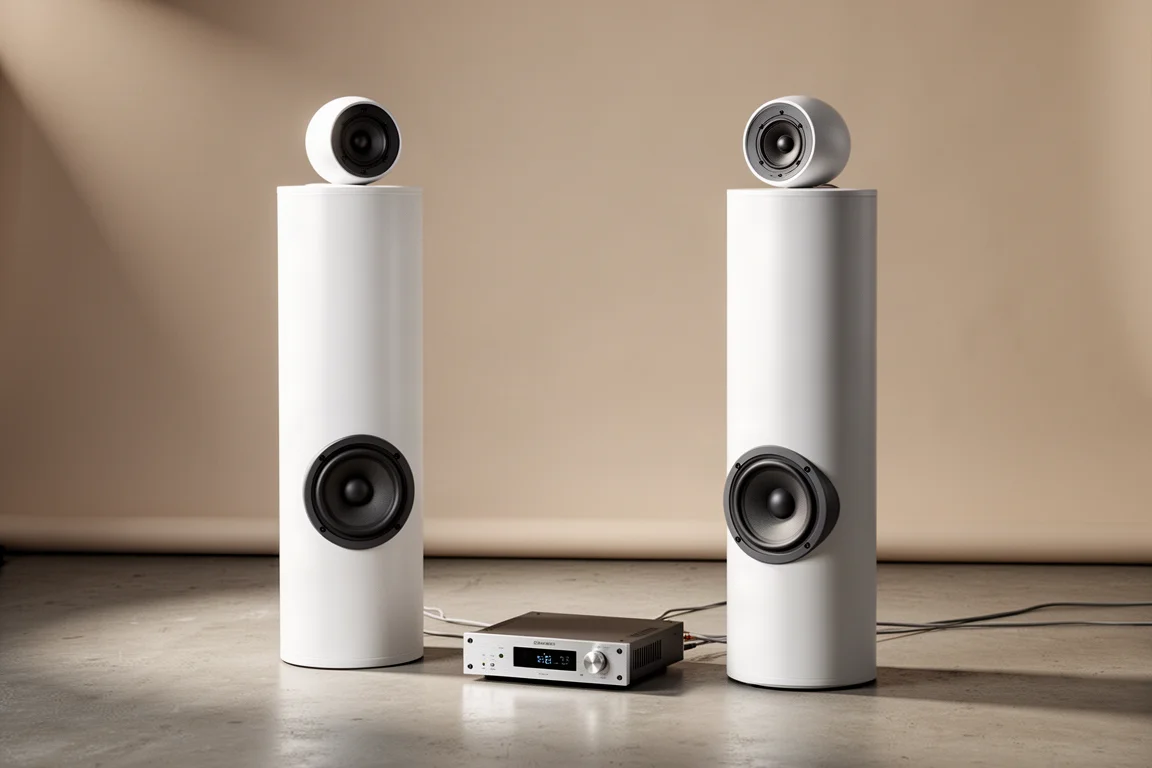
The Linkwitz LX Mini is a compact two-way loudspeaker sold in kit form, designed by Siegfried Linkwitz. It is an active design rather than a conventional passive one. There is no crossover network inside the cabinet. Instead, the crossover and equalisation are handled by a miniDSP 2x4 HD processor, which means a finished pair needs four channels of amplification, two for each speaker.
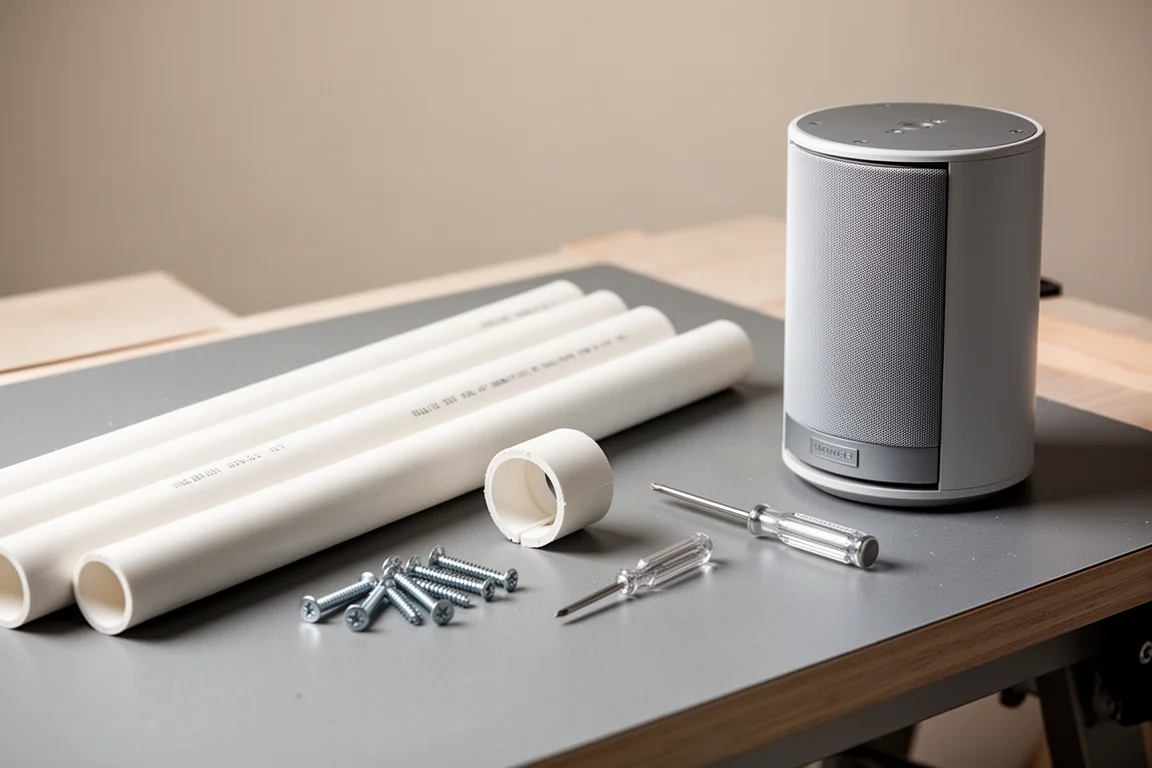
The kit arrives with four drivers: a 6-inch midwoofer and a 4-inch full-range unit for each cabinet. A PVC end cap and assorted hardware are included, and builders who want a simpler assembly can add a set of CNC-machined wood parts. Plans ship with the kit, and the configuration file for the processor is available for download so the crossover and equalisation settings can be loaded rather than built from scratch.
This is a project, not an unboxing. Expect roughly a full day of work if you are comfortable with tools, and a couple of days or more if you are not.
Who This Speaker Kit Is For
The LX Mini makes most sense for listeners who enjoy the building side of the hobby and who are comfortable working inside a digital signal processor. Because the crossover lives in software, tuning is part of ownership. Anyone who wants to plug in a finished pair and never open an app will find the workflow unfamiliar.
It also suits listeners who care more about spatial presentation than about flat-out accuracy out of the box. Tonality can be shaped with equalisation, and the default tuning may not match every taste. The design is aimed at people willing to spend an evening adjusting a few filters.
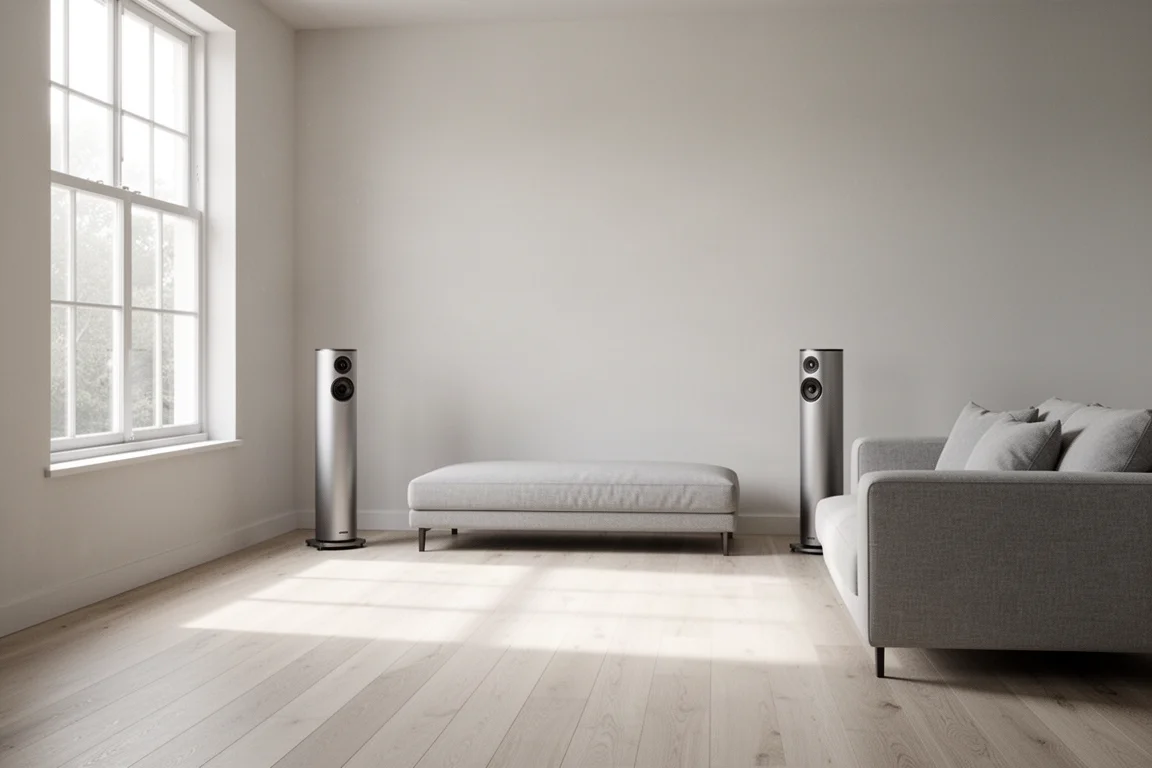
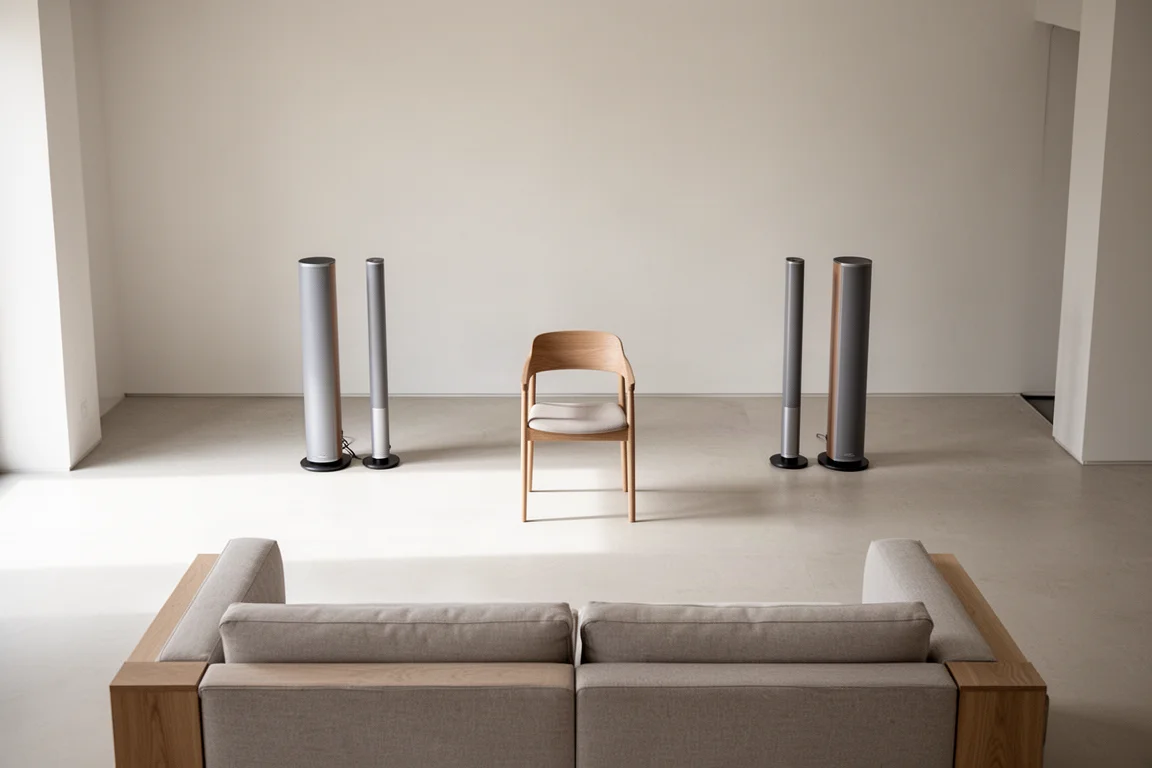
Finally, it is for rooms where the speakers can breathe. In practice the cabinets were set roughly three feet out from the wall in a large open-plan living room, and the seated ear height lined up naturally with the full-range driver even though the speaker stands only about 40 inches tall.
Main Strengths: A Soundstage That Escapes the Box
Most box loudspeakers present a soundstage with clear edges. Picture a bird’s-eye view of the cabinet and you can draw a rectangle around it: a defined width, a front boundary, a rear boundary. Good examples layer instruments neatly inside that rectangle.
The LX Mini does something different. It pushes that rectangle outward, but the edges become ambiguous. You know something is out to the side without being able to say precisely where it stops. Instead of a hard boundary, the presentation simply continues into the room. For listeners who dislike being told exactly where the stage ends, this is the central appeal of the design.
Imaging is good, though not pinpoint. Two useful reference points frame it. A highly diffuse design such as the Bose 901 Series 5 can throw an enormous stage, but instrument placement wanders and the centre image drifts. A waveguided horn at the other extreme produces narrow, tightly controlled dispersion and very precise placement. The LX Mini sits between those poles, and for many listeners that is the more enjoyable position.
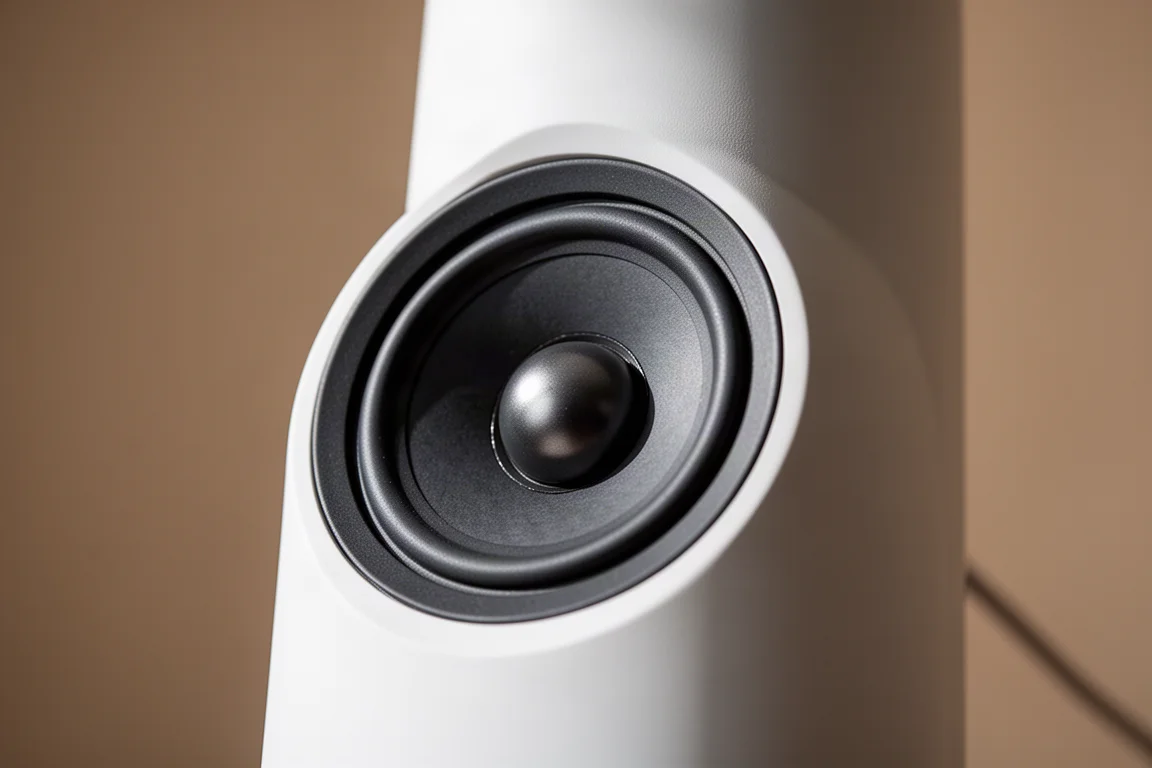
A large part of that behaviour comes from how well the 4-inch full-range driver holds its composure off axis. Most full-range units change character as they stop behaving pistonically, so the response at 30 degrees off axis can look nothing like the response on axis, which makes them impossible to equalise meaningfully. Here the on-axis and off-axis behaviour track closely enough that the speaker responds predictably to equalisation. That is what makes the DSP tuning practical rather than cosmetic.
Build, Drivers, and Assembly
The midwoofer section is a single 6-inch driver mounted in a 4-inch PVC tube. The tube is joined with a PVC pipe coupler and clamped in place with a hose clamp, while the upper section that carries the midrange is secured with silicone.
The full-range driver is mounted differently, and it is the more interesting detail. Screws pass through the PVC pipe, and wood blocks are bonded to the magnet of the driver. The driver’s frame is therefore not directly attached to the main assembly, which should in theory reduce structural resonance travelling through the basket and into the rest of the cabinet. The rear of that full-range enclosure is left open rather than sealed, so additional energy is radiated backwards into the room. That open back contributes to the spacious, dipole-like character of the presentation.
Bass, Dynamics, and Measured Behaviour
Low-frequency extension is respectable for a cabinet this size. In-room output reaches down to roughly 50 Hz, with an F3 of 50 Hz and an F10 of 33 Hz relative to the mean. What is missing is weight. Kick drums are reproduced rather than felt, and anything demanding real output below 50 Hz will want a subwoofer. The overall tonal signature leans warm, with occasional glare or grit in places that respond well to a few gentle filters.
Measured behaviour supports the tuning approach. On-axis response, the listening window, sound power and early reflections all track each other closely in amplitude, and the directivity index follows a broadly linear trend, with exceptions around 800 Hz and some high-frequency irregularities that may come from the driver itself or from radiation reflecting off the woofer cone below it. Nonlinearity begins around 2 kHz and above, which is where equalisation becomes most useful.
Horizontal radiation is wide below roughly 1.3 kHz and narrows above about 2.5 kHz, where the 4-inch full-range driver starts to beam. More energy goes forward and backward than to the sides, which is consistent with the open back. Harmonic distortion at 86 dB showed an anomaly around 1.5 kHz, entirely second order. It appeared on the second unit as well and survived checks of the assembly, cabling and driver mounting, including measurements taken outdoors clear of the ground. The impedance curve shows a blip in the same region, but no definitive cause was identified.
Compression testing behaved more like electronic limiting than mechanical compression, even though the processor’s limiter is bypassed in the default configuration. At high output levels bass output drops and the speaker feels less dynamic than it does at lower volumes. Multi-tone testing at around 96 dB at one metre showed distortion rising with level.
Equalisation is straightforward. The processor offers ten EQ slots per channel, and a few are already used by the stock configuration. A shelf filter around 550 Hz, adjustments around 2 kHz and 4 kHz, and changes to the stock bands near 10 kHz and 16 kHz produced a noticeably smoother result. What equalisation cannot change is directivity. The radiation pattern is fixed by the mechanical design, so tuning shapes tonality only.
Things to Consider Before Buying
The first consideration is commitment. This is a kit that requires assembly, four channels of amplification, and a working relationship with a digital signal processor. The build is achievable in a day for anyone comfortable with tools, but it is still a build.
The second is bass. Extension to about 50 Hz in room is useful for most pop and rock material, but a subwoofer is the realistic answer for deeper content and for genuine low-frequency impact.
The third is the default tuning. The stock configuration may not suit your room or your taste, and the design assumes you will adjust it. Listeners who prefer to leave settings untouched should factor that in.
Finally, dynamic range at high volumes is limited, and the second-order distortion anomaly around 1.5 kHz remains unexplained. It appeared on both units and persisted through repeated verification, so it should be treated as part of the design’s measured behaviour rather than a one-off fault.
Buying Advice
Go in with the right expectations. The LX Mini is best understood as a speaker you buy for its spatial presentation and for the freedom to shape tonality in DSP, not as an out-of-the-box reference monitor. Its strongest quality, the way the stage extends past the cabinets without a hard edge, is exactly the thing equalisation cannot add to a conventional speaker.
Budget for the supporting pieces. Four channels of amplification are mandatory, the miniDSP 2x4 HD is central to the design, and a subwoofer is a sensible addition if you want output below 50 Hz. If you want to reduce assembly friction, the CNC-machined wood parts are worth considering alongside the base kit.
Plan the room as carefully as the build. Roughly three feet of clearance from the wall worked well in a large open-plan space, and seating that places the full-range driver at ear level, which happens naturally for many listeners given the cabinet’s height of about 40 inches, is the position to aim for.
Conclusion
The Linkwitz LX Mini is a rewarding but demanding proposition. Its measured behaviour is not perfectly linear out of the box, its bass needs help below 50 Hz, and it asks for a day of assembly plus ongoing DSP tuning. In exchange, it delivers a soundstage that very few conventional box speakers can approach, with dispersion controlled well enough that equalisation genuinely works.
If you want a finished speaker that requires nothing from you, this is not it. If you want a project that rewards curiosity, rewards a subwoofer, and rewards an hour spent with a filter curve, the LX Mini earns its place on the shortlist.
Product link
View more details for Linkwitz LX Mini
This product is mentioned in the review. Check the specifications, options, and compatibility before buying.
View more details for Linkwitz LX MiniFurther reading
Related Reviews
Speaker Kits
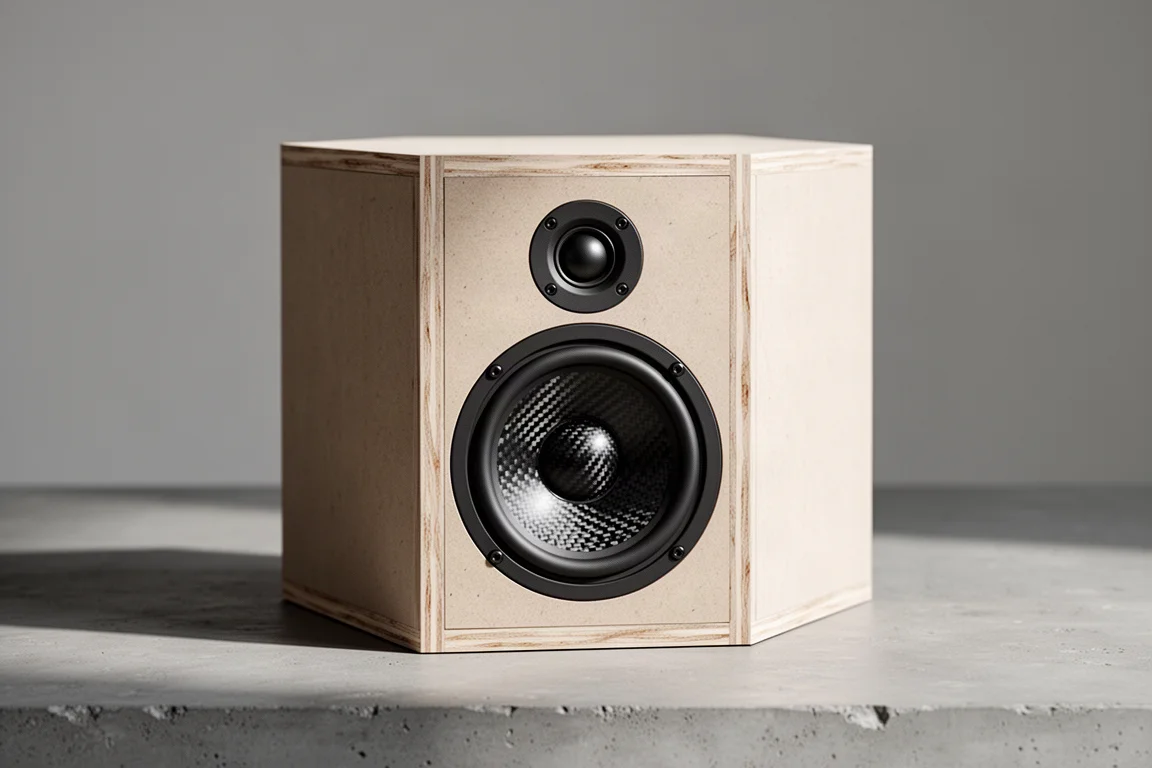
CSS Audio Torii Review: The Most Affordable CSS Audio Speaker Kit
The CSS Audio Torii is a compact two-way speaker kit with a labelled crossover board, an optional CNC flat pack, and bass that belies its cabinet size.
Speaker Kits
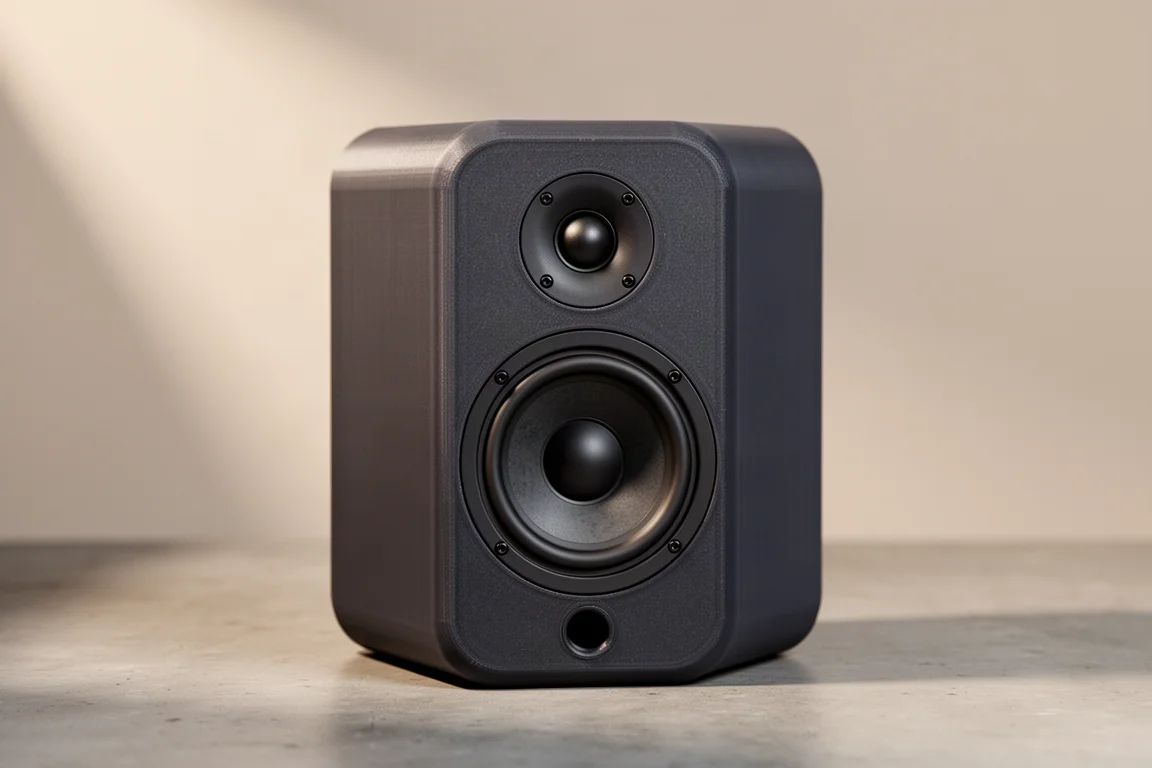
Deposition Sound FDM 5 Review: A 3D Printed Speaker Kit Worth Building
A close look at the Deposition Sound FDM 5, a 3D printed two-way bookshelf speaker kit with punchy bass, a very neutral mid-range, and a few clear trade-offs.
Speaker Kits
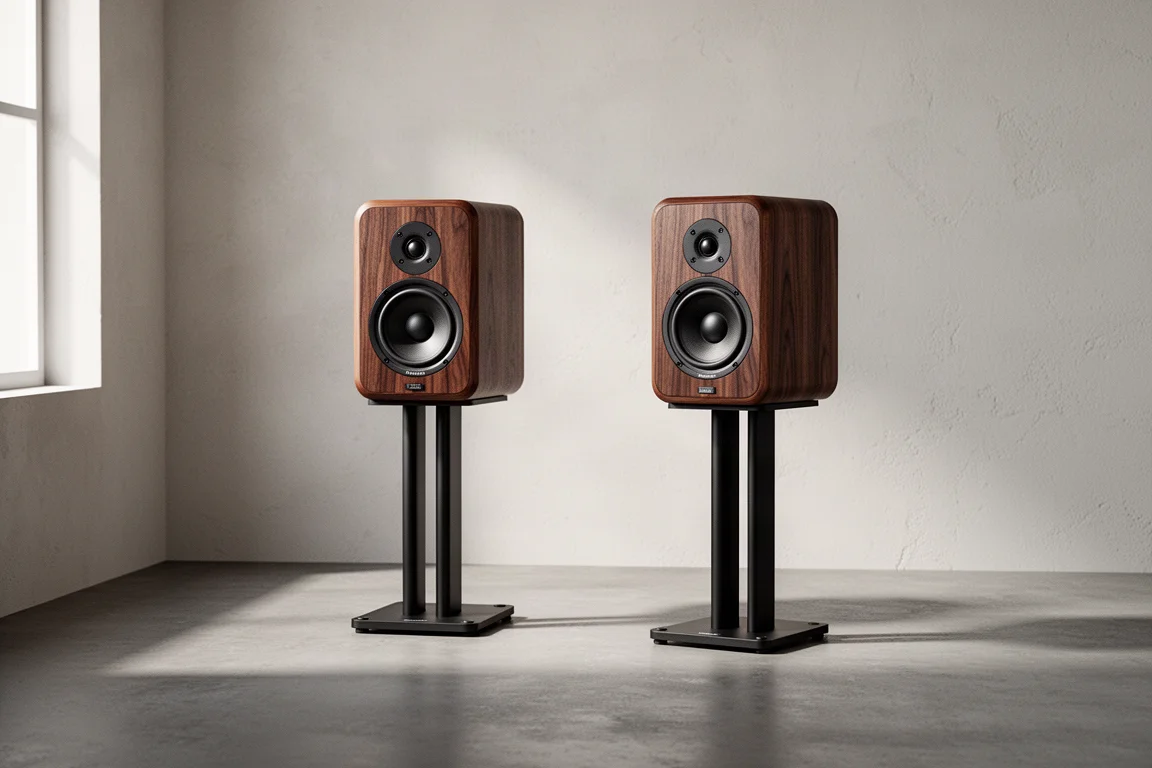
GR Research X-LS Encore Review: Deep Soundstage for Under $1,000
A kit speaker that pairs a smooth, non-fatiguing tone with a soundstage that punches well above its price, provided you are ready for a more demanding build.