Tents
Lightfighter Catamount II Military Tent Review: Fast Setup, Serious Leak Problems
A four-season military surplus tent that pitches in under five minutes, but let water through during a two-day winter storm test.
Introduction
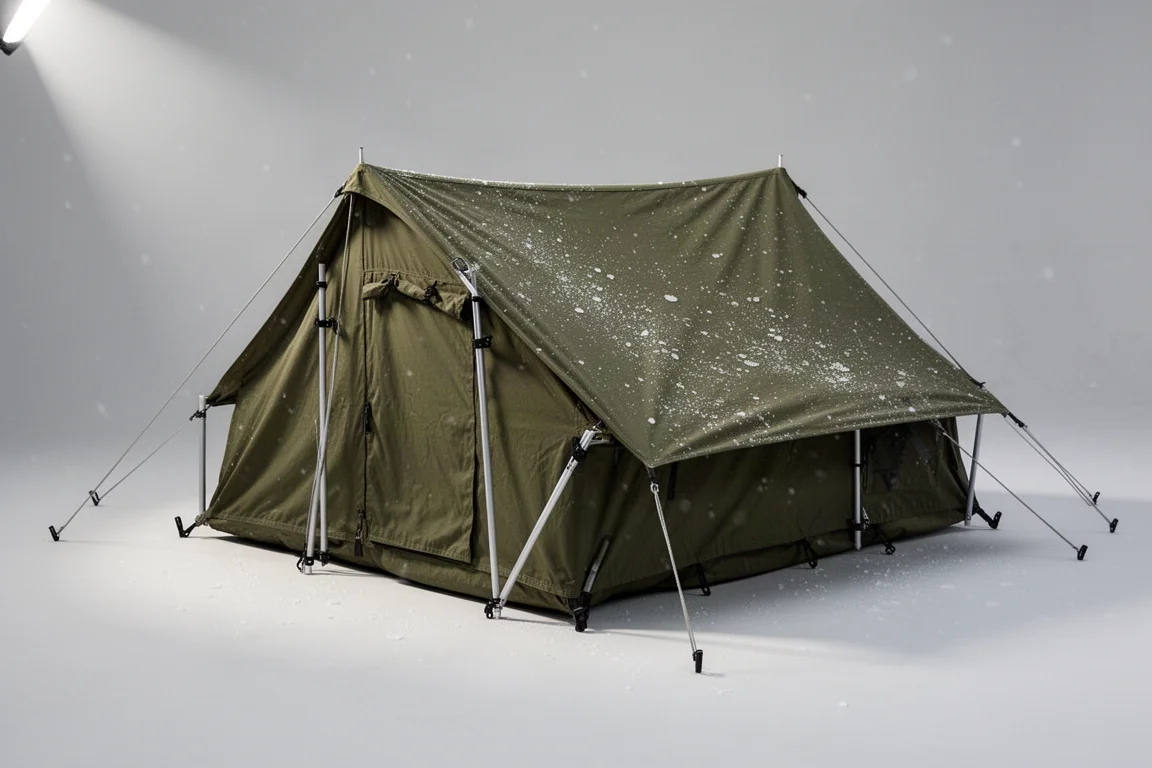
The Lightfighter Catamount II is a genuine military surplus four-season tent, built around an external pole frame and priced around $500. It is designed for the kind of weather that makes most camping trips miserable, which is exactly why its behaviour in freezing rain, sleet and snow deserves close attention.
This review covers the questions that matter most to anyone shopping for a serious cold-weather shelter: how quickly it goes up, how the external frame copes with ice, whether the inner body stays dry, and what happened to sleeping gear after a long night of mixed winter precipitation.
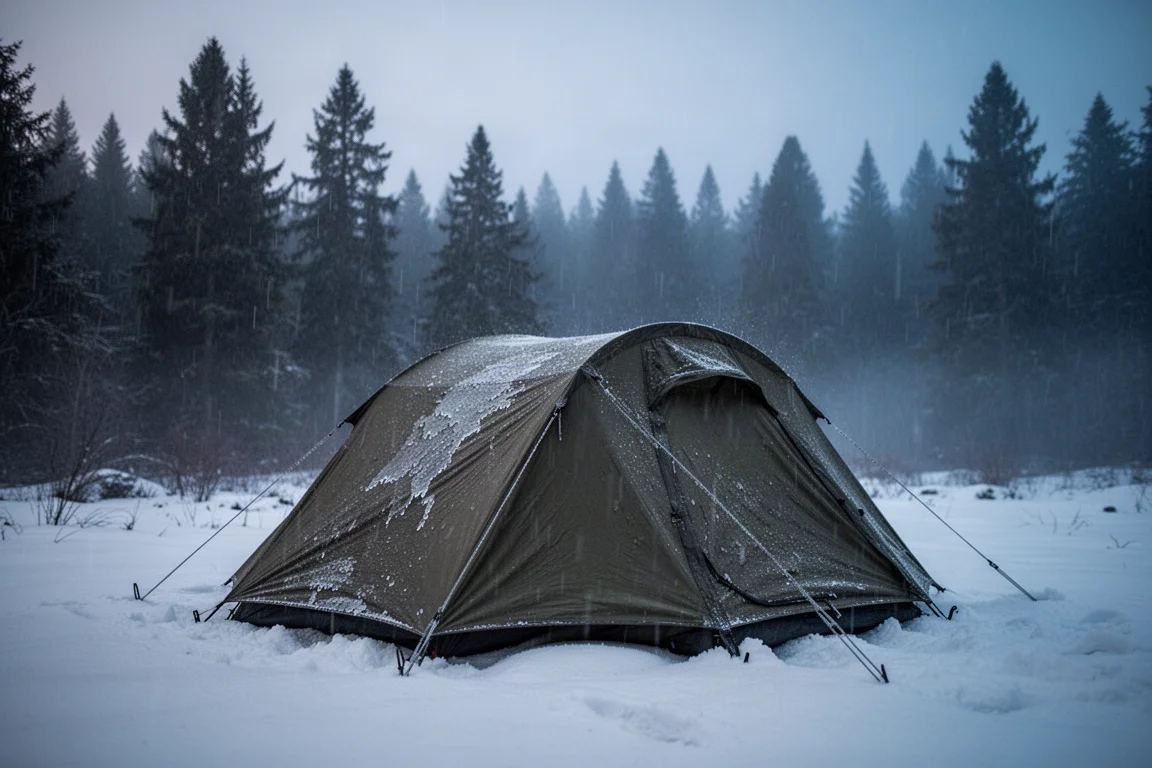
The result is a tent with a genuinely impressive setup experience and a serious weather protection problem. Both halves of that story are worth understanding before any money changes hands.
Who This Tent Is For
The Catamount II is aimed at buyers who want a four-season shelter with a military pedigree and a fast, uncomplicated pitch. The external pole frame goes up in minutes, the vents open without fuss, and the inner body sits clear of the fly so that opening the door does not drop collected moisture onto the sleeping area.
That combination suits cold-weather campers, winter backpackers and anyone who values a quick pitch when conditions are closing in. It is also relevant to buyers who simply want a durable surplus design rather than a lightweight recreational tent.
Main Strengths
The strongest argument for this tent is speed. Setup takes less than five minutes, which is rare for a four-season design, and the process is simple enough that staking out the sides and opening the vents feel like finishing touches rather than real work.
The inner body is offset from the fly, so when the door is opened there is no immediate risk of built-up condensation falling into the sleeping space. During the early part of the storm, with the flysheet coated in roughly two tenths of an inch of ice, the structure carried the load without obvious strain and the interior stayed dry.
Those are real strengths, and they explain why the tent is frustrating rather than simply poor. A fast four-season pitch combined with a dry inner body is a genuinely useful pairing, and it shows how much potential the platform has.
Things to Consider Before Buying
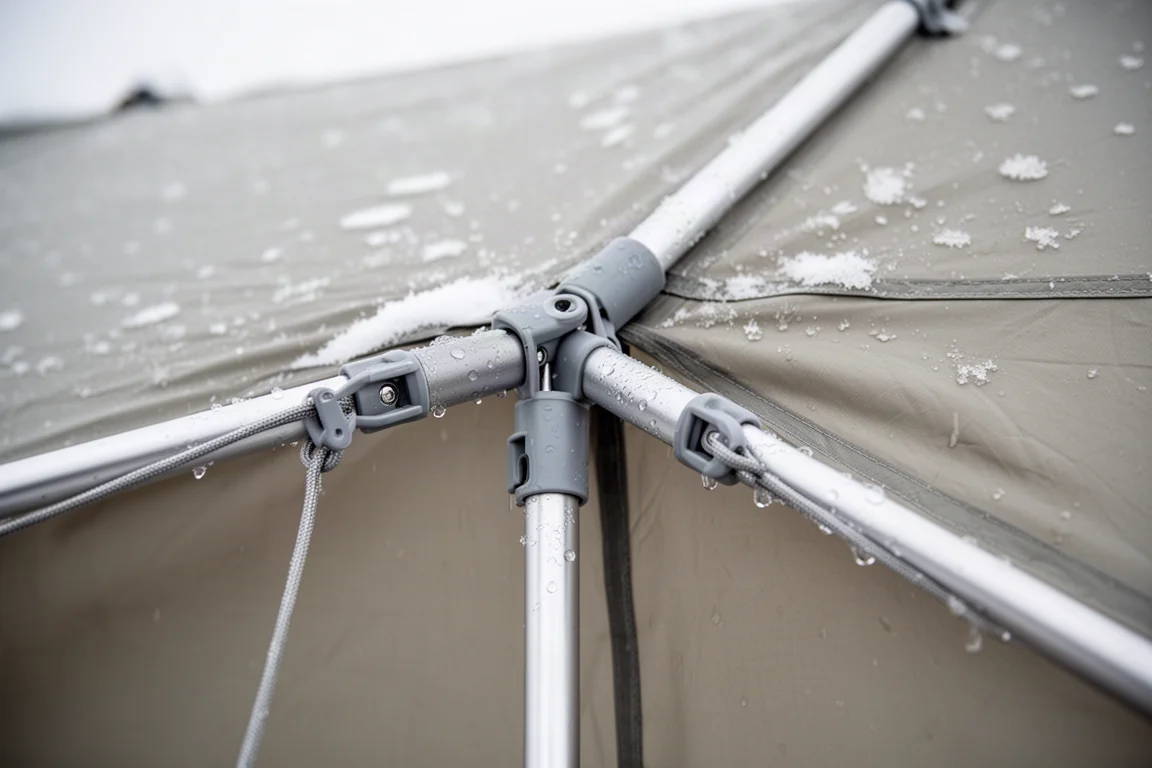
The external pole design carries a specific cold-weather penalty. With the poles sitting on the outside of the tent, they collect moisture and ice, and the joints can freeze solid. Breaking the tent down in those conditions means dealing with frozen connections that may need to be warmed before they separate, and it calls for waterproof gloves to handle safely.
Cost is the other factor. At around $500, this is a premium purchase, and the price raises the bar for construction quality and weather protection alike.
What the Storm Test Revealed
Conditions were mixed rather than extreme: several hours of freezing rain, a switch to rain, then sleet and snow, with temperatures hovering near 34 degrees Fahrenheit. The rain was moderate rather than heavy.
The tent handled the ice coating at first, but it later leaked substantially. Water spread across the inner body, the floor took on significant pooling, and a backpack and sleeping bag were soaked. The leaks appeared at the points where the body attaches to the fly, with drips running down from those attachment areas on more than one side.
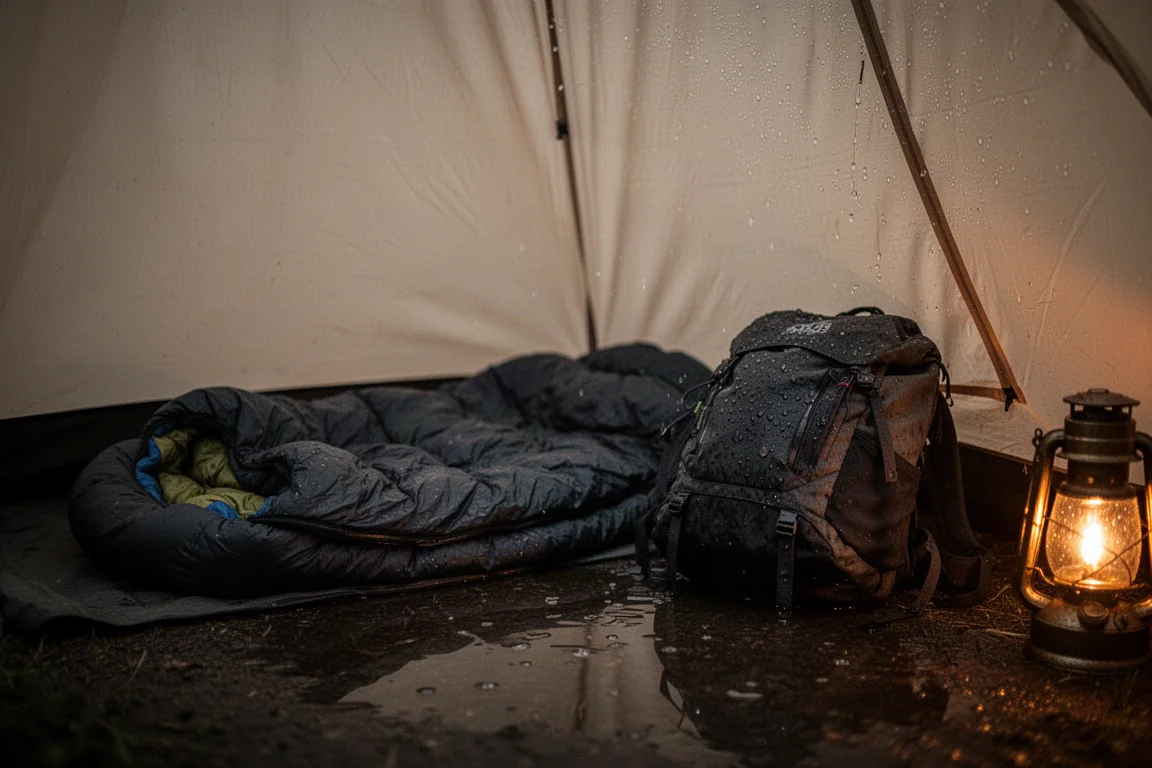
Given how moderate the conditions were, the volume of water inside the tent was difficult to justify. The conclusion at that stage was clear: this version of the tent could not be recommended for the weather it is built to face.
Buying Advice
For anyone shopping in this price bracket, caution is the sensible approach. A four-season tent costing around $500 has to keep sleeping gear dry, and this one did not during a storm that sat well within its intended range.
If you are considering the Catamount II, treat water resistance as the deciding question. Confirm the retailer’s return policy, pitch the tent in wet conditions before relying on it, and inspect the attachment points between the body and the fly, since those are where the water came through.
Buyers who already own one should treat it as a fair-weather shelter until it has proven itself in controlled conditions. The design has real merit, but the leak changes how the tent should be used.
Conclusion
The Lightfighter Catamount II gets the hard part of tent design right: it pitches in minutes and the inner body stays clear of the fly. What it does not do is keep water out. With pooling on the floor and soaked gear after a moderate winter storm, it is difficult to recommend at around $500, even though the setup experience shows how much potential the platform has.
Product link
View more details for Lightfighter Catamount II Military Tent
This product is mentioned in the review. Check the specifications, options, and compatibility before buying.
View more details for Lightfighter Catamount II Military TentFurther reading
Related Reviews
Tents
Black Dog Instant Setup 5 to 8 Person Tent Review: Fast Pitch, Serious Weather Problems
A quick-pitching Black Dog tent that goes up in seconds, but wet-weather testing revealed seam leaks, an overstated capacity claim, and awkward doors.
Tents
Lightfighter Dragoon Review: An Eight-Person Four-Season Military Shelter
The Lightfighter Dragoon is a 57-pound, eight-person expedition tent built for extreme weather. Here is what its materials, size, and setup demands mean for real buyers.
Tents
Lone Rider Motorcycle Tent Review: A Big Shelter That Stays Dry
A double-wall motorcycle tent with two large awnings, two entry points, and enough interior height to stand up, plus the pack size trade-off to weigh first.