Tents
Light Fighter Dragoon Review: A 57-Pound, Eight-Person Expedition Tent
A close look at the Light Fighter Dragoon, an eight-person, four-season geodesic shelter sold to civilians at $4,300, and what its size and weight mean for real buyers.
Introduction
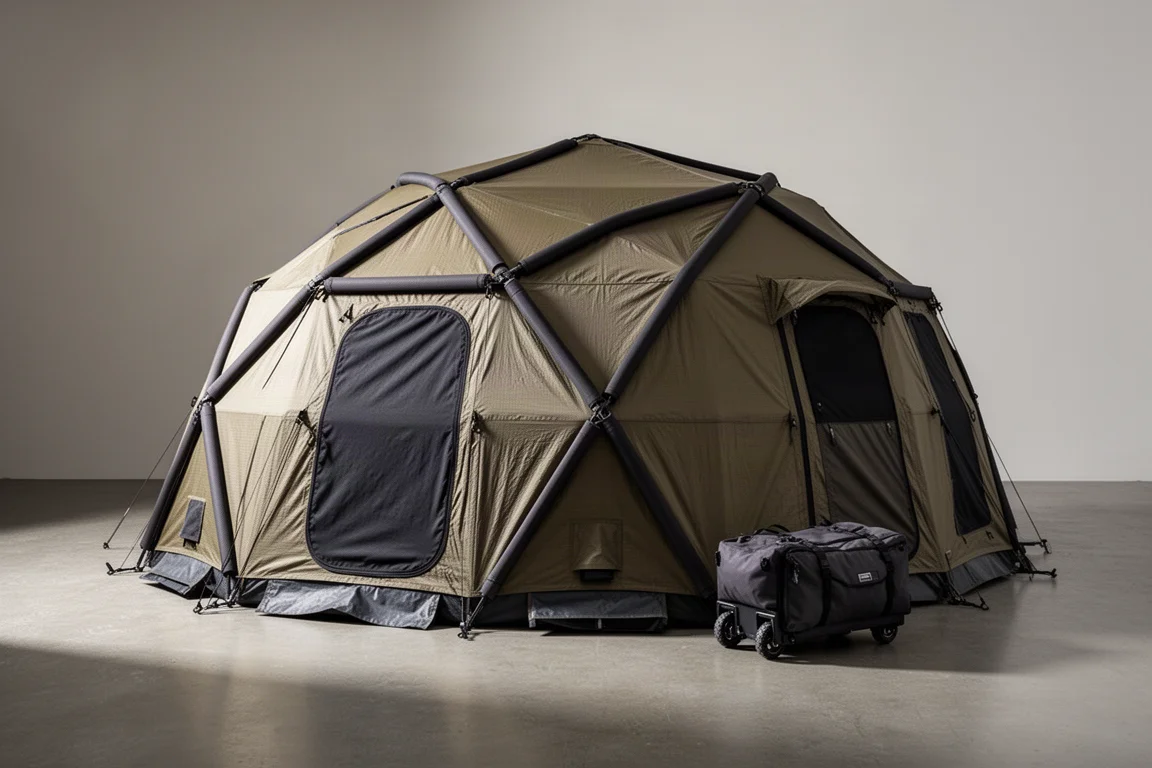
The Light Fighter Dragoon is a large, heavy, purpose-built shelter. It weighs 57 pounds, sleeps eight, and sells to civilian buyers for $4,300. It arrives in a wheeled deployment bag with compression straps, multiple handles, and a harness system that lets one person wear it like a backpack.
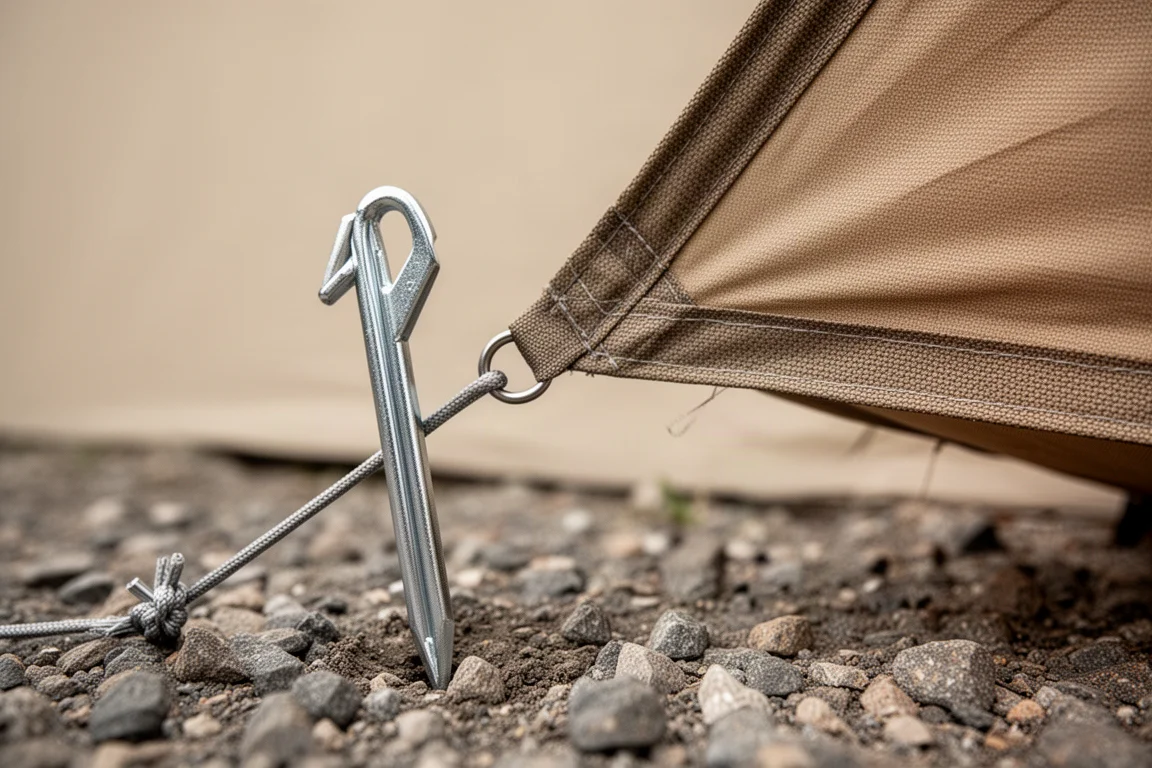
Every part of the tent is scaled up. The center poles are the thickest and longest of their kind, the tent stakes are unusually substantial, and the guy lines use dynamic cordage rather than the thin line found on typical camping tents.
The manufacturer describes the Dragoon as an all-season expeditionary tent built on a geodesic dome design and capable of withstanding strong winds, heavy rain, and accumulating snow.
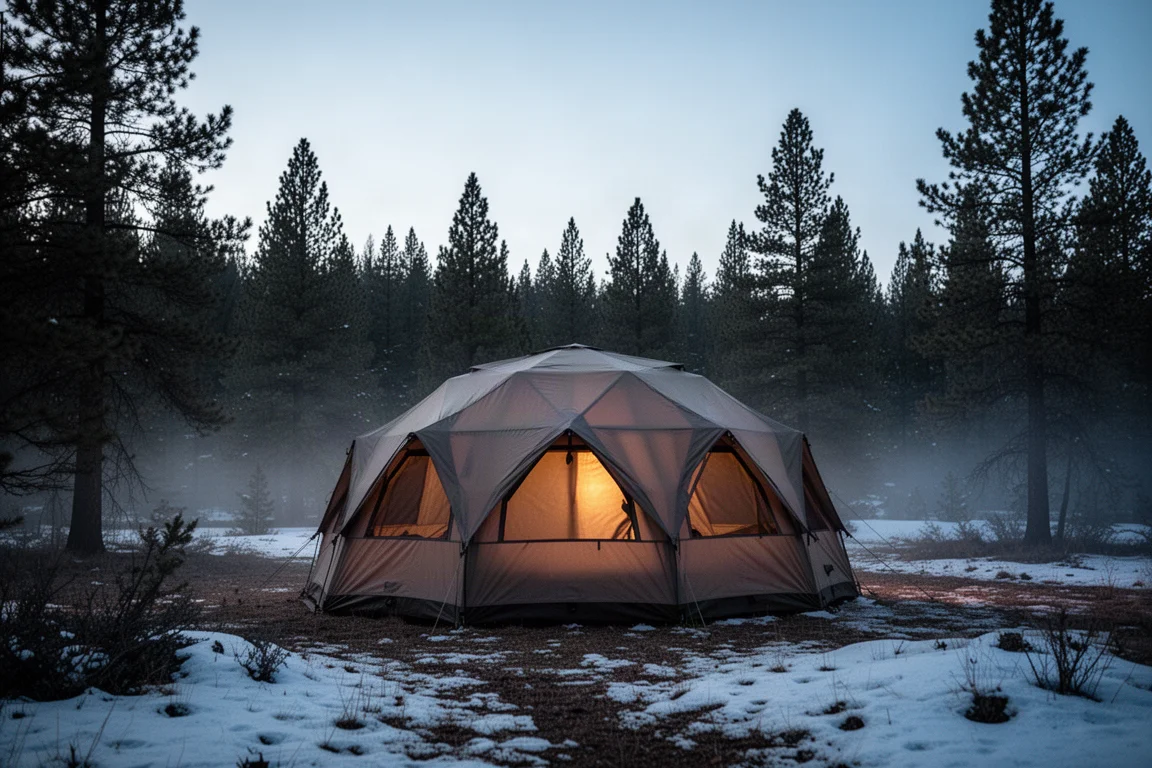
Those capabilities come with real weight, real setup effort, and a real storage requirement, and all three shape who should consider this tent.
Who This Tent Is For
This is a basecamp tent, not a backpacking tent. The most plausible civilian buyers are well-funded hunters who want a shelter that holds up through winter weather, and resorts or outfitters that run hunting trips and need a large, durable structure on site.
Groups are the natural fit. Eight people plus their gear fit inside comfortably, and a group shares the work of moving and pitching the shelter. Solo users face a different calculation. One person can manage the setup in calm conditions, but that same person has to transport 57 pounds of tent, poles, stakes, and bag first. Pitching the Dragoon alone in windy conditions is not a reasonable expectation.
Storage is the other filter. After a wet trip the tent has to be pitched again and dried, which takes a large yard, a garage, or comparable open space.
Main Strengths
The Dragoon’s strengths come down to materials, ventilation, and interior volume.
Build Quality and Materials
The tent body uses 70-denier ripstop nylon with a 5,000 mm hydrostatic head rating, a waterproof urethane coating, and a DWR finish. The vents use 40-denier nylon no-see-um mesh. The floor, the reinforced points, and the pole sleeves are made from 210-denier Oxford nylon, also rated at 5,000 mm.
Stitching is clean throughout, with no loose threads, which is what the price and the intended military use would suggest. The stakes and guy lines follow the same logic: heavier and stronger than ordinary camping hardware.
Ventilation, Doors, and Stove Port
The Dragoon has eight doors, and every door doubles as a vent. Mesh sits behind each door, giving the tent an internal fly for insect protection. Doors roll up and stow at the top and bottom.
Four large vents sit at the top of the shelter and four more wrap around the body. Each can be unzipped for maximum airflow, and the top vents can be propped open with dedicated vent poles or strapped down when the wind picks up. Ventilation ducts for HVAC are built into the body, and a stove jack port lets the tent be used as a hot tent.
Size, Weight, and Setup
The tent stands 77 inches tall and measures 157.5 inches wide and long. Packed, it measures 30 by 17 by 16 inches. It is freestanding once the poles are seated.
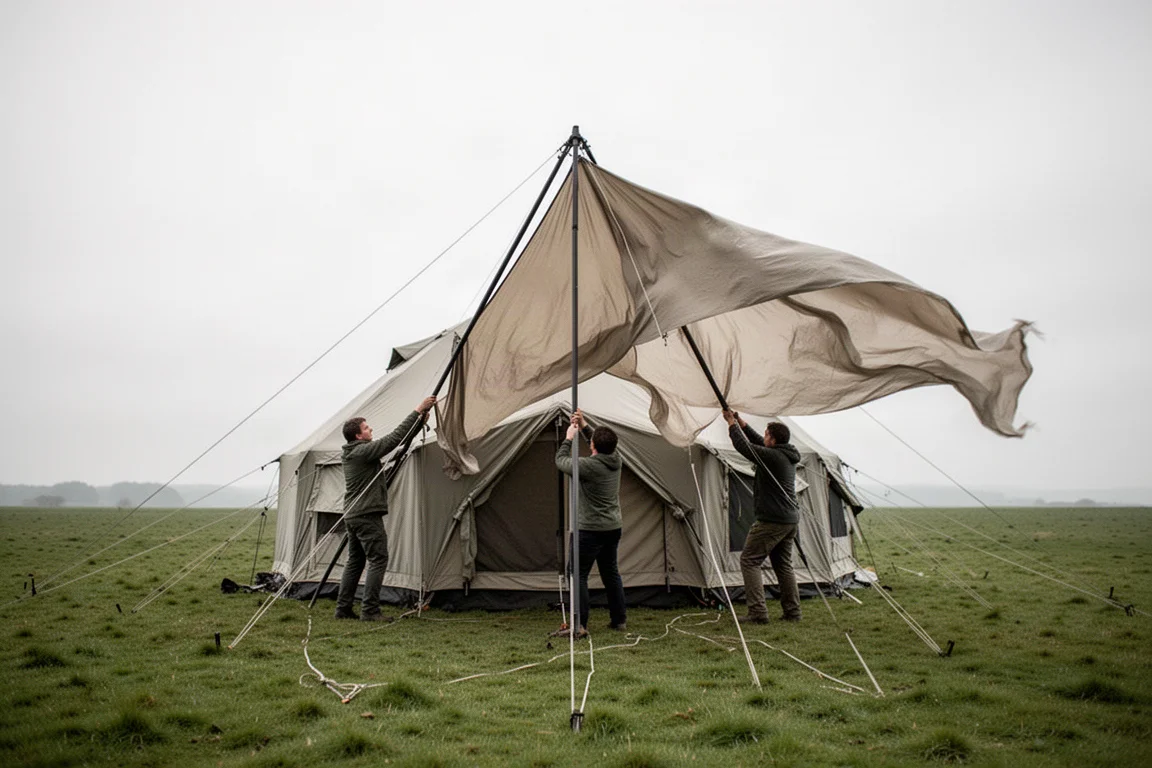
Setup is straightforward rather than difficult, but it takes time. A first attempt ran to roughly 40 minutes, and one person in calm conditions should manage about 30 minutes. Raising and seating the two long center poles takes genuine strength because the fabric and poles are so heavy. A group can handle the process with ease.
Things to Consider Before Buying
Weight and logistics dominate ownership. At 57 pounds, the Dragoon is not a tent anyone carries far. The realistic pattern is vehicle to camp, or vehicle to ATV to camp. The rolling bag, wheels, handles, and backpack harness help with movement, but they do not make this a portable shelter.
The tent ships without a ground sheet. The package instead includes snow and sand parachute stakes. The floor is removable and attaches to the body through a long series of buckles that must each be tightened so insects cannot get in.
The manufacturer states that the Dragoon is in use with military forces around the world and is awaiting an NSN number. It is described as a commercial off-the-shelf item, and the tents sold to civilians are overages from that contract.
Buying Advice
At $4,300, the Dragoon is a deliberate purchase. The question is whether its size and weight match how you actually camp. For trips built around a vehicle, a group, cold weather, and a basecamp used night after night, the materials, ventilation, and snow loading capability line up well.
For anyone who camps alone, moves between sites often, or has nowhere to dry a very large tent, the same features become obstacles. Buyers who want the same construction approach in a smaller package may be better served by the brand’s one-person and two-person shelters and its cold weather kit.
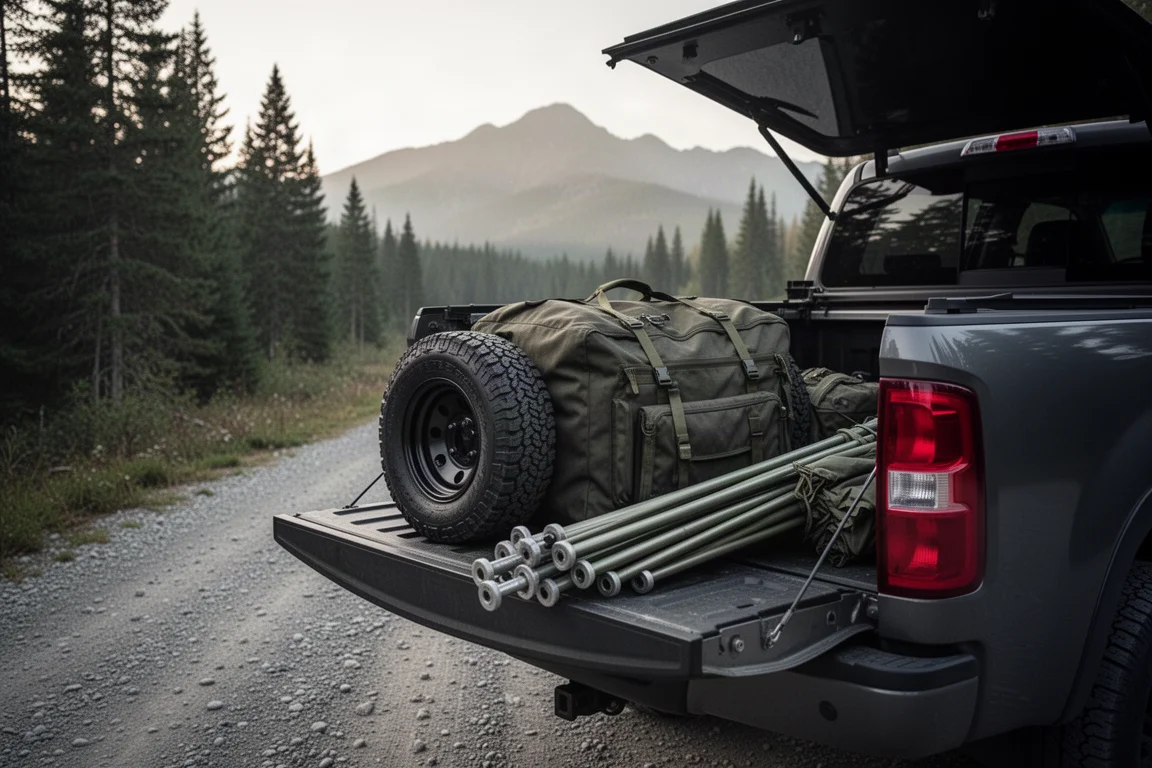
A complete package arrives with the tent: the body, two center poles, four side poles, four vent poles, 16 attached dynamic guy lines, four additional guy lines, eight snow and sand parachute stakes, 20 heavy-duty tent stakes, and the rolling bag.
Conclusion
The Light Fighter Dragoon is a serious shelter with serious trade-offs. Its interior volume, materials, ventilation, and four-season capability are impressive, and the stove jack port adds genuine cold-weather utility. It is also 57 pounds, $4,300, and slow to pitch, and it needs open space to dry. For the right buyer with the right transport and the right storage, it delivers capability that ordinary camping tents cannot match. For most people, it is simply more tent than they can manage.
Product link
View more details for Light Fighter Dragoon
This product is mentioned in the review. Check the specifications, options, and compatibility before buying.
View more details for Light Fighter DragoonFurther reading
Related Reviews
Tents
Black Dog Instant Setup 5 to 8 Person Tent Review: Fast Pitch, Serious Weather Problems
A quick-pitching Black Dog tent that goes up in seconds, but wet-weather testing revealed seam leaks, an overstated capacity claim, and awkward doors.
Tents
Lightfighter Dragoon Review: An Eight-Person Four-Season Military Shelter
The Lightfighter Dragoon is a 57-pound, eight-person expedition tent built for extreme weather. Here is what its materials, size, and setup demands mean for real buyers.
Tents
Lone Rider Motorcycle Tent Review: A Big Shelter That Stays Dry
A double-wall motorcycle tent with two large awnings, two entry points, and enough interior height to stand up, plus the pack size trade-off to weigh first.