Aquarium Equipment
Lifegard Digital Thermometer and Hygrometer Combo Review: A Big Display for Aquarium Monitoring
A large-display digital aquarium thermometer that also reports room temperature and humidity, with max and min memory plus a clock and alarm options. Here is who it suits and what to check first.
Introduction
Keeping an aquarium at a stable temperature is one of the simplest habits that protects livestock, and a thermometer you can actually read is the fastest way to confirm that a heater, chiller, or fan is doing its job. Glass thermometers held to the inside of the glass with a suction cup work fine, but they ask for good eyesight and a fair amount of squinting. Compact digital models are easier to read, although many of them use small displays that are awkward to check from across the room.
The Lifegard digital thermometer and hygrometer combo takes a different route. It pairs a large digital display with an external probe for the tank water, plus a sensor built into the display for room temperature and relative humidity. A clock with alarm options is included as well, so the unit covers tank temperature, room conditions, and a bit of daily scheduling in one place.
Who This Product Is For
This is a natural fit for aquarists who want a big, clearly readable temperature display instead of leaning in to peer at a small screen or a glass tube. The oversized digits are the main appeal: a glance from across the room is enough to confirm the tank is where it should be.
It also suits keepers who care about the room around the tank, not only the water inside it. Because the unit reports room temperature and relative humidity, it can help you judge whether your current heating or cooling equipment is adequate, and how much evaporation to expect in a dry or humid space. Those readings are also a useful reference when the tank looks fine but the fish or corals are not behaving as usual.
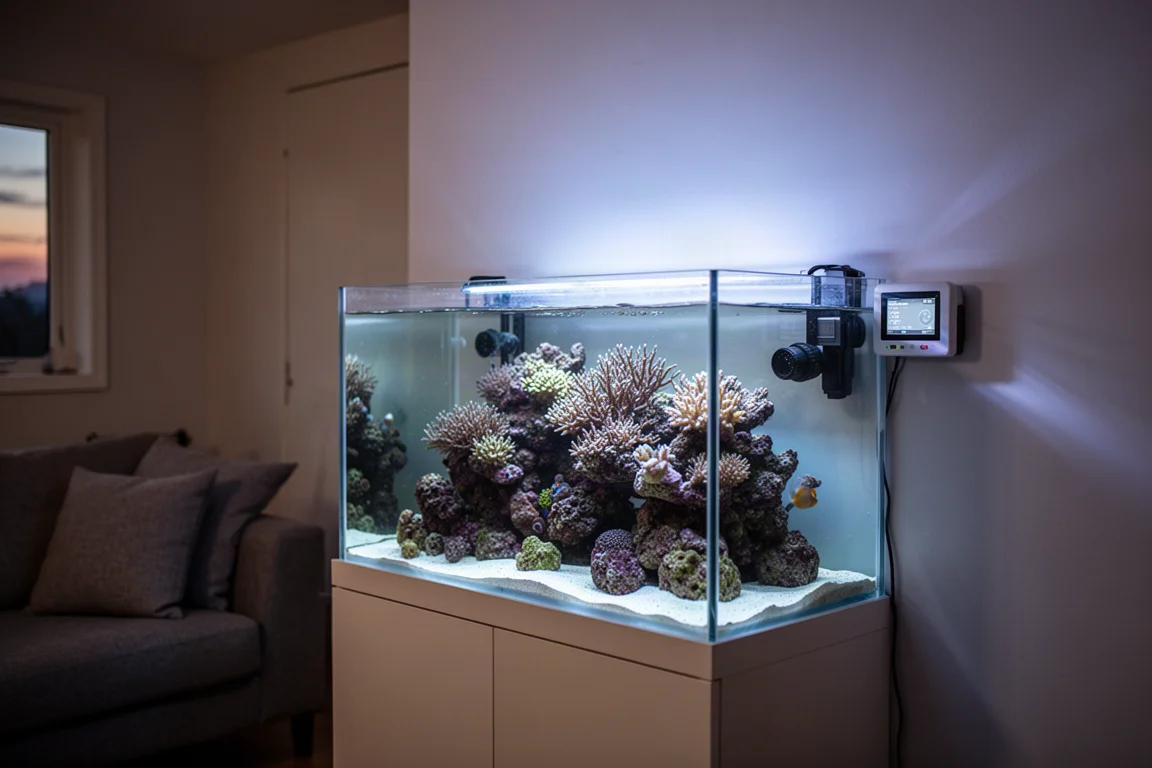
In short, it makes sense for anyone who wants a fast visual check that the equipment is running normally, without opening an app or hunting for a handheld device.
What Comes in the Box and Basic Setup
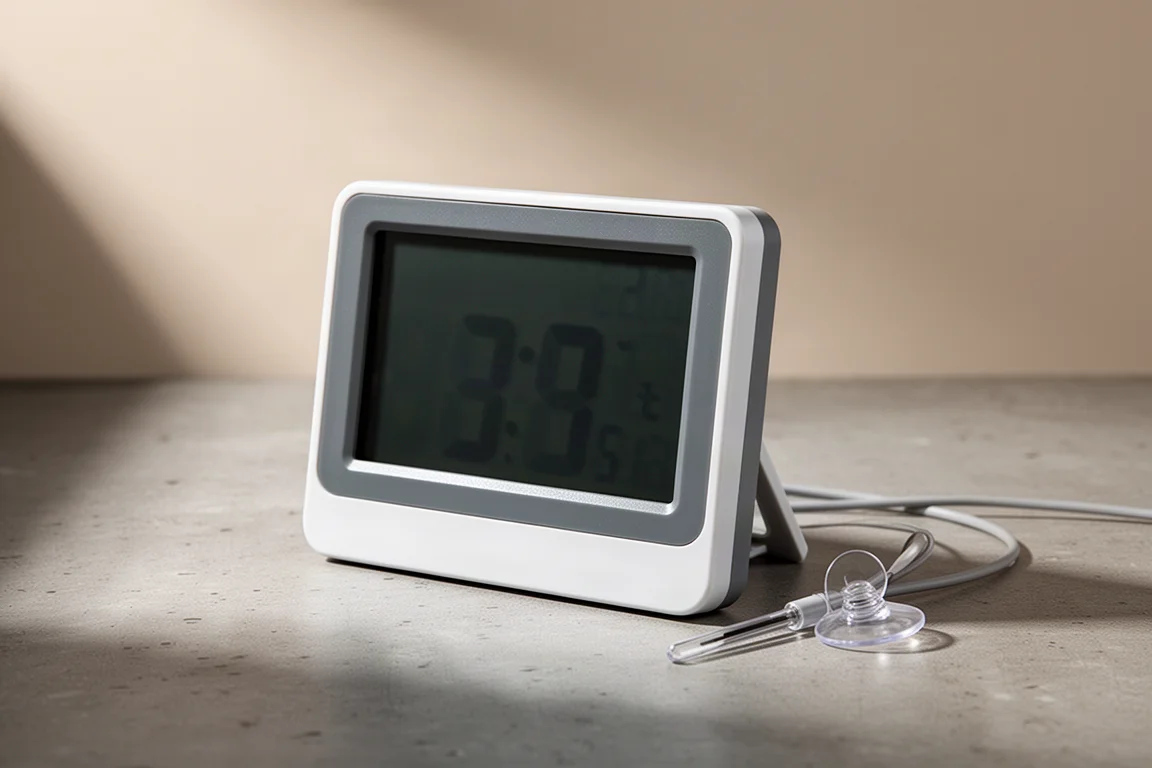
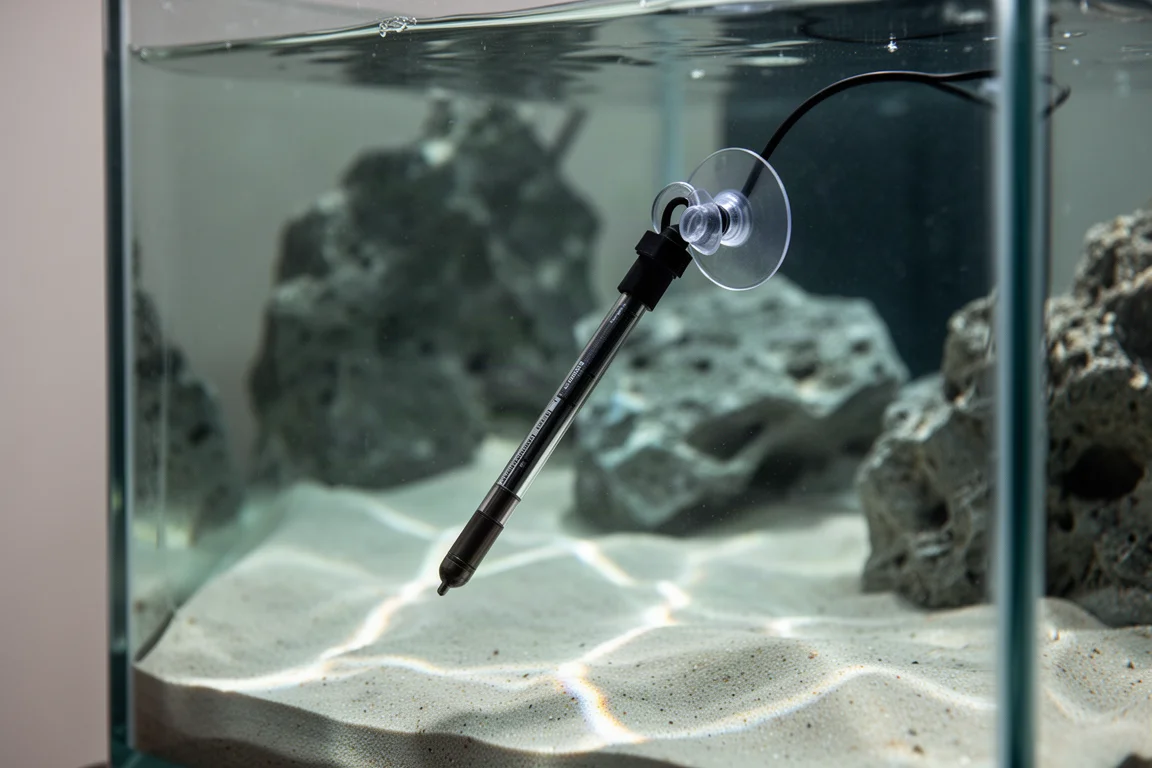
The package is straightforward: the thermometer display, a AAA battery, a suction cup for the probe, and instructions. Setup follows the same pattern as most digital thermometers. Install the battery, slide the probe into the suction cup, and place the probe in the aquarium water.
Once running, the display shows two temperature readings at the same time. The top figure is labeled as the internal reading and reflects the room’s temperature, while the bottom figure is labeled as the external reading and comes from the probe in the tank. That split means one screen tells you both what the water is doing and what the surrounding air is doing.
Placement Options for the Display
There are several ways to position the unit. A kickstand on the back lets it stand on a flat surface near the tank, and a keyhole mount on the back allows it to hang from a small screw. Neither requires any special hardware beyond what is already in the box.
Where you put it matters more than it first appears. The sensor for room temperature and the sensor for relative humidity are both built into the display itself, so those readings describe the air around the unit rather than the air in the room as a whole. Mounting it near the aquarium, on the wall or on the outside of the stand, keeps the display easy to see and keeps the room readings meaningful. Some keepers may find the temperature and humidity inside a cabinet genuinely useful, but the room-level figures tend to be the more actionable ones when you are sizing heating or cooling gear.
Main Strengths: A Display You Can Read at a Distance
The headline strength is legibility. The display is large, and the numbers are easy to read from a distance, which is exactly the gap that small digital thermometers and glass tubes leave open. Checking the tank becomes a quick glance rather than a task.
The specifications are solid for aquarium monitoring. The unit reads in both Celsius and Fahrenheit, covering a range from minus 58 degrees Fahrenheit up to 158 degrees Fahrenheit, with a resolution of 0.1 degrees and an accuracy of roughly plus or minus 1.8 degrees Fahrenheit. It also reports relative humidity between 10 percent and 99 percent, with a 1 percent resolution. That combination covers the water temperature, the air temperature, and the moisture level without adding a second device to the shelf.
Extra Features: Memory, Clock, and Alarms
Beyond the live readout, the unit stores maximum and minimum temperature and humidity values in memory. That history can explain a lot when the current tank reading looks acceptable but the livestock are not acting normally. Perhaps the temperature dipped overnight, or the room spiked during the afternoon.
Three buttons on the front of the display handle everything. Mode and adjust are used to set the clock and to configure chimes or alarms, and the memory button scrolls through the maximum, minimum, and current readings. Holding the memory button for a few seconds clears the stored maximum and minimum values.
The built-in digital clock can be set to either 12 hour or 24 hour time, with an optional hourly chime and a daily alarm, which is handy for keeping manual feedings and dosings on schedule. There is also a reset button behind the kickstand if you ever want to return the unit to its factory settings.
Things to Consider Before Buying
The accuracy rating of about plus or minus 1.8 degrees Fahrenheit is worth keeping in mind. That is a reasonable tolerance for daily monitoring, but it means the unit is best treated as a dependable reference point rather than a laboratory instrument.
Placement is the other consideration. Because the room temperature and humidity sensors sit inside the display, the readings you get depend on where the display lives. A cabinet mount tells you about the cabinet. A wall mount near the tank tells you about the room. Decide which of those is more useful to you before you choose a spot.
Finally, this is a probe-based design, so the external sensor needs to sit in the aquarium water and stay reasonably clean to deliver consistent readings. That is normal for this type of thermometer, but it does mean a small amount of routine attention.
Buying Advice
This unit earns its place when the goal is a fast, readable temperature reference plus useful context about the room the tank sits in. If you have ever squinted at a glass thermometer or leaned over a tiny screen to check a heater, the large display solves that problem directly.
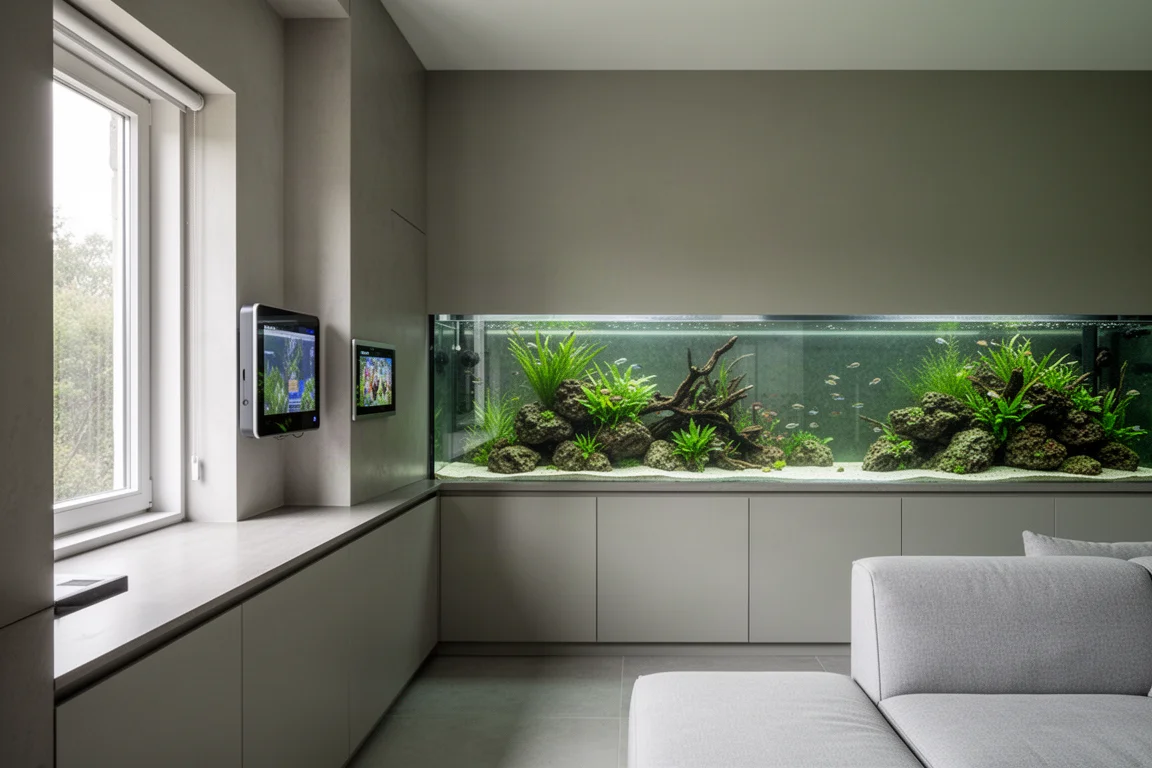
A sensible approach is to mount the display near the aquarium, either on the wall or on the outside of the stand, so the room sensors measure the space you actually care about and the screen stays easy to see. Pair it with the memory function to review overnight lows and afternoon highs, and use the clock and alarm to stay consistent with feedings and dosings.
It is a good fit for a reef keeper or freshwater aquarist who wants one clear screen covering water temperature and room conditions, and who values being able to read it from a distance without extra gear.
Conclusion
The Lifegard digital thermometer and hygrometer combo does a specific job well: it puts a large, readable temperature display in front of you while also reporting room temperature and humidity from the same unit. Setup is simple, the included battery and probe suction cup get you running quickly, and the max and min memory, clock, and alarm options add practical day to day value.
If a legible glance-and-go temperature check is what has been missing from your setup, this is a well-rounded option to consider. Just think through where the display will live, since that decision shapes the room readings as much as it shapes convenience.
Product link
View more details for Lifegard Digital Thermometer and Hygrometer Combo
This product is mentioned in the review. Check the specifications, options, and compatibility before buying.
View more details for Lifegard Digital Thermometer and Hygrometer ComboFurther reading
Related Reviews
Aquarium Equipment
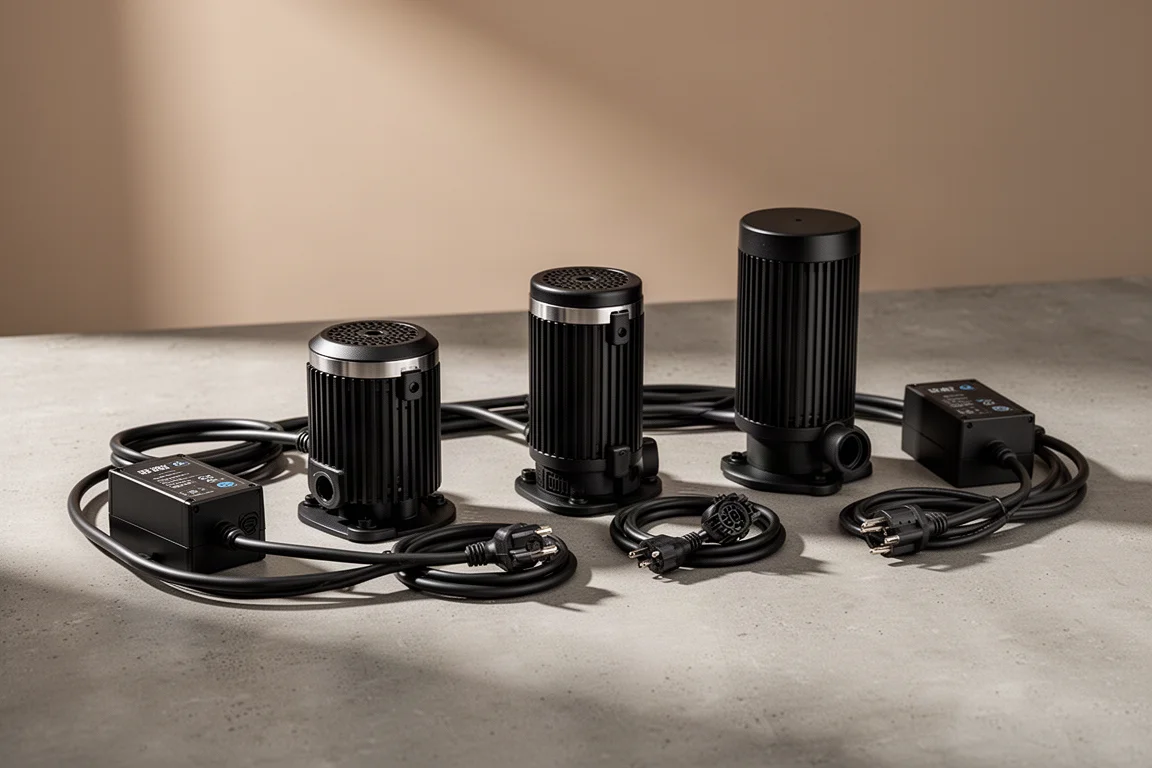
Abyzz Professional DC Pumps: A100, A200, and A400 Reviewed
A closer look at three German-made DC return pumps built for large reef systems, with titanium internals, fine flow control, and a 10-year warranty.
Aquarium Equipment
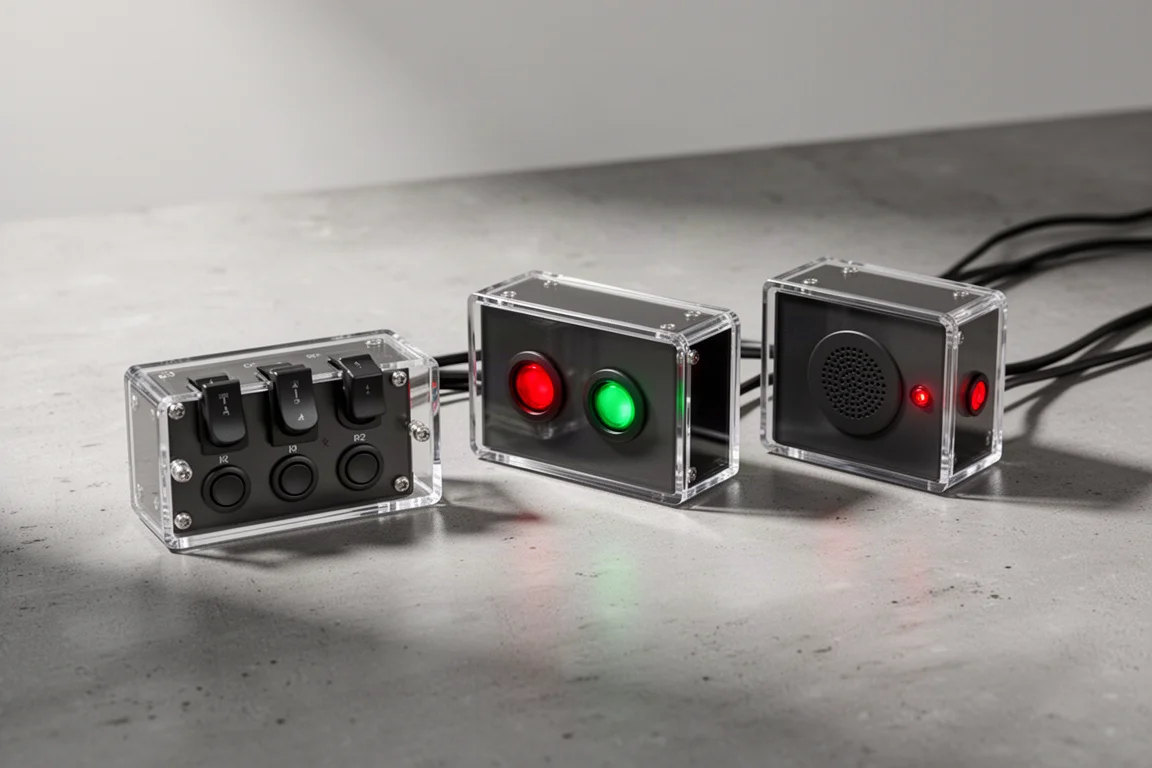
AdaptiveReef Controller Accessories: Three Tactile Upgrades for Your Reef Controller
A practical look at three AdaptiveReef add-ons that put physical switches, at-a-glance status lights, and a loud alarm within arm's reach of your reef tank.

Aquarium Equipment
Adaptive Reef Controller Boards: Basic vs Deluxe for Cleaner Aquarium Gear
A practical look at the Adaptive Reef Basic and Deluxe controller boards, what each one includes, and how to choose the right size for your tank gear.