Soundbars
LG S95QR Review: A 9.1.5-Channel Flagship Soundbar That Asks a Lot of Its Owner
LG's 2022 flagship soundbar brings 17 speakers, 810 watts, and a center-mounted height driver. The hardware impresses, but the tuning demands constant attention.
Introduction
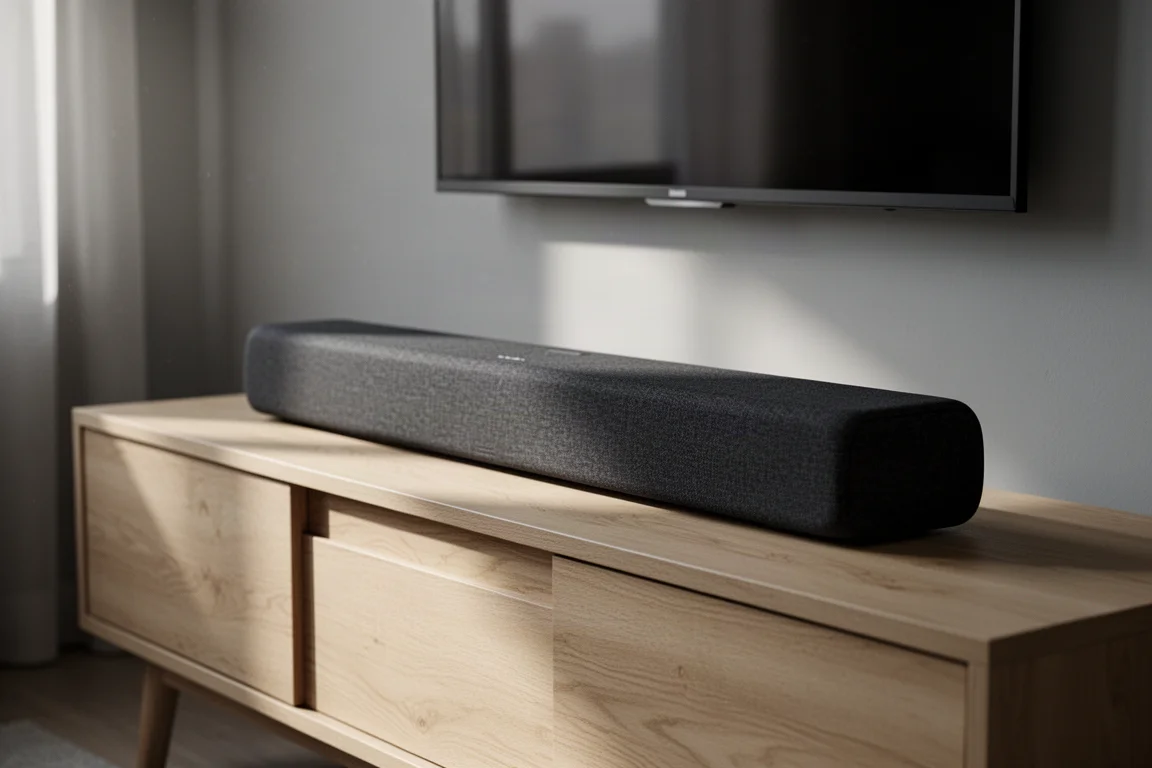
LG’s S95QR is the company’s flagship soundbar system for 2022, and it arrives with an unusual specification sheet. The package pairs a main bar with a wireless subwoofer and two wireless surround speakers for a 9.1.5-channel Dolby Atmos, DTS:X, and IMAX Enhanced setup. LG lists 17 speakers driven by built-in amplifiers, with 810 watts of total system power, which is a little more than the comparable Samsung Q990B offers.
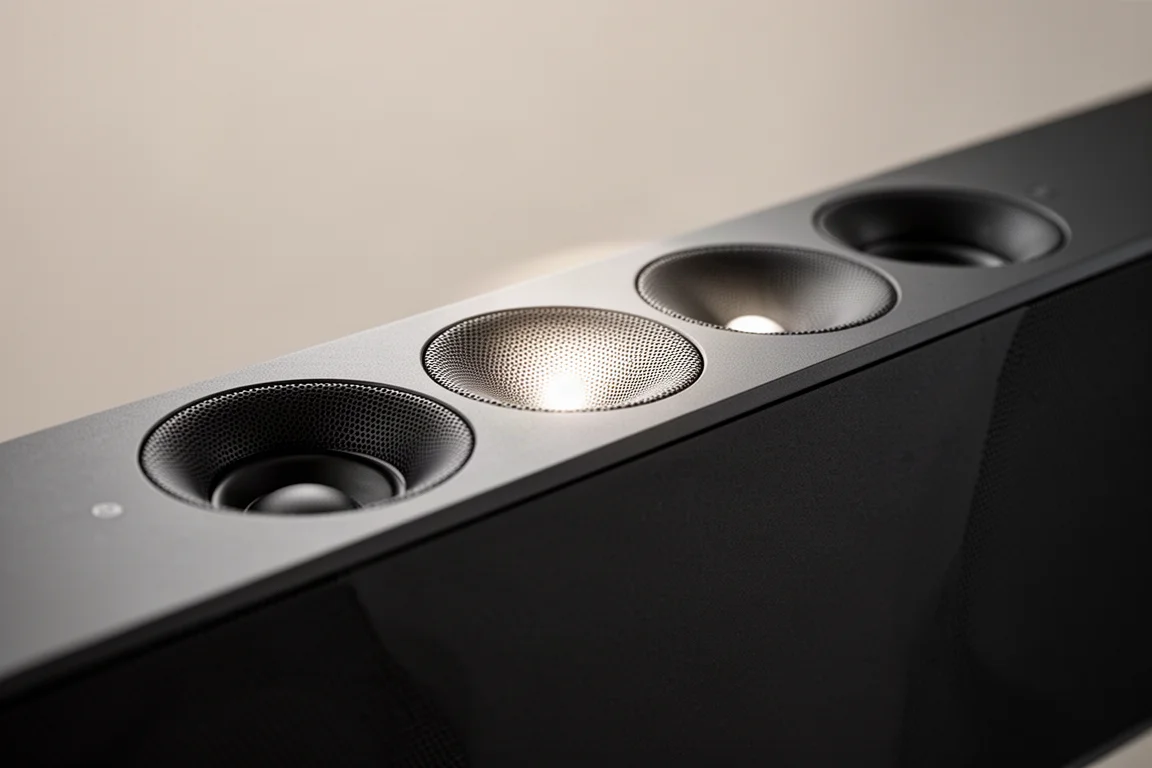
The channel count is the talking point. Three of the bar’s drivers fire upward for height effects, and the third of those sits dead center of the bar, a layout that gives the system its .5 designation. That center-mounted height driver is the feature LG leans on hardest, and it is also the part of the system that proved hardest to detect in practice.
Who This Soundbar Is For
This is a system for someone who wants a full surround Atmos experience without buying an AV receiver, separate speakers, and a nest of speaker cable. The surrounds and the subwoofer are wireless, so the physical setup amounts to a bar under the television, a subwoofer somewhere in the room, and two small speakers behind the listening position.
It is also a system for someone who enjoys adjusting things. The S95QR offers a wide spread of sound profiles, per-speaker level control, and room correction, and getting the best out of it during testing meant using all of them. Listeners who prefer to press play and forget about the settings will find that harder to do here.
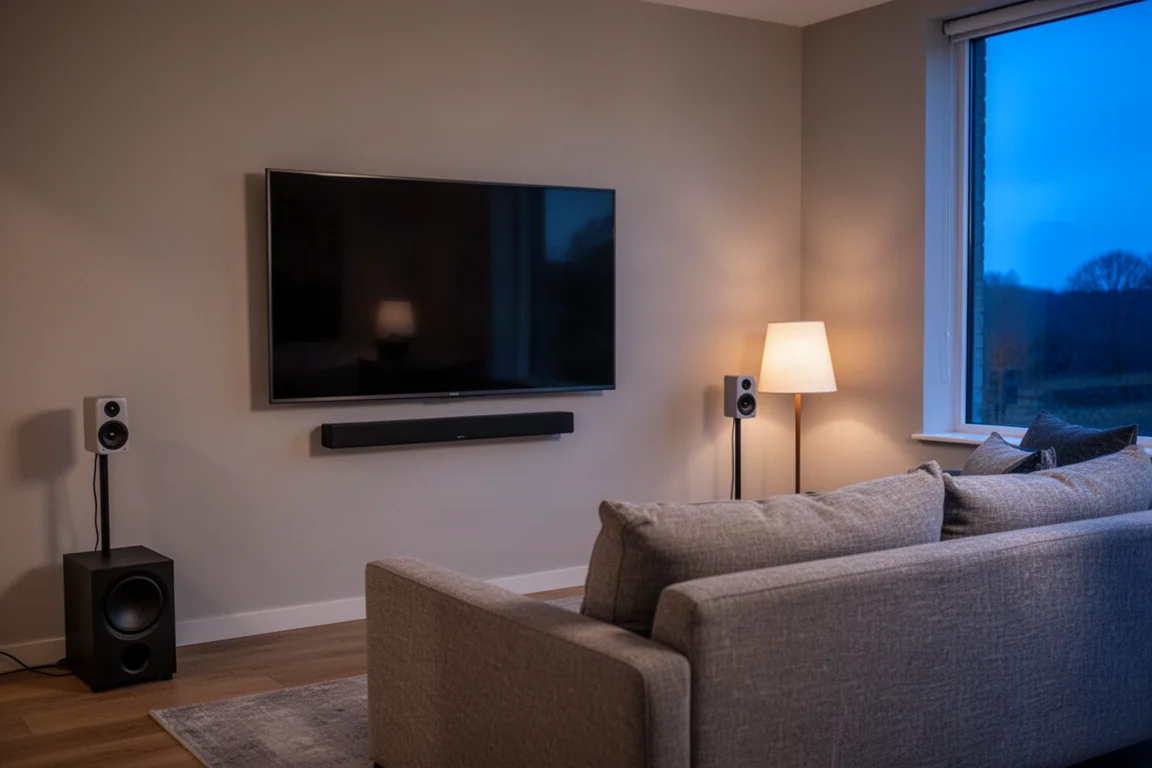
Rooms matter as well. The tuning issues covered later in this review showed up in a larger space, where sustained levels sat in the low to mid 80s dB and peaks occasionally reached 95 dB.
Main Strengths: Build, Power, and Features
Physically, the S95QR is a well-built and decent-looking system. The bar has a clean, low-profile shape, and the 17-speaker array is backed by 810 watts of amplification, more than the Samsung Q990B provides.
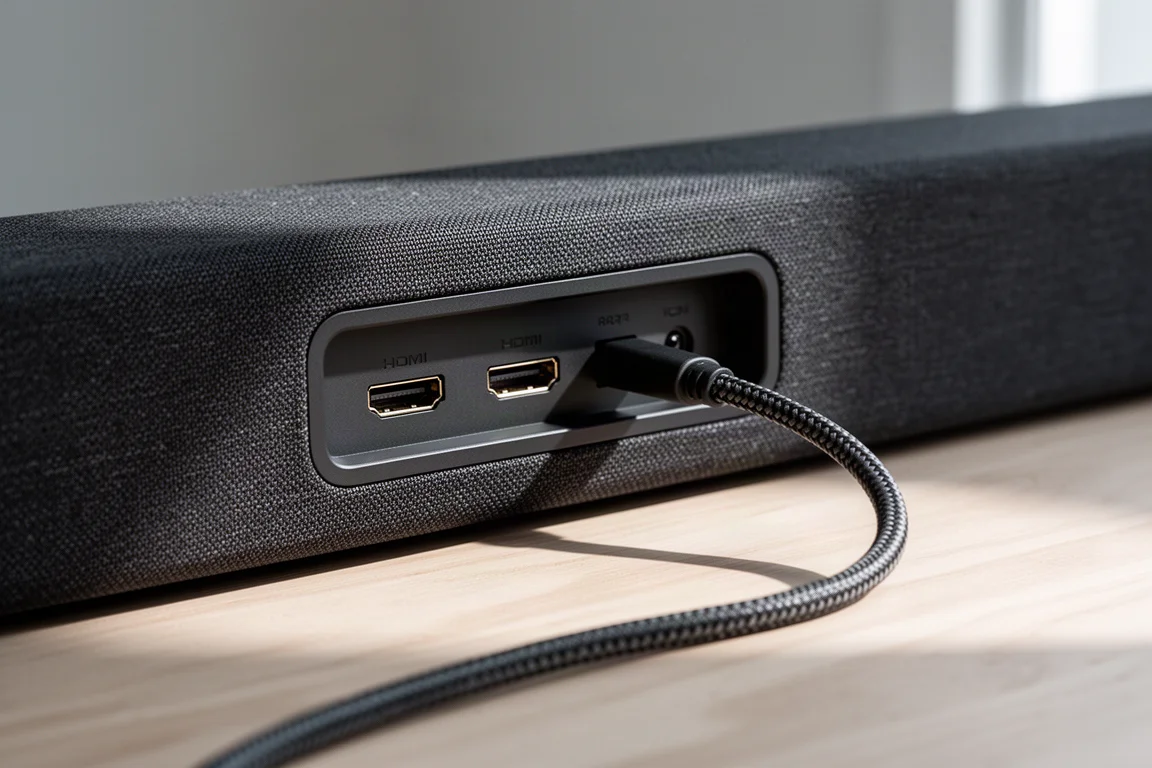
Connectivity is generous. There are HDMI inputs for plugging in a Blu-ray player or a gaming console, and the bar supports variable refresh rate and auto low latency mode for gaming, though it is limited to 4K 60Hz signals. ARC and eARC are both supported, and the bar can pass through Dolby Vision and HDR10 signals.
Wireless and smart features cover the expected ground: Google Assistant, Alexa, AirPlay 2, Bluetooth, and a range of additional streaming options.
Setup, Connectivity, and the LG Soundbar App
Installation is straightforward for anyone who has set up a soundbar before. The bar was connected to a television over eARC using a high-speed HDMI cable, and the rest of the system paired without drama.
One placement note is worth flagging. The wireless subwoofer had trouble staying synced with the bar when it sat around 15 feet away, and moving it closer resolved the problem. That range limitation stood out because the two wireless surrounds held their connection without any issues at 12 to 15 feet from the bar and almost 20 feet from each other.
The companion app makes setup considerably easier. Inside it you can run AI room calibration, adjust individual speaker volumes, make global tone changes, switch inputs, and select sound profiles, and you can also connect the bar to your home network. The small display on the face of the bar is not especially easy to read or responsive, which makes the app the more practical way to manage the system day to day.
Sound Quality and Measured Performance
First impressions were not good. Out of the box the system sounded chesty, muffled, bassy, and at times boomy, with distortion and clipping during the first listening session. A second factory-fresh unit behaved the same way, which ruled out a shipping fault.
Measurements explain part of it. In the default standard profile the response is lumpy across the frequency range with a substantial drop-off in the highs, which matches the muffled, bass-forward character of the sound. Moving through the available profiles produces a wide range of responses, and none of them measured as accurate or neutral. The cinema profile came closest to neutral and sounded reasonably good with both music and movies.
Room correction was less helpful than expected. It affects the bass frequencies only, and in testing it consistently pushed more bass rather than evening the system out. The Meridian profile, despite the high-end audio name attached to it, measured and sounded poor: the presentation collapsed toward mono, vocals lost presence and detail, and low mid-bass and bass overpowered everything, making tracks sound overly boomy. The AI sound profile, which adapts to the content being played, opened up the sound spatially, but two-channel listening remained unimpressive.
There is also a setting that forces every incoming signal into surround processing. It works with all of the profiles, including those intended for two-channel audio, and it adds spaciousness at the cost of an echo-chamber or large-hall character. Surround levels can be turned down to reduce that effect, but there are no user-savable profiles, so music settings have to be undone by hand before movie night.
With movies, results were inconsistent. The system sounded best with a genuine Atmos soundtrack, using the AI sound profile with the side and upward-firing drivers raised and the surrounds and subwoofer lowered, as long as peaks stayed below roughly 90 dB. Pushing volume past that point brought distortion and clipping. Non-Atmos material was more of a gamble: switching between Atmos and non-Atmos programs produced large volume jumps, and at a level of 22 out of 30 a sports broadcast turned shouty while Atmos content at the same setting stayed balanced. The dynamic volume control softens those jumps but also flattens the impact of the whole presentation.
The Center-Mounted Atmos Driver and Channel Count
The center-mounted upward-firing driver is the S95QR’s signature feature, and it is difficult to justify on performance. In testing it produced no real difference in vertical spaciousness compared with a bar that uses a conventional upward-firing layout. It did not make dialogue any clearer, and it did not make the sound feel more tightly focused on screen. Raising the driver to its maximum setting did not change that.
That leaves the feature reading as more of a marketing differentiator than a functional one, at least with the content and the room used for this evaluation.
Things to Consider Before Buying
The core issue is temperament. The S95QR demands ongoing adjustment: profiles for music versus movies, surround levels raised or lowered by hand, and volume managed to avoid the point where the system distorts. That is a lot of babysitting for a product most buyers choose precisely to simplify their setup.
There are practical limits worth knowing about as well. HDMI passthrough tops out at 4K 60Hz. The wireless subwoofer’s usable range is shorter than that of the surrounds. The on-bar display is awkward to read. And LG was asked for comment on these findings and had not responded at the time of writing.
Buying Advice
If you are shopping in this class, the Samsung Q990B is the alternative that came out ahead, described as better and easier to live with day to day, with no dropouts during testing, and it has recently been discounted. Within LG’s own range, the previous-generation SN11RG was well regarded, but it is more than two years old, was hard to find even then, and may not receive support as far into the future. The SP9YA is a solid option with fewer channels if you want to stay with LG. Buyers in smaller rooms who do not need the full channel count have other routes to a satisfying system as well.
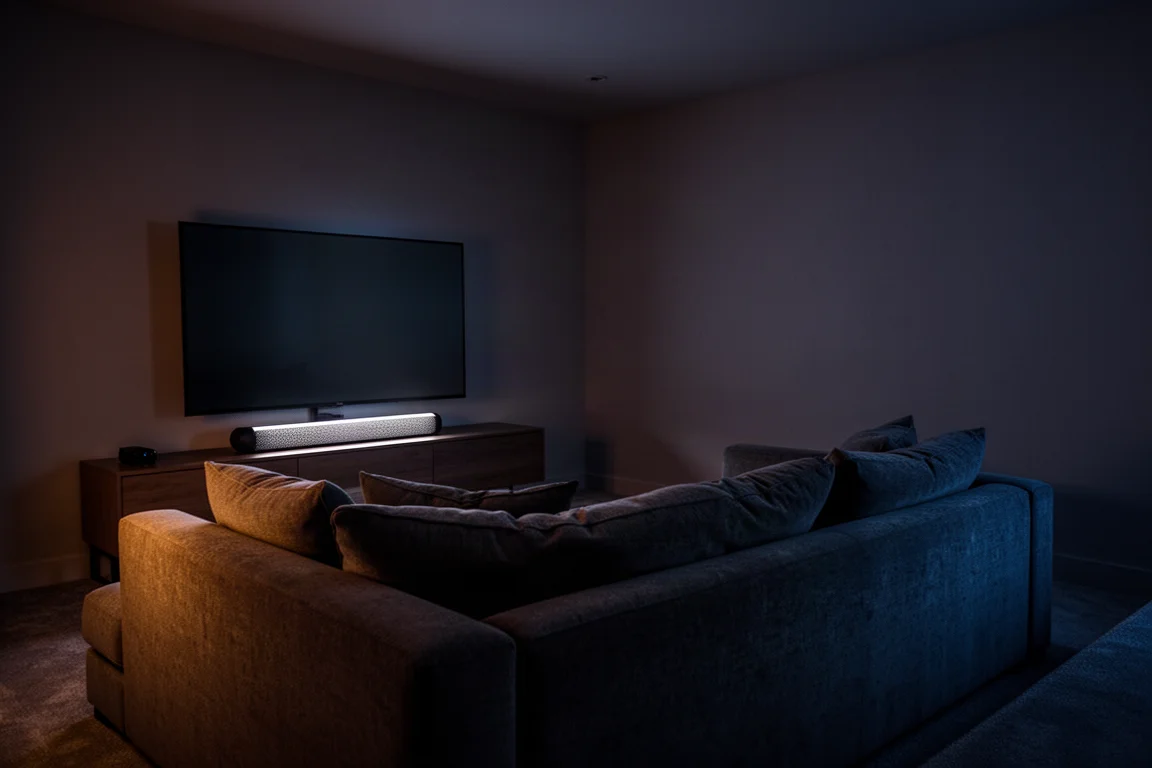
The practical advice is simple: match the system to the room and to how much tuning you are willing to do. The S95QR rewards patience with a broad feature set, but it does not deliver a set-and-forget experience.
Conclusion
The LG S95QR is a well-built flagship with a genuinely large speaker count, a strong feature list, and 810 watts behind it. What it lacks is consistency. Its default tuning is uneven, its profiles vary widely in quality, its center-mounted height driver did not produce a detectable benefit, and its best performance arrives only after manual adjustments that cannot be saved.
LG’s previous soundbars carry a strong reputation, which makes this generation’s flagship a disappointment rather than a step forward. If you want this kind of multi-speaker Atmos package, there are alternatives that are easier to live with, and the S95QR is best approached with clear expectations about how much hands-on work it requires.
Product link
View more details for LG S95QR
This product is mentioned in the review. Check the specifications, options, and compatibility before buying.
View more details for LG S95QRFurther reading
Related Reviews
Soundbars
Bang & Olufsen Premiere Review: A Compact Soundbar Built to Last
A close look at the Bang & Olufsen Premiere, a compact soundbar with deep bass for its size, automatic sound profiles, and a clear modular upgrade path.
Soundbars
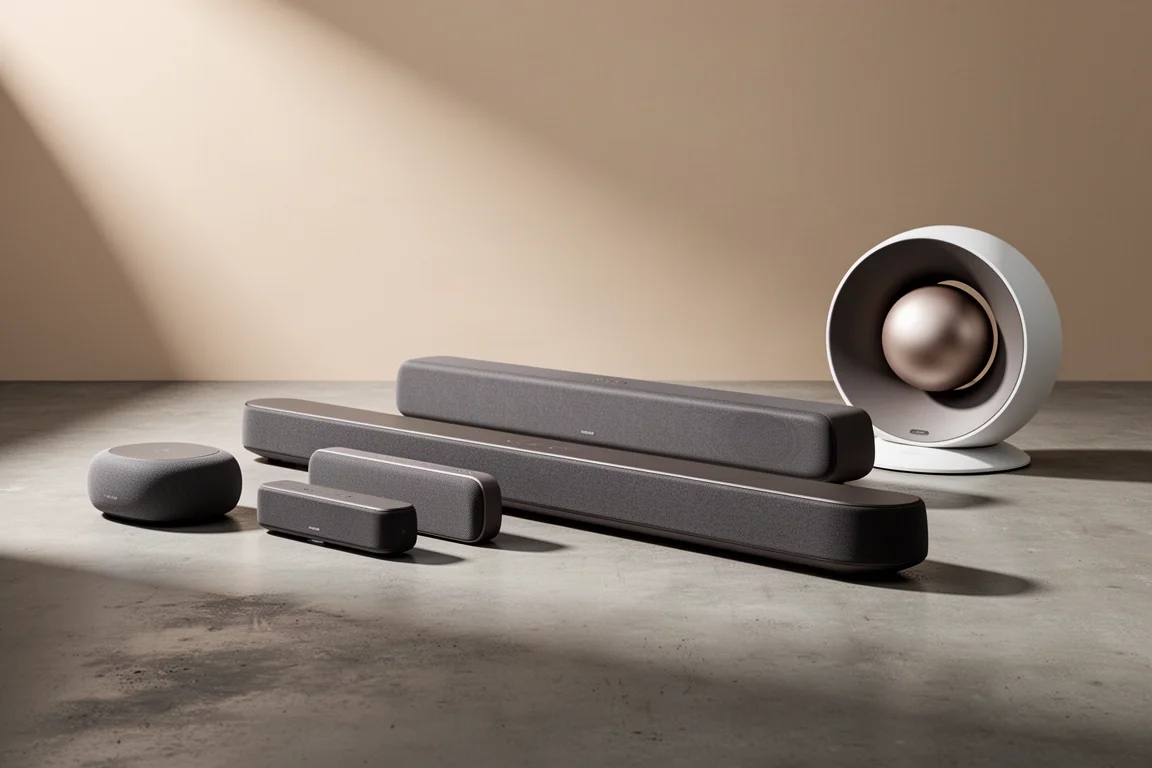
Best Dolby Atmos Soundbars: Six Picks for Movies, Music, and Small Rooms
A practical roundup of six Dolby Atmos soundbars, from compact dialogue-focused bars to expandable systems and an all-in-one flagship.
Soundbars
Bluesound Pulse Cinema Review: A Music-First Soundbar With a Software Catch
A close look at the Bluesound Pulse Cinema, a 3.2.2 soundbar with a genuinely expressive midrange and natural tone, plus the app and expansion limits worth knowing before you buy.