TVs
LG C6 OLED Review: Strong Picture Quality, a Terms of Service Gate, and the Case for the C5
The LG C6 OLED delivers a factory-calibrated picture and a strong gaming feature set, but its built-in apps sit behind LG's terms of service. Here is how it stacks up against a discounted C5.
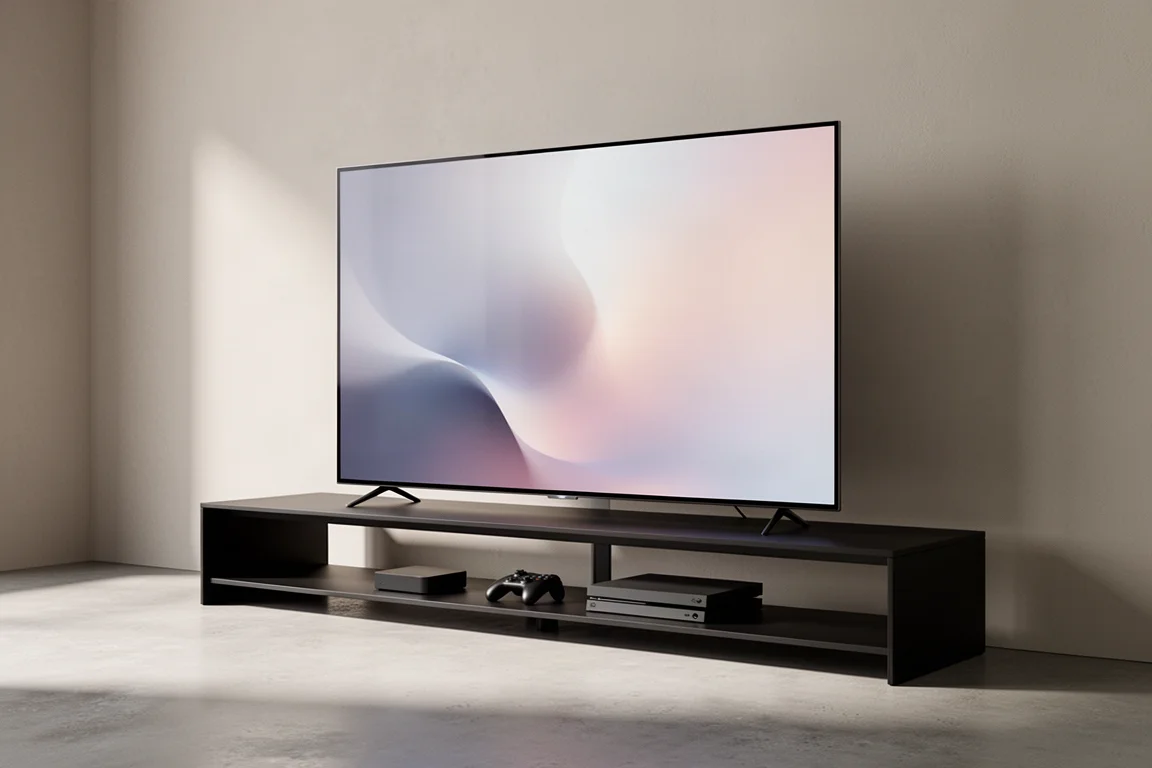
Introduction
The LG C6 OLED gets the fundamentals right. Leave it in Filmmaker Mode and it measures close to reference without a single adjustment, which is rare at any price. It also arrives with a condition attached. Built-in apps stay locked until you accept LG’s terms of service, which turns a simple streaming session into a decision about data sharing.
That combination shapes everything below: what the C6 does well, where it asks for compromises, and why a discounted LG C5 is still the value pick for many buyers in 2026.
LG C6 OLED: Picture Quality Straight Out of the Box
The C6 starts in an energy saving picture profile that is best replaced immediately. Standard and vivid modes push a brighter, bluer, more contrasty image, but neither is accurate. Cinema mode is a clear step up from those, though it still does not land where most film content should.
Filmmaker Mode does. In SDR, the profile measured a delta E of 2 for grayscale and 1.2 for color, with perfect EOTF tracking. Anything under a delta E of 3 generally counts as calibrated, because errors below that threshold are hard to see with the naked eye. The C6 clears that bar without a single menu change.
HDR behaves the same way. Filmmaker Mode measured a delta E of 2 for both grayscale and color, and Dolby Vision stayed inside tolerance at 1.4 for grayscale and 3 for color. Color coverage came in at 89% of Rec. 2020 and 98% of P3. For viewers who want the picture to look the way the content was mastered, Filmmaker Mode is the setting to leave alone.
The Terms of Service Gate
Declining LG’s terms of service does not simply disable optional data sharing. It blocks the apps. Netflix, Disney Plus, Max and the rest remain visible on the home screen, but opening any of them brings up the same agreement prompt again. On other smart TV platforms, declining optional privacy settings has not, in practice, turned already-paid-for apps into locked doors.
The workaround is external hardware. Selecting inputs and reaching the picture, audio and system menus still works, so an Apple TV 4K, a media server of Blu-ray rips, or a game console can carry the entire experience while webOS stays out of the way. That is a reasonable setup for many enthusiasts anyway, but it adds cost to a television that is already expensive, and it should not be necessary.
Brightness, Reflections, and Black Level in Real Content
This is still an OLED, and brightness reflects that. In Filmmaker Mode, peak brightness measured 270 nits in SDR and just over 1,300 nits in HDR and Dolby Vision. Real-time brightness and contrast enhancements could not push it much further. A brief approach to 1,400 nits was quickly clamped by LG’s brightness limiter and settled back near a sustained 1,300. That is bright enough to enjoy in most rooms with some ambient light, but it is not a mini-LED competitor.
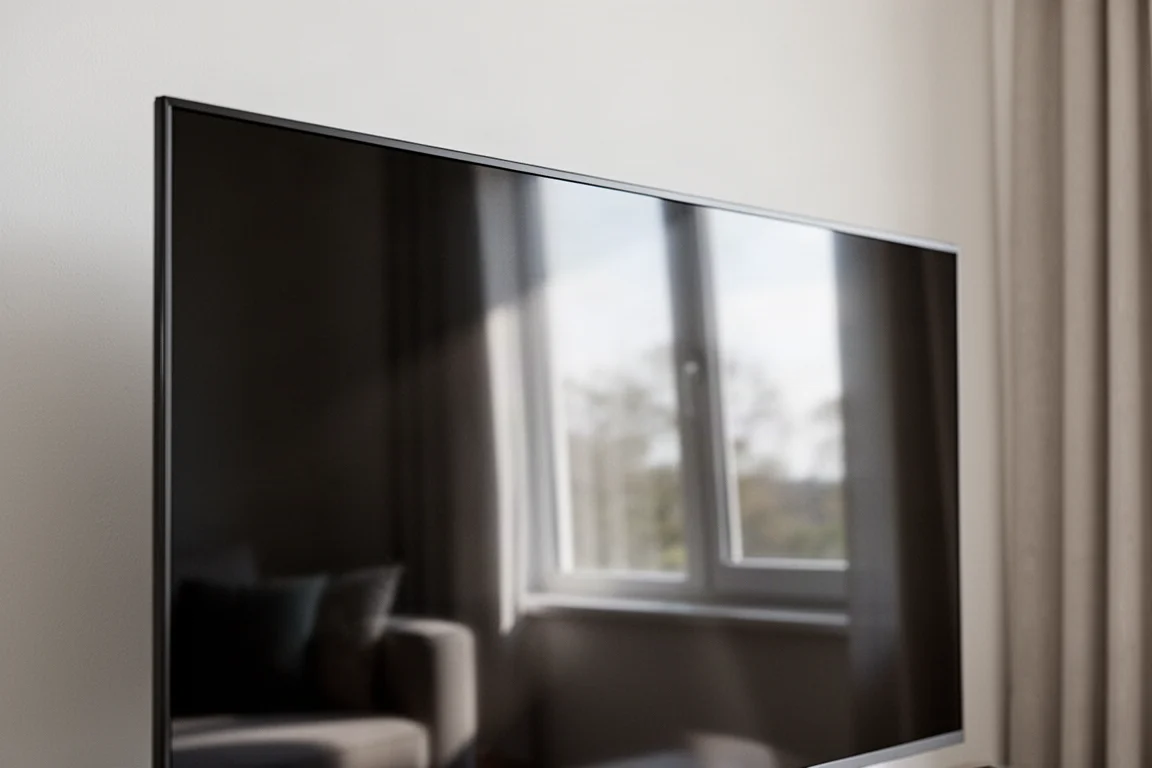
The screen surface is the bigger practical issue. It is more reflective than ideal, and the panel does not always have enough brightness to overcome a direct on-axis light source. Off-axis viewing and edge-to-edge uniformity are excellent, as expected from an OLED, but angling the TV can pull more reflections into view, so room placement matters.
Two quirks stood out in real content. A green glow appeared along the bottom edge of the screen during bright full-screen scenes, the kind of content that fills the frame rather than sitting inside letterbox bars. It was not present with 2.35:1 material. Separately, low-light scenes looked slightly crushed, darker and at times muddier than expected given how well Filmmaker Mode measured. The black level can be lifted in the menus to recover finer shadow detail.
It is also worth knowing which version you are buying. The 55-inch model reviewed here uses a WOLED panel, and the 65-inch follows the same approach. LG’s newer RGB tandem design appears only in the 77-inch and larger versions, which start around $3,700. Compared with higher-end OLEDs, the C6 gives up some color pop, color volume and, in some cases, brightness.
Gaming, Motion, and Day-to-Day Use
Gaming is straightforward. A native 165Hz refresh rate, HDMI 2.1 and the expected gaming feature set make the C6 an easy fit for both consoles and a gaming PC. Console play was smooth throughout.
Movies are a slightly different story. With 24p content, the image could look almost too smooth at times, with a faint soap opera effect creeping in even with motion interpolation and smoothing switched off. It did not appear with television or gaming content, only film, and viewers who are sensitive to motion may notice it.
LG C5 OLED: Why the Older Model Still Makes Sense
The C5, LG’s previous C-series OLED, is not dramatically outclassed here. Both sets share the same natural, organic image with true-to-life contrast and color. The C6 is brighter, but not by much, and in everyday viewing the two perform a lot alike. The C6 reads as an evolution of the C series rather than a new generation.
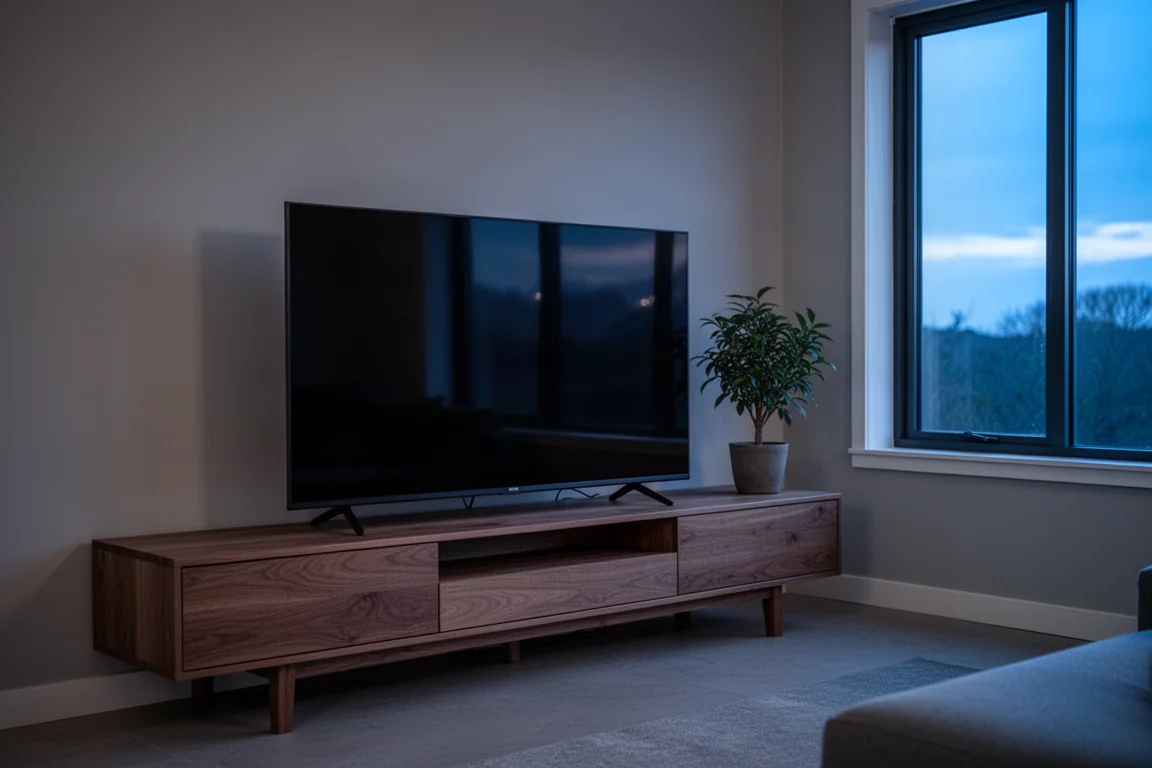
The C5 also avoids the app gating described above, and because it is now the outgoing model, new stock has been selling at deep discounts. For a buyer who wants OLED picture quality without paying the newest-model premium, that combination is difficult to argue with.
Design, Sound, and Sizing Notes
Design remains an LG strength. The C6 is clean, minimal and better looking than competing OLEDs from other brands, though that is a matter of taste.
Sound is the clear weak point. The ultra-thin profile leaves little room for internal speakers, and the result is thin enough that a soundbar should be treated as part of the purchase. On screen sizes, the 55-inch and 65-inch models are the ones described here. The 77-inch and 83-inch versions use LG’s newer RGB tandem panel and are effectively a different television.
Overall Buying Advice
The C6 cost over $1,700 after tax in the 55-inch size. That is a lot of money for a mid-sized television, and it is worth asking what else the same budget could buy. LED-based sets keep closing the gap every year, and they do not come with a terms of service gate on the apps.
If you already own a C5, there is no reason to upgrade. The performance difference is not large enough to justify the spend. If you are buying now, a discounted C5 is the smarter purchase while stock remains. If the C6 is the one you want, the 55-inch and 65-inch versions will serve well as long as you can control reflections in the room and you are comfortable with the platform requirements.
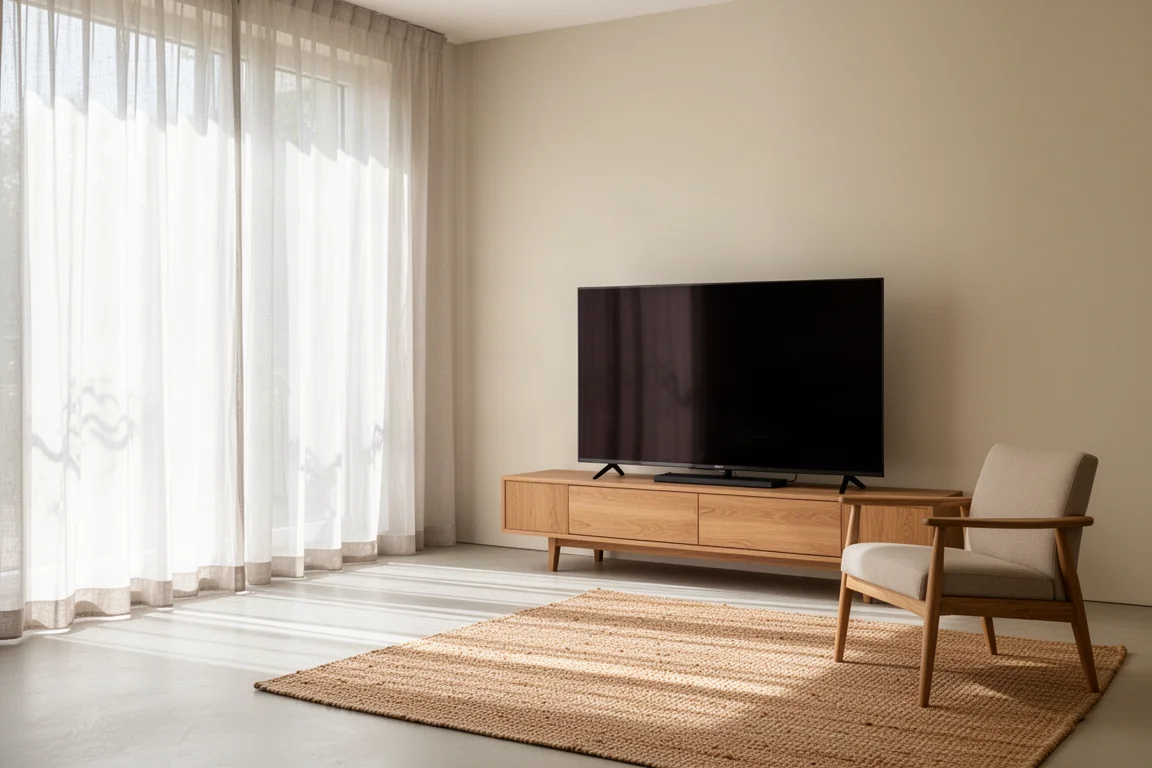
For most buyers, the decision comes down to timing and tolerance. The C6 delivers a genuinely well-calibrated picture and a strong gaming feature set. The C5 delivers much of the same image quality for less, provided you can still find one.
View more details for LG C5 OLED
Conclusion
The LG C6 OLED is a good television with a calibrated picture, capable gaming performance and a clean design. The concerns are equally clear: a reflective panel, a terms of service gate that locks built-in apps, modest brightness for the price, and a picture that reads as a refinement of the previous generation rather than a leap forward. Buyers who want the newest C-series panel and can work around its platform requirements will be satisfied. Buyers who want the most OLED for their money should look hard at a discounted C5 while it lasts.
Further reading
Related Reviews
TVs
Best Sony XR TVs Compared: X90K, X95K, A80K, A90K, A90J, A95K and Z9K
A practical guide to Sony's XR television range, from the value-focused X90K to the 8K Mini LED Z9K, with clear advice on which model suits which room.
TVs
Hisense 100UR8SG Review: A 100-Inch RGB Mini-LED That Takes On OLED
A 100-inch RGB mini-LED television with measured peak brightness of 3,850 nits, wide color volume, and a price far below large-format OLED.
TVs
Hisense U9 vs Hisense U8 vs Samsung S90C OLED: Which TV Is Worth Buying?
A practical comparison of two Hisense RGB Mini-LED televisions and an OLED alternative, with real strengths, trade-offs and a clear buying recommendation.