Home Cooling
Lasko Cyclone vs Dreo Smart Pedestal Fan: Which One Deserves Your Money?
A head-to-head look at two pedestal fans covering height, noise, airflow, oscillation, and smart controls to help you pick the right one.
Introduction
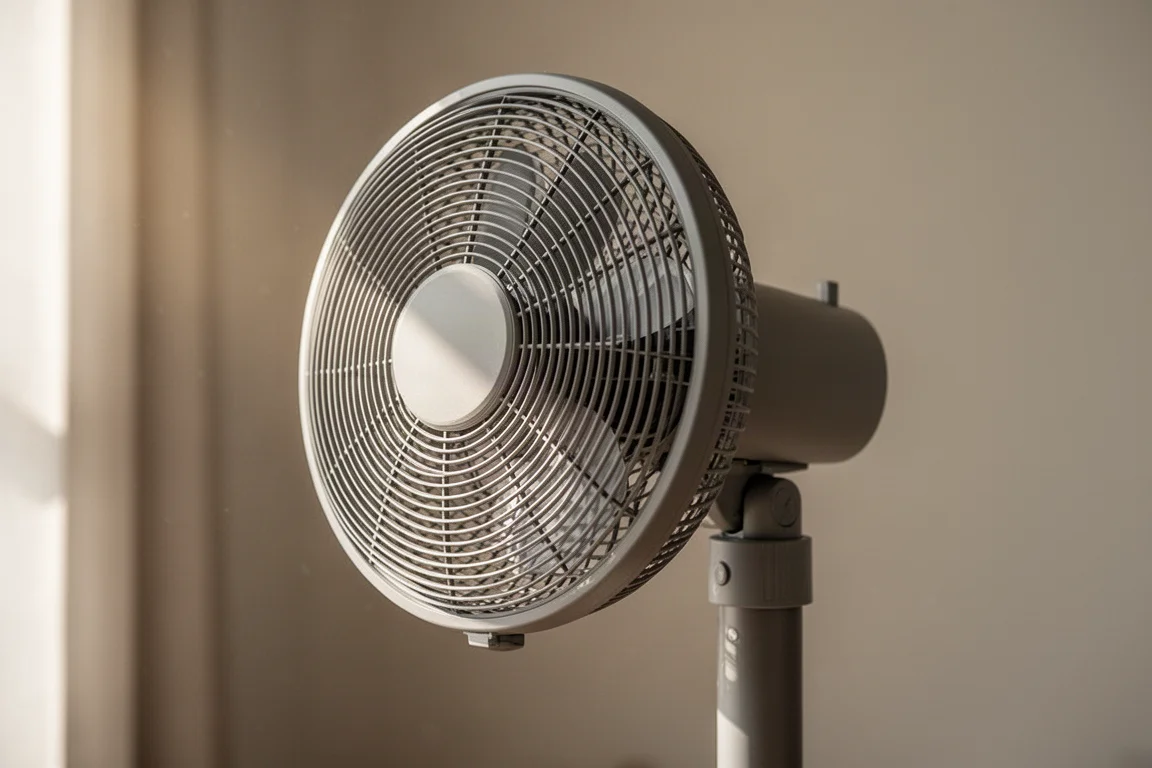
Pedestal fans are one of those purchases that seem simple until you actually compare two side by side. In this head-to-head, we look at the Lasko Cyclone pedestal fan and the Dreo smart pedestal fan across the things that matter day to day: height range, stability, controls, noise quality, airflow, and price. The result is a clear split: one fan wins on raw value and air pushing power, the other wins on refinement, features, and quieter operation.
Height and Base Stability
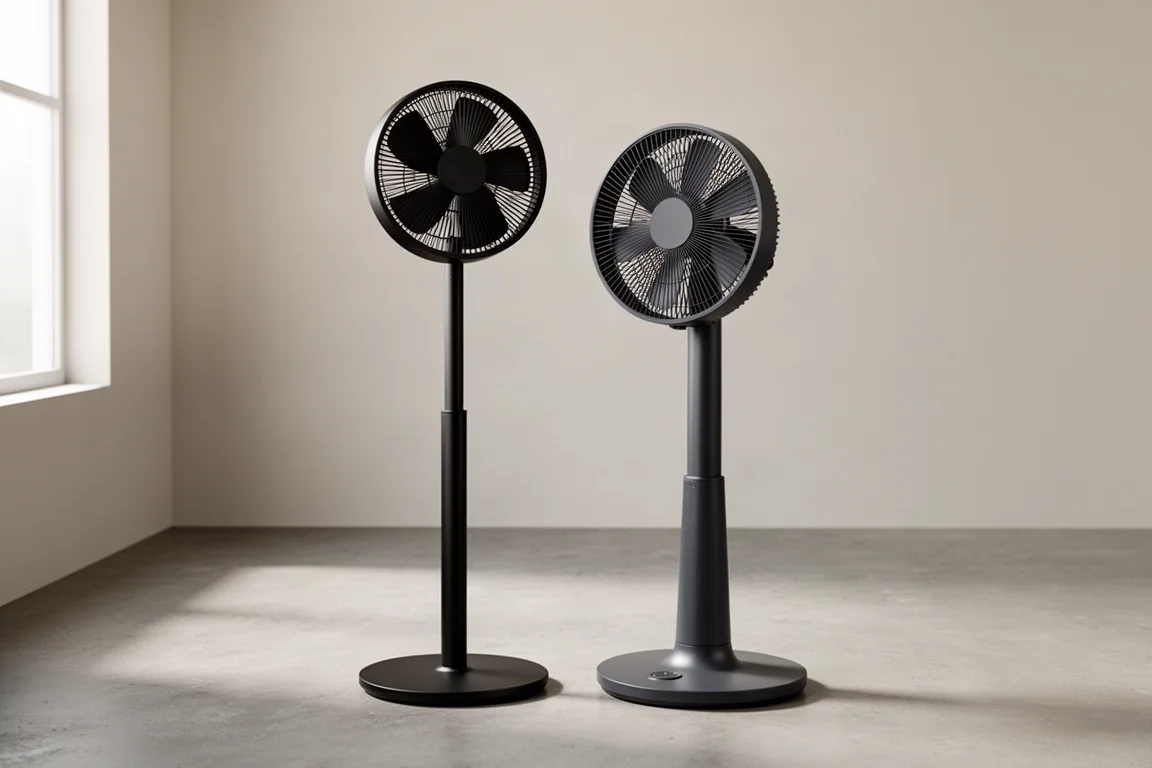
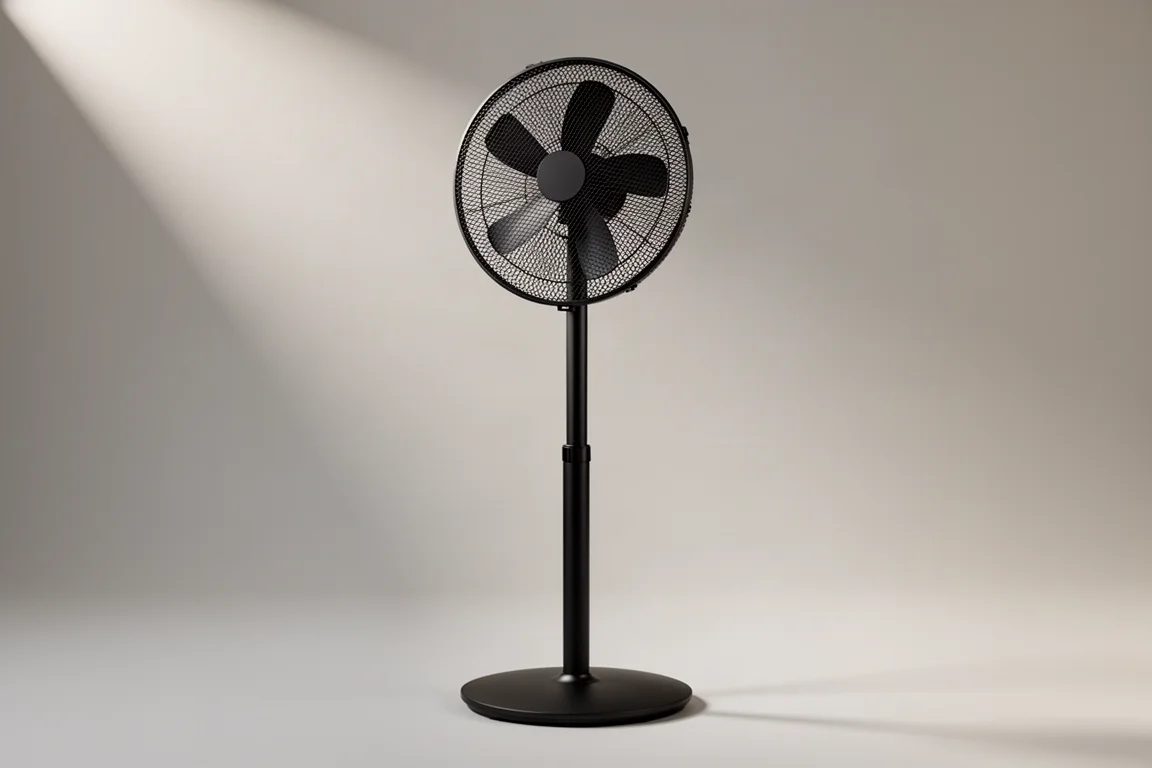
Height flexibility is the first difference worth noting. The Dreo tops out at a max height of 37 inches, while the Lasko reaches 44.5 inches. On the short end, both fans drop down to 33.5 inches at their lowest setting. If you want maximum reach for a tall bed, a standing desk, or airflow over furniture, the Lasko takes the win on height adjustment.
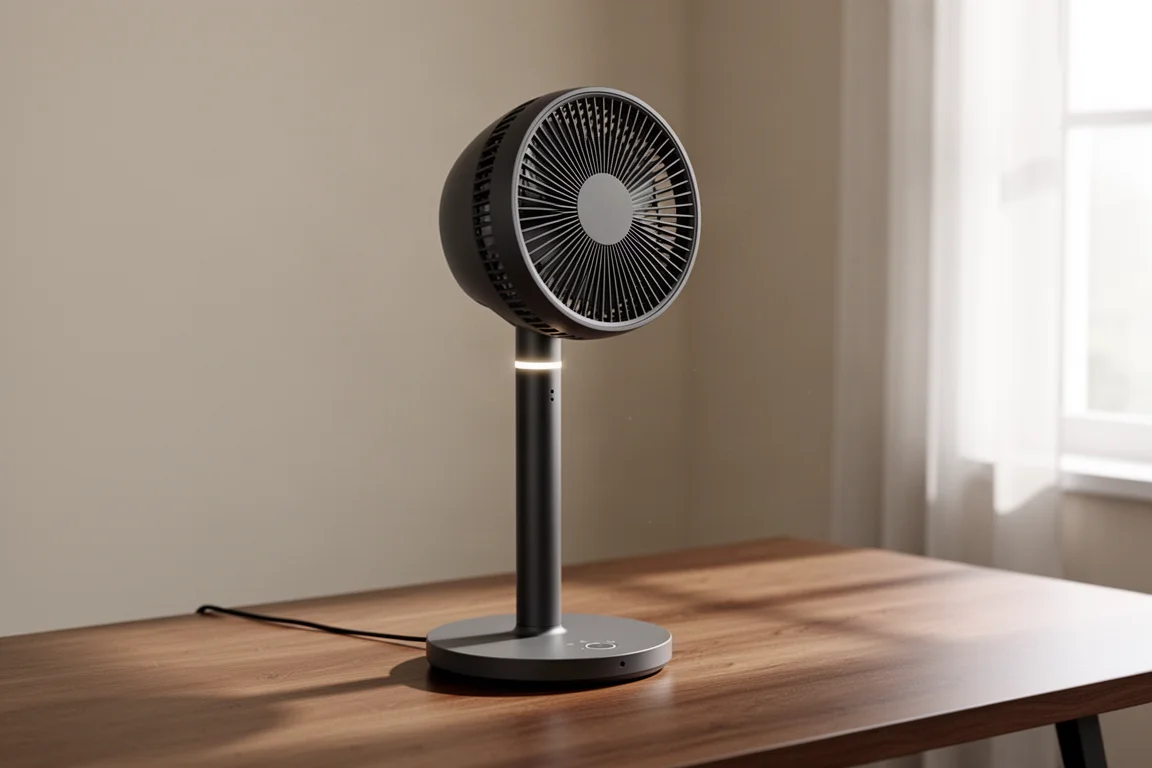
The base tells the opposite story. The Lasko uses a bigger base that feels flimsier, while the Dreo’s base is more compact and feels noticeably more solid. If floor space is tight or you just want the fan to feel planted, the Dreo has the edge here.
Remotes and Controls
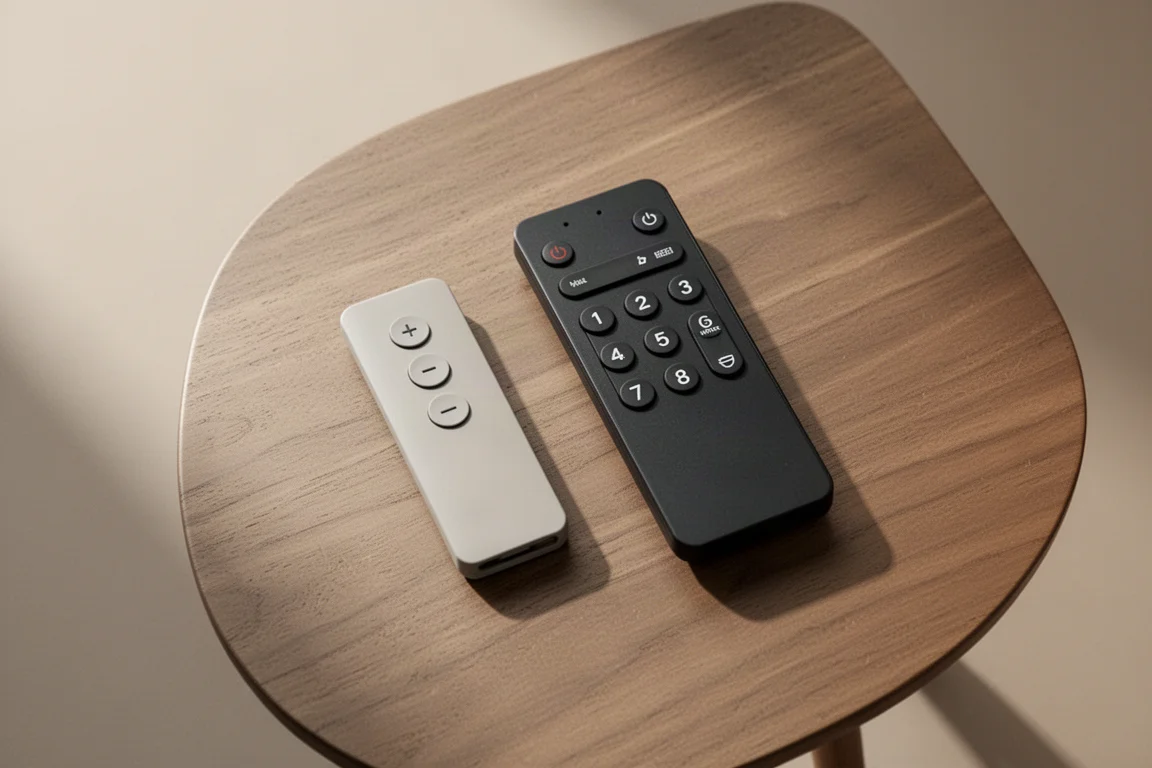
The Lasko ships with a simple three-button remote that covers the basics you actually need. It is honest and functional, nothing more.
The Dreo goes further with a seven-button remote and a much richer control set. It oscillates left to right like you would expect, but it can also tilt up and down, and even run multi-oscillation, moving up, down, left, and right at the same time. The Lasko requires you to manually adjust the tilt by pressing a small button, though its tilt range is generous and can point almost straight up. Still, the Dreo matches that range and does it all from the remote.
The Dreo also has a smart app with extra modes, including a turbo feature, plus RGB lighting on the fan itself. The lighting is a love-it-or-ignore-it kind of thing. The app, on the other hand, is more useful than it first sounds: if you are the type who constantly loses remotes, controlling the fan from your phone is a genuinely practical benefit.
Noise and Sound Quality
On raw loudness, the Lasko is the louder of the two, and the difference in sound quality is just as important as volume. A fan that is louder but smoother can be less annoying than one that is quieter but harsher, but in this case the Dreo wins both ways. Waveforms recorded at max volume for both fans show the Dreo producing a cleaner sound signature at high output, while the Lasko runs louder and rougher.
If you plan to run a fan while working, editing, or sleeping, the Dreo’s calmer sound profile is a real advantage in July and August heat.
Airflow at Ten Feet
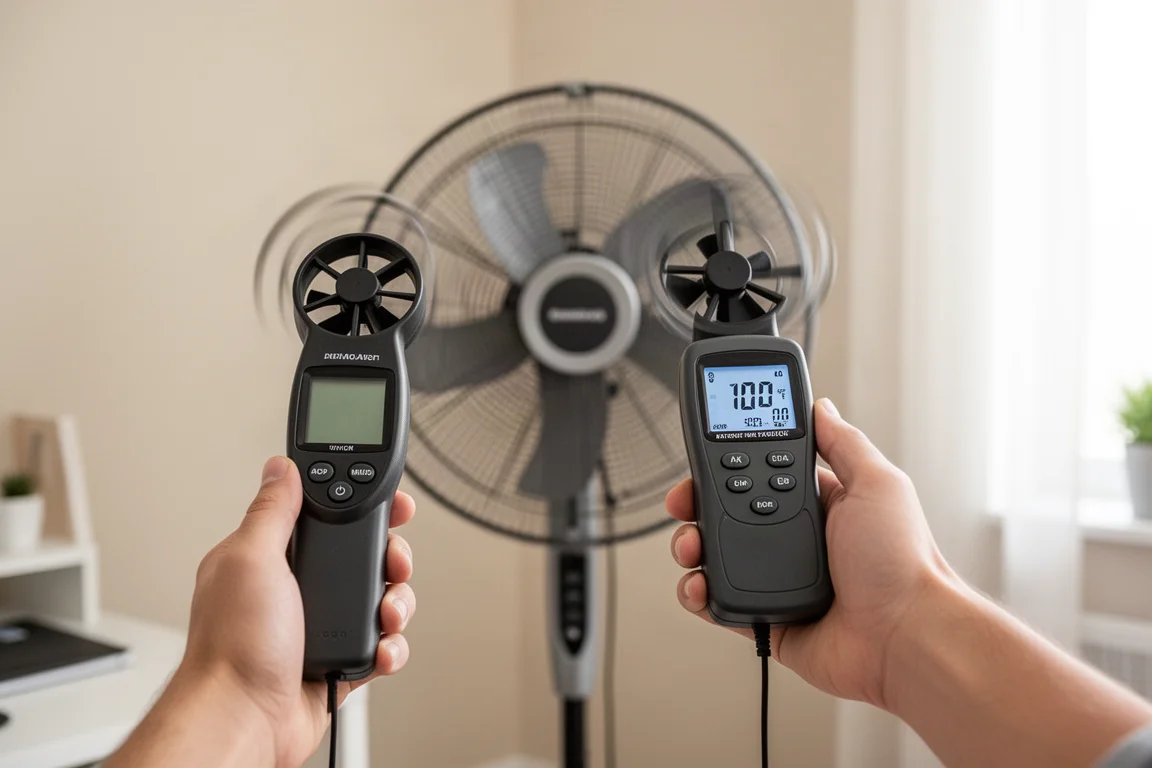
Airflow is where things get interesting. Measured with an anemometer from ten feet away, the Lasko pushed 4.9 mph of wind at its standard high setting, clearly beating the Dreo’s 3.8 mph at the same distance.
But the Dreo’s smart app changes the math. Switching on the turbo mode pushed the Dreo to 6.0 mph from ten feet, taking the airflow crown outright. Beyond speed, the airflow pattern differs too. The Dreo throws a narrower, solid beam of air that feels concentrated and consistent. The Lasko spreads wider but with a hollow center, more like a ring of air with a gap in the middle. Neither pattern is wrong, but the Dreo’s solid beam simply feels better when you are sitting in it.
Which Fan Should You Buy?
Price is what frames this whole comparison. The Lasko Cyclone comes in at an MSRP of $52.49 and is currently on sale. The Dreo lists at $130, though it is regularly discounted, and coupon offers can bring it down to around $107.
So this is not really an apples-to-apples fight. The Lasko is a solid fan from a brand with a long track record of dependable cooling products, and it moves plenty of air for the money. It just does not push as much air, it is louder, and it lacks the smart features.

The Dreo, meanwhile, solves more problems at once: quieter at high speed, a solid concentrated air beam, multi-directional oscillation, full remote and app control, and a turbo mode that outflows the cheaper fan. If you can justify the extra spending, it is easy to see the value, especially for someone who works near the fan all day.
Conclusion
Both fans are good at what they are designed to do. If you are on a budget and just need air moved, the Lasko Cyclone gets the job done at a friendly price with the tallest height range of the pair. If you have a little extra to spend and want quieter operation, smarter controls, multi-oscillation, and stronger tuned airflow, the Dreo smart pedestal fan is the more complete package. Match the fan to your budget and your room, and either one can earn its spot.
Further reading
Related Reviews
Home Cooling
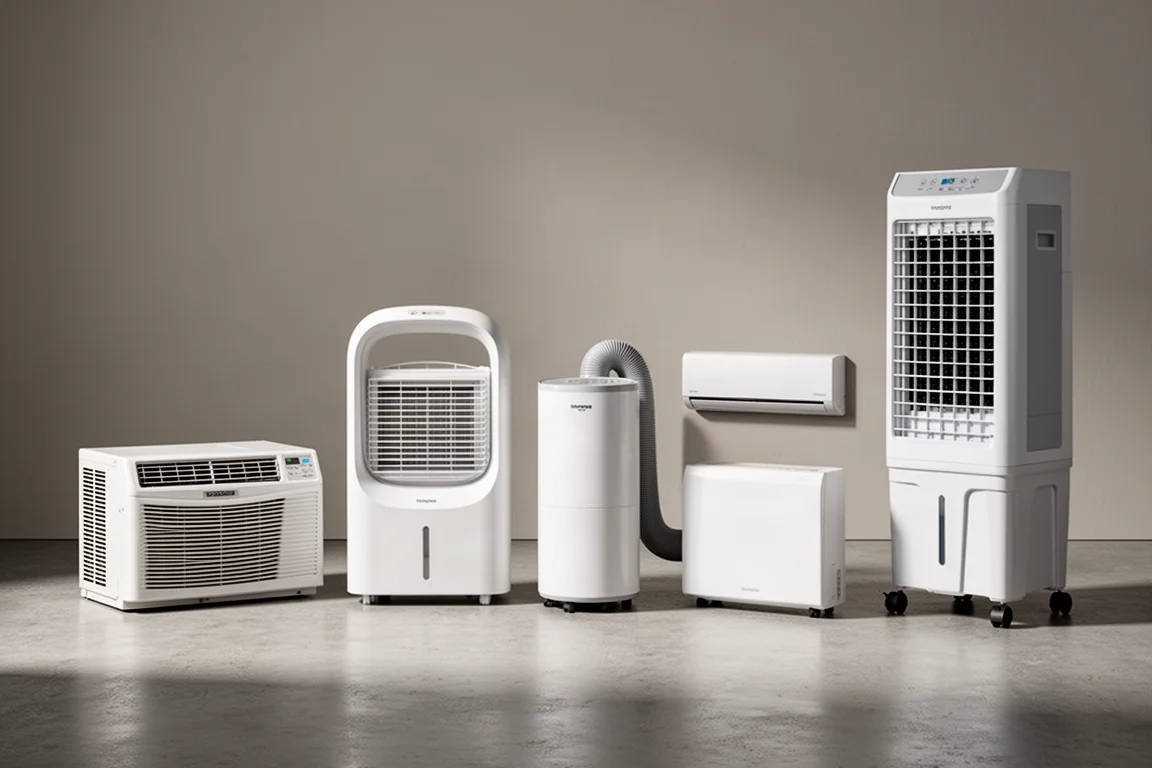
Best Room Air Conditioners and Coolers for 2026: Window, Portable, Mini Split, and Evaporative Picks
From budget window units to quiet U-shaped inverters, dual-hose portables, mini splits, and swamp coolers: eleven ways to keep a single room or shop cool this summer.
Home Cooling
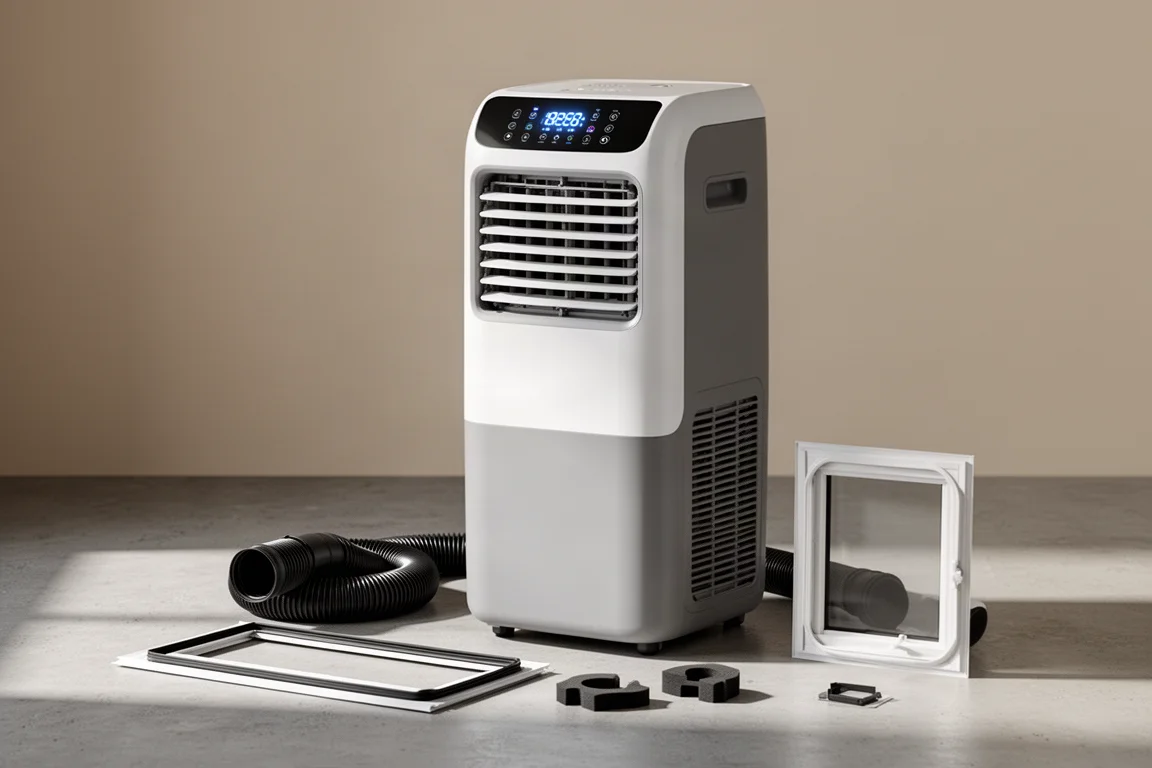
Dreo AC516S Portable Air Conditioner Review: Affordable Cooling With Few Compromises
A drainless-friendly portable AC with strong app support, quiet operation, and a price that undercuts the competition, with the usual single-hose trade-offs.
Smart Home
Amazon Echo Hub Review: A Smart Home Dashboard That Finally Gets It Right
The Amazon Echo Hub puts smart home controls front and center with a fast, simple interface. Here is how it performs as a family-friendly dashboard.