Ski Boots
Lange Shadow 130 LV Review: A Four-Buckle Ski Boot That Rethinks the Rear Half
A closer look at the Lange Shadow 130 LV, a four-buckle overlap boot with a dual pivot rear, a swappable suspension blade, and a low-volume fit that stays forgiving.
Introduction
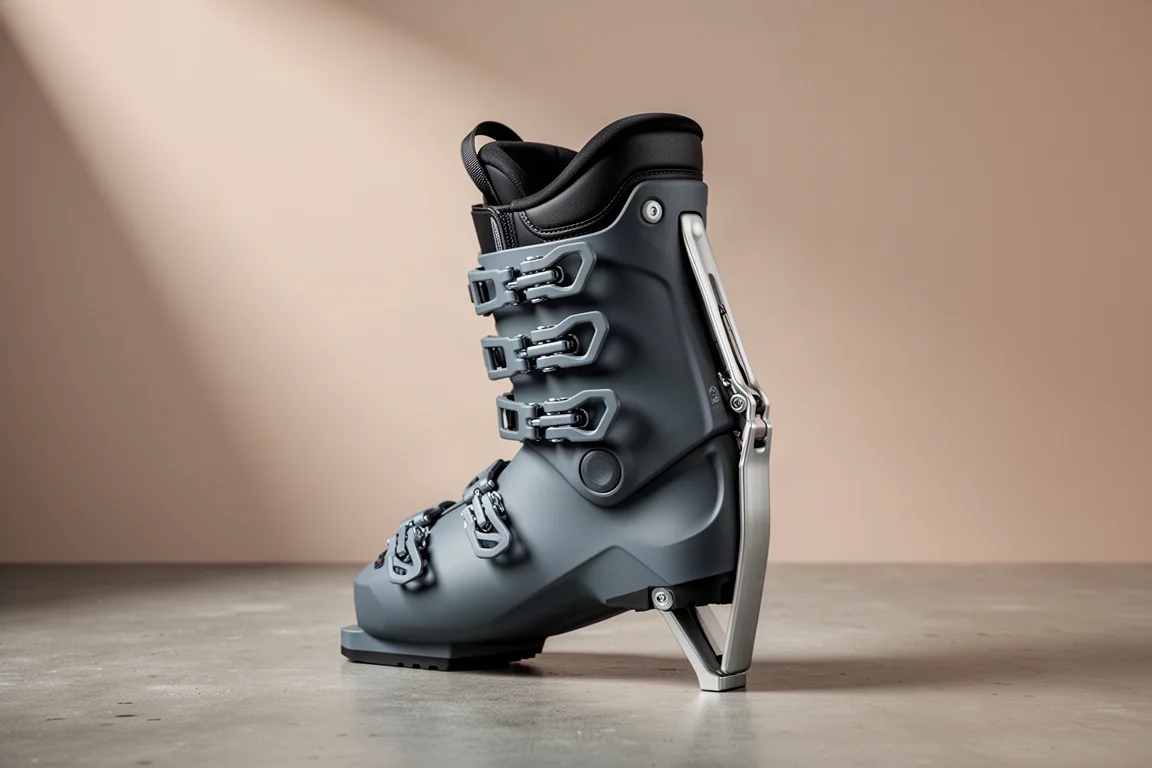
The Lange Shadow 130 LV is a four-buckle overlap ski boot that looks completely conventional from the front and genuinely different from the side. Lange has rebuilt the rear half of the shell around a suspension blade and a second, lower pivot point, a dual pivot layout that changes where and how the boot transmits energy into the ski.
Everything else stays close to the familiar formula. The boot keeps a four-buckle overlap construction and Lange’s dual core polyurethane shell, which means plastic of varying thickness, thicker where stiffness and durability matter and thinner where weight can be saved. A redesigned toe dam at the front of the shell is intended to keep ice from building up in the toe area.
The result is a boot that is less a fit-driven rethink than a mechanical one. Rather than softening or stiffening the shell in the usual places, the Shadow changes the leverage the shell offers a skier, which is why it feels different on snow even though it looks so familiar on the shelf.
Who This Boot Is For
The Shadow 130 LV is aimed at skiers who want strong power transfer without having to fight the boot for it. On moderate terrain and at moderate speeds it produces noticeably more response for the effort put in, which suits the broad middle of the skiing population more than it suits specialists.
It is also a reasonable option for park and freestyle skiers. Standard forward lean is 12 degrees, and the shell can be softened through swappable inserts, which makes an upright, edge-control-friendly setup easier to reach. Skiers who spend their time in soft snow, bumps and trees will find it behaves naturally, though the performance advantage over other boots is less obvious there.
It is worth being honest about who may not take to it. Very strong skiers who habitually drive the front of the boot hard and want a firm, progressive wall of resistance may find the Shadow’s responsiveness unfamiliar at first, and the more race-oriented RS line remains the more obvious choice for that style of skiing.
Main Strengths
The headline strength is efficiency. The suspension blade and lower pivot work together to widen the boot’s usable power band, so a gradual increase in shin pressure produces a corresponding, almost proportional increase in power and precision. The boot reacts to small inputs rather than demanding large ones.
On groomers this translates into a smooth, quick response that stays predictable. The boot also feels lighter than its category suggests, partly because it shed roughly 200 grams per boot compared with the RX model it replaces, and that lower weight is most noticeable when moving the feet around quickly.
Suspension Blade and Dual Pivot Layout
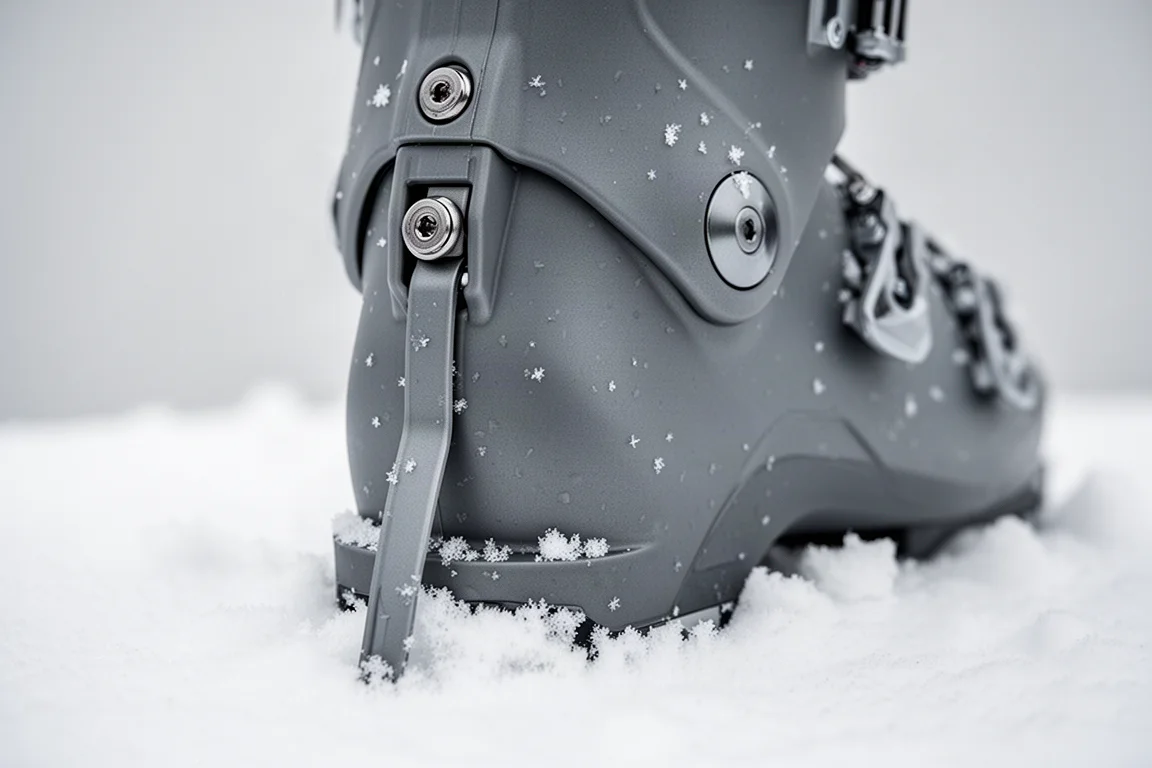
The suspension blade is the piece that connects the upper cuff to the lower shell at the rear. It is considerably softer and more pliable than the surrounding shell, which is not what most skiers expect from a 130-flex boot. Together with the two lower pivot points it creates a lower fulcrum, and a lower fulcrum means more leverage from less movement.
The arrangement is best understood as an easier path to the boot’s top end rather than a higher ceiling, and that matches how it skis. The rear of the shell no longer resists as one firm block. It flexes, recovers, and keeps feeding energy into the ski through a wider range of motion. A raised spine on the stiff tongue adds to the effect by reducing how far the shin has to travel before the boot engages.
Liner, Fit, and Customization
The liner uses a single piece of geometrically structured foam that conforms around the foot and ankle rather than compressing flat. It is more pliable than the liners found in Lange’s race-oriented boots, which makes it comfortable out of the box but also means it feels less powerful than a stiffer, denser liner.
Fit is the other surprise. This is a low-volume boot, yet it has more room over the instep than earlier low-volume Lange shells, enough that skiers who normally cannot wear an LV boot may be able to wear this one. The toe box is asymmetrical, angled to follow the natural line of the toes. The heel pocket has a curved ridge that helps hold the heel in place once the liner has taken up the shape of the foot. The liner is heat moldable, though with foam this pliable it will also adapt through normal skiing.
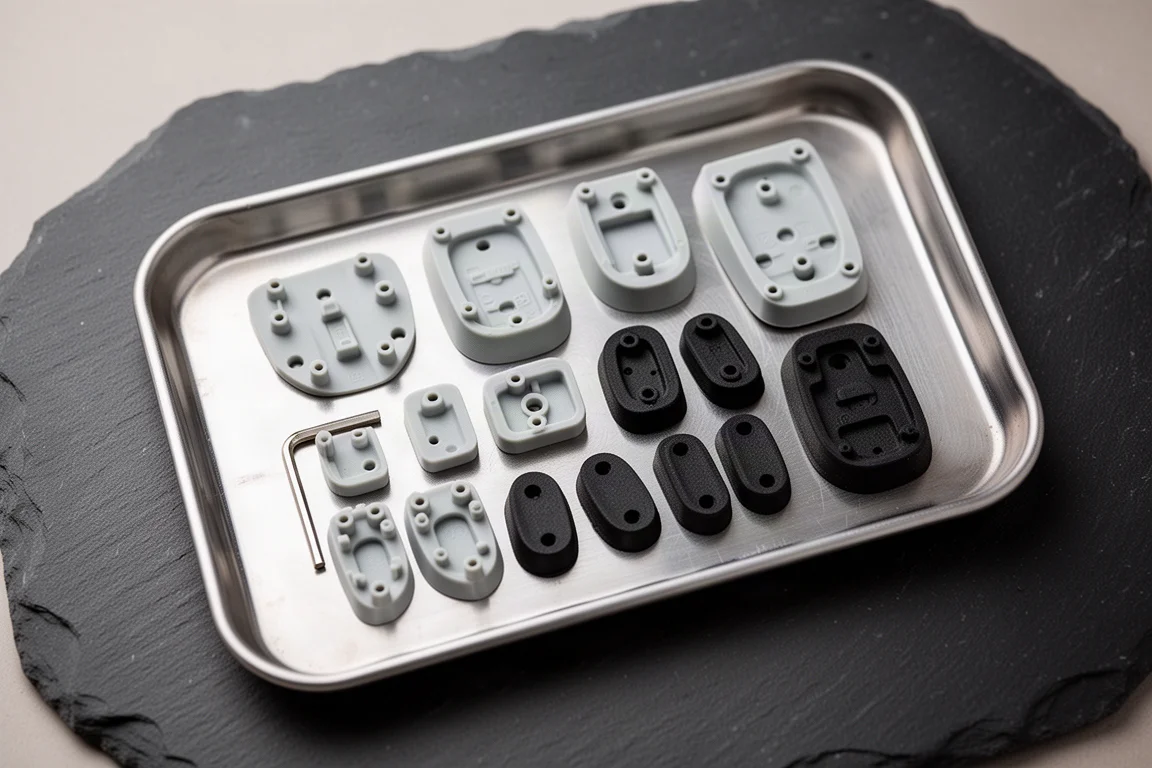
Customization is unusually deep. Three points on the shell, the two lower pivots and the suspension blade, accept interchangeable inserts. The boot ships with dense light-grey plastic pieces installed, and softer black rubber-like pieces come in the box. Lange indicates the softer set makes the boot roughly 10 percent softer. The swap takes only an Allen key, and the pieces can be changed without removing the upper cuff. Upper cuff alignment is adjustable as well.
Things to Consider Before Buying
The Shadow 130 LV asks for an adjustment period. Skiers used to driving forward hard against a firm boot may find the initial response twitchy, because the shell gives power back so quickly. The most common fix is not more force but less, along with a willingness to feel the boot out rather than ski it the way previous boots were skied.
Setup matters more here than on most boots. Forward lean is 12 degrees with a 4-degree ramp, and the optional spoiler adds another 4 degrees. Skiers who prefer a softer, more supple feel may want the softer inserts fitted, while those who want maximum precision can keep the dense factory pieces. Sole choice also changes how the boot feels when putting it on, since the heel pocket can be harder to settle into with a walkable sole than with a standard one.
Finally, the liner is not the most powerful in Lange’s range. Anyone expecting race-boot levels of support from a denser foam will want to look at the stiffer liners used elsewhere in the line.
Buying Advice
This is a boot that rewards a proper fitting rather than a blind purchase. The low-volume shell is more forgiving than its label suggests, but fit still varies enormously from foot to foot, and the smartest approach is to try the boot on with a boot fitter and, if it feels good enough to ski, take it straight to the hill before changing anything.
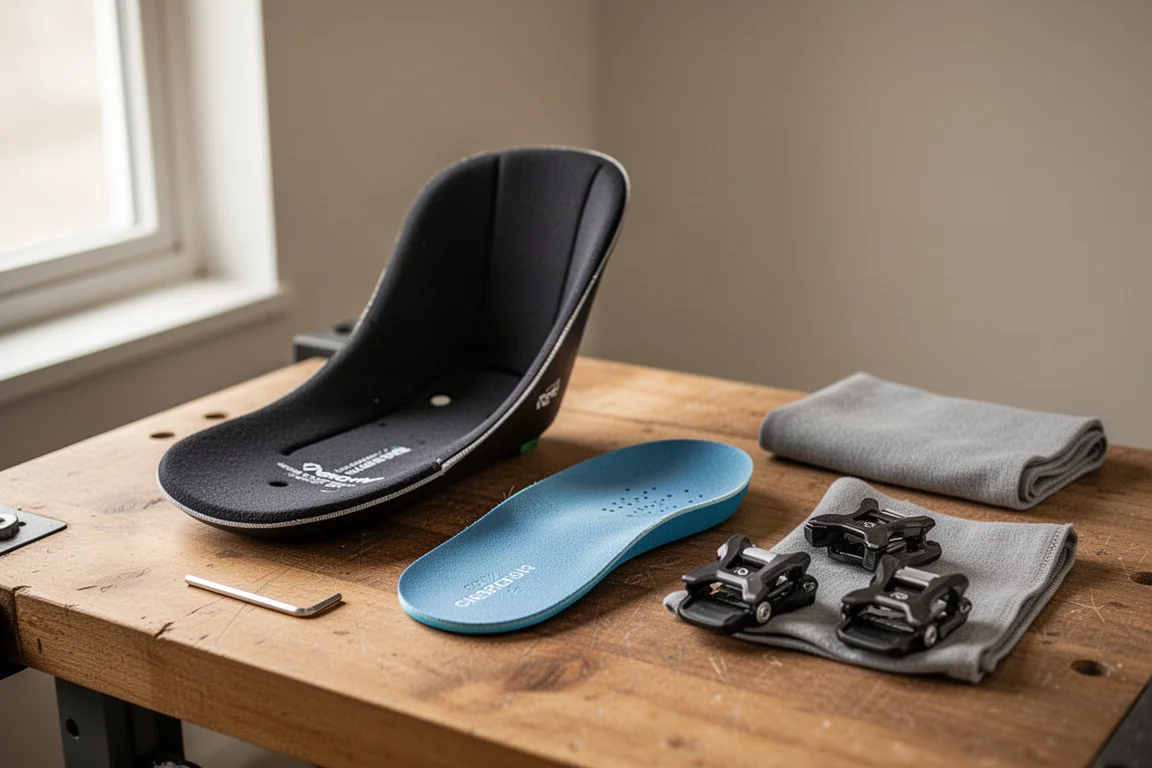
If the liner feels acceptable out of the box, leave it alone. Heat molding is best treated as a solution to a specific problem rather than a routine step. The same logic applies to the inserts: ski the boot as delivered first, then soften it only if the response feels too sharp for the way you ski. The three-point insert system makes that a genuinely useful tuning option rather than a gimmick, and it is the main reason the Shadow can be adapted to a wide range of skiers and skiing styles.
Skier size and weight play a role in the decision too. Lighter skiers may find the factory setup plenty responsive, while heavier or more aggressive skiers may prefer the dense pieces for a firmer platform. Either way, the boot is a stronger match for all-mountain cruising, park laps and moderate-speed carving than for full-throttle racing.
Conclusion
The Lange Shadow 130 LV is a genuine mechanical rethink of the four-buckle overlap boot. The dual pivot rear and suspension blade deliver an unusually accessible power band, the low-volume fit is more accommodating than expected, and the swappable inserts give skiers real control over how firm the boot feels. It is not the right boot for everyone, particularly those who want a hard wall of resistance, but for a broad range of all-mountain skiers it makes strong skiing noticeably easier.
Product link
View more details for Lange Shadow 130 LV
This product is mentioned in the review. Check the specifications, options, and compatibility before buying.
View more details for Lange Shadow 130 LVFurther reading
Related Reviews

Ski Boots
2027 Ski Boot Roundup: Six 130-Flex Boots Worth Knowing
Six 130-flex ski boots for 2027, plus a low-volume liner upgrade, compared on weight, fit, flex feel, and ease of use.

Ski Boots
Armada AR One Ski Boot Review: A Three-Piece Cabrio That Finally Gets It Right
Armada's first ski boot blends three-piece Cabrio design with Atomic engineering, a heat-moldable shell, and a 100mm last that fits better than any Cabrio before it.

Ski Boots
Armada AR1 Ski Boot Review: A Cabrio and Overlap Hybrid for Park and Freeride Skiers
Armada's first ski boot pairs a three-piece cabrio shell with overlap-style buckles and a cable-driven slingshot buckle. Here is where it shines, and what to weigh before buying.