Down Jackets
La Sportiva Lumina 200 Review: A 250g Down Jacket for Lightweight Adventures
A close look at the La Sportiva Lumina 200, a 250g down jacket with 1000 fill insulation, a minimal feature set, and a very small packed size.
Introduction
La Sportiva has spent decades building footwear, from rock shoes to mountaineering boots, and its clothing range is growing quickly. The Lumina line is the lightest down range the brand has produced, and it arrives in three versions: 100, 200, and 300. The Lumina 200 sits in the middle and is the most all-round of the three, balancing warmth against packed size for year-round mountain use.
The company is based in the Alps, and its staff climb, ski, and run from their doorstep, testing garments and footwear on lunch breaks and after work. That shows in the range’s single-minded focus: keep the weight down while keeping performance high.

That focus is what makes the Lumina 200 worth a closer look. It is a jacket built to disappear into a pack and then deliver real warmth the moment the temperature drops.
Who This Jacket Is For
The Lumina 200 suits anyone planning lightweight adventures, wild camping, or summer alpinism, where an extra layer has to earn its place in the pack.
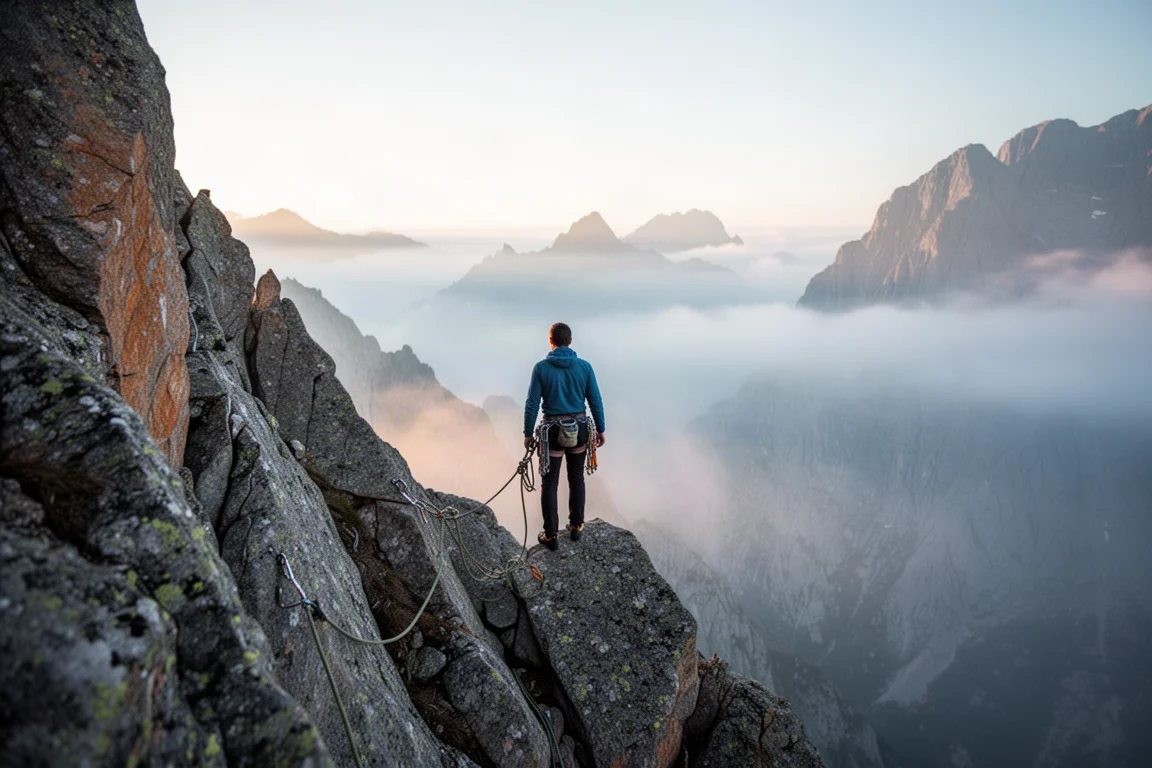
Ski tourers may get the most from it. It can stay in a bag all day, then come out in the evening or at the hut when the temperature falls. The same logic applies to bivouac trips, where an unexpectedly cold night is far easier to handle with a warm layer that takes up almost no space.
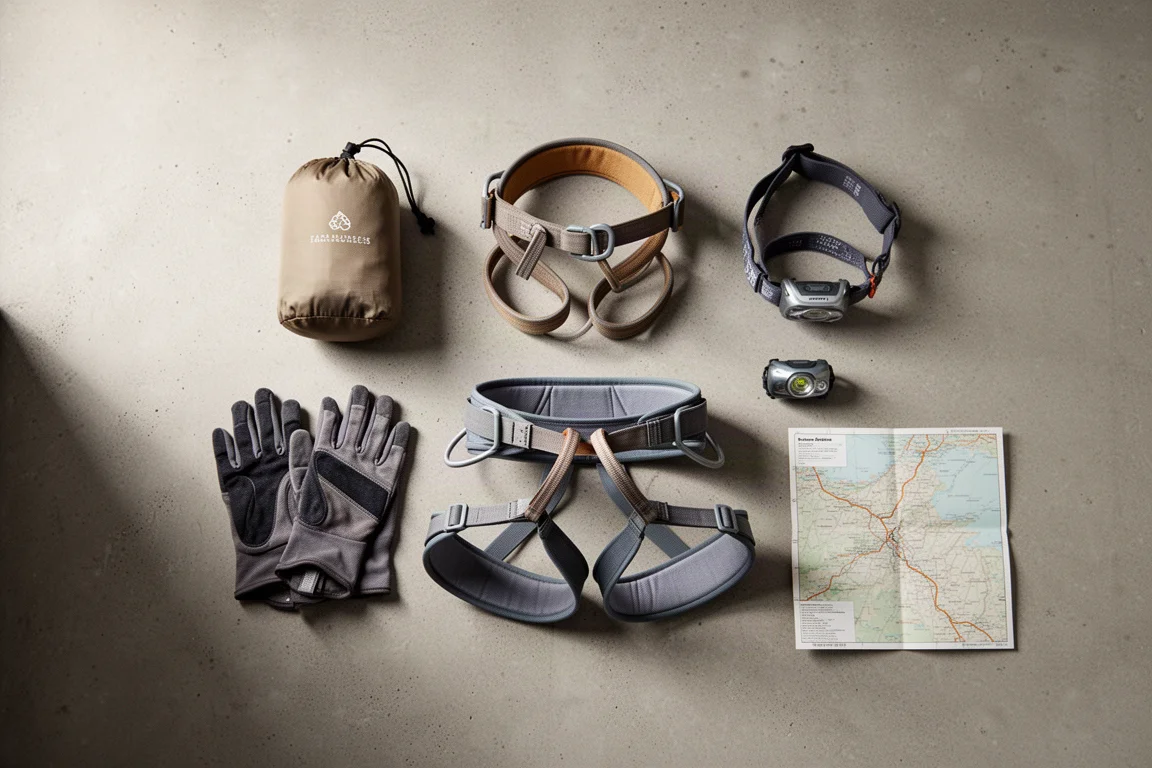
Climbers have a strong case too. Clipped to a harness, it is there for a cold belay on a single pitch, for multi-pitch routes, or for the walk-off. Long-distance runners and bikepackers who want a little warmth without carrying weight will also find it makes sense.
Warmth, Weight, and the Case for 1000 Fill Down
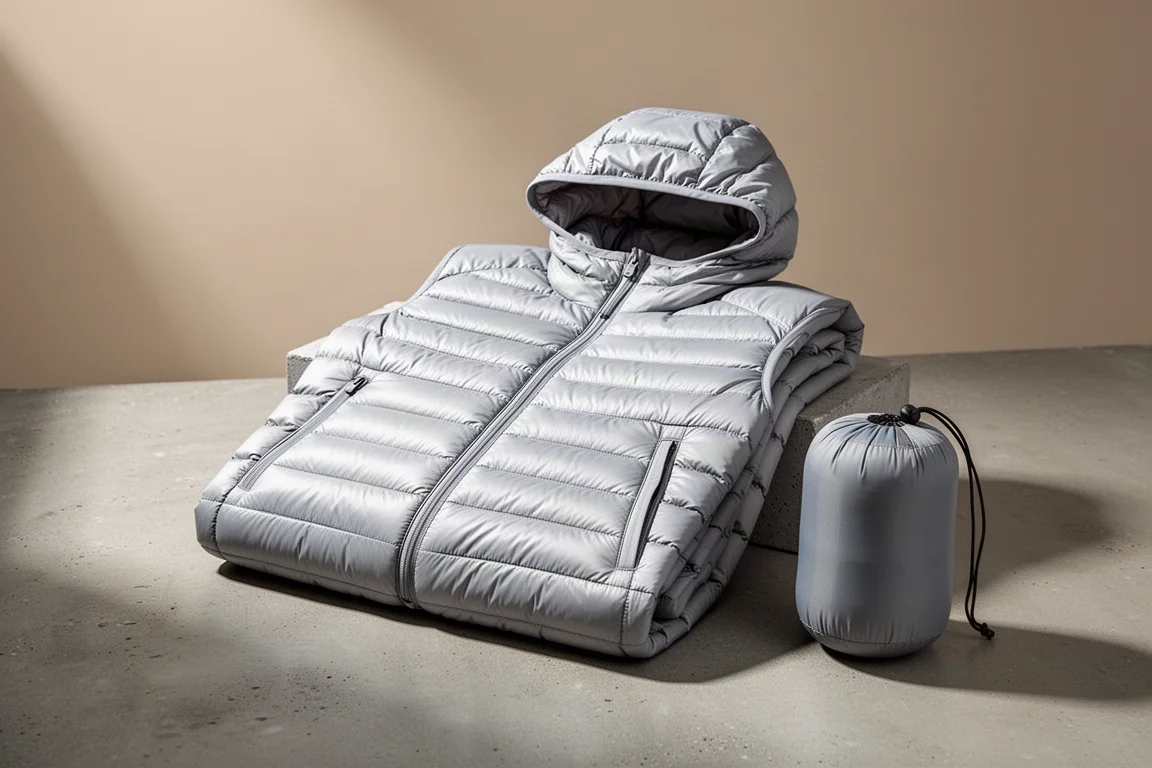
The Lumina 200 weighs 250 g in total, and 125 g of that is 1000 fill white down. Half the weight of the jacket is insulation, and that is where the warmth comes from.
Fill power is worth clarifying, because the number can be misread. A higher figure does not automatically mean a warmer jacket. A jacket stuffed with 600 fill down can be warmer than this one, but it will be bulkier, heavier, and it will not pack down as small. High fill power means the down has more ability to loft and fill space, so less of it is needed. At 1000 fill, this is about as high as fill power gets, and it delivers one of the best warmth-to-weight ratios on the market.
A small amount of lower-quality down would not achieve much. Here, 125 g of 1000 fill down lofts generously, which makes this a genuinely warm jacket for something that packs so small and weighs only 250 g.
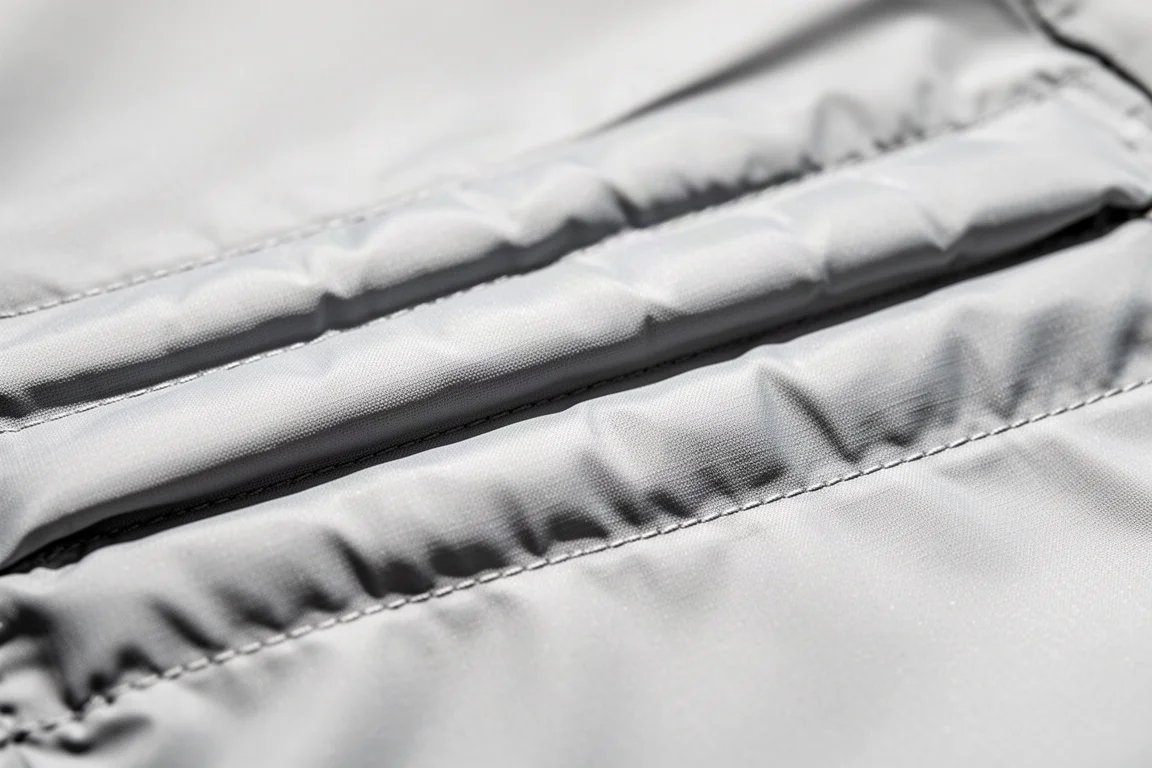
The insulation is paired with a very light, thin Pertex Quantum outer. That is a good match for a jacket like this: the fabric is thin and compressible, yet at a micro scale it is strong. It also matters because down is prickly on a small scale and can work its way through a shell that is not dense enough. Fabrics this thin often look shiny, but their weave is tight and the holes are small, which keeps feathers where they belong.
Design and Construction Details
The design is deliberately minimal: a full-length zip, hand pockets, and a hood. That is essentially the whole feature list. The hem and cuffs fit well as they are, so there are no extra tabs or pull cords, which keeps the weight down.
The hood is not helmet compatible. For a mountaineering jacket that is an interesting decision, and a sensible one, because it removes bulk. In use the hood works well worn on its own, and the jacket compresses neatly enough to layer under a helmet when climbing. The reasoning is straightforward: most people reach for a jacket like this at the end of the day, at a hut or a bivy, when the helmet is already off.
Construction is equally considered. The baffles are patterned to follow the body so warmth lands where it is needed, and stitching is kept to a minimum, because every seam adds weight.
Packability and Real-World Use
The Lumina 200 ships with a very small stuff sack, which shows how compact it can go when clipped to a harness. Over nearly a year of use it has proven itself across rock climbing and multi-pitch routes, where it packs small enough to carry on a harness, and on ski trips, where it spent much of the day in a pack in case the lifts were cold, then doubled as a mid layer in the mornings and evenings.
On a nighttime ski tour, skinning uphill generated plenty of heat, but once at the top the temperature dropped and the jacket came straight out of the pack and delivered a lot of warmth for its size. That is precisely the pattern it is designed for.
Down needs to stay dry to work. Once wet, it stops lofting and stops keeping you warm, so a dry bag is a practical alternative to the included stuff sack: it keeps the jacket dry, compresses it well, and holds the compressed shape without letting air creep back in.
Things to Consider Before Buying
This is not a burly piece of kit. It is not built for backing up chimneys or carrying heavy loads, and it is not intended as an abrasive outer layer. At a micro scale, the fabric resists abrasion about as well as it possibly can for a jacket of this weight, but that still means handling it with care.
A repair kit is included, which is a thoughtful detail. If the shell picks up a nick while you are out on a route, it can be patched there and then rather than ending the trip.
The hood is not helmet compatible, so if you specifically want a hood that fits over a climbing helmet, this is not that jacket. Because the insulation is down, it also needs to be kept dry and packed with some care.
It is worth knowing why this jacket stands apart from many very thin down jackets. Thin shells paired with lower-quality down are often neither especially warm nor especially compact, which is why synthetic insulation is frequently the better answer at that end of the market. The Lumina 200 bucks that trend because of the fill quality: it is warmer than jackets of similar thickness, and it packs far smaller than lower-fill alternatives of comparable warmth.
Buying Advice
If your priority is maximum warmth in the smallest possible package for the days you actually need it, the Lumina 200 makes a clear case for itself. It is at its best as a layer that lives in a pack and comes out at the hut, the bivy, the belay, or the summit.
Think about how you will use it before you commit. If you want a jacket for abrasive work, heavy loads, or wearing over a helmet all day, look elsewhere. If you want something to clip to a harness, stuff into a dry bag, and forget about until the temperature drops, this is a strong match. Pair it with a dry bag rather than the stuff sack if you expect wet conditions, and treat the shell with reasonable care.
The most useful way to judge it is against the alternatives you would otherwise carry. Compared with a lower-fill down jacket of the same warmth, it takes up noticeably less room, and compared with a synthetic layer it delivers more warmth for its weight. For lightweight adventures where every gram is negotiated, that difference is the whole point.
Conclusion
The Lumina 200 is a focused piece of kit. It takes 1000 fill down, a thin and surprisingly durable Pertex Quantum shell, and a minimal design, and turns them into a 250 g jacket that packs down to almost nothing. The trade-offs are real but predictable: a non-helmet hood, a shell that needs care, and insulation that must stay dry.
For ski tourers, lightweight alpinists, climbers, and anyone heading out with a small pack and an uncertain forecast, it solves a genuine problem. It is warmth you can carry without noticing, ready for the moment you need it.
Product link
View more details for La Sportiva Lumina 200
This product is mentioned in the review. Check the specifications, options, and compatibility before buying.
View more details for La Sportiva Lumina 200Further reading
Related Reviews
Down Jackets
Best Budget Down Jackets 2026: Three Picks Worth Considering
A practical look at three budget down jackets between $80 and $150, compared on warmth, features, build quality, and weight.
Down Jackets
Best Down Jackets 2026: From Budget Warmth to Extreme Cold
Nine technical jackets compared by warmth, weight, price, and availability, from an affordable $120 layer to a 537 g expedition jacket worn down to -30°C.
Down Jackets
RAB Mythic G vs Decathlon MT500: What a $525 Down Jacket Actually Buys You
Two down jackets with similar warmth on paper and a price gap of nearly $400. Here is where the money goes and which one suits which kind of buyer.