Down Jackets
Best Down Jackets 2026: From Budget Warmth to Extreme Cold
Nine technical jackets compared by warmth, weight, price, and availability, from an affordable $120 layer to a 537 g expedition jacket worn down to -30°C.
Introduction
A down jacket is one of the few pieces of gear that earns its place on a mountain and around town in the same week. The difficulty is that the category is enormous, and two jackets that look almost identical on a rack can behave very differently once the temperature drops.
This guide groups nine technical jackets by the job each one does best: an affordable all-rounder, the lightest option in the group, a four-season winter layer, an expedition piece for extreme cold, and a synthetic alternative for wet conditions. Most of them are built for outdoor use, but several work just as well for commuting and everyday wear, which is worth factoring in if you want one jacket to cover more than trail days.
How These Jackets Were Chosen
Every jacket here was worn in real cold, from around freezing down to -30°C and below, and judged on the same short list of priorities:
- Price and value, meaning how much warmth and durability you get for the money.
- Warmth, measured against the temperatures the jacket is actually likely to face.
- Availability, so the jacket is easy to buy in most regions rather than in one country only.
- Weight and packability, since a layer that disappears into a pack gets used far more often.
- Durability and reliability, including shell fabric, zippers, and seams that have to hold up on long trips.
- Features, such as hoods, hand pockets, chest pockets, and full-length zippers that make a jacket versatile.
Weight classes matter more than they appear on paper. A jacket around 200 g disappears into a pack, while a 440 g jacket is a very different proposition if you are counting grams on a long hike. Fill power matters too: high fill power down is efficient for its weight but loses performance faster when it gets damp, while synthetic insulation keeps working in wet conditions.
That combination of weight, fill power, and shell thickness is what separates the jackets below. It is also why the same jacket can be the right answer for one person and the wrong one for another, depending on whether they are moving fast or standing still.
Best Affordable Down Jacket: Decathlon MT100
The budget category came down to three priorities: a low price, genuine warmth, and the ability to buy the jacket almost anywhere in the world. The Decathlon MT100 wins on all three.
In the US the MT100 has crept up in price over the last several years, from $80 to about $120, and it is still the best option in the category at that price. Outside the US it costs considerably less, which makes the value argument even stronger. It is warm, durable, and made with good materials, and at 280 g it is light enough to bring on backpacking trips.
It also looks better than most budget jackets, which makes it easy to wear off trail. The trade-offs are worth knowing. Prices have risen while the amount of down inside has been reduced, so newer versions do not hold heat as well as older ones. An older model stays comfortable while standing around at roughly freezing, while a current version is closer to a 5 to 10°C jacket. The upside is that you can wear it anywhere without worrying: a campfire spark or a snag matters far less on a $120 jacket than on a $600 one, and it still performs close to jackets that cost several times more.
Best Ultralight Down Jacket: Zpacks Ultralight Down Jacket
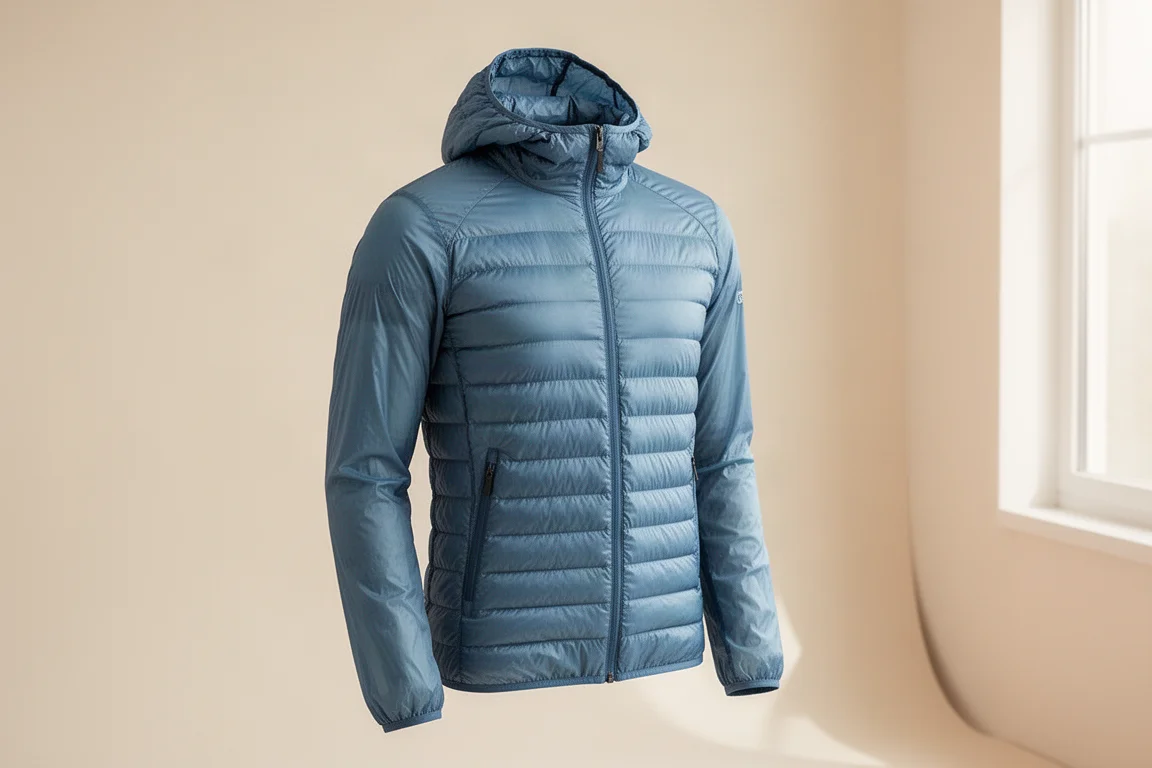
The ultralight category is a straight warmth-to-weight contest. The Zpacks Ultralight Down Jacket wins it at 192 g, the lightest jacket in this group, while still being warm enough to keep you comfortable down to around freezing.
What makes it stand out is that it does not strip features to reach that weight. You get a hood, hand pockets, and a full zipper, which is what turns a lightweight layer into a genuinely versatile one. Lighter jackets exist, but they give up exactly those features.
The trade-off is durability and moisture behaviour. The shell uses very thin denier fabric, and the high fill power down inside loses performance faster than lower fill power insulation when it gets damp. With careful handling it holds up well, and it packs down small enough to serve as a just-in-case layer on trips that are not especially cold.
Alternative Ultralight Pick: Mountain Hardware Ghost Whisper Ultralight
If the Zpacks jacket is hard to find or you want more colour choice, the Mountain Hardware Ghost Whisper Ultralight is the closest alternative. It weighs one gram more, which is effectively the same weight, and it is a little more durable. It costs a bit more than the Zpacks jacket, and it comes in a wider range of colours.
Best Four-Season Winter Jacket: Decathlon MT500
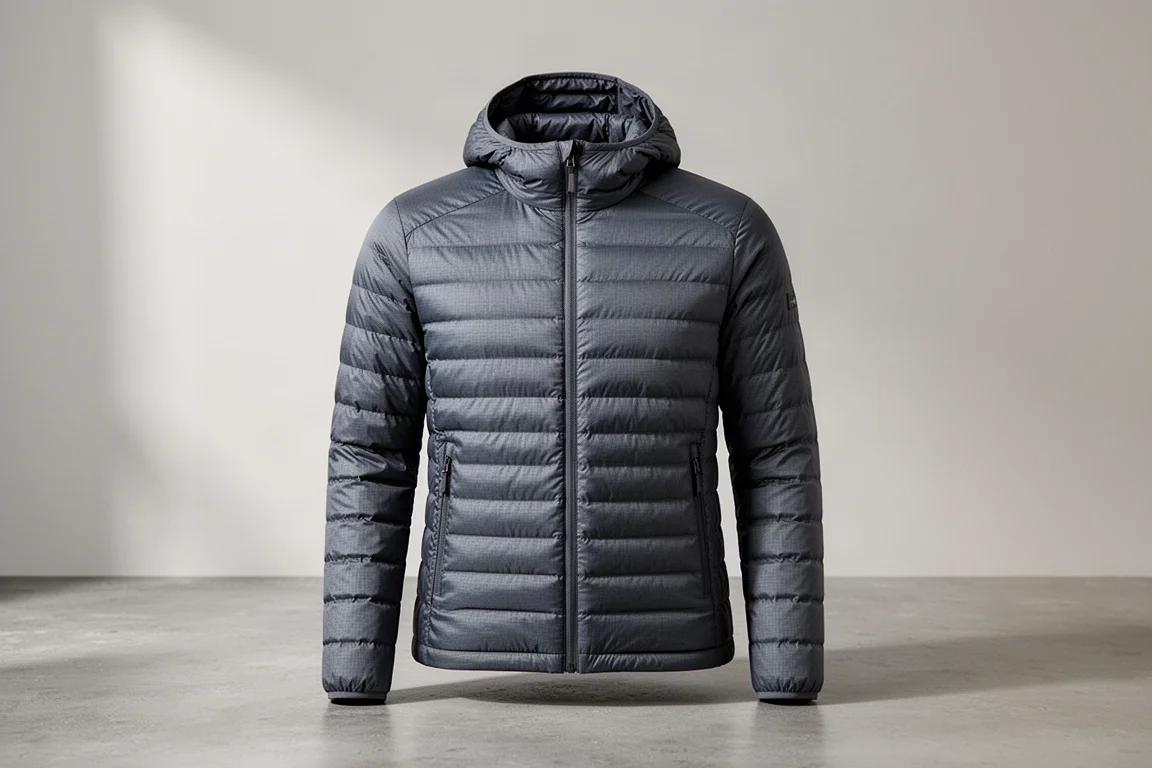
This category is about a jacket most people can wear all winter without thinking about it: warm below freezing, reasonably priced, and easy to buy. The Decathlon MT500 delivers on all three at $140.
Warmth is the headline. Worn with just a base layer and a fleece underneath, it has stayed comfortable below freezing at around -10°C. The shell is roughly 20 denier, which has proven durable in steady use without any special care, and because it comes from Decathlon it is widely available around the world.

The compromise is weight. At 440 g it is noticeably heavier than the lighter alternatives, even though it is equally warm. It works well for spring and autumn, and for anyone who runs cold it can serve as a summer jacket as well.
Lighter Four-Season Alternative: Rab Mythic G
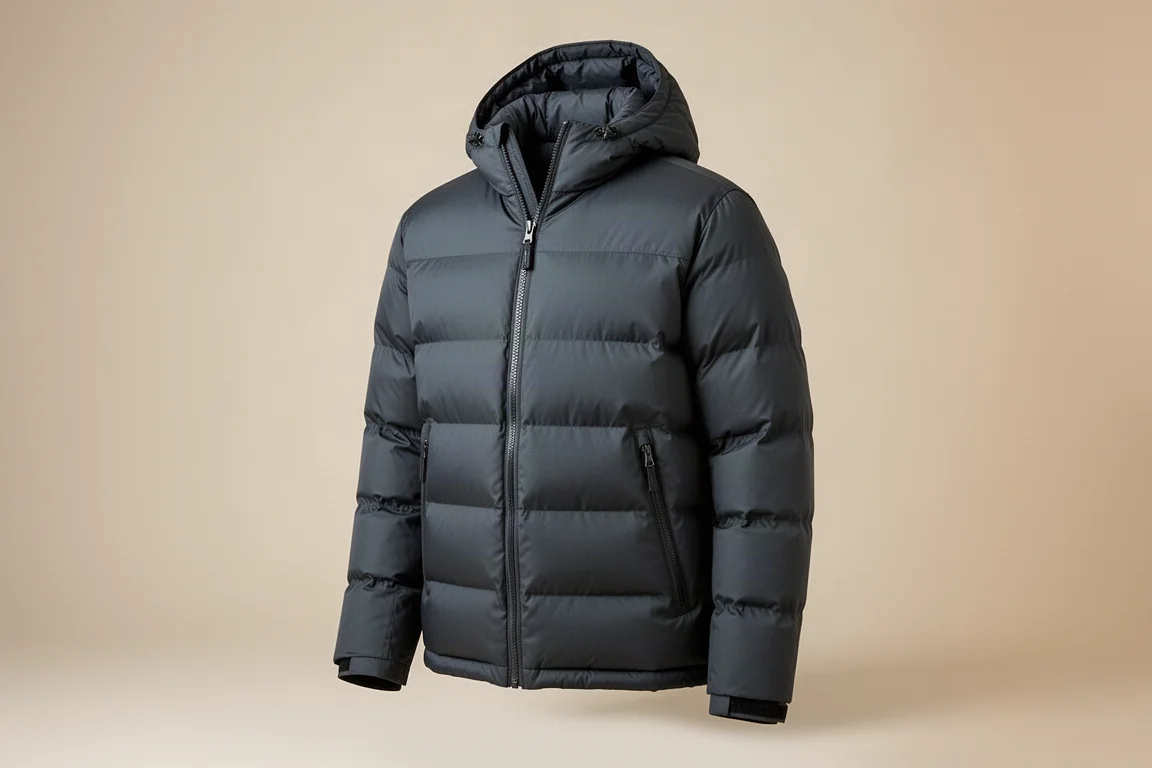
The Rab Mythic G is the weight-conscious version of the same idea. It weighs under 300 g, less than half of the MT500, and it is equally warm. The catch is price: at over $500 it is the most expensive jacket in this group, so it is a trade-off you make deliberately rather than by accident.
Best Winter and Expedition Jacket: Rab Mythic Ultra
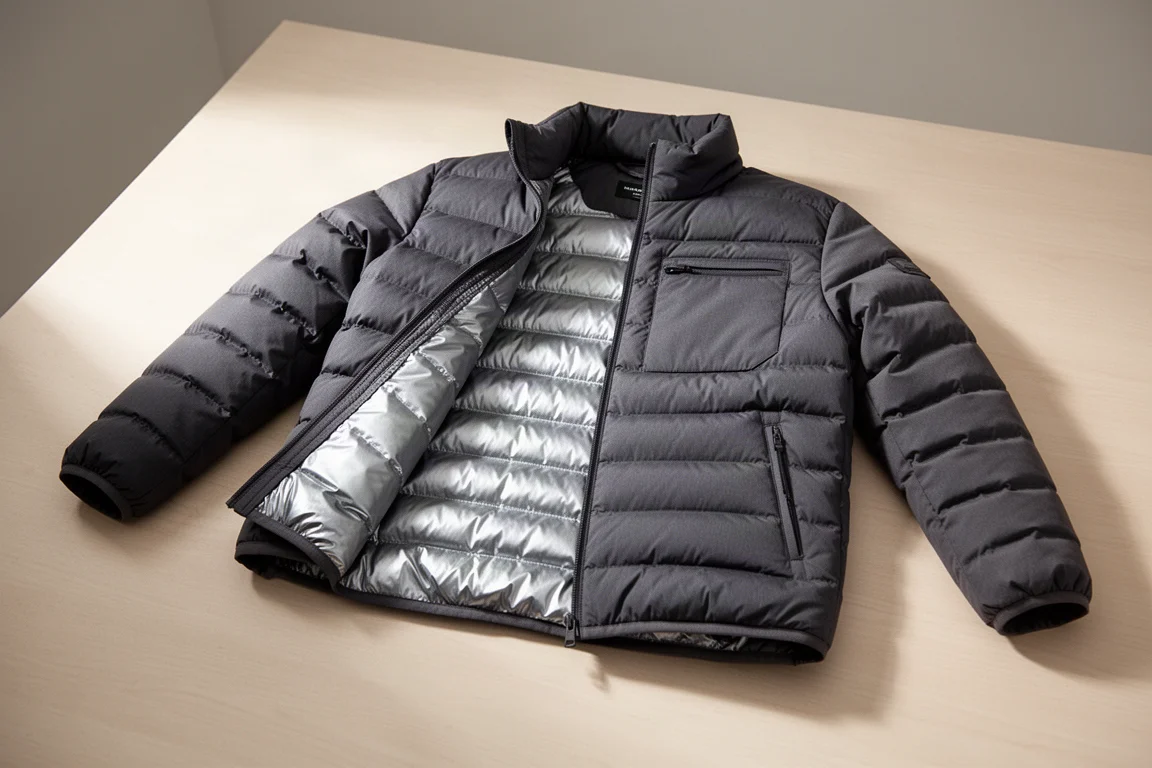
For deep winter and expedition use, the Rab Mythic Ultra is the pick. It weighs 537 g, which is remarkable for a jacket that has been worn down to -30°C, and it packs down small enough to travel well on long trips.
Reliability matters as much as warmth when you are far from shelter. Zippers, seams, and overall construction are built to hold up trip after trip, which is exactly what you want from a jacket you depend on.
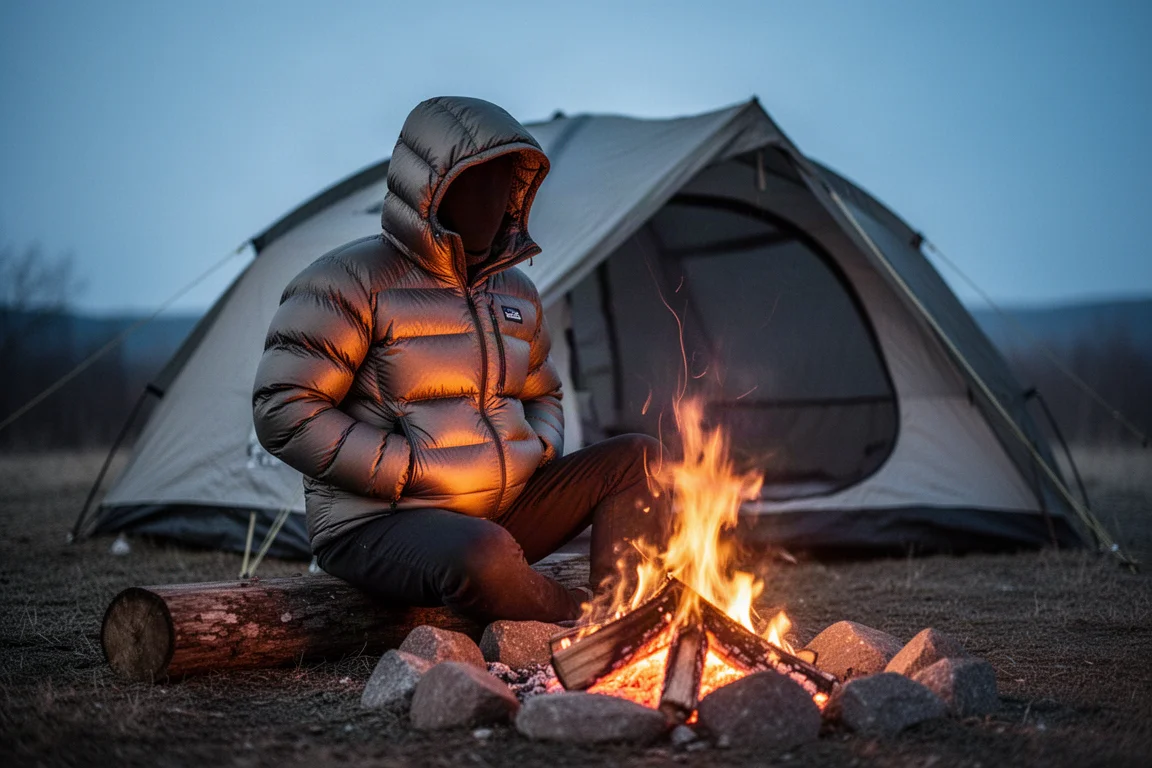
Three things are worth weighing before you buy. It costs $500 US. The pocket layout is limited to one chest pocket and two hand pockets, with no internal pockets for storing gloves and other small items. And the materials are very light, so the jacket rewards careful handling. That makes it the go-to choice for moving fast and light in serious cold, and less ideal if you plan to sit around camp for hours. For that, the two Decathlon options below are the better answer.
Lower-Cost Extreme Cold Option: Decathlon MT900
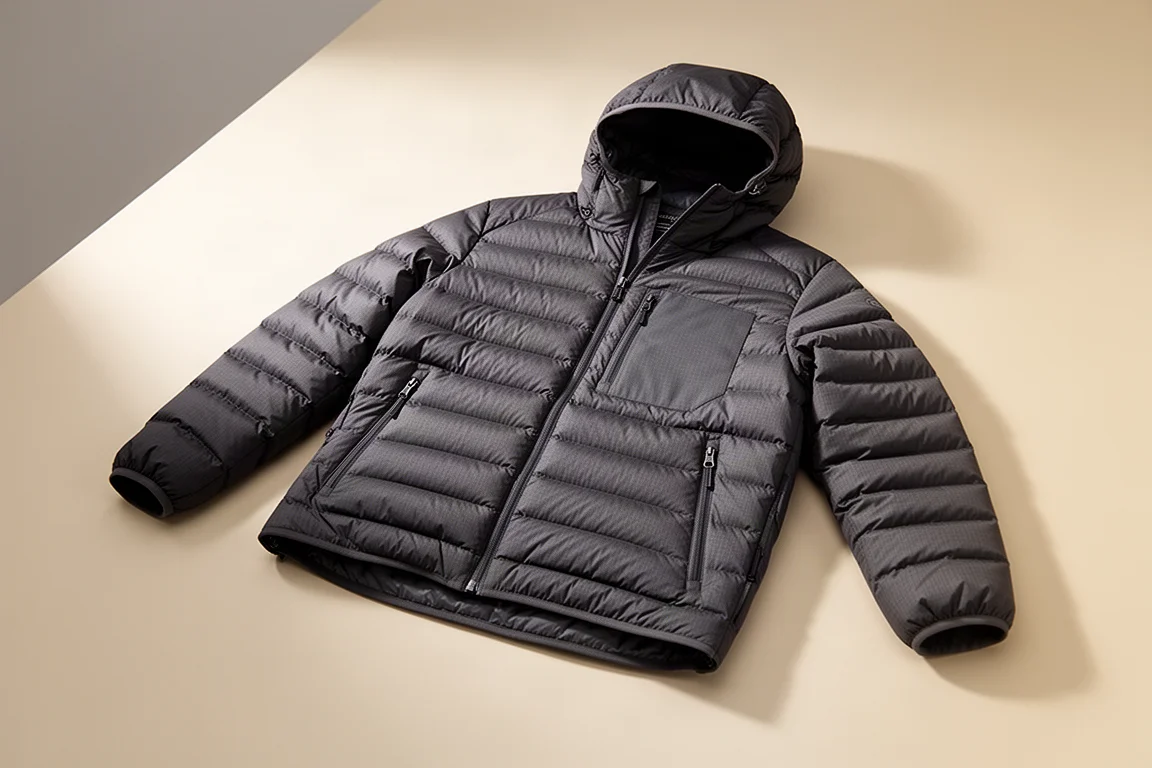
The Decathlon MT900 is the more affordable route to the same kind of warmth, and it is easy to find in most regions. It is a strong jacket in its own right. The main difference is weight: it is quite a bit heavier than the Rab Mythic Ultra, which is the price you pay for the lower cost.
Maximum Warmth for Camp: Decathlon Simon Parka
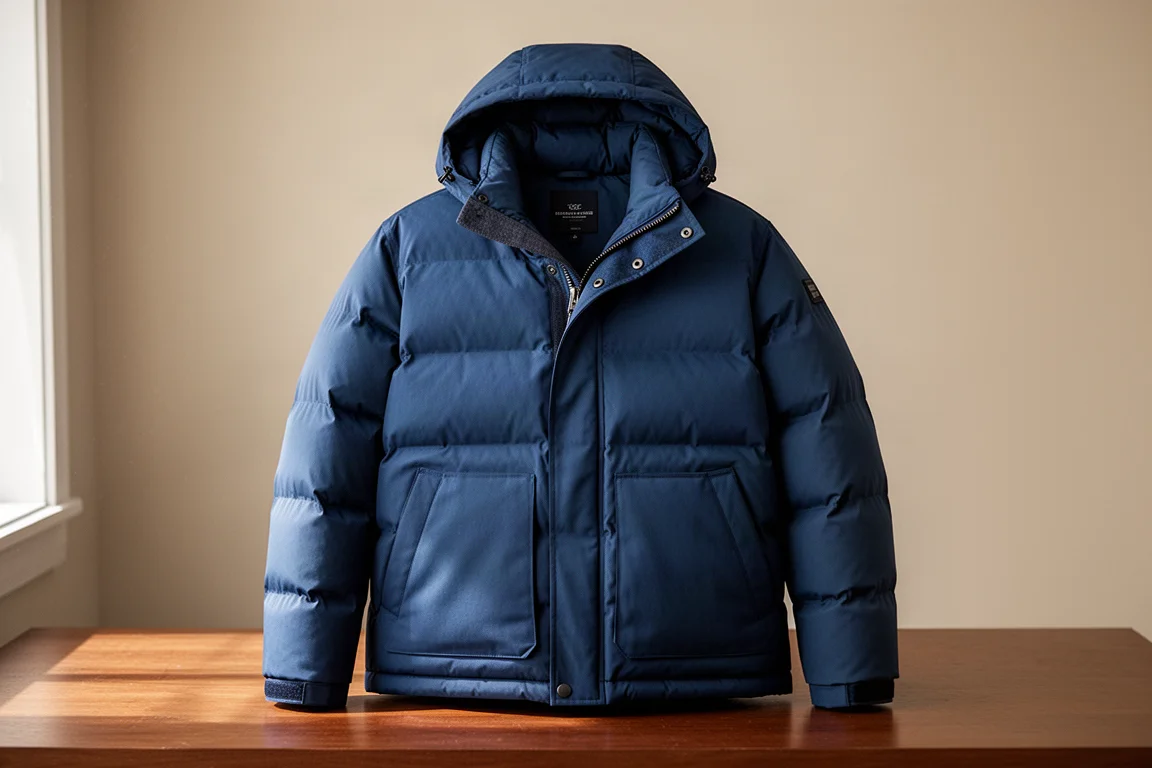
The Decathlon Simon Parka is built for the opposite scenario: standing or sitting still in extreme cold. It is very warm, it has a lot of pockets, and the long cut covers your legs when you are seated at camp. It is the jacket to bring when the forecast sits around -40°C to -30°C, and it edges out the Rab Mythic Ultra on both warmth and features for stationary use.
Best All-Around Jacket: Enlightened Equipment Torrid Apex Jacket
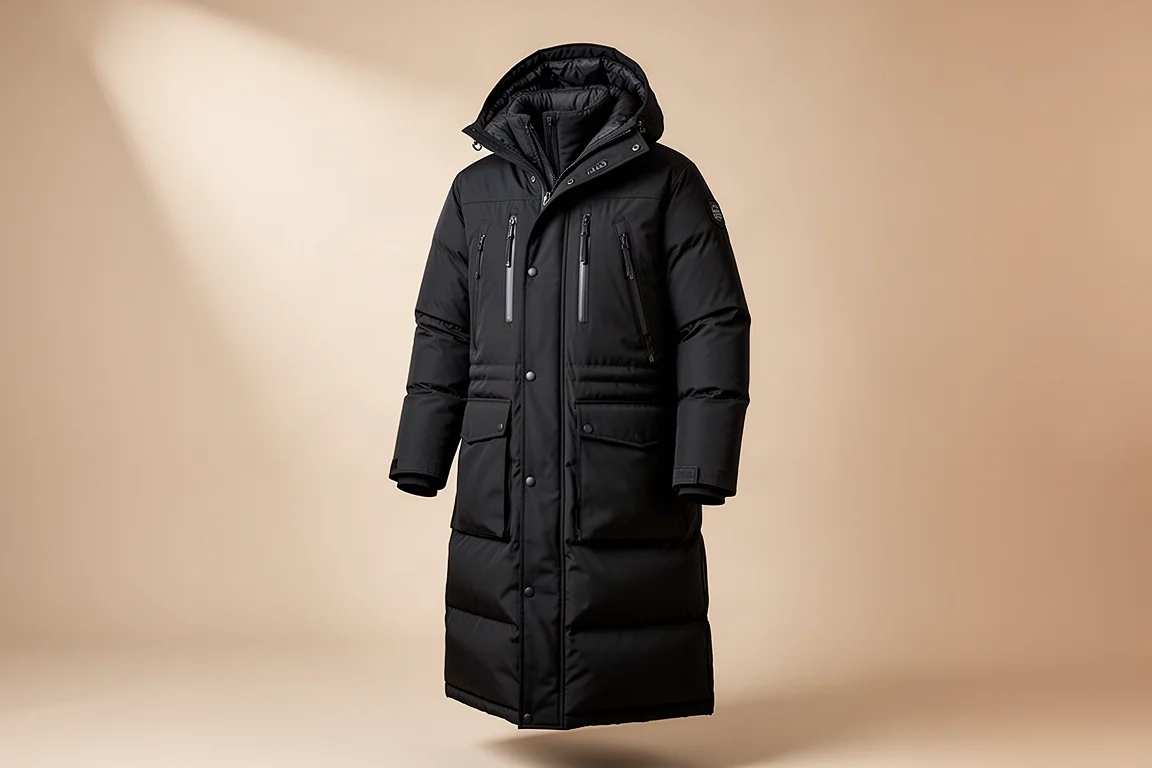
The all-around category asks for a jacket that is well priced, capable, feature-complete, and easy to live with. The Enlightened Equipment Torrid Apex Jacket takes it, and it does so with synthetic insulation rather than down.
That choice pays off in wet and humid conditions, where it keeps performing while down would struggle. It is light, packs small, and is warmer than it looks. It has covered a 37-day thru-hike across wildly mixed conditions.
The compromises are bulk and looks. It is bulkier than a comparable down jacket and not especially stylish, so it is a function-first piece. If you do not know what the weather will do, or you are heading out on a long trip with a wide range of conditions, that trade is usually worth making.
Which Down Jacket Should You Choose?
Start with the coldest temperature you realistically expect, then decide how much weight and money you are willing to spend to get there. The Decathlon MT100 and the Enlightened Equipment Torrid Apex Jacket cover the widest range of everyday use, and the MT100 in particular is hard to beat on value.
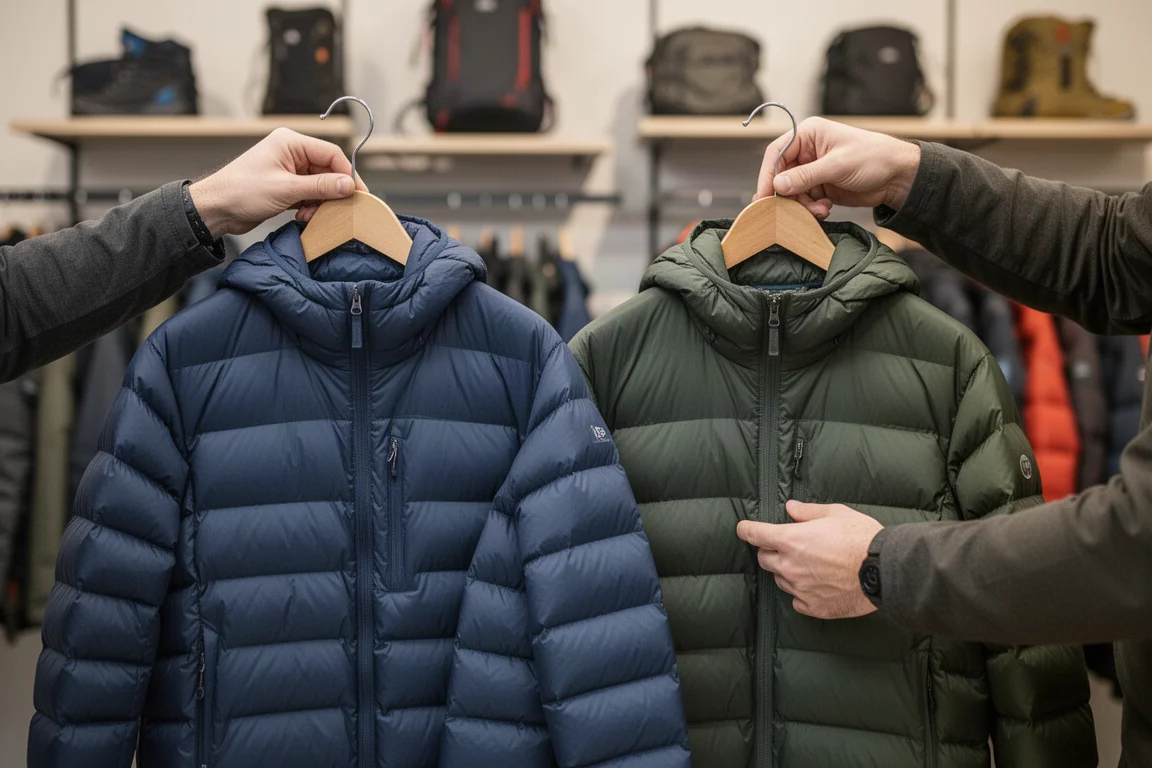
If winter is the target, the Decathlon MT500 is the sensible default, with the Rab Mythic G as the lighter and more expensive upgrade. For serious cold, the Rab Mythic Ultra is the fast-and-light choice and the Decathlon MT900 is the budget-friendly one, while the Decathlon Simon Parka is the right answer when you will be stationary in extreme conditions.
Two brands dominate this shortlist. Decathlon builds affordable jackets that punch well above their price, and Rab pushes weight and warmth further with more technical designs. Between them, almost every realistic cold-weather scenario is covered.
Conclusion
There is no single best down jacket, only the best one for the conditions you actually expect. The Decathlon MT100 remains the strongest value in the budget class, the Zpacks Ultralight Down Jacket is the lightest way to stay warm near freezing, and the Rab Mythic Ultra is the jacket to trust when temperatures drop far below zero. Decide on the temperature range first, and the choice becomes straightforward.
Further reading
Related Reviews
Down Jackets
Best Budget Down Jackets 2026: Three Picks Worth Considering
A practical look at three budget down jackets between $80 and $150, compared on warmth, features, build quality, and weight.
Down Jackets
RAB Mythic G vs Decathlon MT500: What a $525 Down Jacket Actually Buys You
Two down jackets with similar warmth on paper and a price gap of nearly $400. Here is where the money goes and which one suits which kind of buyer.
Down Jackets
REI Down Hoodie 2.0 vs Decathlon Trek 100: Which Budget Down Jacket Is Better?
A practical comparison of two affordable down jackets, covering warmth, weight, shell materials, hood coverage, fit, and warranty terms.