Heavy Equipment
Kubota L2500 vs Case Skid Steer Loader: Which Compact Machine Should You Buy?
Two compact machines with similar purposes but very different personalities. Here's how a small farm tractor with a front loader stacks up against a skid steer for real property work.
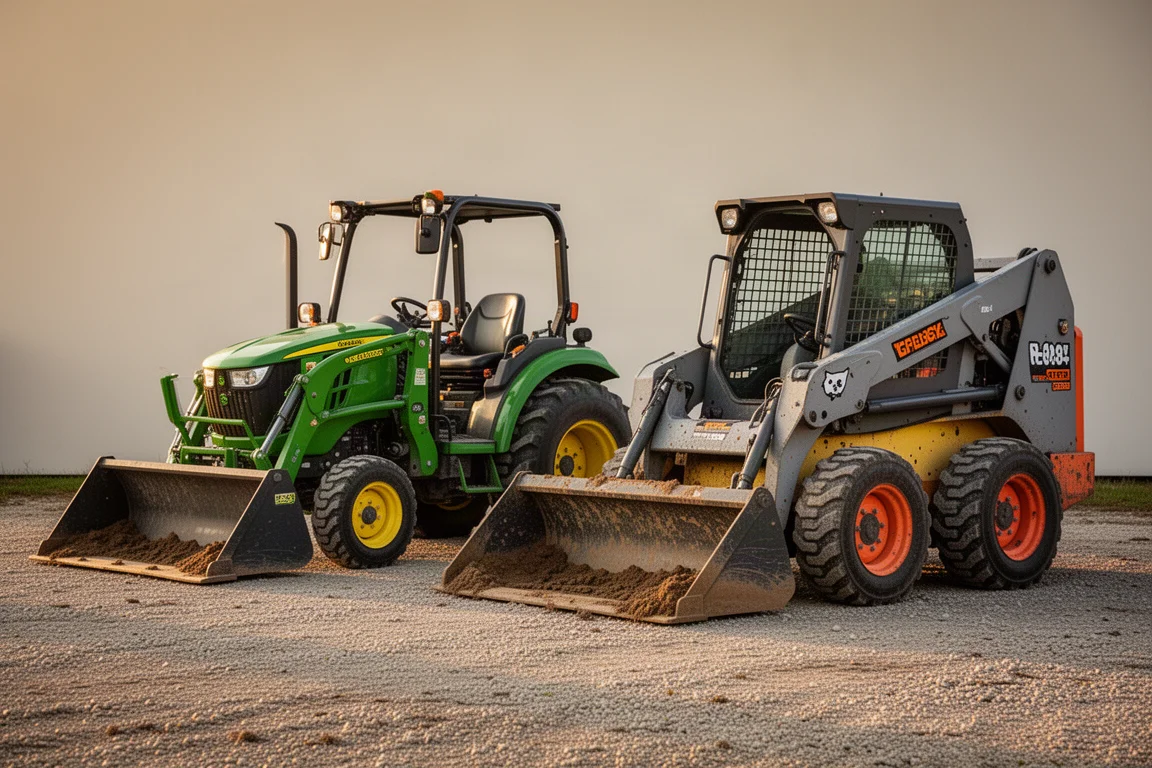
Introduction
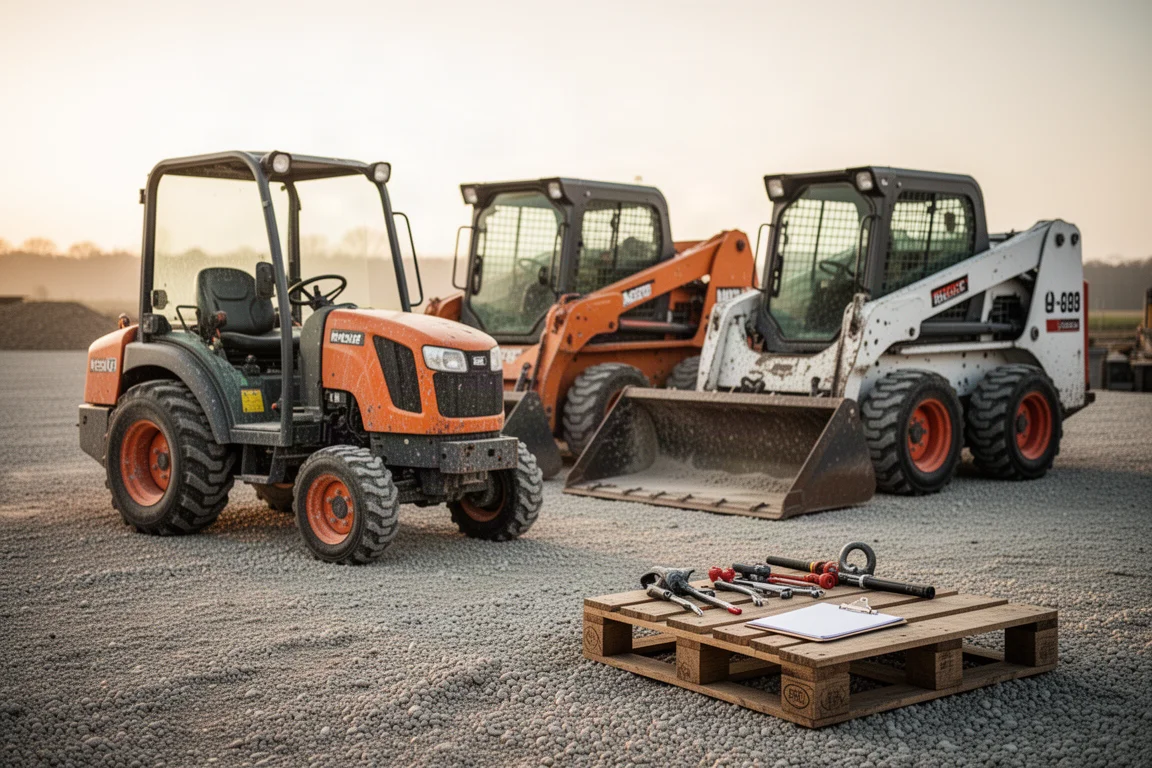
Heavy equipment, even the slightly heavy kind, magnifies how much work one person can get done in a day. Few comparisons illustrate that better than the two machines at the centre of this one: a Kubota L2500 compact tractor from the early 1990s, and a Case skid steer loader that has spent its working life in construction and agriculture before moving to a small property.
Both machines were used side by side on an underground utility project, trenching, hauling soil, and back filling ditches. That extended side-by-side use makes this less of a spec-sheet comparison and more of a practical verdict for anyone deciding which single machine to buy: homeowners, property owners, landscape contractors, dairy farmers, or anyone weighing plan A against plan B.
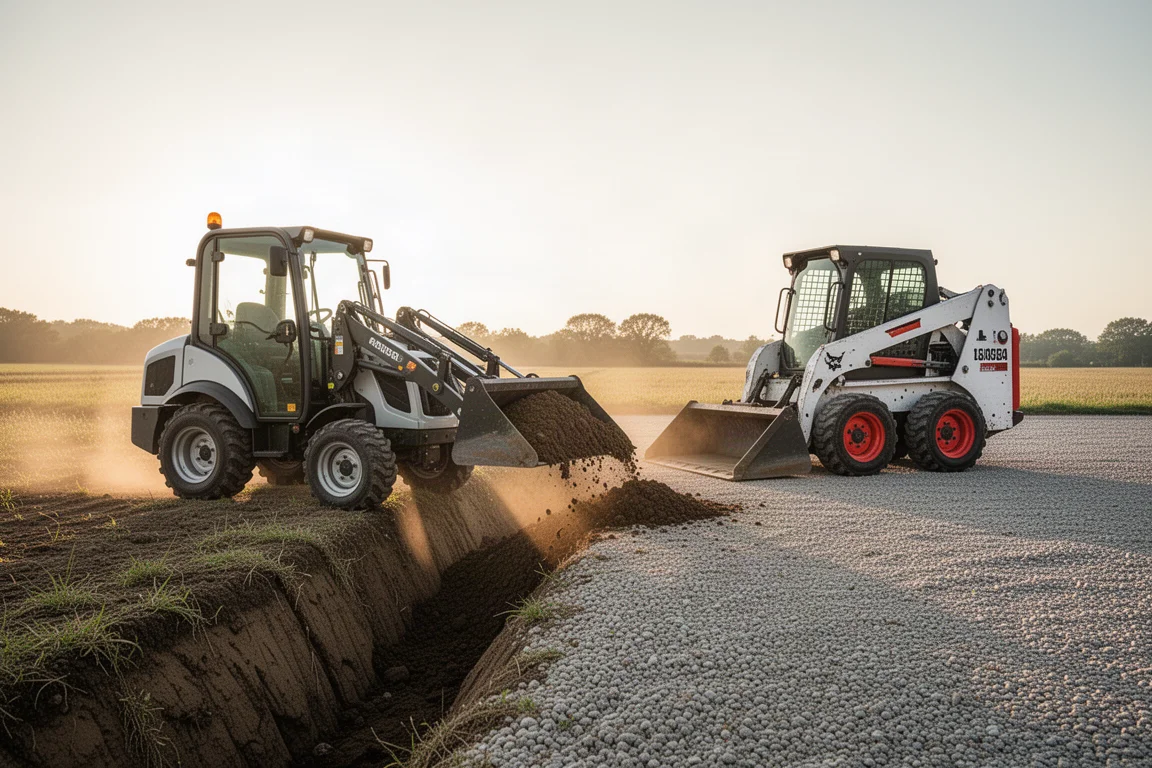
The core difference is worth stating up front. A skid steer steers by spinning the wheels or tracks on one side at a different rate or direction than the other. A wheel tractor with a front loader steers conventionally. That one mechanical difference drives nearly every trade-off below.
Where the Skid Steer Wins
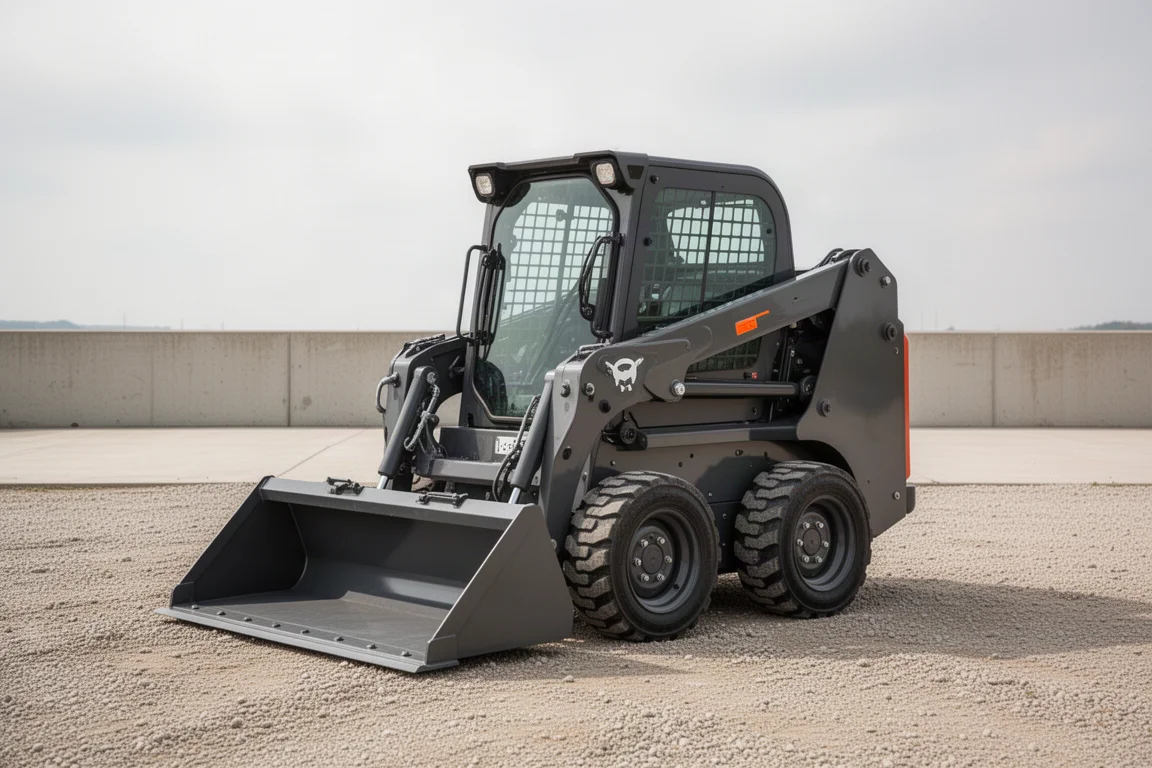
The Case skid steer is the production machine of the pair, and it earns that reputation in four distinct ways.
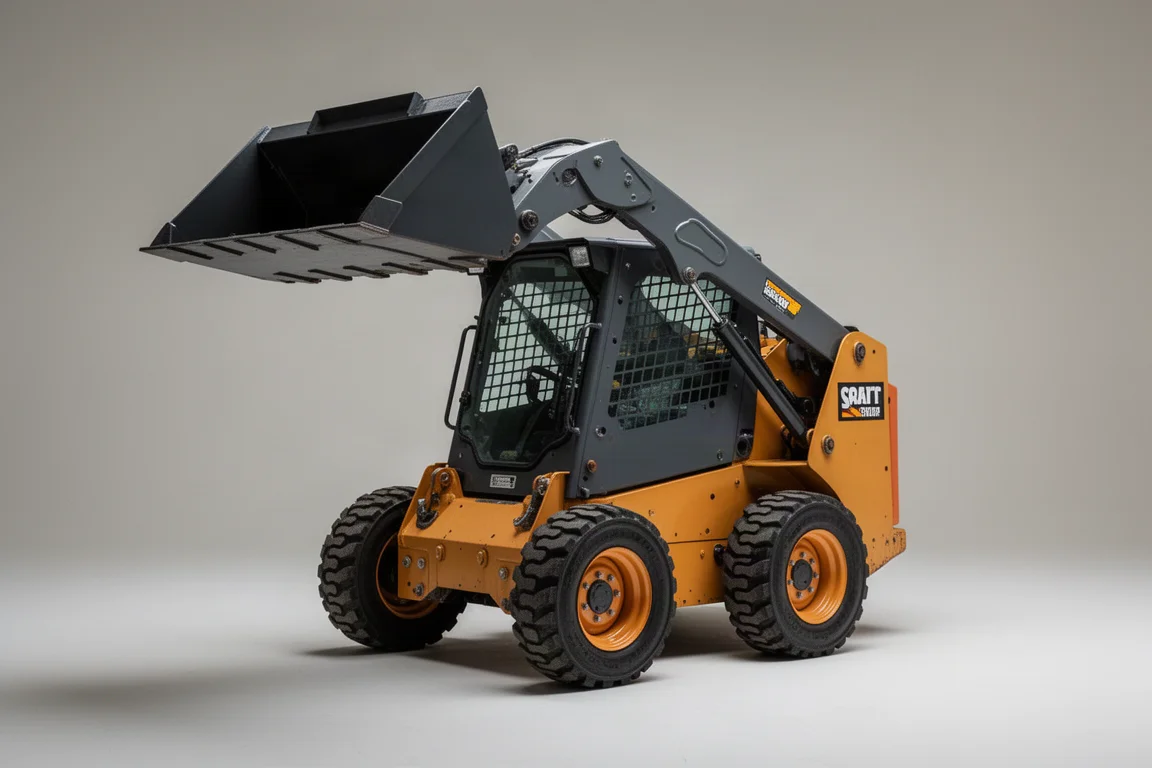
First, it is simply easier to get in and out of, which matters more than it sounds when you are climbing aboard dozens of times a day. Second, the bucket holds almost three times as much material as the tractor’s front loader. Third, the visibility from the seat makes it easy to see exactly where you are placing every load, so transporting material and dumping it precisely becomes a fast, controlled operation.
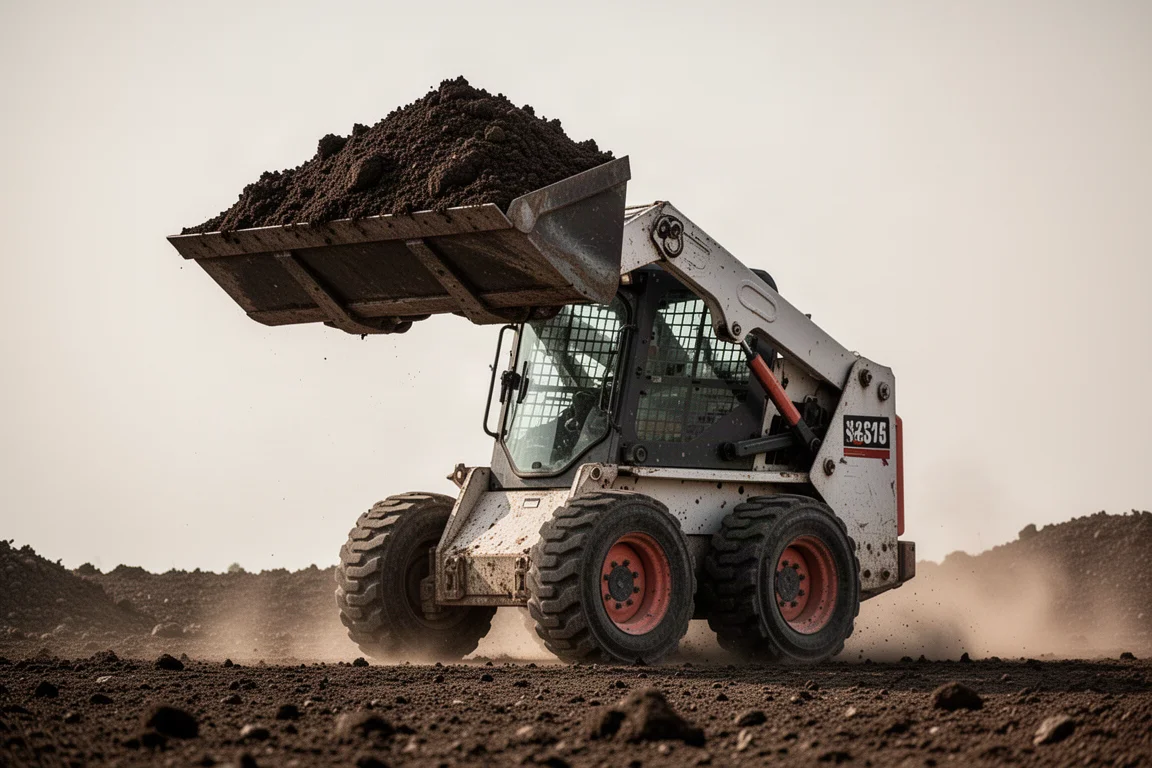
Fourth, and this is where the gap widens, the skid steer is genuinely excellent at back dragging. For hauling material, putting it exactly where you want it, and finishing surfaces, it is dramatically more productive than the tractor. It is also fast, nimble, and strong, with fine controllability that makes grading work feel almost effortless.
If your work skews toward heavier-scale, production-oriented jobs, this is the machine category that solves them. The downside list is real, though. From the seat, visibility behind and to the sides is close to blind, which is a challenge around cars, buildings, and people, and it restrains your ability to keep track of the whole job site. Skid steers also tear up the ground. On a gravel driveway it is merely handy; on a yard, it will plow it. And mechanically, skid steers break, and they are hard to work on when they do.
Where the Tractor Wins
Step out of the lightning-fast, super-strong Case and onto the Kubota L2500, and the character of the work changes completely. On the tractor you can see, you can hear, you can communicate with people around you. You are far less likely to wreck something, which makes it the obvious choice for back filling ditches right next to a house.
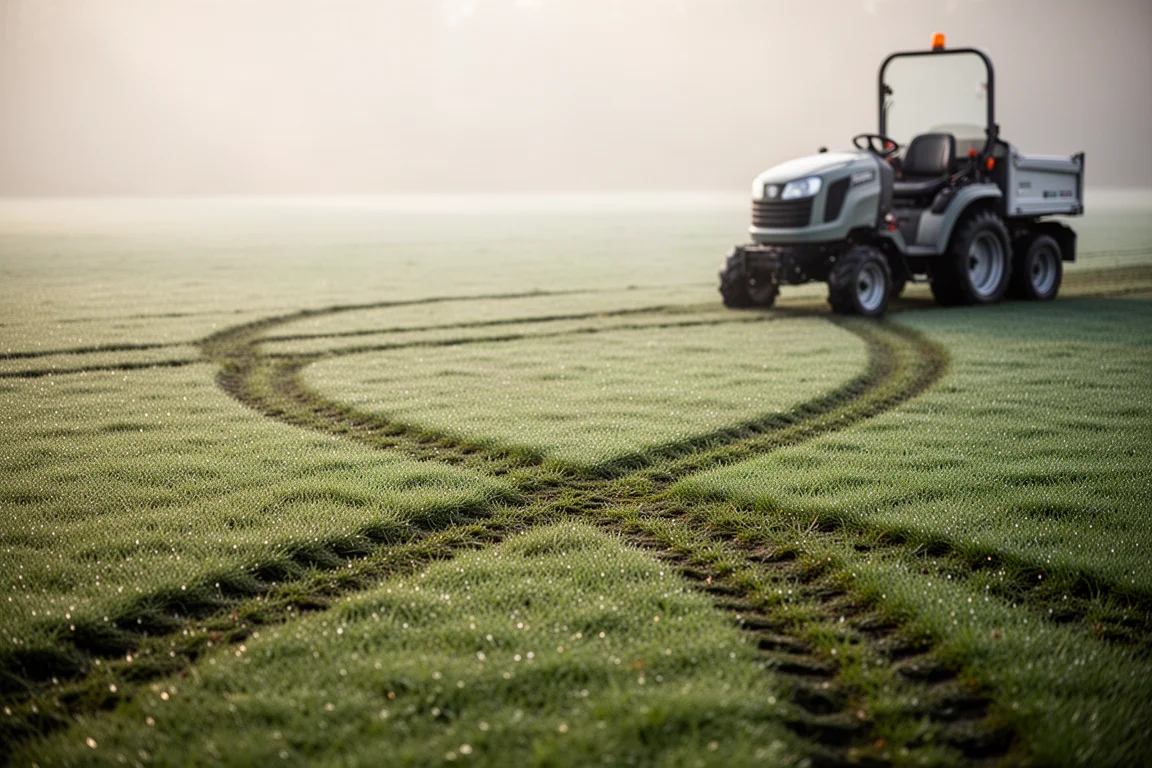
The tractor’s biggest domestic advantage is how gently it treats the ground. It tends to float over vulnerable subgrade and do minimal damage. Driven across a yard thirty times in a month, it leaves the lawn intact, where the skid steer would have plowed the whole thing. That makes it the machine for working around the house, in landscaping contexts, and anywhere the surface matters.
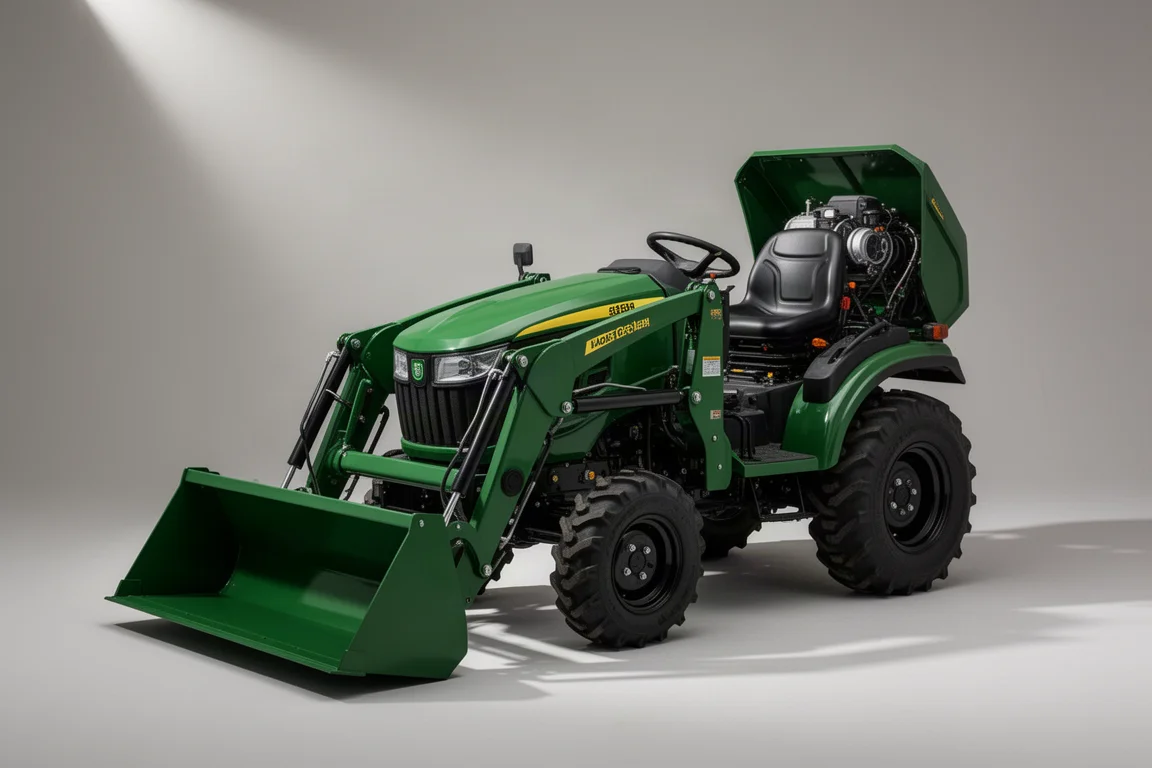
It is also the more maintainable machine. The components are accessible and the design is intuitive, and it is less prone to breakdown. The implements and accessories available for compact tractors lean toward yard maintenance, small property upkeep, and farming, which suits a wider range of tasks.
The trade-offs are just as clear. A wheel tractor is more prone to tipping over, especially on a sidehill or with a big load carried too high off the ground. It hauls far less per load, and placing material precisely is harder to do. In raw production terms, it is slower and less nimble.
Head-to-Head Trade-offs at a Glance
This is not an apples-and-oranges comparison, and it is nothing like choosing between corded and cordless saws. These are completely different tools for doing similar work in different environments. The essential trade-offs:
- The skid steer is heavier, harder to haul, faster, and more nimble, with more accurate grading and material placement. The tractor is lighter, easier to haul, and less prone to breakdown.
- Skid steers break and are hard to work on. Tractors are intuitive, with components you can actually reach.
- The tractor is more prone to tipping, but safer to operate around other people.
- Tractor accessories suit yard, property, and farm work. Skid steer accessories, particularly in the wider market, are built for commercial and heavy production work.
One more note for anyone who already owns a small excavator: a tractor’s backhoe attachment fades in importance, since the excavator covers that role. For scale reference, a backhoe attachment on the tractor served a decade of useful work before an excavator arrived.
Buying Advice: Buy the Good Deal, Not the Category
Both machines magnify your ability to get work done, and in exactly the same way they magnify your ability to do damage. Attention and care are part of the ownership package either way.
In general, for heavier-scale work, the skid steer is the solution, but you have to be careful and ready to maintain it, and that maintenance costs money. For those operating at a smaller scale with a wider range of tasks, many of them around the house, the compact tractor is probably the answer.
If you are buying used, the final filter is not the category at all. It is where you find the deal. Look for the bargain, get advice from someone who can evaluate the machine’s condition before you shell out the money, and only then commit.
Conclusion
These two machines are radically different but similar in purpose, and life is a series of trade-offs. Choose the skid steer when production, payload, and precise material placement dominate the job and you can absorb the maintenance burden. Choose the compact tractor when ground protection, safety around people, maintainability, and task variety matter more than raw output. And whichever you choose, pay attention, because the same machine that multiplies your productivity will multiply your mistakes.
Further reading
Related Reviews
Heavy Equipment
Toro TX1300 Mini Skid Steer Review: Telescoping Arms That Change the Job
A close look at the Toro TX1300 mini skid steer, whose hydraulically telescoping loading arms add reach, lift capacity, and a smartload protection system.

Backpacking Gear
Building a 10 lb Base Weight: An Ultralight Backpacking Gear List
A practical walkthrough of the ultralight pieces behind a 10 lb base weight, from a 765 g pack and a roomy one-person tent to a full camp chair and a dependable water filter.
Road Bikes
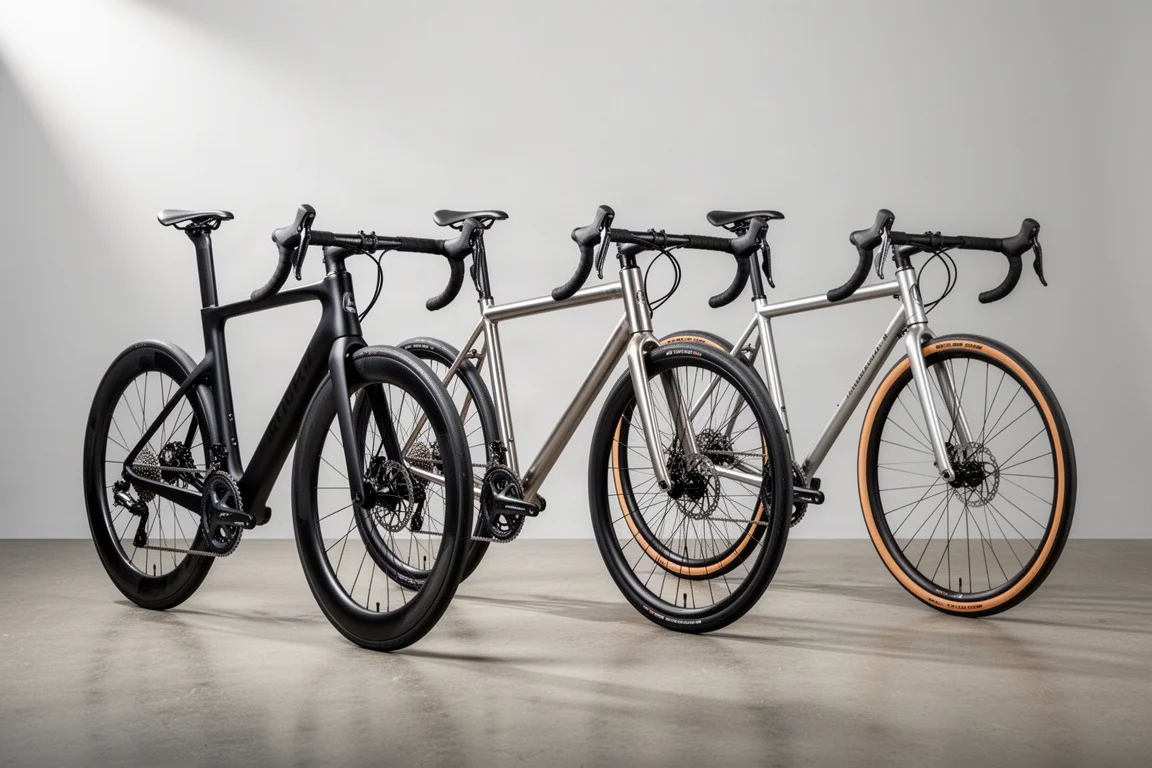
10 New Road Bikes Worth Watching: Aero, Titanium, Steel and Endurance Standouts
A practical roundup of 10 new road bikes, from aero flagships chasing single-watt gains to titanium, steel and endurance platforms built for real roads.