Camping Heaters
Kovea Cupid Heater Review: A Compact Butane Heater for Very Small Spaces
A long-term look at the Kovea Cupid, a three-pound butane heater built for tents, rooftop tents, and small vehicles, including real runtime, price, and cold-weather limits.
Introduction
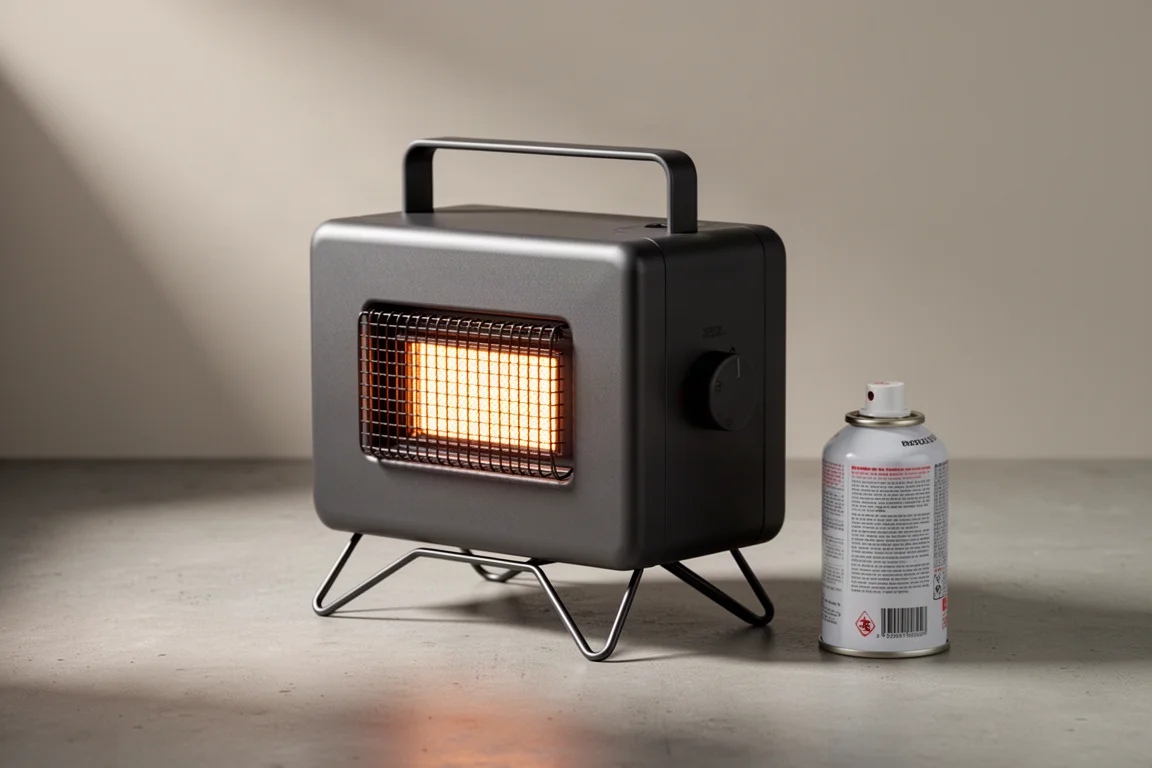
Most portable heaters trade size for output. The Kovea Cupid goes the other way. It is a three-pound butane-only heater that measures 10.3 by 7 by 5.3 inches and is built for spaces where almost nothing else fits: a two-person to four-person tent, a rooftop tent, a small vehicle, or a similarly tight spot.
That focus shapes everything about it, including the price and the limitations. Here is what the Cupid does well, what it does not do, and who should think about buying one.
Who the Kovea Cupid Heater Is For
Kovea is a South Korean company that produces stoves, heaters, and a wide range of outdoor equipment, and it carries a favorable reputation for higher-end gear, particularly backpacking stoves. The Cupid reflects that positioning.
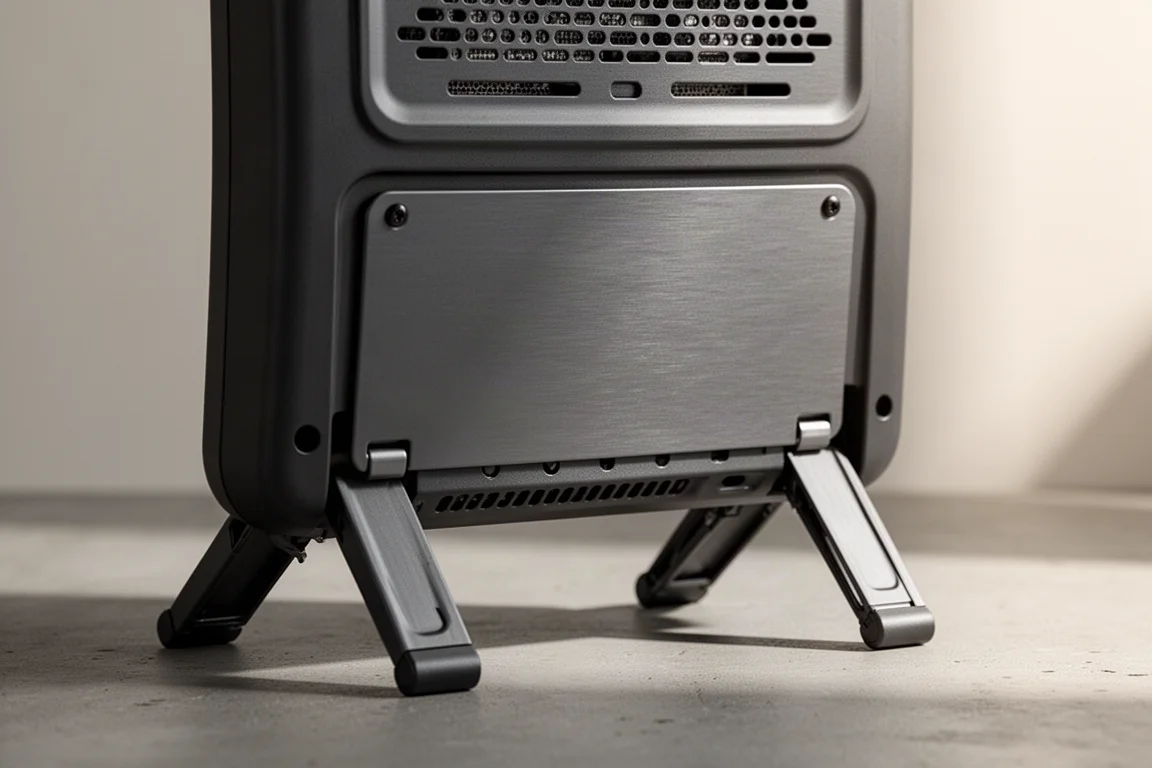
It runs on butane only, with no dual-fuel option. A fold-out leg at the base lets you set it down angled upward, and a carry handle at the top makes it easy to relocate. A storage box is included.
The intended use case is narrow by design. This is a heater for a small tent, a rooftop tent, a small vehicle, or another genuinely confined space. Anyone hoping to warm a garage, a large tent, or an open room should look elsewhere.

Setup takes about 30 seconds once you know the routine, and the heater is light enough to move with one hand.
Design and Build Quality
The layout is straightforward. A grill sits at the front, with a ceramic heating plate behind it. On the side you will find the on and off switch along with the igniter: push the control in, turn it, and click it down to light.
Ventilation holes run along the bottom and the top, and the butane canister port sits on the side. Inside there is a notch that holds the canister in the correct position. You pop the cap off an eight-ounce butane canister, insert the spout, notch it, and twist it into place.
Build quality is a strong point. The housing feels solid, the ceramic plate appears to be of good quality, and the igniter works reliably. Shielding is also well handled: the underside does not get hot, so you do not have to worry about the surface beneath it, and the sides and back stay cool as well. Once the heater is set down, it stays put and is not easy to knock over.
Main Strengths in Real Use
The Cupid is quick and simple. It deploys fast, lights immediately, and warms up in about 15 seconds, which is a meaningful difference from heaters that need time to come up to temperature. It also cools down quickly once you switch it off, and inserting or ejecting fuel canisters is easy.
Noise output is low. There is a brief burping sound at the start, gone after roughly 20 seconds, and after that the heater runs quietly.
Fuel is inexpensive. Twelve eight-ounce butane canisters cost roughly $30, which keeps running costs low for the amount of heat the unit produces.
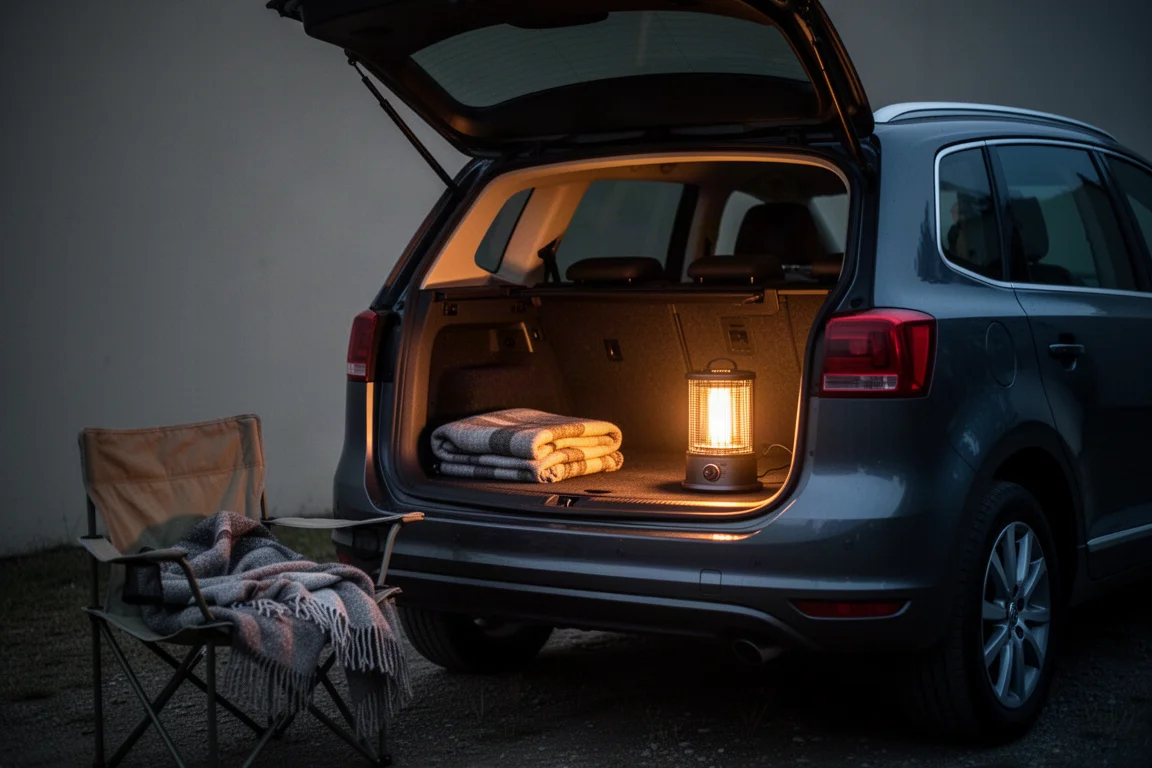
The included storage box deserves an honest note. It does the job, but it is thin and flimsy, and there are many reports of it breaking. Treat it as a consumable and be prepared to replace it.
Real-World Performance and Fuel Use
Published output figures for the Cupid conflict. One retail listing states 5,633 BTUs, while the manufacturer’s US site states 3,333 BTUs. Based on how the heater performs in practice, something around 3,000 BTUs is the realistic figure.
That puts the Cupid in a different class from larger catalytic heaters. A Mr. Heater Buddy, for comparison, is rated at 18,000 BTUs and is built for much bigger spaces. The two are not interchangeable, in performance or in size.
Runtime from one eight-ounce canister is roughly two hours on high and about three and a half to four hours on low. Claims of six hours per canister do not hold up in real use.
One detail matters more than the headline numbers. The difference in heat output between the low and high settings is small, but the difference in fuel consumption is not: high burns fuel about twice as fast without producing twice the heat. Running the heater somewhere in the middle gives the best balance of output and efficiency.
Things to Consider Before Buying
Price is the main sticking point. The Cupid sells for around $110, with a retail price of $140. Most butane heaters cost roughly $70 to $80, so this sits well above the category norm. The $110 figure is easier to justify than $140, particularly given the modest heat output.
The size comparison cuts both ways. A Buddy-style heater can sometimes be found for less money and delivers more than three times the output, but it is designed for larger spaces. Inside a tent, that extra power becomes a liability rather than an advantage. The Cupid’s advantage is that it is genuinely small, and at present other butane heaters on the market are noticeably larger.
There is also an ambiguity worth knowing about. The company states that the heater has an auto shutoff feature but does not specify what triggers it. A tip-over cutoff is a reasonable assumption, but it is not confirmed. The heater does not appear to include an oxygen sensor.
Cold Weather and Safety Notes
Butane does not perform well below 40 degrees Fahrenheit. In colder conditions the fuel needs care: keeping the canister close to your body to warm it before insertion helps, and the heater can then run until the canister is empty. It has been used down to roughly 20 degrees Fahrenheit this way.
Because there is no oxygen sensor, airflow matters when the Cupid is used inside a tent, a rooftop tent, or any small enclosed space. A carbon monoxide detector is a sensible addition, and the same advice applies to a Buddy-style heater.
One unusual incident is worth passing along. During a lighting attempt, liquid fuel emerged from the unit, and once ignited the heater threw flames roughly two feet high. After shutting it down, removing the canister, and letting the remaining vapor escape for about 30 seconds, a fresh canister worked normally. The likely cause was liquid fuel finding its way into the internal plumbing, possibly from moving the heater around with a canister attached.
The practical guidance is simple: insert the canister only when you are ready to light the heater, remove it when you are done, and avoid carrying the unit around with fuel connected. Running the heater briefly after removing the canister can also help clear any residual fuel.
Buying Advice
The Cupid makes sense for a specific buyer: someone heating a two-person to four-person tent, a rooftop tent, or a small vehicle who values a compact, light, quiet unit that lights instantly and costs little to run.
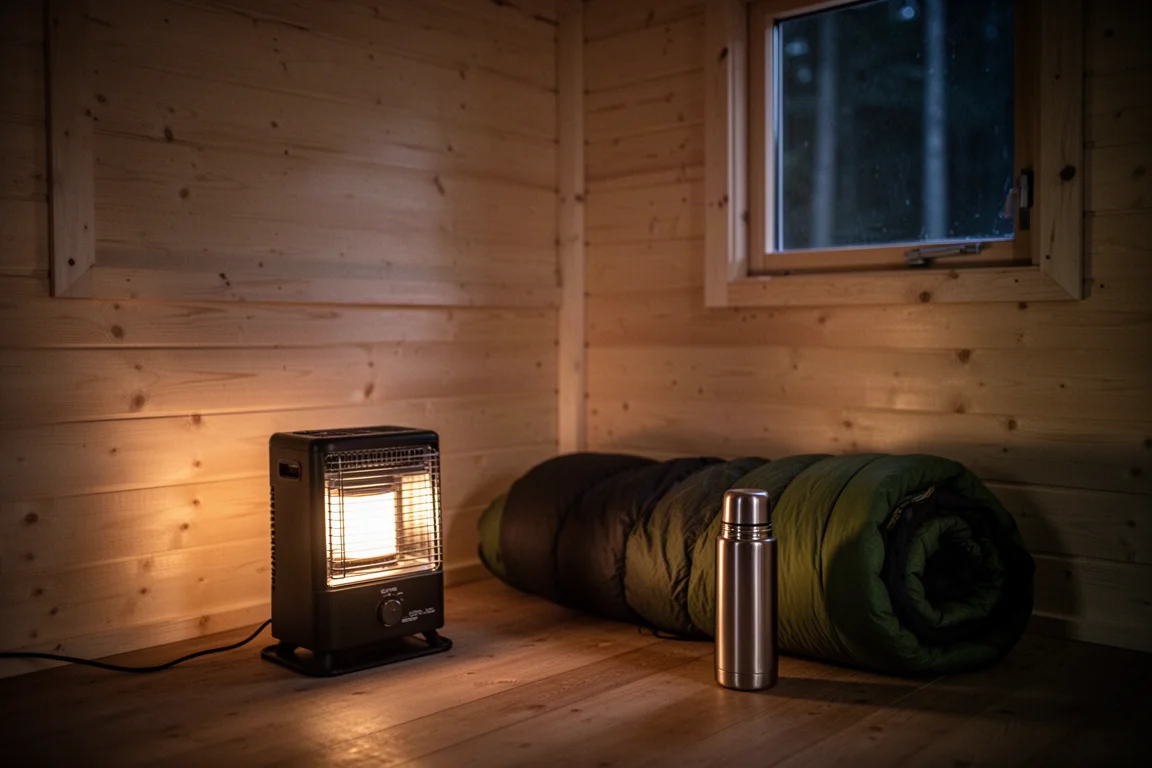
It makes less sense as a general-purpose heater. If you need real heat output for a larger space, a higher-BTU catalytic heater is the better tool, and it may cost less. If your priority is the smallest possible footprint that still produces usable warmth in a confined space, the Cupid is close to unique.
At around $110 the value proposition is reasonable for what it is. At the $140 retail price, the case is harder to make given the limited output.
Conclusion
The Kovea Cupid is a well-built, genuinely compact butane heater with fast warm-up, quiet operation, low running costs, and a clear purpose. Its limits are just as clear: modest heat output, a high retail price, and fuel that needs attention in cold weather. Buy it for small spaces and it does its job well. Buy it expecting the power of a full-size catalytic heater and it will disappoint.
Product link
View more details for Kovea Cupid Heater
This product is mentioned in the review. Check the specifications, options, and compatibility before buying.
View more details for Kovea Cupid HeaterFurther reading
Related Reviews
Camping Heaters
Kovea GigaSun Heater Review: Extreme Propane Heat for Emergencies and Off-Grid Use
A close look at the Kovea GigaSun, a propane heater with extraordinary output, a stainless steel build, and a heat level that suits emergency backup better than tent camping.
Camping Heaters
Mr. Heater Buddy Review: A Dependable Propane Heater for Cold Weather Camping
A close look at the Mr. Heater Buddy, covering its 4,000 and 9,000 BTU output, fuel efficiency, safety shut-offs, and the hose detail worth understanding before you buy.
Camping Heaters
Portable Butane Heater Stove Combo Review: A Two-in-One for Car Camping
A fold-out butane heater that converts into a stove, rated at 4,400 BTU with a 7 minute 42 second boil time and a $57 price tag.