Headphones
Koss KPH40 Review: Open-Back Sound That Punches Far Above Its Price
A budget on-ear open-back headphone with a remarkably wide soundstage, all-day comfort, and a warm tuning that trades some midrange clarity for easy listening.
Introduction
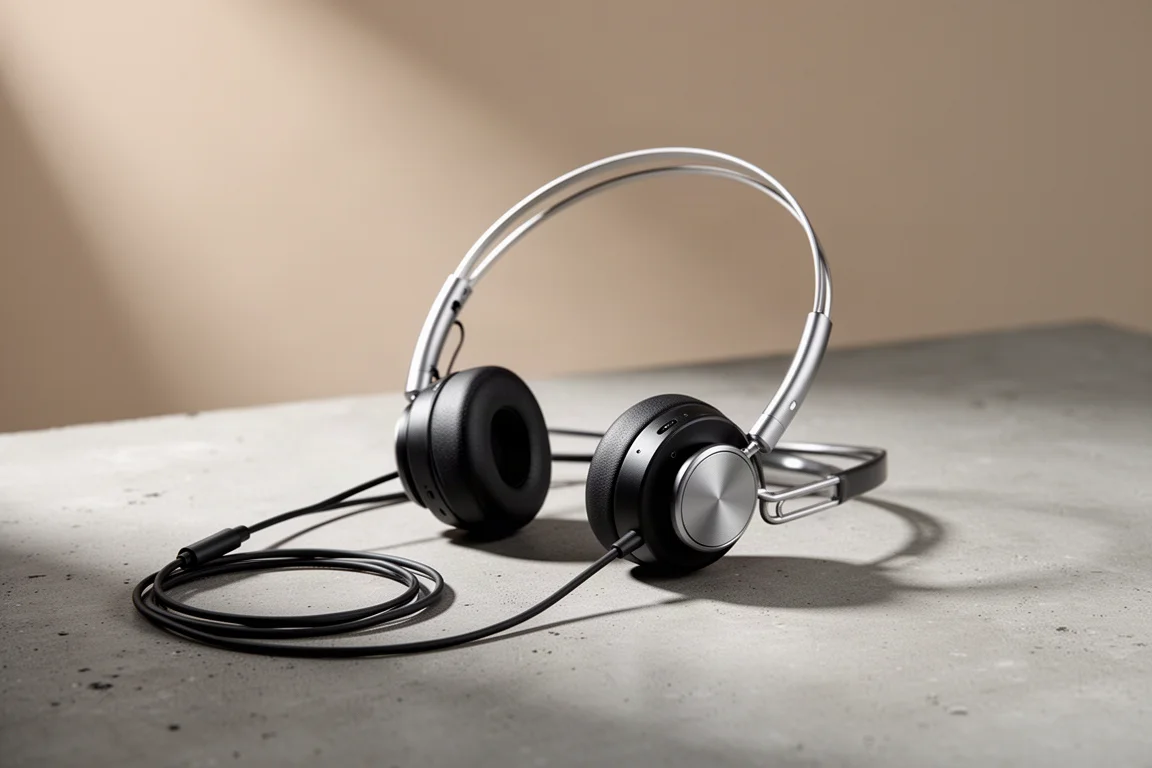
The Koss KPH40 looks like a pair of headphones that came free with a portable cassette player in the late 1980s. It does not sound like one. For roughly $35, this open-back on-ear model delivers a sense of space and instrument placement that is genuinely rare, and it does it with a slim metal headband, a flat attached cable, and almost no weight on your head.

The result is a headphone that is easy to dismiss on sight and hard to put down once you listen. This review covers what it does well, where it makes compromises, and who should consider it.
Who This Product Is For
The KPH40 makes the most sense for listeners who are curious about open-back headphones and want to spend as little as possible finding out whether the format suits them. It is also a strong candidate for anyone who wants a single pair of open-back headphones and has no intention of building a larger collection.
It suits people who work from home and wear headphones for hours at a time. The light frame and low weight mean you can keep them on through long calls, writing sessions, and remote meetings without the pressure or heat that heavier over-ear designs build up over a day.
It is less suited to anyone who needs to block out the world. If your listening happens on a train, a plane, or in a busy shared office, an open-back design is simply the wrong tool for the job.
Main Strengths
Two things stand out here: how much space the KPH40 puts around the music, and how little it asks of your head and your equipment.
Soundstage and Instrument Placement
This is the headline. Instruments are placed well outside the head, with clear front-to-back layering. On a live unplugged recording, the audience sits far back, percussion lands forward and wide, and the vocal stays centred without crowding the rest of the mix. Acoustic guitar parts separate cleanly into their own space instead of smearing together.
That spatial accuracy arrives without any spatial audio processing. There is no digital trickery involved, just the physical design of the drivers and cups. Where some headphones simulate a wider stage through software, the KPH40 presents the recording more or less as it was mixed.
Bass extension is also stronger than the price suggests. Low-frequency content reaches deep enough to register as real presence rather than a hint, even if the open-back design means it never pressurises the ear the way a closed headphone can.
Comfort Over Long Listening Sessions
The frame is metal, with a simple sliding adjustment on each side. The cups rotate through a wide range so they settle at whatever angle your ear needs. Because the whole thing is light, the KPH40 disappears on the head in a way that heavier headphones rarely manage.
That matters for people who wear headphones all day. In-ear models start to itch after a while, and large over-ears clamp or build heat. The KPH40 stays comfortable across long stretches, which makes it an easy choice for remote work, podcasts, and video calls.
It is also easy to drive. No external amplifier or dongle is required. Straight out of a computer headphone jack, the KPH40 sounds clean and controlled. Pairing it with a very analytical portable DAC can push the tuning too far in the bright direction, so a warmer-sounding source tends to be the better match.
Things to Consider Before Buying
The KPH40 is not a universal recommendation. Its openness and its tuning both cut in specific directions, and knowing that up front makes the purchase decision much simpler.
Open-Back Design and Isolation

There is no isolation at all. You will hear traffic, conversation, and everything else around you, and the people near you will hear your music. For commuting or noisy offices, that rules it out.
In a quiet room, it becomes an advantage. Being able to hear your own voice is genuinely useful during podcasts, video calls, and voice recording, and the open design is part of why the soundstage feels so wide.
Tuning Trade-Offs and Fatigue
The KPH40 leans warm through the lower mids and upper bass, with a lift somewhere around 200 to 300 Hz. The meaty part of the midrange is slightly scooped, which makes vocals and acoustic guitars sound warmer and thicker than neutral. Some listeners will enjoy that richness. Anyone chasing maximum midrange clarity will notice the trade.
The upper midrange sits forward and can become fatiguing. At moderate volumes it stays manageable, but pushed louder for an hour or more it starts to wear. Complex, densely layered tracks at higher volumes also lose some separation as the lines blend together. A small EQ cut in the lower mids is a straightforward fix for the warmth, and aftermarket pads are available that can improve the sound further.
One practical note on the cable: it is attached, with a 2.5 mm connector at the headphone end and a 3.5 mm plug at the other. The 2.5 mm side needs to be seated firmly, otherwise a channel can drop out.
Buying Advice
At around $35, the KPH40 sits in a price bracket where most options are disposable. This one is not embarrassed by headphones costing $100 to $150. Better headphones exist, and models such as the HiFiMan Sundara and the Sennheiser HD 560S are clearly superior, but they cost several times as much.
That changes the calculus. If a pair breaks, replacing it costs about as much as a couple of coffees. The low price also makes it an unusually low-risk entry into the hobby: add a modest dongle DAC and you have a working Hi-Fi setup for well under $50 in total, with a warmer-sounding dongle suiting the tuning better than a highly analytical one.
Buy it if you want to hear what an open-back headphone does without spending real money. Skip it if you need isolation or insist on perfectly neutral mids.
Conclusion
The Koss KPH40 is one of the most surprising value plays in audio. It looks like a relic, yet it places instruments in space better than far more expensive designs and stays comfortable through an entire working day. Its warm lower midrange and forward upper midrange are real compromises, and its total lack of isolation limits where it can be used. Judged on sound alone rather than on sound for the money, it holds up. For a first open-back headphone, or a last one, it is an easy recommendation.
Product link
View more details for Koss KPH40
This product is mentioned in the review. Check the specifications, options, and compatibility before buying.
View more details for Koss KPH40Further reading
Related Reviews
Headphones
Apos Audio Caspian Review: Warm Bass, Solid Build, and a Detail Trade-Off
The Apos Audio Caspian is an easy-to-drive open-back headphone with standout bass and a warm, relaxed tuning, though mid-range and treble detail trail the competition.
Headphones
Audeze LCD-X vs LCD-XC vs LCD-3: Which High-End Headphone Fits Your Setup
A practical comparison of three Audeze planar magnetic headphones under $2,000, covering the open-back LCD-X, the closed-back LCD-XC, and the wood-ringed LCD-3.
Headphones
Audeze LCD-X vs HiFiMan Edition XS: Two Open-Back Headphones Compared
A practical comparison of the Audeze LCD-X and the HiFiMan Edition XS, covering build quality, comfort, sound signature, and which listener each one suits.