Reef Aquarium Additives
Korallen-Zucht Problem Solutions: Four Reef Tank Fixes That Work Indirectly
A practical look at four Korallen-Zucht problem solutions for flatworms, coral stress, cyanobacteria, and organic waste, and how they fit into a reef tank routine.
Introduction
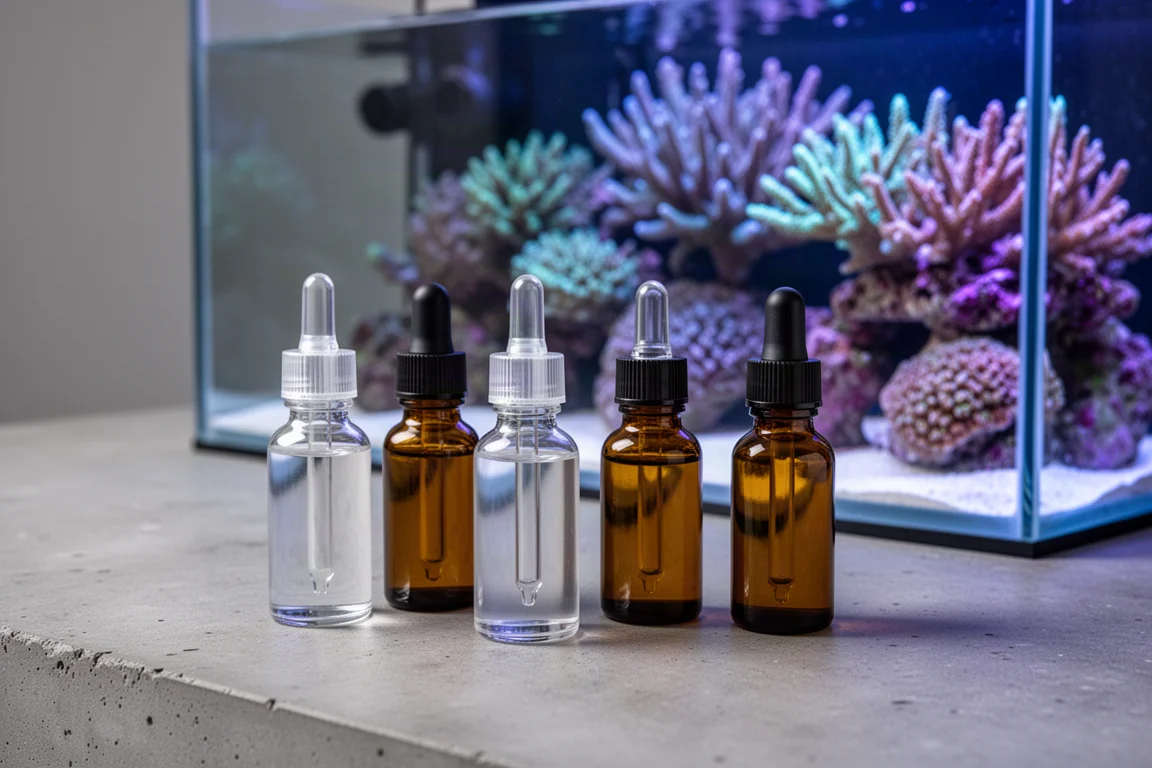
Korallen-Zucht keeps a small group of products separate from its regular dosing line and labels them problem solutions. The distinction is worth understanding, because these four are not meant to replace an existing routine. They are aimed at specific, stubborn problems that show up in reef tanks.
The four covered here are Flatworm Stop, Coral Booster, Cyano Clean, and Zeozym. What they share is an indirect strategy. Rather than wiping out a pest or a nuisance growth outright, they change conditions inside the tank so the problem loses its foothold.
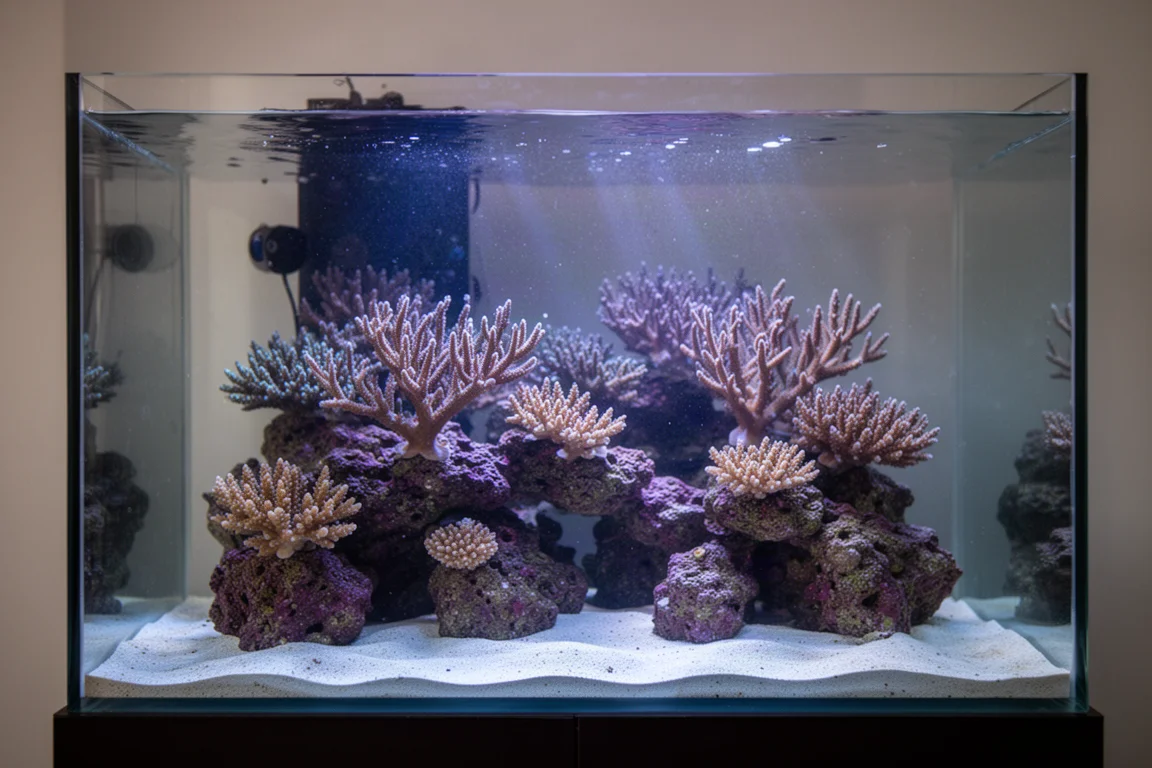
That difference matters most when the direct route has already failed. Flatworm eggs sit protected from most treatments, and cyanobacteria often returns a week or two after an antibacterial dose. Working on the tank’s biology rather than on the organism itself is the idea running through all four products.
What Sets KZ Problem Solutions Apart
Most reef keepers handle pests and nuisance growth the same way: find something that kills the target, dose it, and hope it does not come back. That approach has an obvious weakness. Anything with a protected life stage, such as flatworm eggs, survives the treatment, and anything with a fast reproductive cycle, such as cyanobacteria, can re-establish quickly once dosing stops.
KZ’s problem solutions take the opposite route. They strengthen the coral or reshape the bacterial community until the nuisance can no longer compete effectively.
It is worth setting expectations before buying. Results build over weeks rather than days, and consistency matters more than dose size. It is also fair to say that Korallen-Zucht does not publish much about how these products are formulated or the exact mechanisms behind them. The case for them rests largely on the long-term results reef keepers report in established tanks, which is a reasonable basis even without a detailed technical breakdown.
Korallen-Zucht Flatworm Stop: Making Corals Less Palatable
Flatworm Stop does not attack flatworms with a chemical knockdown. Instead it fortifies the coral and makes it less palatable, which reduces how effectively flatworms are able to feed on it.
That approach suits acropora-eating flatworms, which are notoriously difficult to eliminate once they are established. Because the product is not aimed at the flatworm itself, it does not depend on reaching protected eggs. By protecting the coral and cutting the flatworm’s feeding efficiency, survival and reproduction become harder, and the population tends to decline over time. The damage done to prized acropora is limited along the way.
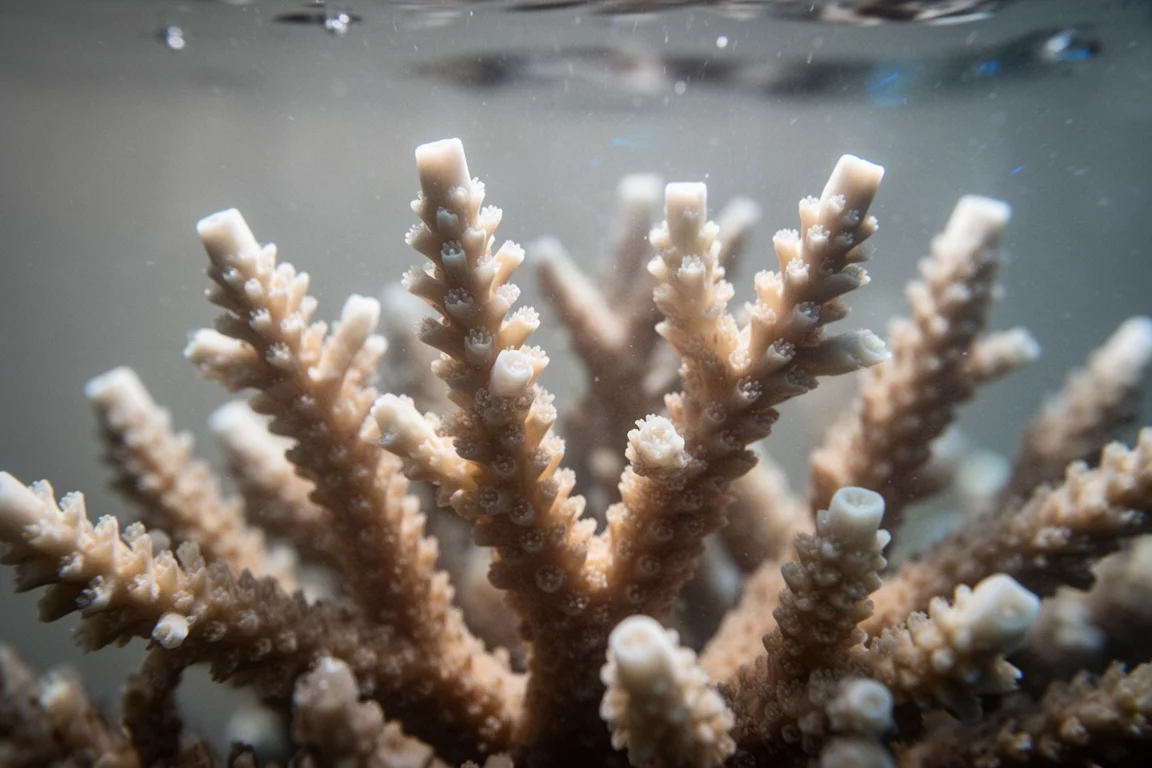
This is a long game rather than a knockout. Flatworm Stop needs consistent dosing to produce visible change, and the shift happens gradually as the balance tips toward the coral.

Korallen-Zucht Coral Booster: Supporting Coral Health
Coral Booster pairs naturally with Flatworm Stop. Where Flatworm Stop makes the coral a poorer meal, Coral Booster supports overall coral health, immune response, and tissue strength so the coral is better able to handle pest pressure in the first place.
For a tank already under stress, the pairing covers both sides of the problem. It reduces pressure from the pest while improving the condition of the coral being targeted. Neither product is designed as an instant win on its own, and both reward steady dosing over a long period.

Korallen-Zucht Cyano Clean: Outcompeting Cyanobacteria
Cyano Clean is not a typical antibacterial treatment. The usual approach kills the cyanobacteria in the tank, and the growth often reappears a week or two later once conditions allow it to return.
Cyano Clean works differently. It contains intentionally selected bacteria capable of outcompeting cyanobacteria. Those bacteria take up the same dissolved organics and nutrients that cyanobacteria rely on, so the cyanobacteria lose their advantage and are eventually displaced from substrate and rockwork. Nothing is being killed directly. The microbiology of the tank is being changed so that cyanobacteria can no longer dominate.
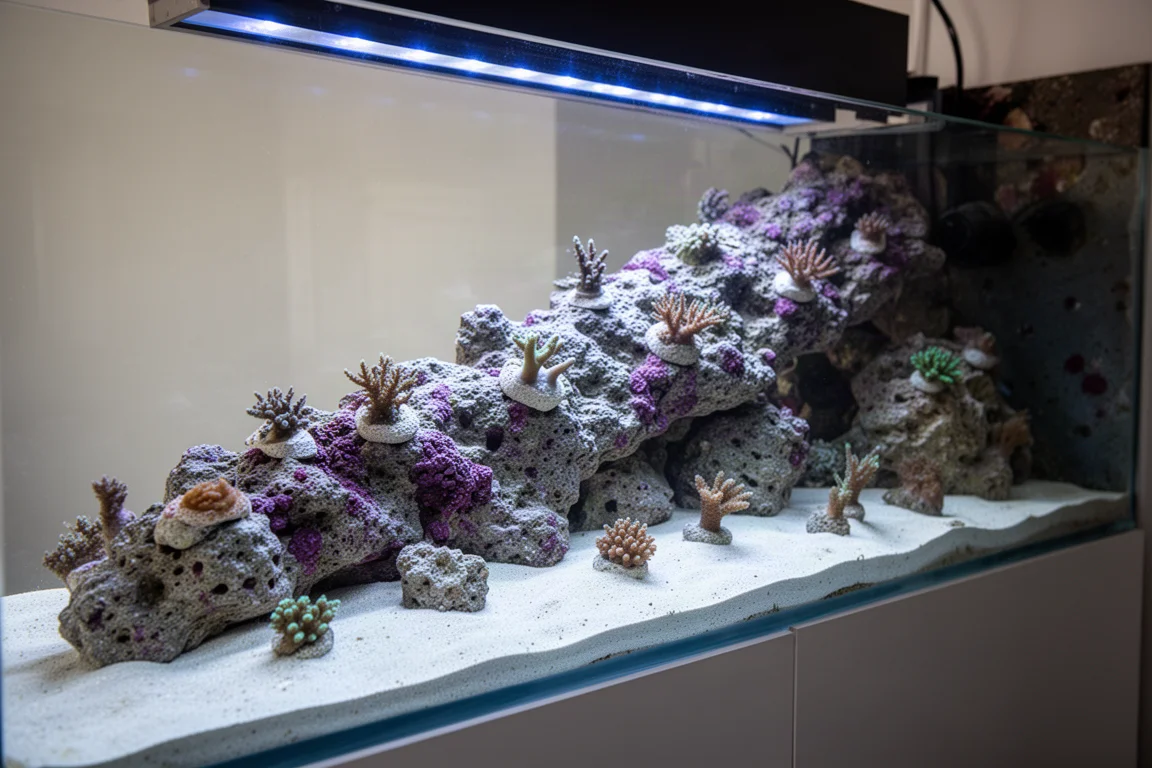
That makes the product most relevant where cyanobacteria has already returned after a knockout treatment.

Korallen-Zucht Zeozym: Fueling Beneficial Bacteria
Zeozym is designed to accelerate what Cyano Clean starts. It boosts bacterial activity and breaks complex organic waste down into simpler compounds that beneficial bacteria can process more efficiently, increasing the amount of usable fuel in the system so competing bacteria establish themselves faster.
The effect is not limited to the bacteria introduced by Cyano Clean. Zeozym gives a broader boost to beneficial bacteria throughout the reef system, which also means less dissolved waste in the water column. Because those nutrient-rich bacteria get bound up in the skimmer and physically removed with the skimmate, the waste is exported from the tank rather than simply recycled inside it.

Overall Buying Advice
These four products make the most sense as a coordinated approach rather than as impulse purchases. If acropora-eating flatworms are the issue, Flatworm Stop and Coral Booster are the pair to consider: one reduces the pest’s feeding success, and the other keeps the coral in better condition while it recovers. Both need consistent dosing and both work on the timescale of weeks and months.

For recurring cyanobacteria, Cyano Clean and Zeozym cover two halves of the same job. Cyano Clean introduces bacteria that compete for the same resources cyanobacteria depend on, while Zeozym speeds up that establishment and supports waste export through the skimmer.
One reasonable caution applies across all four. Korallen-Zucht does not publish full formulation details or exact mechanisms, so the decision rests on the results reef keepers see over time in their own systems. If you prefer a documented mechanism before you dose anything, that gap is worth weighing carefully. If you are comfortable judging a product by its long-term effect on coral condition and overall tank stability, these are worth a closer look.
Conclusion
Korallen-Zucht’s problem solutions are built around shifting the balance rather than knocking a problem out in a single dose. Flatworm Stop and Coral Booster work on coral resilience and pest pressure. Cyano Clean and Zeozym work on the bacterial community and the waste it processes. None of them is a fast fix, and all of them reward consistent dosing. For reef keepers who have already watched a direct chemical approach fail, that slower, indirect strategy is exactly the point.
Further reading
Related Reviews

Backpacking Gear
Building a 10 lb Base Weight: An Ultralight Backpacking Gear List
A practical walkthrough of the ultralight pieces behind a 10 lb base weight, from a 765 g pack and a roomy one-person tent to a full camp chair and a dependable water filter.

Road Bikes
10 New Road Bikes Worth Watching: Aero, Titanium, Steel and Endurance Standouts
A practical roundup of 10 new road bikes, from aero flagships chasing single-watt gains to titanium, steel and endurance platforms built for real roads.
Saltwater Aquarium Setup
10 Questions About Cycling a Saltwater Aquarium: What You Need to Know
Essential questions and answers for cycling a reef tank or saltwater aquarium, from biome building to light management and bacterial supplements.