Grilling
Best Charcoal for Konro Grilling: OGatan vs Shirakumi vs Tosa Binchotan Compared
We put three konro-ready charcoals head to head in a controlled burn test. Here is how they differ on lighting time, heat, and how much effort each one demands.
Introduction
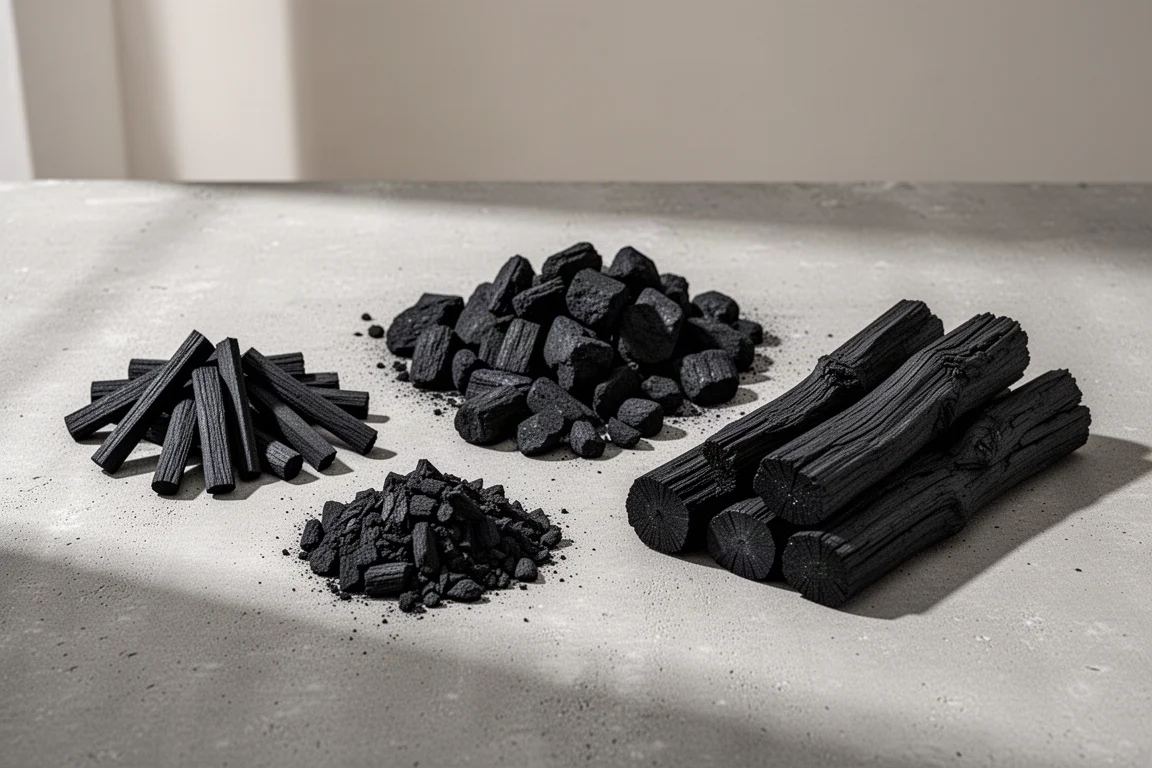
Dense Japanese-style charcoal is a different beast from the briquettes most people grew up with. It lights slowly, burns long, and rewards a bit of technique. But with several types on the shelf, which one actually fits your grilling style?
To find out, a team set up a controlled comparison: four ceramic konro grills, four types of charcoal, each with its own chimney starter, tracked with infrared thermometers and heat guns. Every charcoal got exactly one pound, exactly half an hour of starter time, and a hands-off approach once it hit the grill. The test did not produce the hard burn-time numbers hoped for, but it produced something arguably more useful: a clear picture of how much effort each charcoal demands, and who each one suits.
How We Tested
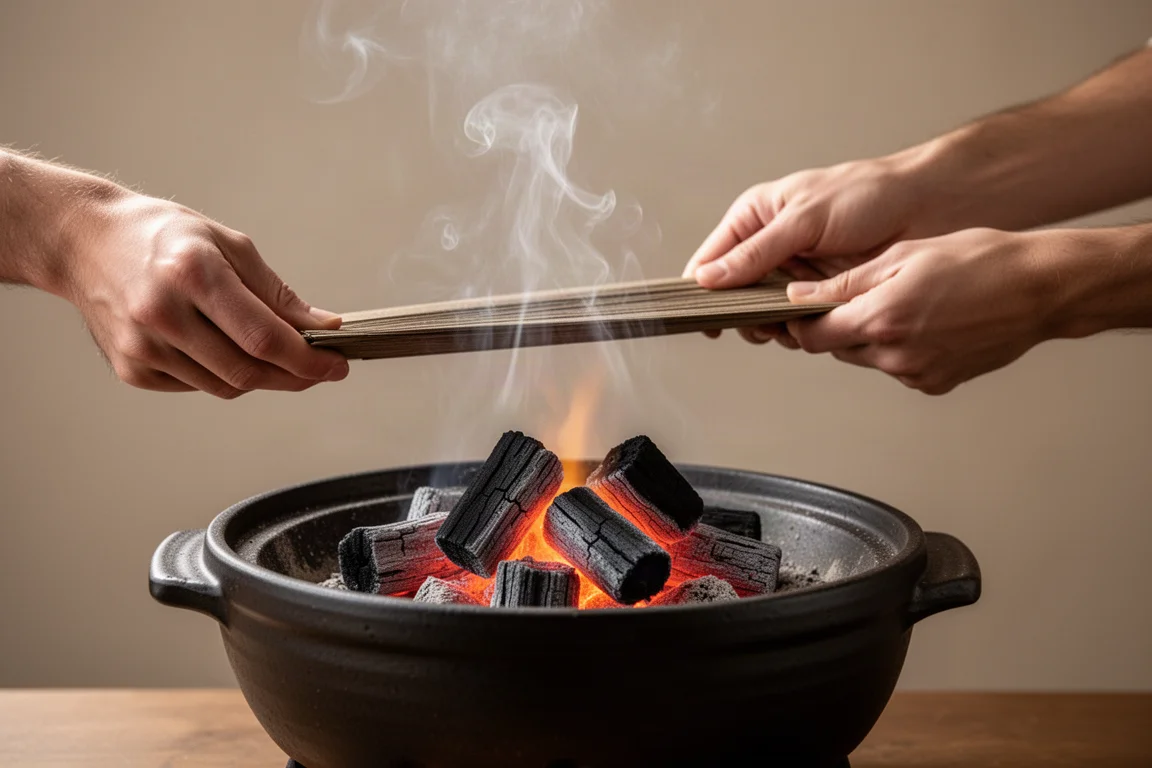
Each charcoal type was started at the same time in its own chimney on an iwatani cassette burner, which is also a handy tool if you cook with a wok or a donabe pot. Stopwatches ran in parallel, and temperatures were measured with infrared meters.
The no-name briquette charcoal lit easily and was ready in about 15 minutes, but it entered the konro nearly spent and its temperature dropped off after roughly 35 minutes. The denser charcoals needed the full half hour, and one of them arguably needed more.
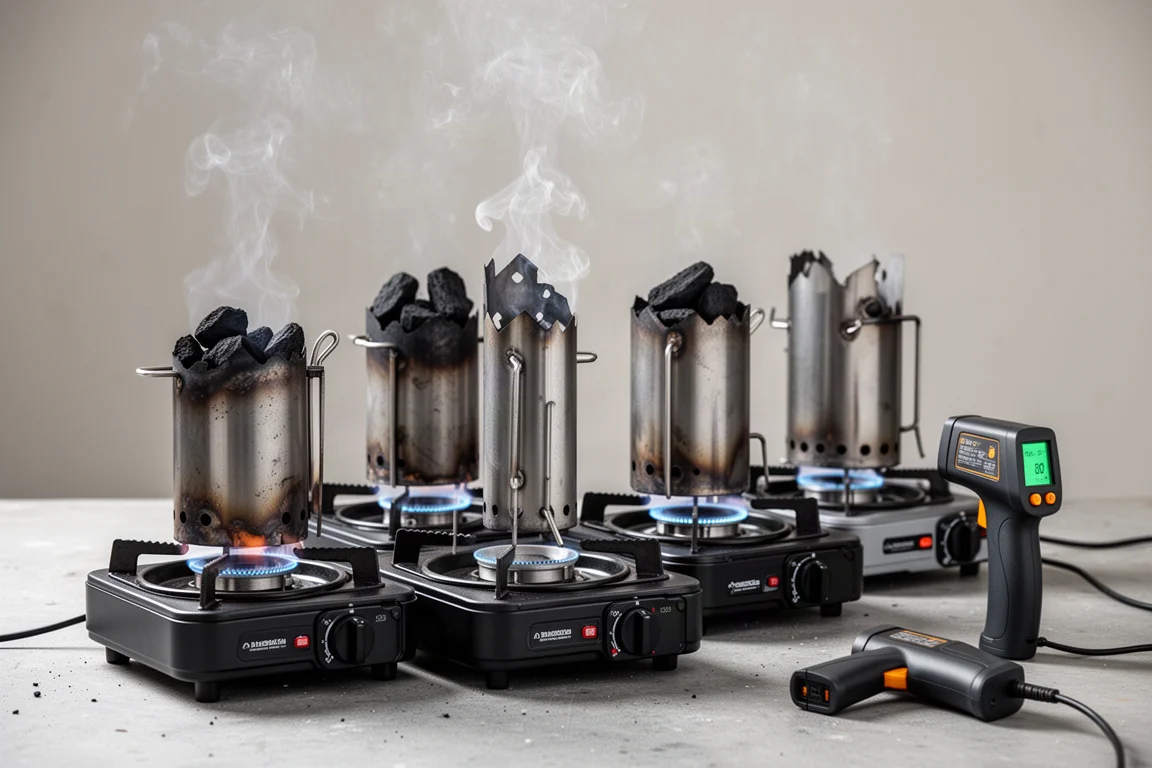
One caveat worth noting: a single pound was not enough to fully fill the test konro, so the ceramic could not build up and radiate heat back at the fuel. That radiant effect matters, especially for the densest charcoal in the lineup.
The OGatan: Easy Wins
Knifewear OGatan is a pressed wood charcoal, and it was the clear winner of the test for one simple reason: it performed best with the least amount of babying. The pieces are evenly sized, so stacking them is straightforward, and once lit it just burned. Temperatures were the most consistent of the bunch, and it held its heat well during cooking.
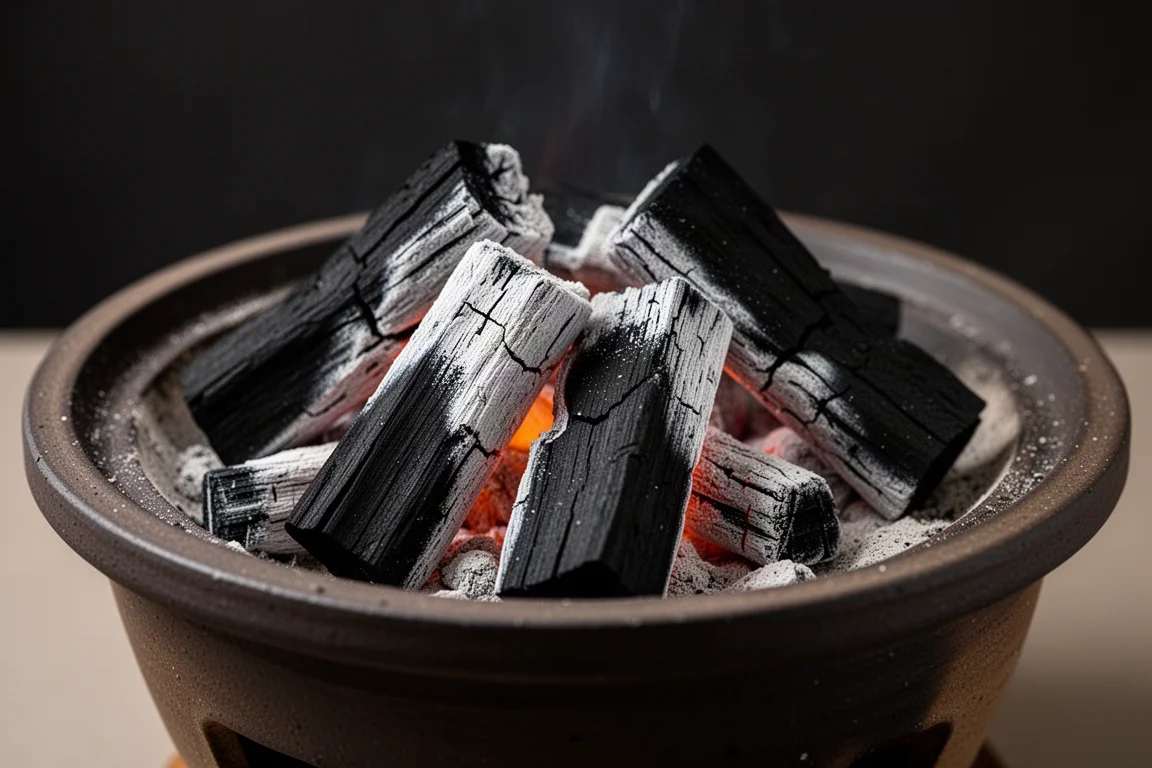
It even responded well when fat from a pork leg dripped onto it, burning hotter rather than struggling. If you are just getting into konro grilling or dense charcoals in general, this is a very forgiving starting point. The trade-off is burn time: it will not last as long as the higher-grade options, though it still burns for a long time without much fuss.
The Shirakumi: The Middle Path
Shirakumi is a eucalyptus-style binchotan, and it landed between the other two on effort. It was easier to get going than the densest option but needed more attention than OGatan. The pieces come in varied sizes: the small ones catch quickly and help light the bigger ones, but the mixed sizing means you should move pieces around as the small ones burn out, nestling the bigger pieces together to keep everything going.
The hands-off test protocol worked against it here, since nobody was rearranging the charcoal. Managed actively, it is a genuine step toward the high heat and long burn of true binchotan, and it comes in a large box, so you will not be reordering constantly.
The Tosa: For the Traditionalist
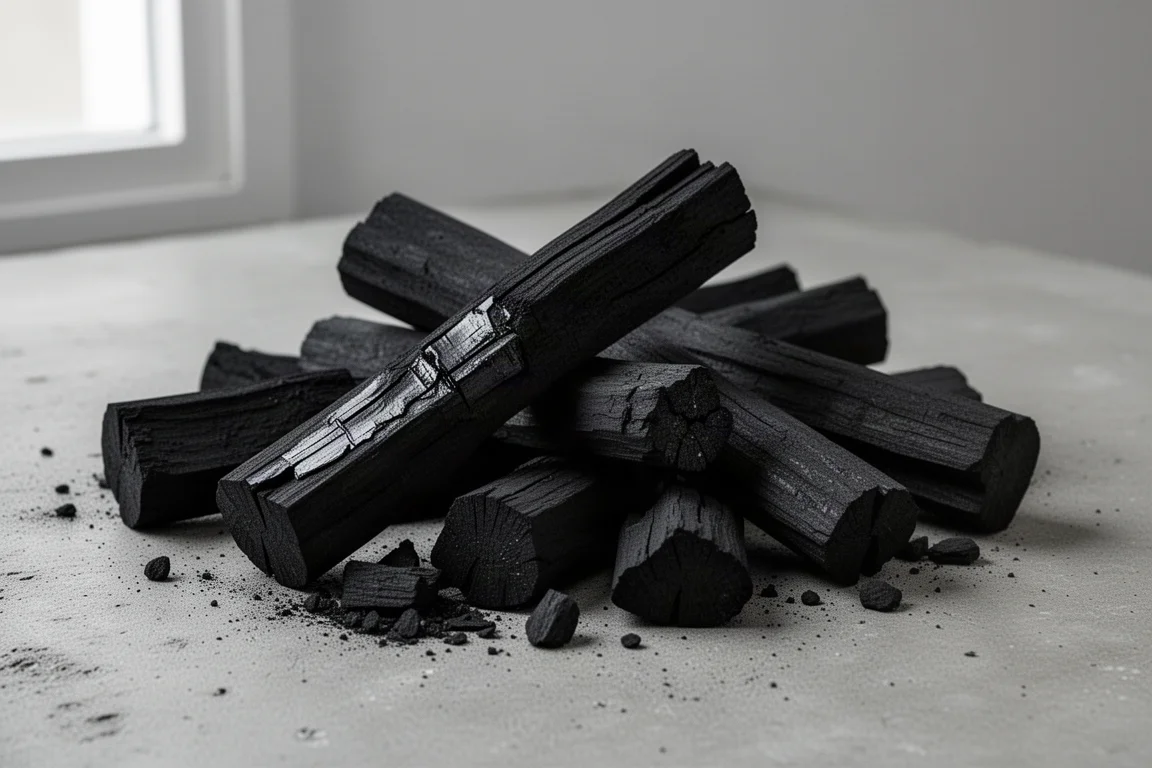
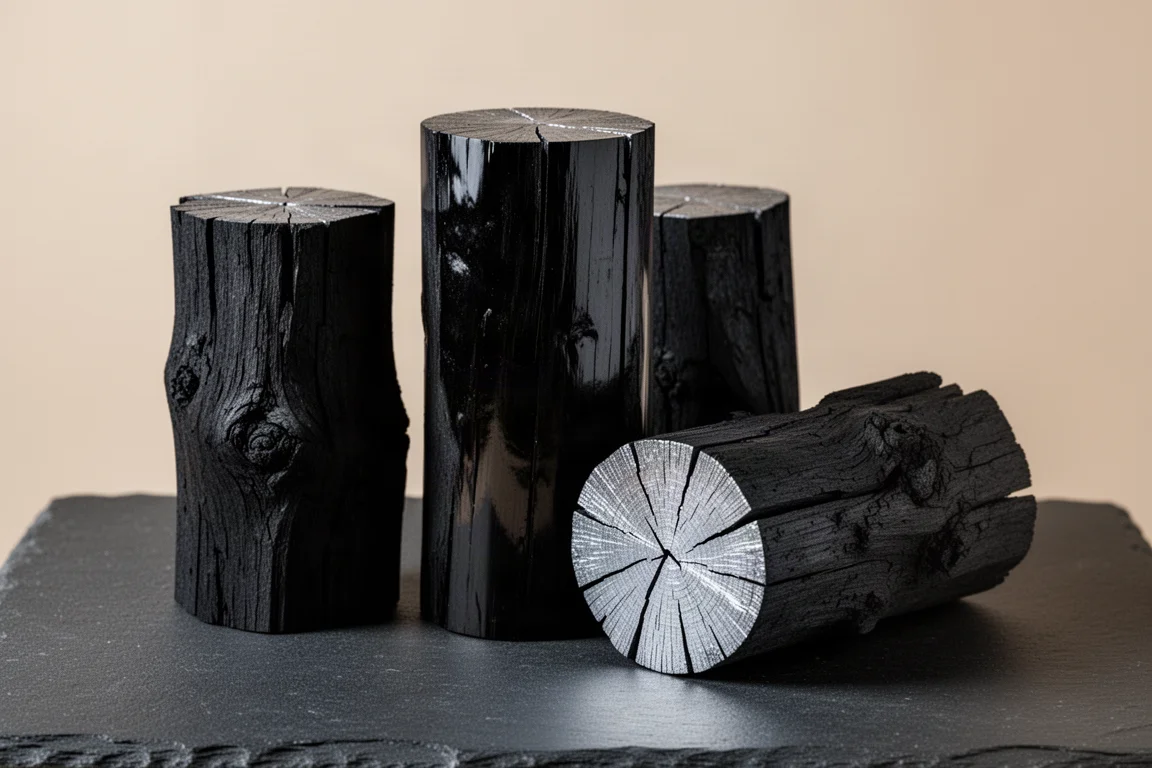
Tosa binchotan is made from white oak and is extremely dense. In the test it crackled and popped through the chimney phase, but even after half an hour it arguably was not ready for the konro. Once in the grill it ran cooler than it should, with pieces dying out, because it simply did not get enough starter time.
That said, the disappointment says more about the test than the charcoal. A demanding yakitori chef who accepts nothing less than the best buys Tosa exclusively, insisting it delivers the longest, most even, hottest burn when worked properly. Another customer preheated it in an oven at 450 degrees for half an hour before the chimney, then had it cooking-ready in another half hour, searing fatty pork skewers remarkably fast. His setup also used a small konro with the bottom fully covered in charcoal, letting the ceramic radiate heat back and keep the fuel alive.
Who Should Buy Which
The experiment ultimately sorted these charcoals by how much effort you are willing to invest.
- OGatan is the set-and-forget choice. Easy to light, consistent heat, minimal fiddling, slightly shorter burn.
- Shirakumi is the toe-dip into dense charcoal. Easier than Tosa, with more of that high-heat, long-burn character, in a big box.
- Tosa is for the traditionalist who wants the best possible results and will fuss for them: preheating in the oven, fanning constantly, and rearranging pieces like a yakitori chef. Fanning proved helpful mid-test and is close to a requirement for Tosa.
Match the charcoal to your patience level and your grill size, and make sure you have enough charcoal to cover the bottom of the konro so the ceramic can do its radiant work.
Conclusion
No single charcoal wins outright; each fits a different kind of griller. OGatan rewards beginners with effortless, consistent heat. Shirakumi bridges the gap toward dense binchotan without a steep learning curve. Tosa asks for the most work and, in the hands of people who put that work in, reportedly delivers the finest results. Choose based on how hands-on you want to be, and happy grilling.
Further reading
Related Reviews
Grilling
Knifewear Ogatan Charcoal: A Practical Middle Ground for Charcoal Grilling
Ogatan is a dense Japanese-style sawdust charcoal that lights more easily than binchotan and burns longer than lump charcoal. Here is what to know before you buy.
Backpacking Gear
Building a 10 lb Base Weight: An Ultralight Backpacking Gear List
A practical walkthrough of the ultralight pieces behind a 10 lb base weight, from a 765 g pack and a roomy one-person tent to a full camp chair and a dependable water filter.
Road Bikes
10 New Road Bikes Worth Watching: Aero, Titanium, Steel and Endurance Standouts
A practical roundup of 10 new road bikes, from aero flagships chasing single-watt gains to titanium, steel and endurance platforms built for real roads.