Camping Sleeping Pads
Klymit Double V Uninsulated Sleeping Pad Review: A Packable Two-Person Pad for Summer
A practical look at the Klymit Double V Uninsulated Sleeping Pad, covering comfort, inflation and packing times, packed size, weight, and the trips it suits best.
Introduction
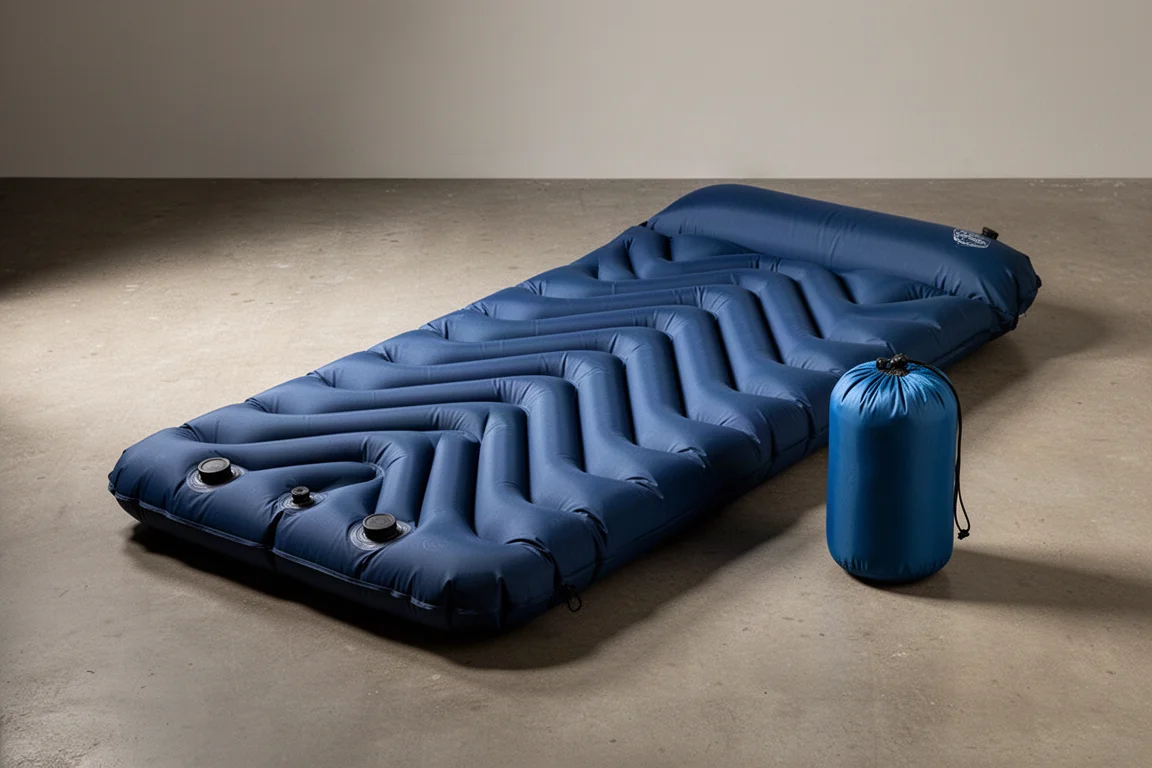
The Klymit Double V Uninsulated Sleeping Pad is a two-person air pad built around a grid of V-shaped air chambers and a stuff sack that doubles as a pump. The blue uninsulated version carries an R-value of 1.6, which places it firmly in warm-weather territory, and it arrives with a stuff sack, printed instructions, and a patch kit.
Fully inflated, the pad measures about 74 by 46 inches and lifts a sleeper roughly 2.5 inches off the ground. The complete package, pad plus stuff sack, weighs 43.4 oz, or about 2.7 pounds. That combination of a low profile, a modest footprint, and a compact packed size is what makes it interesting for anyone who wants one pad to cover several kinds of trips rather than a specialist ultralight setup.
Who This Sleeping Pad Is For
This pad makes the most sense for campers and for shorter backpacking trips. It is light enough to carry when a little extra weight and space are acceptable, but at 2.7 pounds for the full package it is not an ultralight choice. Campers who are short on space will also find it useful, because it stays low to the ground and does not eat into the livable room inside a tent.
It also suits anyone who wants a single pad for everything: backpacking, camping, and travel. Its low profile means it fits into two-person tents, including models with lower peak heights, and it can be inflated either inside the tent or outside and then squeezed through the door.
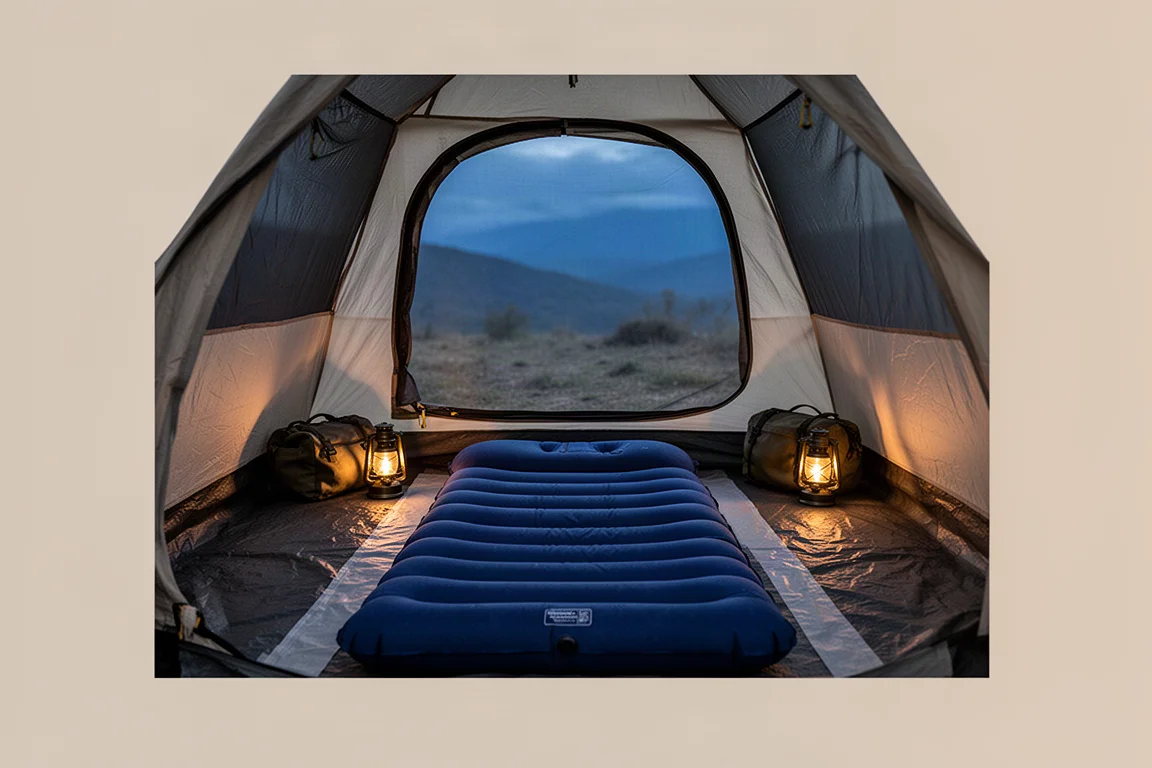
The R-value of 1.6 is worth repeating here, because it defines the season. This is a summer pad rather than a three-season or winter one.
Comfort and Support on the Ground
At full firmness, the sleeping surface keeps the body clear of the ground whether you sleep on your back, your stomach, or your side. The V-shaped chambers run across the whole pad and provide a noticeable amount of support and contour, rather than the flat, even surface of a self-inflating foam mattress.
That difference is the main adjustment. Anyone used to a completely flat and cushy foam pad may need a few nights to settle into the chambered surface, which is not as smooth and takes some getting used to. After a few days of use it reads as decently comfortable rather than luxurious.
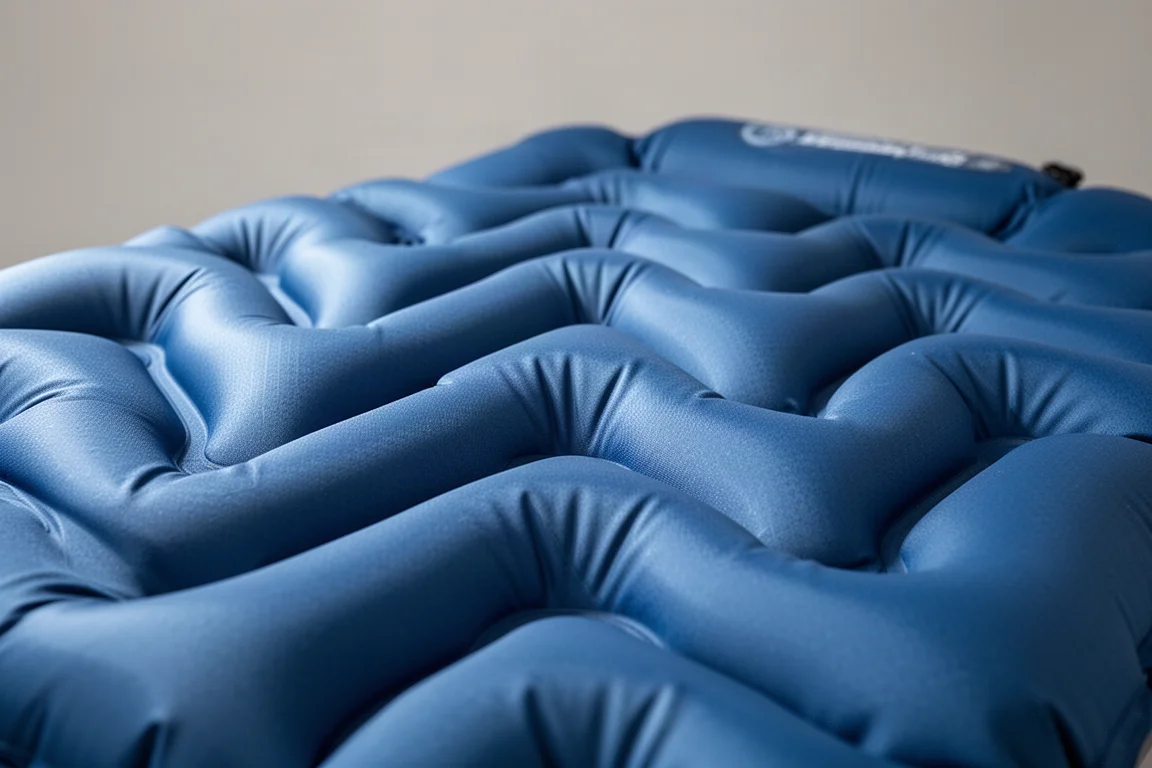
Pressure points are where the design shows its limits. Leaning on an elbow or a knee, or simply sitting down, brings the ground back into contact, and tossing and turning can do the same. The side rails offer better edge support than many higher-profile two-person air mattresses, but they do not stop you from rolling off the pad.
Two details help when a second person shares the pad. The chambers on the left and right are not completely separate from one another, but the layout does reduce air movement through the night, so bouncing stays minimal. The surface fabric is a little louder than other two-person air and self-inflating mattresses, though not dramatically so.
Main Strengths
Build quality is the strongest argument for this pad. It uses 75D polyester, which is on the thicker side for a sleeping pad, and both the top and bottom surfaces feel identical in material and thickness. The FlatValves sit flush with the surface and stay low profile, and having separate inflate and deflate valves is a genuinely useful detail. The valve flaps feel thick and rugged, the seams are clean, and air retention has held up: the pad has gone three consecutive nights with two people sleeping on it without needing a top-off, and after close to a year of use it still holds air with no leaks.
The stuff sack deserves equal credit. It feels like the same durable material as the pad, it survives being pressed hard during pumping, and it compacts the pad down as far as it will go. It has a handle for carrying and a hole at the bottom so air can be pushed out of the sack itself. The roll top is a little tight, but the overall design is clever.
Inflation, Deflation, and Packing
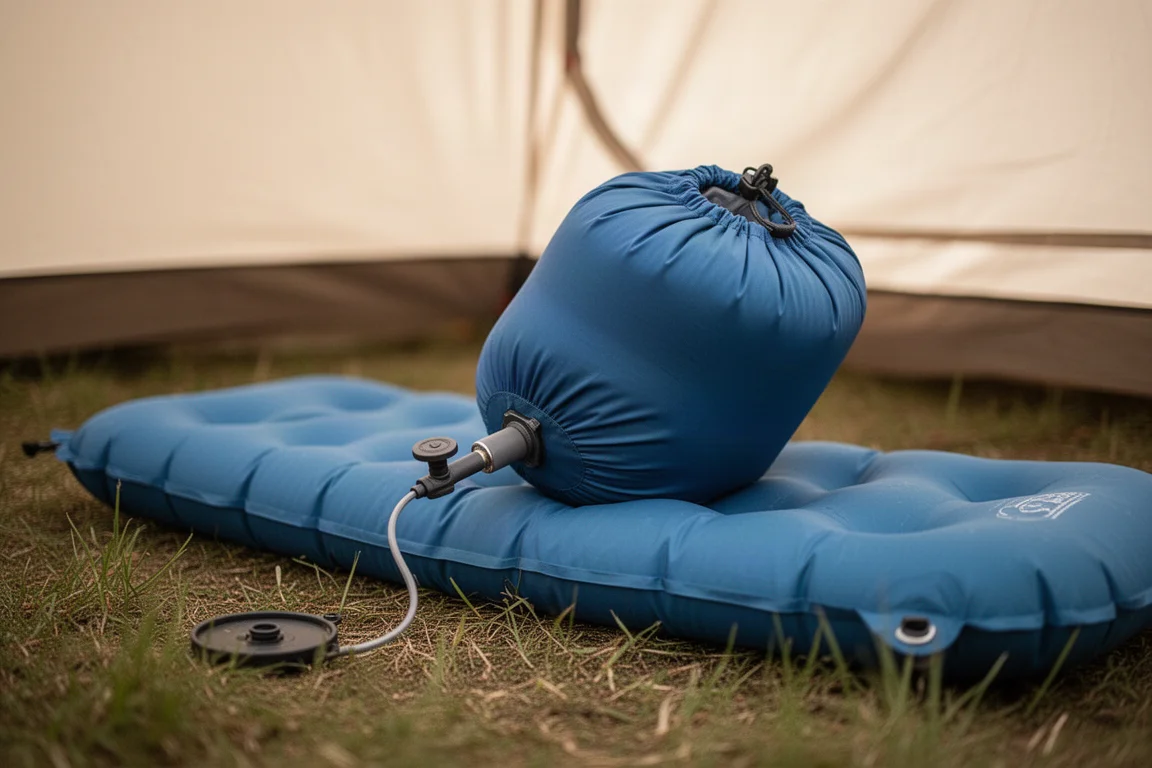
Setup starts at the head of the pad, where two valves sit flush with the surface and are labeled “Inflate” and “Deflate”. Pulling the flap off the inflate valve exposes a one-way valve that only lets air in. The bottom of the stuff sack then clicks onto that valve, and the sack becomes the pump.
Getting a full bag of air is the only part that takes technique. With no airflow, pushing an arm into the sack and working it up and down a couple of times evens out the wrinkles and makes the sack as cylindrical as possible, which fills it surprisingly well. In moving air, facing the sack opening into the wind fills it faster. The top is then folded down two or three times and pressed to push the air into the pad.
Timing is straightforward. Without airflow, roughly 17 bags of air are needed, which takes about 2 minutes and 15 seconds. With wind, the bags are bigger, so around 14 bags and about 1 minute and 45 seconds do the job. If the pad ends up too firm, opening the inflate valve and pressing gently on the built-in flap releases a little air at a time.
Deflation and packing add roughly three minutes in total. Both valve flaps come off, the pad is folded in half lengthwise twice and rolled from the side without the valves, pressing the deflate and inflate valves if air gets trapped in the final rolls. Deflating takes about a minute, and folding and repacking takes another 2 minutes and 15 seconds or so, for a total of about 2 to 2.5 minutes. The packed pad measures roughly 11 by 7 by 5 inches, and it can end up larger if not enough air is pushed out.
Things to Consider Before Buying
Comfort is the honest caveat. The chambered surface is decent rather than plush, and anyone who sleeps best on a flat foam mattress should expect an adjustment period. The 74 by 46 inch footprint is also worth measuring against expectations: it is nowhere near a Queen or even a Full in width, and is essentially just slightly wider than two regular sleeping pads placed side by side. For two people it is workable, but it is not spacious.
Weight is the second consideration. At 2.7 pounds for the pad and sack together, this is not an ultralight item, and the R-value of 1.6 keeps it in summer use. Cold-weather campers should look elsewhere.
Smaller points: the surface fabric is slightly noisier than comparable mattresses, the roll-top opening is tight enough that a poorly deflated pad will not fit back in neatly, and the side rails will not keep a restless sleeper on the pad.
Buying Advice
Tent fit is where this pad performs better than its dimensions suggest. Inside a Coleman 2-Person Sundome, it does not fill the entire floor, leaving space for gear at the sides, and it does not reduce livable space: there is plenty of room to sit up and to crouch. It can be inflated inside the tent thanks to the space at the sides, or inflated outside and squished through the door.
In a larger Coleman 4-Person Dome Tent, it fits both horizontally and vertically, and even with a second Double V alongside it there is still a little room left at the sides, along with enough headroom to almost stand up.
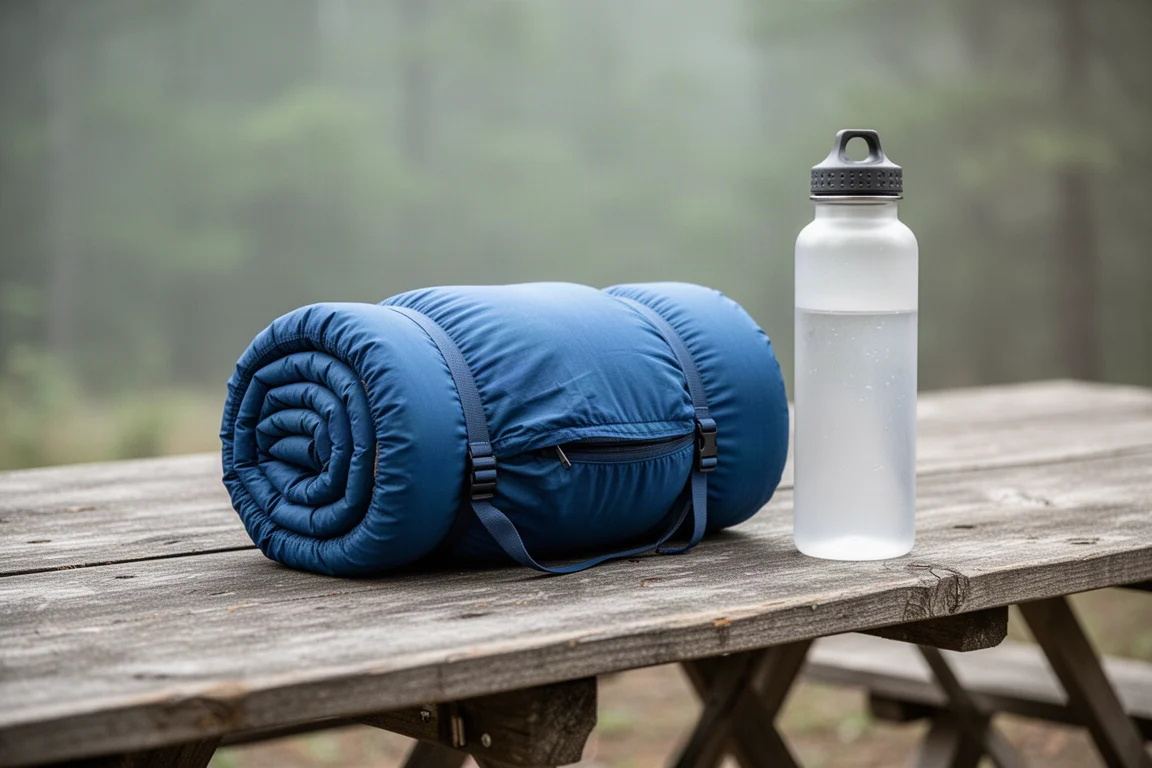
For buyers weighing it up, the practical question is how you camp. If your trips are shorter backpacking outings where a bit more weight and bulk are acceptable, or car camping where floor space inside the tent is tight, this pad covers both without needing a second mattress. If you need winter insulation or the lowest possible pack weight, the specifications here point you elsewhere.
Conclusion
The Klymit Double V Uninsulated Sleeping Pad trades outright plushness for durability, portability, and versatility. The 75D polyester construction, the separate inflate and deflate valves, and the pump-capable stuff sack all hold up in regular use, and the compact packed size makes it easy to live with. The compromises are clear and easy to plan around: a chambered surface that takes some getting used to, a footprint that is much narrower than a Queen or Full mattress, a 2.7 pound package weight, and a summer-only R-value of 1.6. For shorter backpacking trips, space-conscious camping, or anyone who wants one pad that handles several kinds of trips, those trade-offs are reasonable.
Product link
View more details for Klymit Double V Uninsulated Sleeping Pad
This product is mentioned in the review. Check the specifications, options, and compatibility before buying.
View more details for Klymit Double V Uninsulated Sleeping PadFurther reading
Related Reviews
Camping Sleeping Pads
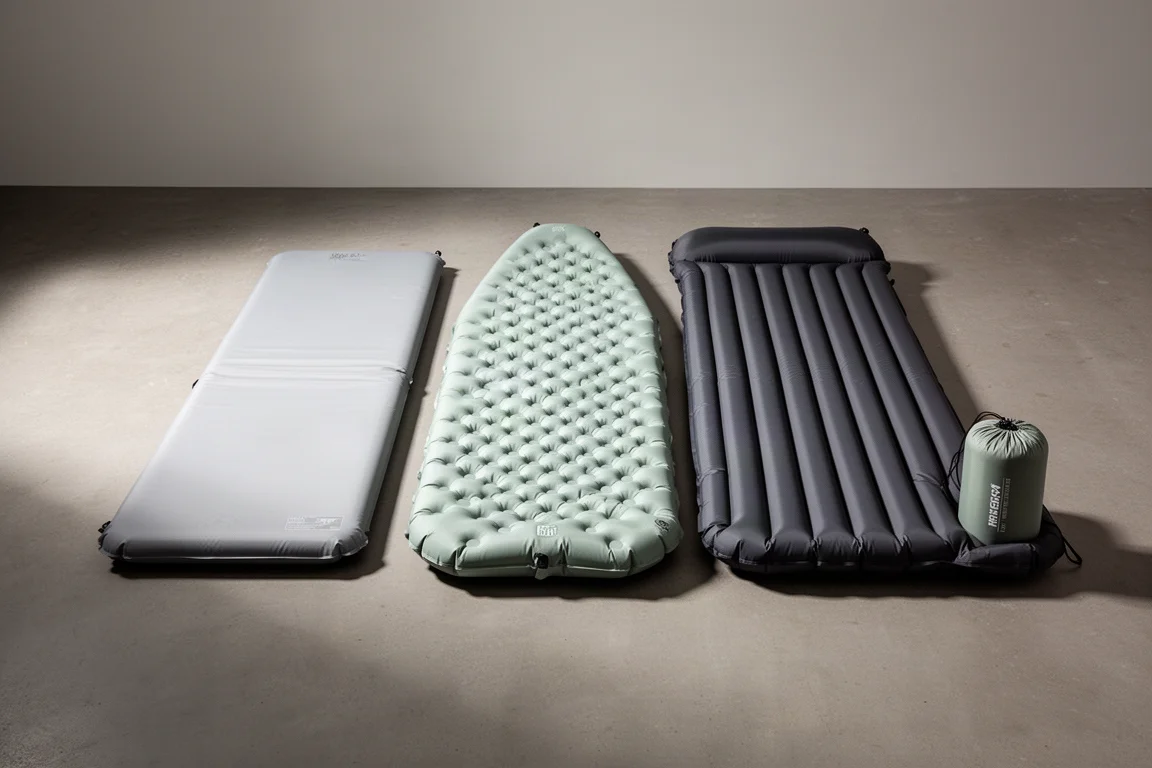
Best Sleeping Pads 2026: Comfort Awards and Top Picks
A comfort-focused roundup of ten sleeping pads, from budget dimpled designs to thick stretch-top models, with gold, silver, and bronze comfort awards.
Camping Sleeping Pads
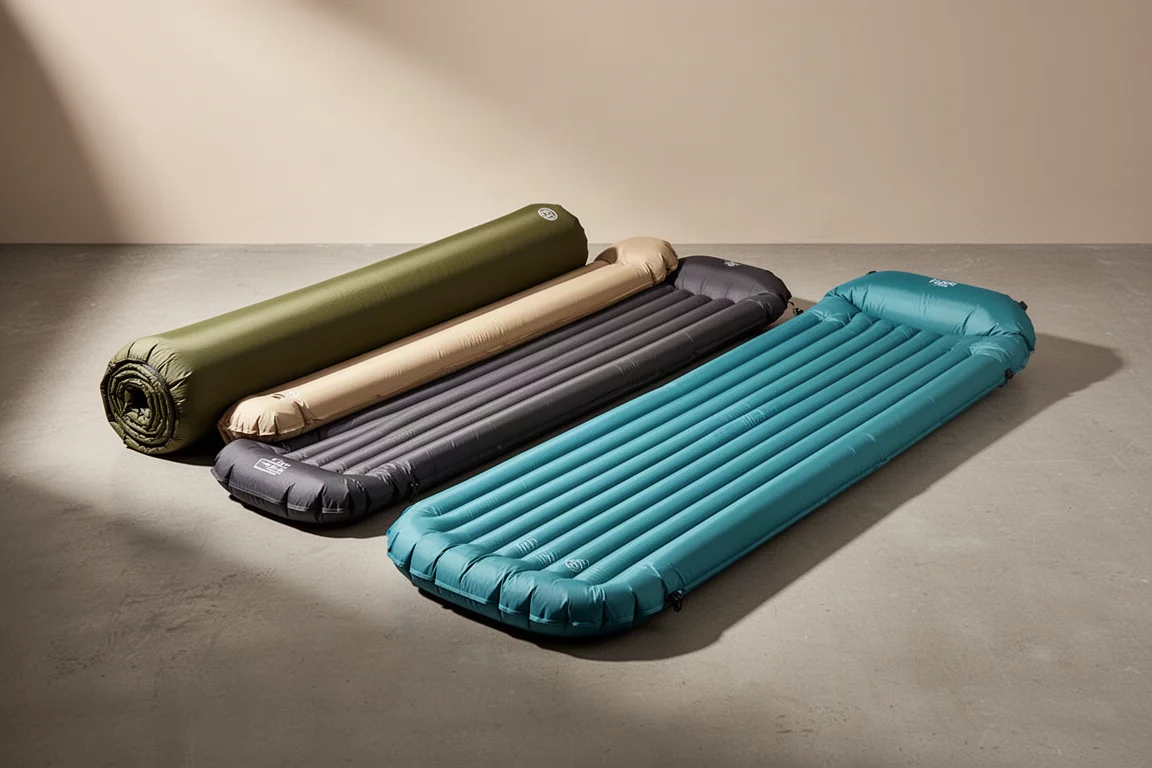
Best Ultralight Sleeping Pads 2026: Seven Lightweight Pads Compared
Seven sub-600 g sleeping pads compared on weight, comfort, warmth, and price, with clear picks for cold sleepers, comfort seekers, and budget buyers.
Camping Sleeping Pads
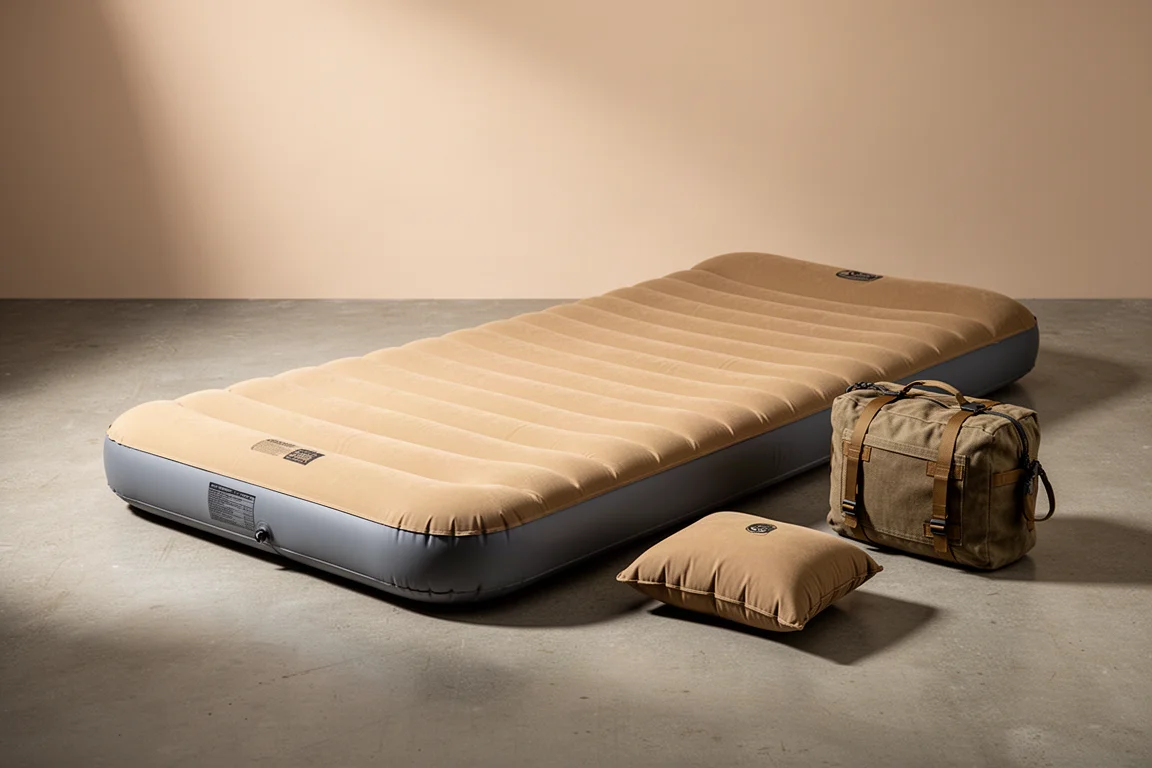
DOD Outdoors Soto Air Mattress Review: Comfort First, at a Price
A thick foam-and-air camping mattress with an 8.3 R-value and a clever inflation system, weighed against a premium price and a tight storage bag.