Floorstanding Speakers
Klipsch RP-6000F Review: A Lively Floorstanding Speaker With Real Low-End Weight
A close look at the Klipsch RP-6000F tower speaker: horn-loaded treble, dual 6.5-inch woofers, 97 dB sensitivity, and the practical trade-offs to weigh before buying.
Introduction
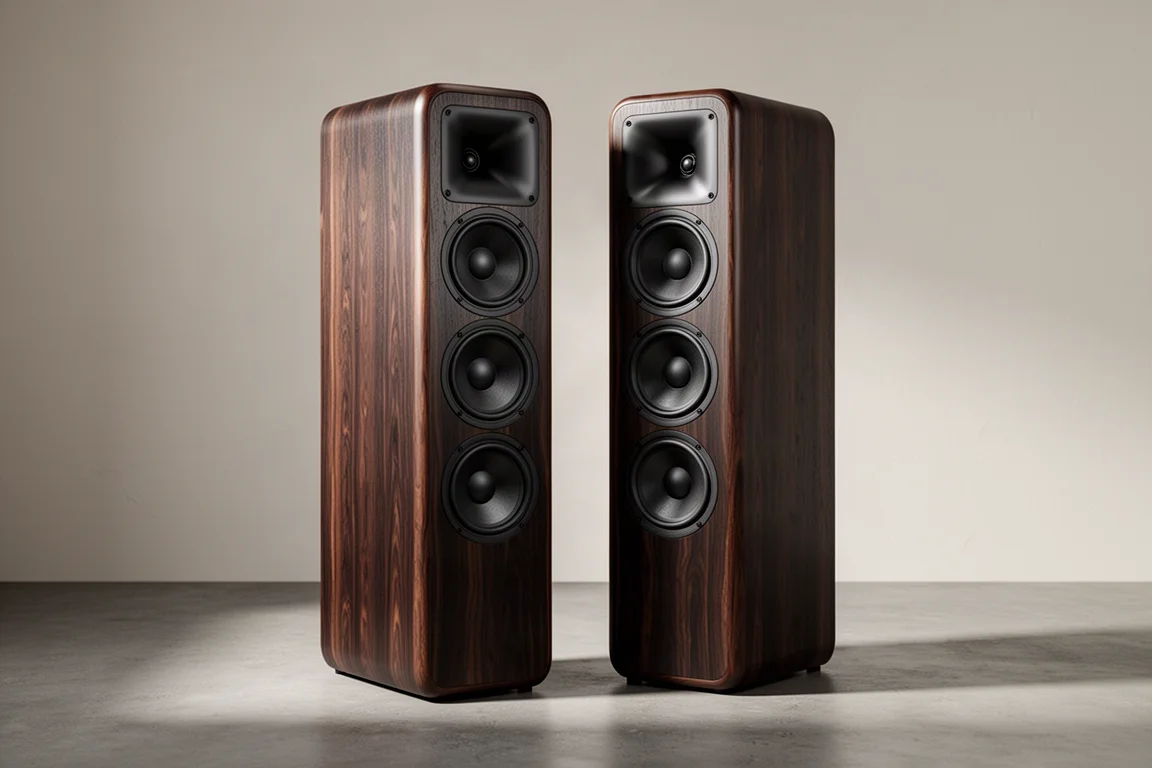
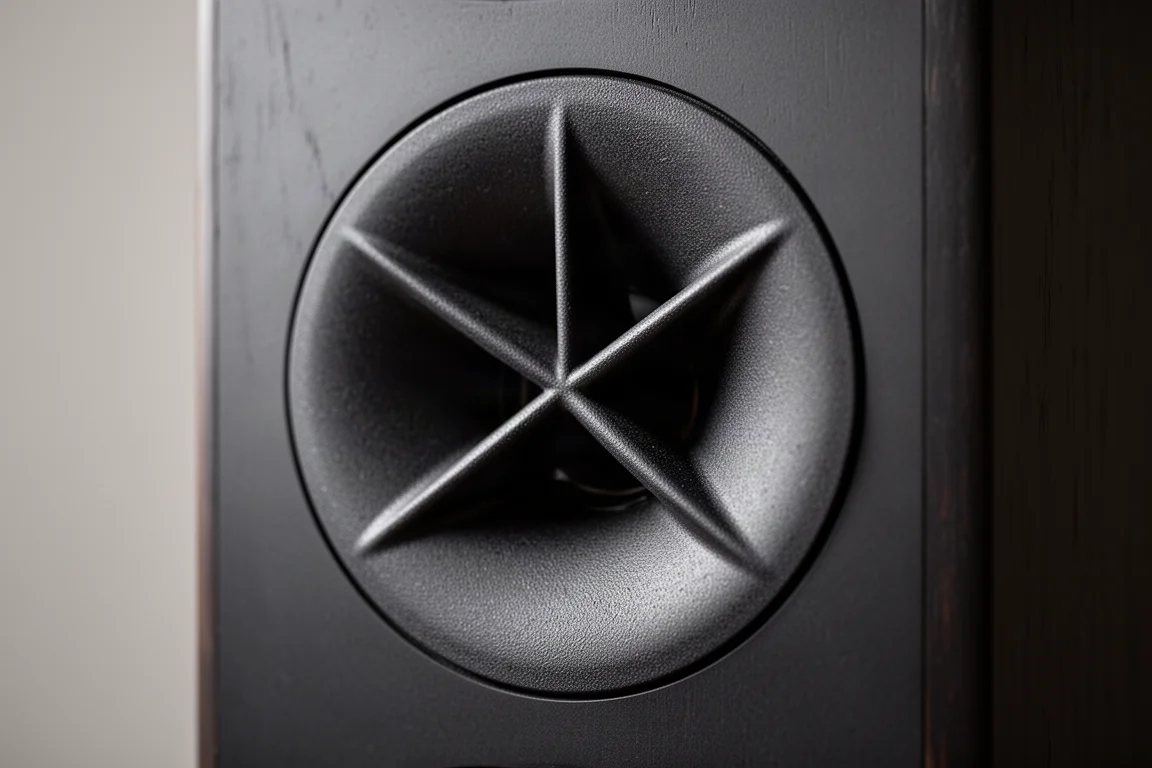
The Klipsch RP-6000F is a floorstanding tower speaker built around a familiar Klipsch formula: a 1-inch titanium dome tweeter loaded into a Tractrix horn, paired with two 6.5-inch woofers in a rear-ported cabinet. It stands roughly 39 inches tall, about 10 inches wide and around 17 inches deep, which makes it a genuine full-size tower rather than a slim lifestyle design. Klipsch rates sensitivity at 97 dB and frequency response from 34 Hz up to 25,000 Hz. The cabinet is bi-ampable, the rear port uses Klipsch’s patented Tractrix design, and a pair of magnetic grilles is included in the box. It is offered in a small number of finishes, including the ebony version.
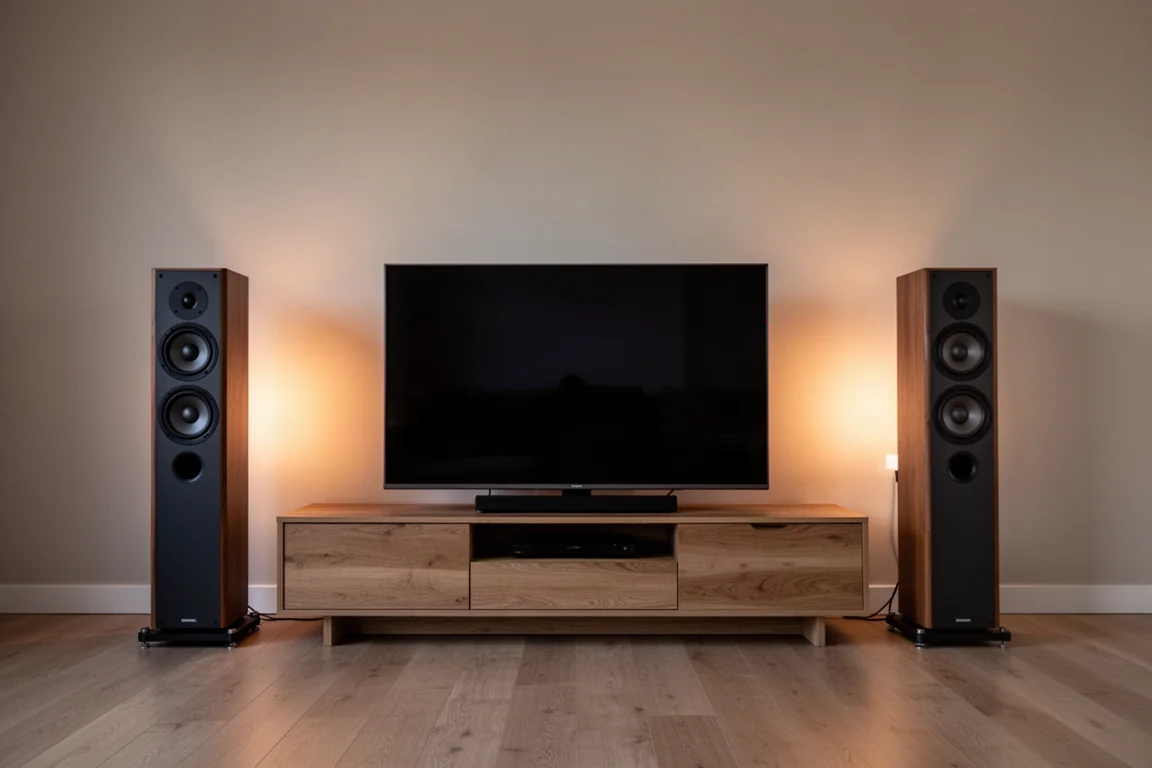
Those two figures, 97 dB and 34 Hz, explain most of what makes this speaker interesting. High sensitivity means it plays loudly from very little amplifier power, while the deep, ported cabinet delivers low-end weight that many towers in this class leave to a subwoofer. The result is a speaker that is easy to drive and, unusually for its size and price band, genuinely full range on its own.
The RP-6000F sits in the middle of the Reference Premiere tower range. A larger RP-8000F and a smaller RP-5000F are also available, though the tuning and output of those models differ, so the character described here should not be assumed to carry over unchanged.
Who This Speaker Is For
This is a speaker for listeners who value energy and presence over strict tonal neutrality. If your reference point is a flat, studio-monitor-style response, the RP-6000F will not be the obvious choice. If you want a lively, forward presentation that makes vocals and percussion feel immediate, it is worth serious attention.
It also suits home theater setups particularly well. The high sensitivity and the low-end reach mean it can carry a movie soundtrack without an immediate subwoofer purchase, and the wide, immersive staging makes film material feel larger than the cabinet dimensions suggest.
Finally, it is a good fit for anyone running modest amplification. Owners of low-power tube amplifiers, small integrated amps or older receivers will find that the RP-6000F asks very little of them. During testing it ran happily on amplifiers ranging from a 2-watt single-ended tube design up to a 200-watt solid-state unit, including a 20-watt integrated, a 25-watt integrated, a 50-watt AV receiver and a higher-powered AV receiver.
Main Strengths
The RP-6000F leans into the classic Klipsch character instead of chasing a flat, studio-neutral curve. It is a speaker with personality: emphasis at the top and bottom, a forward midrange, and a sense of scale that fills a room without straining. Across a wide range of material it stayed composed at high volumes, and it never sounded as though it was working hard.
Three areas stood out most clearly over extended listening.
Bass and Presence
Two 6.5-inch woofers in a large, rear-ported enclosure give this tower more low-end weight than the driver count suggests. In a normal room, with the speaker placed a short distance from the wall, the bass has real punch and enough extension to make a subwoofer optional rather than mandatory. Explosions and low-frequency effects in film material land with weight, and music with a strong kick drum or bass line comes across with body.
Just as important is what the bass does not do. Rear-ported towers placed close to a wall often turn boomy, with the low end smearing over the midrange and treble. The RP-6000F largely avoids that. Even positioned near the wall, the bass stays controlled enough to remain enjoyable rather than intrusive. There is a gentle emphasis in the 80 to 100 Hz region, which adds warmth and impact, but it does not overwhelm the rest of the range.
Soundstage and Imaging
Staging is one of the strongest aspects of this speaker. With the towers toed in slightly and given a little breathing room, the presentation extends well beyond the cabinets, with convincing placement of instruments and effects across the width of the room. Lateral and vertical off-axis performance is good, which helps the sound hold together when listeners are not sitting in the sweet spot.
On film material this translates into an immersive, enveloping feel from just two channels, with effects appearing high and wide without surround speakers. On music, dense productions retain their separation, and details that sit far to one side of the mix stay anchored there rather than collapsing toward the center. For a two-channel tower at this price, that level of spatial performance is a genuine highlight.
Efficiency and Amplifier Flexibility
A 97 dB sensitivity rating is the specification that changes how you shop for the rest of the system. Very low-powered amplifiers, including small tube designs of only a couple of watts, can drive these towers to satisfying levels in a typical room. That opens up options that would be impractical with a typical 85 dB bookshelf speaker.
During testing, the RP-6000F worked well on every amplifier it was paired with. Favorites included a 50-watt AV receiver and a 25-watt integrated amplifier, both of which produced a cohesive, balanced result. Because the speaker has a distinct voice, amplifier matching becomes a matter of taste rather than power: warmer, smoother electronics balance the forward treble, while bright amplification can push the presentation too far. Receivers with built-in EQ make that balancing act easier.
Things to Consider Before Buying
The cabinet is deep at around 17 inches, and that depth is exactly what produces the bass. It also means the speaker needs to sit a fair distance into the room. Four to six inches of clearance from the wall worked well, but rooms with very limited floor space may struggle to accommodate these towers comfortably.
Tonally, the RP-6000F is not a linear speaker, and it does not pretend to be. There is a slight lift in the upper midrange and a pronounced treble region, giving it a V-shaped or U-shaped balance. Male vocals can sound a touch forward and leaner in body than on some competing designs, while female vocals come across as detailed and analytical rather than smoky. Acoustic instruments in the upper registers are rendered with plenty of detail, but listeners who insist on midrange flatness will likely find this tuning distracting.
Bass texture and clarity are good rather than class-leading. Aluminum drivers of this type tend to trade a little fine-grained subtlety for punch and dynamics, and some paper or Kevlar designs deliver more nuance in the low end. It is a minor trade-off given how much impact the speaker provides.
Alternatives exist in the same price neighborhood, including Emotiva’s T1+ and T2+ towers, which use a different tweeter technology and, in the larger T2+, produce more bass with a more airy top end and a less forward presentation. They are different speakers rather than direct upgrades, so the choice comes down to which character suits your room and taste.
Pricing moves around. New pairs have been listed around $1,200, with renewed pairs appearing near $900, and promotional pricing is common. Build quality feels consistent with a pair in the $1,300 range, so patience on price is rewarded.
Buying Advice
The RP-6000F is easy to recommend to the right listener and equally easy to rule out for the wrong one. If you want a flat, reference-style response for critical listening, look elsewhere. If you want a tower that makes films feel big, plays loud from almost any amplifier, and delivers satisfying bass without a subwoofer, this is one of the more compelling options in its price band.
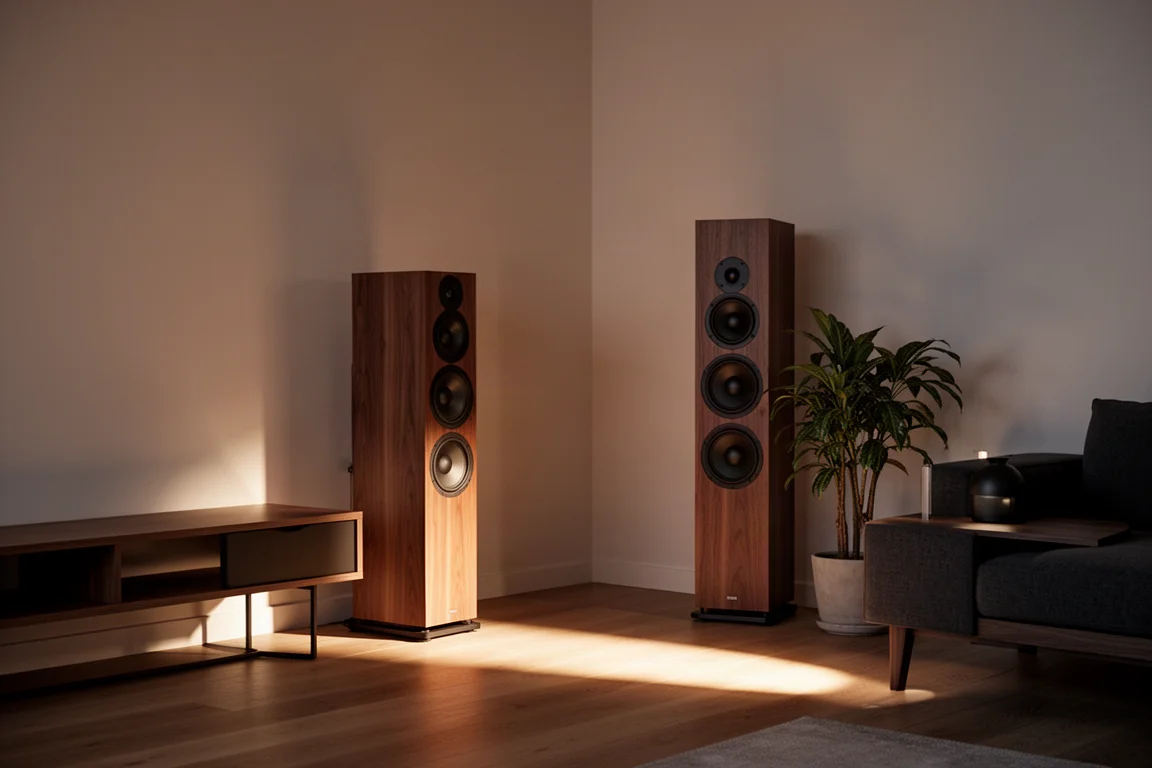
Room planning matters more than most buyers expect. Measure your available depth first, because the cabinet needs space behind it and a little toe-in to give its best. Budget for a warm-sounding amplifier or a receiver with room correction if the treble emphasis bothers you, and consider waiting for a sale or a renewed listing if you want the strongest value.
If you already own a low-powered amplifier or an older AV receiver, this speaker is a rare opportunity to get full-range sound without upgrading your electronics. In that scenario, the RP-6000F delivers more usable performance per dollar than almost any change you could make elsewhere in the system.
Conclusion
The Klipsch RP-6000F is a distinctive, characterful tower speaker rather than a neutral one. Its strengths are clear: high sensitivity that welcomes almost any amplifier, bass weight that removes the immediate need for a subwoofer, and a wide, immersive soundstage that shines with film material. Its compromises are equally clear: a deep cabinet that demands floor space and a forward, treble-forward tonal balance that will not suit every taste.
For home theater fans and listeners who enjoy a lively, energetic presentation, it is a confident buy, particularly at sale or renewed pricing. For anyone chasing strict midrange linearity, it is simply the wrong tool. Match it to the room and the system it was designed for, and it rewards the decision.
Product link
View more details for Klipsch RP-6000F
This product is mentioned in the review. Check the specifications, options, and compatibility before buying.
View more details for Klipsch RP-6000FFurther reading
Related Reviews
Floorstanding Speakers
Acoustic Energy AE109 Mark II Review: A Refined Floorstander at £699
The Acoustic Energy AE109 Mark II is a slim, warm sounding floorstander that delivers clarity, midrange body and strong imaging in small to medium rooms.
Floorstanding Speakers
Acoustic Energy AE509 Review: A Slim Floorstander With Deep, Defined Bass
A practical look at the Acoustic Energy AE509, a slim floorstanding speaker with carbon fibre drivers, deep and well-defined bass, and an easy-going character that rewards careful system matching.
Floorstanding Speakers
Arendal 1528 Tower 8 Review: Reference Neutrality With Real Demands
A close look at the Arendal 1528 Tower 8, a nearly five-foot, 200-pound floorstander that rewards generous space, serious power, and high listening levels with reference-grade neutrality.