Horn Loudspeakers
Klipsch La Scala KOR2 Review: A Big Horn Speaker That Refuses to Shout
The Klipsch La Scala KOR2 pairs a wide-band multi-sectorial horn with a 15-inch woofer and images unlike most horns. Here is what it does well, and how it compares with the La Scala AL6.
Introduction
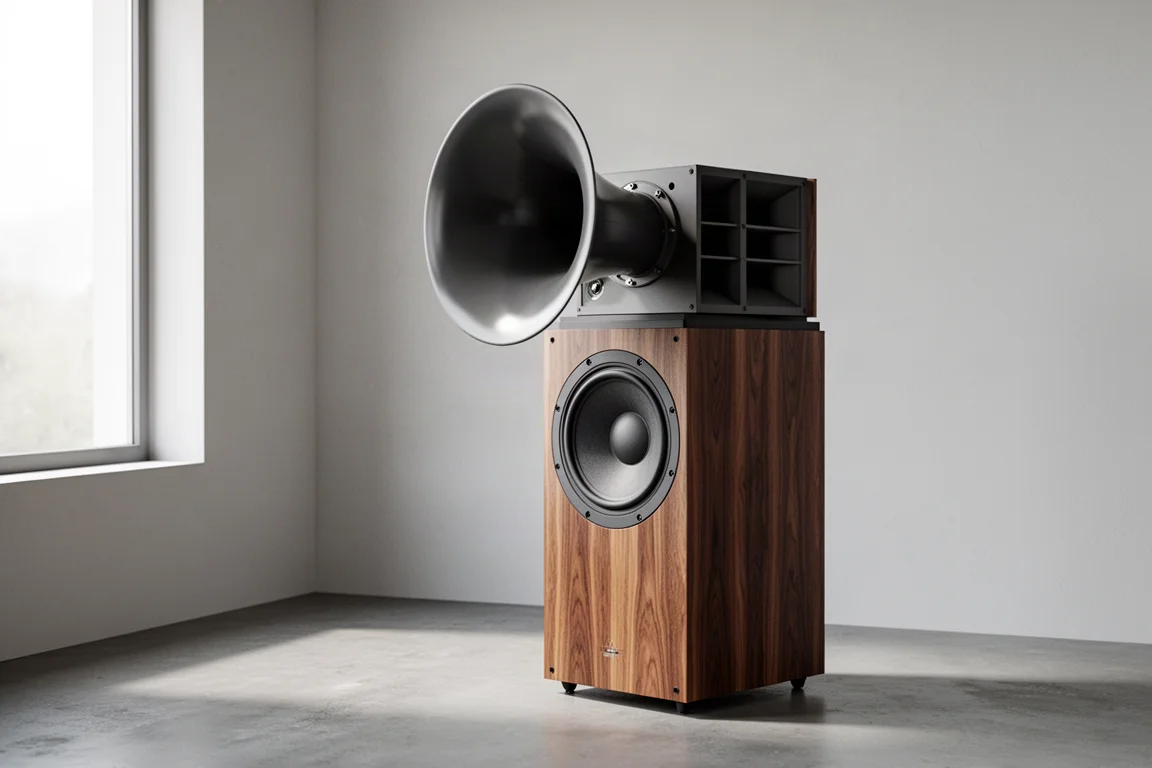
The Klipsch La Scala KOR2 is the second collaboration between Klipsch and OJAS, the Brooklyn-based design studio, following the earlier KOR1. It is a large, high-sensitivity horn loudspeaker, and it is being sold as a limited edition of 600 pairs worldwide.
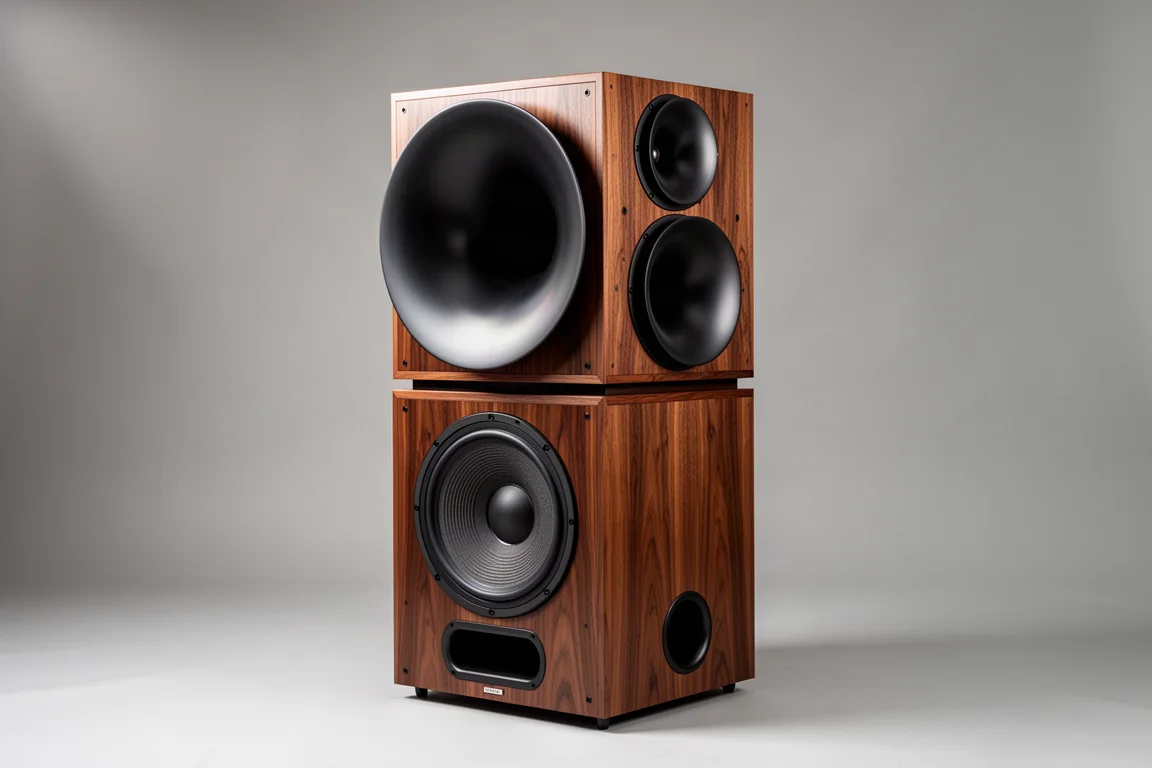
Even among horn designs, the KOR2 stands apart. A big multi-sectorial horn sits on top of the cabinet, and it does not look like the horns used on the familiar Klipsch heritage models. That horn is the heart of the design, and it shapes almost everything about how this speaker behaves in a room.
This article covers what the KOR2 does well, what to consider before buying, and how it sits next to the Klipsch La Scala AL6.
Design and the Multi-Sectorial Horn
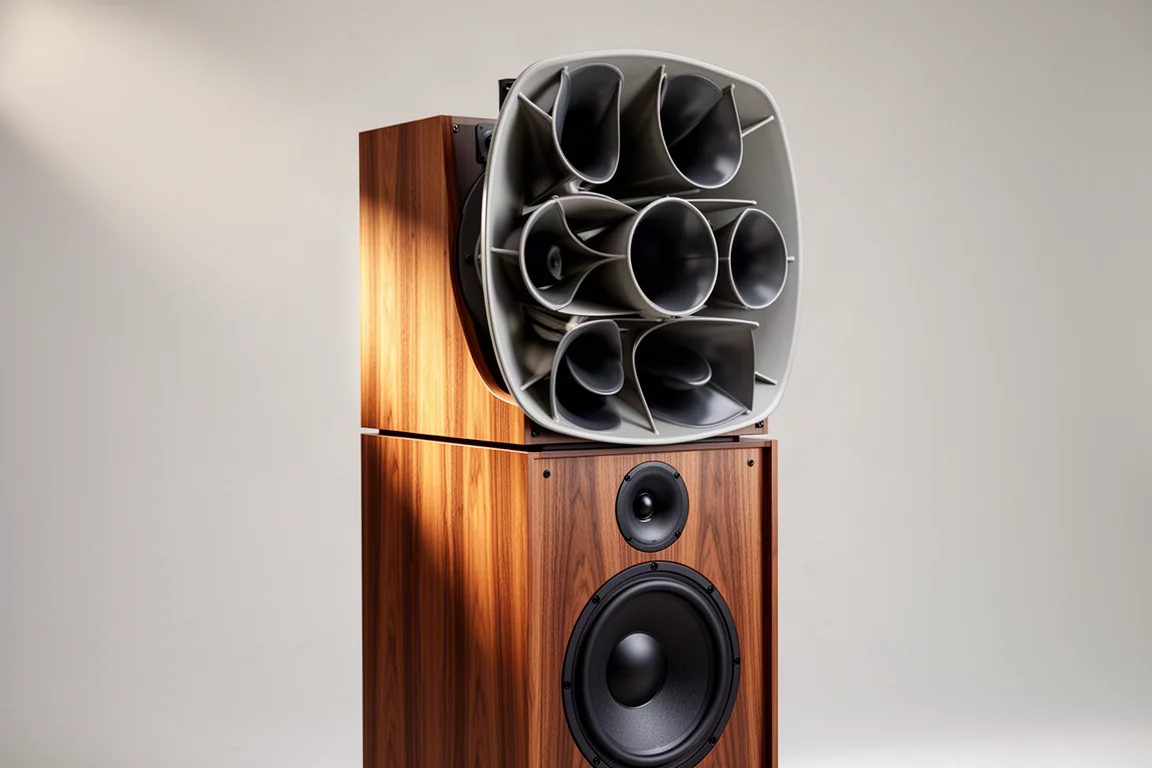
The defining element is the multi-sectorial horn mounted above the bass cabinet. Because of its size, it covers an unusually wide frequency range, from 760 Hz all the way to 20 kHz. That is a broader span than the horns used on comparable Klipsch or JBL designs, and it is a large part of why this speaker makes such a distinct impression.
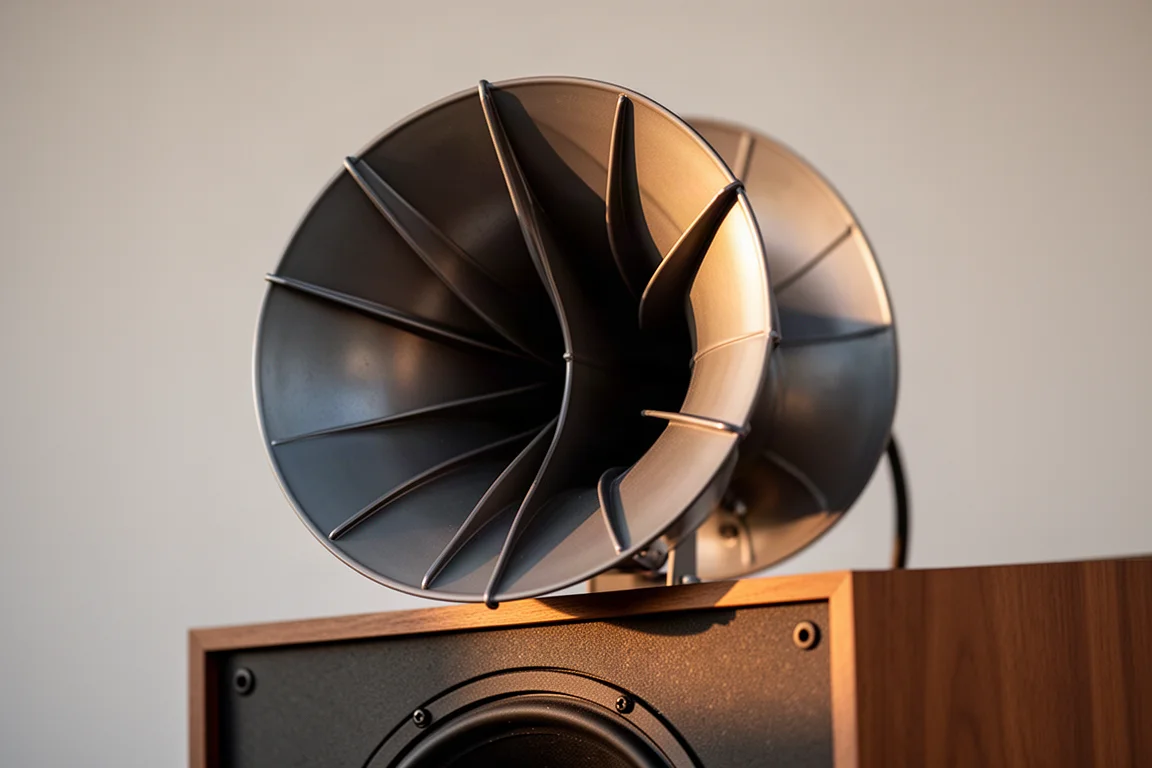
That wide-band horn shapes the presentation in a specific way. Imaging is spacious, with a big, wide image, real depth, and a sense of scale. Just as importantly, the KOR2 does not shout. Despite being a horn speaker, it comes across as relaxed and sweet rather than forward or aggressive, which is exactly the quality that surprises listeners who normally avoid horns.
Specifications, Build, and Availability
The KOR2 is a substantial piece of furniture as well as a loudspeaker. It is listed at 120 pounds, with a high-sensitivity design rated at 97 dB. Nominal impedance is 8 ohms, though it drops to 4 ohms at points, so a capable amplifier is still worth having on hand.
A 15-inch woofer handles the low end, and a level control for the horn allows adjustment from minus 3 dB to plus 3 dB in 1.5 dB steps. That control makes it easy to tune the relative loudness of the horn against the woofer, and it is a feature the La Scala AL6 does not offer.
Each pair is assembled at the Klipsch factory in Hope, Arkansas, the same facility that builds the Klipschorn, Heresy, Cornwall, and Forte. Availability is limited to 600 pairs in total: 200 pairs are destined for the United States, and the remaining 400 pairs are intended for the rest of the world. Pricing is $11,995 per pair in the US and 13,995 euros per pair in Europe.
Amplifier Pairings and System Matching
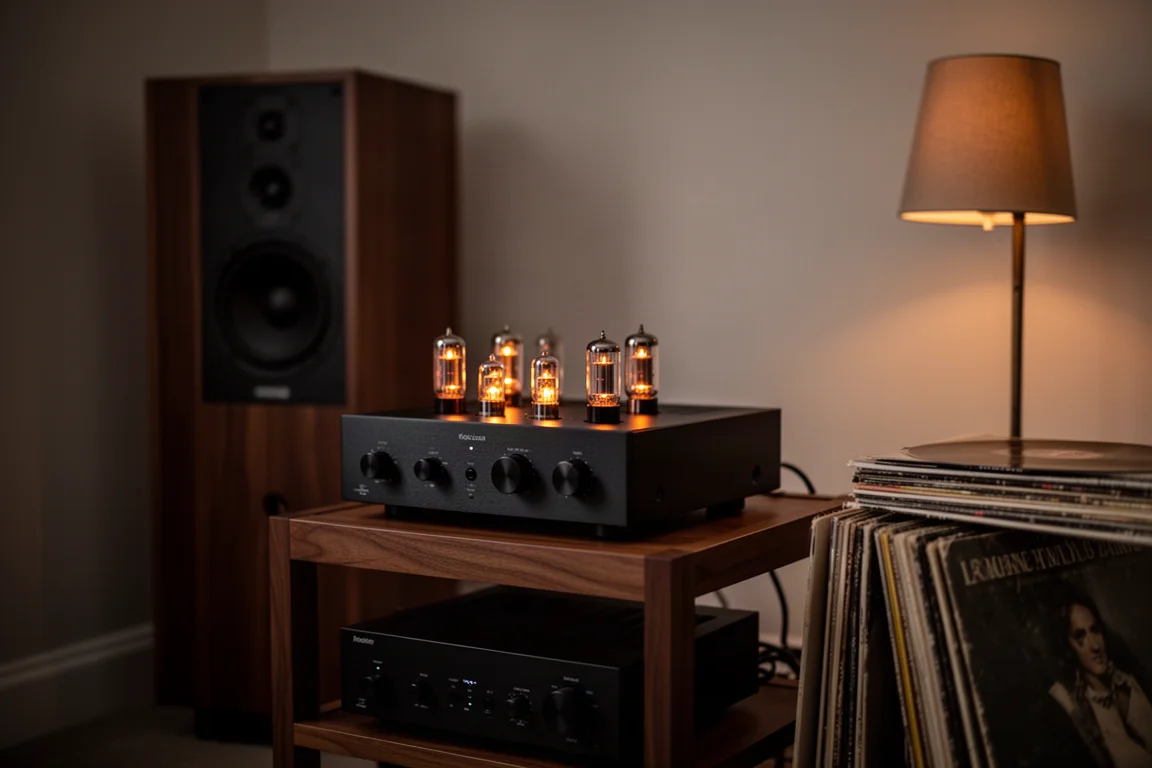
High sensitivity makes the KOR2 easy to drive, but easy to drive is not the same as indifferent to what feeds it. Across several amplifiers, the results varied in character.
A Pass XA25 proved an excellent all-round match. The First Watt SIT3, at 18 watts per channel, produced a sweet and genuinely beautiful combination. The First Watt F8 struck a balance of richness and articulation, with strong control over the woofer. An inexpensive Class D amplifier also drove the speaker convincingly, which underlines how undemanding the load really is.
The exception was a vintage Dynaco Stereo 70 built in 1965, which sounded too soft, lacked detail, and did not control the woofers well. The lesson is a familiar one: on paper a pairing can look ideal, and in the room it may not be. If you already own an amplifier, it is worth hearing the combination before committing.
What the KOR2 Does With Music
The 15-inch woofer is central to the experience. It goes deep, and it fills a room in a way that smaller drivers simply do not, regardless of their other strengths.
Dynamics are the other half of the story. Horn loading delivers the obvious swings, but the more interesting part is the subtle shading: fingers on a string, small shifts in tone and touch that stay available and expressive. Heavily compressed recordings also fare better than expected, coming across as more dynamic than they have any right to sound.
Two listening examples stand out. On Simon and Garfunkel’s Bridge Over Troubled Water, the reverberant space around the vocals on “So Long, Frank Lloyd Wright” was captured with real clarity, which is exactly the kind of micro detail this speaker resolves. On a Del Fuegos record played with peaks around 95 dB, the music erupted into the room and filled it completely. Both cases point to the same strength: the KOR2 puts you inside the recording.
Klipsch La Scala AL6: The Logical Alternative
The natural comparison is the Klipsch La Scala AL6. It costs about $3,500 more per pair and takes up considerably more space in a listening room, so the decision is not only about sound.
Where the AL6 pulls ahead is bass articulation and clarity. In those areas it is, in some ways, the better speaker. Where the KOR2 answers back is imaging: it is more open, more spacious, and it presents a bigger, more relaxed picture of the performance. The horn level control is also exclusive to the KOR2, giving its owner a degree of tuning freedom the AL6 does not provide.
Both are excellent loudspeakers. They simply emphasise different things, and the right choice depends on which of those qualities matters more in your room.
Who the KOR2 Suits Best
The KOR2 makes the most sense for listeners who have been curious about horns but worried about the usual complaints: shoutiness, aggression, and fatigue over long sessions. This speaker sidesteps all three while keeping the dynamics and immediacy that make horns worth pursuing.
It also suits anyone with a room large enough to give a speaker of this size some breathing space, and anyone who wants to use a wide range of amplifiers, from low-powered designs to modest Class D models, without fighting the load. Finally, the level control is genuinely useful for rooms with awkward acoustics, since it lets you rebalance the horn against the woofer rather than treating the speaker as a fixed quantity.
The main caveats are practical. It is a 120-pound speaker, it needs space, and the production run is capped at 600 pairs, with only 200 of those allocated to the United States.
Buying Advice
Start with the room, not the specification sheet. A speaker this large needs distance from walls and a seating position that lets the horn’s wide coverage do its work. If the space is not there, the La Scala AL6 will be an even harder fit, since it occupies more real estate again.
Then think about priorities. If bass articulation and clarity come first and you have the room and the budget, the AL6 is the alternative to audition. If a spacious, open image and a horn that stays relaxed and sweet are more appealing, the KOR2 is the stronger candidate. The horn level control adds real long-term flexibility in either case.
Pricing is $11,995 per pair in the US and 13,995 euros per pair in Europe, and availability is finite at 600 pairs worldwide. If the KOR2 is the speaker you want, the limited run is the most time-sensitive part of the decision.
Either way, this is a purchase worth planning around amplification. The speaker is easy to drive, but the amplifier still shapes the result, and a home audition remains the most reliable way to confirm the match.
Conclusion
The Klipsch La Scala KOR2 is a large, high-sensitivity horn loudspeaker that covers 760 Hz to 20 kHz through a multi-sectorial horn, pairs it with a 15-inch woofer, and images with a spaciousness that few horns manage. It is dynamic, expressive, and notably free of the aggression many listeners associate with horn designs.
Against the La Scala AL6, it trades some bass articulation and clarity for a more open and spacious presentation, and it adds a horn level control the AL6 does not have. Both are serious speakers. The KOR2 is the one to consider if you want horn dynamics without the shout, in a room that can accommodate it.
Further reading
Related Reviews
Horn Loudspeakers
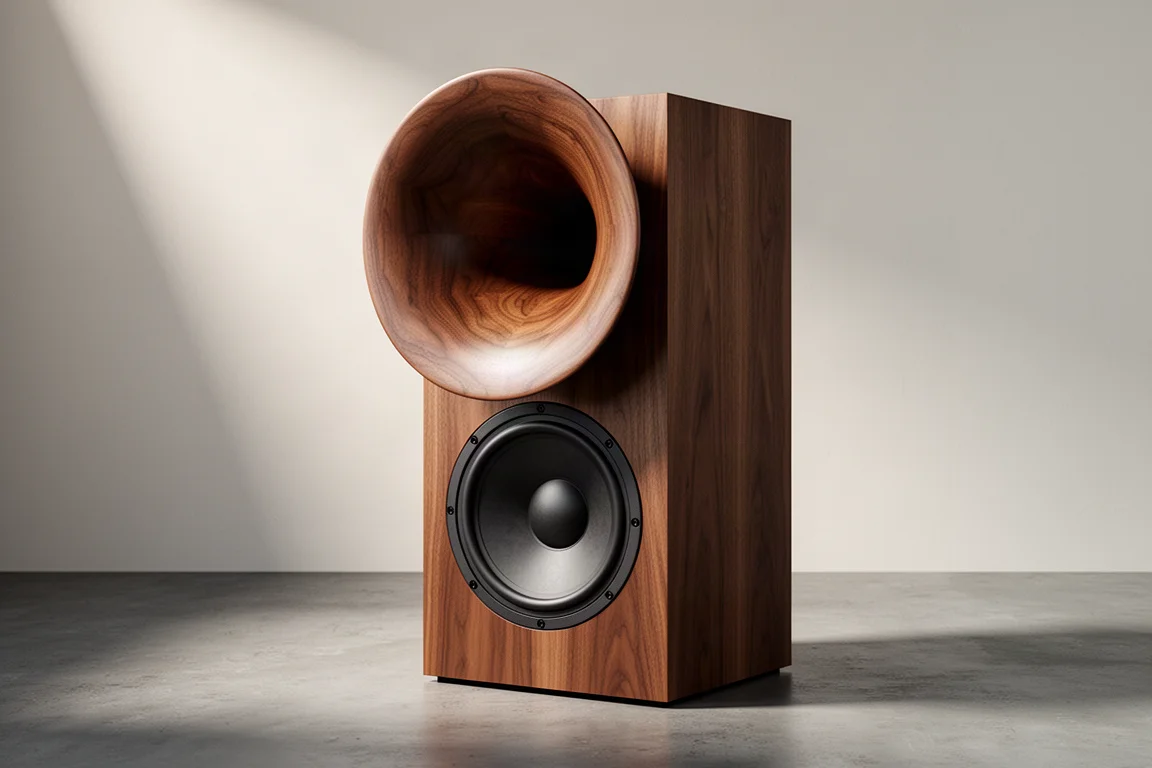
Joseph Crowe System No. 1680 Review: A Meticulously Engineered Horn Loudspeaker
A two-way horn loudspeaker with solid walnut construction, 90 dB sensitivity, and unusually consistent off-axis behavior. Here is what it does well and what to check first.
Bookshelf Speakers
Acoustic Energy AE100 MK2 Review: Measured Performance and Four Alternatives
A close look at the Acoustic Energy AE100 MK2 bookshelf speaker, what its measured performance reveals, and four alternatives with different trade-offs.
Floorstanding Speakers
Acoustic Energy AE509 Review: A Slim Floorstander With Deep, Defined Bass
A practical look at the Acoustic Energy AE509, a slim floorstanding speaker with carbon fibre drivers, deep and well-defined bass, and an easy-going character that rewards careful system matching.