Sound Bars
Klipsch Heritage Theater Bar Review: A Passive Sound Bar Built to Last
A passive three-channel sound bar with heritage-grade drivers, outstanding dialogue clarity, and a firm requirement for a receiver, room correction, and a subwoofer.
Introduction
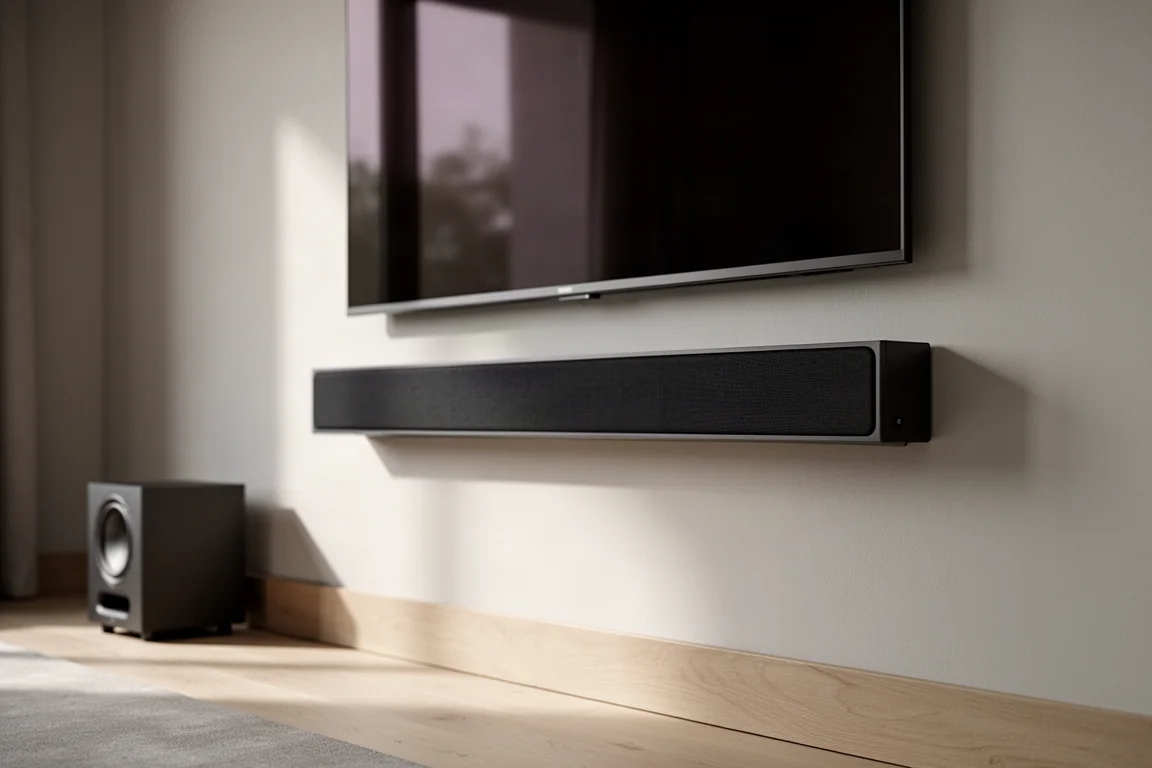
Klipsch has spent the past couple of years promoting its powered Cinema sound bars, and the Heritage Theater Bar has sat in the lineup for nearly as long with far less attention. That is a little strange, because this is not really a sound bar in the usual sense. It is a passive left, center, and right loudspeaker built into a single chassis, designed to be driven by a separate multi-channel amplifier or AV receiver.
That single design decision separates it from almost everything else on the shelf, and it changes who should consider it.
Who the Klipsch Heritage Theater Bar Is For
Anyone who has complained that a sound bar goes out of date the moment a new surround format arrives will find the passive approach appealing. There is no internal processing to age out and no amplifier section to replace. The bar plays whatever your receiver sends it.
It also suits listeners who want the physical scale of separate speakers without giving up floor space. The cabinet is large enough that it does not look out of place beneath an 85-inch television, and it can sit completely flush against a wall thanks to the substantial mounting cleat that comes pre-installed from the factory.
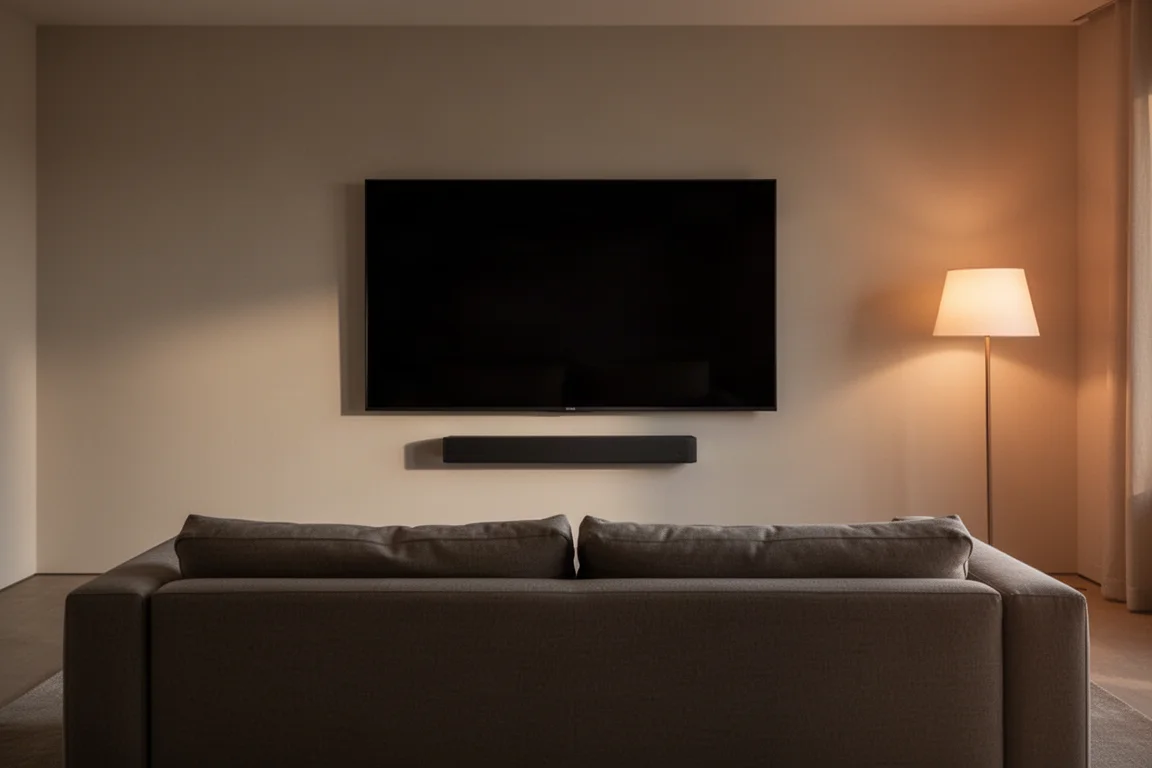
It is not the right answer for someone who wants one box and one remote. The Heritage Theater Bar needs a receiver, a subwoofer, and some form of room correction to perform at its best, and that is a genuine commitment of budget and setup time.
A Passive Design and What It Requires
Because the bar is passive, it behaves like a traditional left, center, and right speaker trio. Each of the three channels uses a three-quarter-inch titanium tweeter mounted inside a Tractrix horn, paired with dual 4-inch woofers. Klipsch rates the bar at 95 Hz to 20 kHz, with sensitivity of 92 dB and an impedance of 8 ohms, which makes it fairly friendly to a wide range of amplifiers and receivers.
Connection is straightforward. The binding posts sit inside the cabinet and are reached by removing the magnetic grille. They use a modern push-pin design that accepts bare wire, though 12-gauge cable is trickier to fit than 14- or 16-gauge.
Wall mounting is clearly the intended installation, and cabinet placement works too. The bar ships with its own sticky feet, and those should go on before it is set anywhere near a shelf.
Room correction matters a great deal here. In testing with the Onkyo RZ50 and Onkyo 7100 receivers, a full Dirac calibration elevated the bar’s performance considerably, and comparable systems such as Audyssey or YPAO would likely have a similar effect. Without correction, the bar sounds much like a trio of Klipsch bookshelf speakers sitting close together: dynamic, engaging, and lively, but not especially spacious or full range.
Main Strengths
The Heritage Theater Bar shows its best face once it is properly calibrated and supported by a subwoofer.
Scale, Dynamics, and Detail
On film soundtracks, the scale is genuinely epic. The bar routinely transforms the whole front wall into one large soundscape, and in that respect it comes surprisingly close to Klipsch’s Forte and Heresy heritage speakers. It is not a blunt instrument either. Nuance and detail come through clearly, and with Dolby virtualization engaged, effects begin to wrap around the listening position in a way that is impressive for a bar with no height channels.
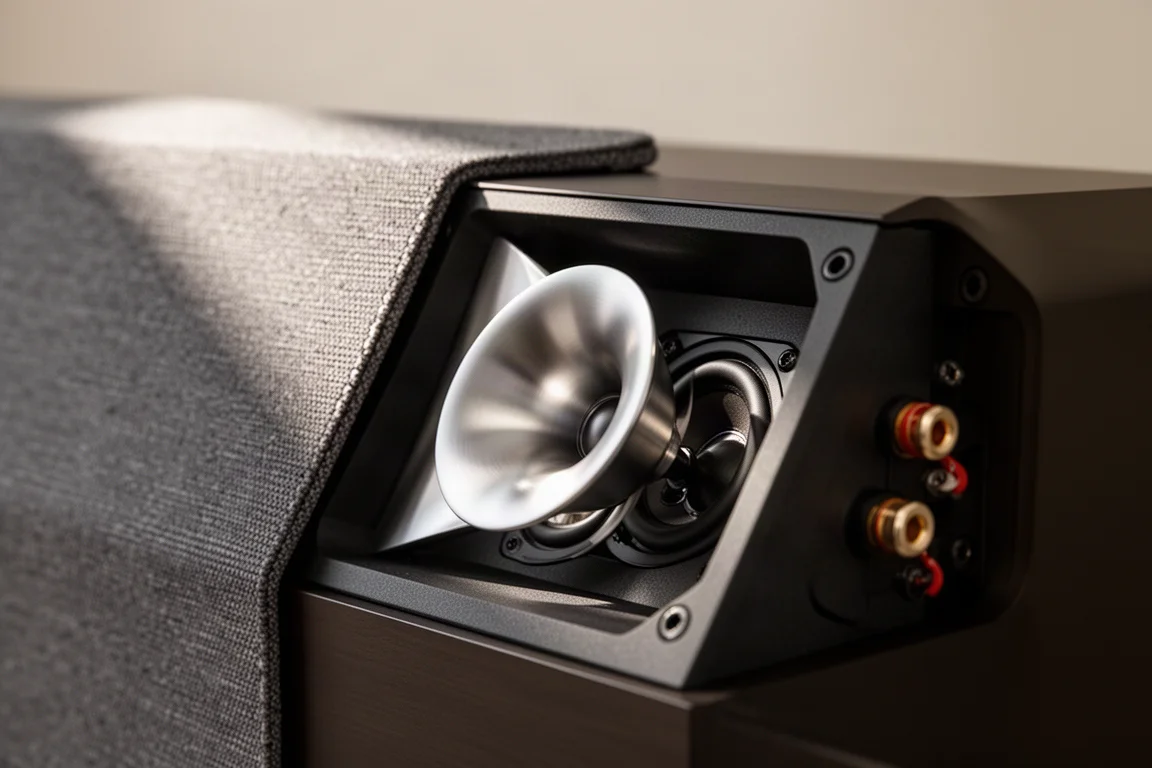
Vertical dispersion is a big part of that effect. Even without dedicated height speakers, the bar pushes sound well up into the listening position, which helps explain how convincing the virtualized presentation can be.
Dialogue Intelligibility
Dialogue is where this bar separates itself from the crowd. Intelligibility is excellent, and speech never sounds constrained or thin. The bar has enough articulation on its own that dialog enhancement settings are unnecessary; in testing, switching them on made voices sound slightly less natural than leaving them alone.
That matters if you regularly struggle to follow quiet or mumbled dialogue in modern films and series. The Heritage Theater Bar handled that problem better than any other sound bar tested in the same room, and it did so without leaning on artificial processing.
Things to Consider Before Buying
The Heritage Theater Bar earns its keep in a calibrated, subwoofer-supported system. Outside those conditions, several limitations become obvious.
Bass: A Subwoofer Is Not Optional
Despite the dual 4-inch woofers, the bar has no appreciable output below roughly 70 Hz. A subwoofer is mandatory rather than optional, and the Klipsch SPL-100 used in testing rounded out the low end well. Listened to on its own, the bar will sound lean, and that lack of bass is its single biggest downside.
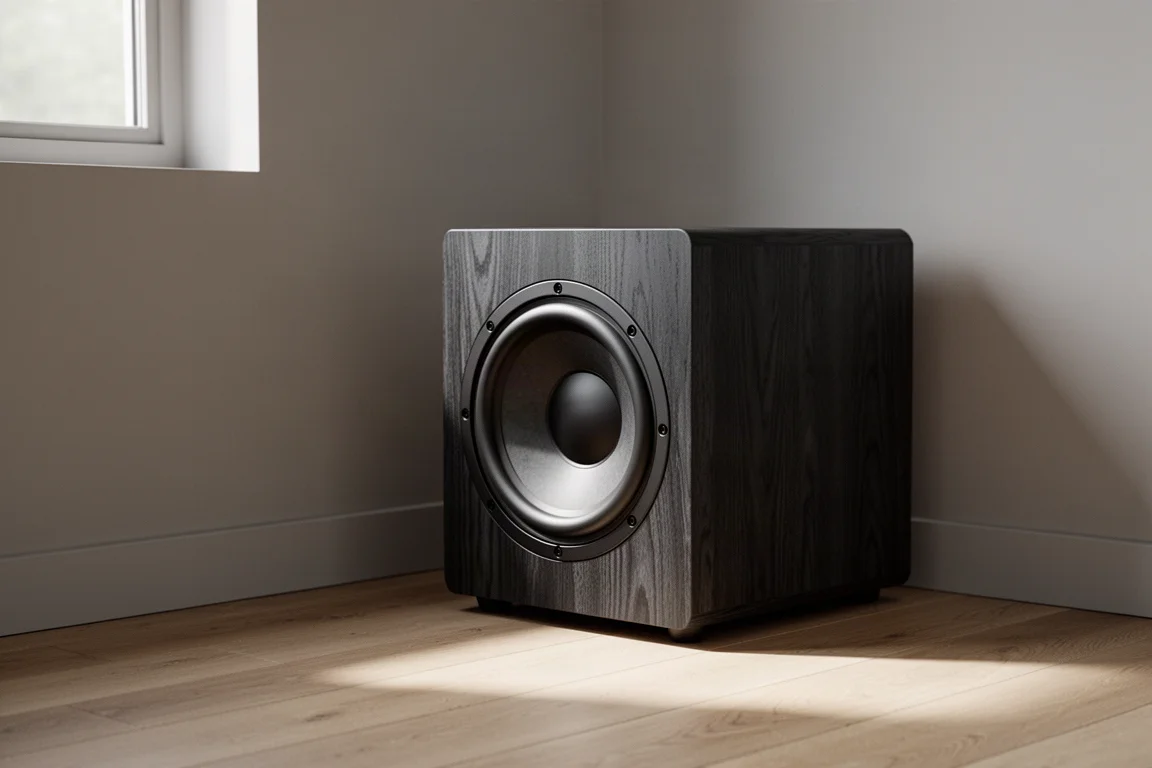
One point in its favor is the low-mid bass it does produce. Because the bar has enough body in that region, deeper voices do not also pour out of the subwoofer when everything is crossed over correctly, which is a real advantage over some all-in-one bars.
Treble Behavior With Compressed Sources
The tweeters extend all the way to the limit of human hearing without distortion, and on good material they never sound aggressive or overly forward. They are not forgiving, however. Poorly recorded or heavily compressed signals, including some streaming videos and television broadcasts, can come across as sibilant and grainy. Dropping the treble by a notch or two on the receiver solved the issue in testing without costing much intelligibility.
Setup, Amplification, and Room Correction
This is not a plug-and-play product. It needs a multi-channel amplifier or AV receiver, and it rewards a receiver with capable room correction. In testing it worked well as the front stage of a simple 3.1 system, and it can be expanded into a full surround setup by adding two or four RP-400M bookshelf speakers, or Klipsch in-wall and in-ceiling speakers for surround and height channels. A subwoofer should be part of the budget from the start.
Music and Midrange Character
For casual or background listening, music is perfectly fine. Critical stereo listening is a different story. The bar does not deliver the separation and spaciousness of properly spaced dedicated speakers, and a traditional pair of Klipsch speakers will give better results for two-channel purists. Sending stereo content through Dolby Surround or Dolby Atmos upmixing opens the bar up considerably and gets closer to a conventional stereo presentation.
Tonally, the midrange is neutral, perhaps a touch lean, with a mild rise near the crossover to the tweeter. It is not a warm or lush sound, so listeners who want extra body through the middle may prefer a different speaker.
How It Compares With Other Options
Against the Sennheiser Ambeo, the Heritage Theater Bar is not the better value. It costs more on its own than the Ambeo, which includes Atmos and DTS:X support and a built-in subwoofer in one unit. Sound bar against sound bar, the Ambeo is more impressive by itself and has a more balanced sound on its own.
The Klipsch’s advantage is longevity. If a new surround format arrives, the Ambeo is unlikely to support it, while the passive Heritage bar can. That is the same logic as buying separate passive speakers, and it is the main reason to choose the Klipsch for the long term.
Within Klipsch’s own range, the Heritage Theater Bar is the preferred pick over the newer Cinema 1200. It sounds considerably better, and because it relies on an AV receiver of your choosing, it offers more control, adjustability, and customization than the Klipsch app provides. The Cinema 600 remains a strong value that is hard to beat on price. For anyone who wants simplicity and fewer components, a traditional powered bar such as the Cinema 600, a one-bar solution like the Sonos Beam Gen 2, or a full-system option such as the Samsung Q950 makes more sense than a passive design.
Buying Advice
The Heritage Theater Bar is expensive, large, and demanding. It needs a subwoofer and a receiver with room correction to sound its best, and it repays that investment with scale, clarity, and dialogue intelligibility that most one-box bars cannot match.
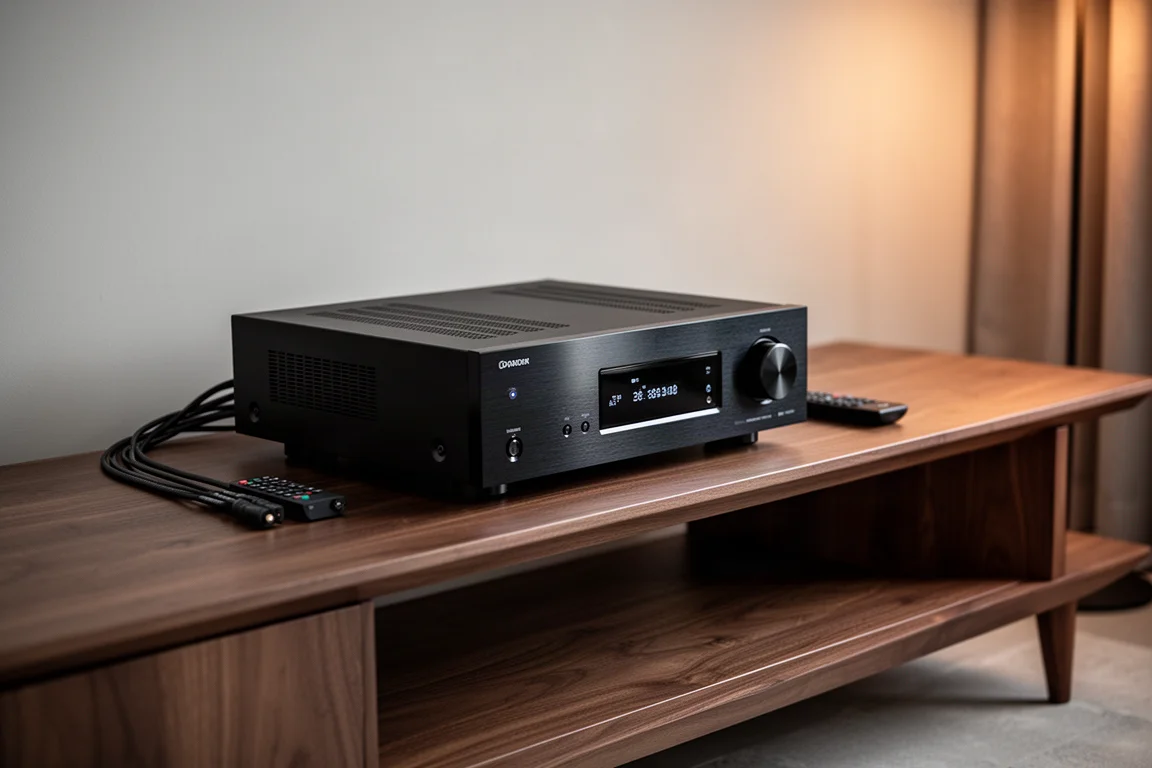
If you are assembling a traditional home theater and want to save space, this is a genuinely compelling front stage. Budget for the receiver, the subwoofer, and calibration time as part of the same purchase, because those pieces are what unlock the bar’s performance. Buyers who want fewer components and a simpler setup should look at a powered bar instead.
Conclusion
The Klipsch Heritage Theater Bar is a rare product: a sound bar that behaves like proper speakers and will not be obsoleted by the next surround format. It is not perfect, and it is not cheap, but once the subwoofer and room correction are in place, it turns a living space into a theater with very little clutter. For anyone chasing true theater sound at home, it deserves serious consideration.
Product link
View more details for Klipsch Heritage Theater Bar
This product is mentioned in the review. Check the specifications, options, and compatibility before buying.
View more details for Klipsch Heritage Theater BarFurther reading
Related Reviews
Sound Bars
Best JBL Sound Bars 2026: Bar 500, Bar 700, Bar 1000, and Bar 1300X Compared
A practical look at JBL's latest sound bar lineup, from the budget Bar 500 to the flagship Bar 1300X, and how to match each model to the room you actually have.
Sound Bars
Roku Streambar Pro Review: A $179 Sound Bar That Grows Into Wireless 5.1
The Roku Streambar Pro pairs a 4K HDR streamer with a $179 sound bar, and the Roku Wireless Subwoofer and Wireless Speakers can grow it into a wireless 5.1 system for under $660.
Sound Bars
Sonos Arc Review: A Sound Bar Built for Television, Not for Music
The Sonos Arc transforms television sound with clear dialogue, punchy bass and deep low-end extension, but music stays pinned beneath the screen. Here is what to weigh before buying.