Speakers
Klipsch Heresy IV Review: A Compact Floorstander With Serious Dynamics
A fourth-generation horn-loaded floorstanding speaker that asks for your own amplification and rewards careful placement in the room.
Introduction
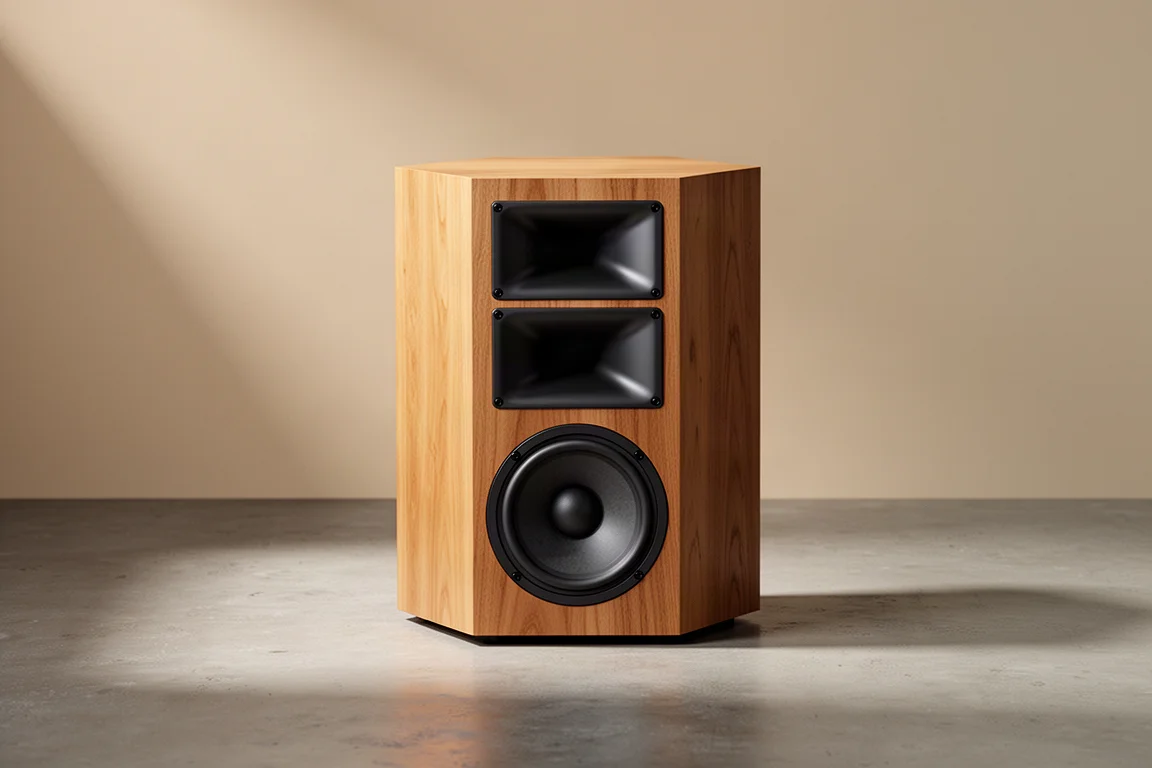
The Klipsch Heresy IV is the fourth generation of a loudspeaker that has stayed in production for more than fifty years, which is a rare run in hi-fi. It is a compact floorstander rather than a full-height tower, and it is fully passive: you supply the amplifier and the source, and the cabinet does the rest. In Europe it sells for around €5,000 a pair, while in the United States, where it is built, the price is closer to $3,200 a pair. That regional gap makes direct value comparisons against active rivals more complicated than usual, but the character of the speaker itself is unmistakable.
The Heresy name goes back to the early days of the company, when it was the first box-shaped speaker in a range otherwise built around large corner-loaded designs. This fourth version keeps the low, boxy proportions but moves to a ported cabinet using Klipsch’s Tractrix port geometry, rated down to 48 Hz. The previous generation was a sealed design rated to 58 Hz, so the newest model reaches noticeably lower. The cabinet is also tilted back slightly, which means the drivers fire forward and upward rather than straight ahead.
Who the Klipsch Heresy IV Is For
This is a speaker for listeners who put dynamics near the top of their list of priorities. Its contrasts between loud and quiet passages are strong, and that quality pays off at both ends of the volume range: it can fill a larger listening space, and it also holds together at low late-night levels when you do not want to disturb anyone else in the house.
It is equally well suited to owners of modest amplifiers. High-efficiency designs like this one play nicely with lower-powered integrateds, and it is a common pairing with low-power tube amplifiers. If your system is built around a small amplifier and a warm, physical presentation rather than a hyper-detailed one, the Heresy IV is a natural fit.
The cabinet is also fairly compact for a floorstander, which matters if you want a very present, energetic sound without a large speaker visually dominating the room. What it is not is a delicate, filigreed speaker. Buyers looking for the last word in treble refinement or deep, layered soundstaging should read the next sections carefully before committing.
Design, Drivers, and Build Quality
The Heresy IV is a three-way design. All of the low end is handled by a dedicated 12-inch driver that Klipsch describes as fiber composite, and it reads very much like a paper cone in practice. Above it sit two horn-loaded compression drivers: a titanium tweeter and a polyimide midrange unit. Because the horn loads both drivers, efficiency is high and the presentation is direct rather than soft.
Physically, each speaker weighs around 20 kg. That is not especially heavy on its own, but the boxy dimensions make the cabinets awkward to carry, and the tilt-back mounting means you need to think about how you lift and set them down. The skirting at the base can be removed if you want to place them on stands, although there is little obvious reason to do so.
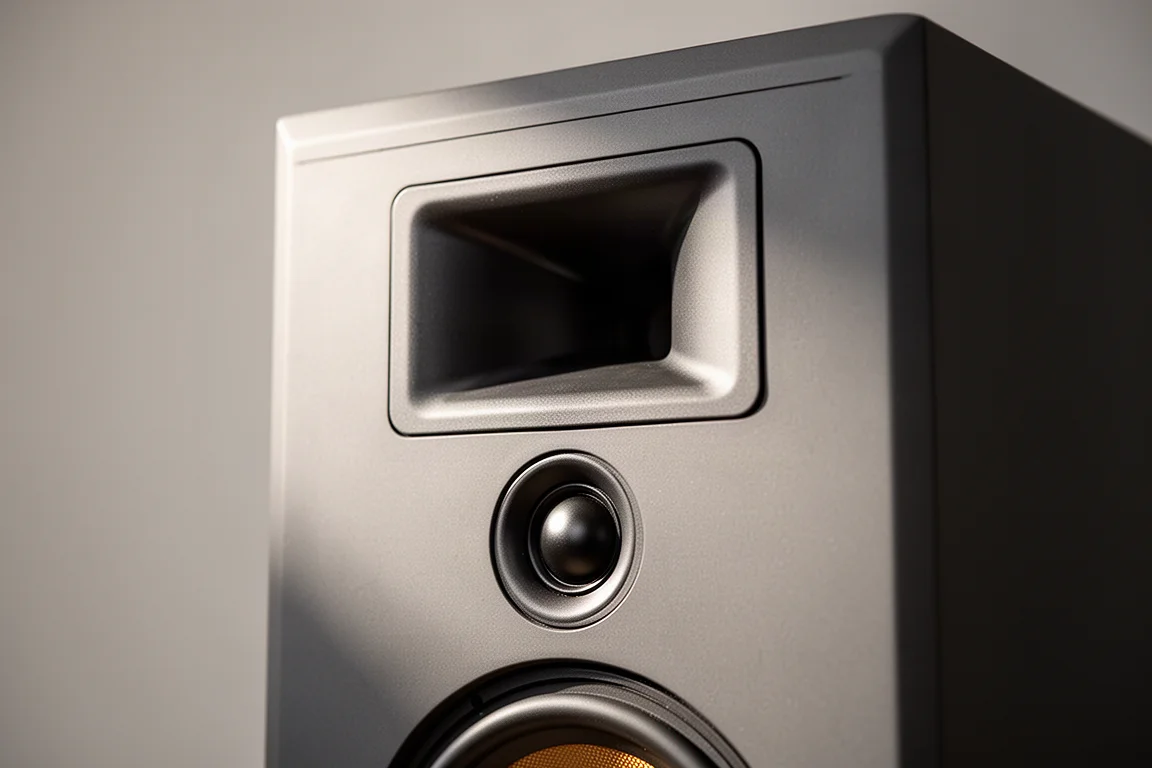
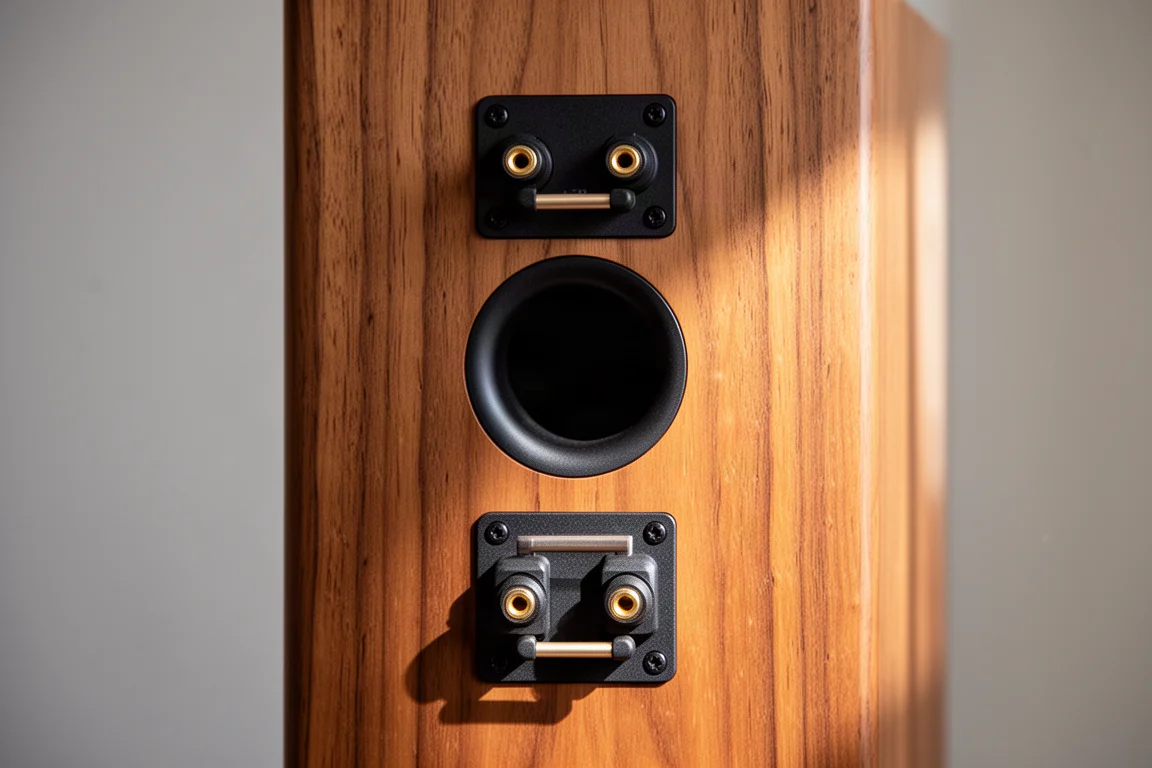
One question that comes up with a ported cabinet is whether the port makes noise under heavy bass. Pushed hard with bass-heavy material and listened to from behind, this one stays quiet and does not chuff. What you do get instead is a great deal of low-frequency energy for the size of the box.
Sound Character and Dynamics
The low end is forceful, robust and very present, and in a medium-sized room it sits right at the upper limit of what the space will tolerate. Klipsch rates the speaker down to 48 Hz, which is not extreme on paper, but the quantity and impact of bass on offer feels considerably larger than that figure suggests. The speaker can comfortably satisfy listeners in bigger rooms.
The soundstage is the other headline quality. Despite the low seating position of the drivers, the stage is surprisingly expansive and notably wide. Some of that height and openness comes from the backward tilt of the cabinet. What it does not deliver is much depth, so the presentation is broad and immediate rather than layered and recessed behind the speakers.
Dynamics are where this speaker separates itself from most of the competition. Strong contrasts between loud and quiet sounds are audible even on heavily compressed modern recordings, which otherwise tend to sound flat and lifeless. Dense mixes stay legible, with individual instruments cutting through, and the same quality makes quiet listening genuinely enjoyable rather than merely tolerable. The tweeter adds a degree of crispness that helps define where instruments sit between the two cabinets.
That energy comes with a trade-off. The uppermost treble is not as refined or as finely filigreed as the best active alternatives, and on some dynamically compressed mid-nineties indie rock there is a hint of coarseness. In exchange, the speaker resolves low-level detail more easily than several rivals and gives male vocals noticeably more presence in the room.
Placement, Amplification, and Setup
Placement matters a great deal here, more than with most speakers. Sat directly on the floor, the Heresy IV can sound a little thick in the mid-bass. Raising the cabinet slightly off the floor lifts the woofer and reduces, at least partially, the effect of floor bounce. In one medium-sized room the best results came from pushing the speakers unusually close to the front wall, closer than most other designs tolerate, which produced the widest overall stage in every direction except depth.
Amplifier matching is more flexible than the specs imply, but the specs are worth reading carefully. Klipsch rates the Heresy IV at 8 ohms nominal with 99 dB sensitivity. Independent measurements suggest a figure closer to 4 ohms nominal and roughly 92.5 dB, which is still efficient enough to work well with lower-powered amplifiers. A 100 watt per channel integrated drives them comfortably, and a more affordable 100 watt per channel alternative in the same room sounded close, with slightly less refinement at the top end and a marginally narrower stage.
One useful characteristic is that the speaker does not exaggerate the differences between amplifiers as sharply as some revealing designs do, so it is relatively forgiving of a modest front end. That said, the extra control of a capable amplifier is audible in the bass, and the sense of width benefits from a decent source.
Things to Consider Before Buying
The most obvious consideration is that the Heresy IV is a passive speaker. Everything upstream, from amplification to streaming, is an additional cost, and that has to be factored into any budget comparison. Buyers in Europe in particular should weigh it against active speakers that include their electronics and streaming hardware inside the cabinet, because those designs deliver considerably more for the money in that market.
Depth is the second point to weigh. If you value a soundstage that extends behind the speakers and images in layers, this is not the speaker’s strength. Its appeal is width, immediacy and physical impact rather than holographic layering.
Third, this is a speaker that asks for a little experimentation. The difference between a floor placement and a slightly raised one, and between a conventional position and one much closer to the front wall, is larger than most buyers would expect. If your room is inflexible about placement, budget time to find the position that works. Finally, the cabinets are boxy and awkward to handle at around 20 kg each, so plan where they will live before they arrive.
Buying Advice
Buy the Klipsch Heresy IV if you want a compact floorstander that sounds big, energetic and alive, and if your priority list puts dynamic contrast and a wide, room-filling stage above layered depth and the very last degree of treble polish. It suits larger spaces, it suits small amplifiers, and it suits anyone who listens to a lot of compressed modern music and wants it to keep its pulse.
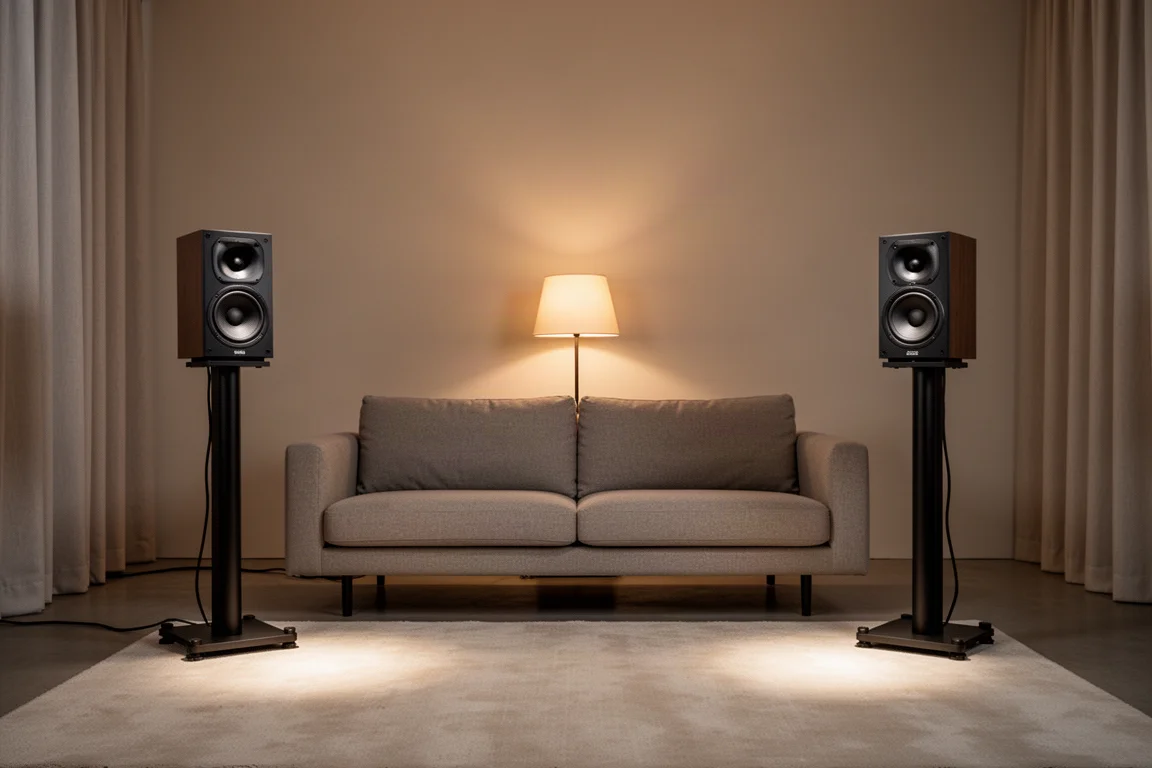
Choose something else if you need the electronics included in the box, if you are shopping in Europe and want maximum value per euro, or if your room gives you no freedom to move the speakers around. Pair it with an amplifier you already trust, give it a little space from the floor, and take the time to slide it toward the front wall before you settle on a final position.
Conclusion
The Heresy IV is a lively, physical speaker with a distinctive character: strong bass for its size, a wide stage, and dynamics that make both loud and quiet listening rewarding. It is not the most refined option at the top end and it will not give you deep, layered imaging, and it insists on careful placement and your own electronics. Get those things right, though, and it delivers a level of involvement that is hard to find at this size.
Product link
View more details for Klipsch Heresy IV
This product is mentioned in the review. Check the specifications, options, and compatibility before buying.
View more details for Klipsch Heresy IVFurther reading
Related Reviews
Speakers
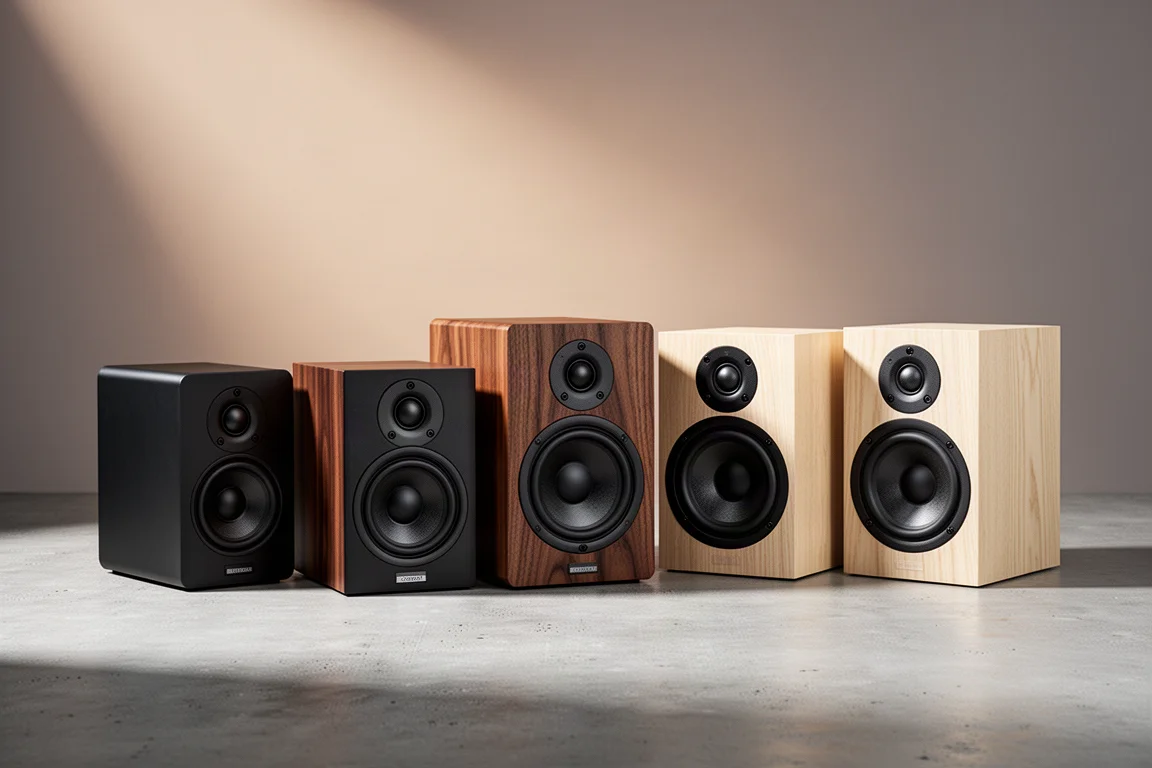
13 Under-the-Radar Speakers Still Worth Buying
Thirteen speakers that quietly stayed in production while newer models took the spotlight, from budget bookshelf pairs to a full-size tower.
Speakers
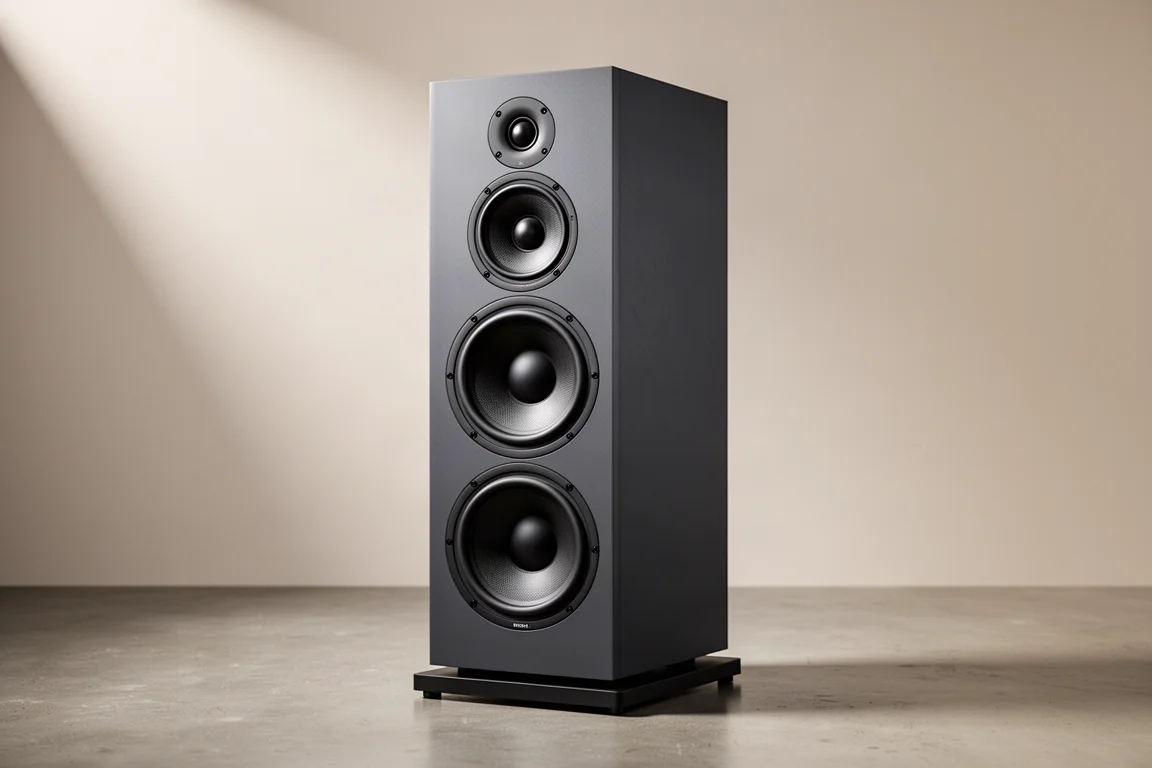
Arendal 1528 Monitor 8 Review: A Three-Way Standmount With Serious Dynamic Headroom
A three-way standmount speaker with extremely low distortion, high output capability, and deep bass for its size, plus the setup details worth knowing before buying.
Speakers
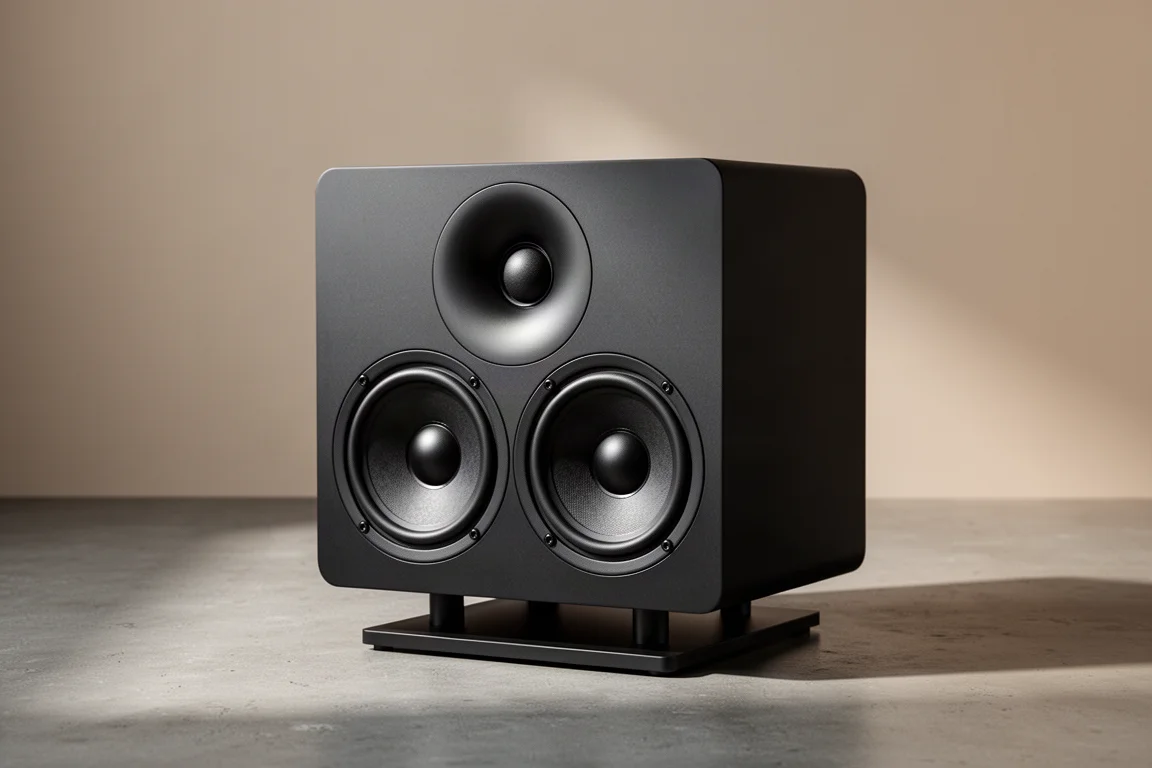
Arendal 1723 Monitor S Review: A Compact Monitor With Serious Ambition
A close look at the Arendal 1723 Monitor S, a compact MTM monitor with a waveguide-loaded tweeter, an HDF cabinet, and flexible ported or sealed operation for music and home theater.