Floorstanding Speakers
Klipsch Forte IV Review: Heritage Horn Sound With Everyday Warmth
A three-way Heritage floorstanding speaker with a 15-inch passive radiator, 99 dB sensitivity, and a soundstage that makes familiar music feel new.
Introduction
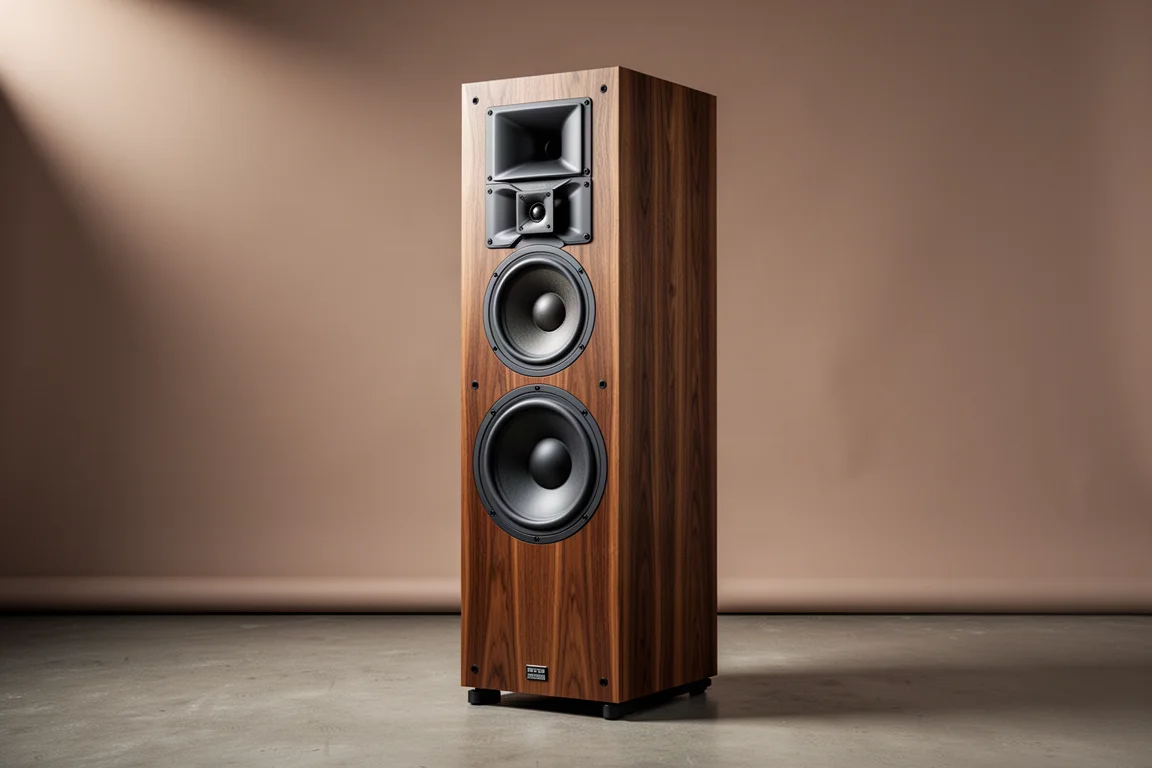
The Klipsch Forte IV is a three-way floorstanding loudspeaker built around a horn-loaded tweeter and midrange, a 12-inch fiber composite woofer, and a 15-inch passive radiator. It belongs to the Heritage line, a family of speakers that has been in production on and off since 1985, and it sells for around $5,500.
At that price it is a considered purchase rather than an impulse one, and the design is unusual by modern standards. High efficiency and horn loading are old ideas, but the Forte IV is tuned to work in a normal living room rather than a dedicated listening hall.
This review looks at what the Forte IV does well, what it asks of the buyer, and how it compares with the Emotiva LB12s, a lower-priced tower pair that often comes up in the same conversation.
A Heritage Speaker With Real History
The Forte line traces back to the KG2 and the KG4, and to an engineer named Gary Gillum who was experimenting with passive radiators. A passive radiator looks like a woofer but is not driven by the amplifier. It moves with the pressure inside the cabinet and reinforces low frequencies. Paul Klipsch was heavily involved in the first Forte, and the brief was simple: build a Heresy with bass.
The original Forte arrived in 1985. The Forte II followed in 1989, and that is where Roy Delgado’s influence became central. He took the passive radiator from a 12-inch design to the 15-inch unit still used today, a direct route to more low-end output.
That generation also brought the tractrix horn equation into the design, replacing the exponential approach used previously. The change promised better dispersion, but it could not be proven at the time. It was validated later, and the tractrix approach found its way into essentially every Klipsch speaker that followed. The Forte, in other words, was a test bed for the rest of the Heritage family. It was nearly named the KG5 before the company settled on a proper name.
The speakers are built in Hope, Arkansas, the small town in the southwest corner of the state where Paul Klipsch was stationed during the Second World War and where the company has been building speakers for roughly 80 years. Many people on that line have worked there for decades, and the Heritage models, the Forte IV included, are still made in the same building.
Who the Klipsch Forte IV Is For
Sensitivity is rated at 99 dB, which means the Forte IV reaches 99 dB at one meter with a single watt of power. Many floorstanding speakers sit in the 85 to 88 dB range, so the difference is significant. Low-power tube amplifiers, which often struggle with inefficient speakers, have an easy time here.
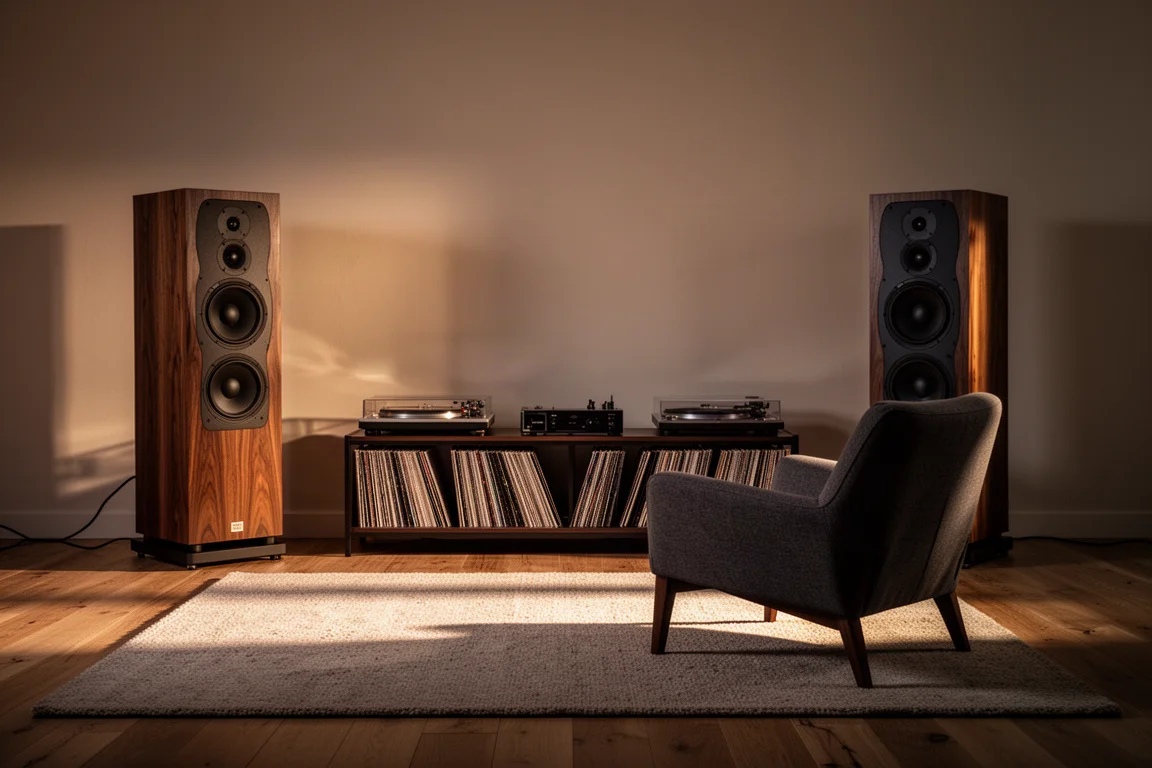
Placement is another practical point. The manual suggests positioning the speakers roughly 2 to 10 inches from the wall behind them, closer than many towers tolerate, and the cabinets are designed to work with a wall rather than far away from one.
This is a speaker for listeners who want a wide, deep soundstage, strong vocal presence, and bass with real weight. It is a poor fit for anyone chasing a deliberately flat, clinical monitor sound or shopping to a strict budget.
Main Strengths: Sound Quality and Presentation
The most immediate quality is the size of the image. Vocals and instruments are clearly defined and placed within the stage, and the presentation extends noticeably beyond the cabinets in both width and depth.
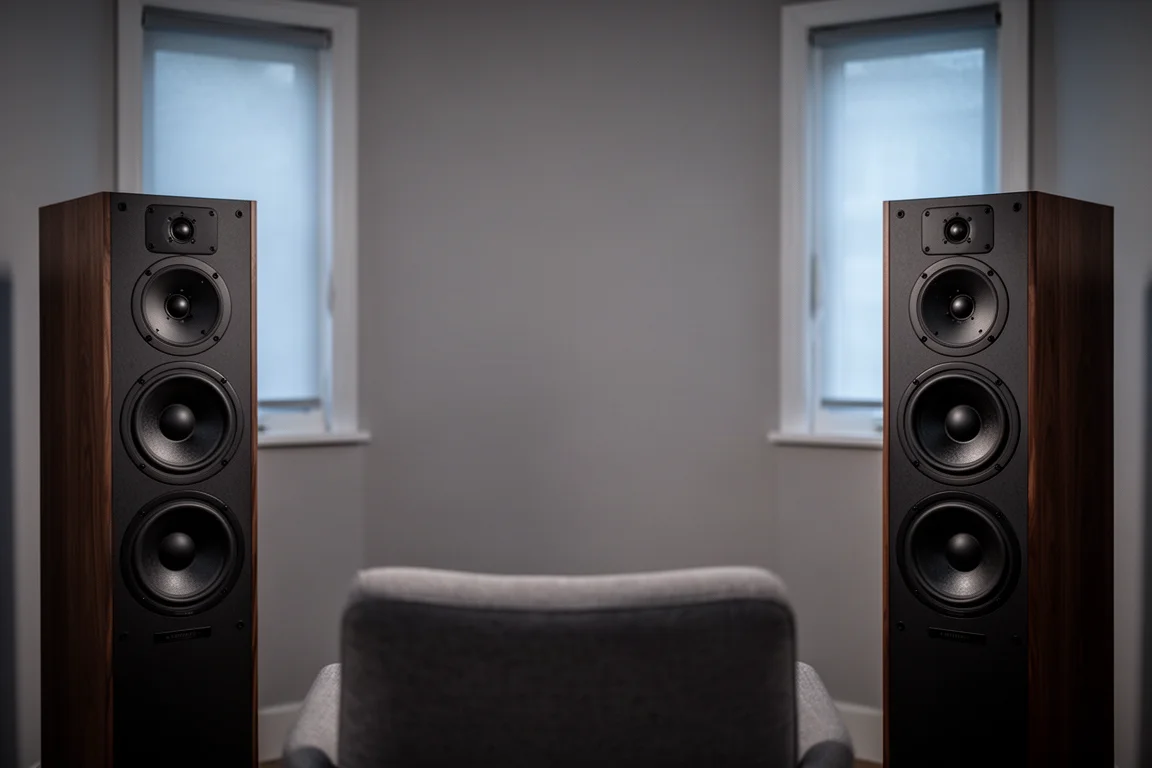
Instrument separation and layering hold up across dense recordings. Percussion is especially convincing: individual strikes, the air after a hit, and the difference between a bass drum and a tom are all easy to follow. The 1-inch titanium compression tweeter, horn-loaded with a wide dispersion phase plug, gives cymbals a fast, clean character without turning harsh.
Bass is the other headline. The 12-inch woofer and the 15-inch passive radiator produce genuine low-frequency weight, and passages built almost entirely from sub-bass content come through with their energy intact.
What ties it together is balance. The Forte IV can play extremely loud without drawing attention to how loud it is, which is usually a sign that the frequency response is well behaved. There is no sibilance to speak of and no fatigue over long sessions, something that cannot be said for every horn-loaded design. The midrange also carries more warmth than other Klipsch models, particularly on male vocals, while still keeping the forward, live character the brand is known for. Reported frequency response is 38 Hz to 20 kHz, plus or minus 3 dB.
Design, Build Quality, and Placement
The cabinet uses real wood veneer on the sides, the top, and the bottom, while the front and back are finished in a black textured paint. Available finishes include American walnut, black ash, auburn pine, Pinehurst, and red oak. The grille attaches magnetically and lifts off cleanly, and speakers ship as matched pairs.
The driver complement is a three-way design with a passive radiator: a 1-inch titanium diaphragm compression driver with a horn-loaded design and a wide dispersion phase plug, a 1.75-inch polyimide diaphragm compression driver for the midrange, also horn-loaded, a 12-inch fiber composite woofer, and the 15-inch passive radiator. Efficiency is rated at 99 dB.
Placement is more forgiving than the size suggests. Klipsch recommends roughly 2 to 10 inches of space between the rear of the cabinet and the wall, which makes the Forte IV easier to accommodate in a normal room than many large towers.
How the Forte IV Compares to the Emotiva LB12s
The Emotiva LB12s is the alternative most often raised, and at around $3,000 per pair it costs meaningfully less than the $5,500 Forte IV. It is not a cheaper version of the same speaker.
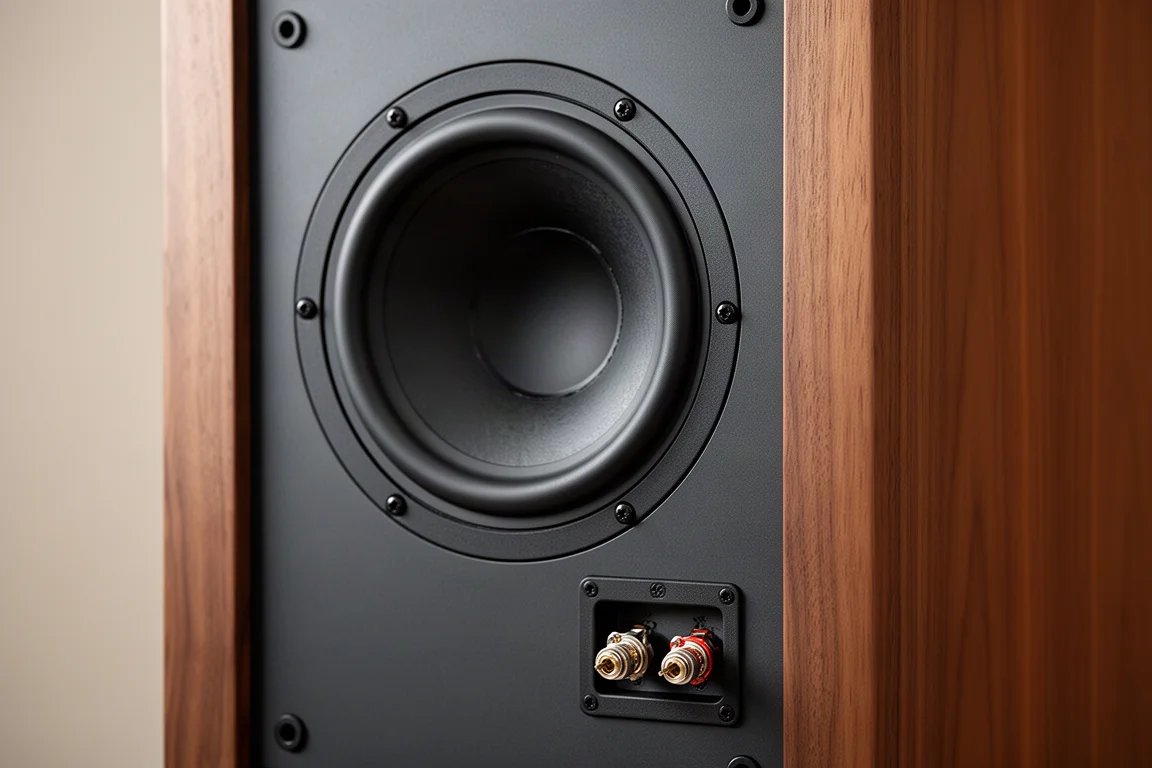
On construction alone, the Emotiva has the advantage. It uses more extensive bracing, carries veneer on both the front and the back, and may be slightly heavier. It also includes treble and midrange attenuator switches, which give the owner more freedom to adjust the response for a room.
Sonic priorities differ. The Forte IV is the more aggressive of the two in soundstage and imaging, with a wider and deeper presentation that places more information outside the speakers. The Emotiva keeps more of its energy between the cabinets. The driver designs are different as well: the Emotiva pairs a soft dome tweeter with a large soft dome midrange, while the Forte IV relies on horn-loaded tweeter and midrange drivers.
The practical conclusion is that these are two distinct presentations rather than two price points on the same product. Buyers who want a specific balance of build quality, adjustability, and a more contained stage will find the Emotiva compelling. Buyers who want the wide, forward Heritage presentation will not get it from the Emotiva.
Things to Consider Before Buying
Price is the first consideration. At around $5,500, the Forte IV sits well above the mainstream floorstanding market, and it is worth being honest about whether the room and the rest of the system can do it justice.
Size and presence are the second. These are substantial cabinets with a 12-inch woofer and a 15-inch passive radiator, and they will shape the look of the room they sit in, even in a finish as attractive as walnut.
For listeners who go looking for faults, there may be some cabinet resonance, though it is a fine detail that is unlikely to change a purchase decision once the speaker is playing music.
The high sensitivity is mostly good news. A 99 dB design reaches high output without exotic amplification, so the Forte IV does not demand an expensive amplifier or an unusually strong source to sound its best.
Buying Advice
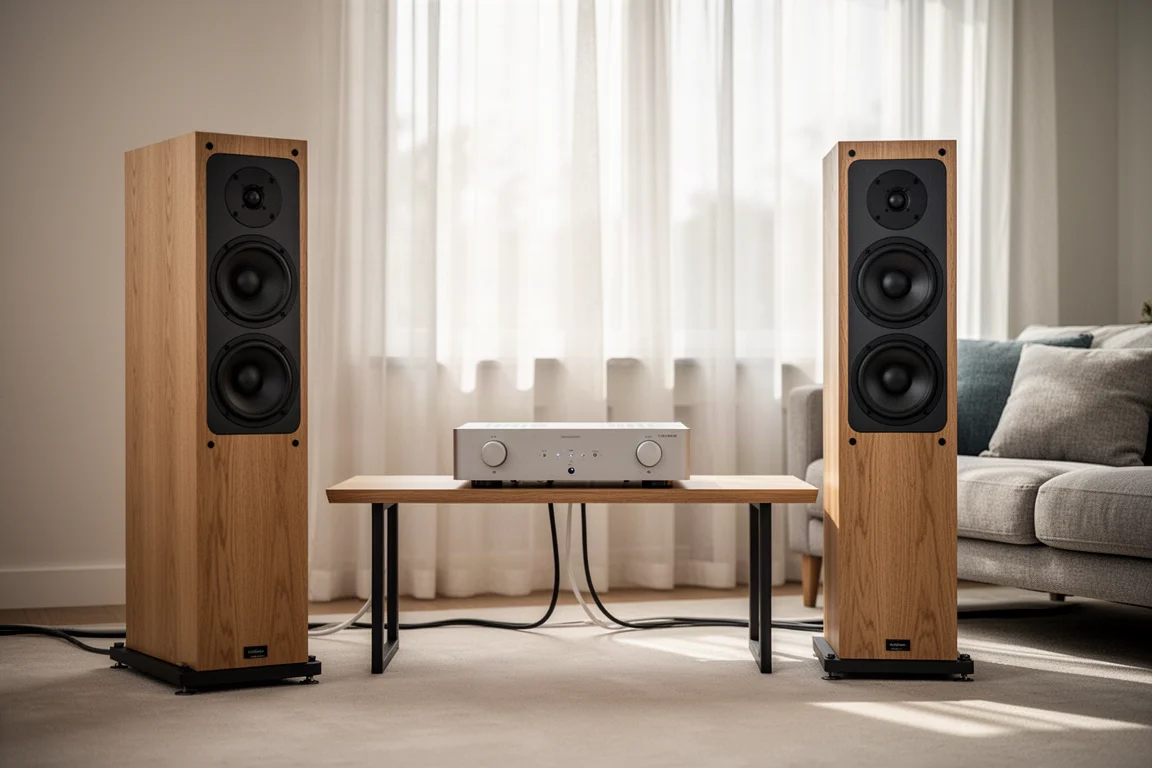
If the Forte IV is within reach, the best next step is to hear it with music you know well. The speaker’s character is distinctive enough that a demonstration will tell you more than any specification sheet.
If $5,500 is more than you want to spend, the RP-8000F is the closest thing in the Klipsch range for dynamics, but it will not match the Forte IV’s soundstage, imaging, or the more balanced character that makes the Heritage model so easy to live with.
The Emotiva LB12s at around $3,000 per pair is the other sensible route, provided you accept that it is a different speaker rather than a discounted Forte IV. Its construction and adjustment options are genuine advantages, and its more contained soundstage suits some rooms better.
For buyers who want the Heritage presentation, the midrange warmth, and a stage that reaches well past the cabinets, the Forte IV earns its price.
Conclusion
The Klipsch Forte IV is a premium floorstanding speaker with an unusually long lineage and a sound that is hard to mistake for anything else. A 99 dB sensitivity rating, a horn-loaded tweeter and midrange, a 12-inch woofer, and a 15-inch passive radiator add up to a speaker that plays loud with little power and still stays balanced.
It is not the only good option near its price. The Emotiva LB12s offers stronger construction and more tuning flexibility for considerably less money. What the Forte IV offers instead is a wide, deep, forward presentation with warmth in the midrange and bass that carries real weight, and for listeners who want that specific combination, it is worth arranging a listen.
Product link
View more details for Klipsch Forte IV
This product is mentioned in the review. Check the specifications, options, and compatibility before buying.
View more details for Klipsch Forte IVFurther reading
Related Reviews
Floorstanding Speakers
Acoustic Energy AE109 Mark II Review: A Refined Floorstander at £699
The Acoustic Energy AE109 Mark II is a slim, warm sounding floorstander that delivers clarity, midrange body and strong imaging in small to medium rooms.
Floorstanding Speakers
Acoustic Energy AE509 Review: A Slim Floorstander With Deep, Defined Bass
A practical look at the Acoustic Energy AE509, a slim floorstanding speaker with carbon fibre drivers, deep and well-defined bass, and an easy-going character that rewards careful system matching.
Floorstanding Speakers
Arendal 1528 Tower 8 Review: Reference Neutrality With Real Demands
A close look at the Arendal 1528 Tower 8, a nearly five-foot, 200-pound floorstander that rewards generous space, serious power, and high listening levels with reference-grade neutrality.