Floorstanding Speakers
KLH Model 7 Review: Acoustic Suspension Heritage in a Modern Floorstander
A three-way sealed floorstanding loudspeaker that carries KLH's acoustic suspension legacy into modern rooms, with wide baffle design, flexible placement, and deep, controlled bass.
Introduction
KLH was founded in 1957 and helped popularise the acoustic suspension principle, a breakthrough that allowed compact sealed enclosures to deliver deep, accurate bass with low distortion. That idea reshaped the home loudspeaker market of the 1960s and 1970s, and it remains central to the brand’s identity today. The Model 7 carries that heritage forward, drawing on the proportions of classic wide baffle designs while updating them for modern rooms and modern expectations.
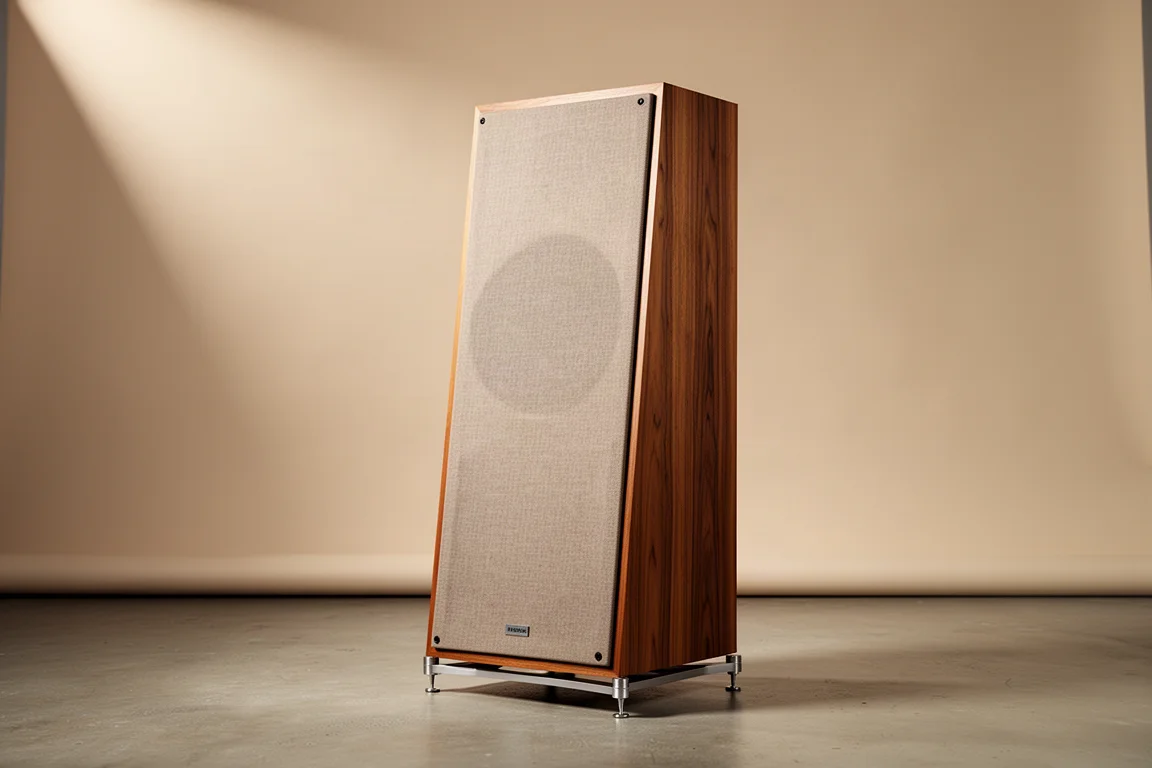
The Model 7 is a three-way floorstanding loudspeaker built around a wide baffle cabinet and a fully sealed enclosure. It sits above the smaller Model 3 and Model 5 in the range, sharing their acoustic suspension platform and vintage styling, but scaled up to fill larger spaces. The cabinet is a simple rectangular box rather than a flashy statement piece, and that restraint reads as timeless rather than trendy.
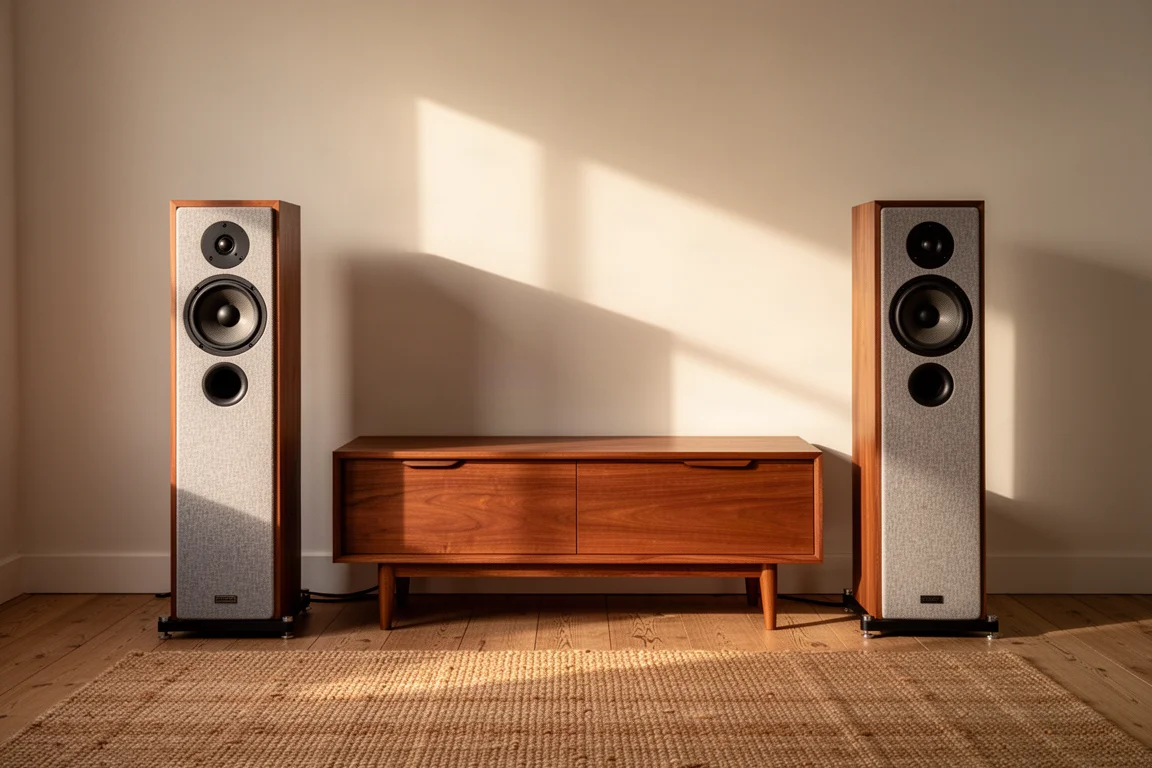
When the Model 7 was first showcased at Audio Advice Live 2025, it drew a steady stream of listeners, and plenty of them came back more than once to hear it again. That kind of repeat attention says something useful: this is a speaker people want to sit with, not just glance at.
Who the Model 7 Is For
The Model 7 is aimed at listeners who care about how bass behaves in a real room, not just how low a specification sheet claims it goes. Because the cabinet is sealed, the air inside acts as a spring that controls the woofer’s movement. Air behaves more predictably than most mechanical suspensions, so the woofer can travel further while staying linear, which translates to higher output, deeper extension and lower distortion without the port noise, group delay or placement headaches that bass reflex designs often bring.
That makes it a natural fit for two-channel systems in living rooms, where furniture, walls and listening distance all influence the result. It also suits listeners who would rather not add a separate subwoofer. With a rated response of 38 Hz to 20 kHz plus or minus 3 dB and usable energy down to 26 Hz at minus 10 dB, the Model 7 is a genuine full-range loudspeaker capable of anchoring a serious system on its own.
It is less suited to anyone who wants a small, discreet speaker. This is a substantial floorstander, and it is meant to be seen and heard.
Main Strengths: Acoustic Suspension Done Properly
The low end is handled by a 13-inch pulp paper cone woofer mounted in its own sealed 2.5 cubic foot sub enclosure. The larger cone area and rugged suspension move a lot of air per stroke, which is the most direct route to extended, low distortion bass. Maximum output is rated at 111 dB at 45 Hz, with peak in-room levels reaching 115 dB. Those figures support what the design implies: this is a speaker that can underpin a demanding system without asking for help.
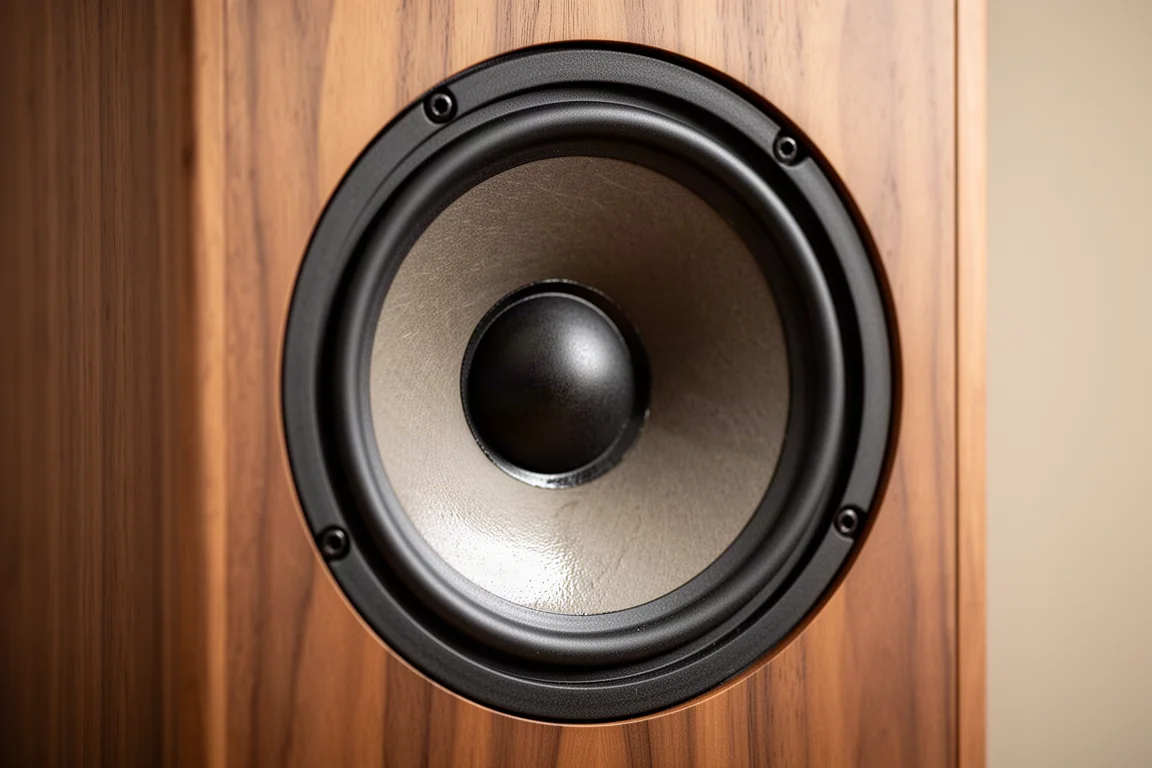
Above that, the midrange gets its own dedicated 5-inch driver in a separate sealed chamber. Isolating it from the woofer means voices and instruments come through with noticeably more clarity, and since this is the range our ears are most sensitive to, the Model 7 puts extra focus there. High frequencies come from a 1-inch aluminium dome tweeter with a soft rubber suspension, and integration across all three drivers is handled by a third order electro-acoustic crossover using 19 carefully selected components, including air core and iron core inductors.
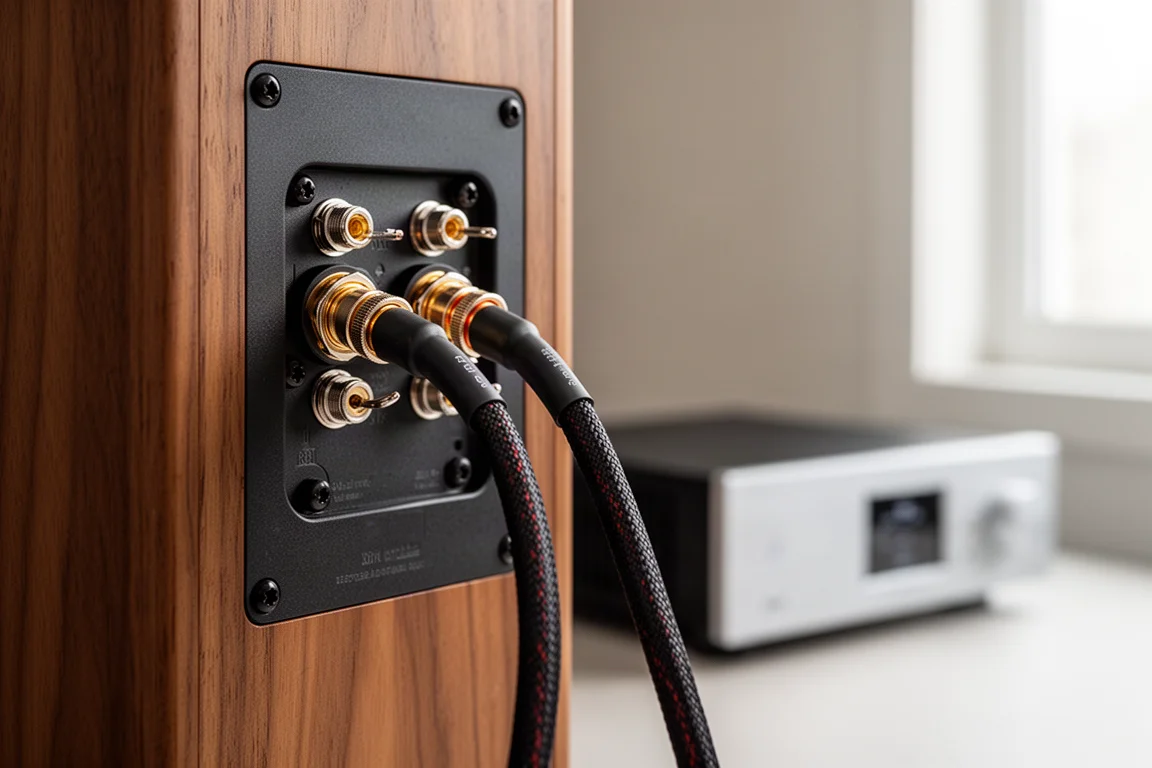
On the rear panel, a three-position acoustic balance control lets you fine-tune output above 400 Hz by plus or minus 1.5 dB. The high setting is the neutral reference, while the medium and low settings gently contour presence in the top end to suit a room or a taste. It is not a heavy-handed tone control, but a subtle and genuinely useful room-tuning tool. The binding posts are five-way gold plated. With a sensitivity rating of 91 dB in-room, the Model 7 works well with moderately powered amplifiers, and power handling is rated at 250 watts continuous and 1,000 watts peak, so dynamic headroom is not a concern.
Design, Build, and Room Placement
The enclosure is constructed from structurally reinforced MDF in both 3/4-inch and 1-inch thickness. Each cabinet weighs 68 lbs and measures 36 inches tall, 18 inches wide and about 12 inches deep. For a speaker of this size, that depth is relatively shallow, which makes it easier to pull the cabinets out from the wall without them jutting far into the room. KLH recommends a range of roughly 6 inches to 2 feet, and because the cabinet is sealed you can place it closer if the room demands it.
The included riser base lifts each speaker to about 41 inches tall and introduces a 3 degree slant that aims the midrange and tweeter directly at your ears from a standard seat or couch. Finishes are handcrafted English walnut real wood veneer or West African mahogany, the latter with a distinctive red tint. Magnetic grilles are included, each fitted with a vintage KLH logo cast in zinc, and the speakers are sold as mirrored pairs so the left and right cabinets present symmetrical driver layouts once set up. The overall impression is furniture-grade rather than appliance-like, the sort of speaker you are happy to leave on display.
How the Model 7 Sounds in Practice
On John Coltrane’s “Naima”, the quiet opening piano chords floated delicately into the room with every strike decaying naturally into the background. The tenor saxophone carried a warmth and body that felt authentic, never thin or edgy, and the subtle brush work on the drums came through with impressive texture. What stood out most was how the Model 7 handled the space of the recording: instruments spread wide across the soundstage while remaining locked into position, making it easy to picture where each player sat in the studio.
A denser, more layered modern production proved just as revealing. The falsetto vocal sat front and centre, smooth and clear without being pushed forward, acoustic guitar strums carried natural resonance, and low-end swells stayed controlled and blended seamlessly into the mix. As the arrangement built in intensity, the soundstage expanded without strain, filling the room with an enveloping presentation.
Dynamics are a big part of the story. Crescendos feel relaxed rather than compressed, and bass keeps its shape at much higher levels. Large orchestral pieces, powerful rock tracks and cinematic scores can all be reproduced at convincing volumes without losing finesse on smaller acoustic material. The sealed alignment follows a gentle 12 dB per octave rolloff, which works with natural room gain, and in some rooms that helps bass extend down into the mid-20 Hz range. It is one of the reasons acoustic suspension designs still have a devoted following among listeners who value realism over raw extension figures: the bass sounds like real instruments in real spaces rather than a curve engineered to impress.
Things to Consider Before Buying
The wide baffle is doing real acoustic work. The wider front panel directs more energy toward the listening area and reduces the wraparound that thinner speakers can suffer from, which can otherwise lead to early reflections off nearby walls. The trade-off is that this type of design sacrifices pinpoint imaging just a little. If razor-sharp, holographic placement is your priority above all else, that is worth weighing.
Size and weight also deserve honest consideration. At 68 lbs per cabinet and 36 inches tall before the riser base is fitted, the Model 7 needs floor space and a partner willing to help with setup. And while the sealed cabinet is flexible about placement, the deepest bass relies on room gain, so the result will vary from room to room rather than being fixed by the specification alone.
Finally, price. At their price, the Model 7 enters a genuinely competitive category. It stands apart by offering a specific blend of heritage, technology, flexibility and craftsmanship rather than by undercutting rivals.
Buying Advice
The Model 7 makes the most sense for listeners who want a full-range floorstander with natural, low-distortion bass and a midrange that treats voices and instruments seriously. If you listen to acoustic recordings, jazz, orchestral works or cinematic scores and you value a sound that feels connected to the performance rather than merely loud, this is a speaker worth auditioning carefully.
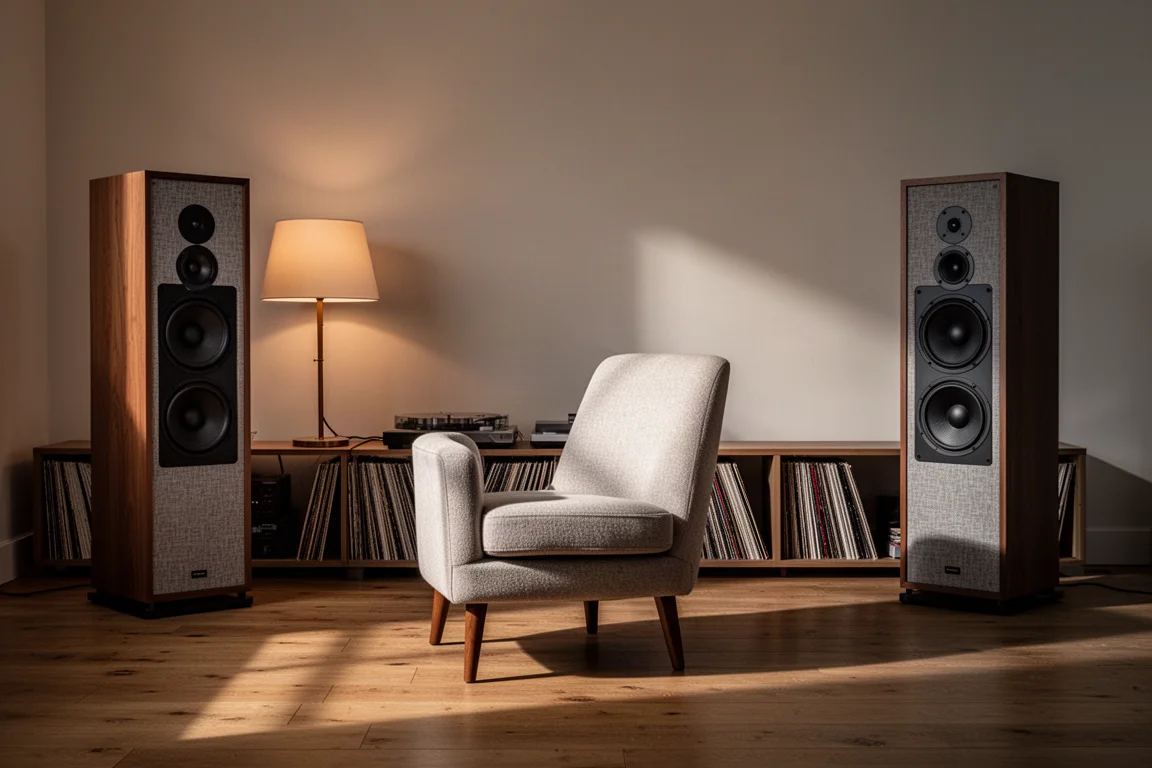
On electronics, the 91 dB in-room sensitivity means you do not need an enormous amplifier, but the 250 watt continuous and 1,000 watt peak ratings suggest the Model 7 will come alive with more power on tap. Plan for a little breathing room behind the cabinets, somewhere between 6 inches and 2 feet if the room allows, and use the three-position balance control to settle the top end rather than reaching for an equaliser.
If the concept appeals but the footprint does not, the Model 5 and Model 3 share the same acoustic suspension design and vintage styling, scaled down for different room sizes and system needs. That gives you a way into the same approach without committing to the largest cabinet in the range.
Conclusion
The KLH Model 7 continues the path set by the Model 3 and Model 5 and reads as both a continuation of the brand’s legacy and a statement about the enduring value of acoustic suspension design. It is one of a handful of speakers offering this particular blend of heritage, technology, flexibility and craftsmanship. For listeners who want not only to hear their music but to feel deeply connected to it, the Model 7 is a genuinely compelling choice.
Product link
View more details for KLH Model 7
This product is mentioned in the review. Check the specifications, options, and compatibility before buying.
View more details for KLH Model 7Further reading
Related Reviews
Floorstanding Speakers
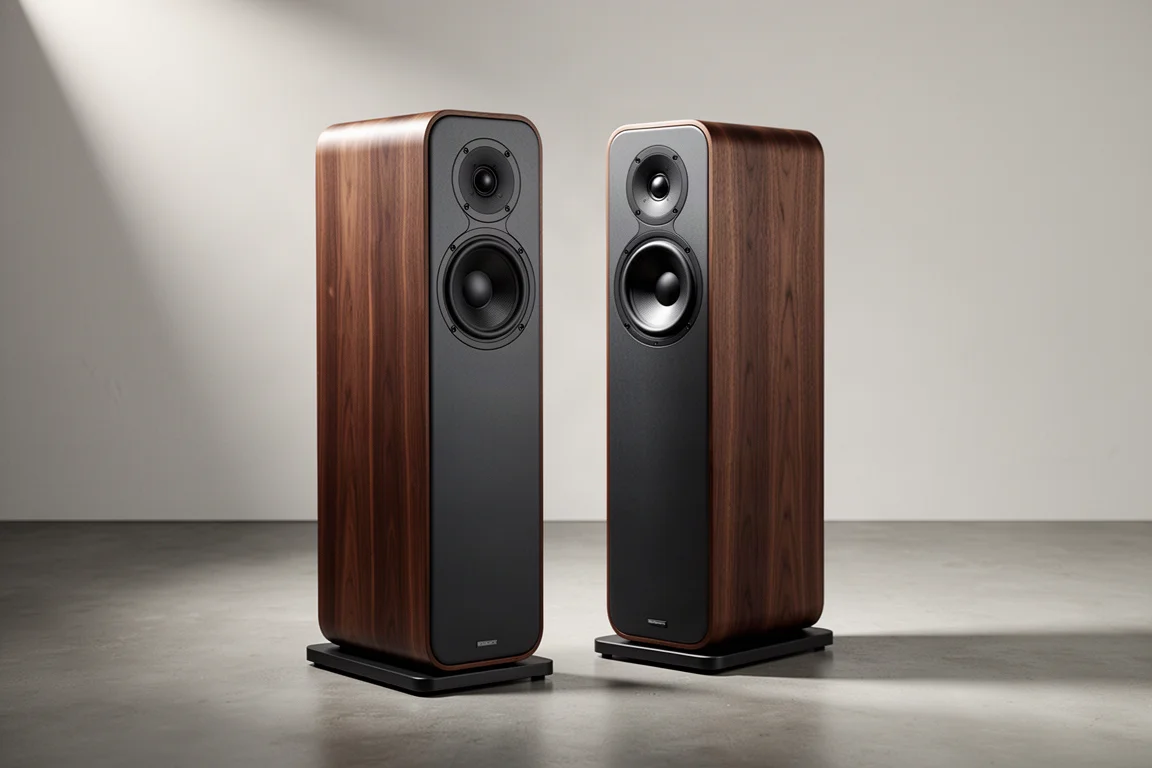
Acoustic Energy AE109 Mark II Review: A Refined Floorstander at £699
The Acoustic Energy AE109 Mark II is a slim, warm sounding floorstander that delivers clarity, midrange body and strong imaging in small to medium rooms.
Floorstanding Speakers
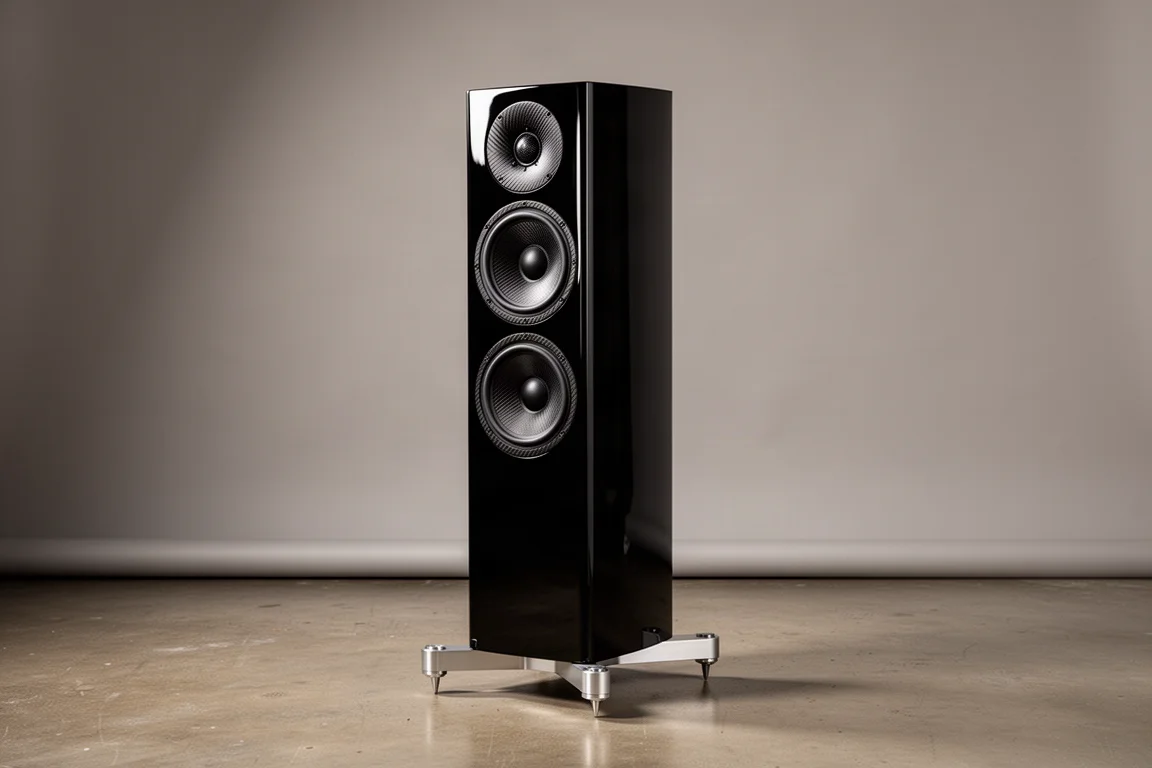
Acoustic Energy AE509 Review: A Slim Floorstander With Deep, Defined Bass
A practical look at the Acoustic Energy AE509, a slim floorstanding speaker with carbon fibre drivers, deep and well-defined bass, and an easy-going character that rewards careful system matching.
Floorstanding Speakers
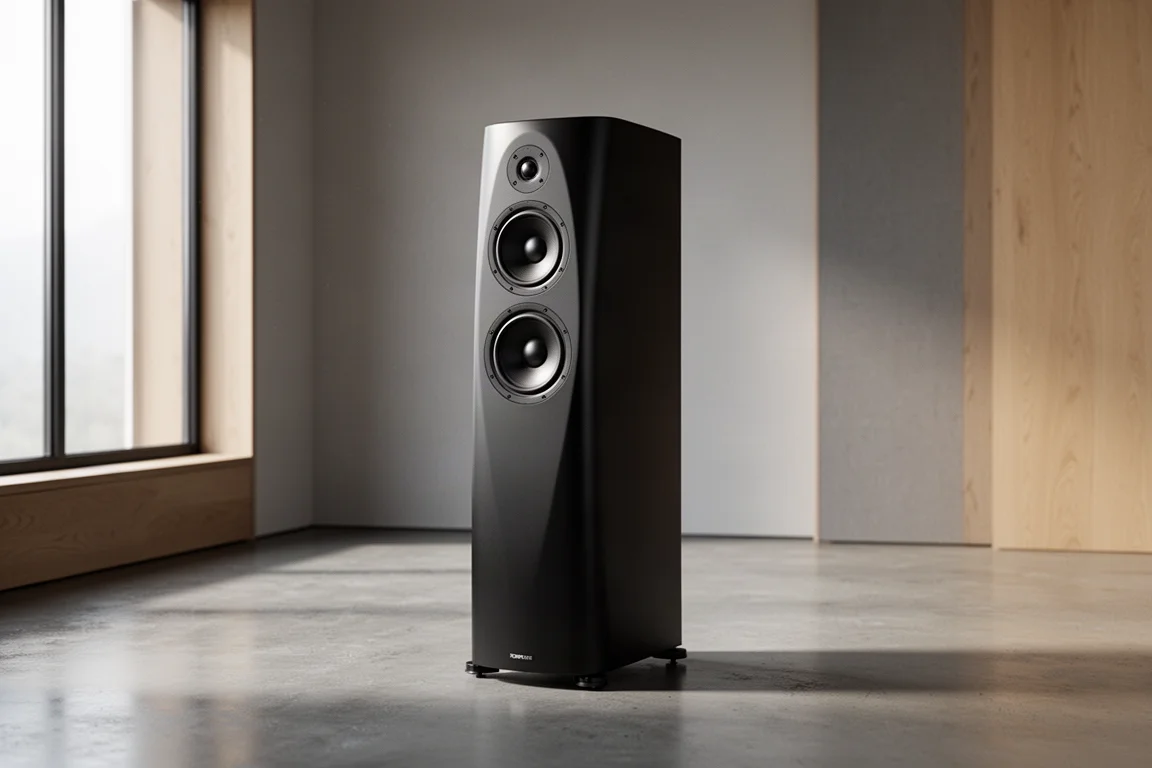
Arendal 1528 Tower 8 Review: Reference Neutrality With Real Demands
A close look at the Arendal 1528 Tower 8, a nearly five-foot, 200-pound floorstander that rewards generous space, serious power, and high listening levels with reference-grade neutrality.