Floorstanding Speakers
KLH Kendall Review: A Slim Floorstander That Punches Above Its Price
The KLH Kendall pairs Kevlar drivers and a carefully tuned metal dome tweeter with a genuinely wide soundstage. Here is what it does well, and where it asks for compromise.
Introduction
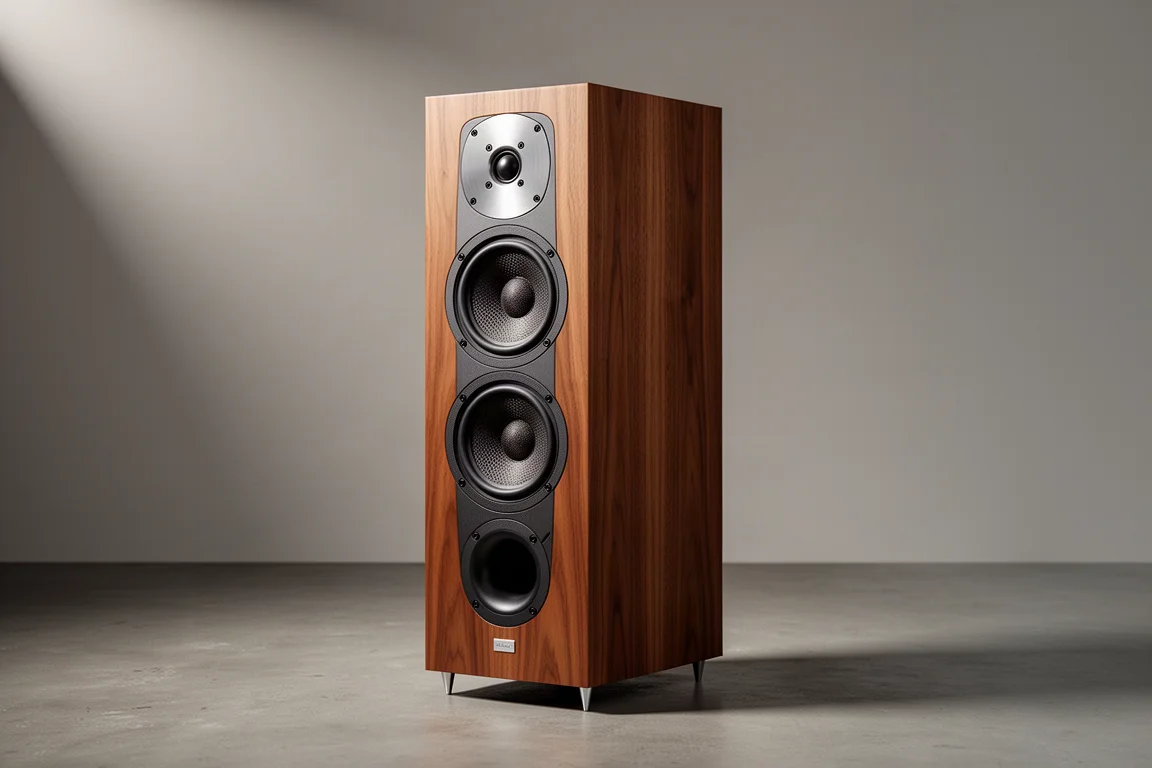
The distance between an affordable floorstanding speaker and a genuinely high-end one has narrowed considerably in recent years. The KLH Kendall sits right in the middle of that conversation: a slim tower selling for around $1,500, with a metal dome tweeter behind a brushed aluminium faceplate, a Kevlar midrange, two Kevlar woofers, and a real wood veneer cabinet. On paper it reads like a modest speaker. In practice it behaves like something considerably more expensive in the areas that matter most for long-term listening.
This review covers how the Kendall sounds, how it is built, how it wants to be placed, which amplification suits it, and how it stacks up against other speakers that reach into high-end territory.
Who the KLH Kendall Is For
The Kendall is aimed at listeners who care more about mid-range and treble refinement than about raw low-frequency output. It rewards people who value tonal sweetness, a low-fatigue top end, and a wide, holographic soundstage. It also suits anyone building a system around a tube amplifier or a high-current solid state design, because it is relatively sensitive for a tower of its size and responds audibly to different amplification.
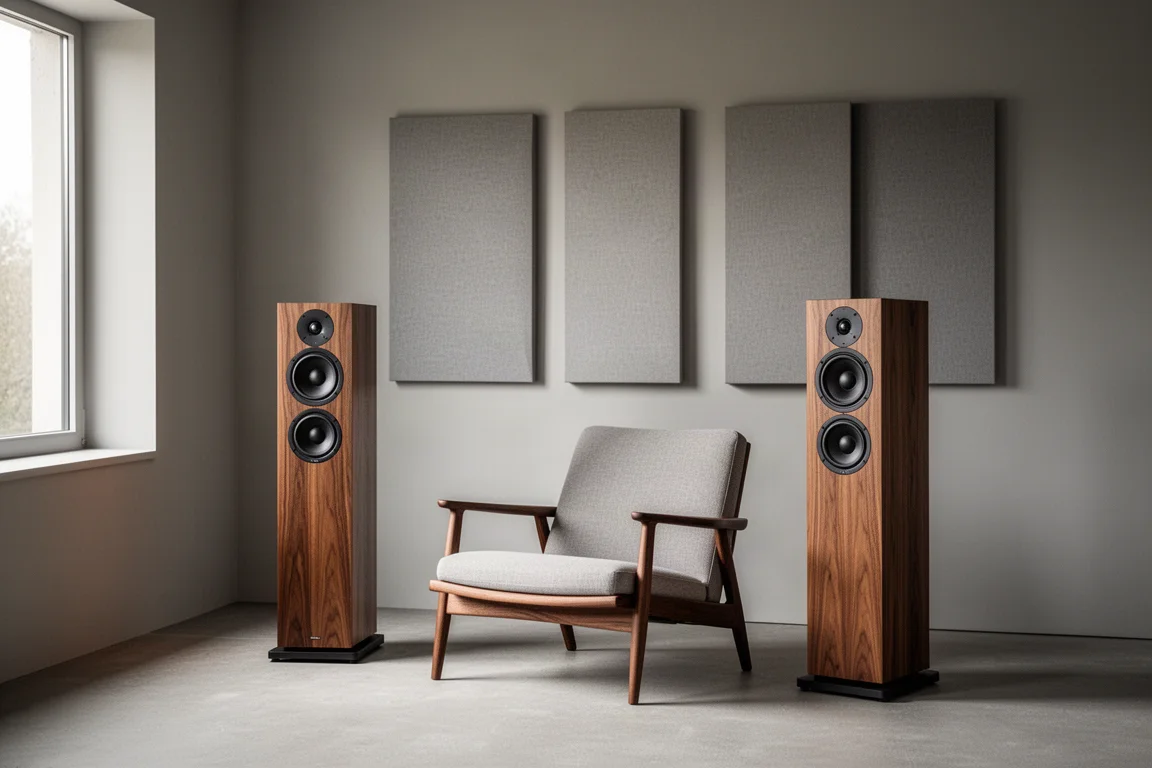
Where it asks for a compromise is deep bass. Listeners who want weighty, room-filling low-frequency impact should plan on adding a subwoofer. Buyers who prefer a bright, forward presentation may also find the Kendall’s balance too polite, because its treble is detailed but deliberately sweet rather than aggressive.
Sound Quality
Bass is the most surprising part of the Kendall’s performance. The cabinet is slim, yet the low end is linear and delivers real punch and dynamics, particularly through the upper bass. The specification claims extension down to 25 Hz at plus or minus 3 dB, a figure worth treating with healthy skepticism, because the speaker does not plumb the deepest octaves with the authority that number implies. A subwoofer remains the right call for anyone who wants genuine visceral depth. What stands out instead is accuracy: the Kendall delivers bass when the recording contains it and stays restrained when it does not. It will not impress you in the first thirty seconds with exaggerated low end.
Mid-range and treble are where the Kendall makes its case. Vocals are clean, the background is unusually black for the price, and instruments separate cleanly. The metal dome tweeter is tuned so carefully that it never announces itself as a metal dome, which is rare at this price. Treble sits right on the edge of bright without crossing over, and the result is a sweetness that is uncommon here. It stays detailed and articulate without the fatigue that brighter high-end designs can cause.
Imaging is pinpoint and easy to follow, helped by that quiet background and the instrument separation. Soundstaging is wide and deep, and the slim cabinet appears to be a large part of why. Against bigger, more expensive towers the Kendall still holds its own on stage width and depth. It does not match horn-loaded designs or the best bookshelf speakers for that particular quality, but for a conventional floorstander at this price it is genuinely impressive.
Build Quality and Design
The cabinet uses real wood veneer and the finish is executed very well for the price. A second finish is available in black ash. The tweeter sits behind a brushed aluminium faceplate, and the driver complement is a metal dome tweeter, a Kevlar midrange and two Kevlar woofers, all sharing a consistent woven texture.
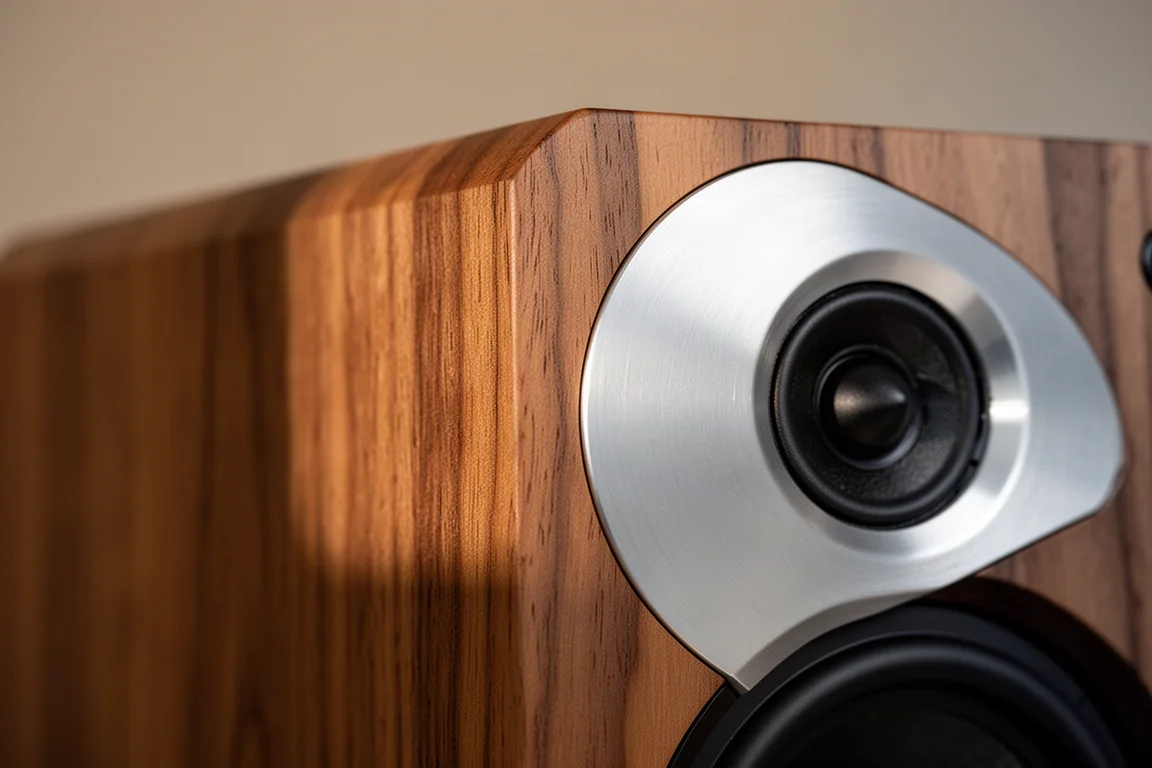
The compromises show up in the details rather than the cabinet itself. The base and the supplied spikes feel inexpensive, and the overall look is fairly plain and generic. Rubber feet are included for listeners who want to protect hard floors, but the spikes deliver better sound. Levelling matters more than usual here: if the cabinet rocks, bass response suffers noticeably, so it is worth taking the time to get all four contact points even.
The rear of the cabinet has two ports, so this is a back-ported design and it needs a little breathing room behind it.
Placement and Setup
The Kendall does not need a large distance from the wall behind it. Bass stays controlled close to the wall rather than turning boomy, so a modest gap is enough for most rooms. Pulling the speakers further into the room, roughly three to four feet in practice, adds depth and more spatial information. That is simple physics: the further out they sit, the more of the room’s acoustic space they can use.
Toe-in is the more unusual part. The Kendall sounds most linear and neutral with very little toe-in. Angling the speakers more directly toward the listening position reduces high frequency output rather than increasing it, which runs opposite to the behaviour of most speakers. This held true even in a well-treated room, so it appears to be a characteristic of the design rather than a room artifact. Buyers should plan to experiment, and should not assume that on-axis is automatically best.
Equipment Matching
The Kendall is sensitive enough for a tower of its size that tube amplification is a realistic option. A Doge 10 Mark III tube amplifier elevates the soundstage considerably. A Line Magnetic amplifier trades some bass weight for a mid-range, treble and tone that are difficult to walk away from. A Denafrips Apollo, a heavy high-current amplifier, brings a lot of power and headroom: bass grip and visceral impact are the best of the group, though it gives up some of the stage width that tubes provide.
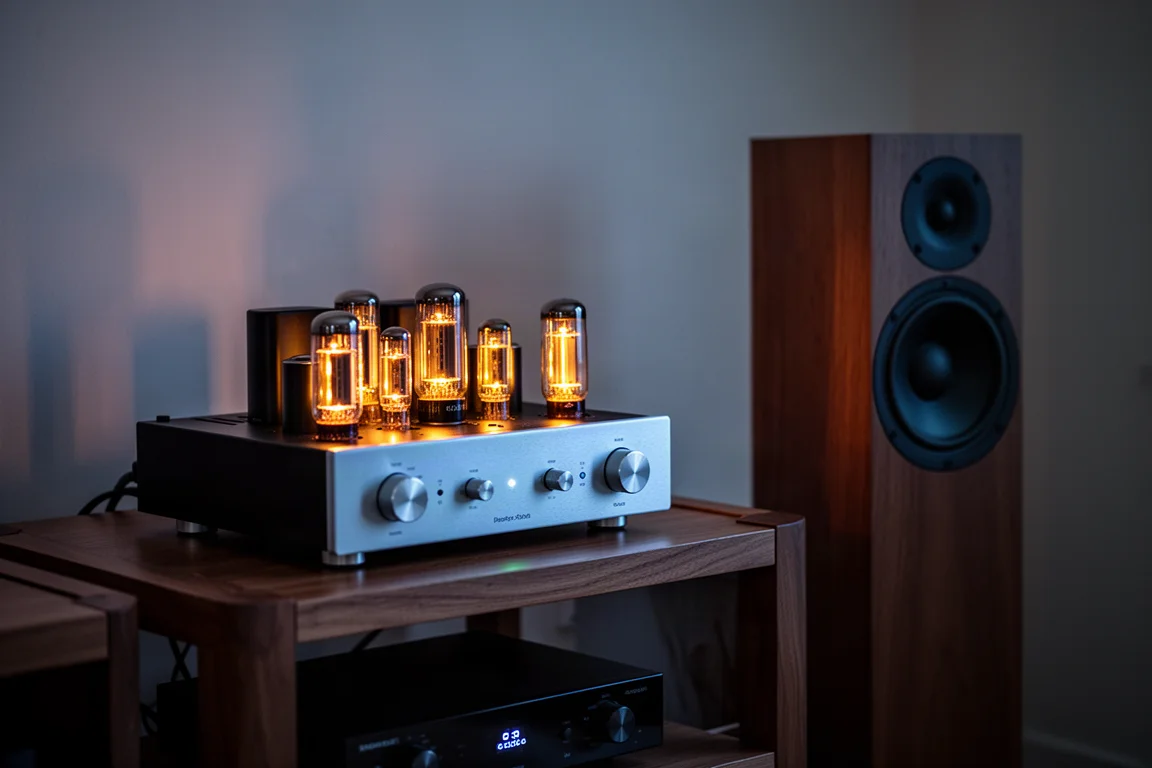
At the value end, an Iota VX is a sensible match at this price. It delivers good bass and solid refinement with a decent stage, and it is a remarkable pairing for the money, even if it cannot match the mid-range and treble polish of the more expensive amplifiers.
The most satisfying combination was a more affordable Denafrips amplifier paired with a Denafrips preamplifier. That pairing produced a soundstage that extended behind and around the speakers, and it is the natural recommendation for anyone building a system around the Kendall.
How the KLH Kendall Compares With Other Speakers
Against the Polk R700, the Kendall gives up air movement and scale, which is expected given the size difference. The R700 moves more air in the low end. The Kendall counters with noticeably better mid-range and treble refinement and a wider, deeper soundstage.
Against the KLH Model Five, the choice comes down to tonal balance. The Model Five is the more even all-rounder and sits between a Sonus Faber and a Totem character, which makes it easy to live with across a wide range of music. The Kendall pushes a little more bass and a slightly sweeter top end. Listeners who want maximum bass weight and treble sweetness will lean toward the Kendall; those who want the most balanced tone will lean toward the Model Five.
The Totem Tribe Tower costs considerably more, and the Kendall’s tone is remarkably close to it. That resemblance is one of the strongest arguments in the Kendall’s favour.
Against the CSS Audio 1TDX, a bookshelf design, the two are technically close. The 1TDX has the edge in treble refinement and imaging, and it scales further as upstream equipment improves. The Kendall has better bass extension and a more effortless low end because of its floorstanding cabinet and twin ports. Pairing the Kendall with modest electronics makes sense; the 1TDX rewards a more ambitious system.
The Buchardt S400 Mark II is another bookshelf speaker with remarkable bass extension, and it goes deeper than the Kendall. Its bass is also more linear, more accurate and more textured, and its mid-range and treble are arguably more technical. The Kendall still wins on clarity, and it sounds sweeter and more incisive rather than softer. Listeners who find Focal, Magico or B&W speakers too bright may prefer the Kendall’s balance.
The Tekton Double Impact extends further in the treble and sounds slightly brighter and leaner, with a more stripped-back tone. Clarity between the two is essentially equal, and the Double Impact has a little more mid-bass impact, which is expected from a much larger speaker. Which one sounds more realistic comes down to taste.
Higher-end designs with weighty, deeply extended bass, such as Wilson Audio models, remain in a different category, and the Kendall does not compete there. What it does do is compete with high-end speakers that prioritise mid-range and treble refinement, and it does so for a fraction of the cost.
Things to Consider Before Buying
Deep bass requires a subwoofer. The Kendall is accurate rather than weighty in the lowest octaves, and the claimed 25 Hz specification should not be read as a substitute for a subwoofer.
The cabinet looks plain. Finish quality is good, but the design is understated and the base and spikes feel inexpensive.
Levelling is mandatory. If the speaker rocks, bass performance suffers, and the effect is easy to hear.
Toe-in behaves unusually. Plan on experimenting, and expect the most neutral result with minimal toe-in.
Brightness is not part of the package. Listeners who want a forward, aggressive top end should look elsewhere.
Amplification matters. The speaker is revealing enough that the character of the amplifier will shape the final result.
Buying Advice
At around $1,500, the Kendall delivers mid-range and treble refinement that normally belongs to far more expensive speakers. That is the core of the value proposition. Buyers who prioritise vocals, acoustic instruments, imaging and a wide soundstage will get a great deal for their money, particularly if they pair it with a tube amplifier or a high-current design from a brand such as Denafrips.
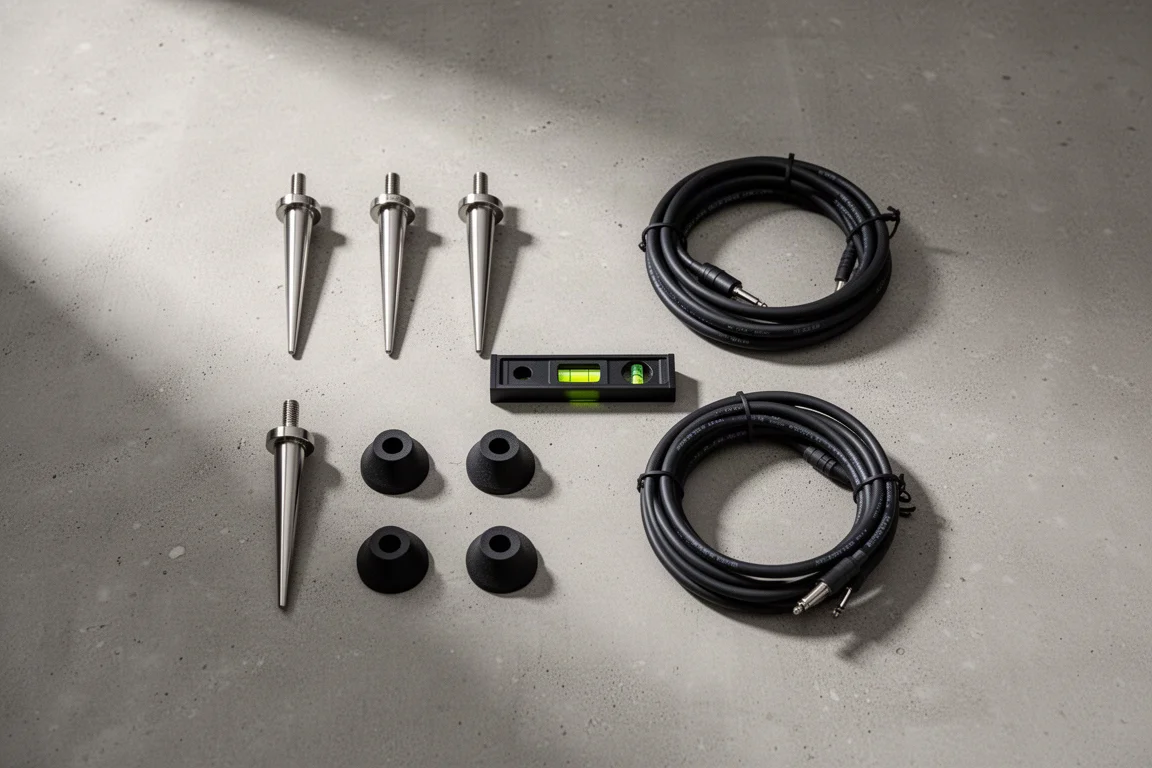
The practical advice is to budget for a subwoofer if deep bass matters, to spend time on levelling and toe-in, and to choose an amplifier whose character you genuinely like, because the Kendall will reveal it. Buyers who want the most balanced tone across every genre should also consider the Model Five before deciding. Either way, this is a speaker that makes the case that serious performance no longer requires a five-figure budget.
Conclusion
The KLH Kendall is a slim, plainly styled floorstander that behaves like a far more expensive speaker in the ways that matter most for everyday listening. Its bass is accurate and dynamic rather than deep, its mid-range and treble are clean and sweet rather than bright, and its soundstage is wide and deep for the price. Add a subwoofer, take care with placement, and match it with sympathetic amplification, and it becomes one of the strongest arguments for buying a well-chosen mid-priced tower instead of a high-end one.
Product link
View more details for KLH Kendall
This product is mentioned in the review. Check the specifications, options, and compatibility before buying.
View more details for KLH KendallFurther reading
Related Reviews
Floorstanding Speakers
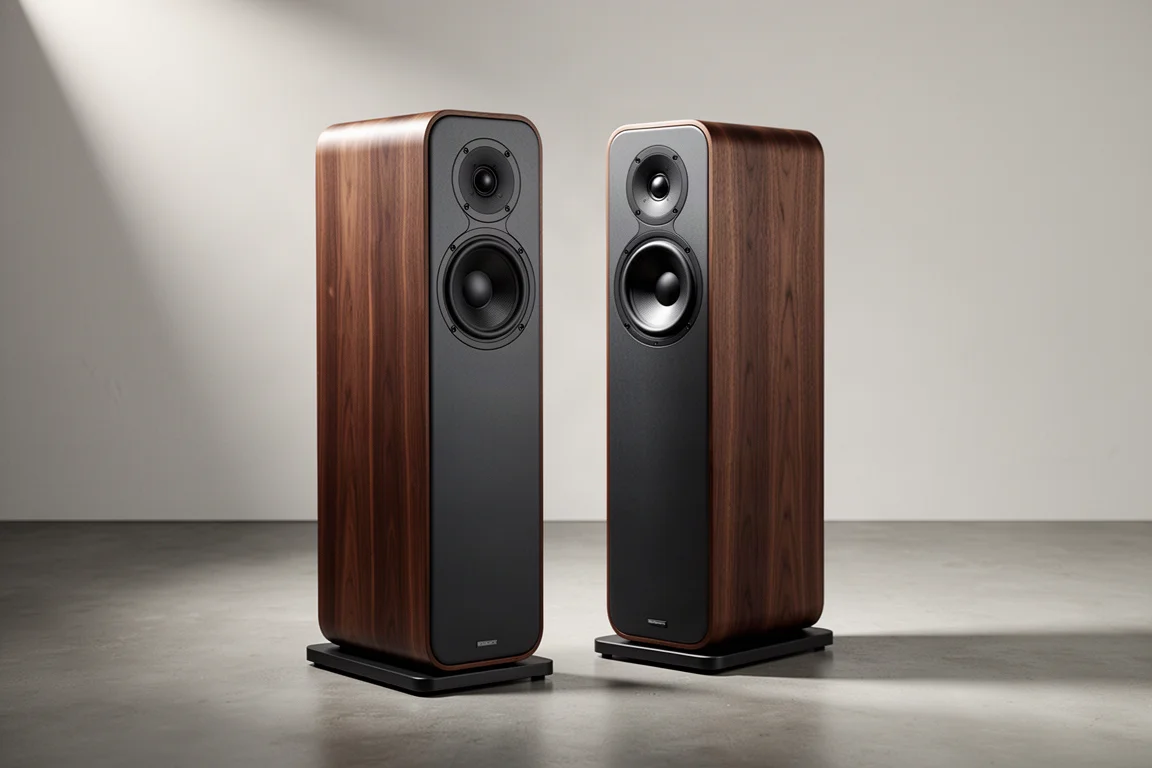
Acoustic Energy AE109 Mark II Review: A Refined Floorstander at £699
The Acoustic Energy AE109 Mark II is a slim, warm sounding floorstander that delivers clarity, midrange body and strong imaging in small to medium rooms.
Floorstanding Speakers
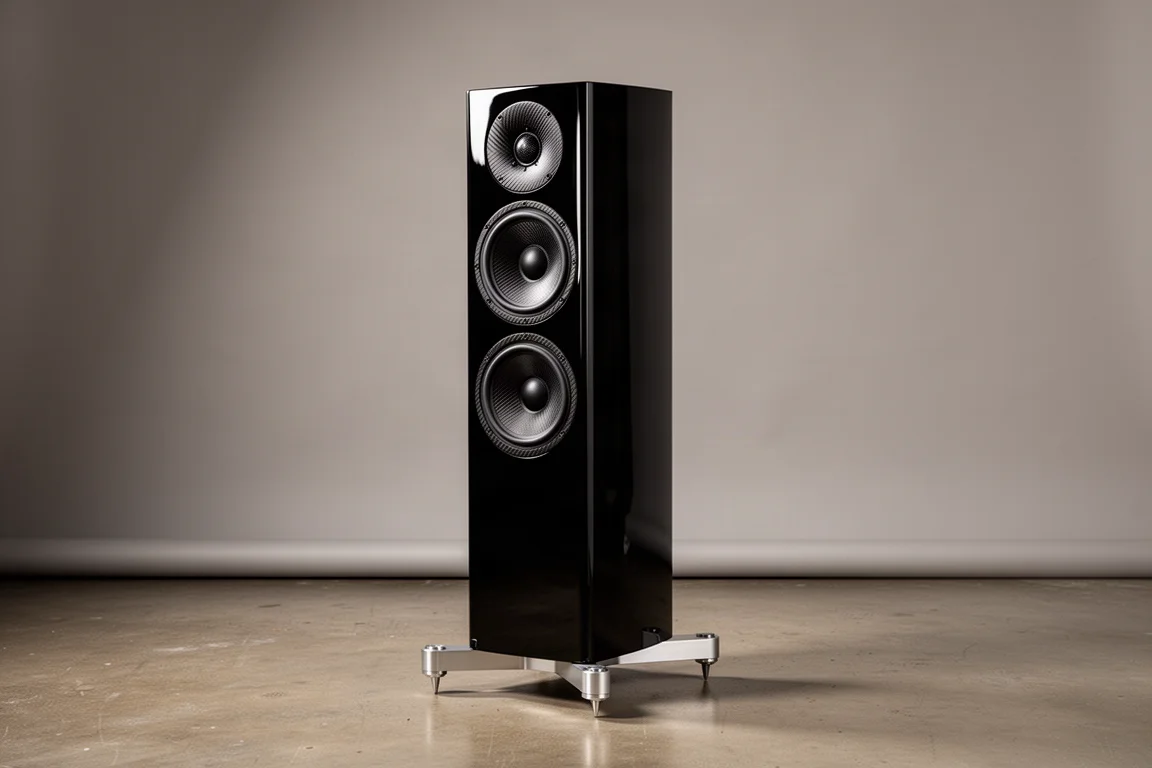
Acoustic Energy AE509 Review: A Slim Floorstander With Deep, Defined Bass
A practical look at the Acoustic Energy AE509, a slim floorstanding speaker with carbon fibre drivers, deep and well-defined bass, and an easy-going character that rewards careful system matching.
Floorstanding Speakers
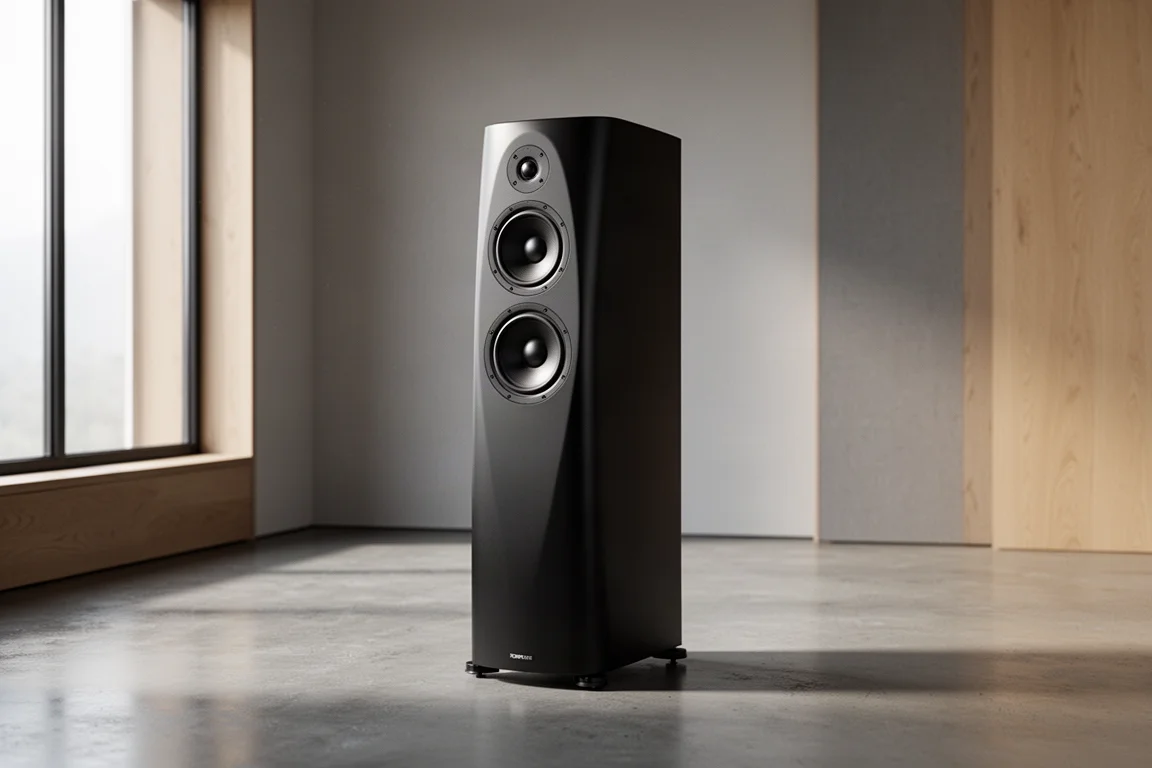
Arendal 1528 Tower 8 Review: Reference Neutrality With Real Demands
A close look at the Arendal 1528 Tower 8, a nearly five-foot, 200-pound floorstander that rewards generous space, serious power, and high listening levels with reference-grade neutrality.