Camping Shelters
Kifaru IBS Tent Review: A Military-Grade Pop-Up Bug Net Shelter
A one-person pop-up bug net shelter used by the US Army and Marines, with a two-second setup, a 2 lb packed weight, and a very specific set of trade-offs.
Introduction
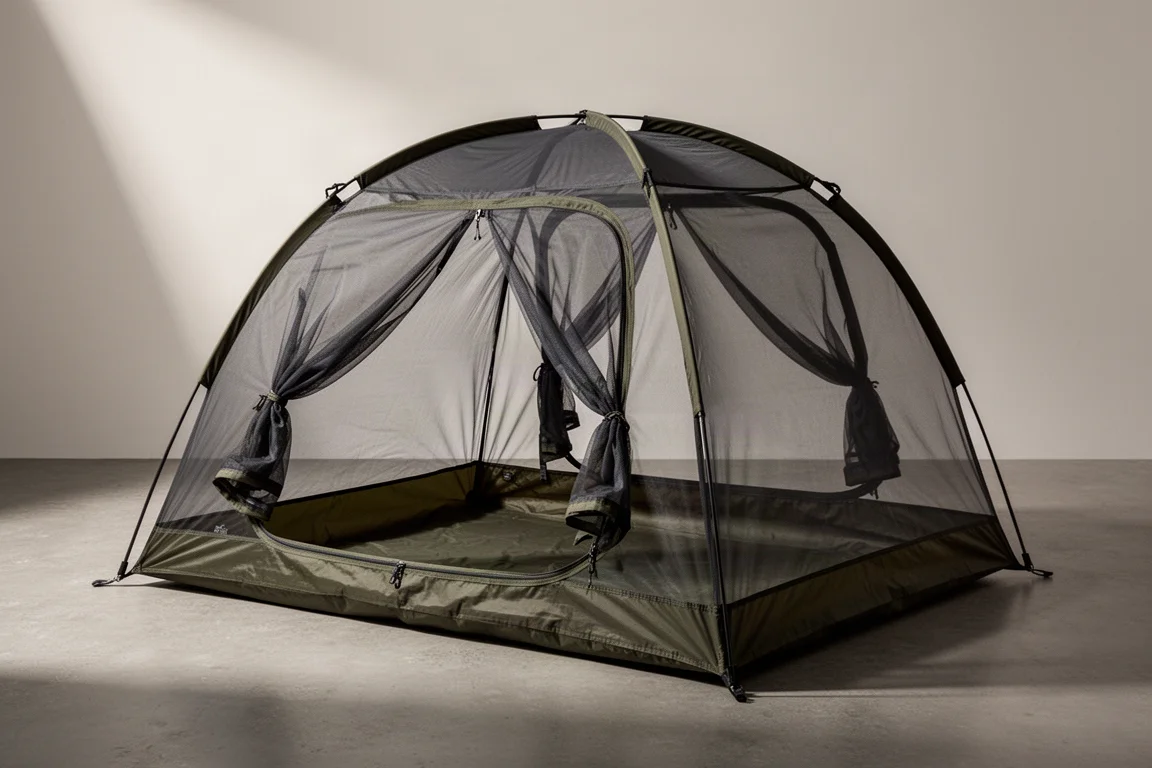
The Kifaru IBS, short for Improved Bed Net System, is a one-person bug net pop-up shelter with an unusual pedigree. It is currently in service with the United States military, specifically the Army and the Marines, and it is sometimes referred to as the burrow tent. Kifaru has been building specialized gear since 1993 from Montgomery, Alabama, and the company’s first product was a tent designed for wilderness firefighters. That background explains the IBS well: it is a focused tool rather than a general-purpose tent.
What arrives in the box is a tight, purpose-built kit. There is an oversized storage bag that swallows the shelter easily, the shelter itself, a repair kit, and setup and breakdown instructions. A compression strap runs across the top and holds the whole package under tension, which is why there is a warning label reminding you to release that strap carefully. Two plastic tent stakes are also included.
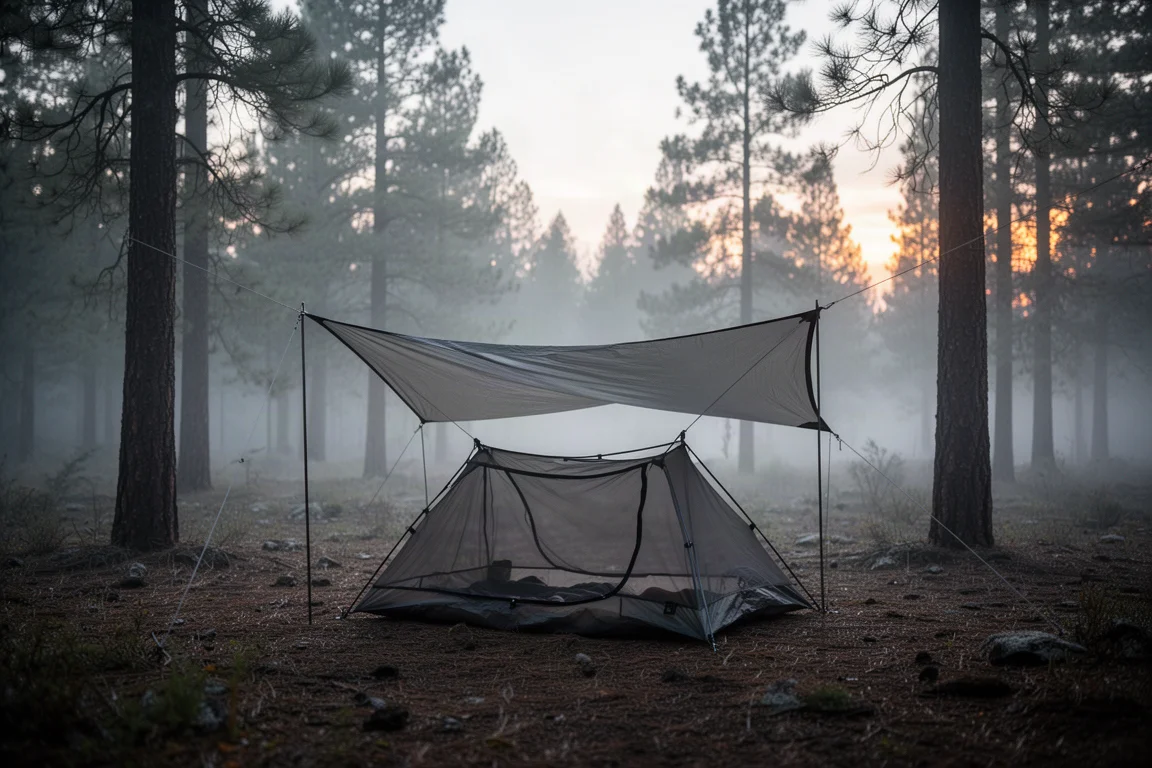
Deployment is genuinely instant. Once the compression strap is released, the shelter springs open on its own, and it goes up in roughly two seconds. Two stakes are enough to secure it, with one end acting as the front and the other as the back. The speed comes from fiberglass poles that are integrated into the shelter body, so there is nothing to assemble, thread, or tension by hand.
The IBS is available in coyote brown and woodland green. In its basic form it does not include a fly, and Kifaru sells additional components if you want to convert it into a fuller tent. In practice it is most often used on its own or paired with a tarp.
Who This Shelter Is For
This is a shelter for people who want to go light, go minimal, and keep bugs out without carrying a conventional tent. The interior is rated for users under 6’3”. Taller campers will find themselves brushing the top or the foot end, so that limit is worth taking seriously rather than treating as a suggestion.
The dimensions are generous for the category. Set up, the shelter measures 90 inches long, 33 inches wide at the head, 25 inches wide at the feet, and 26 inches tall. Packed, it collapses to 13 x 13 x 3 inches and weighs 2 lb on the scale. That combination of a small pack footprint and low weight is the main reason it appeals to backpackers who count every ounce and every cubic inch.
Inside, there is room for one person plus a modest amount of gear. A practical routine is to lay a backpack down first, then a sleeping pad on top, and use the pack as a slight headrest, which keeps gear out of the way and puts it to work at the same time. There is also a single mesh pocket for small items, and a loop in the center of the ceiling that can be tied up to an overhead tarp to pull the middle of the shelter higher for extra headroom.
It is worth being honest about the experience: this offers noticeably more space than a bivvy, but it is not a tent. Anyone who dislikes confined spaces should look elsewhere.
Main Strengths
The materials are chosen for a specific job. The mesh is a 20 denier no-see-um fabric, and the floor is a 75 denier 1.9 oz ripstop nylon with a bathtub design that keeps splashing groundwater away from your sleeping bag. The floor is waterproof, and the walls are water resistant, which is enough to shield you from splash in sustained rain.
Ventilation is where the design really earns its place. With so much mesh in the body, airflow is excellent, and the two-way zippers on two separate doors give you two ways in and out. That second door is a small detail that makes a real difference in daily use. The doors roll back and tie off with straps, and clips are provided for when the shelter is used in its fuller tent configuration.

The bug protection goes beyond the mesh itself. The shelter has been impregnated with permethrin, a treatment common to military shelters, so mosquitoes and ticks are deterred from crawling on the fabric rather than simply blocked at the doorway. The shelter is also backed by a lifetime warranty, and buckles around the perimeter let you attach it directly to a standard-size cot, which is a useful option for basecamp-style use.
Build Quality and Durability
Overall construction is excellent. Stitching, thread work, and finishing are all clean, with no developing holes reported in the materials, and the zippers have held up without issue. The shelter is basic by design, but it includes the features you would actually want from a bug net system.
The fiberglass poles are the part that invites skepticism, and they have proven more durable than expected year after year. That said, this is not a shelter you can treat carelessly. The floor needs protection from sharp, pointy objects, so clear the ground, lay down a ground sheet, or do both. With that habit in place, the shelter lasts a long time.
One practical caution: the mesh is fine and thin, so pressing a hot flashlight lens against it from inside can melt a hole. Keeping light sources off the fabric is a simple habit that prevents damage. Treated properly, this is a shelter that stays bug proof and holds up over many seasons.
Things to Consider Before Buying
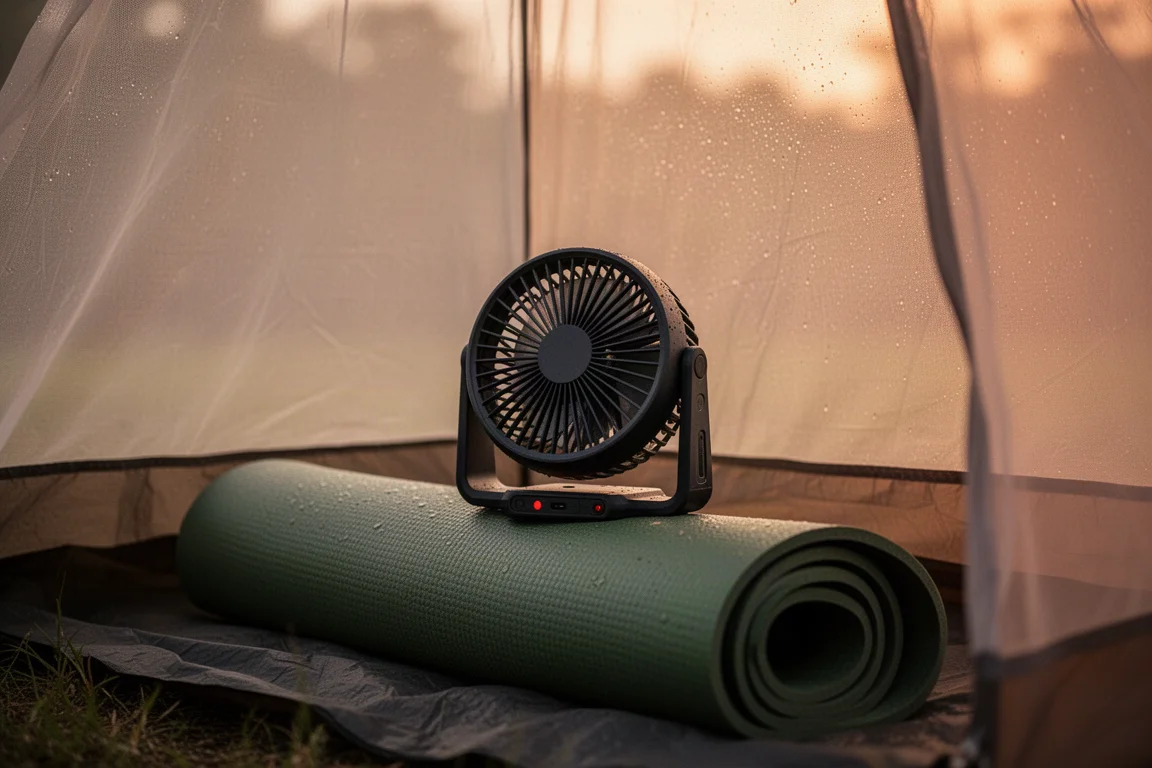
The most important limitation is heat. Any tent body, even one that is mostly mesh, traps some warmth, and the IBS is no exception. In warmer months a small portable fan inside the shelter makes a meaningful difference to comfort overnight, especially in muggy, bug-heavy conditions.
The included plastic tent stakes are the weakest part of the package and are worth replacing immediately. They are not confidence-inspiring, and one broke during a routine adjustment. Inexpensive shepherd hook stakes would be a better choice from the first trip.
Converting this into a true tent requires buying additional components, including straps and a fly kit with its own pole. That kit is finicky to set up and is not the strongest reason to buy into the system. The better path is pairing the shelter with a tarp.
Tarp sizing matters more than it might seem. A good-sized tarp covers you from sun, falling rain, and wind-driven rain that splashes sideways. A small tarp leaves you exposed, so if you intend to run this as a tarp-and-shelter setup, budget for adequate coverage.
Also note that Kifaru offers two versions. One is made outside the country, and one is made in the US. The US-made version is considerably more expensive, approaching $300, which changes the value calculation significantly.
Price and Value
Retail price for the standard version is $175, and it is commonly available for around $140. At $140 the shelter makes sense for the right buyer. At $175 the case gets harder to make, and at close to $300 for the US-made version the value proposition largely disappears for most people.
What you are paying for is a very specific combination: instant deployment, a 2 lb packed weight, a 13 x 13 x 3 inch pack size, excellent airflow, permethrin-treated bug protection, cot compatibility, and a lifetime warranty. If those priorities match how you camp, the math works. If you want a general-purpose tent, the same money buys more conventional shelter elsewhere.
Buying Advice
For anyone who wants to go light and minimal, the standard IBS at around $140 is a sensible purchase, particularly if you plan to run it with a tarp rather than with the optional fly kit. Buy it for the ventilation and the bug protection, and accept that it is a specialized piece of gear rather than an all-rounder.
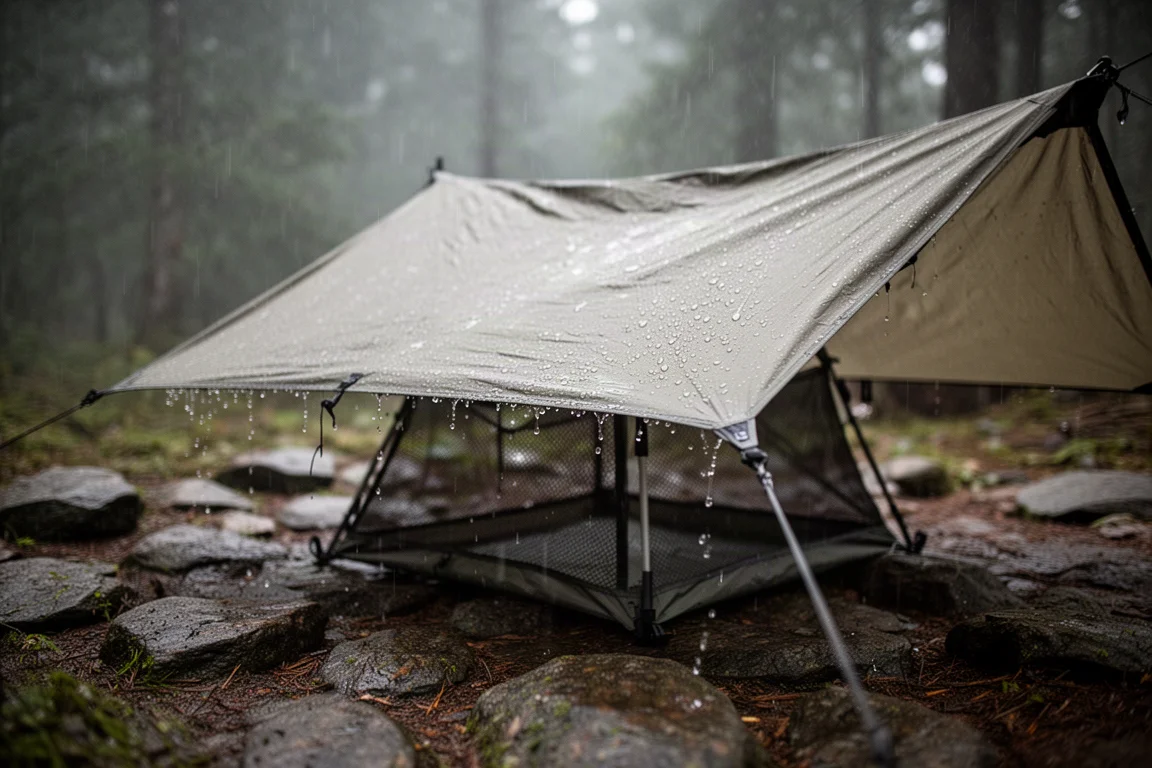
Budget for two upgrades on day one: a set of better stakes and a properly sized tarp. Those two additions address the weakest parts of the stock package and turn the shelter into a genuinely capable lightweight sleep system.
Skip the fly kit unless you have a specific reason for it, and think carefully before paying a premium for the US-made version. The standard version delivers the same core function at a much lower cost.
Conclusion
The Kifaru IBS is a well-made, deliberately simple shelter that does one job exceptionally well. It goes up in about two seconds, keeps bugs off with permethrin-treated mesh and a bathtub floor, ventilates far better than a closed tent, and packs down to almost nothing at 2 lb. It is not a tent, it is not for tall campers, and it traps some heat in summer, but for lightweight travelers who want reliable bug protection and a tarp-compatible sleep system, it remains a smart, durable choice.
Product link
View more details for Kifaru IBS Tent
This product is mentioned in the review. Check the specifications, options, and compatibility before buying.
View more details for Kifaru IBS TentFurther reading
Related Reviews
Camping Shelters
Alps Mountaineering Stealth 1 Bivy Review: A Waterproof Claim That Does Not Hold Up
The Alps Mountaineering Stealth 1 Bivy carries a 2,000 mm hydrostatic head rating and a waterproof claim, but sustained rain exposure and build quality concerns make it difficult to recommend.
Camping Shelters
AquaQuest Safari Hybrid 20 ft x 13 ft Tarp Review: Two Years Under a Very Large Roof
A long-term look at the AquaQuest Safari Hybrid 20 x 13 tarp, covering build quality, weather protection, setup realities, and who should buy one.
Camping Shelters
Backcountry Light Mesa 3 Hot Tent and Floor SL Tarp Review
A practical look at the Backcountry Light Mesa 3 four-season hot tent and its optional Floor SL Tarp, covering materials, stove jack design, packed weight, pricing, and the trade-offs to weigh before buying.