Soundbars
KEF XIO Review: A Flagship Dolby Atmos Soundbar and the KC62 Pairing
A close look at the KEF XIO, KEF's first soundbar, covering its 5.1.2 driver array, Music Integrity Engine, streaming platform, room calibration, and how it performs with a KEF KC62 subwoofer.
Introduction
KEF has spent decades earning a reputation for acoustic engineering, from compact wireless speakers to the flagship Blade series. The KEF XIO is the company’s first soundbar, and it arrives as a flagship 5.1.2 model with Dolby Atmos and DTS:X support. Rather than trimming its engineering down to fit the category, KEF carried over its own driver designs, a proprietary DSP suite, and a genuinely slim enclosure.
On paper it covers the expected ground. In practice, the interesting part is how the pieces fit together, and how the system changes once a KEF subwoofer joins it. This review walks through the design, the driver array, the streaming and calibration features, and what the XIO does well with films and music.
Who the KEF XIO Is For
The XIO is built for listeners who want cinematic, room-filling sound from a single bar, without running cables to rear speakers or assembling a full separates system. It suits anyone who cares about dialogue clarity, natural mid-range tone, and even dispersion across a room rather than a single narrow sweet spot.
It is not aimed at someone who simply wants the evening news a little louder. This is a system built around accuracy and immersion, and it rewards a room that can support it.
Design and Build Quality
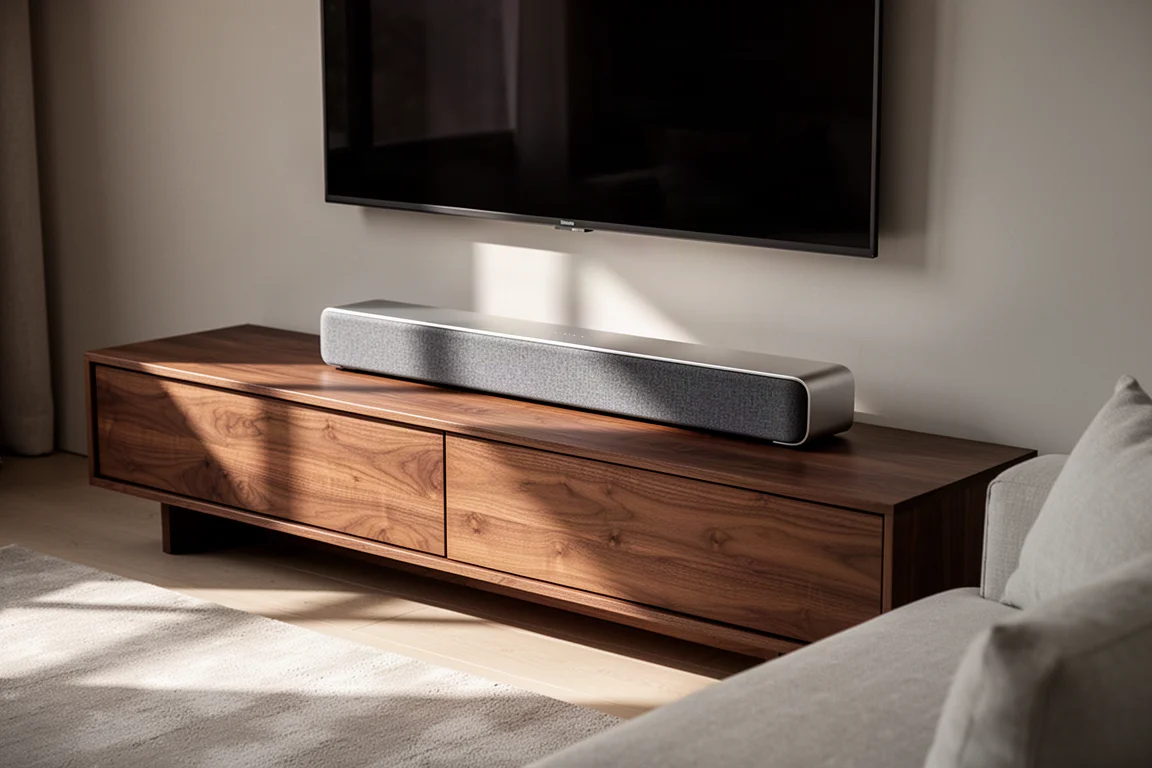
The XIO is slim and understated. A sculpted aluminium top plate sits above a fabric-wrapped front, and the bar is available in silver grey or slate black. At just under 48 inches wide and around 2.8 inches tall, it houses 12 individual drivers while staying visually light, and at roughly 23 pounds it feels solid rather than hollow.
Capacitive touch controls sit on the top panel, with a subtle LED strip showing the current volume level. Around the back there is a reset button, a Bluetooth pairing button, a physical power switch, an HDMI 2.1 eARC port, Ethernet, an optical subwoofer output, and the power input, which uses an included right-angle cable. A privacy switch disables the internal microphones when they are not wanted.
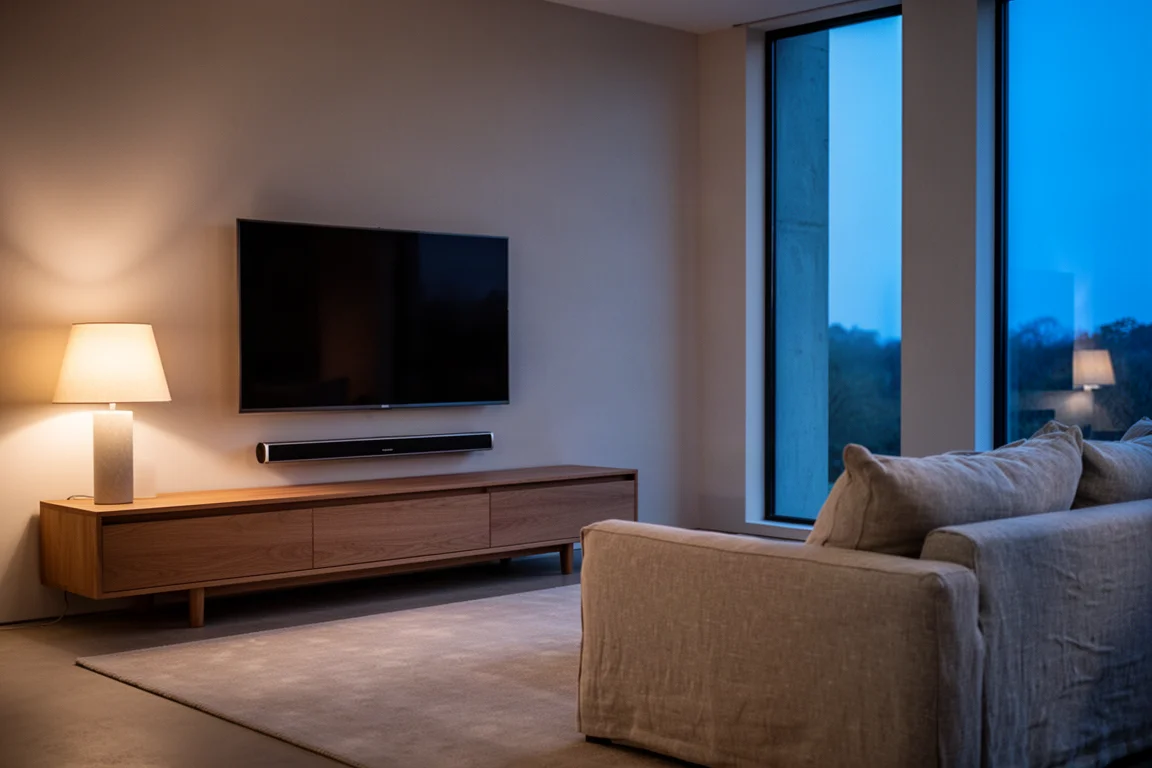
In the box you also get a wall mount template, screws, and plugs, including hardware suited to concrete walls. An onboard gyroscope detects whether the bar is wall-mounted or resting on a shelf, then reroutes which drivers act as the centre and front channels based on its orientation. That is a genuinely useful piece of flexibility, because placement does not have to come at the cost of sound quality.
The included remote is simple and easy to live with, with soft backlighting and only the essentials on the button layout. It is handy for switching sound modes and triggering custom actions without reaching for a phone.
Driver Technology and Amplification
Inside the bar is a full 5.1.2 channel layout powered by 12 Class D amplifiers with a combined output of up to 820 watts. Six Uni-Q MX drivers handle the front and height channels, two additional full-range drivers create surround effects, and four P185 low-frequency drivers in a force-cancelling configuration take care of the low end.
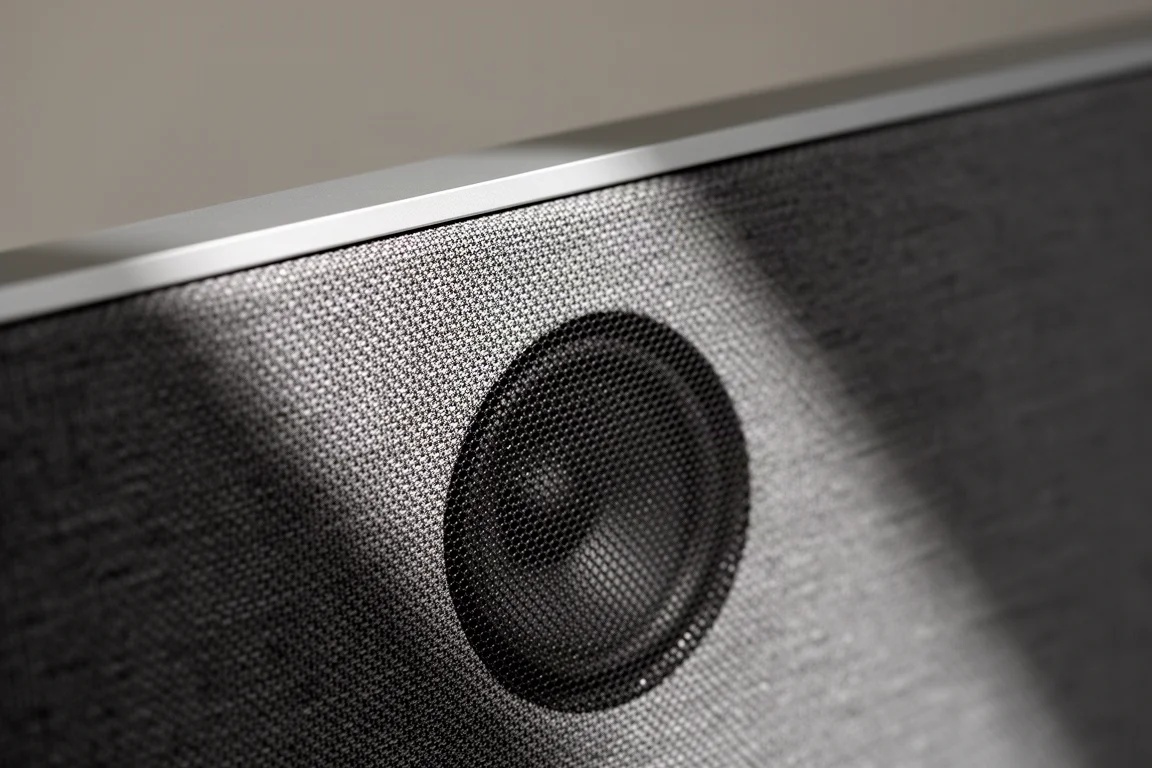
The Uni-Q MX array is a miniaturised version of KEF’s concentric driver design, reworked to fit the limited space inside a soundbar. It preserves the wide dispersion and precise imaging the brand is known for, so clarity and detail hold up across the room instead of collapsing outside the centre seat.
The P185 racetrack woofers use a long, narrow shape that offers more surface area than a conventional circular driver, which translates into deeper, more powerful bass without a bulky enclosure. KEF also applies VECO, or velocity controlled technology, adapted from the KC62 subwoofer. Real-time motion sensing and a feedback loop reduce distortion and power compression, described as a 28 dB reduction in distortion, or roughly 99.8 percent accuracy. That level of control is rare in a soundbar, and it gives the XIO a low end that stays clean and composed.
Coordinating all of it is KEF’s Music Integrity Engine for Cinema, a proprietary DSP suite handling spatial processing and virtualisation, adaptive EQ, digital crossovers, and dynamic correction. It keeps timing, phase alignment, and output consistent across every driver, which is what makes the resulting sound stage feel cohesive rather than assembled.
Streaming, App Control, and Room Calibration
The XIO is designed to double as a music system, and switching from a film to a playlist is straightforward. KEF’s W2 wireless platform adds high-resolution streaming alongside Bluetooth 5.3, with support for Spotify Connect, Tidal, Qobuz, Amazon Music, Apple AirPlay, Google Cast, and UPnP. Network streaming is supported up to 384 kHz.
Day-to-day control runs through the KEF Connect app, the included remote, or the capacitive touch panel. The app is clean and clearly laid out, offering default and expert EQ modes plus presets such as dialog mode for vocal clarity and night mode for late viewing.
Intelligent placement technology analyses the bar’s surroundings and calibrates the sound automatically using the built-in calibrated microphones. The process takes about 45 seconds of playing sound, and it is worth doing. Calibration made a noticeable difference in unusually shaped rooms, and because it relies on the bar’s own microphones there is no phone waving involved. It is not a fix for every acoustic issue, so the room itself still deserves some thought.
How the KEF XIO Performs With Movies and Music
Dialogue is clear and locked to the screen, which matters in films where conversation sits underneath intense action. The centre Uni-Q MX driver keeps voices anchored, and the mid-range carries the natural, fleshed-out quality KEF is known for rather than a hollow or artificially boosted tone.
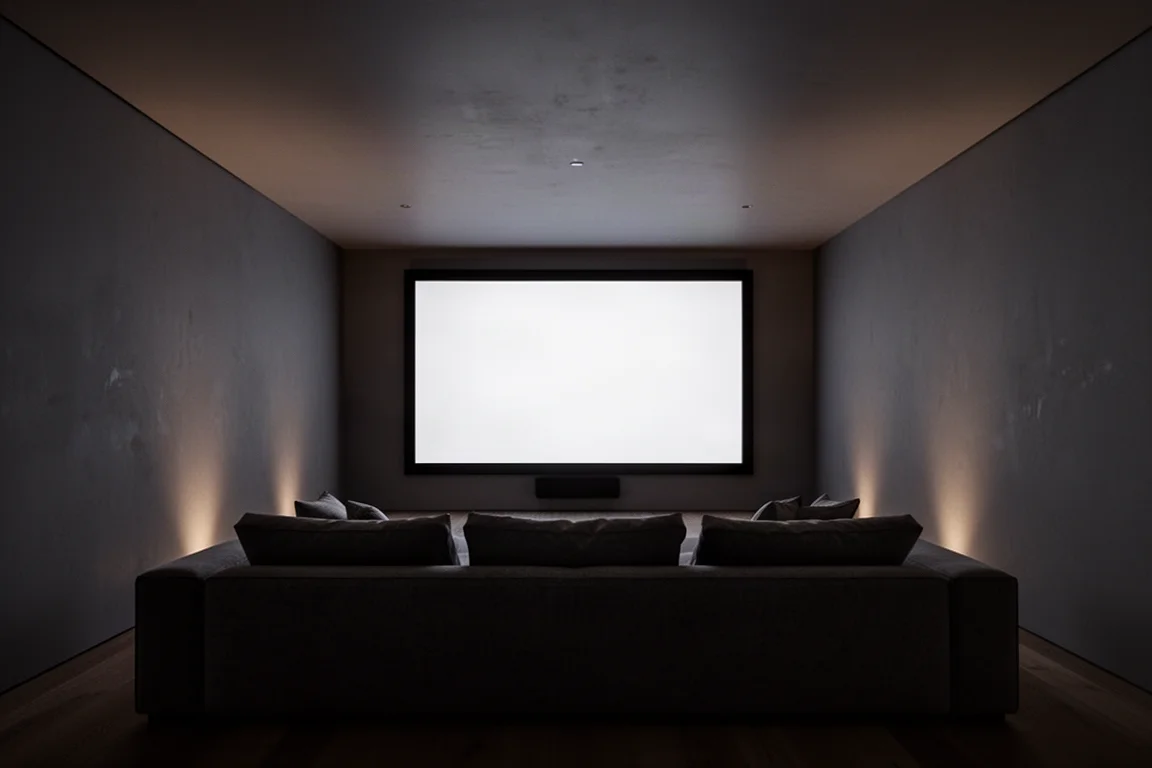
Effects pan smoothly across the front and surround channels, and the spatial placement is convincing even without rear speakers. Height effects from the upfiring drivers are well handled in Dolby Atmos material, adding a real sense of vertical space without the bright, hazy artefacts some bars produce. To get that effect, a flat ceiling roughly 8 to 12 feet high with nothing blocking the drivers gives the best result.
Bass is deep, tight, and well integrated. It will not rattle the walls the way a large dedicated subwoofer can, but it fills a medium or even fairly large room without sounding strained, and the dual P185 drivers keep the low end articulate rather than bloated.
Adding a KEF Subwoofer: The KC62 Pairing
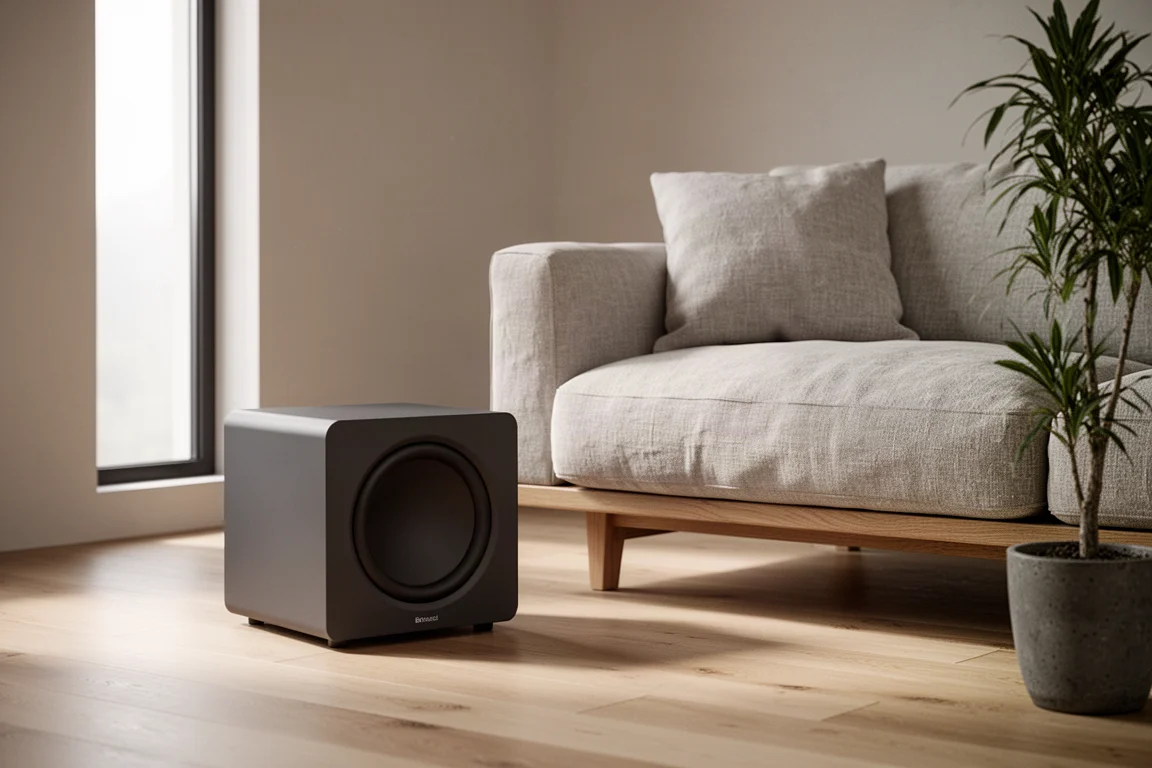
The XIO can drive a subwoofer over a wired connection or wirelessly through a compatible KEF wireless device. The app includes default settings for each KEF subwoofer model, and you can also adjust level and blend yourself if you prefer more weight during action films.
Adding a subwoofer takes the system to another level. Paired with the KEF KC62, the bar hands off the deepest bass and can concentrate on the mid-range and treble, which brings out extra clarity in dialogue, instruments, and ambient effects. Explosions land harder, music gains punch and depth, and the whole presentation becomes more dynamic and cinematic. Stepping up to a larger KEF subwoofer goes further still, but the KC62 is a natural match where floor space matters.
Things to Consider Before Buying
The XIO is not the cheapest option in its category, and it is not intended for listeners who simply want a louder television. It is built for people who value genuine hi-fi sound, cinematic immersion, and clean aesthetics in a single package.
Height effects depend on your ceiling. A flat, unobstructed surface roughly 8 to 12 feet high is what lets the upfiring drivers bounce sound back down and create the overhead impression.
Calibration helps, but it is not a substitute for thinking about the room. Placement, hard surfaces, and furniture all still shape the final result.
Buying Advice
On its own, the XIO is a complete and coherent system. It fills a medium or fairly large room without an external subwoofer, and for many rooms that is already enough.
If your budget allows, adding a KEF subwoofer is the single biggest upgrade available. The KC62 is a strong pairing, and a larger KEF subwoofer delivers more again. The app makes setup straightforward with model-specific defaults, and you can fine-tune the blend afterwards to suit your own taste.
Whichever route you take, the XIO rewards a considered setup. Run the room calibration, give the height drivers a clear path to the ceiling, and spend a little time with the app’s EQ modes. The result is a system that sounds composed with music and genuinely immersive with film.
Conclusion
The KEF XIO brings real acoustic engineering into a single slim enclosure. Its Uni-Q MX array, VECO-controlled woofers, and Music Integrity Engine deliver clear dialogue, natural mid-range tone, and convincing spatial effects without rear speakers. Add a KEF subwoofer such as the KC62 and it becomes a noticeably more dynamic and cinematic system. For listeners who want hi-fi sound and immersive film audio in one clean package, the XIO is a serious contender.
Product link
View more details for KEF XIO
This product is mentioned in the review. Check the specifications, options, and compatibility before buying.
View more details for KEF XIOFurther reading
Related Reviews
Soundbars
Bang & Olufsen Premiere Review: A Compact Soundbar Built to Last
A close look at the Bang & Olufsen Premiere, a compact soundbar with deep bass for its size, automatic sound profiles, and a clear modular upgrade path.
Soundbars
Best Dolby Atmos Soundbars: Six Picks for Movies, Music, and Small Rooms
A practical roundup of six Dolby Atmos soundbars, from compact dialogue-focused bars to expandable systems and an all-in-one flagship.
Soundbars
Bluesound Pulse Cinema Review: A Music-First Soundbar With a Software Catch
A close look at the Bluesound Pulse Cinema, a 3.2.2 soundbar with a genuinely expressive midrange and natural tone, plus the app and expansion limits worth knowing before you buy.