Soundbars
KEF XIO Review: A Premium First Soundbar With Caveats
The KEF XIO is a well-built all-in-one Dolby Atmos soundbar with deep bass and flexible placement, but limited inputs, modest tuning flexibility, and unresolved CEC behavior shape who should buy it.
Introduction
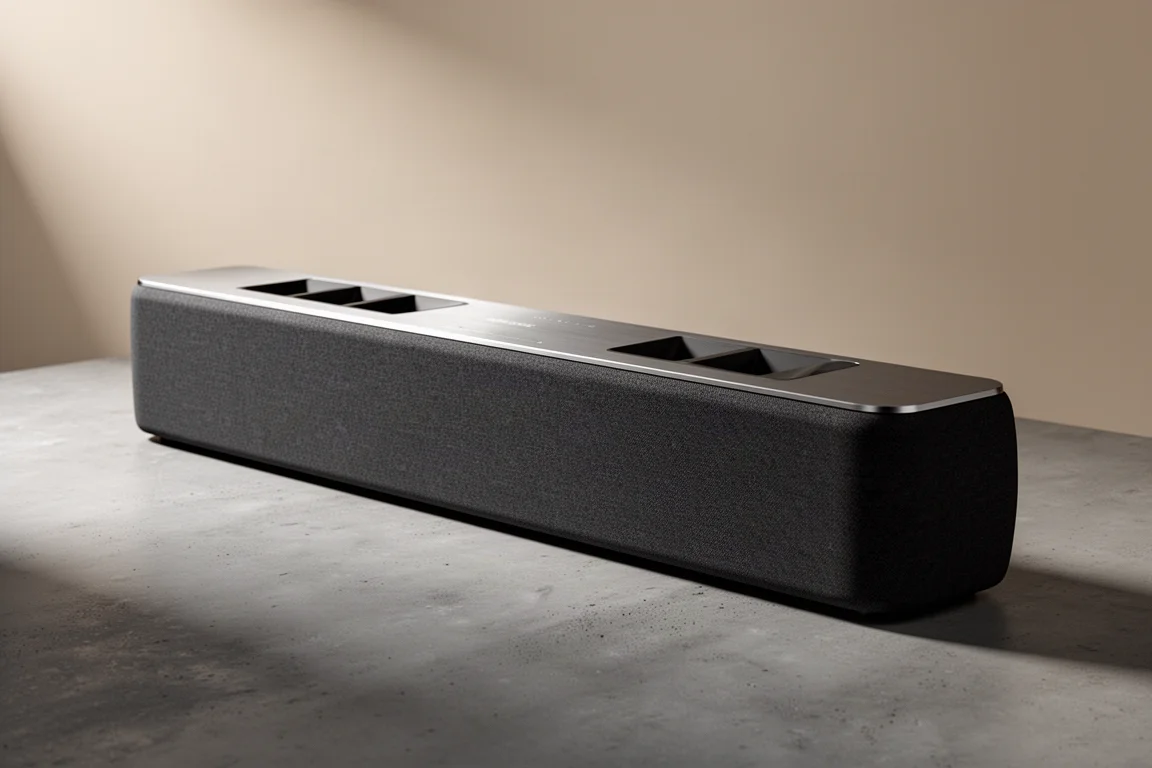
The KEF XIO is the company’s first soundbar, and it arrives with an ambitious brief: an all-in-one 5.1.2 Dolby Atmos design that collapses the multi-speaker, multi-wire world of home theater into a single box that comes close to plug and play. Twelve drivers do the work, and the bar can sit on a cabinet below a television or be mounted to a wall with the included hardware.
The price sets expectations high. At $2,500 for the bar alone, the XIO sits in premium territory alongside well-established competitors. Across two samples and two televisions, the bar proved well built and capable of genuine low-frequency output, while also showing stability and usability issues that are worth understanding before buying.
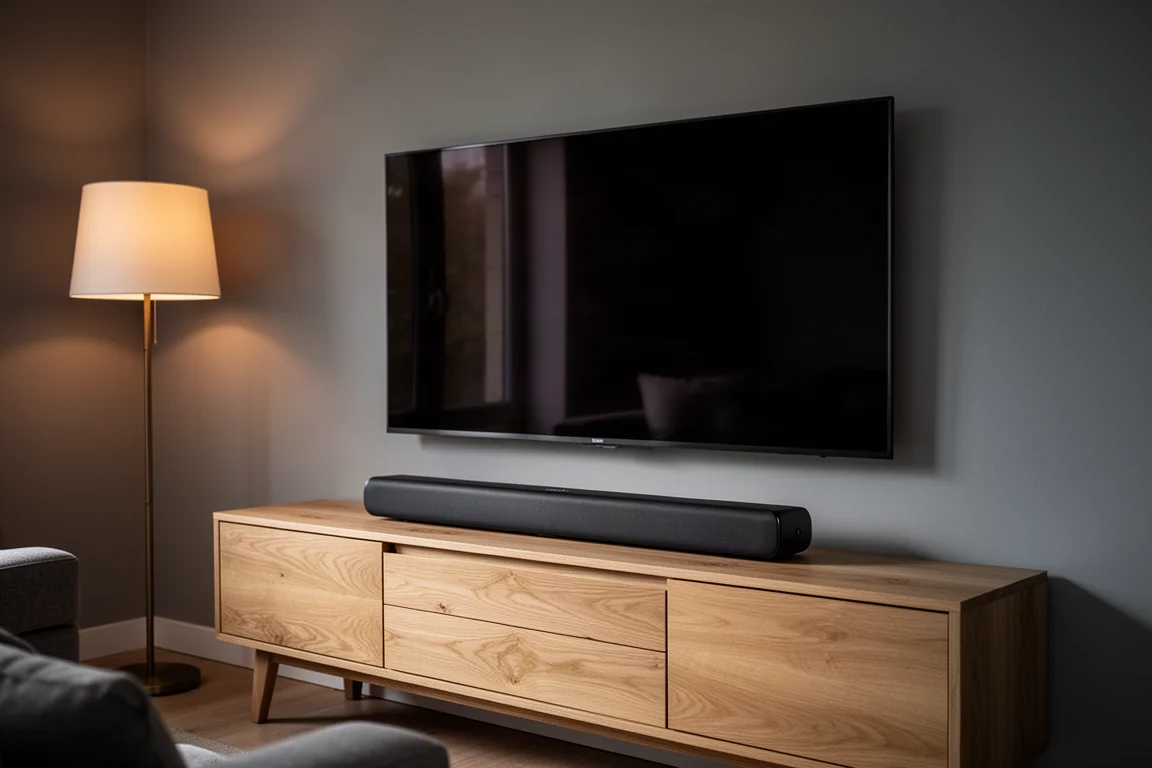
Placement flexibility is a real part of the pitch, and the XIO is designed to be equally at home on furniture or on a wall. What follows is a breakdown of where it performs well, where it falls short, and who is most likely to be happy with it.
Who This Soundbar Is For
The XIO makes the most sense for listeners who want one box under or beside the television, with the streaming conveniences of a modern wireless speaker built in. Wi-Fi, Bluetooth, AirPlay, and Google Cast are all present, so the bar can carry music duty as well as film duty without extra hardware. Buyers who already enjoy the KEF house sound will recognize it here, and the measured in-room response follows a familiar downward slope from bass to treble.
It is a less natural fit for anyone who wants to tune and tailor the sound. The adjustment options are deliberately limited, and the available sound profiles do not change the tuning much once volume differences are accounted for. Listeners who expect to shape the output to a room, the way full room correction systems do, are likely to feel constrained.
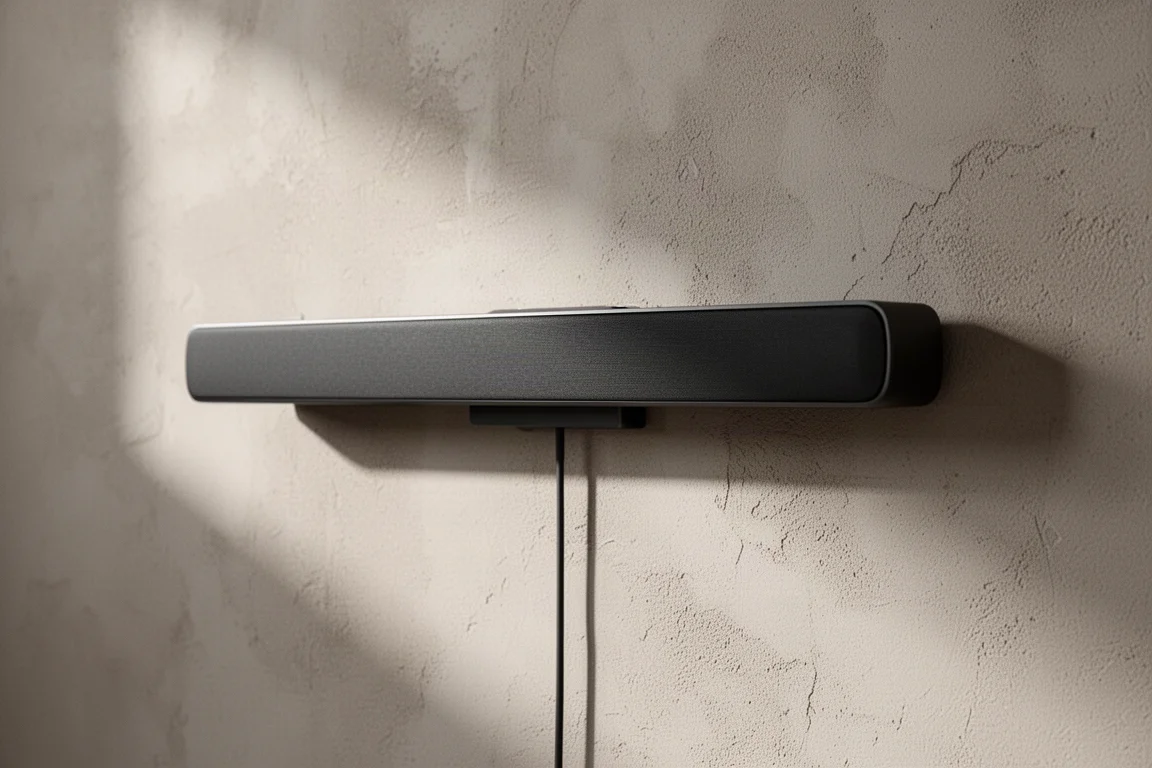
Wall-mount users are well served. The bar can be placed vertically on a wall, and in testing dialogue was slightly more consistent and intelligible in that orientation than when the bar sat horizontally on a cabinet.
Design, Placement, and Setup
Out of the box, the XIO feels substantial. It is heavy in hand and clearly well made, which is consistent with the brand’s reputation for build quality. In testing it sat below a 98-inch television and connected over HDMI.
Intelligent Placement Technology, or IPT, is the headline setup feature. It determines whether the bar has been placed horizontally on a flat surface or vertically on a wall, and it can be fine-tuned by emitting a simple pink-noise-like tone and adjusting performance accordingly. KEF describes the system as deliberately constrained rather than full room correction in the style of Audyssey or Dirac, on the view that many correction systems are too heavy-handed and overly processed. Internal data suggests IPT primarily adjusts the bar’s bass output on a global scale, based on placement relative to a cabinet or a wall. It does not appear to automatically adjust levels or fine-tune the twelve drivers individually to match a room.
Connections are simple but limited: a single HDMI eARC port, an optical audio input, a network input, an RCA-style subwoofer output, and a USB input labeled for service. Any additional HDMI sources, such as a streaming box, a 4K disc player, or a game console, must connect directly to the television and be switched using HDMI-CEC. Physical setup is straightforward, and getting the bar onto the home network through the app is quick and painless.
Connectivity and App Control
Wireless support compensates for the slim physical input list. The KEF Connect app provides access to most major streaming platforms, including Spotify, Tidal, and Qobuz, and the layout is clean and intuitive for streaming content.
The EQ section deserves attention because it is less flexible than it first appears. On first opening, the bar sits in its default setting, and no adjustments can be made in that state. To change anything, a new profile must be created, and there are two choices: Normal and Expert.
Normal lets you run IPT and choose from six sound profiles: default, music, movie, night, dialogue, and direct. One or two basic adjustments are also available. It is clearly aimed at novice users, and it limits what the bar can do, which makes it worth avoiding if you want the XIO to perform at its best. Expert adds a little more room to move: IPT calibration can be adjusted on a global scale, bass can be attenuated further through what KEF calls bass extension, treble trim offers plus or minus 3 dB, and subwoofer adjustment becomes finer for anyone connecting an external subwoofer. With a KEF subwoofer such as the KC92, crossover and level settings are preloaded in the app menu, which makes integration easy. Third-party subwoofers will work as well.
Volume control is a small but persistent annoyance. Changing the volume while doing anything else requires scrolling to a completely different page in the app.
Sound Performance and Measured Behavior
In-room, the XIO reaches 40 Hz and a little below on its own, and it follows a textbook downward slope from bass through to treble, with an observable spike in brilliance that gives the bar presence and a sensation of detail. Low bass output is fuller and chestier than much of the competition.
Measured across all six sound profiles, the responses were largely the same. Selecting movie or night does produce an audible change, but it is closer to a change in level than a change in tuning. Once volume is accounted for, the profiles measure very similarly, and engaging IPT made little measurable difference to the sound. Placement does change the measured response, but the profiles remain similar to one another in either orientation.
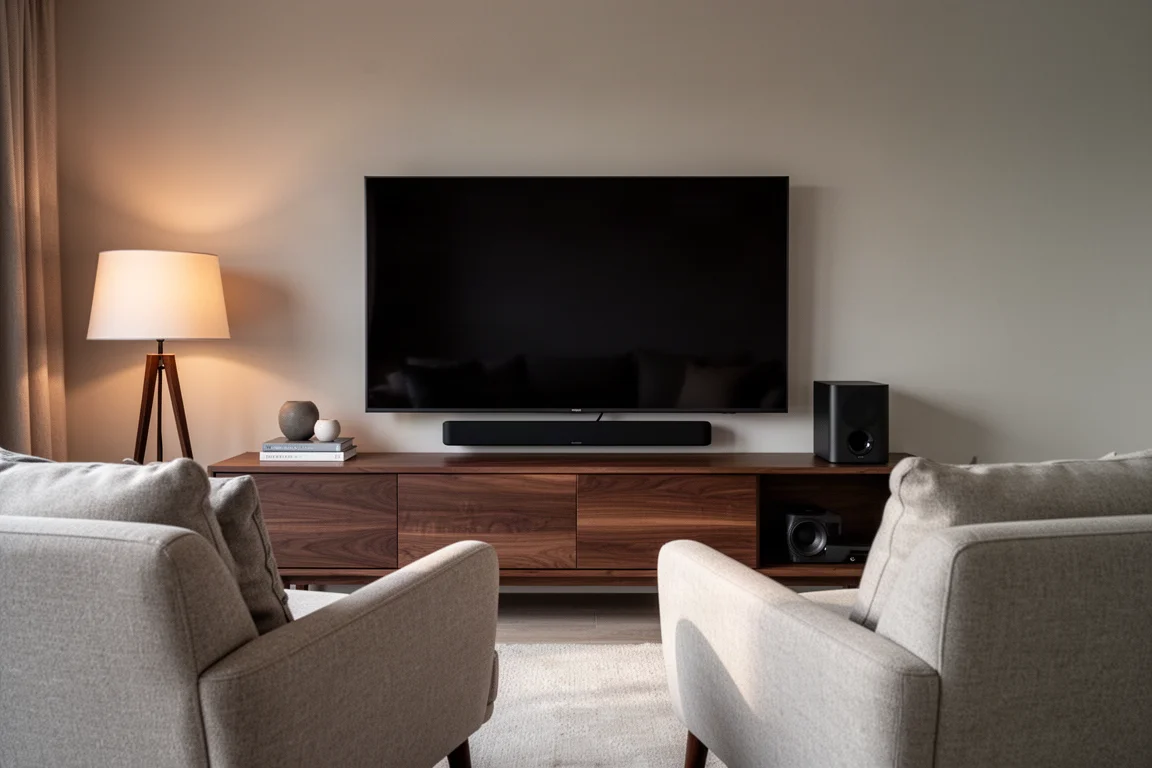
Pushing the volume up is where the bar struggles. At higher levels the sound becomes flat, compressed, and resonant rather than refined, and dialogue can suffer as a result. In one film with a raspy lead vocal, emphasis in the upper bass and lower midrange made much of the dialogue unintelligible, and the bar’s boxy character did the voice no favors. Adding a subwoofer helped noticeably, partly because the bar is tuned to cross over with KEF’s KC92 at around 70 Hz, which bypasses the more distorted lower frequencies. Cabinet vibrations and distortion were also measurable during bass sweeps between 30 and 100 Hz at 70 to 75 dB in room. The first sample was notably worse; a second sample still exhibited some vibration, but far less.
Dolby Atmos demonstration material shows the bar at its best, filling a room roughly 20 feet wide with 10-foot ceilings. With real-world content, the perceived horizontal and vertical height diminishes, and a true 360-degree immersive field does not materialize; the top and side-firing drivers could not deliver it. Competing bars produce a more three-dimensional and spacious presentation. Surround performance was essentially the same whether the bar was horizontal or vertical, though dialogue was slightly more consistent in the vertical position. For music, the XIO stays center-weighted even with virtualization enabled, which is narrower than several rivals.
Things to Consider Before Buying
The most significant issue is HDMI handshake and CEC behavior. With a third-party streamer such as an Apple TV in the signal chain, the bar took about 30 seconds to establish a stable connection to the television, and the picture flickered off and on each time the system powered up. The same problem appeared on a second television and persisted when other HDMI sources were added to the chain. Performance was better when the television’s internal operating system handled streaming, though the issues were still present, just less frequent.
KEF has acknowledged the behavior and says its software team is actively working on a firmware enhancement intended to streamline the interaction, optimize compatibility, and improve the overall experience. The company has also confirmed similar findings in its own testing, pointing to unexpected CEC traffic as a possible cause. Owners have reported comparable CEC frustration, so this does not appear to be an isolated case. Buyers who depend on an Apple TV may want to wait until the update arrives.
A few other points are worth weighing. The limited physical inputs mean source switching depends on the television and CEC rather than the bar. None of the bar’s physical controls or indicators are visible when it is placed horizontally. And a future firmware update that would allow existing wireless KEF speakers to serve as rear channels has been discussed, but nothing about its timing or its effect on performance is confirmed.
Buying Advice
The XIO costs $2,500 on its own. KEF also offers the bar bundled with the smaller KC62 subwoofer and a wireless adapter for a little over $4,300, and pairing the bar with a subwoofer does meaningfully improve the sound. Adding the KC92 used in testing brings the total to roughly $5,000.
At that level, the value question is unavoidable. Listeners who love the KEF house sound and want a single, well-built box with strong streaming support will find things to like, particularly once a subwoofer is connected. Those who prioritize maximum flexibility, a wide soundstage, or a fully immersive Atmos presentation are likely to find more satisfying options elsewhere. A pair of KEF’s powered speakers with HDMI connectivity and streaming convenience is also worth considering for roughly similar money if music matters more than the bar form factor.
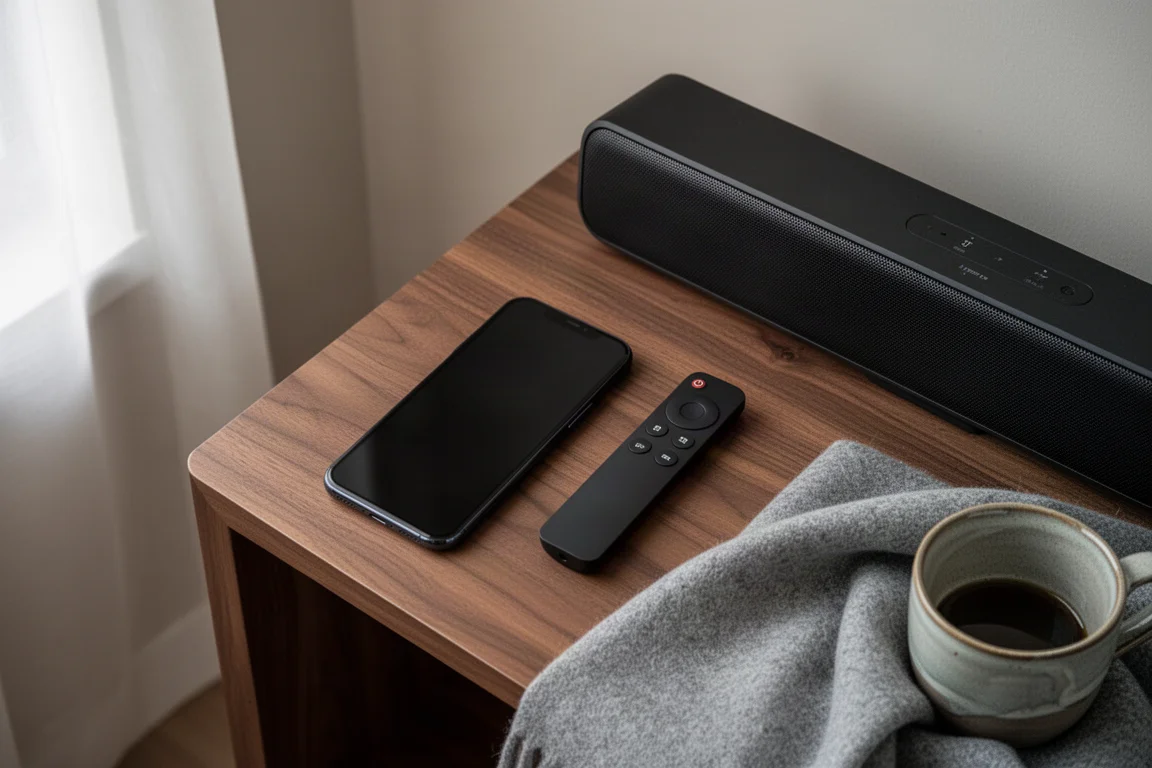
Anyone shopping the XIO today should treat the pending firmware work as part of the decision. If the handshake issues are resolved, the bar becomes a considerably easier recommendation for buyers who already like how KEF voices its products.
Conclusion
The KEF XIO is a well-made first soundbar with genuine low-frequency reach, flexible placement, and a clean app experience. It is also a premium product with average tuning flexibility, a short input list, and CEC behavior that the manufacturer is still working to resolve.
For listeners who value the KEF sound signature, want one box, and are willing to live with those caveats, it is a reasonable choice, especially with a subwoofer in the mix. For everyone else, comparing alternatives at this price before committing is the sensible move. As always, the only opinion that ultimately matters is your own ears.
Product link
View more details for KEF XIO
This product is mentioned in the review. Check the specifications, options, and compatibility before buying.
View more details for KEF XIOFurther reading
Related Reviews
Soundbars
Bang & Olufsen Premiere Review: A Compact Soundbar Built to Last
A close look at the Bang & Olufsen Premiere, a compact soundbar with deep bass for its size, automatic sound profiles, and a clear modular upgrade path.
Soundbars
Best Dolby Atmos Soundbars: Six Picks for Movies, Music, and Small Rooms
A practical roundup of six Dolby Atmos soundbars, from compact dialogue-focused bars to expandable systems and an all-in-one flagship.

Soundbars
Bluesound Pulse Cinema Review: A Music-First Soundbar With a Software Catch
A close look at the Bluesound Pulse Cinema, a 3.2.2 soundbar with a genuinely expressive midrange and natural tone, plus the app and expansion limits worth knowing before you buy.