Floorstanding Speakers
KEF Reference Model 203 Review: A 20-Year-Old Flagship That Still Holds Up
A close look at the four-way KEF Reference Model 203 floorstander, covering measured performance, placement behaviour and what to check before buying a used pair.
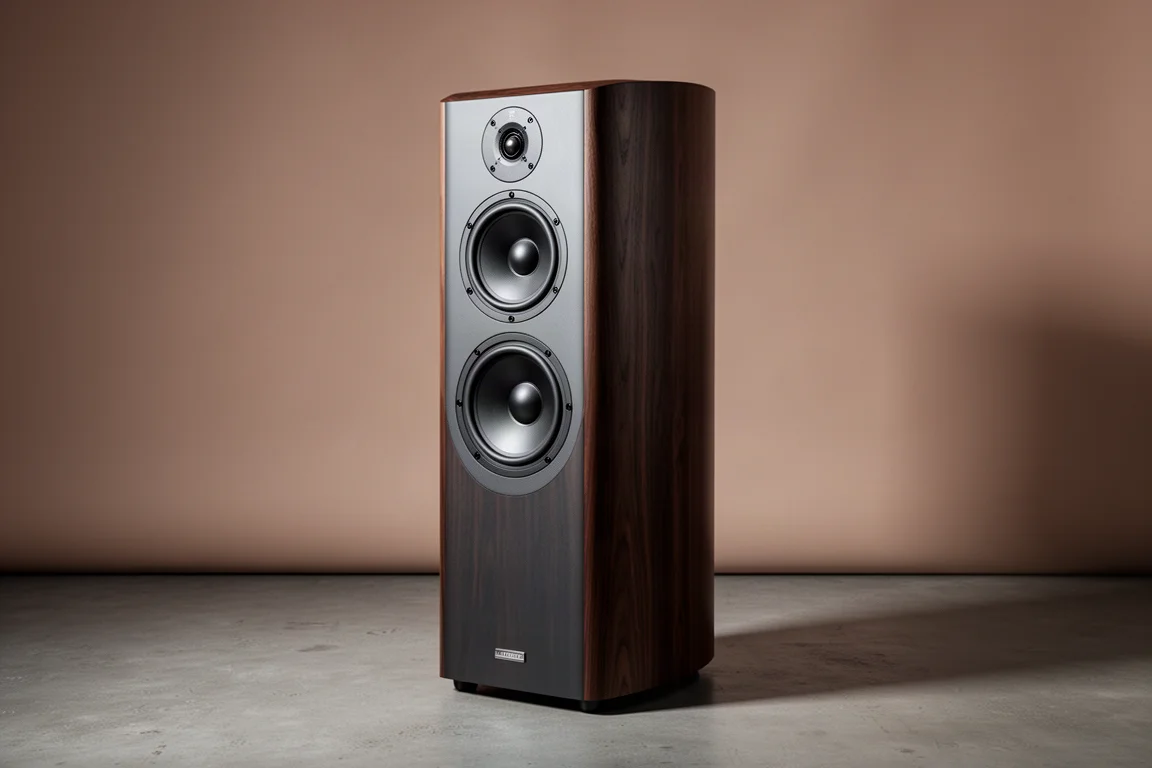
Introduction
The KEF Reference Model 203 is a four-way floorstanding loudspeaker that KEF produced between 2001 and 2006, with a retail price of roughly $5,000 at the time. It sits in an unusual position today. It is old enough to appear on the used market at a fraction of its original asking price, yet it was engineered around a driver layout that almost nobody builds anymore, including a dedicated super tweeter and a coaxial midrange and tweeter assembly.
This article covers how the speaker sounds, what the measurements show, and what to check before paying for a pair that is now at least two decades old.
Who This Speaker Is For
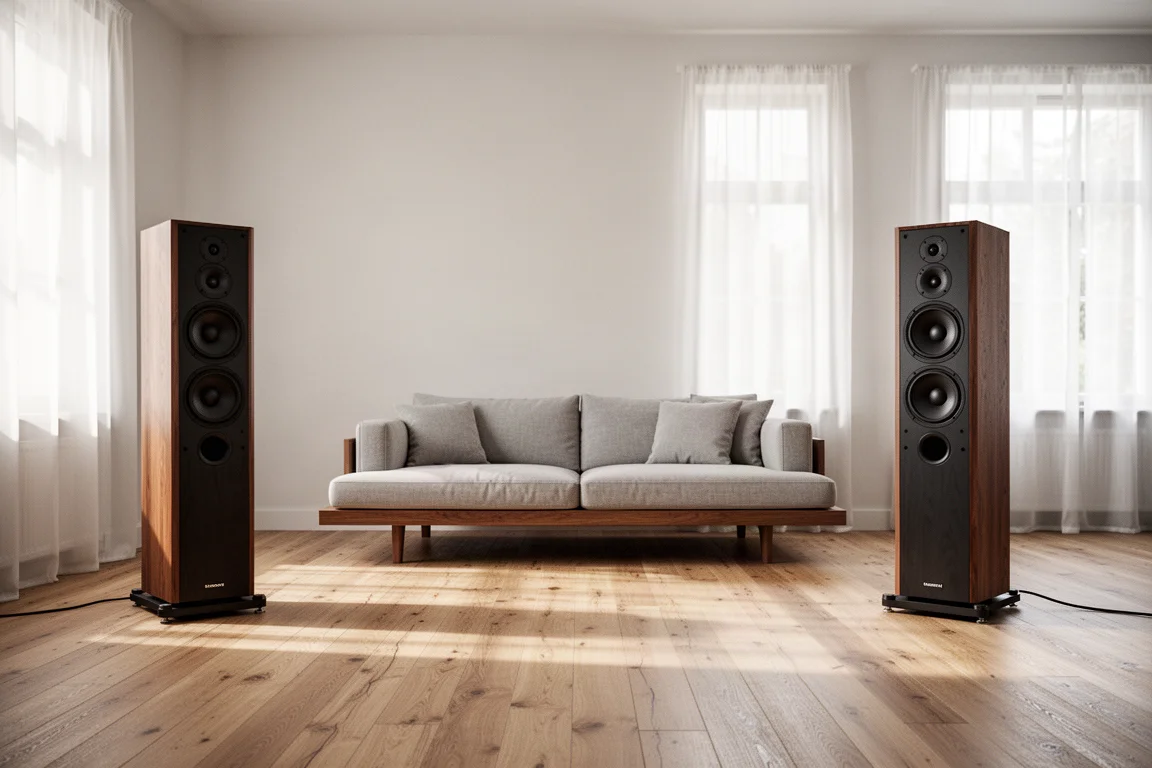
This is a speaker for listeners who want a neutral tonal balance and a wide listening window rather than a strong house flavour. Because the design radiates broadly, it works well in rooms where more than one seat matters, and it does not require a heavily treated space to stay coherent.
It also suits buyers who are comfortable shopping the second-hand market. The model has been out of production for years, so the realistic route to owning a pair is a local listing rather than a dealer.
The trade-off is that any surviving pair carries a history with it. That makes a careful in-person audition far more important here than it would be with a new speaker.
Sound Quality and Measurements
KEF specified the Model 203 at 89 dB sensitivity with a power handling range of 50 to 200 watts. Measurement of the pair covered here came in close to that, averaging 88 dB, with an F3 of 51 Hz and an F10 of 37 Hz. On-axis linearity stayed within roughly plus or minus 3 dB, a strong result for a cabinet of this vintage.
Horizontal radiation measured at around plus or minus 55 degrees, with vertical coverage around plus or minus 45 degrees. In practice that means the speaker holds its tonal character as you move off axis, which is what makes the wide soundstage believable rather than smeared. Imaging stayed tight, with no sense of the stage blurring into the room.
Distortion figures were solid as well. Harmonic distortion stayed below 1 percent above 80 Hz even at 96 dB, and multi-tone distortion sat around 1 percent, comfortably under a 3 percent threshold. Compression behaviour held up too, with the super tweeter the only element showing strain at the highest output levels and the highest frequencies.
The estimated in-room response is close to neutral, with a mild lift that can read as slightly forward on some material. Extended listening turned up nothing that flagged as a problem, which is a useful signal in itself for a speaker of this age.
Design and Build Quality
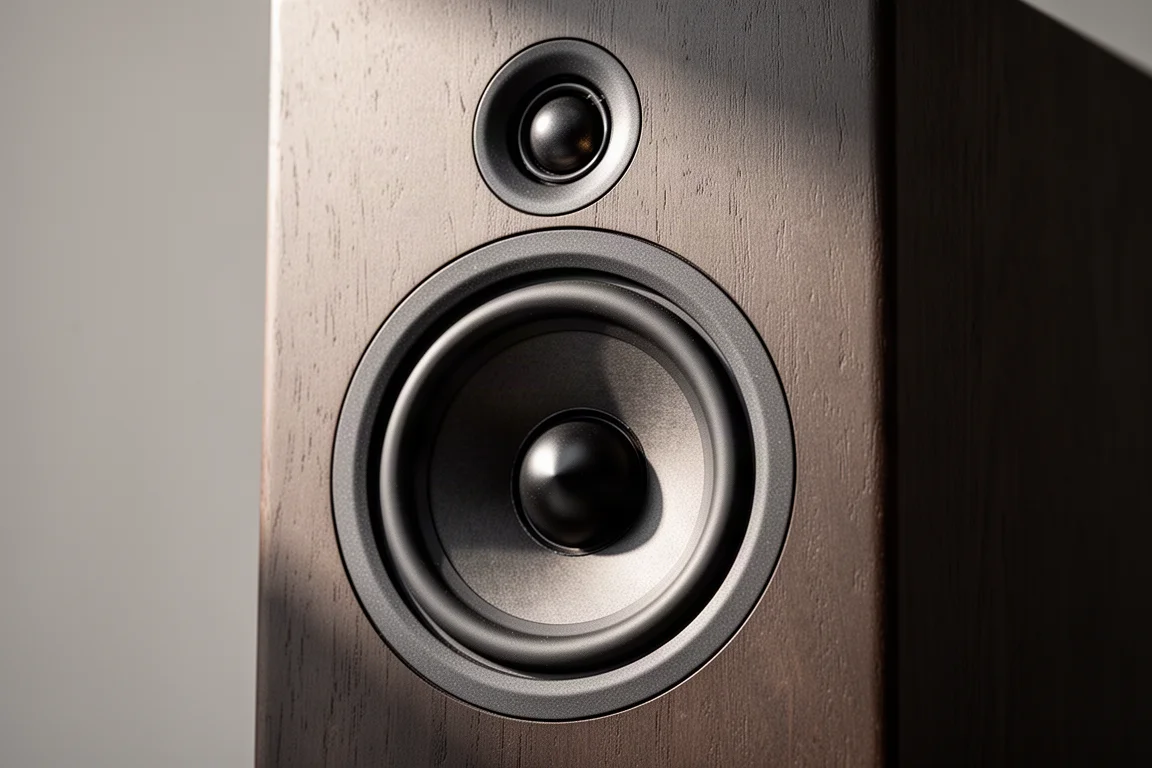
The cabinet stands about 42 inches tall and weighs roughly 58 pounds, so it is a substantial piece of furniture as well as a speaker. It is a ported design, and the driver complement is genuinely unusual. There are two 6.5 inch midwoofers, a coaxial unit that combines a 6.5 inch midrange with a 1 inch dome tweeter, and a small super tweeter of around three quarters of an inch at the top of the baffle.
The aesthetic is a real point of distinction. Current KEF designs lean toward flat baffles and rectangular boxes, while the Model 203 uses a rounded cabinet edge. Rounded edges reduce diffraction, and the wider radiation pattern of this design makes that shaping more relevant than it would be for a narrower waveguide. The result is a softer, more sculpted look than most modern floorstanders.
Things to Consider Before Buying
Age is the first consideration. Any surviving pair is at least twenty years old, and driver components can drift over that span. Matching between the two speakers in a used pair is not guaranteed, and a tower is difficult to measure precisely in a home setting, so a listening test matters more than a specification sheet.
Amplification is the second. Nominal impedance is 8 ohms, but the minimum specification is 3.2 ohms, and measurement showed the load dipping to about 3.6 ohms above 80 Hz with a minimum EPDR of 2.2. That points to an amplifier with genuine current delivery rather than a modest receiver.
Bass extension is the third. With an F3 around 50 Hz, the speaker reaches into the low 40 Hz region in a normal room with decent weight, which covers most music. Content with real 20 to 30 Hz rumble will still want a subwoofer.
There is also a vertical response artefact tied to the super tweeter placement, visible as a narrow band of breakup in the vertical contour data. It did not present as an audible issue, but it is part of this design’s measured signature.
Setup and Placement Notes
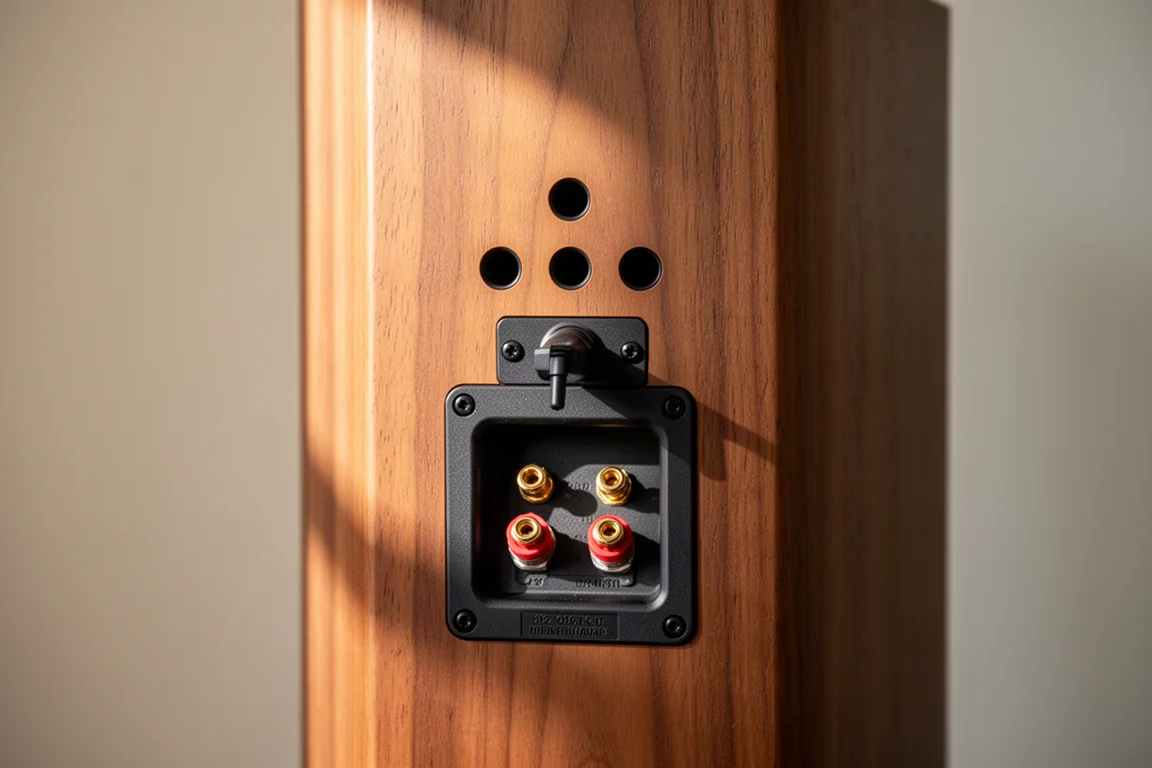
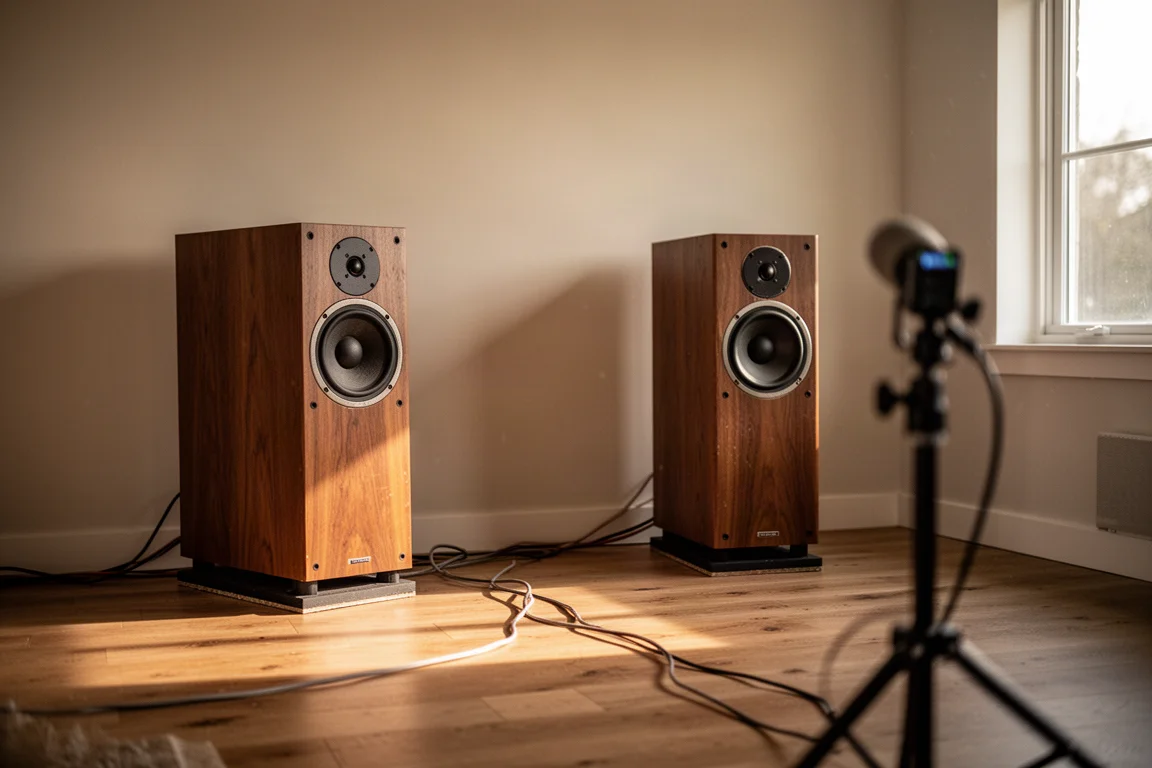
Positioning matters more than usual here because KEF built in a boundary compensation system. Three openings on the rear panel above the terminals let you choose a flat response, a reduced bass response, or a lifted bass response, simply by plugging or opening the holes.
The pair covered here sat roughly two to three feet off the rear wall, which produced the most balanced result. Pushing the speakers closer to the wall made the low end sound boomy, and the reduced bass setting corrected it. Moving them further into the room is where the lifted setting becomes useful.
Buying Advice
The realistic way to buy a KEF Reference Model 203 today is through local listings. When a pair turns up within budget, treat the audition as the deciding factor rather than the model name on the baffle.
Listen to both speakers, ideally on the same material, and check that they sound closely matched. Look over the cabinets, confirm the grilles are present, and ask about the history of the pair. A well kept example with its original accessories is a much safer proposition than one that has clearly been driven hard.
It also helps to know what you are listening for. The speaker should sound neutral and even, with a wide stage and stable imaging. If one side sounds duller or thinner than the other, or if you hear rattles at higher volumes, walk away.
Conclusion
The KEF Reference Model 203 is a genuinely interesting used buy. Its four-way layout, coaxial midrange, super tweeter and rounded cabinet place it in a different design tradition from most speakers sold today, and its measured performance holds up well: flat on-axis response, wide radiation, low distortion and usable bass into the low 40 Hz region.
It is not a speaker to buy blindly. The load is demanding, the drivers are old, and a subwoofer is still needed for the deepest content. But for a patient buyer with a capable amplifier and a local pair in good condition, it remains a compelling piece of audio engineering.
Product link
View more details for KEF Reference Model 203
This product is mentioned in the review. Check the specifications, options, and compatibility before buying.
View more details for KEF Reference Model 203Further reading
Related Reviews
Floorstanding Speakers
Acoustic Energy AE109 Mark II Review: A Refined Floorstander at £699
The Acoustic Energy AE109 Mark II is a slim, warm sounding floorstander that delivers clarity, midrange body and strong imaging in small to medium rooms.
Floorstanding Speakers
Acoustic Energy AE509 Review: A Slim Floorstander With Deep, Defined Bass
A practical look at the Acoustic Energy AE509, a slim floorstanding speaker with carbon fibre drivers, deep and well-defined bass, and an easy-going character that rewards careful system matching.
Floorstanding Speakers
Arendal 1528 Tower 8 Review: Reference Neutrality With Real Demands
A close look at the Arendal 1528 Tower 8, a nearly five-foot, 200-pound floorstander that rewards generous space, serious power, and high listening levels with reference-grade neutrality.