Floorstanding Speakers
KEF Reference 3 Meta Review: A Floorstanding Speaker Built for Transparency and Scale
A practical look at the KEF Reference 3 Meta floorstanding speaker: metamaterial driver technology, imaging strengths, room requirements, and where it sits in the Reference range.
Introduction
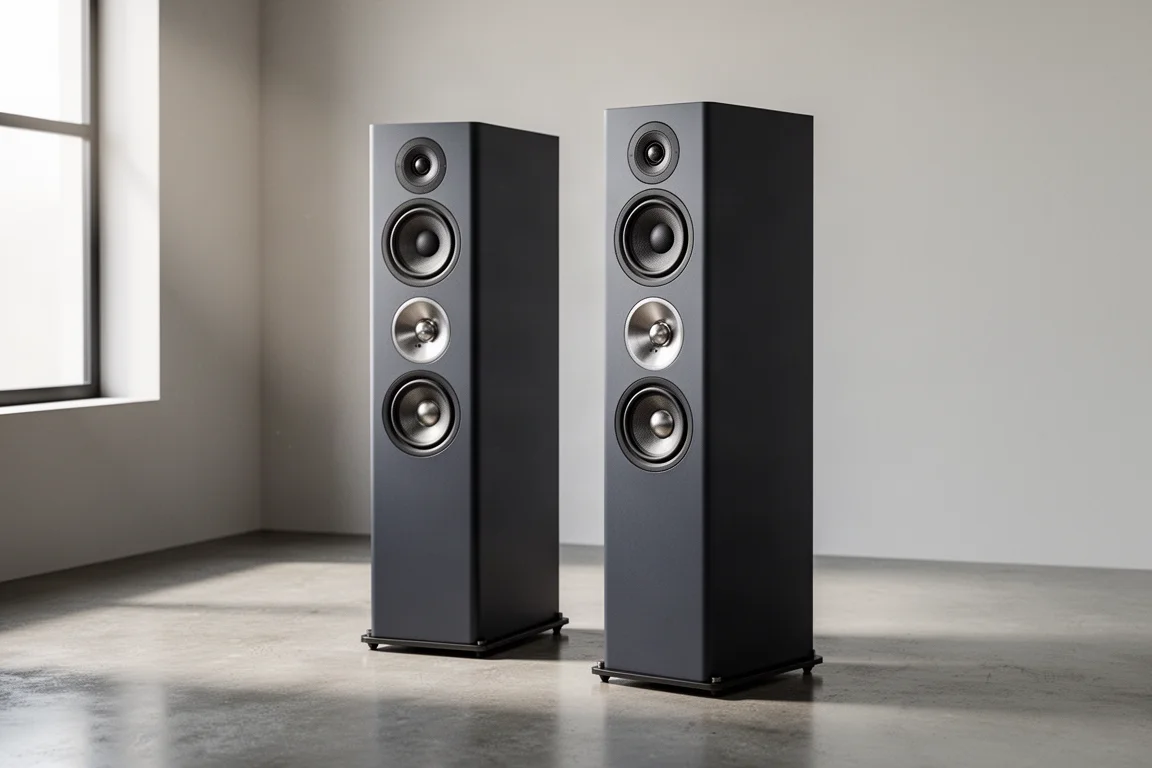
The KEF Reference 3 Meta is a large floorstanding loudspeaker from the top of KEF’s Reference range, and it carries the metamaterial absorption technology the company introduced with the LS50 Meta. It is designed and built in the UK, and two details set it apart before a single note plays.
Each pair is assembled from start to finish by one person. Once complete, that pair is measured against a laboratory reference and must match it within 0.5 dB across its entire range before it can be packed and shipped. There is also no standing inventory: every pair is built to order, so when a customer buys one, that pair is made for them.
At $15,000 a pair it is a significant purchase. This guide covers what the Reference 3 Meta does exceptionally well, the room and system requirements it places on an owner, and how it fits alongside the rest of the Reference line.
Who This Speaker Is For
The Reference 3 Meta is built for listeners who have a large room and a system of comparable quality. It is a full-range floorstander that thrives on good electronics, and it is comfortable at both ends of the volume scale. It sounds convincing when played loudly, and it also holds together at the low levels required for late-night listening.
Room size matters more here than with most speakers. KEF’s own range offers a sensible alternative for smaller spaces: the stand-mount Reference 1 Meta at $9,000 a pair. For very large rooms where high output is the priority, the flagship Reference 5 Meta at $22,000 a pair is the next step up. Listeners working with a tighter budget can look at the R series, which includes towers, a stand-mount model, and a centre channel at a considerably lower price.
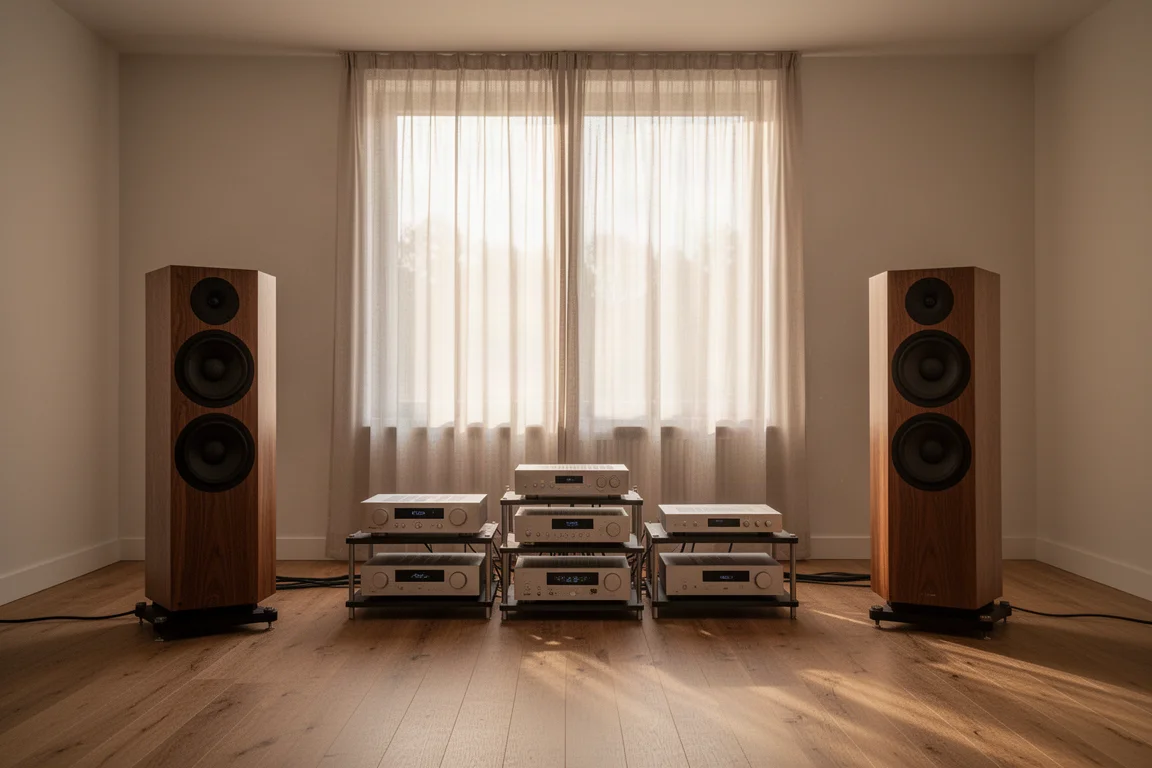
What the Reference 3 Meta offers in return for its size and price is a combination that is difficult to find at any level: high transparency, a large and precisely focused image, and dynamic control that does not fall apart when the music becomes demanding.
Design and Build Quality
The cabinet is engineered around rigidity. The front baffle is attached to the cabinet with eight bolts that run from the baffle all the way to the back of the speaker, where they are tightened to compress the entire structure. The result is a stiffer, more inert enclosure that resists the energy the drivers produce.
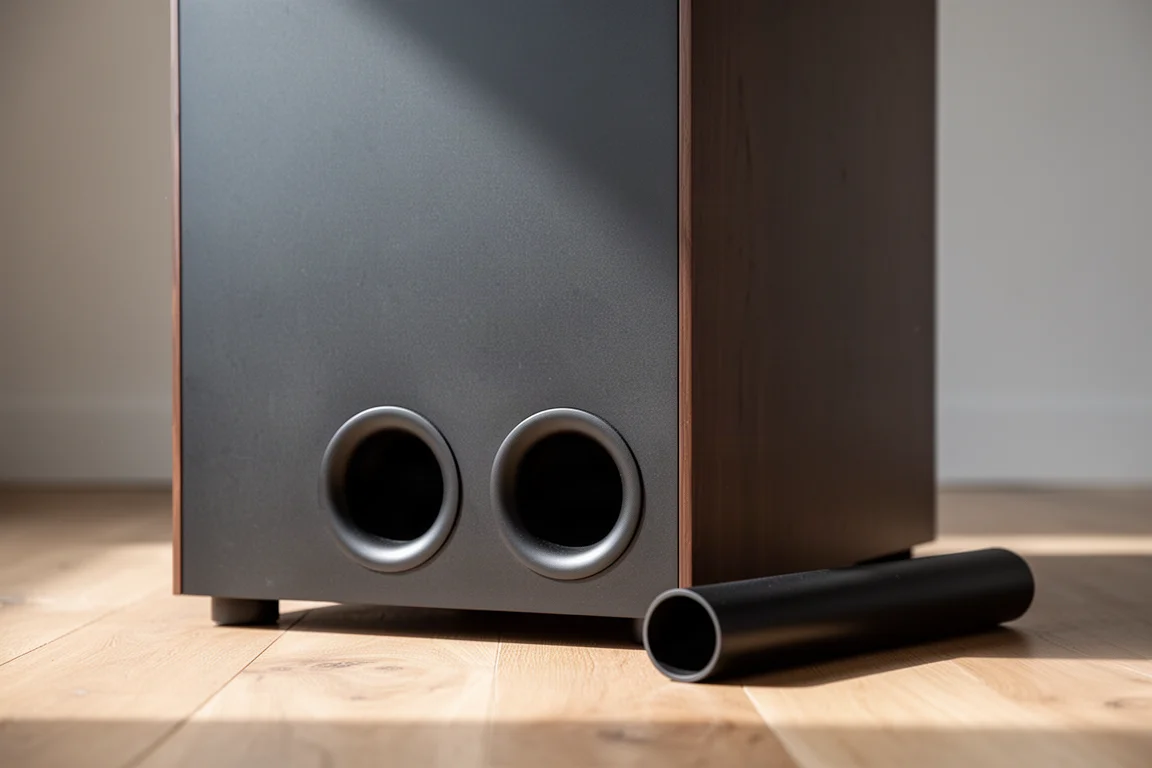
The two 6.5-inch aluminium woofers are each housed in their own separate compartment, so they do not share the internal volume of the cabinet. That separation keeps each woofer working in its own defined space rather than interacting with the other. Two bass ports sit on the rear panel.
Meta Technology and the Uni-Q Driver
The Reference 3 Meta uses the 12th generation of KEF’s Uni-Q point source driver, a concentric arrangement that places the tweeter at the acoustic centre of the midrange unit. That geometry is central to the speaker’s imaging behaviour, because the two drivers radiate from effectively the same point.
Behind the driver sits the Meta disc, a two-layer absorber with 30 channels, each tuned to a specific frequency band. It absorbs the back wave of the tweeter inside the Uni-Q driver, working from 620 Hz out to 40 kHz. Rather than letting that energy reflect back through the driver and blur the output, the disc removes it, and the audible result is greater clarity. The driver itself sits in what KEF calls a shadow flare, a shaped surround that reduces diffraction off the front baffle.
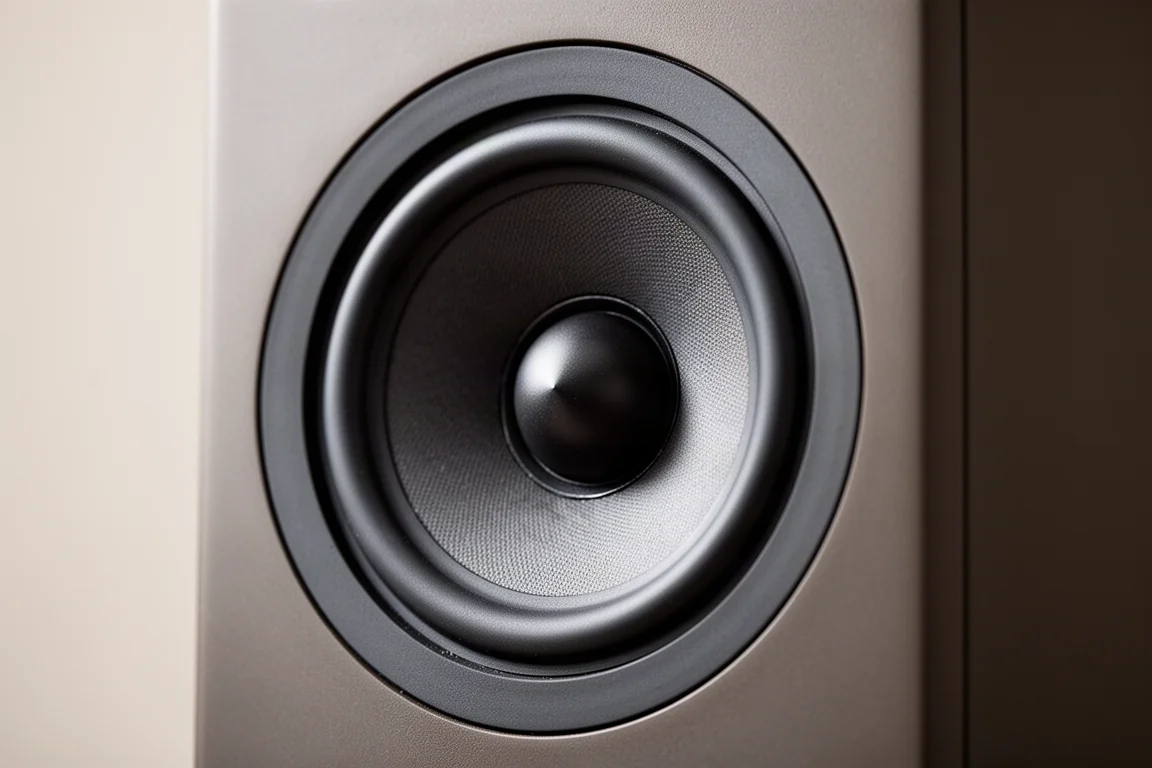
Together these details explain much of what the speaker does well. The openness and definition that listeners notice first come from controlling energy inside the cabinet and around the driver, not simply from adding output.
Sound Quality and Imaging
Imaging is the headline. The presentation is big and spacious, with instruments placed precisely and a strong sense of the space between them. On dense productions, including Peggy Lee’s “Is That All There Is”, the mix stays wide open instead of collapsing into a wall of sound. On Can’s “Future Days”, recorded in 1973 but sounding far more contemporary, the separation between the percussion and the rest of the band is unusually clear.
Tone and nuance are equally strong. Vocal performances carry emotional weight that lesser speakers smooth over, and Aretha Franklin’s phrasing reveals both soul and sadness. Solo piano, such as an Eric Satie recording, has a transient response and an instrument tone that sounds correct rather than merely pleasant.
The treble deserves particular mention. The Uni-Q tweeter is refined and clear without drawing attention to itself, and it does not tip into brightness when the speakers are driven by capable electronics. Placement matters here: firing straight ahead, with no toe-in toward the listening position, produces an open and pure result. Angling them inward works against that quality.
Dynamics are excellent for a speaker of this type. Even alongside a much larger horn-loaded floorstander with a 15-inch woofer, such as the Klipsch Cornwall IV, the Reference 3 Meta delivers more low-frequency weight and a noticeably better integrated sound, where the larger speaker can seem to present its woofer, midrange, and tweeter as separate elements. The horn design has the edge only when both are pushed to extreme levels, and even then the Reference 3 Meta is far from short of impact.
Resolution is high, but it is not punishing. Poor recordings remain listenable rather than becoming uncomfortable, which is unusual for a speaker this revealing.
Living With the Reference 3 Meta
Setup is more flexible than the size and price might suggest, thanks to the port tuning system. Both rear ports have removable covers, and each speaker ships with two sets of port tubes, one long and one short. Swapping them changes the low-frequency extension and the roll-off of the speaker, so an owner can choose the version that suits the room rather than accepting a single fixed tuning.
In practice the long tubes produced deeper bass, and bass that was also faster, tighter, and better integrated with the Uni-Q driver. The change takes only a couple of minutes, which makes experimentation worthwhile rather than tedious.
Placement is otherwise straightforward once the room is right: a large space, a sensible distance from the walls, and the speakers aimed straight down the room.
Things to Consider Before Buying
Room size is the first consideration. This is a speaker that needs space to breathe, and a small room will work against it. Listeners in small or even medium-sized rooms should weigh the stand-mount Reference 1 Meta instead.
Price is the second. At $15,000 a pair, the Reference 3 Meta sits in a bracket where expectations run high, and it meets them, but it is still a substantial outlay. The R series offers a more affordable route into the same broad tonal philosophy.
Third, the speaker is revealing enough to expose weaknesses elsewhere in the chain. It benefits from quality amplification, sources, and cables, and a modest system will limit what it can do. In the same way, the room itself is part of the equation, and a large, reasonably treated space will let the speaker show what it is capable of.
Finally, every pair is built to order rather than drawn from existing stock, so this is not a product that sits on a shelf waiting to be shipped.
Buying Advice
For a listener with a large room, a capable system, and a budget in this range, the Reference 3 Meta is easy to recommend. It holds its own against speakers costing considerably more, including well-known high-end designs such as the Wilson Sabrina, and it does so without demanding unusual placement or exotic electronics.
If the room is small or medium, the Reference 1 Meta is the smarter choice at $9,000 a pair. If the room is very large and high output is the priority, the Reference 5 Meta at $22,000 a pair is the logical step up. Anyone shopping below the Reference line should start with the R series, which covers towers, a stand-mount model, and a centre channel.
Conclusion
The KEF Reference 3 Meta is a special speaker. Its hand-built production process, its measured matching against a laboratory reference, and its metamaterial absorption technology all point in the same direction: clarity, integration, and a large, precisely focused image. It plays loud without strain and quiet without losing detail, and it stays composed with recordings that are less than perfect.
The caveats are real but simple. It needs a big room, it asks for electronics of similar quality, and it costs $15,000 a pair. For listeners who can meet those conditions, it delivers a level of transparency, imaging, and dynamic control that is rare at any price.
Product link
View more details for KEF Reference 3 Meta
This product is mentioned in the review. Check the specifications, options, and compatibility before buying.
View more details for KEF Reference 3 MetaFurther reading
Related Reviews
Floorstanding Speakers
Acoustic Energy AE109 Mark II Review: A Refined Floorstander at £699
The Acoustic Energy AE109 Mark II is a slim, warm sounding floorstander that delivers clarity, midrange body and strong imaging in small to medium rooms.
Floorstanding Speakers
Acoustic Energy AE509 Review: A Slim Floorstander With Deep, Defined Bass
A practical look at the Acoustic Energy AE509, a slim floorstanding speaker with carbon fibre drivers, deep and well-defined bass, and an easy-going character that rewards careful system matching.
Floorstanding Speakers
Arendal 1528 Tower 8 Review: Reference Neutrality With Real Demands
A close look at the Arendal 1528 Tower 8, a nearly five-foot, 200-pound floorstander that rewards generous space, serious power, and high listening levels with reference-grade neutrality.