Floorstanding Speakers
KEF R11 Meta Review: Flagship Scale From the R Series Tower
A close look at the KEF R11 Meta, the flagship R Series tower, covering its 12th-generation Uni-Q driver, metamaterial loading, four 6.5-inch aluminum woofers, amplifier demands, and $7,000 a pair pricing.
Introduction
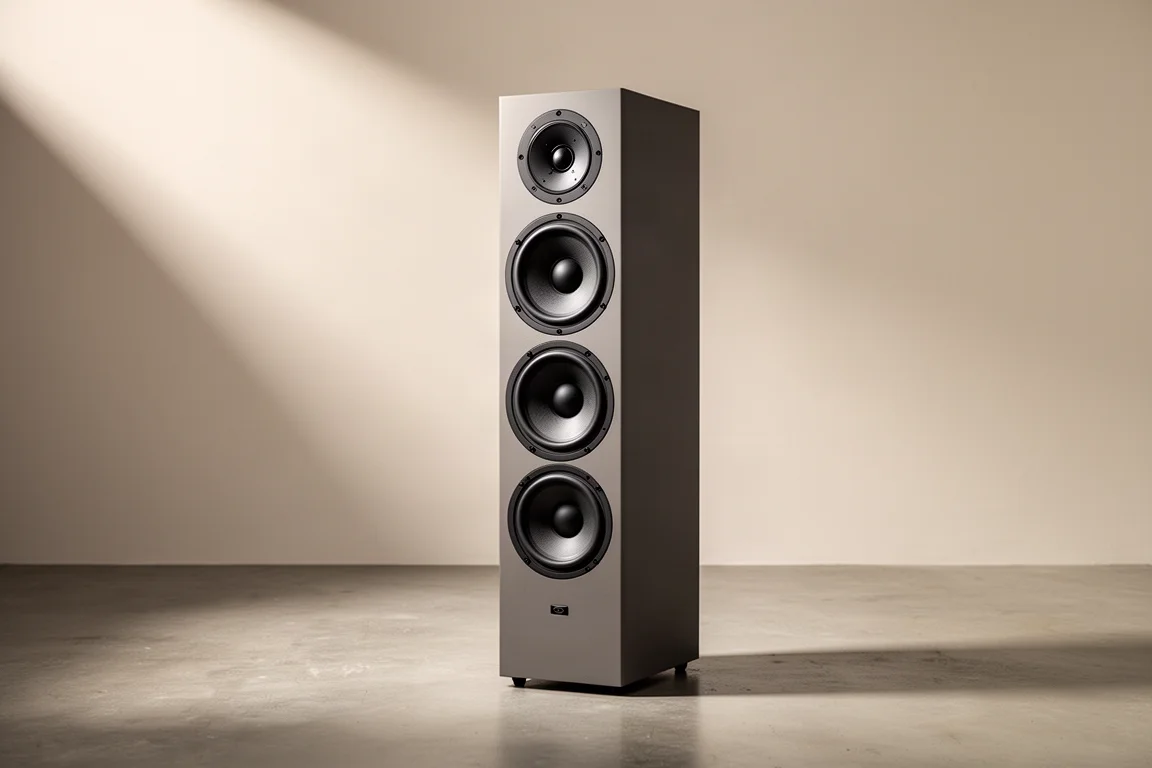
The KEF R11 Meta is the flagship tower in KEF’s R Series and the largest model in that family. At $7,000 a pair it sits firmly in premium territory, and the design brief behind it is straightforward: deliver the dynamics, scale, soundstage size, and bass extension that a genuinely large cabinet makes possible, while keeping the baffle narrow enough to live with in a normal room.
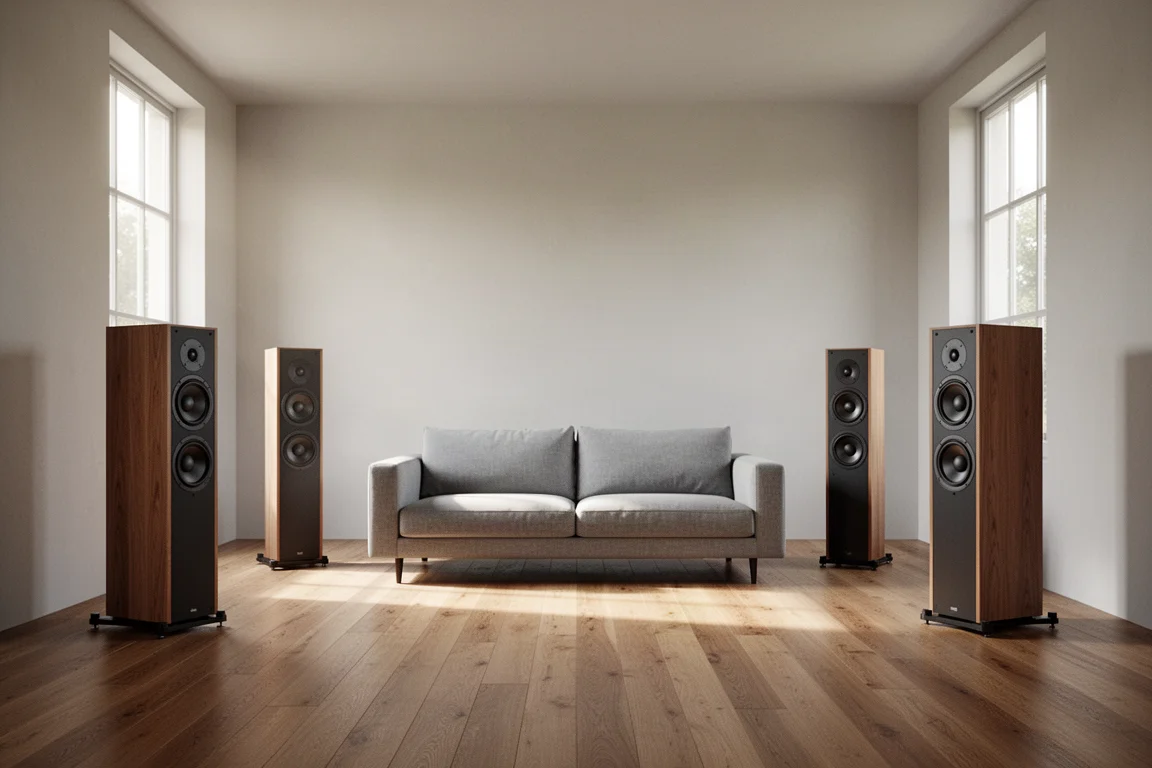
It is a three-way speaker built around KEF’s concentric Uni-Q driver and supported by four aluminum woofers, and it is the biggest and most capable model in the line. The sections below cover what is inside the cabinet, how it behaves in a real listening room, where it stands against other towers, and the trade-offs worth knowing before you buy.
Who the KEF R11 Meta Is For
Size matters here in a practical sense. The R11 Meta is for listeners with a larger room who want a full-scale presentation: the weight of a large ensemble, the physical punch of percussion, and a soundstage that extends well behind the speakers.
It is also a speaker for listeners who care about midrange presence. Vocals are one of its strongest arguments, and that quality carries across genres rather than showing up on a handful of recordings.
By contrast, a compact tower such as the Dynaudio Evoke 30 is considerably less expensive and better suited to small or just barely mid-size rooms. The R11 Meta is the opposite proposition. It sounds bigger and far more powerful, and it wants space around it to show what it can do.
Design and Technology Inside the R11 Meta
The 12th-Generation Uni-Q Driver
The R11 Meta is a three-way design, and two of those ways live inside a single concentric driver. KEF’s Uni-Q array pairs a 5-inch midrange cone with a 1-inch aluminum dome tweeter mounted at its acoustic center, and this is the 12th generation of that layout. Behind the tweeter sits a disc of metamaterial that absorbs the rearward wave the tweeter produces, largely nulling out the energy behind the dome so the listener hears the tweeter’s output with far less resonance and back-wave interference. It is a refined and effective approach, and it has been developed over several product generations.
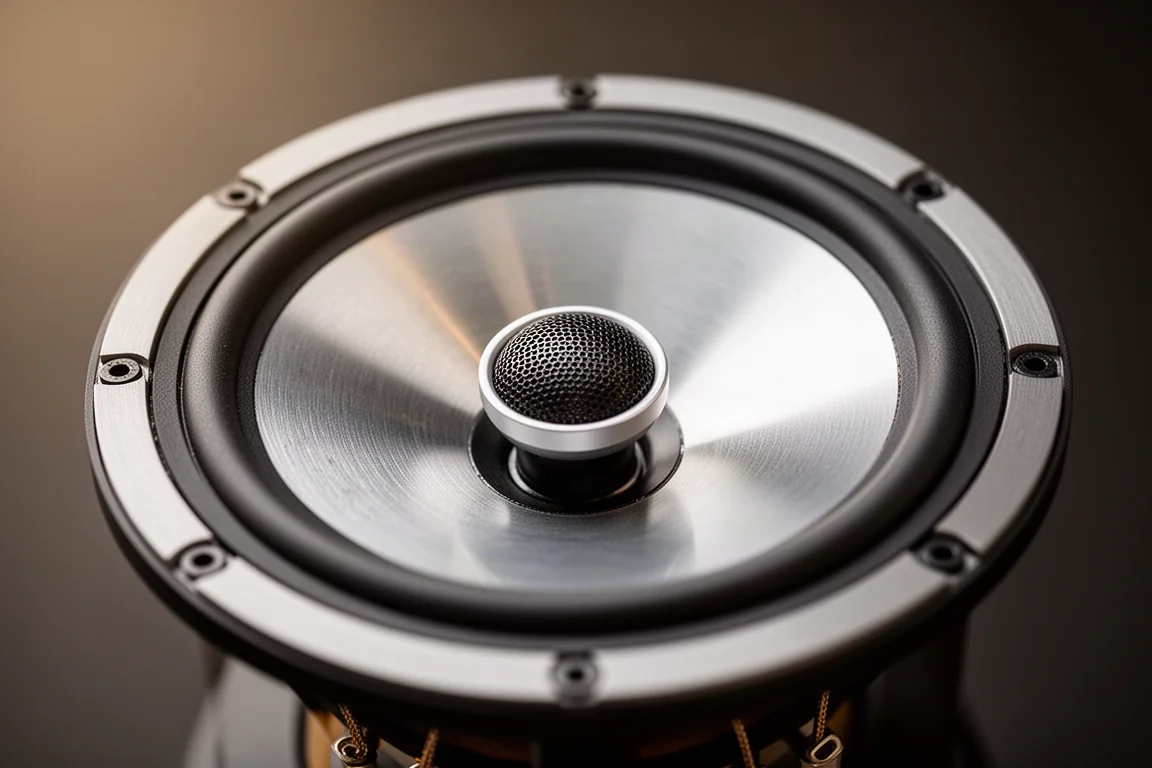
Material consistency runs through the whole speaker. The tweeter dome, the midrange cone, and the four woofers are all aluminum, which gives the design a coherent voice from top to bottom.
Four 6.5-Inch Aluminum Woofers and the Cabinet
Below the Uni-Q array, the R11 Meta uses four 6.5-inch aluminum woofers. A cutaway of the cabinet shows how much structure sits inside it: the Uni-Q driver occupies its own separate compartment, and the two pairs of 6.5-inch drivers are separated from each other as well. The enclosure is heavily braced and acoustically treated, which is part of why the speaker keeps such a firm grip on its energy.
Ports, Bi-Wiring, and Finishes
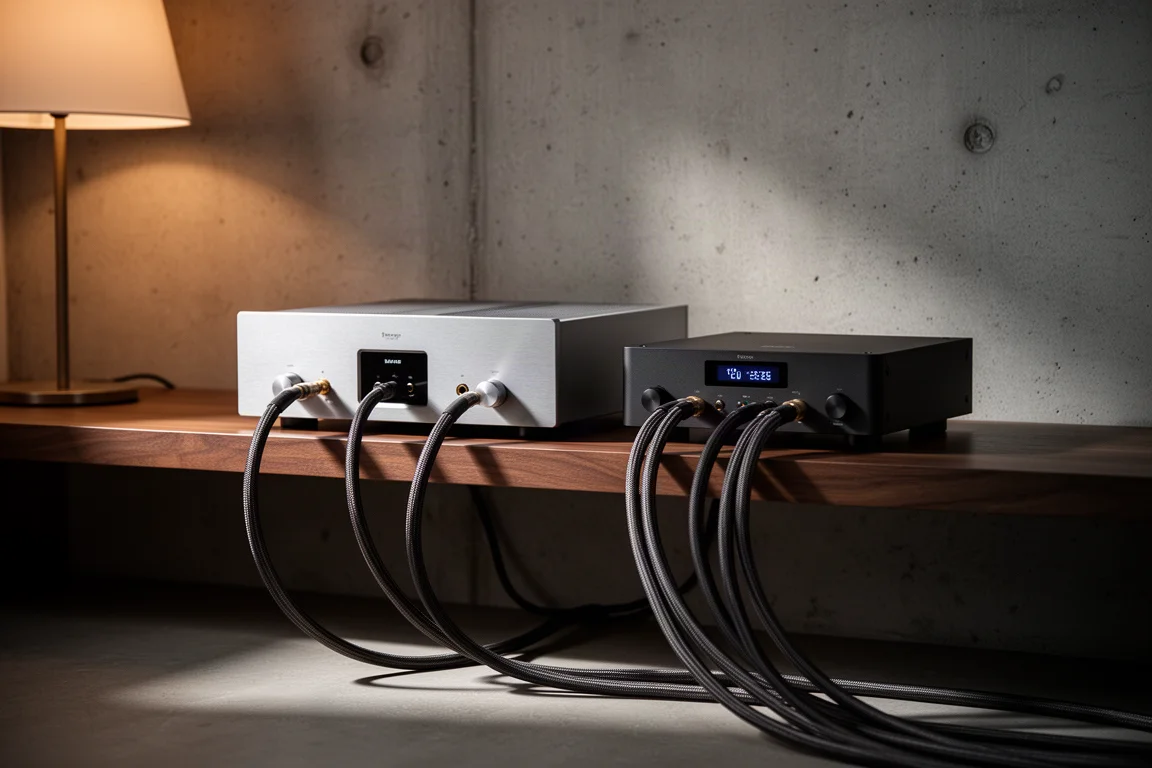
The rear panel carries two ports, one serving the upper pair of woofers and a separate one for the lower pair. Even with bass-heavy material, very little air movement is felt at the ports, which makes the R11 Meta more tolerant of placement near a wall than its rear-ported layout might suggest. Foam plugs are supplied for listeners who need to push the speakers close to a wall, though any speaker will sound better with some distance behind it.
Connections are bi-wire capable. Unscrewing the center post of the terminal block configures the speaker for bi-wiring, and screwing it back in returns it to single-wire operation. In practice, bi-wiring brought a worthwhile improvement rather than a dramatic one. Three finishes are offered at the same price: gloss white, gloss black, and a real walnut veneer rather than a vinyl wrap.
Setup, Placement, and Amplifier Matching
In this evaluation the speakers were positioned 8.5 feet apart, center to center, with the listening position also 8.5 feet back and a generous amount of toe-in aimed at the listener.
The R11 Meta is rated at 4 ohms and dips to roughly 3.2 ohms, so it presents a demanding load. Sensitivity is 90 dB, which is reasonably high, meaning a lower-powered amplifier can drive it successfully as long as it is comfortable with 4-ohm and lower impedances. Amplifiers that dislike low-impedance loads are the wrong match.
Because the cabinet is tall but narrow, it does not visually dominate a room the way its height might suggest, and the fit and finish feel a step above the price point.
Listening Notes: Scale, Depth, and Midrange Presence
With large-scale material, the R11 Meta behaves the way a flagship tower should. Big dynamic swings land with real weight, and the smaller dynamic shading inside a performance comes through clearly. Bass extension is substantial, and with four 6.5-inch woofers per cabinet working together, low-frequency energy is not only audible but physical. The soundstage is large and deep, and that depth is one of the speaker’s standout qualities: performers sit well behind the front plane of the speakers rather than flattened against it.
Midrange performance deserves its own note. Vocals in particular gain a sense of presence, the feeling of hearing more of a singer’s body in the room and more of the microphone character in the recording. High-frequency extension, clarity, and inner detail are all strong.
Against a horn-loaded tower such as the Klipsch La Scala, which sells for roughly similar money, the R11 Meta gives up some of the live dynamic snap that horns do so well. Large dynamics, subtle shading, and that immediate, lifelike quality favored the horn speaker, while the KEF brought more brawn: greater weight to the sound, a bigger and better-focused soundstage, and a presentation closer to life size. The same pattern held against the 52-inch-tall Klipsch RF-7, where the R11 Meta produced the larger presentation and resolved high-frequency extension, clarity, and detail more cleanly.
What to Consider Before Buying
Two considerations stand out. The first is price. At $7,000 a pair the R11 Meta is a serious outlay, even though its build and finish make it feel like a more expensive speaker than that. The second is low-frequency ambition. The R11 Meta reaches low with genuine authority, but if you want the deepest sub-bass, or if home theater is part of the plan, a dedicated subwoofer remains the right answer, as it does for nearly every full-range tower.
Room size matters as well. In a small or barely mid-size room, a large tower like this has less opportunity to open up, and a smaller speaker in the same line may be the more sensible match.
Buying Advice
The R11 Meta makes the most sense for listeners with a larger room and an amplifier that is happy driving a 4-ohm load down to about 3.2 ohms. If your space is smaller, the R5 and R7 Meta towers in the same series are the more practical choice.
If you have the room and want a big, deep, dynamically capable presentation with a particularly strong midrange, the R11 Meta offers a genuine taste of high-end sound without moving into the cost of true flagship exotica. Finish choice does not affect the price, so the decision between gloss white, gloss black, and walnut veneer comes down to the room the speaker will live in.
Conclusion
The KEF R11 Meta earns its flagship status through scale rather than gimmicks. Its 12th-generation Uni-Q driver and metamaterial loading keep the midrange and treble clean and present, four aluminum woofers give it genuine low-frequency authority, and the narrow cabinet keeps a very tall speaker from overwhelming a room. It does not chase horn-style dynamic snap, and at $7,000 a pair it is not a budget proposition. For listeners with the space and the amplification to support it, it is a compelling step into serious high-end sound.
Product link
View more details for KEF R11 Meta
This product is mentioned in the review. Check the specifications, options, and compatibility before buying.
View more details for KEF R11 MetaFurther reading
Related Reviews
Floorstanding Speakers
Acoustic Energy AE109 Mark II Review: A Refined Floorstander at £699
The Acoustic Energy AE109 Mark II is a slim, warm sounding floorstander that delivers clarity, midrange body and strong imaging in small to medium rooms.
Floorstanding Speakers
Acoustic Energy AE509 Review: A Slim Floorstander With Deep, Defined Bass
A practical look at the Acoustic Energy AE509, a slim floorstanding speaker with carbon fibre drivers, deep and well-defined bass, and an easy-going character that rewards careful system matching.
Floorstanding Speakers
Arendal 1528 Tower 8 Review: Reference Neutrality With Real Demands
A close look at the Arendal 1528 Tower 8, a nearly five-foot, 200-pound floorstander that rewards generous space, serious power, and high listening levels with reference-grade neutrality.