Floorstanding Speakers
KEF Q11 Meta vs Polk Reserve R700: Which Floorstanding Tower Fits Your Room?
Two three-way floorstanding towers at around $2,100, compared on dispersion, bass tuning, and the room conditions that decide which one works better.
Introduction
Two floorstanding towers at roughly the same price, both three-way designs, both capable of filling a room. The KEF Q11 Meta and the Polk Reserve R700 are close enough on paper that the decision rarely comes down to which one is simply better. It comes down to the room you are going to put them in.
This guide walks through how the two designs differ, what each tower does well, and the placement conditions that decide which one will actually sound right in your space.
How These Two Towers Compare on Paper
Both speakers retail for around $2,100 and both use three-way driver configurations, but they get there differently.
The Polk Reserve R700 pairs two 8-inch mid/bass drivers with a 6.5-inch midrange and a 1-inch ring radiator tweeter. The KEF Q11 Meta uses a coaxial driver assembly that places a 3/4-inch tweeter inside a 4-inch midrange, supported by three 6.5-inch mid/bass drivers.
Cabinet dimensions are broadly comparable, though the Polk weighs roughly 17 pounds more.
Those driver choices shape almost everything that follows, from how wide each speaker throws sound to how close it wants to sit to a wall.
KEF Q11 Meta: Coaxial Consistency for Real Rooms
The KEF Q11 Meta holds a horizontal coverage window of roughly plus or minus 50 degrees, and it maintains that window through the treble all the way up to about 20 kHz. That consistency matters more than it first appears. Listeners sitting off to the side still hear the top end at roughly the same level as the midrange, so a sofa full of people gets a similar tonal picture.
Vertically it is similarly forgiving. The sound stays reasonably consistent whether you are ear level with the driver or a little above or below it, which helps in rooms with a low sofa, a raised seating platform, or a second row.
Its bass tuning is the other defining trait. The Q11 Meta uses an extended bass shelf rolloff that assumes the speaker will sit fairly close to the wall behind it. Placed that way, the low end fills in and stays controlled. Pull it more than a few feet into the room and the bass drops away quickly, which is the trade-off built into the design.
Polk Reserve R700: A Bigger Stage With Stricter Placement
The Polk Reserve R700 reaches a little lower, digging roughly 5 to 10 Hz deeper than the KEF. Through the midrange it radiates wider, which translates into a larger sense of stage and more envelopment around the listening seat.
Horizontal coverage is quoted at around plus or minus 70 degrees, but it narrows sharply above roughly 7 kHz. Listeners well off to the side will notice the top end tapering away while the midrange stays full.
Vertical placement is the bigger consideration. Sit more than about 10 degrees above or below the tweeter axis and the high treble rolls off while the crossover region between the midrange and tweeter develops a dip. The result is less detail, less dynamic snap, and reduced intelligibility, which is worth knowing before committing a pair to a home theater with multiple rows of seats.
What You Will Hear: Tonality and Stage
Assume for a moment that both are set up in conditions that suit them. The Polk will sound brighter overall, with a treble balance that sits noticeably higher relative to the midrange. The KEF takes the opposite approach, with a top end that slopes down to match the directivity of its mid/bass drivers.
Output capability and distortion performance are close enough that they are not the deciding factor. What separates them is how the energy leaves the cabinet and what the room does with it.
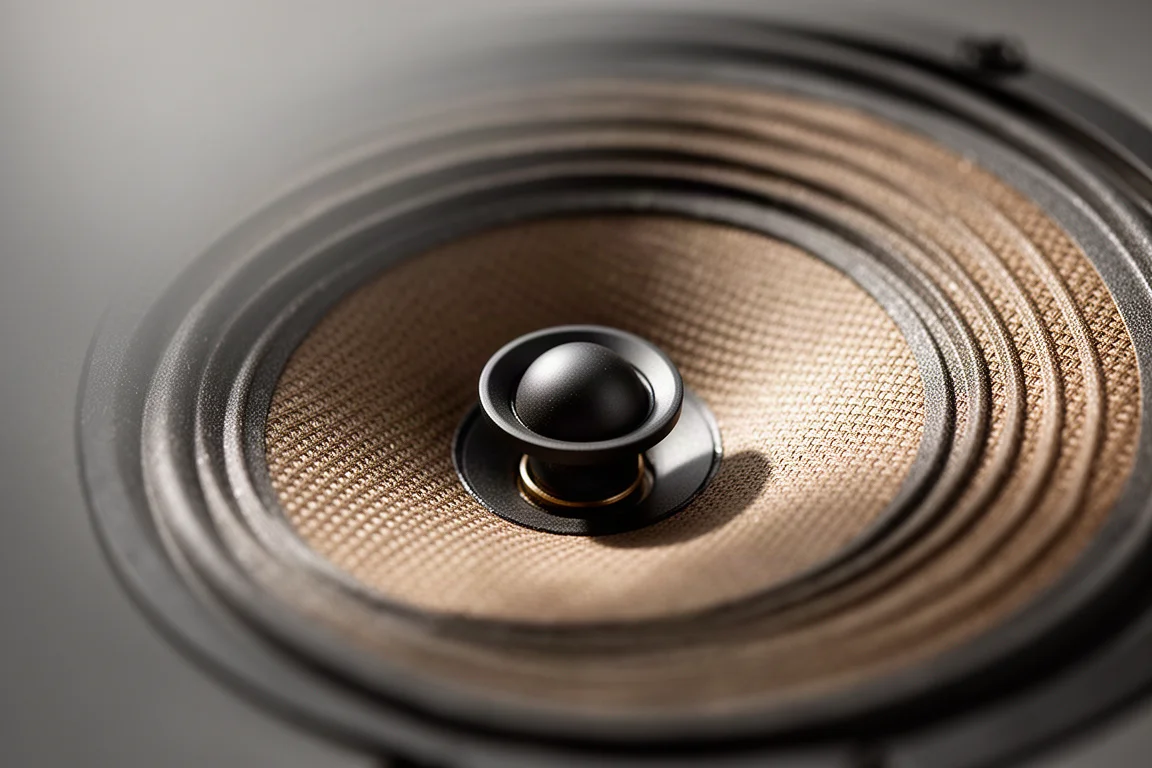
Dispersion: Why the Coverage Window Matters
Off-axis behaviour is where the two designs diverge most. The Polk sends a lot of energy sideways through the midrange, and the reflections that return from a nearby sidewall do not share the same tonal balance as the direct sound. In a room with close sidewalls, that tends to push the presentation brighter, with a bump in the sibilance region around 6 kHz that stays audible whether the speaker is aimed straight ahead or toed in.
The KEF is engineered around those reflections. With sidewalls in reasonable proximity, the reflected energy adds up to a smooth, linear response at the seated position. That is the design intent, and it is why the Q11 Meta tends to sound balanced in ordinary domestic rooms rather than dark.
Room Placement: Where Each Tower Makes Sense
This is the part that decides the purchase.
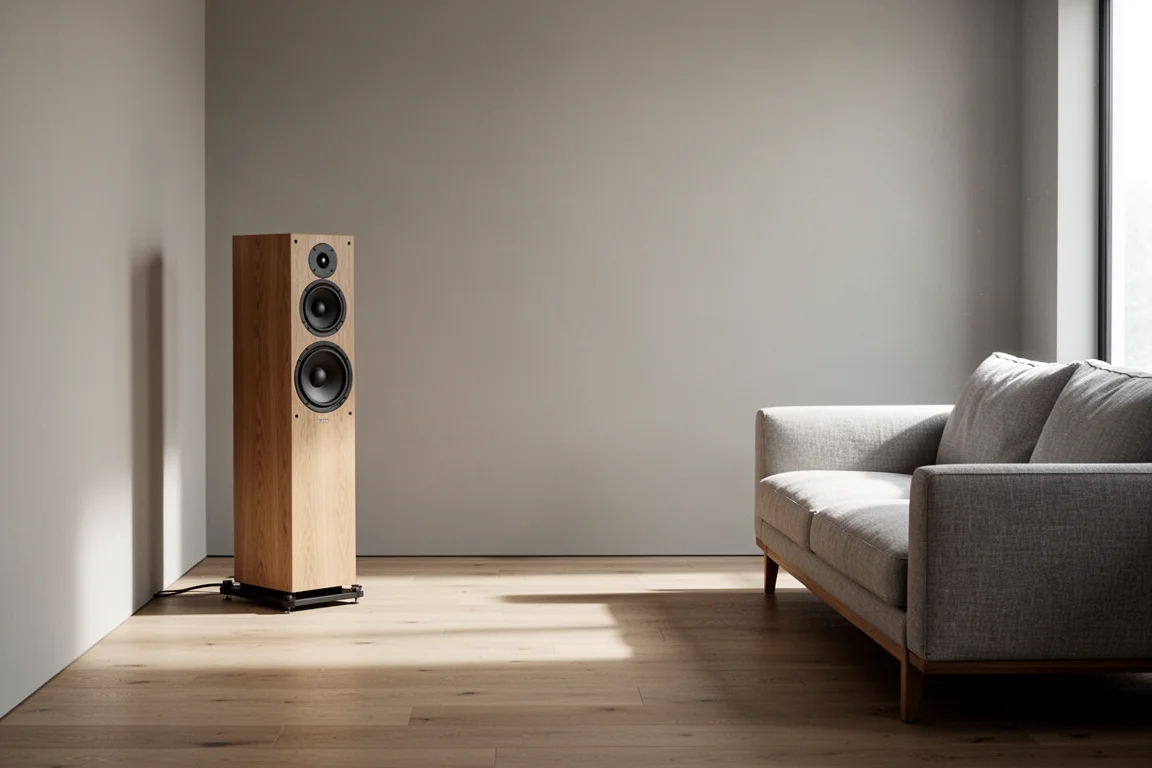
If your room has sidewalls within a few meters of the speakers, the KEF Q11 Meta is the easier fit. It is designed to sit closer to the wall behind it, and it works with sidewall reflections rather than fighting them. Rooms that are not especially large, where the speakers need to stay close to the front wall, favour it as well.
The Polk Reserve R700 asks for more room to breathe. Place it close to a wall and the bass becomes boomy, and a nearby sidewall adds brightness on top of that. Moving it well out from the wall solves the bass problem and unlocks the deeper extension it is capable of, but that requires space. Equalization can tame the low end if you have it available.
An open space with little or nothing to either side of the speakers, or a large room where the towers can sit well clear of the front wall, is where the Polk makes the most sense. If you need to sit off the tweeter axis, or you want several listeners to hear a consistent top end, the KEF is the safer choice.
Measurement Notes: Bass Extension, Sensitivity, and Crossover
The measured numbers back up the listening impressions. The KEF Q11 Meta is rated at 88.6 dB sensitivity with an F3 of 60 Hz and an F10 of 29 Hz. Its on-axis and listening window responses decline gently, and its early reflections and sound power decline along the same line, which points to well-controlled directivity. Early-reflection directivity is solid through the midrange, with a small discontinuity around 2 to 3 kHz that looks like diffraction from the drive unit.
The Polk Reserve R700 measures around 87.5 dB sensitivity, roughly a decibel lower, with an F3 of 40 Hz and an F10 of 31 Hz. Its on-axis response is more linear than the KEF’s, but it shows a significant discontinuity between roughly 3 and 7.6 kHz, right in the crossover region. In practice that crossover behaviour is less clean than the KEF’s, and it is a large part of why a nearby sidewall causes trouble.
In the bass, the Polk extends lower, while above roughly 30 Hz the two rolloff profiles run fairly close together. Looking at estimated in-room response, the KEF on its own without room reflections would read as dark, which is exactly why the near-wall placement it was designed for matters so much. The Polk’s treble sits roughly 7 dB higher relative to the midrange than the KEF’s does, which is what produces its brighter character.
Buying Advice: Choosing Between the KEF Q11 Meta and the Polk Reserve R700
Start with the room rather than the spec sheet.
Choose the KEF Q11 Meta if you have sidewalls within a few meters, if the speakers need to sit fairly close to the front wall, or if several people will be listening from different seats. Its consistent coverage and near-wall bass tuning are built for exactly those conditions.
Choose the Polk Reserve R700 if you have a large space, if there are no sidewalls for reflections to bounce off, or if you can pull the towers well out into the room. You gain deeper bass extension and a wider, more enveloping stage in exchange for stricter placement.
If room correction or equalization is available to you, the Polk’s low-end behaviour near a wall becomes more manageable. Without it, placement does the work.
Conclusion
There is no single winner here. The KEF Q11 Meta and the Polk Reserve R700 are both three-way towers at around $2,100, and each is tuned for a different kind of room.
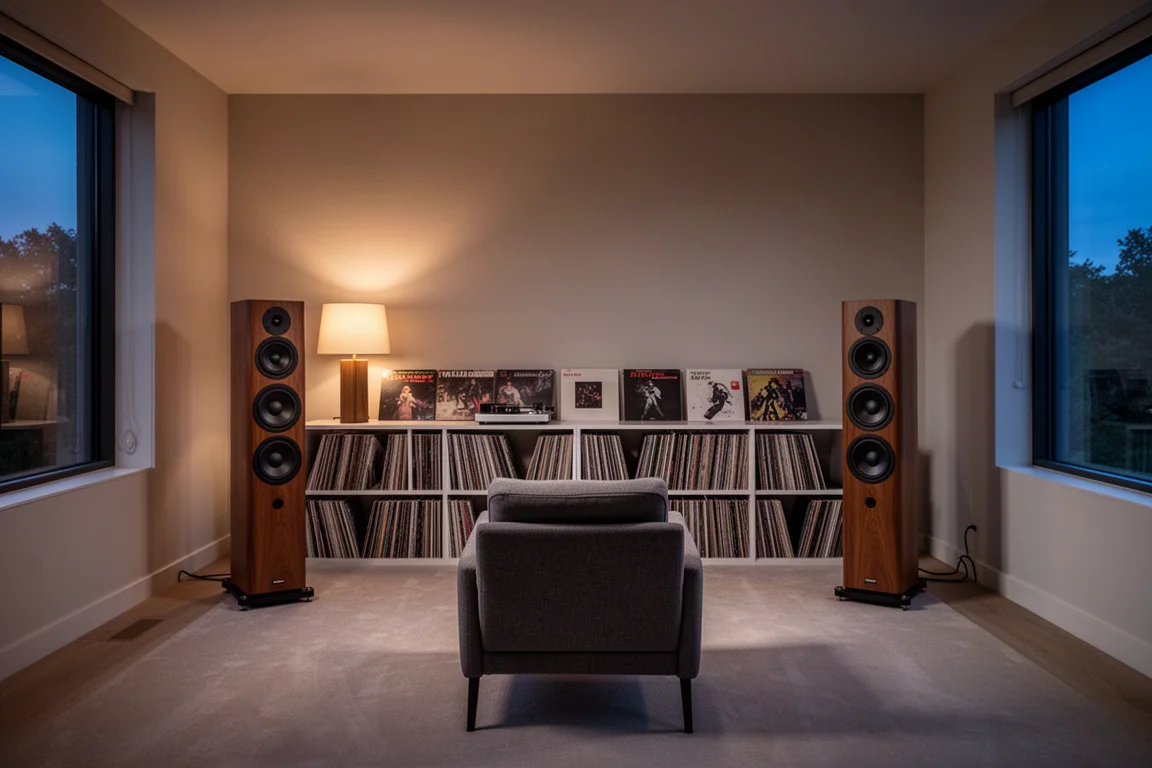
If your listening space is a typical domestic room with walls on either side, the KEF is the more predictable choice. If your speakers will stand in the open with room to spare behind and beside them, the Polk rewards that freedom with deeper bass and a bigger stage. Match the speaker to the room and either one will do what it was designed to do.
Further reading
Related Reviews
Floorstanding Speakers
Acoustic Energy AE109 Mark II Review: A Refined Floorstander at £699
The Acoustic Energy AE109 Mark II is a slim, warm sounding floorstander that delivers clarity, midrange body and strong imaging in small to medium rooms.
Floorstanding Speakers
Acoustic Energy AE509 Review: A Slim Floorstander With Deep, Defined Bass
A practical look at the Acoustic Energy AE509, a slim floorstanding speaker with carbon fibre drivers, deep and well-defined bass, and an easy-going character that rewards careful system matching.
Floorstanding Speakers
Arendal 1528 Tower 8 Review: Reference Neutrality With Real Demands
A close look at the Arendal 1528 Tower 8, a nearly five-foot, 200-pound floorstander that rewards generous space, serious power, and high listening levels with reference-grade neutrality.