Floorstanding Speakers
KEF Blade 2 Meta Review: A True Point Source With Measured Excellence
A close look at the KEF Blade 2 Meta, from its coaxial driver architecture and curved cabinet to its measured performance, listening character, and the trade-offs worth weighing before buying.
Introduction
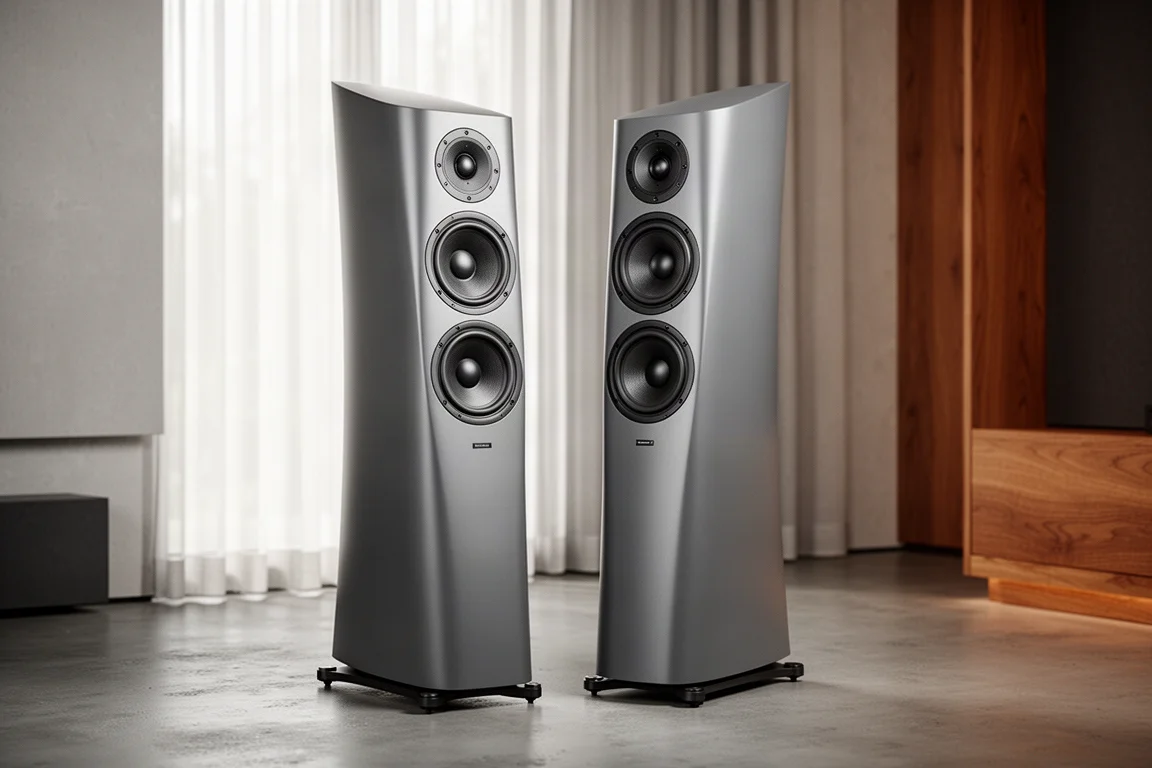
The KEF Blade 2 Meta is a floorstanding loudspeaker roughly 57 inches tall, and almost every design decision behind it serves a single goal: making the speaker behave as close to a true point source as possible. Rather than stacking drivers in a vertical line, KEF mounts four 6.5 inch mid-bass drivers around a central coincident driver that handles both midrange and treble.
The cabinet curves smoothly from the front baffle around to the back, with no sharp box edges anywhere. It is a rear-ported design, with one port positioned about midway up the back panel and a second toward the bottom, and it can be bi-amped if you prefer to drive its sections separately.
Pricing sits at roughly $30,000 per pair, which places the Blade 2 Meta firmly in flagship territory. The larger Blade 1 Meta uses approximately 9.5 inch mid-bass drivers and costs more again, while this model keeps the four 6.5 inch units. The useful question is whether all that engineering produces audible benefits, and that is what the rest of this article addresses, first through listening and then through measured performance.
Who the KEF Blade 2 Meta Is For
The Blade 2 Meta makes most sense for listeners who have already invested in a high-quality source and a capable power amplifier, and who want a loudspeaker that resolves fine detail without imposing much of its own character on the music.
It also suits listeners who move around while listening, or who use an open-plan living space. Because its vertical and horizontal dispersion are closely matched, the presentation stays consistent when the listening seat is not a single fixed chair.
It is a less obvious choice for anyone who wants maximum bass extension from a passive floorstander, or who prefers a very wide, enveloping horizontal presentation. Both points are covered in more detail below.
Design and Engineering: Why the Curved Cabinet Matters
The rounded baffle is not only cosmetic. A sharp cabinet edge sends part of the outgoing sound wave back toward the listener out of phase, which typically produces a dip somewhere between roughly 4 kHz and 8 kHz on axis. That dip fills in as you move off axis, changing the relationship between direct and reflected sound. Because the Blade 2 Meta has no sharp edge, the off-axis response mainly reduces in overall amplitude rather than changing shape.
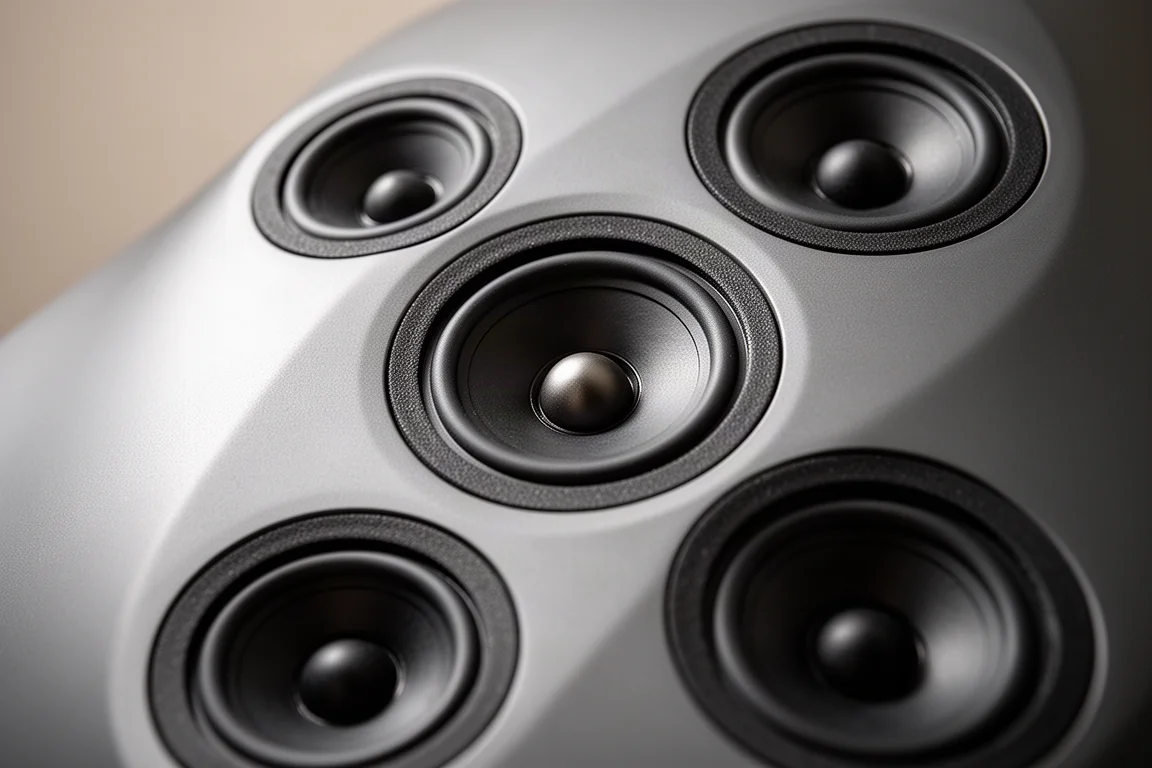
The coaxial driver addresses a different problem. A point source, meaning a single location that radiates the full 20 Hz to 20 kHz range, is the theoretical ideal because every frequency leaves from the same place. Multi-way designs with stacked drivers rely on a crossover to hand off between units, and maintaining a consistent radiation profile through those handoffs is difficult, particularly in the vertical plane. Several manufacturers handle the coax handoff well, but KEF has pushed this approach further than most.
KEF places the tweeter at the centre of the midrange driver, which then acts as a waveguide. The trade-off with this arrangement is the potential for modulation distortion, since the midrange cone is moving while it shapes the tweeter’s output. The Blade 2 Meta crosses the midrange over relatively high, at around 550 Hz, which keeps cone movement small. At that crossover point, audible modulation artefacts are unlikely.
The result is a speaker that maintains its directivity through the crossover region and holds a coherent vertical pattern, something stacked two-way and three-way designs often struggle to achieve beyond about 30 degrees vertically.
Listening Impressions
Familiar recordings reveal how well the design works in practice. On “Why Not Me” by The Judds, the percussive box sound sits unusually deep in the stage and carries a noticeable halo of ambience around it.
On Michael Jackson’s “Wanna Be Startin’ Somethin’”, a short percussive scratch that appears around the 29 second mark is rendered with unusual separation. Compared directly with the PS Audio FR10 and the MoFi SourcePoint 8, and over headphones as well, the sound remained audible on each, but never as distinctly placed as through the Blade 2 Meta.
Dire Straits’ “Walk of Life” provides another useful test. The opening hi-hat is not a single repeated sample; its timbre varies and its position in the stage shifts slightly. The Blade 2 Meta made both the tonal variation and the positional movement easier to follow than any other speaker available for comparison at the time, including the KEF LS60 Wireless, which resembles the Blade visually but does not perform at the same level.
One practical note concerns setup. The Blade 2 Meta has a narrower horizontal spread than the PS Audio FR10, which covers roughly 70 to 80 degrees either side. Toeing the speakers out by around 10 to 20 degrees increases sidewall reflections and adds a sense of spaciousness without any loss of image stability. Listening directly on axis can sound slightly forward in the treble, so some experimentation with toe-in pays off.
Measured Performance
The electrical load is demanding. Minimum impedance measures about 3.3 ohms, and minimum EPDR measures about 1.8 ohms. Buyers at this price point are unlikely to be driving a pair from an AV receiver, but a separate power amplifier with solid current delivery is the sensible partner.
Frequency response is exceptionally even. On-axis and listening window curves stay within roughly 2.5 dB of each other, with one small resonance around 200 Hz that also appears in the manufacturer’s own documentation, which suggests a cabinet-related cause. Low-frequency extension is given as F3 at 31 Hz and F10 at 26 Hz, so the speaker reaches about 30 Hz before rolling off quickly.
Directivity is the standout result. The directivity index is remarkably clean, horizontal dispersion holds to about plus or minus 50 degrees at the -6 dB point, and the vertical pattern almost exactly matches it. Harmonic distortion is very low at 86 dB and 96 dB, rising below about 100 Hz before dropping again as the port takes over.
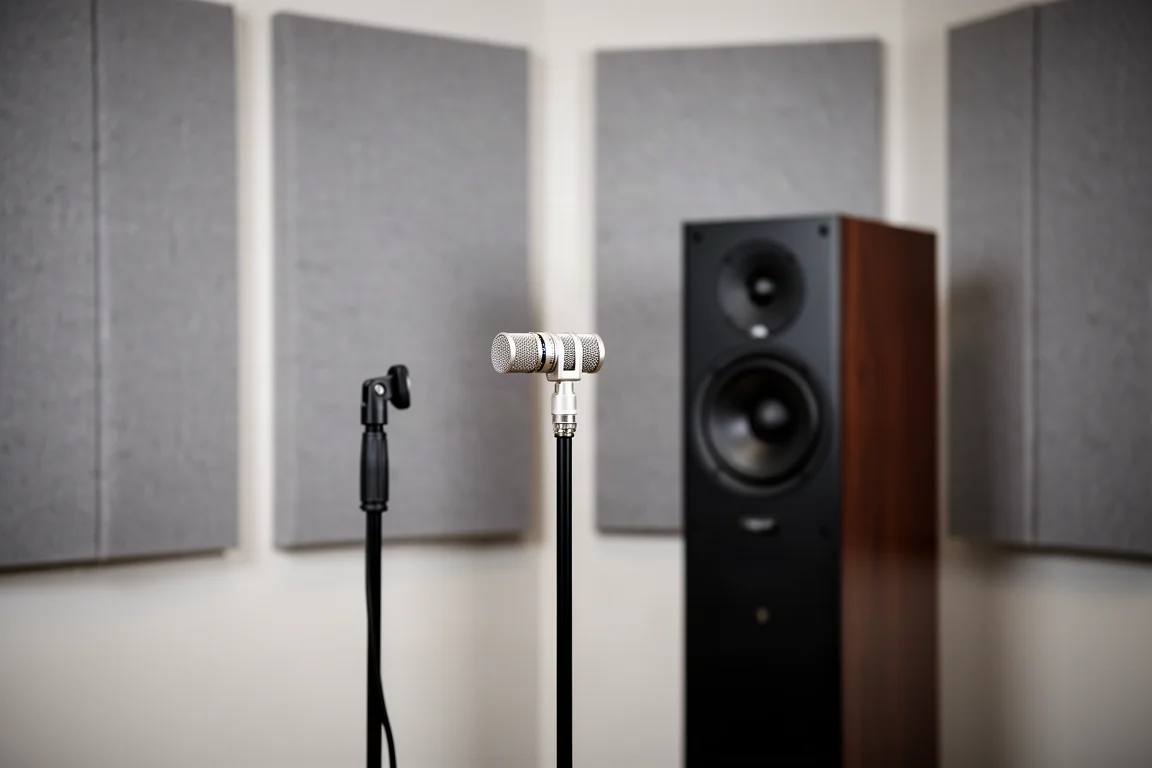
Multi-tone distortion stays below 1 percent at 96 dB, which corresponds to 8.9 volts, and remains under a 3 percent audibility threshold further up the range. Compression sweeps from 76 to 102 dB at 1 meter show excellent dynamic range, with less than half a decibel of compression at 96 dB at 1 meter over 30 seconds. These results rank among the best compression measurements recorded for any speaker tested so far.
Things to Consider Before Buying
Bass depth is the clearest limitation. The Blade 2 Meta is comfortable down to about 30 Hz, but it rolls off quickly below that, so it will not deliver authoritative output at 20 Hz. Listeners who want the lowest octave reproduced with real weight will need to think about how the rest of the system handles it.
Dispersion is a matter of taste. The horizontal spread is narrower than some wide-dispersion designs, and while toe-in mitigates this, listeners who specifically prefer a very broad, room-filling presentation should audition before committing.
The speaker is also substantial, at roughly 70 to 80 pounds each, and the low impedance means it needs a power amplifier rather than a receiver. Setup and matching deserve as much attention as the purchase itself.
Buying Advice
The Blade 2 Meta rewards careful system matching. A capable, current-happy power amplifier is the priority, followed by time spent on positioning. Toe-in between roughly 10 and 20 degrees is a good starting point for balancing treble energy against stage width.
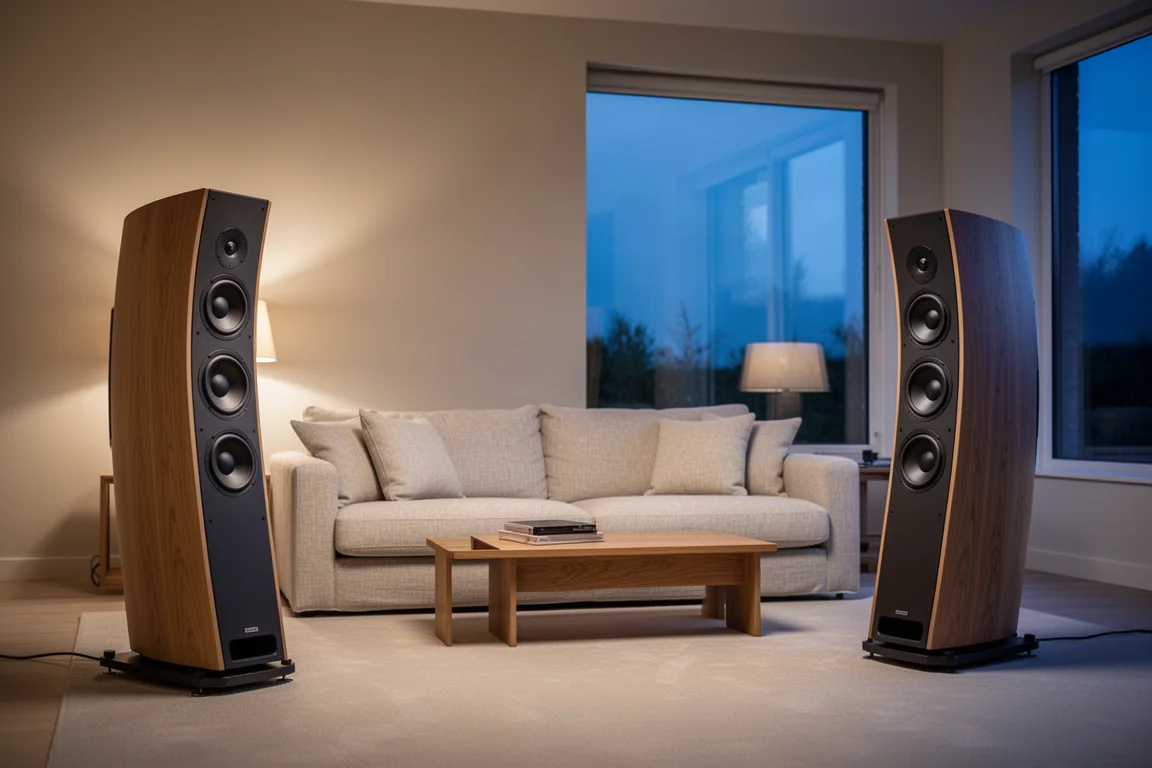
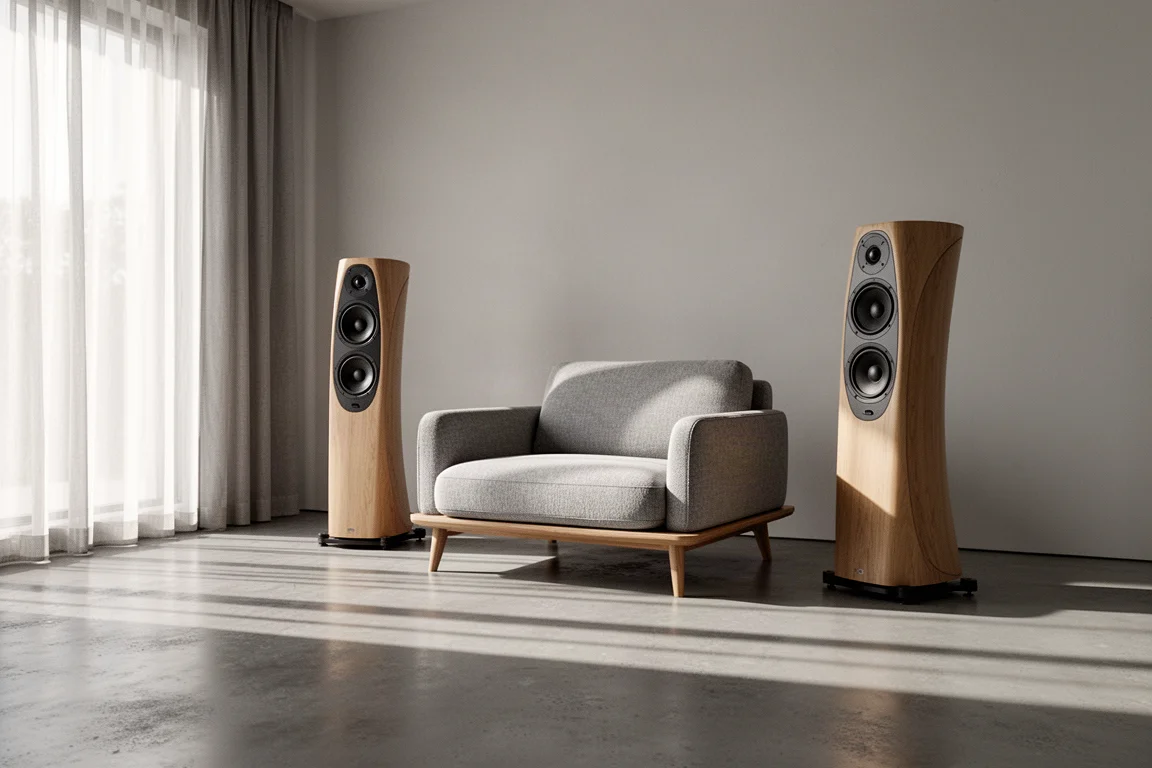
Finishes range from satin gray and gloss black to gloss red, blue, a satin blue with a matching blue cone, and gloss black with a gold cone, with custom colors available to order. Availability and pricing can vary between dealers, so it is worth confirming both directly before you commit.
For listeners who already own high-quality electronics and want a loudspeaker that resolves detail without adding coloration, the Blade 2 Meta is a credible long-term investment. It is not a casual purchase, and it is not the right answer for every room, but for the specific goal of a coherent point source with consistent dispersion, very few alternatives come close.
Conclusion
The KEF Blade 2 Meta pairs a genuinely purposeful design with measured performance that is close to exemplary across every major metric. The coaxial driver arrangement, the curved cabinet and the high midrange crossover all contribute to a presentation that keeps detail intact and places instruments precisely within the stage. Its limits are clear and honest: bass rolls off below roughly 30 Hz, dispersion is narrower than some rivals, and it asks for a serious amplifier. For buyers shopping at this level, those are manageable trade-offs rather than flaws.
Product link
View more details for KEF Blade 2 Meta
This product is mentioned in the review. Check the specifications, options, and compatibility before buying.
View more details for KEF Blade 2 MetaFurther reading
Related Reviews
Floorstanding Speakers
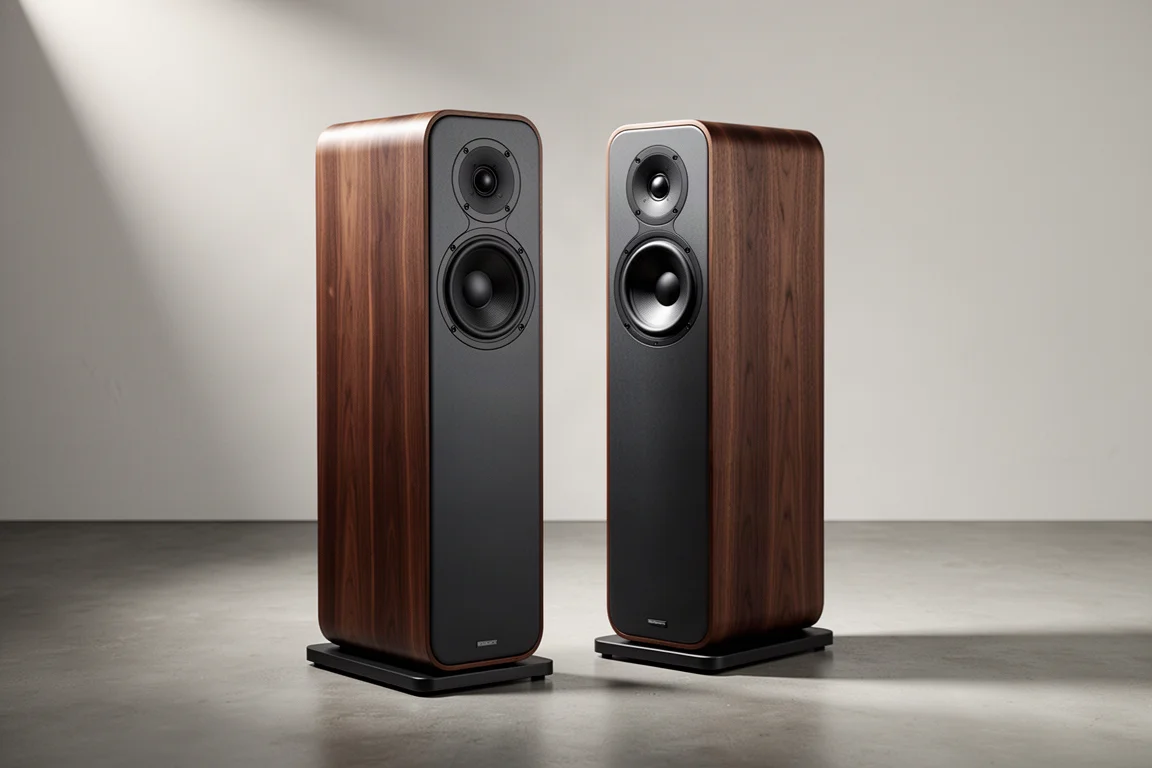
Acoustic Energy AE109 Mark II Review: A Refined Floorstander at £699
The Acoustic Energy AE109 Mark II is a slim, warm sounding floorstander that delivers clarity, midrange body and strong imaging in small to medium rooms.
Floorstanding Speakers
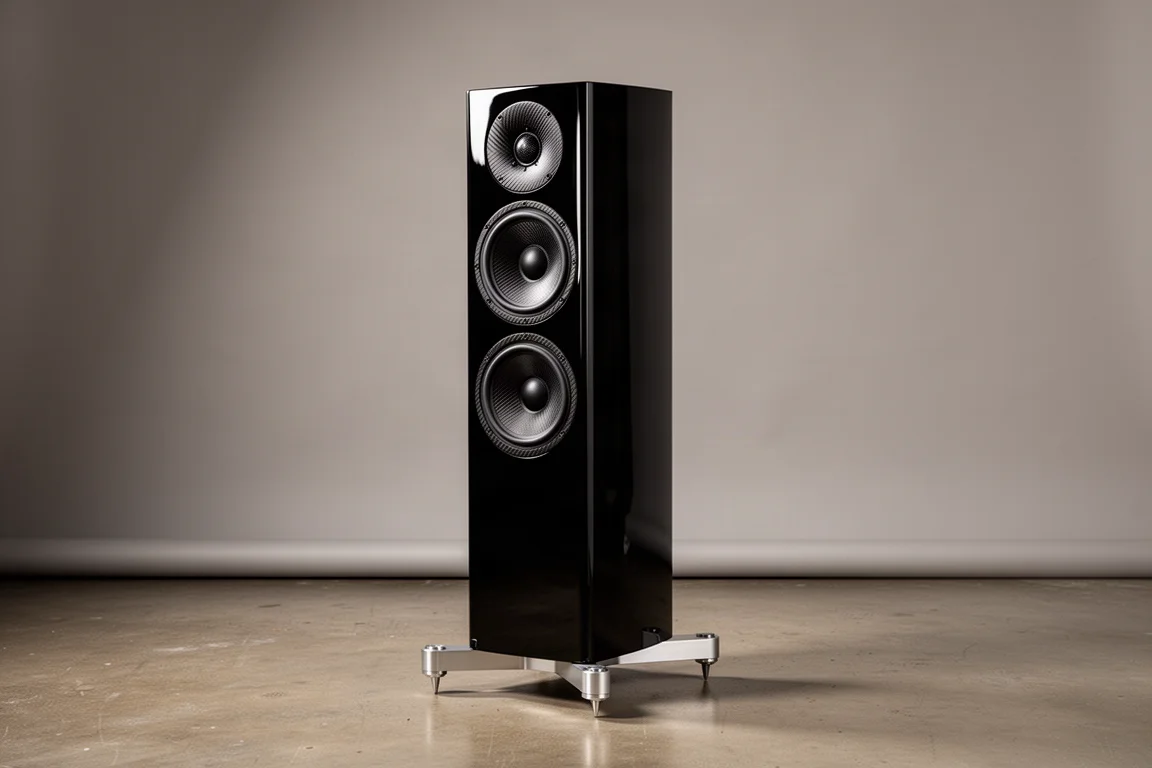
Acoustic Energy AE509 Review: A Slim Floorstander With Deep, Defined Bass
A practical look at the Acoustic Energy AE509, a slim floorstanding speaker with carbon fibre drivers, deep and well-defined bass, and an easy-going character that rewards careful system matching.
Floorstanding Speakers
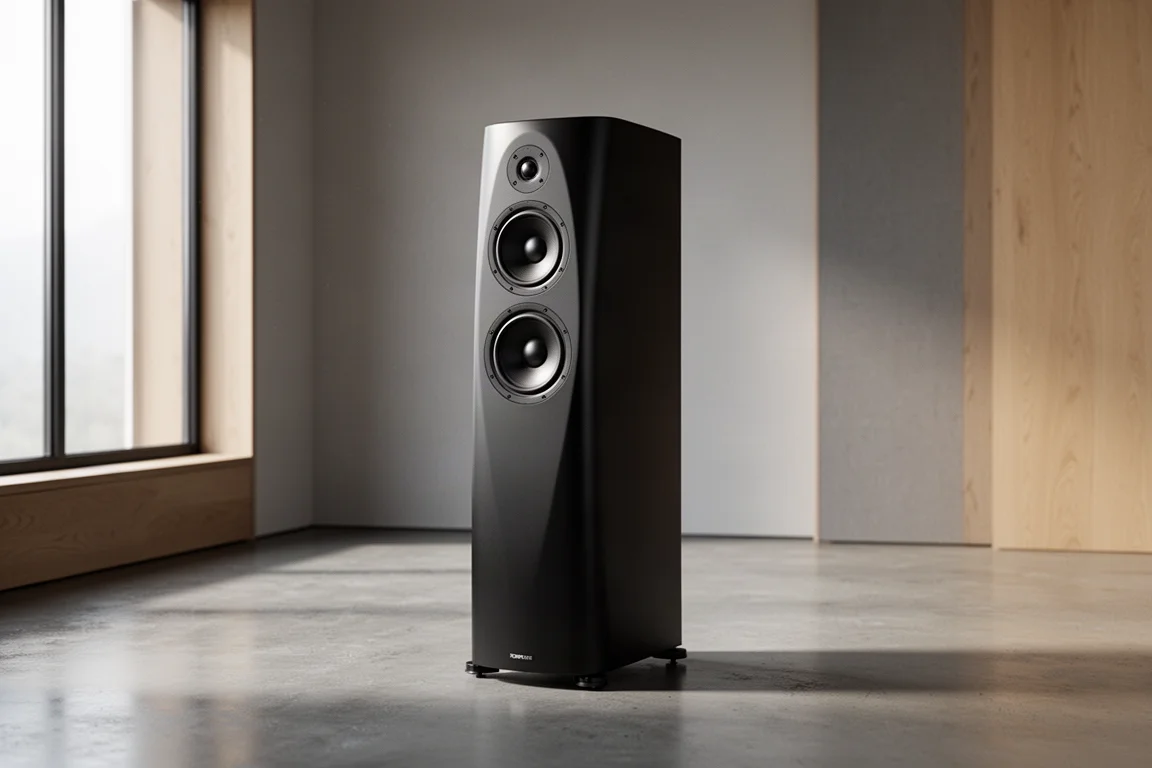
Arendal 1528 Tower 8 Review: Reference Neutrality With Real Demands
A close look at the Arendal 1528 Tower 8, a nearly five-foot, 200-pound floorstander that rewards generous space, serious power, and high listening levels with reference-grade neutrality.