Camping Shelters
Katoma IBNS vs US GI Industries Bivvy Tent: Two Bug Net Shelters Compared
Two near-identical bug net shelters compared on materials, packed size, features, and the frame claim that decides which one is worth buying.
Introduction
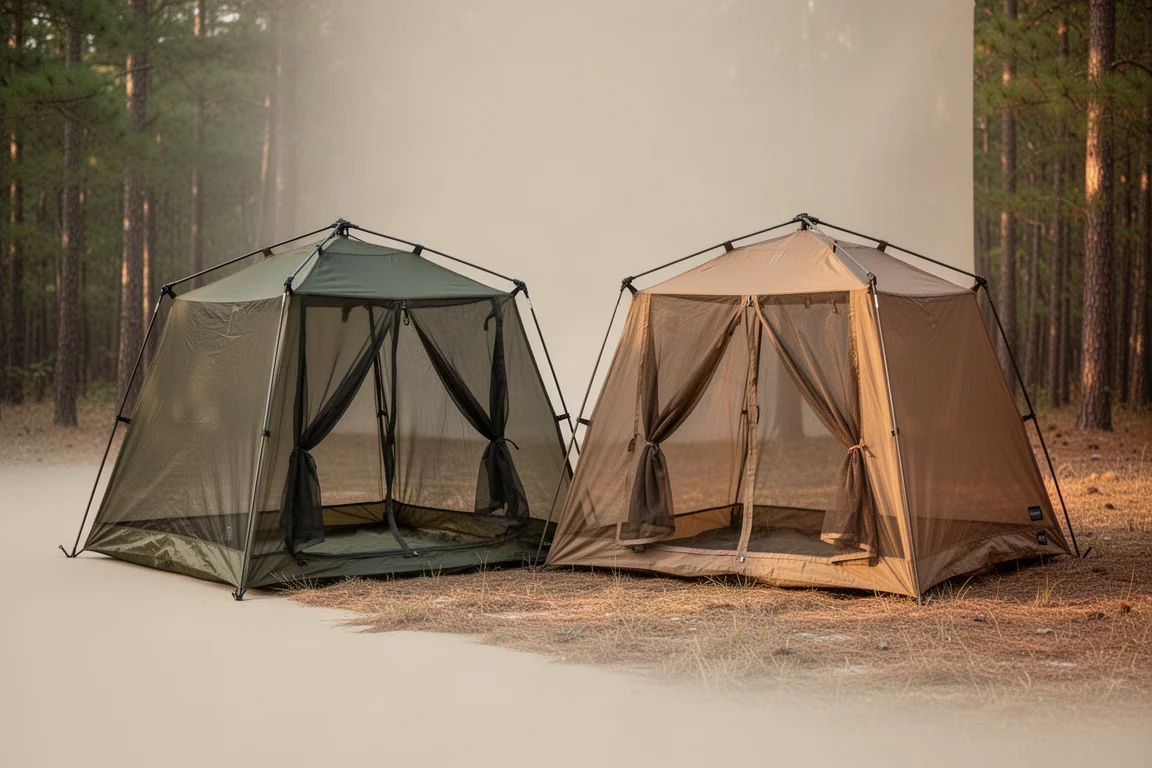
Bug net shelters occupy a useful middle ground for campers. They are not a full tent and they are not a bivvy sack. The idea is simple: a mesh inner with a bathtub floor that keeps insects out and can be pitched under a tarp, placed on a cot, or turned into a small tent with the right add-ons.
Two products follow that brief almost line for line. The Katoma IBNS Instant Setup Tent is the better-known version, and the US GI Industries Bivvy Tent A2C Bug Net Shelter is a lower-cost alternative that copies the layout closely. The price gap is significant, with the Katoma listed around $140 on Amazon against $70 for the US GI version at the time of writing. The real question is whether the cheaper shelter is the same product in a different bag, and the answer is more complicated than the price tag suggests.
What These Two Shelters Have in Common
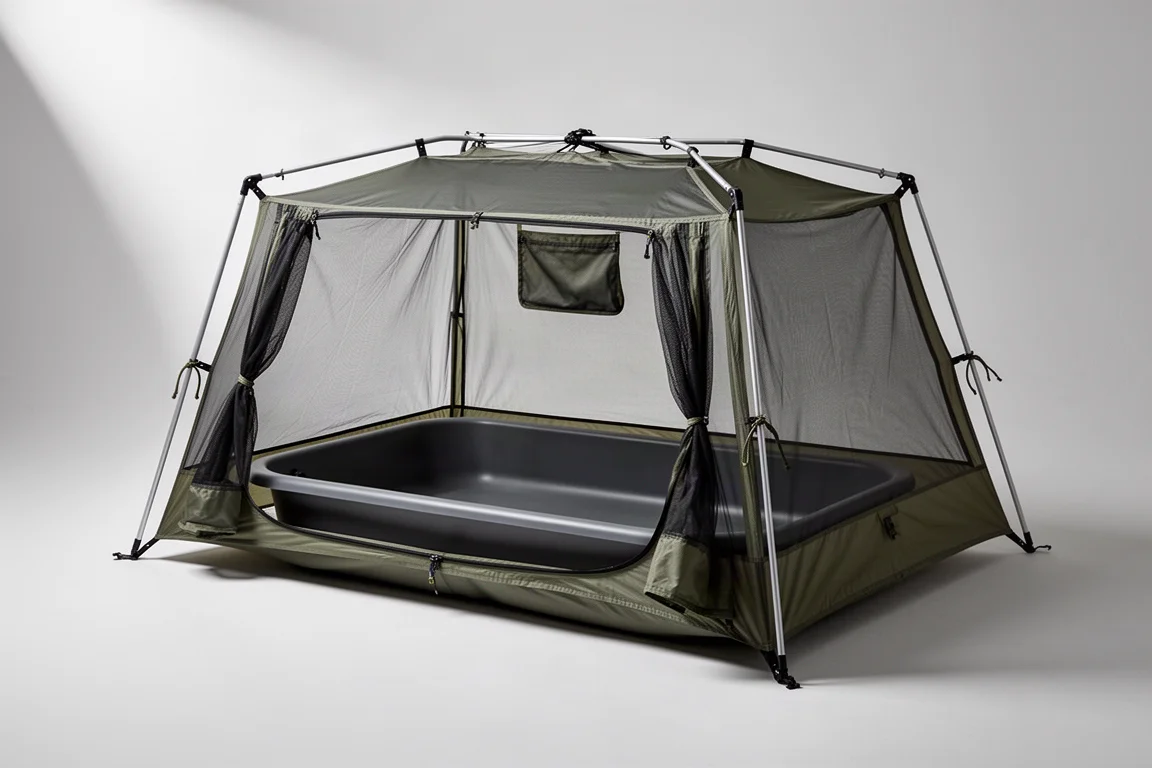
Put the two shelters side by side and the similarities are hard to miss. Both stand 26 inches tall inside, both suit users under 6 ft 3 in, and both use the same basic construction: two doors that tie back out of the way, a bathtub floor, and mesh walls for ventilation.
Seam-to-seam measurements come out essentially identical, roughly 85 inches long with widths in the 26 to 30.5 inch range depending on where you measure. Both need to be staked out to lie flat, because the wire frame has a tendency to curl up when left free. Both also ship with plastic tent stakes that are worth replacing before the first trip.
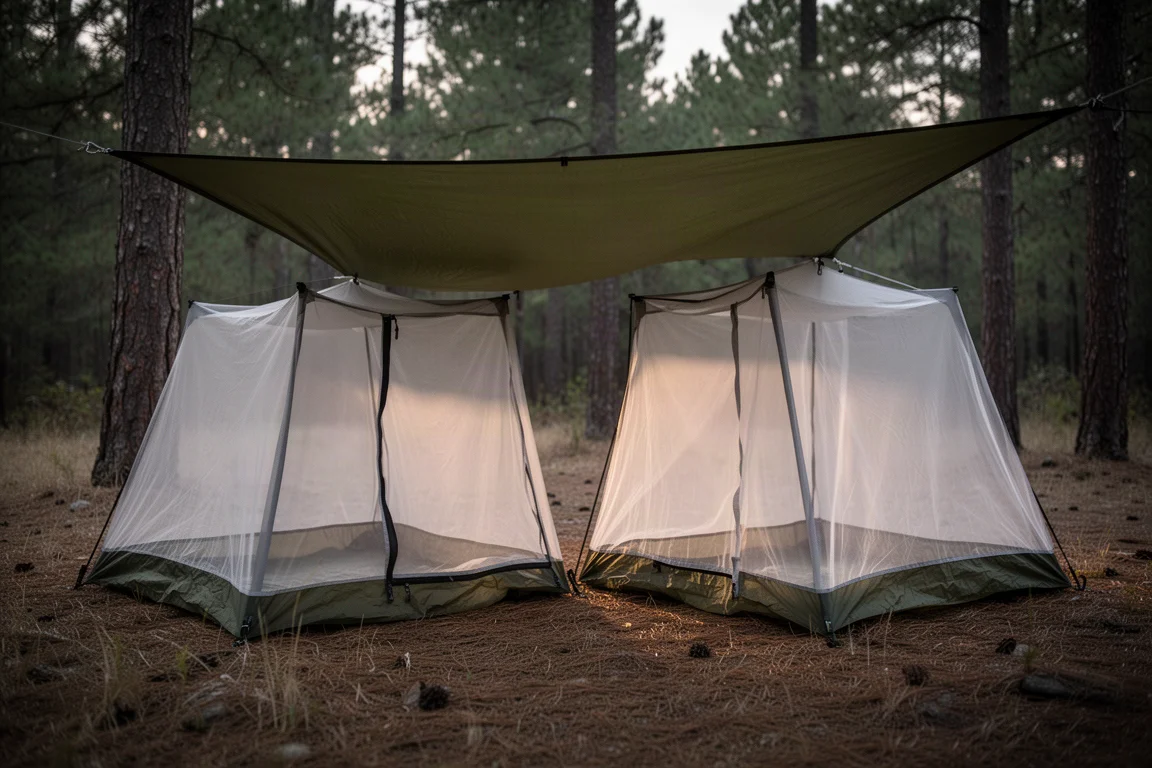
The interior is a confined space by design. It is more enclosed than a tarp shelter and more spacious than a bivvy sack, which is either exactly what you want or an instant dealbreaker depending on how you sleep.
Katoma IBNS Instant Setup Tent: The Design That Started It
The Katoma version uses a 20 denier no-see-um nylon mesh with a 75 denier nylon ripstop floor, and fiberglass poles. Packed, it measures about 13 by 13 inches and roughly 3 inches thick, and it weighs 2 lb. Retail price is $175, with the tent listed around $140 on Amazon at the time of writing.
Two design details set it apart from the copy. Clips let you attach a fly to the poles and turn the inner into a proper small tent, and the shelter is built to connect directly to a cot rather than simply rest on top of one. Inside, the pocket sits at the centre of the head end, and a tarp add-on is available for the same system.
Setup is quick and the breakdown is just as straightforward, which is the point of an instant-pitch inner like this.
US GI Industries Bivvy Tent A2C: The Lower-Cost Copy
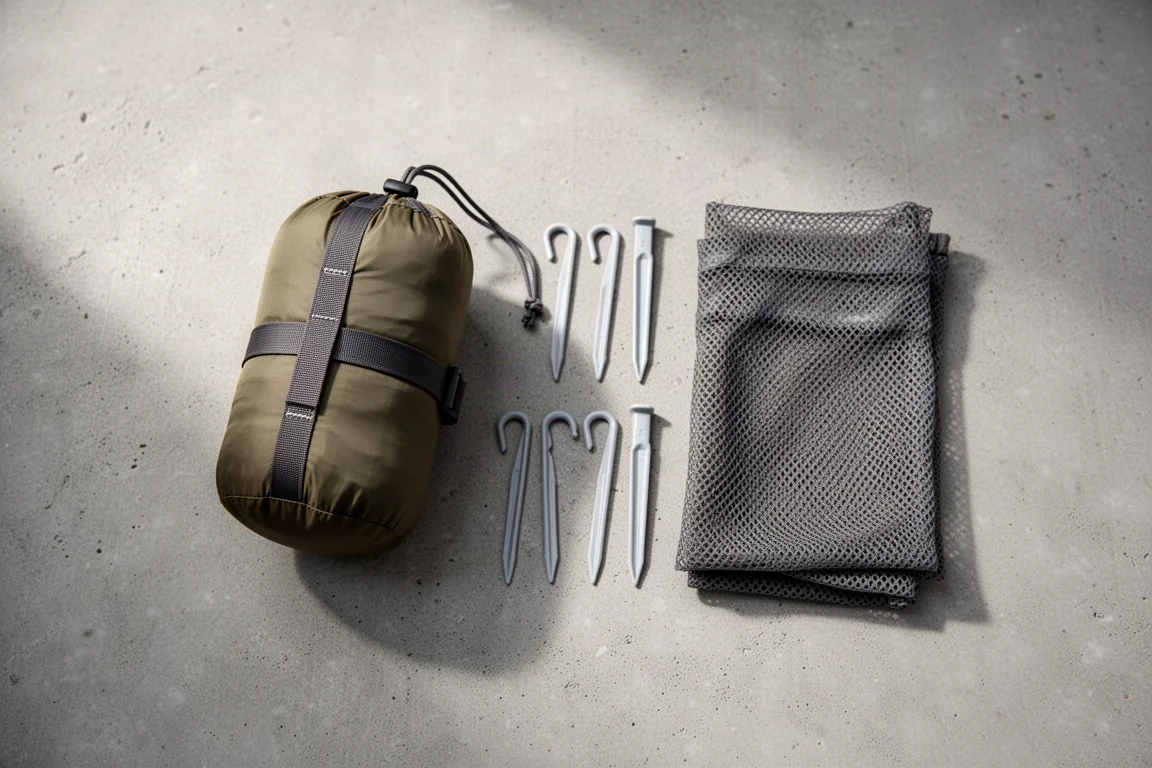
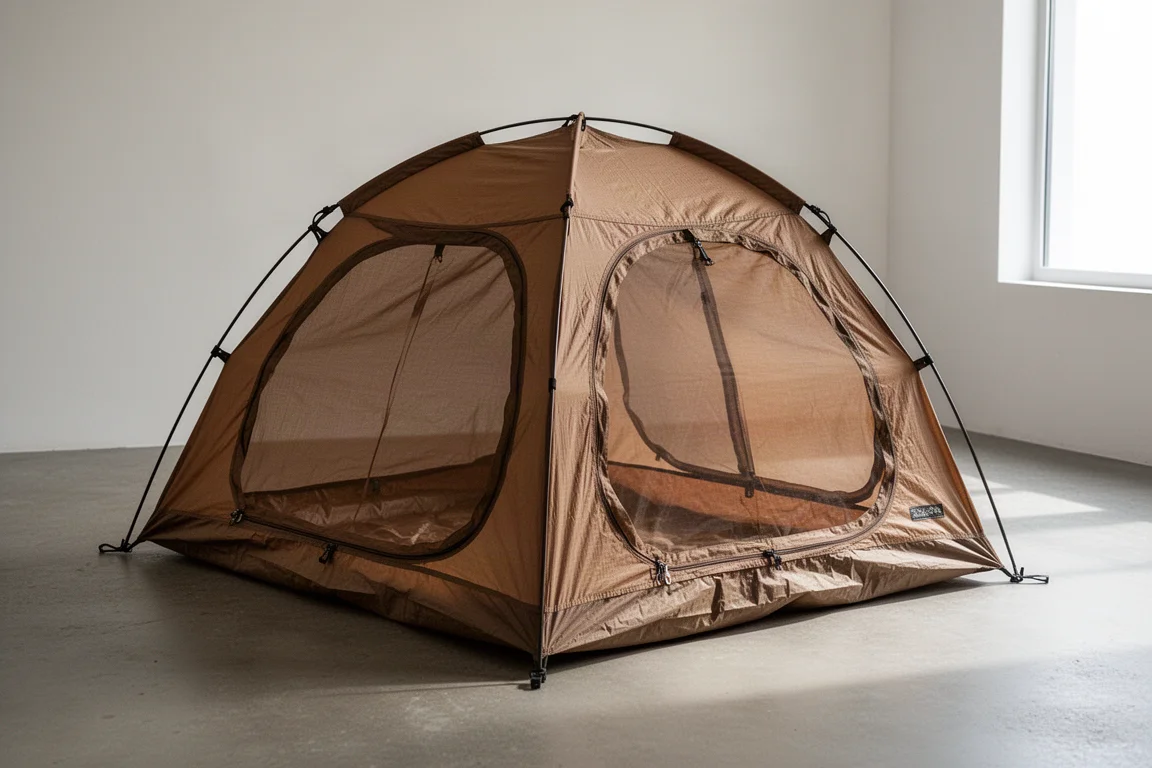
The US GI Industries shelter covers the same ground with a 210 denier polyester ripstop instead of nylon. Stored, it is about 18 inches long and roughly 2.5 inches thick, and it weighs 2.2 lb. It sells for $70 and comes in two colours, Dark Earth (a coyote tone) and OD Green.
The storage bag includes setup and breakdown instructions printed on the inside, and the compression strap is sewn directly to the tent rather than being a separate strap you can lose. Four plastic stakes are included, and they are as basic as the ones supplied with the Katoma.
What is missing matters more than what is included. There are no clips for attaching a fly, so this shelter cannot be converted into a tent the way the Katoma can, and it does not connect to a cot even though it can be placed on one. The internal pocket sits on the left-hand side instead of at the head end. The two doors, the bathtub floor, and the mesh coverage are otherwise the same.
Materials, Weight, and Packed Size Compared
Nylon versus polyester is the clearest difference between the two shelters. The 20 denier no-see-um mesh and 75 denier ripstop floor on the Katoma feel noticeably nicer in hand, and nylon is both stronger and lighter for the same job. The polyester on the US GI version is heavier and less strong, which is why the shelter comes in at 2.2 lb rather than 2 lb. Even the storage bag feels cheaper.
The bigger practical difference is packed volume. The Katoma packs into a compact bundle that slides into a normal backpack without much thought. The US GI version packs into a long, flat 18 inch package, which can be awkward to fit inside a pack and may push you toward strapping it to the outside.
The Pole Claim: What the Frame Is Actually Made Of
This is where the two products stop being interchangeable. US GI Industries states that the frame is PVC coated stainless steel and that it is stronger than fiberglass. Our check says otherwise. After cutting into a pole section, the material was plainly fiberglass, with no stainless steel component anywhere in the frame.

That matters for two reasons. Fiberglass is not the material described, and it is unpleasant to handle once it splinters, which is why a cut section needs gloves. A shelter can be fair value at $70 and still be a product we would not point people toward when the published specification does not match what arrives in the box.
Who These Shelters Suit
These shelters suit campers who want insect protection with a small footprint and who already own a tarp large enough to cover them in blowing rain. They also work for cot users, though only the Katoma version is designed to attach to a cot rather than rest on one.
They are less suited to anyone who wants room to sit up and move around, or who dislikes sleeping in a tight space. Buyers who want more interior volume have plenty of larger bug tents to choose from, and a larger mesh inner pitched under an adequately sized tarp remains a proven setup.
Buying Advice
Whatever you choose, budget for two small upgrades. Replace the plastic stakes with something more substantial, and check that your tarp is large enough to keep driven rain off the mesh.
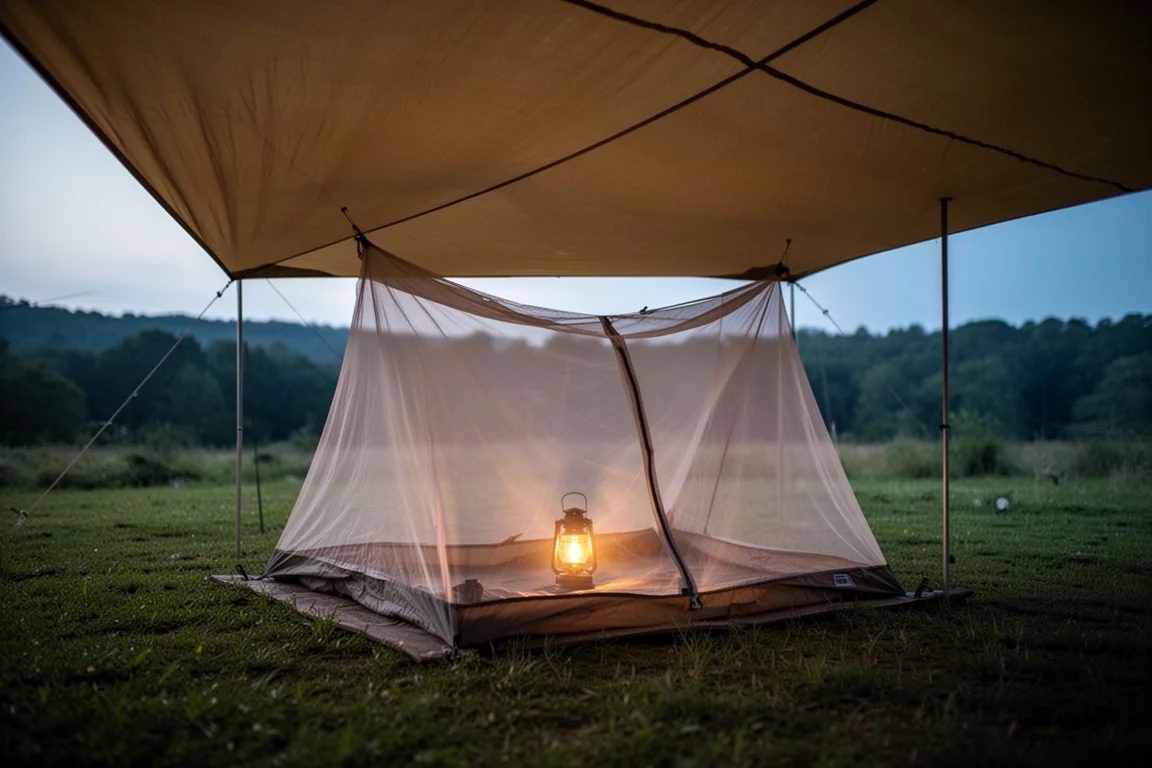
Between the two, the Katoma IBNS Instant Setup Tent is the version worth buying. It is lighter, packs smaller, uses nylon rather than polyester, converts into a tent with a fly, and connects to a cot. The price is roughly double, and for many buyers that premium pays for better materials and for the features the cheaper shelter omits.
The US GI Industries Bivvy Tent A2C is cheaper and the core shelter works, but the frame description does not match the construction. That is a hard thing to look past when the whole appeal of the product is its price.
Conclusion
These two bug net shelters are close enough in layout that the choice comes down to materials, packed size, and whether the specification sheet can be trusted. The Katoma IBNS remains the safer purchase for campers who want a lightweight mesh inner that can grow into a small tent. The US GI Industries version undercuts it on price, but the pole claim is a reminder to check what a shelter is actually made of before you rely on it.
Further reading
Related Reviews
Camping Shelters
Alps Mountaineering Stealth 1 Bivy Review: A Waterproof Claim That Does Not Hold Up
The Alps Mountaineering Stealth 1 Bivy carries a 2,000 mm hydrostatic head rating and a waterproof claim, but sustained rain exposure and build quality concerns make it difficult to recommend.
Camping Shelters
AquaQuest Safari Hybrid 20 ft x 13 ft Tarp Review: Two Years Under a Very Large Roof
A long-term look at the AquaQuest Safari Hybrid 20 x 13 tarp, covering build quality, weather protection, setup realities, and who should buy one.
Camping Shelters
Backcountry Light Mesa 3 Hot Tent and Floor SL Tarp Review
A practical look at the Backcountry Light Mesa 3 four-season hot tent and its optional Floor SL Tarp, covering materials, stove jack design, packed weight, pricing, and the trade-offs to weigh before buying.