Camping Shelters
Katoma IBNS vs US GI Industries Bivvy Tent 2C: Two Bug Net Shelters Compared
A side-by-side look at two low-profile bug net inner tents: the nylon Katoma IBNS Instant Setup Tent and the $70 US GI Industries Bivvy Tent 2C Bug Net Shelter, including where they differ and what to check before buying.
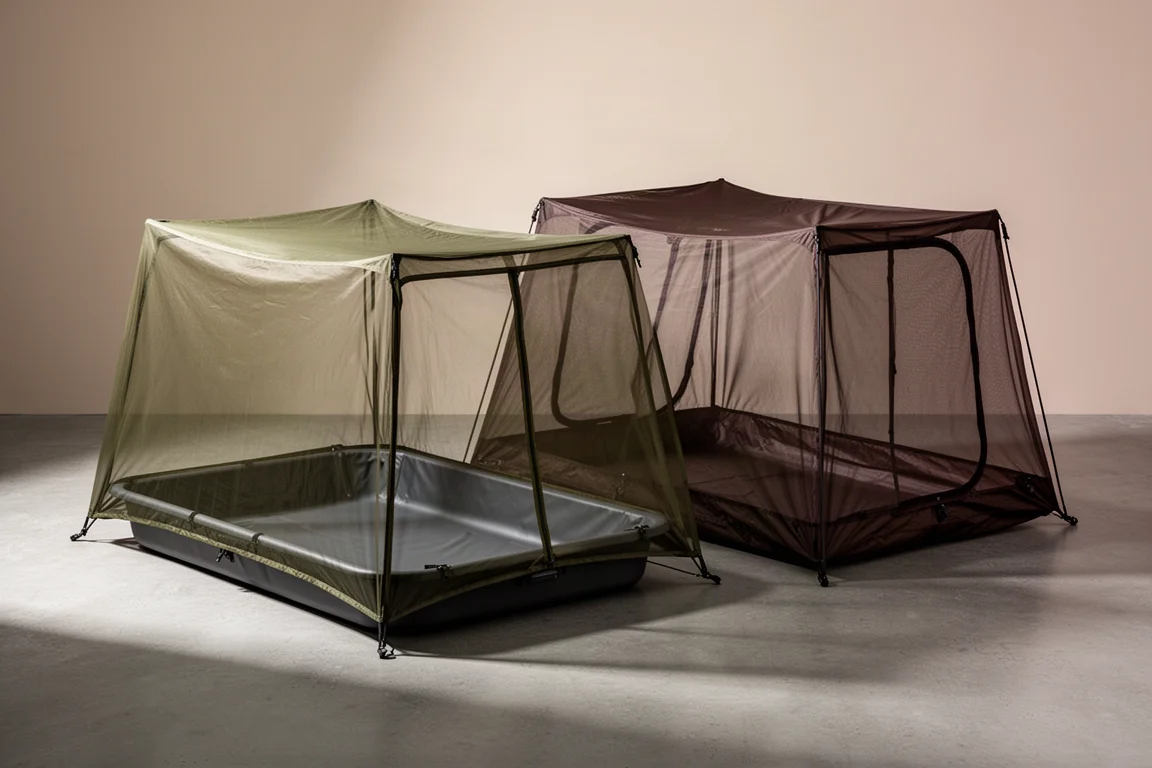
Introduction
A bug net inner tent quietly solves one specific problem: it keeps insects off you when you sleep under a tarp, on a cot, or inside a larger shelter, without the weight and bulk of a full tent. Two options in this class are worth a close look, the Katoma IBNS Instant Setup Tent and the US GI Industries Bivvy Tent 2C Bug Net Shelter.
In shape, ventilation, and setup, the two shelters are near-identical. The differences come down to fabric, packed size, a handful of small design details, price, and one company claim about materials that does not hold up on inspection.
What These Two Bug Net Shelters Share
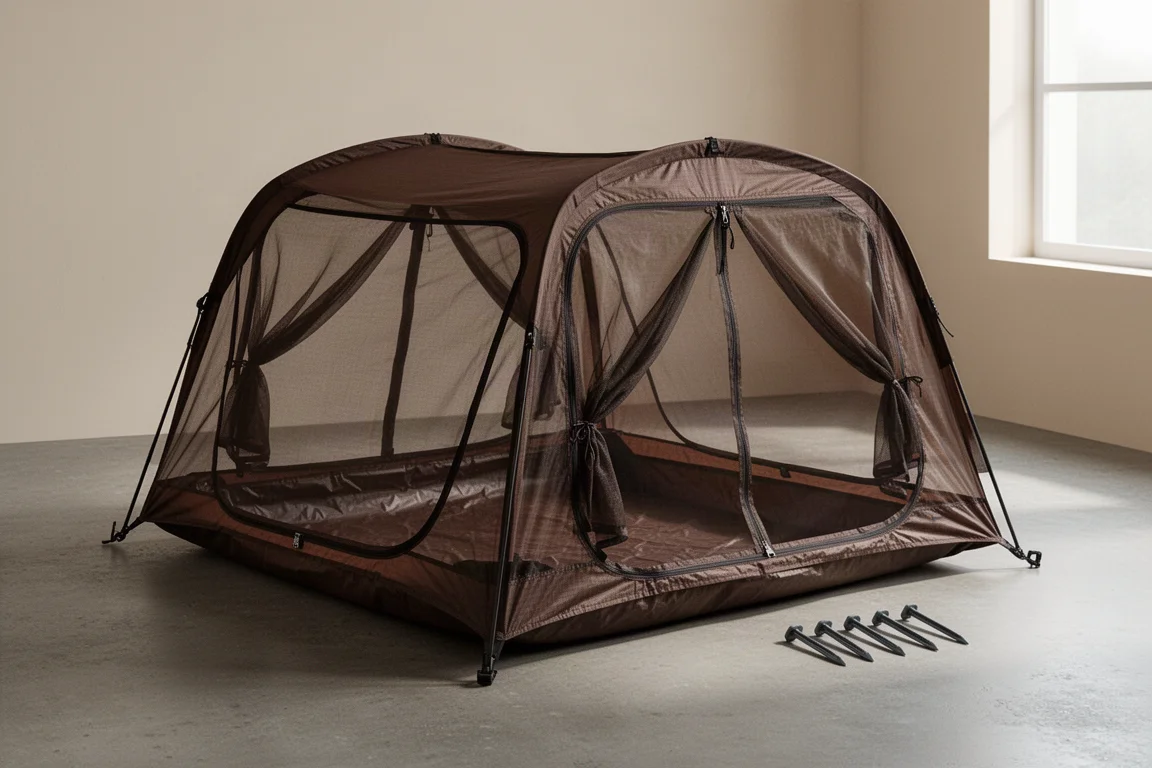
Both are inner shelters rather than freestanding tents. Each stands about 26 inches tall inside and is intended for users under 6 feet 3 inches. Both have two doors that can be tied back and stowed out of the way, bathtub floors, and generous mesh walls for airflow.
Both also have to be staked out. The wire frames have a tendency to curl, so the shelters lie flat only when the corners are pegged down. Neither ships with quality stakes; both include plastic pegs that are worth replacing before your first trip. Interior volume is modest on both, closer to a bivvy than to a tent.
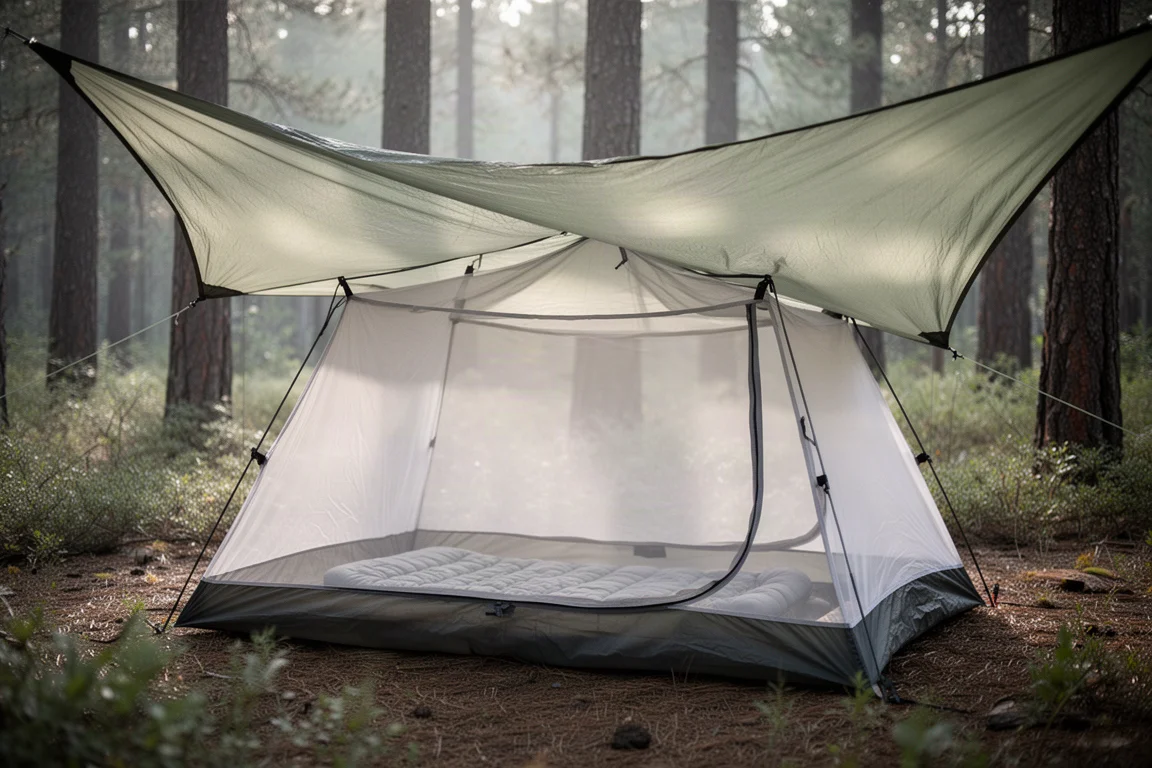
That shared layout is the reason the two products are worth comparing at all. Once you understand what they have in common, the remaining differences are easier to weigh against your own priorities.
Katoma IBNS Instant Setup Tent: Design and Materials
The Katoma uses a 20 denier nylon no-see-um mesh with a 75 denier nylon ripstop floor. Nylon is the lighter and stronger of the two fabrics in this comparison, and it feels noticeably better in the hand than the polyester used by the lower-cost alternative.
The frame is fiberglass. Setup is quick: the shelter springs into shape and only needs to be staked out at the back and the front. Packed down, it measures about 13 by 13 inches and roughly 3 inches thick, and it weighs 2 pounds. Retail price is $175, though it was listed at $140 on Amazon at the time of writing.
Two features set it apart. Clips connect the pole to a fly, so the inner can be built into a full tent with the right add-on. The shelter is also designed to connect to a cot rather than simply rest on top of one. The internal pocket sits at the center of the head end, a sensible spot for a phone or a headlamp.
Katoma IBNS Instant Setup Tent: Real-World Use
Interior space is the trade-off. The Katoma is a low shelter, so you will be sitting up with limited headroom, and it works best as a sleeping space rather than somewhere to spend an evening. Ventilation through the mesh is excellent, and the two doors make entry and exit easy from either side.
The compact packed size is a genuine advantage. It slides into a normal backpack without a fight, which is not something every shelter in this class can claim. Combined with the 2 pound weight and the nylon construction, it is the better choice for anyone carrying their shelter on foot rather than in a vehicle.
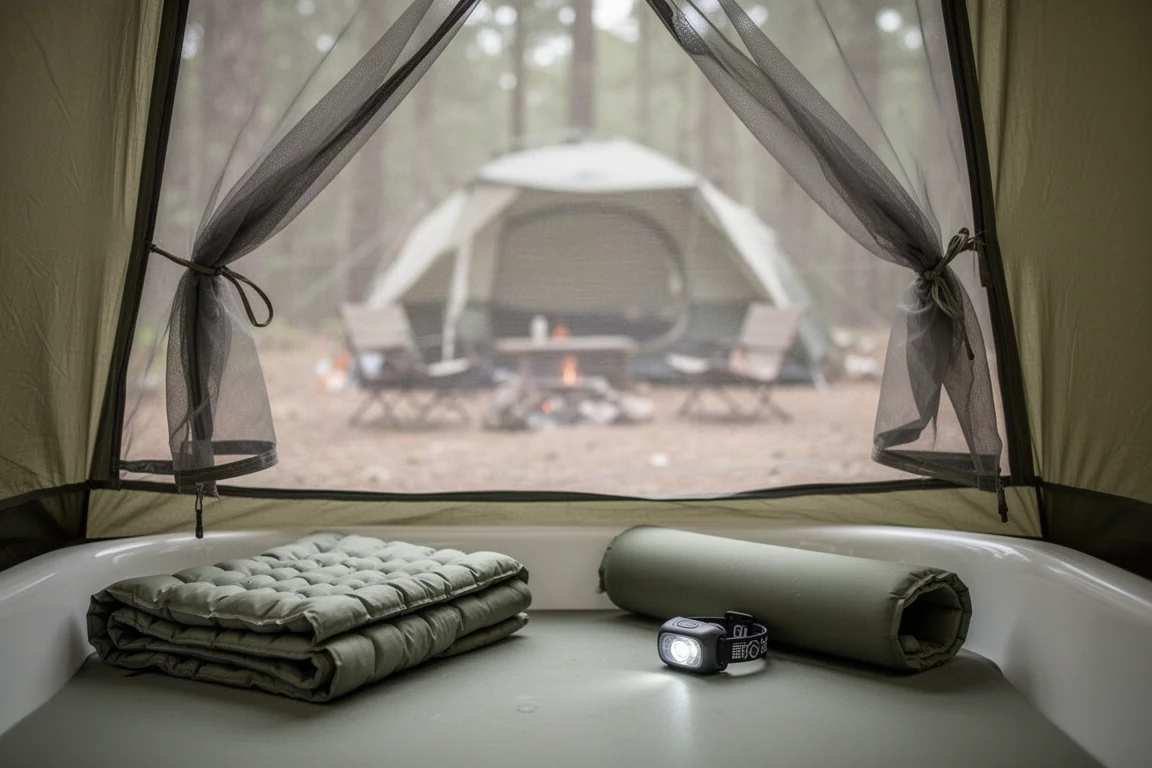
If you want the cot connection, the fly clips, or the smaller packed footprint, this is the shelter that delivers them, and the material quality is the part you notice every time you handle it.
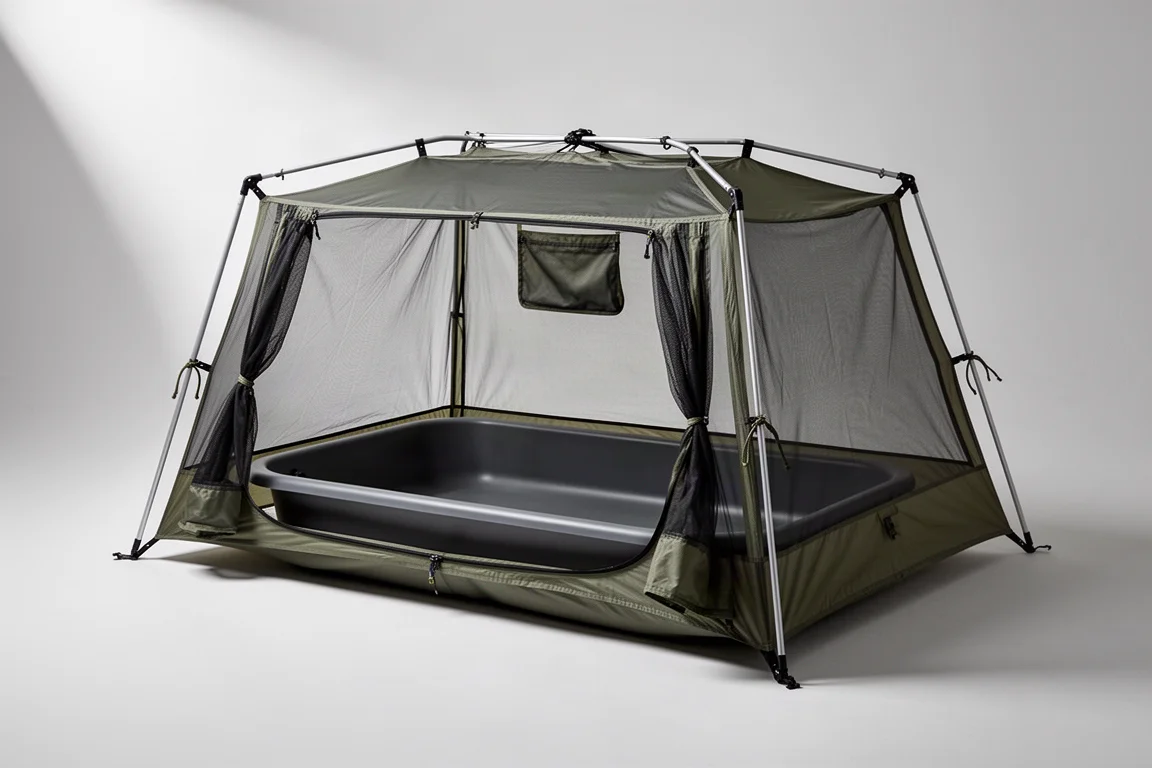
US GI Industries Bivvy Tent 2C: Design and Materials
The US GI Industries shelter uses 210 denier polyester ripstop instead of nylon. Polyester is heavier and not quite as strong, and the difference is easy to feel. The storage bag feels cheaper as well.
Packed, it measures roughly 18 inches long and about 2.5 inches thick, and it weighs 2.2 pounds. Setup and breakdown instructions are printed on the inside of the storage bag, and the compression strap is sewn directly to the shelter. It ships with four plastic stakes.
Like the Katoma, it has two doors, a bathtub floor, and plenty of mesh. Two design differences matter: there are no clips for attaching a fly, so it cannot be converted into a full tent, and it can be placed on a cot but not connected to one. The internal pocket is on the left side rather than centered at the head.
Price is the headline. The US GI Industries shelter is $70 and is available in two colors, Dark Earth, a coyote tone, and OD Green. That is roughly half the cost of the Katoma.
US GI Industries Bivvy Tent 2C: The Frame Material Problem
Here is where the two products stop being interchangeable. The company states that the frame is PVC coated stainless steel and that it is stronger than fiberglass. Hands-on inspection shows the poles are fiberglass, and owners who have received or broken poles report the same.
That detail matters for handling as well as for trust. Fiberglass can splinter, and the strands irritate skin, so broken pole sections need to be handled with gloves and disposed of carefully rather than pushed back into a pack.

A misstated material affects two things. It changes how buyers plan around durability and replacement parts, and it makes every other specification harder to take at face value. In size, ventilation, and setup process, the shelter is otherwise very close to the Katoma.
What to Check Before Buying a Bug Net Shelter
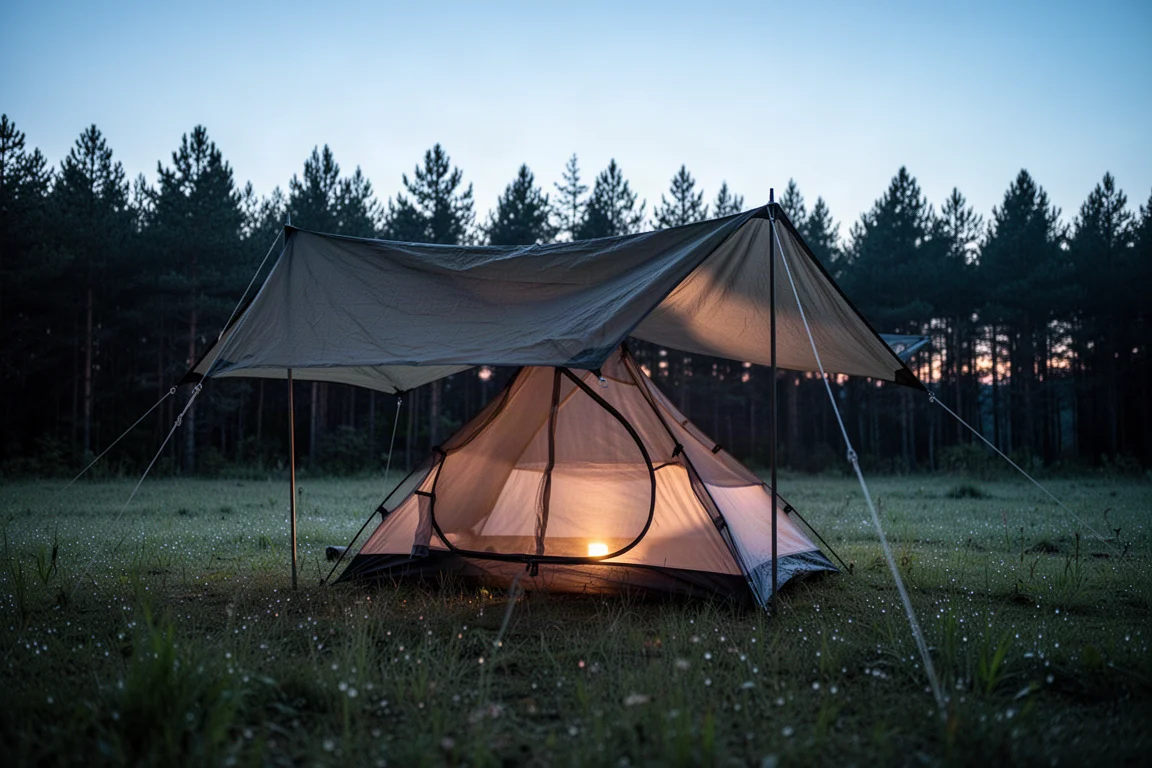
A few practical points apply to either shelter. Decide first whether you want a bug inner or a proper tent. Both of these are confined spaces and neither replaces a roomy tent. If you plan to sleep under a tarp, make sure the tarp is large enough to keep blowing rain off the mesh, since neither shelter is weatherproof on its own.
Check the packed dimensions against your backpack before you commit. An 18 inch roll is harder to fit than a 13 inch one, and that difference shows up every morning when you pack up. Replace the included stakes with something more substantial, since the stock pegs on both are the weakest part of the kit.
Finally, remember that size is a choice rather than a constraint. Larger bug tents exist, and a bigger inner pitched under a tarp works well, costs less than a full tent, and gives you room to move.
Buying Advice
The Katoma IBNS Instant Setup Tent is the stronger buy if you want nylon fabric, a 2 pound packed weight, a 13 by 13 inch footprint that fits inside a backpack, plus the cot connection and the fly clips. At $140 to $175 it costs more, but the materials and the extra features justify the gap for anyone who carries their shelter on foot.
The US GI Industries Bivvy Tent 2C Bug Net Shelter is half the price at $70, and in shape, ventilation, and setup it is very nearly the same product. If price is the deciding factor and you are comfortable with polyester fabric and a longer packed size, it can do the job.
The unresolved pole claim is the reason to think twice. A company that misstates the frame material makes the rest of the specification sheet harder to trust, and that is a real consideration when the shelter is what stands between you and the insects.
Conclusion
Both shelters solve the same problem in nearly the same way, and both are low, mesh-lined sleeping spaces that work best under a tarp. The Katoma wins on materials, packed size, and flexibility. The US GI Industries version wins on price alone, and its stated frame material does not match what the poles are actually made of. If you want a bug net inner that is easy to carry and easy to build on later, the Katoma is the safer choice.
Further reading
Related Reviews
Camping Shelters
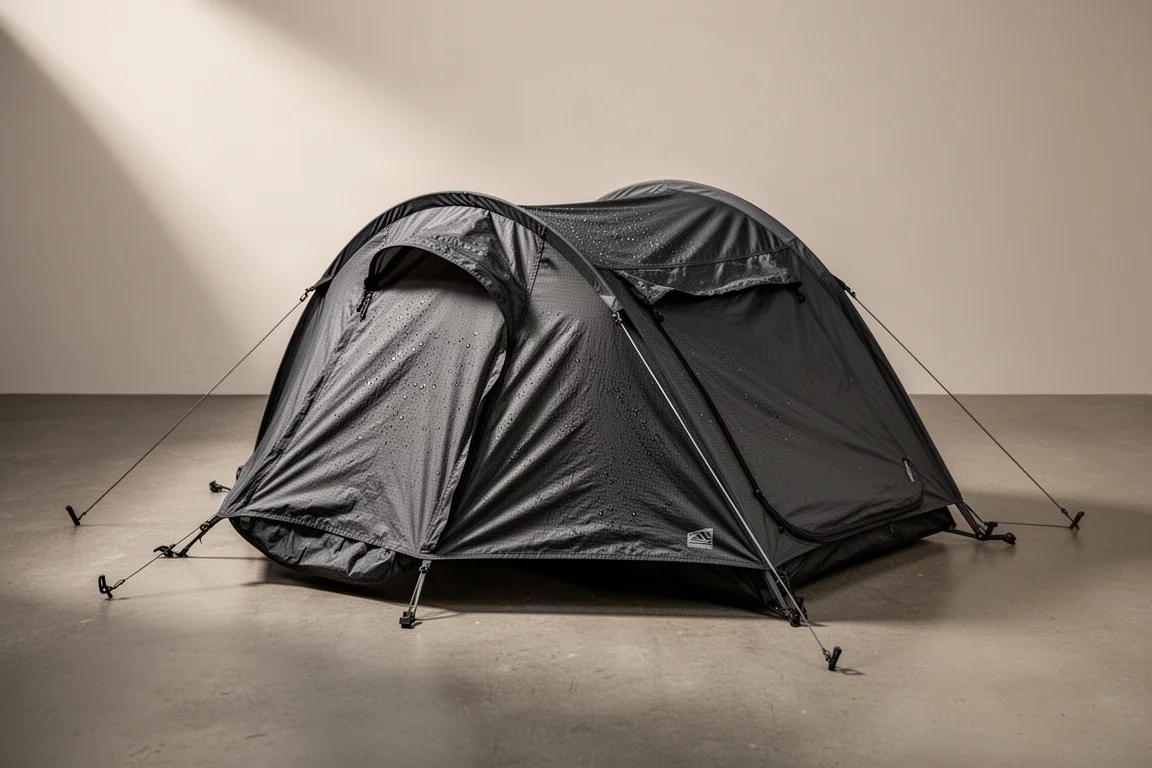
Alps Mountaineering Stealth 1 Bivy Review: A Waterproof Claim That Does Not Hold Up
The Alps Mountaineering Stealth 1 Bivy carries a 2,000 mm hydrostatic head rating and a waterproof claim, but sustained rain exposure and build quality concerns make it difficult to recommend.
Camping Shelters
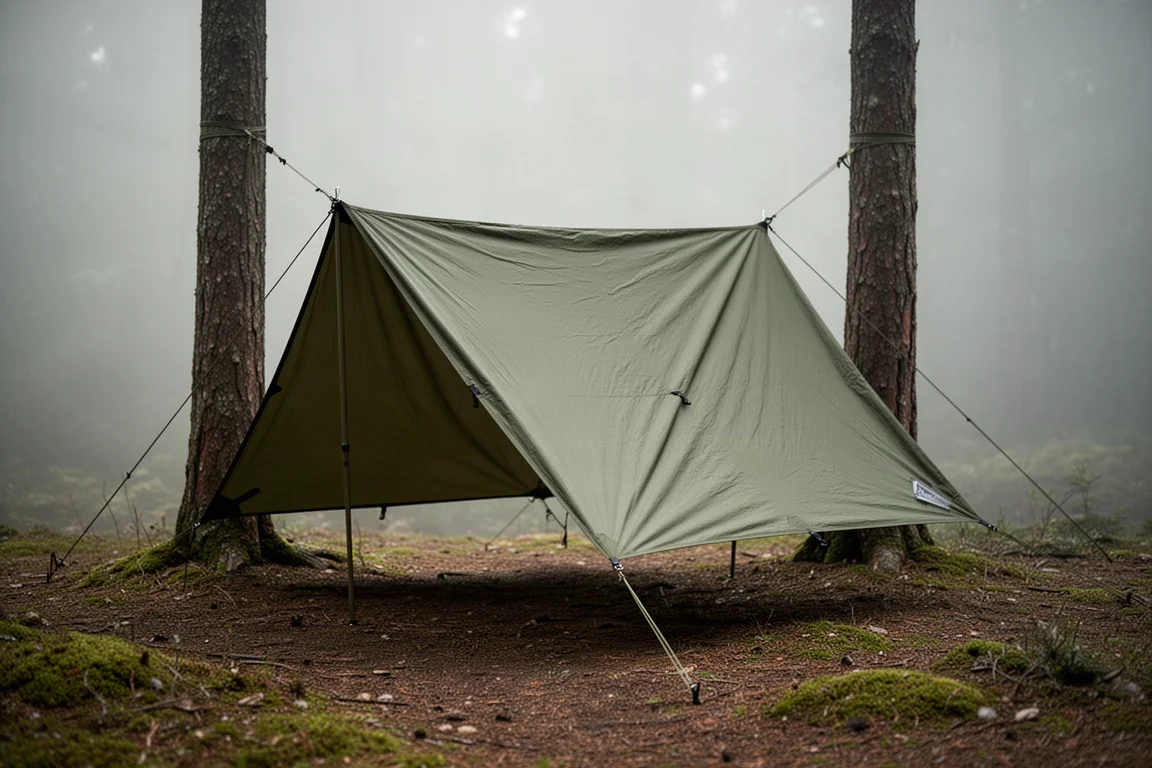
AquaQuest Safari Hybrid 20 ft x 13 ft Tarp Review: Two Years Under a Very Large Roof
A long-term look at the AquaQuest Safari Hybrid 20 x 13 tarp, covering build quality, weather protection, setup realities, and who should buy one.
Camping Shelters
Backcountry Light Mesa 3 Hot Tent and Floor SL Tarp Review
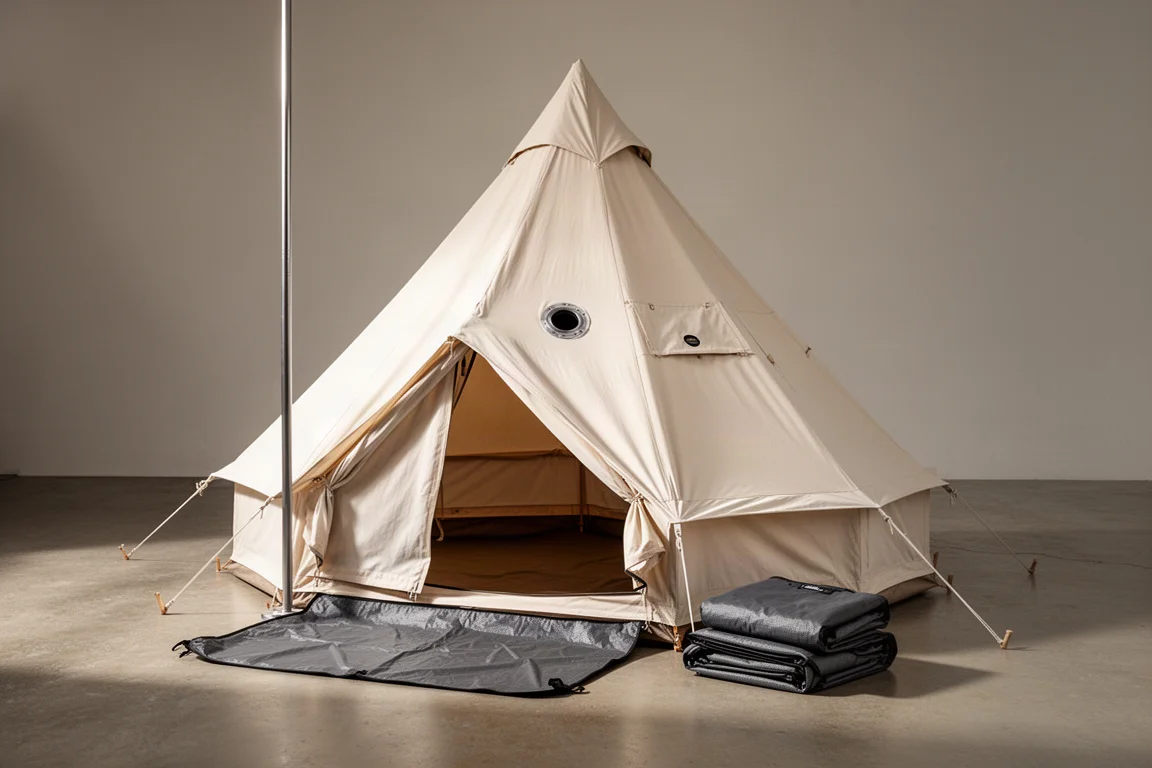
A practical look at the Backcountry Light Mesa 3 four-season hot tent and its optional Floor SL Tarp, covering materials, stove jack design, packed weight, pricing, and the trade-offs to weigh before buying.