Bike Brakes
Juin Tech F1 Review: Cable-Actuated Disc Brakes With a Hydraulic Reservoir
A practical look at the Juin Tech F1, a cable-actuated disc brake caliper with an internal hydraulic reservoir, and whether it is worth swapping in over basic mechanical discs.
Introduction
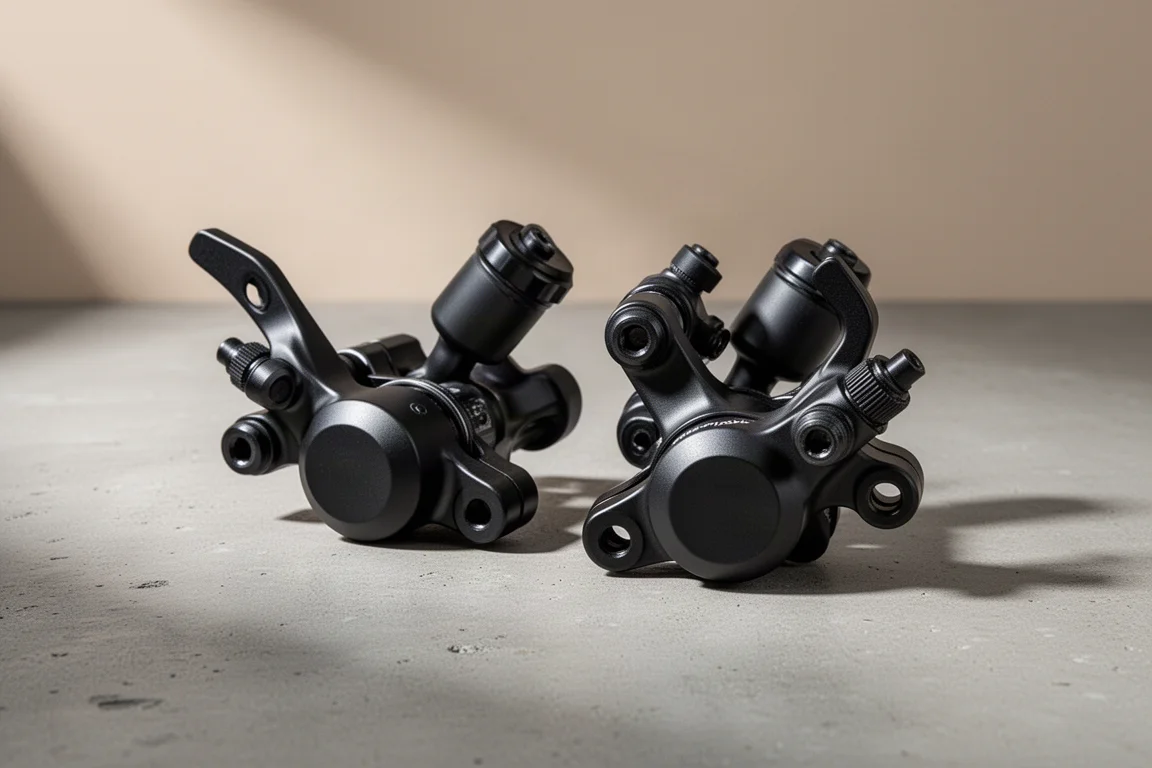
Cable-actuated disc brakes have a long-standing reputation problem. They stop the bike, and on a hard squeeze they can even lock a wheel, but the lever feel and modulation rarely match what riders expect from a modern performance groupset. The Juin Tech F1 takes a different route to that problem: it keeps the cable pull but places a hydraulic reservoir inside the caliper itself, so hydraulic fluid does the work at the pads while a standard brake cable does the actuation.
The F1 belongs to a small family of calipers built around that idea, alongside options such as the TRP Hy/Rd. Pricing moves with the seller and the channel. It is roughly a 130 pound purchase through Amazon, and it can often be found for under 100 pounds on AliExpress depending on the seller, with direct-from-China orders typically taking six to eight weeks to arrive. The package can include disc rotors in a choice of sizes, mounting bolts in different lengths, and colour options, so it is worth reading the listing carefully before ordering.
The question this review addresses is a narrow one: does the F1 deliver a meaningful improvement over a basic mechanical disc caliper, and does that improvement justify the cost? The short answer is yes, with caveats that are worth understanding before you buy.
Who the Juin Tech F1 Is For
The F1 makes the most sense for riders who are already on a cable-actuated disc brake system and want a clear step up in feel without rebuilding the bike around hydraulic lines. If your current calipers are functional but vague, if the lever feels spongy, or if you can only get real stopping power by grabbing a fistful of lever, this is the category of upgrade that changes the character of the bike.
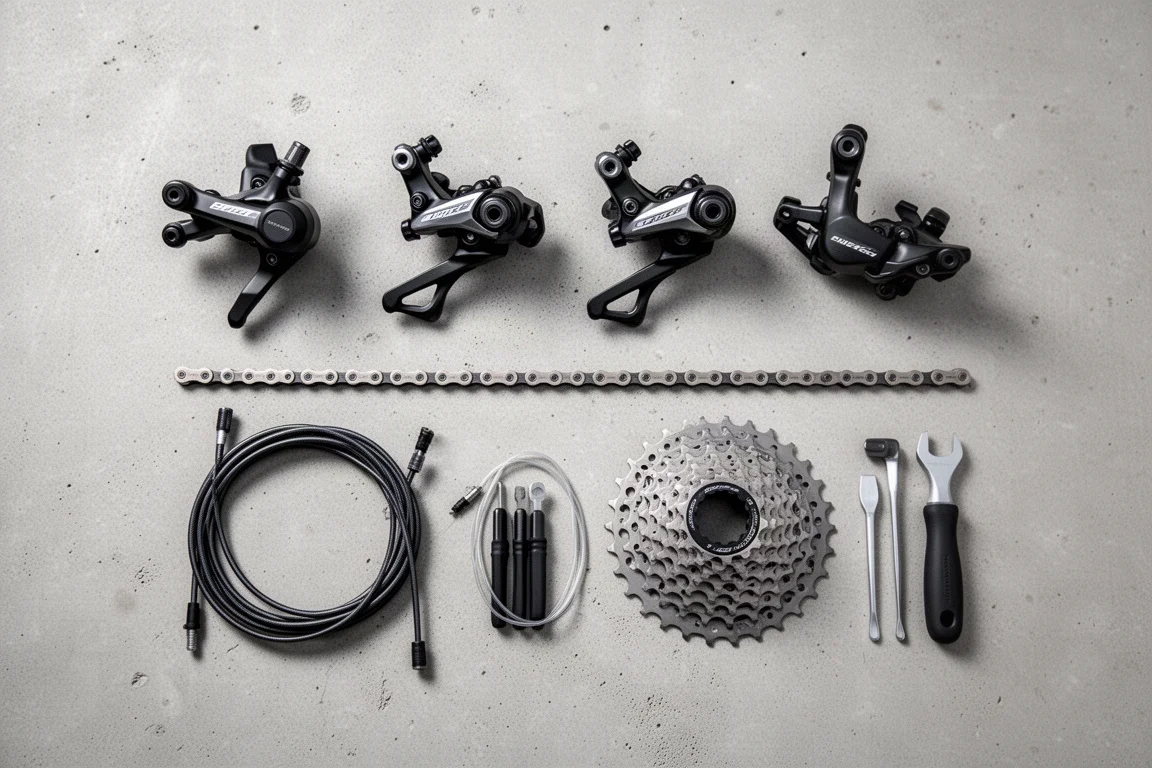
It also suits riders assembling a budget groupset where the brakes are the weak link. A 12-speed carbon groupset can be bought as a complete package, but the calipers bundled with some of those kits do not match the performance level of the rest of the drivetrain. Swapping just the brakes is a cheaper fix than replacing the whole groupset.
A third group benefits too: riders who want to avoid the workshop dependency of full hydraulic brakes. Cable-actuated systems are simple to install and adjust at home, and the F1 adds a hand-adjustable element that makes pad and cable tension changes a roadside task rather than a workshop booking.
Main Strengths
The headline feature is the internal hydraulic reservoir, driven by a conventional cable. In practice that means more power and better lever feel than a purely mechanical caliper, while keeping the cable routing and the simple installation that mechanical systems are known for.
Weight is another point in its favour. The F1 calipers weigh in at around 314 grams for the pair without bolts, compared with roughly 439 grams for the calipers they replaced in this build, a saving of well over 100 grams.
The service and setup details are sensible as well. The system runs on mineral oil and is compatible with Shimano-style disc pads, and mineral oil does not use DOT fluid, so it will not deteriorate in the same way and does not demand regular bleeding. There is a small adjustment wheel on the caliper body that can be turned by hand to change cable tension and therefore how firmly the pads sit against the rotor. That is a genuine advantage over hydraulic brakes, where pad adjustment often means a bleed or a trip to a shop.
On the road, the difference is not subtle. These brakes feel strong and grippy, they can lock up a wheel without an especially hard squeeze, and they are clearly better than rim brakes. They also feel noticeably less spongy than the basic calipers they replaced, both on the stand and out riding.
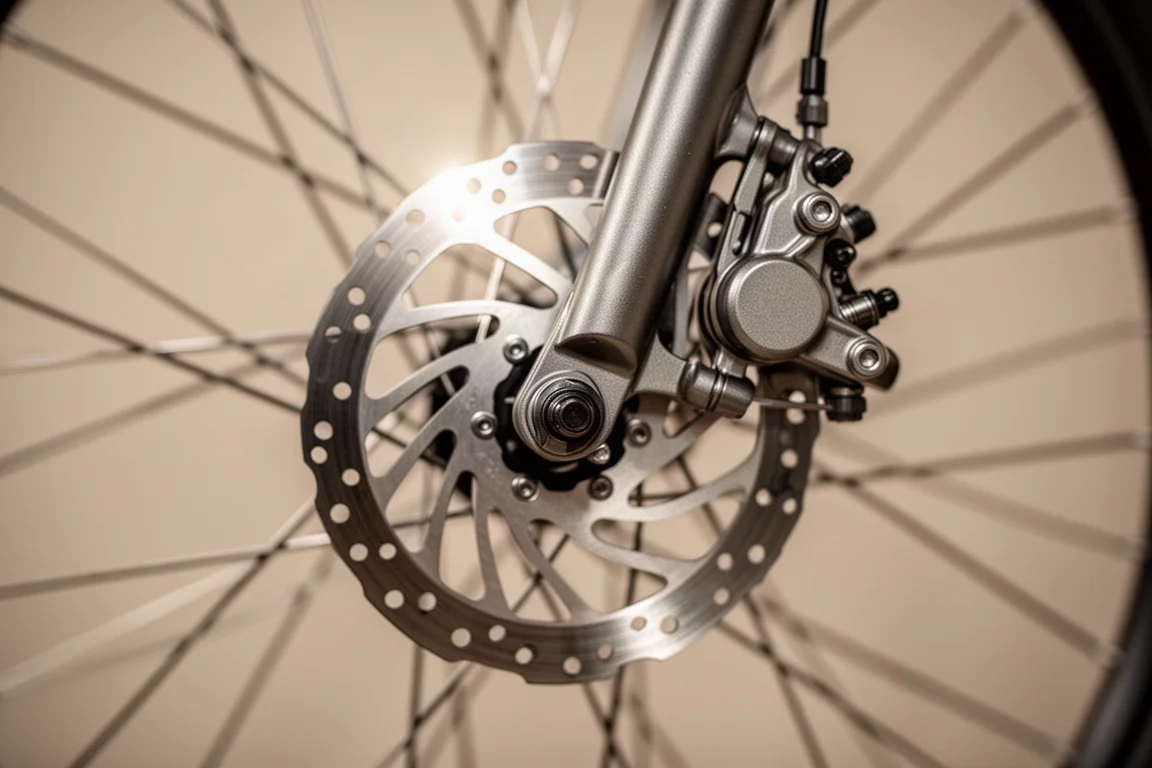
Aesthetics matter to some buyers, and here the F1 also reads as a performance part. The finish is sleek and racy in a way that the plainer calipers common on budget builds are not.
Installation Notes and Cable Routing
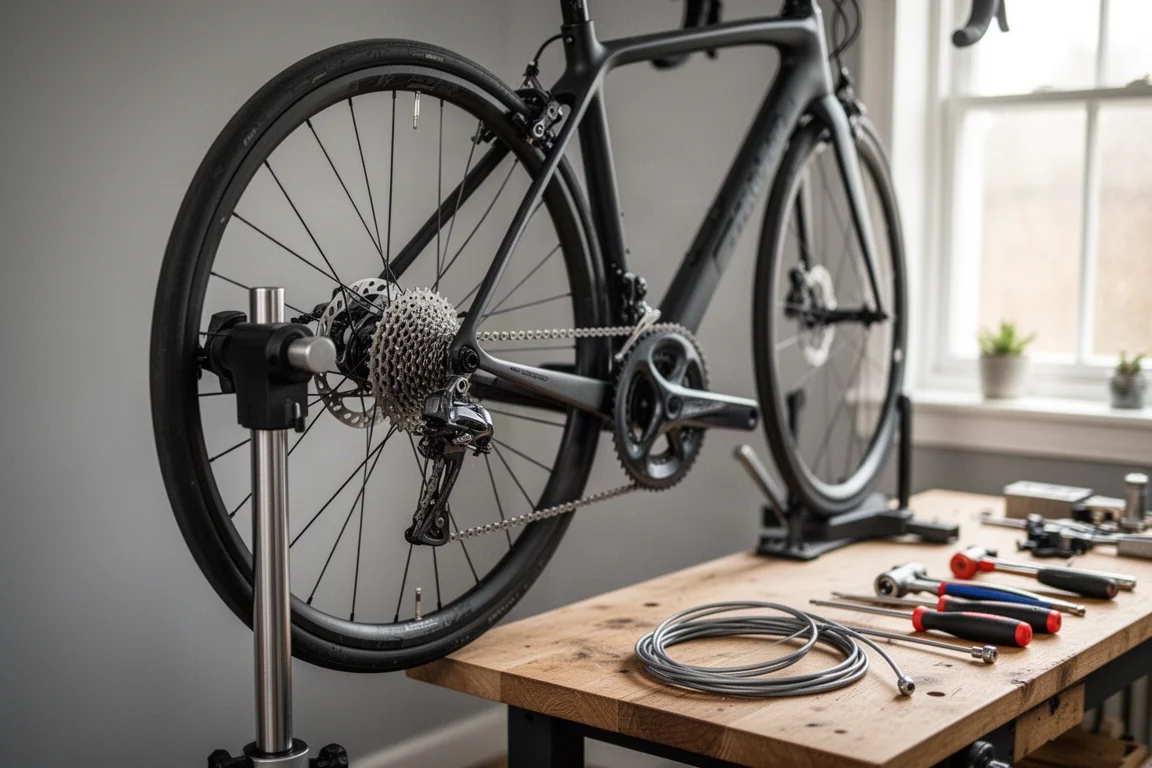
Fitting the F1 is straightforward. The same mounting bolts, the same inner and outer cables, and the same housing can be reused, so the swap is essentially an unbolt-and-bolt-on job for anyone comfortable with basic bike maintenance.
The one variable is frame routing. On a Scott Foil, the cable had to bend sharply around the frame to reach the caliper, and a little extra outer cable would have made the path smoother. It still worked, but it is the kind of detail that varies from frame to frame. Other frames have different exit positions for the cable, so routing that looks awkward on one bike may be perfectly clean on another.
The brakes were set up with ordinary brake housing, and the difference over the previous calipers was already significant. There is likely more to gain from compressionless housing, though that adds cost. Performance should also improve over the first few rides as the pads bed in.
Things to Consider Before Buying
The most important thing to be clear about is what the F1 is not. It is not a full hydraulic brake. Riders coming from SRAM Red, Magura, Dura-Ace or even the cheaper GRX hydraulic options will find those systems outperform the F1 significantly. That gap is the inherent compromise of any cable-actuated design, and no caliper in this category closes it completely.
That also means the marketing wording on the box, which promises perfect performance, should be read as marketing. The F1 is very good for what it is, but it does not sit in the same league as a proper hydraulic setup.
Longevity is an open question. A fresh set of impressions cannot speak to how the calipers hold up over thousands of kilometres, so buyers should treat long-term durability as unproven until more riders have put serious distance on them.
Cable routing is worth checking against your own frame before ordering, particularly if your rear cable exits at an awkward angle. And there is a service consideration: buying through more established retailers costs more but generally makes returns and support easier, while ordering direct from a marketplace seller can save money at the expense of convenience if something goes wrong.
Finally, budget buyers should weigh the alternative. Cheaper calipers that use a similar internal reservoir design exist, but they come with their own trade-offs in finish, refinement and support.
Where the Juin Tech F1 Sits in the Market
The F1 sits in the middle of a small spectrum. At the lower end, budget calipers from marketplace brands can be bought for around 60 pounds all in with rotors. At the upper end, the TRP Hy/Rd uses the same hydraulic-reservoir-in-a-cable-caliper concept but costs around 240 pounds, and that premium buys access to better-known retailers and potentially better customer service if a return is needed.
At roughly 120 pounds, and often less depending on the seller, the F1 lands between those two poles. It costs more than the cheapest option and delivers a notably more refined, more performance-oriented product with a better finish. It costs far less than the premium alternative while using the same underlying technology.
For riders who want the concept without paying top-of-market prices, that is a defensible position to be in.
Buying Advice
The most useful way to think about the F1 is as part of a build budget rather than as a standalone purchase. A complete 12-speed carbon groupset bought as a package can cost around 300 pounds, and it includes brakes, chain, cassette and most of what is needed to get a bike rolling.
If you buy the shifters and derailleurs on their own for around 200 pounds, then spend around 100 pounds on a set of F1 calipers, you end up with a better braking setup and you are only missing a chain and cassette. Based on how the F1 performs in use, that is the route worth taking. The bundled calipers on some budget groupsets are simply not pleasant to live with, particularly for anyone who has spent time on hydraulic disc brakes, and the F1 is a much more satisfying part to ride.
Two practical tips before ordering. First, confirm which rotor size and mounting bolt length you need, since both vary by bike and the listing options matter. Second, if you are ordering from a marketplace seller and want the parts quickly, expect to pay a premium for faster delivery rather than waiting out the standard six to eight week window.
Conclusion
The Juin Tech F1 does exactly what it promises within the limits of a cable-actuated system. It brings hydraulic fluid into the caliper, keeps installation simple, saves a meaningful amount of weight over basic mechanical calipers, and delivers braking that feels strong, grippy and far less spongy than what it replaces.
It is not a substitute for full hydraulic brakes, and anyone expecting that will be disappointed. But for riders who want a clear, affordable improvement in braking feel without rebuilding their bike around hydraulic lines, the F1 is an easy recommendation, particularly as part of a budget groupset build where the stock calipers are the weakest component.
Product link
View more details for Juin Tech F1
This product is mentioned in the review. Check the specifications, options, and compatibility before buying.
View more details for Juin Tech F1Further reading
Related Reviews
Bike Brakes
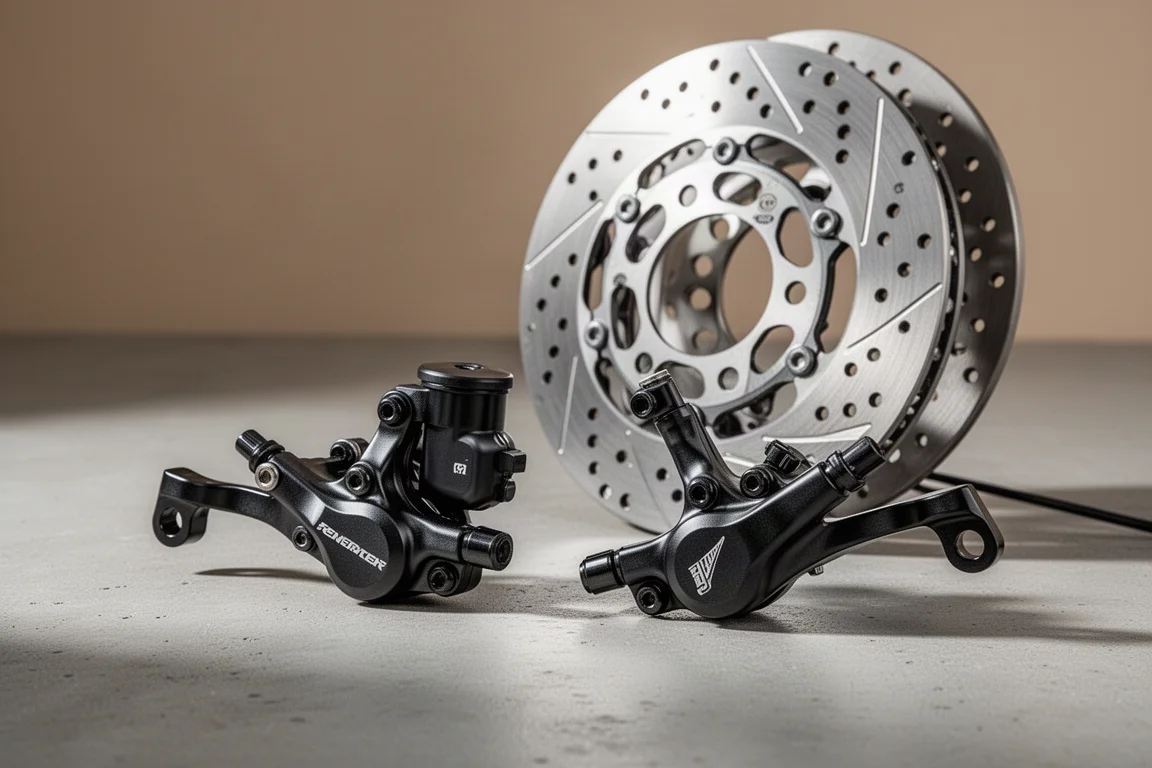
Juin Tech F1 vs TRP HY/RD: Cable-Actuated Hydraulic Disc Brakes Compared
Two cable-actuated hydraulic disc brake calipers compared on feel, weight, price, and setup, so you can pick the right upgrade for a budget groupset.
Cycling Components
7 Bike Fit Products Fitters Avoid: What to Check Before You Buy
Seven bike components that regularly cause knee, foot and saddle problems, with the specific concerns behind each one and what to look for instead.
Cycling Components
AliExpress Bike Parts: 8 Brands Worth Knowing Before You Order
A practical guide to buying bike parts from AliExpress, covering eight established brands, realistic shipping and tax expectations, customer service, and how to avoid counterfeit components.