Tower Speakers
JTR RTJ Modular Tower Speakers Review: A Three-Box Passive Stack Built for Scale
A close look at the JTR RTJ modular tower system, from coaxial point-source imaging and 18-inch bass drivers to what it really takes to live with a stack this large.
Introduction
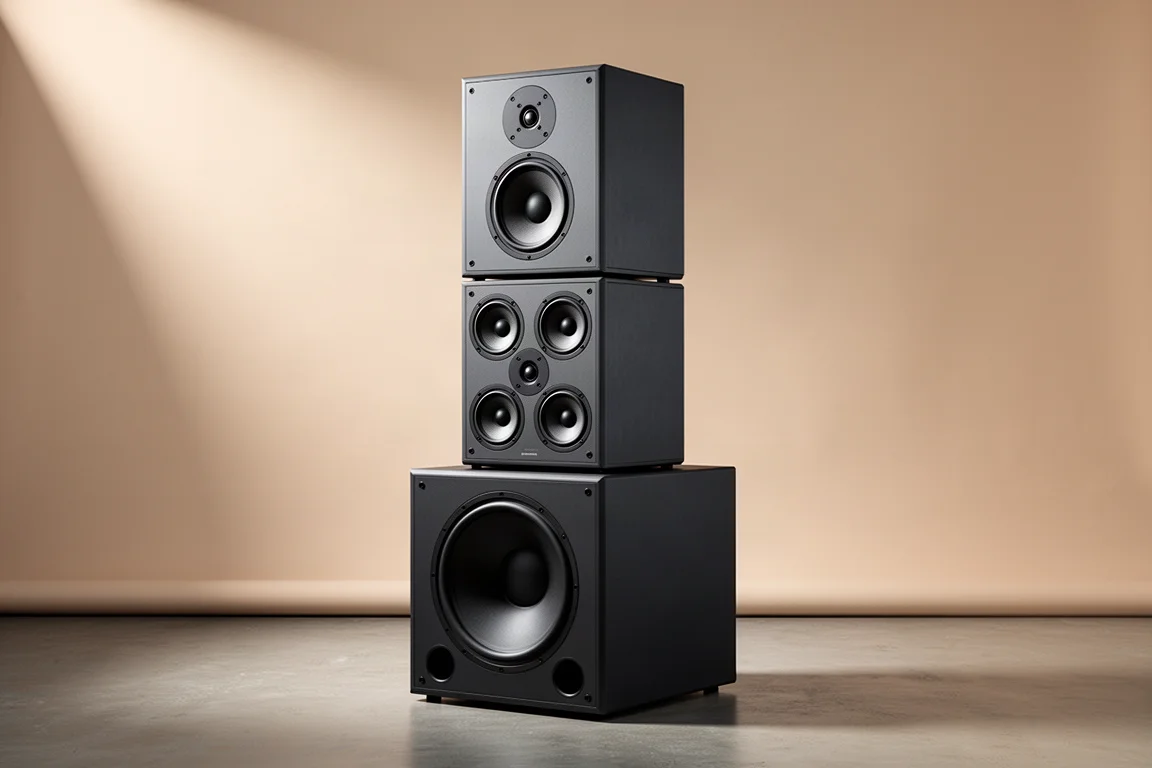
The JTR RTJ is a modular tower loudspeaker built as a stack of three separate cabinets rather than one monolithic box. The layout is the first thing anyone notices: an 18-inch driver in the bottom cabinet, four 10-inch drivers above it, a two-way driver section in the middle, and a second 18-inch driver at the top. Together they form a full three-way passive design that hands off to external amplifiers instead of carrying its own power.
That modular approach is not only about acoustics. Splitting the tower into three manageable sections makes the system far easier to move, position, and set up than a single enclosure of the same total size would be.
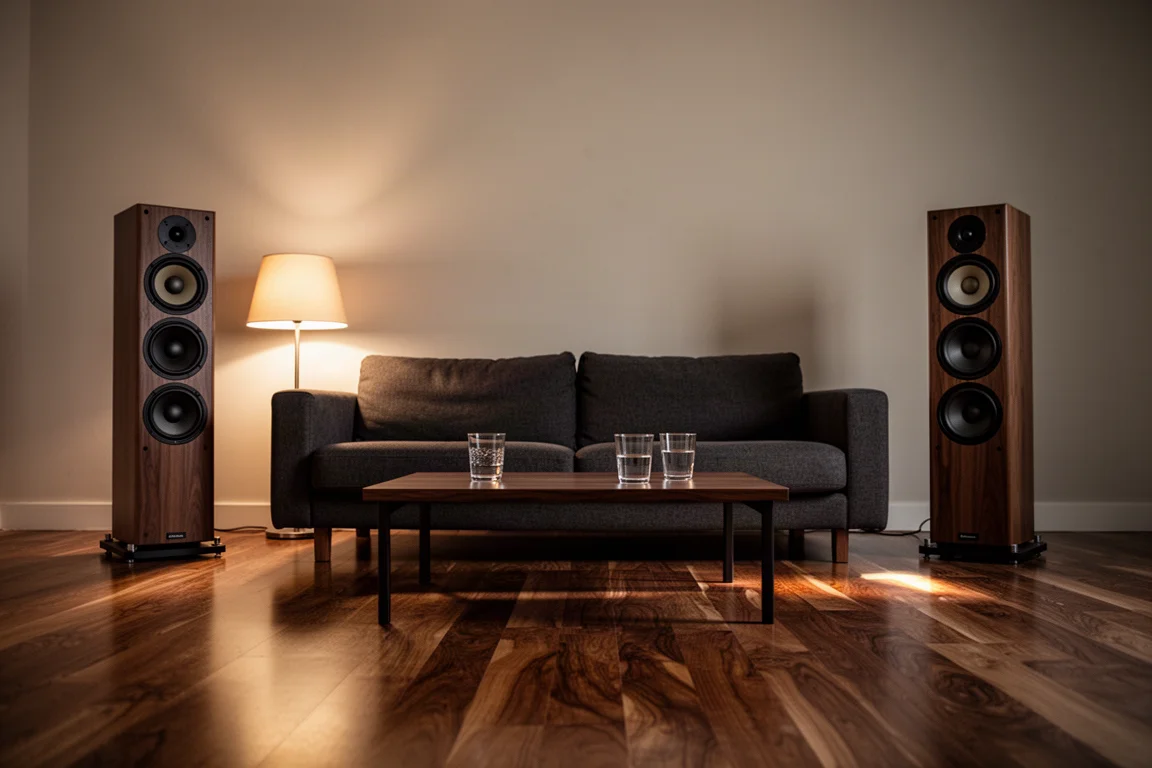
Because the RTJ is passive, the character of the sound depends heavily on what drives it. The bass cabinets are normally paired with a dedicated amplifier, while the mid and high sections benefit from separate amplification. That is worth keeping in mind if you are coming from a powered or all-in-one system.
Who These Speakers Are For
These are speakers for listeners who want scale and physical impact from a two-channel system, and who have the floor space and rack space to support it. The RTJ also fits a shared family listening room, where someone can walk up, choose music from a simple streaming interface, and get a satisfying result without touching a single setting.
They suit listeners who care about imaging as much as output. The coaxial driver at the heart of the design is time coherent, and that is the reason instruments lock into place with a precision that conventional multi-way speakers often struggle to match. It is the combination of pinpoint placement, high efficiency, and genuinely deep bass that defines the appeal here.
They are not, however, a discreet solution. Anyone who wants speakers to disappear into a room should look elsewhere.
Main Strengths
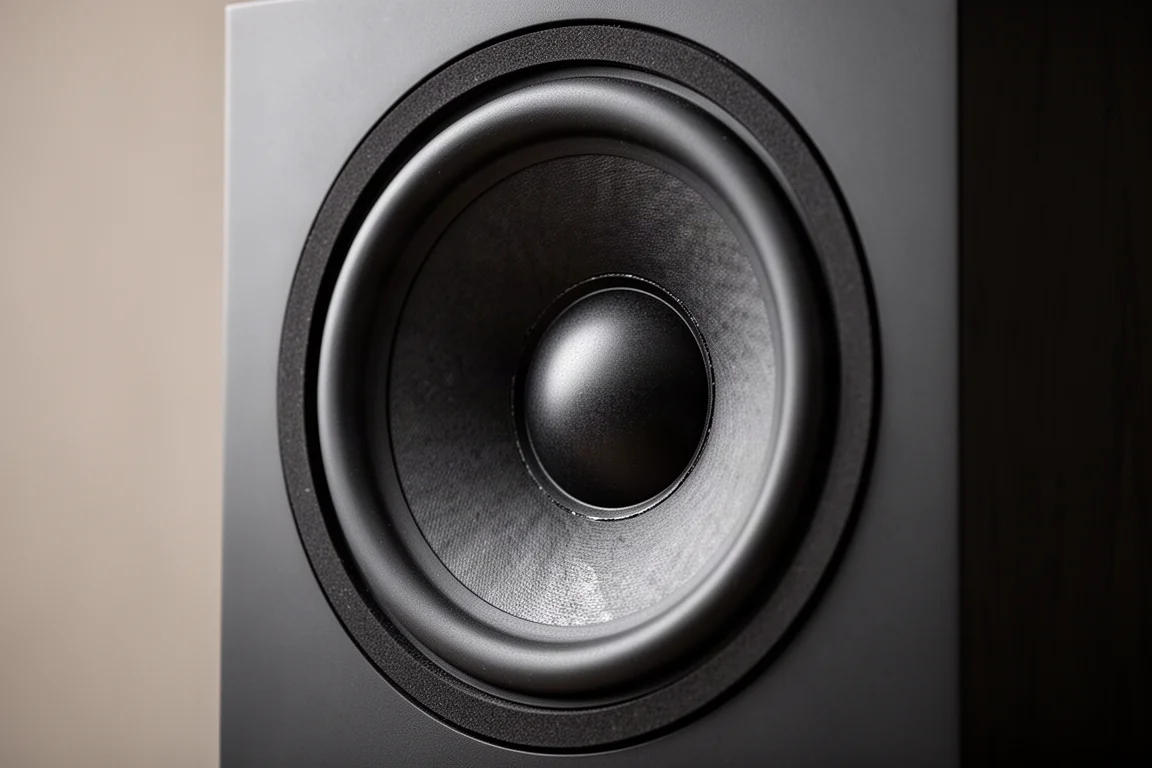
The headline strength is the bass. The 18-inch drivers are the foundation of the system and the part most listeners remember. They play deep and they play tight, and they hold together at levels where lesser designs begin to sound strained. What stands out is the absence of boom: even with the low end pushed hard, the presentation stays controlled rather than thick or offensive.
Reliability is the second strength, and it is easy to overlook on a specification sheet. A long-term owner of this system reports four years of use and more than 800 demonstration sessions, running the same punishing material each time, without a single blown driver and without a warranty claim. For a system asked to operate near the edge of its capability on a regular basis, that is a meaningful detail.
Imaging and Detail in Practice
Time coherence is the technical reason the RTJ images the way it does, and the practical result is easy to hear. Drum work is a good test. Fills move across the kit with a sense of space that puts the listener behind the drummer rather than in front of a pair of boxes, and the small grace notes around a snare hit stay audible, with their decay intact, instead of blurring into the main beat.
Two-channel spatial effects come through clearly as well. Claps placed off to one side of a mix stay anchored there, and whispered vocal layers spread around the listening position rather than collapsing into the centre. In a room with acoustic treatment that effect would be more pronounced still, but the point source behaviour of the coaxial driver is doing the heavy lifting.
Living With the RTJ System Day to Day
A system of this size only justifies its footprint if it actually gets used, and the RTJ setup described here is the most-used system in its household. Streaming runs through a network player chosen mainly for its interface: browsing and searching for music from a tablet is simple enough that anyone in the house can do it unaided.
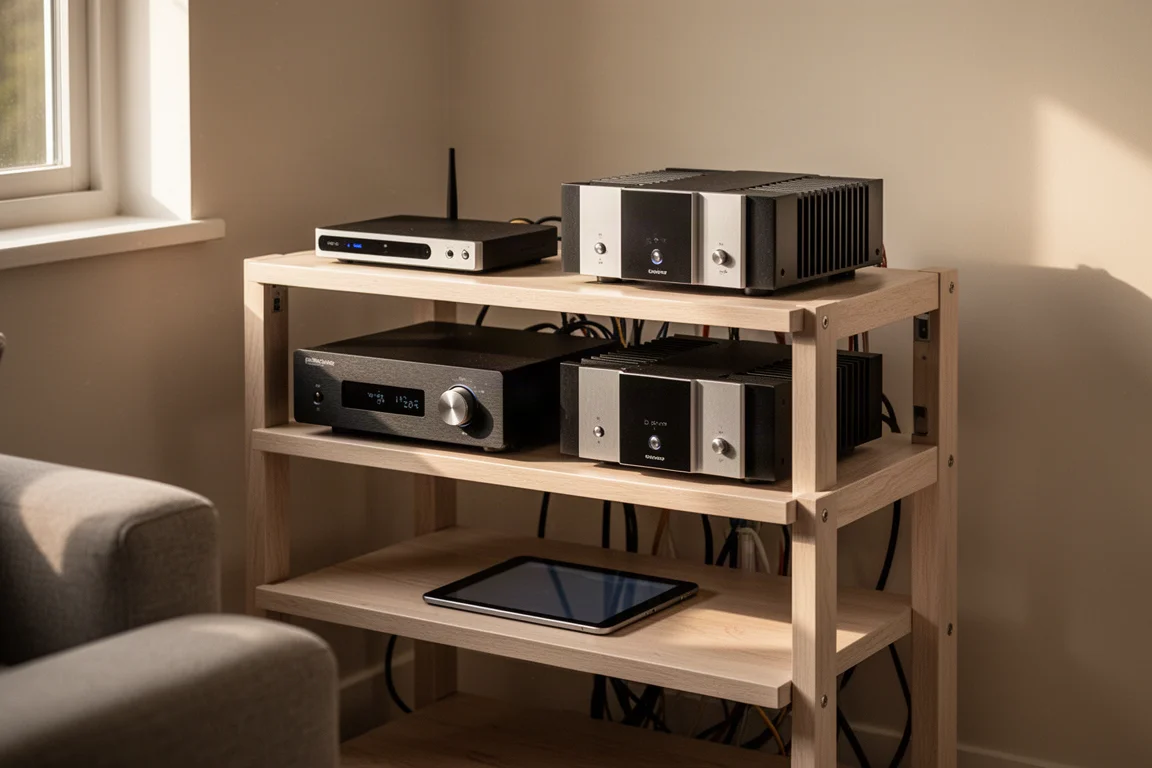
The supporting electronics are deliberately practical. A stereo preamplifier handles subwoofer integration and system switching, and the amplifiers drop into sleep mode when idle so the system can be left ready during the day. That combination of simple control and always-available playback is what turns a large speaker stack from a hobby project into everyday furniture.
Things to Consider Before Buying
The first consideration is space. Three stacked cabinets per channel take up real floor area, and they need room to breathe if the bass is going to integrate properly. A hardwood floor over a suspended structure, as in the setup described here, helps the low end travel.
The second is amplification. Because the RTJ is passive, the total cost of ownership includes the amplifiers, and the system rewards quality amplification for the mid and high sections. The bass cabinets are typically driven by a dedicated amplifier supplied with the system, while the mid and high sections benefit from a low-noise, low-distortion class D design. Budget for the whole chain, not just the speakers.
The third is current draw. At extreme playback levels this system can pull enough power to trip a household circuit, so it is worth knowing which outlets and breakers you intend to use before the speakers arrive. That is a wiring question rather than a fault, but it is better answered in advance.
Buying Advice
Match the system to the room before you match it to a specification sheet. The RTJ rewards a space with volume and a solid floor, and it will sound more controlled in a treated room than in a bare one. If your listening space is small or heavily reflective, the bass capability here will be harder to manage than the rest of the performance.
Think about the full signal chain at the same time as the speakers. A streamer with a clean, approachable interface, a preamplifier with proper subwoofer integration, and enough clean amplification for the mid and high sections will do more for the final result than any single component upgrade added later.
Finally, treat this as a long-term purchase. The modular cabinet design makes installation and future repositioning straightforward, and the durability record on the driver complement suggests the system will keep performing for years. Pricing and configuration details are best confirmed directly with the manufacturer or an authorised dealer, since the RTJ is offered as a system rather than a single boxed product.
Conclusion
The JTR RTJ modular tower is a serious two-channel system with a clear personality: coaxial point-source imaging at the top, enormous and well-controlled bass at the bottom, and a modular build that makes a very large speaker practical to own. It asks for space, amplification, and a willingness to plan the whole chain, and in return it delivers scale and precision that are hard to find in one package.
For listeners who want their music to have physical presence and who will genuinely use the system every day, the RTJ makes a strong case. For anyone short on room or looking for a discreet installation, it is the wrong tool, and that is worth being honest about before you start measuring walls.
Product link
View more details for JTR RTJ Modular Tower Speakers
This product is mentioned in the review. Check the specifications, options, and compatibility before buying.
View more details for JTR RTJ Modular Tower SpeakersFurther reading
Related Reviews
Tower Speakers
Arendal 1610 Tower 8 vs MoFi SourcePoint 888 vs MoFi V10: Three Tower Speakers Compared
A close look at three large tower speakers in a similar price bracket, from the punchy, heavy-built Arendal 1610 Tower 8 to the coaxial MoFi SourcePoint 888 and the high-output MoFi V10.
Tower Speakers
Definitive Technology BP9020 Review: A Powered Tower With Real Bass and a Few Quirks
A slim tower speaker that hides a powered 8-inch subwoofer inside the cabinet, delivering deep bass and a wide stage alongside some clearly defined trade-offs.
Tower Speakers
Emotiva XT1 Tower Speakers Review: Serious Clarity Under $1,000
The Emotiva XT1 brings three woofers, a dedicated midrange and an AMT tweeter to the sub-$1,000 tower market. Here is where it delivers and what to weigh first.