Speakers
JBL Stage 2 280F and 250B Review: Output, Value, and the Case for EQ
A two-speaker look at JBL's Stage 2 floorstander and bookshelf, covering real strengths, measured limits, and who each one actually suits.
Introduction
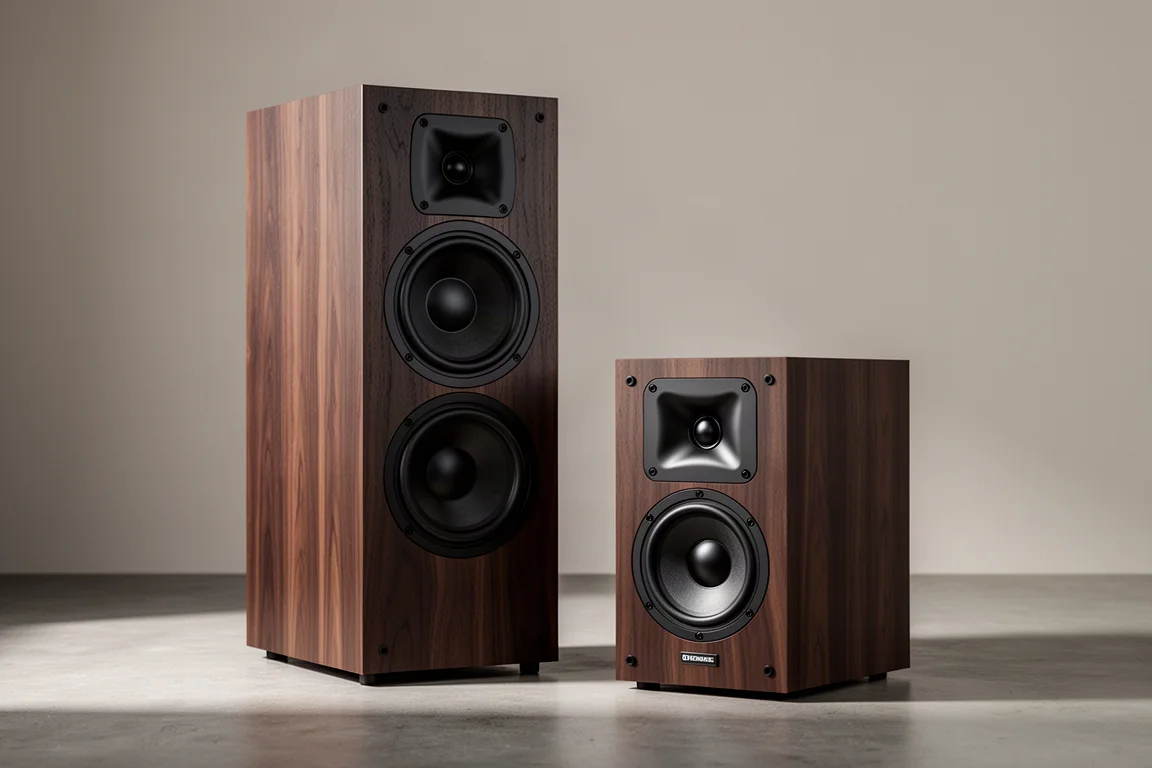
JBL’s Stage 2 range arrived with a straightforward pitch: a waveguide-loaded tweeter, a choice of cabinet sizes, and pricing aimed squarely at first-time buyers and budget home theater builders. The Stage 2 280F floorstander runs about $1,100 to $1,200 per pair, while the Stage 2 250B bookshelf comes in around $400 per pair.
That combination is easy to like on paper. In practice, both speakers share a specific personality. They deliver impressive output for their size, but they are not linear out of the box. Understanding that trade-off is the whole story here, and it is what determines whether either model belongs in your room.
Shared Design and What These Two Speakers Have in Common
Both models pair JBL’s HDI high-definition imaging waveguide with a 1-inch aluminum dome tweeter. The 280F is a 2.5-way design using two 8-inch woofers, with specified crossover points at 1.1 kHz and 2.1 kHz. The 250B is a two-way design built around a 5.25-inch midwoofer, using the same tweeter and waveguide combination, though crossed over at a different point.
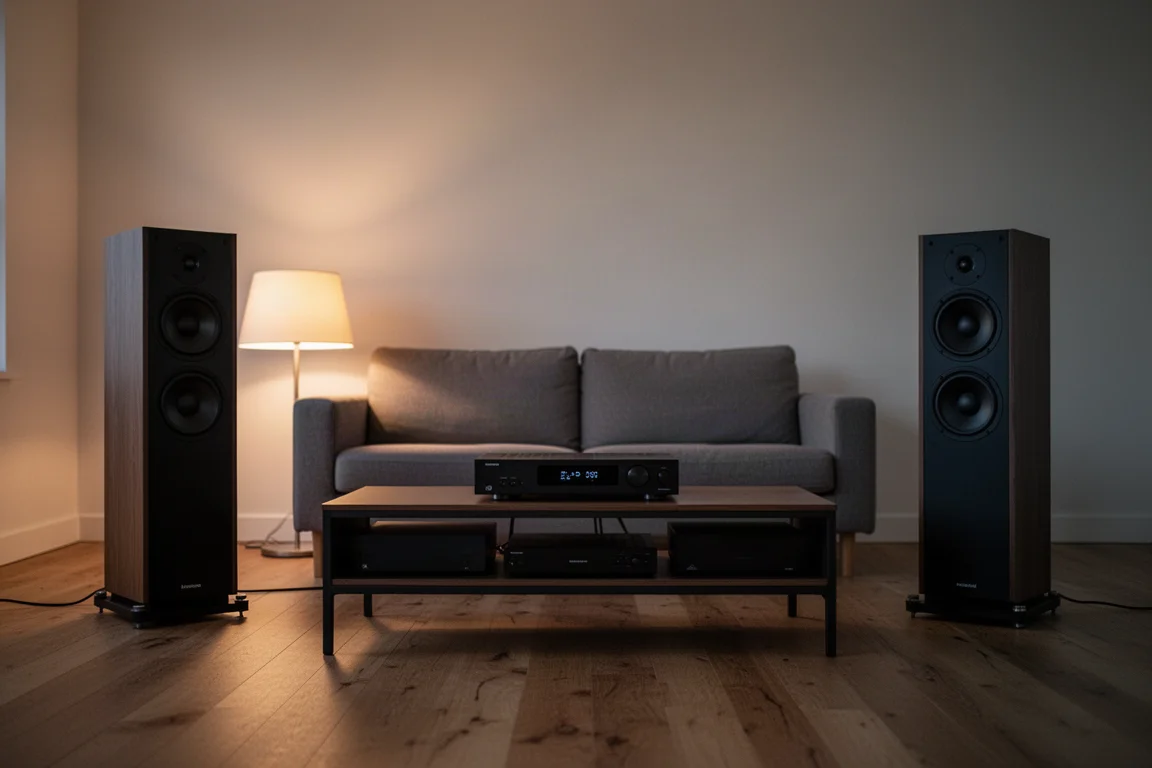
The two speakers also share a radiation width of roughly plus or minus 50 to 60 degrees. That sits in a sensible middle ground: wide enough to create a sense of space and imaging depth, narrow enough to avoid the diffuse, over-reflective image produced by very wide designs. A few regions widen more than others due to diffraction, and that shows up in the measured behavior.
The shared strength is low compression and low distortion relative to cabinet size. The shared weakness is linearity. Neither speaker offers the flat, native response a two-channel purist would want without touching an equalizer.
JBL Stage 2 280F: Floorstanding Sound and Output
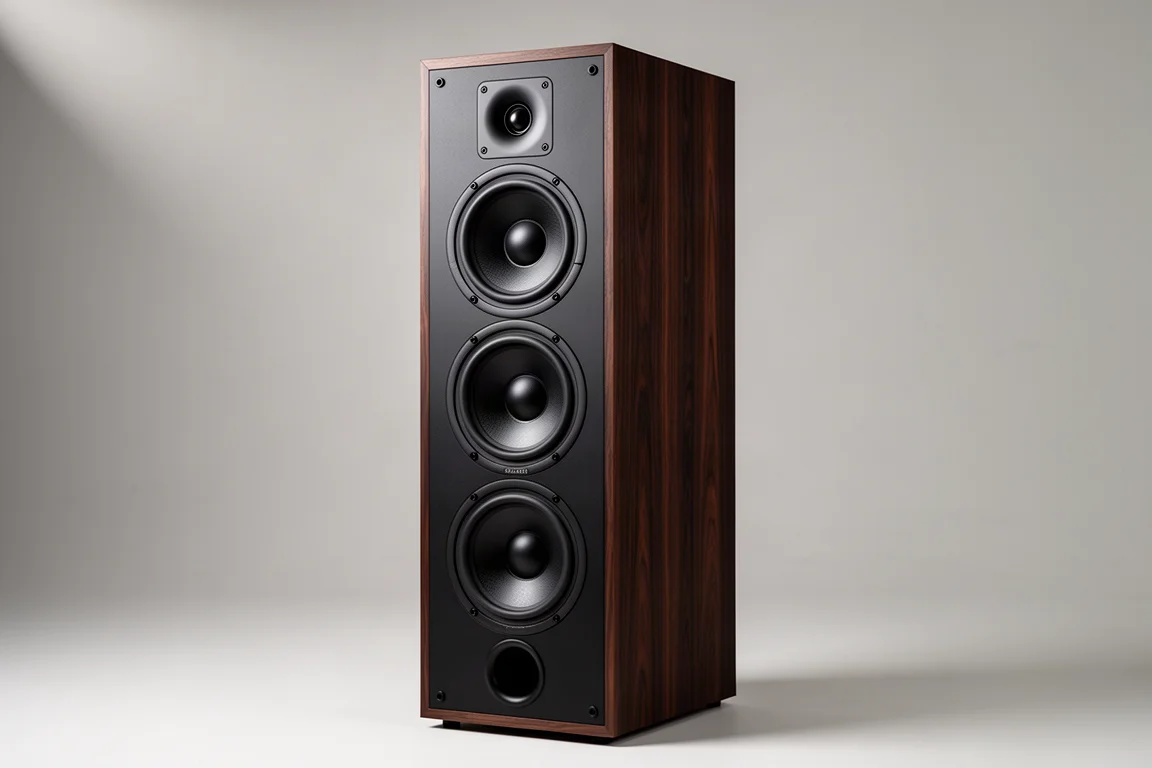
The 280F is the more impressive of the two in absolute terms. With two 8-inch woofers, it has genuine dynamic headroom, and raw output capability is its standout quality. Distortion and compression both look strong for the price, and the low-frequency reach is meaningful: an F3 of 48 Hz and an F10 of 30 Hz means usable in-room extension down to roughly 50 Hz and a little below.
What holds it back is tonal balance. There is a noticeable dip in the lower midrange, which comes across as a slightly soft, lifeless character and a missing sense of body in the lower vocal register for both male and female voices. Above roughly 10 to 12 kHz the response falls away sharply, which reads as a lack of air and space.
Sensitivity is rated at 89.5 dB and the impedance is low, so the speaker is easy to drive with a broad range of amplifiers.
JBL Stage 2 280F: Measurements and Room Behavior
The impedance curve shows a pair of closely spaced resonances around 900 Hz and 1.1 kHz. They sit too close together to target cleanly with standard equalization. A very narrow filter might address one of them, but the result rarely sounds right, so a gentler approach works better: a small boost of about 1 to 2 dB in the lower region, plus a broad high-frequency lift.
The horizontal dispersion data tracks consistently across angles, which is a good sign, because it means the on-axis irregularities should respond to EQ. The vertical separation and some diffraction elements are responsible for the rougher features in the response. Above roughly 8 kHz, a wide, gentle boost of a few dB is worth trying, since that is where much of the missing air lives. Horizontal coverage is about plus or minus 55 degrees, with vertical coverage of 15 to 20 degrees relative to the tweeter axis.
Harmonic distortion rises around 2 kHz, and multi-tone distortion increases between roughly 600 Hz and 2.5 kHz. That behavior points toward the midwoofer rather than the tweeter, since high-frequency distortion stays lower overall. Compression is well controlled, with a small amount of limiting around 2.1 kHz. Applying an 80 Hz high-pass filter changes very little.
JBL Stage 2 250B: Bookshelf Sound and Character
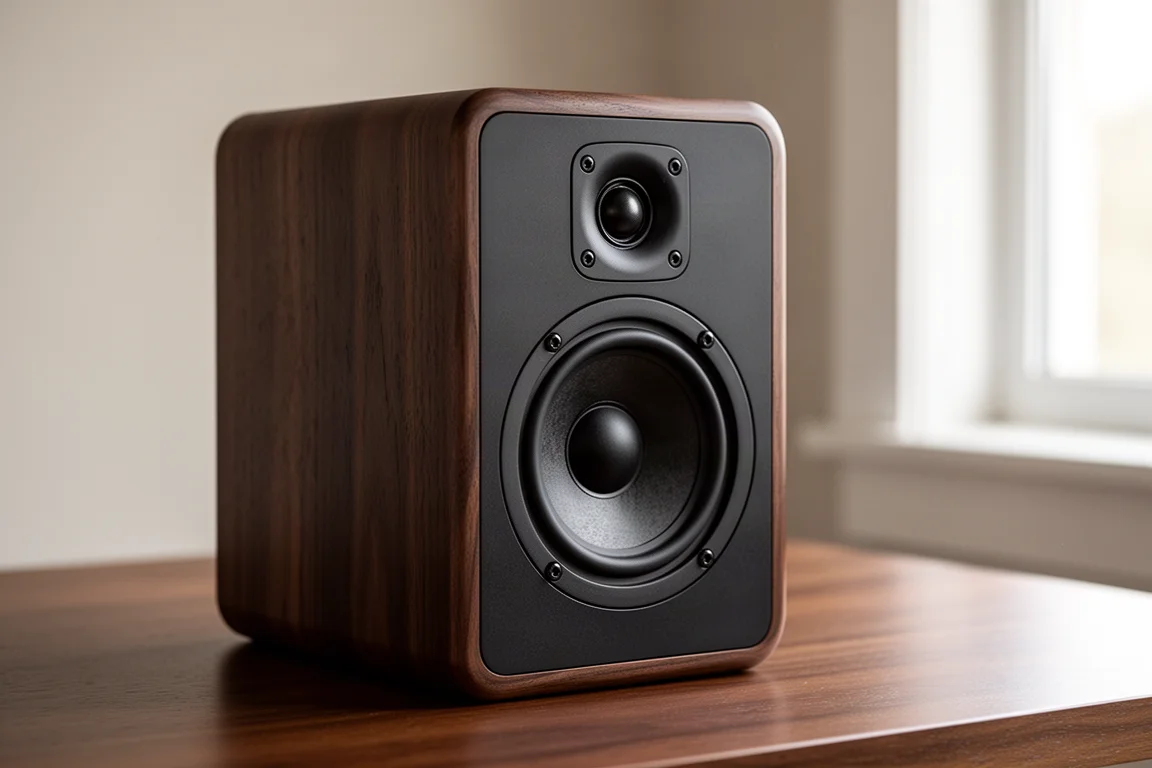
The 250B is the smaller and more affordable option, and it sounds noticeably different from its larger sibling. The lower midrange dip that softens the floorstander is not present here, so vocals keep more of their body. What replaces it is a harder-to-pin-down character: the speaker can come across as sibilant, or alternately as recessed and short on attack, depending on the material.
That inconsistency comes from the shape of the response. There is a dip around 1 to 2 kHz followed by a rise of roughly 2 to 4 kHz, and another dip near 4 kHz. The result is a speaker that sounds recessed in one passage and forward in the next, which makes it difficult to settle on what it does well. High frequencies then drop off above roughly 6 to 7 kHz, adding the same lack of air found in the floorstander.
Sensitivity is about 86 dB, and extension is limited: an F3 of 64 Hz and an F10 of 50 Hz mean a subwoofer is a sensible addition if these are used as main speakers.
JBL Stage 2 250B: Measurements and Limits
The response irregularities are mostly consistent off-axis, which is encouraging. The dip around 1 to 2 kHz can be lifted, and the rise around 4 kHz can be pulled down. That EQ-friendly behavior is what makes the 250B a workable budget option rather than a dead end.
Distortion is the bigger concern. At the highest tested output of about 96 dB, multi-tone distortion climbs well above 3 percent, and it is higher still at lower test levels. Compression data shows the low end giving up early, with the port and cabinet running out of headroom, while the tweeter region holds up reasonably well. The midwoofer, not the tweeter, is the limiting factor here.
EQ, Amplification, and Setup Notes
Both speakers reward equalization, and both are best approached with that expectation. A broad high-frequency shelf across the 10 to 20 kHz range, applied with a gentle wide filter, restores much of the air and liveliness that is missing natively. On the 280F, a small lift in the lower midrange helps as well.
The 280F is the easier load at 89.5 dB sensitivity, and its low impedance means most modern amplifiers will drive it without trouble. The 250B is less sensitive at about 86 dB, so it asks for a bit more power, and its limited bass extension makes a subwoofer crossover around 80 Hz a practical choice.
For listeners who want a strictly linear speaker with no processing at all, the Stage 2 pair is not the natural pick. Alternatives in similar territory, such as the Polk R500 tower or the Polk R200 and R100 bookshelf models, trade some output capability for a more linear native response. Klipsch’s RP-8000F II and RP-6000F II cost a little more and offer better directivity, which means they respond even more predictably to EQ, but they are narrower in radiation and brighter out of the box, and the JBL floorstander extends roughly 20 Hz lower. None of these is a clean win over the others; it depends on what you are optimizing for.
Buying Advice: Which Stage 2 Speaker Suits Your Room
Choose the 280F if you want high output and deep bass for the money, you are building a home theater system, and you are willing to use equalization. It is the more capable speaker of the two, and its distortion and compression performance at higher volumes is the main reason to pick it.
Choose the 250B if you need something compact, you plan to pair it with a subwoofer, and you are comfortable shaping the response with EQ. At around $400 per pair it is a reasonable entry point, but it is the less convincing of the two on its own.
Either way, budget for a way to apply EQ. That single addition changes how much value these speakers deliver far more than any cable or amplifier swap.
Conclusion
The JBL Stage 2 280F and 250B are built around output and value rather than linearity. The floorstander is genuinely impressive in dynamics and bass reach for its price, while the bookshelf is a smaller, more compromised take on the same formula. With equalization, and with a subwoofer in the case of the bookshelf, both can do solid work in a budget home theater. Without it, listeners who want a naturally balanced speaker should look elsewhere.
Further reading
Related Reviews
Speakers
13 Under-the-Radar Speakers Still Worth Buying
Thirteen speakers that quietly stayed in production while newer models took the spotlight, from budget bookshelf pairs to a full-size tower.
Speakers
Arendal 1528 Monitor 8 Review: A Three-Way Standmount With Serious Dynamic Headroom
A three-way standmount speaker with extremely low distortion, high output capability, and deep bass for its size, plus the setup details worth knowing before buying.
Speakers
Arendal 1723 Monitor S Review: A Compact Monitor With Serious Ambition
A close look at the Arendal 1723 Monitor S, a compact MTM monitor with a waveguide-loaded tweeter, an HDF cabinet, and flexible ported or sealed operation for music and home theater.