Party Speakers
JBL PartyBox Lineup Guide 2026: Club 120, Stage 320, 520, 720 and More
A practical walk through the current JBL PartyBox range, from the compact Encore models to the 800 W PartyBox 720 and the mains-powered Ultimate.
Introduction
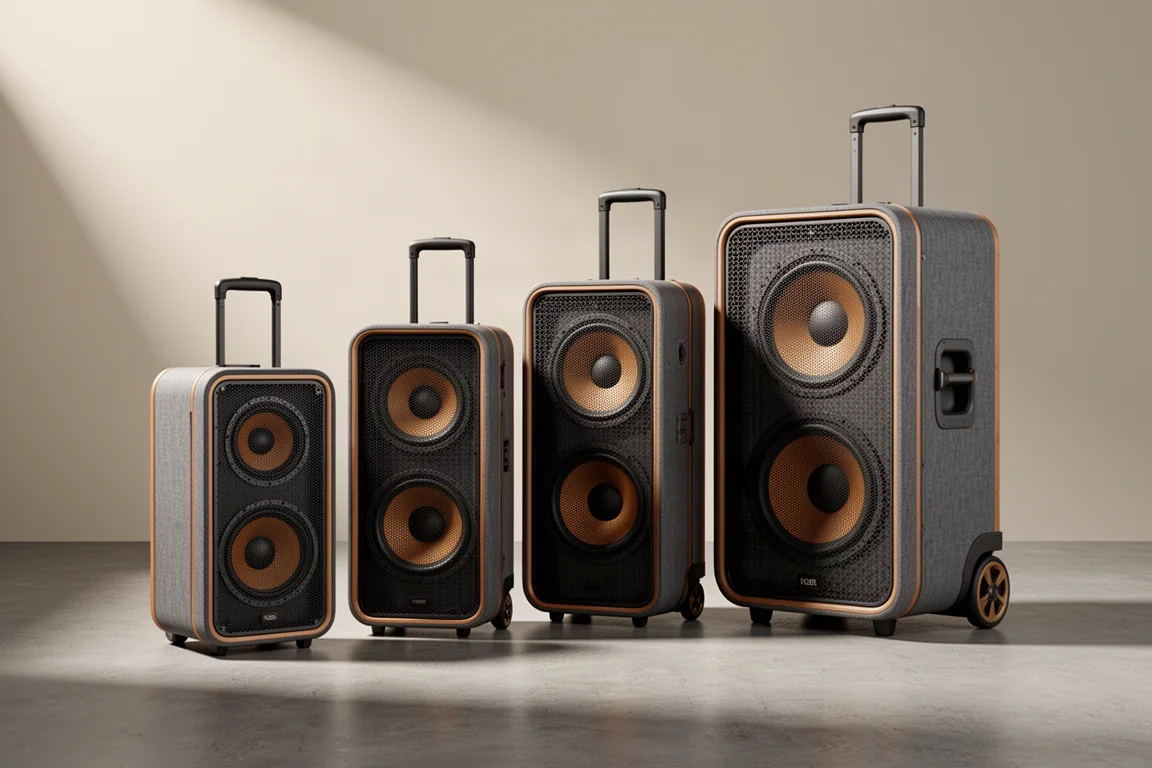
JBL’s PartyBox family has become a default choice for backyard parties, outdoor gatherings, and anyone who wants serious volume without assembling a full PA system. The newest generation brings several meaningful changes across the range, and the lineup now stretches from compact, affordable speakers to a flagship that can anchor a festival-style setup.
This guide walks through the PartyBox Club 120, Stage 320, 520, and 720 in detail, then covers the smaller Encore 2 and Encore Essential 2 and the high-output PartyBox Ultimate.
What Changed Across the New Generation
Three updates define this generation, and they apply across the main models.
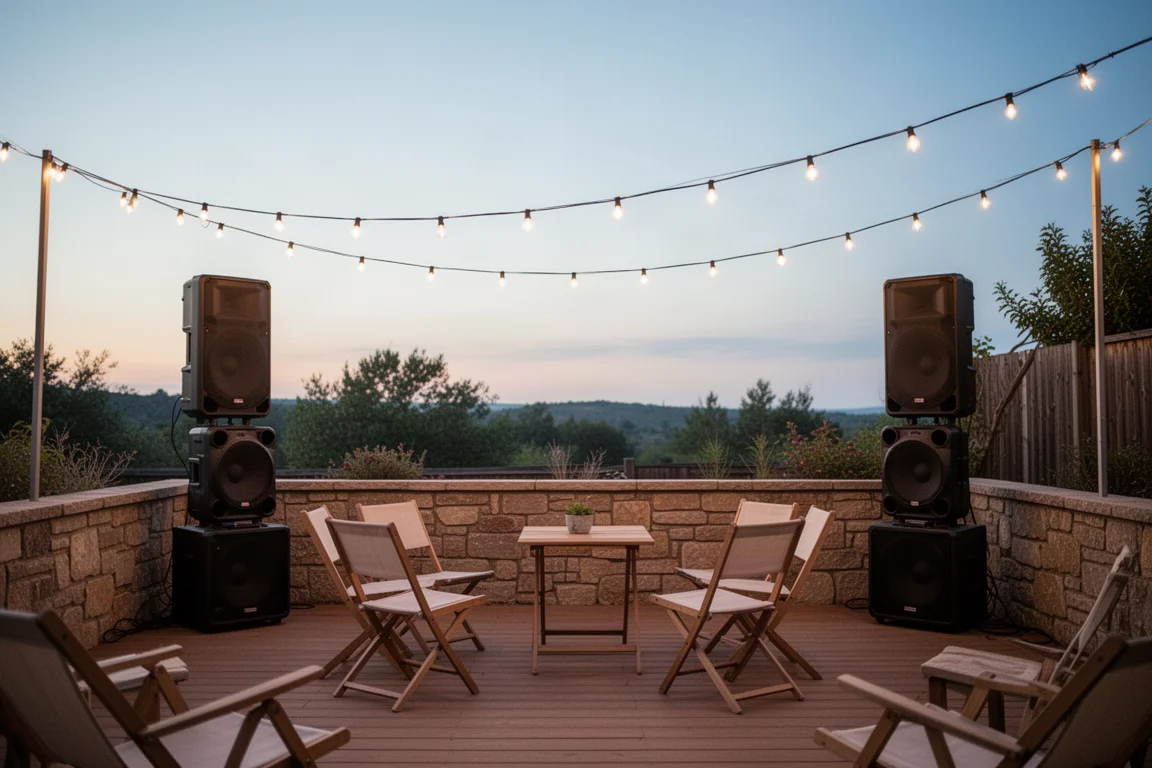
The first is Auracast. The previous true wireless stereo mode paired two speakers, and both had to be the exact same model. Auracast Bluetooth technology removes both limits: multiple Auracast-enabled JBL speakers can be linked wirelessly, and they do not all have to be the same model or even the same product line. Pairing two units in stereo makes an obvious difference in a backyard, and spreading four units into the corners of a space is an effective way to fill it evenly. Two identical models can still be stereo paired for a proper left-right stage.
The second is AI Sound Boost, an algorithm that analyzes the audio signal in real time and pushes the drivers toward their maximum capability without introducing distortion. In practice, the new speakers play louder and stay cleaner at high volume than the models they replace.
The third is replaceable batteries. Every speaker in this guide runs on a removable, swappable battery pack, so a party that runs longer than expected means swapping in a fresh pack rather than stopping. The earlier PartyBox 710 had no battery at all and could only run plugged in, which limited where it could be used.
The four main models also use Bluetooth 5.4 and carry an IPX4 rating for splash resistance, so light rain or a poolside splash is manageable as long as the port covers stay closed. The JBL PartyBox app brings the features together with EQ control, light show customization, Auracast pairing, and karaoke functions.
JBL PartyBox Club 120
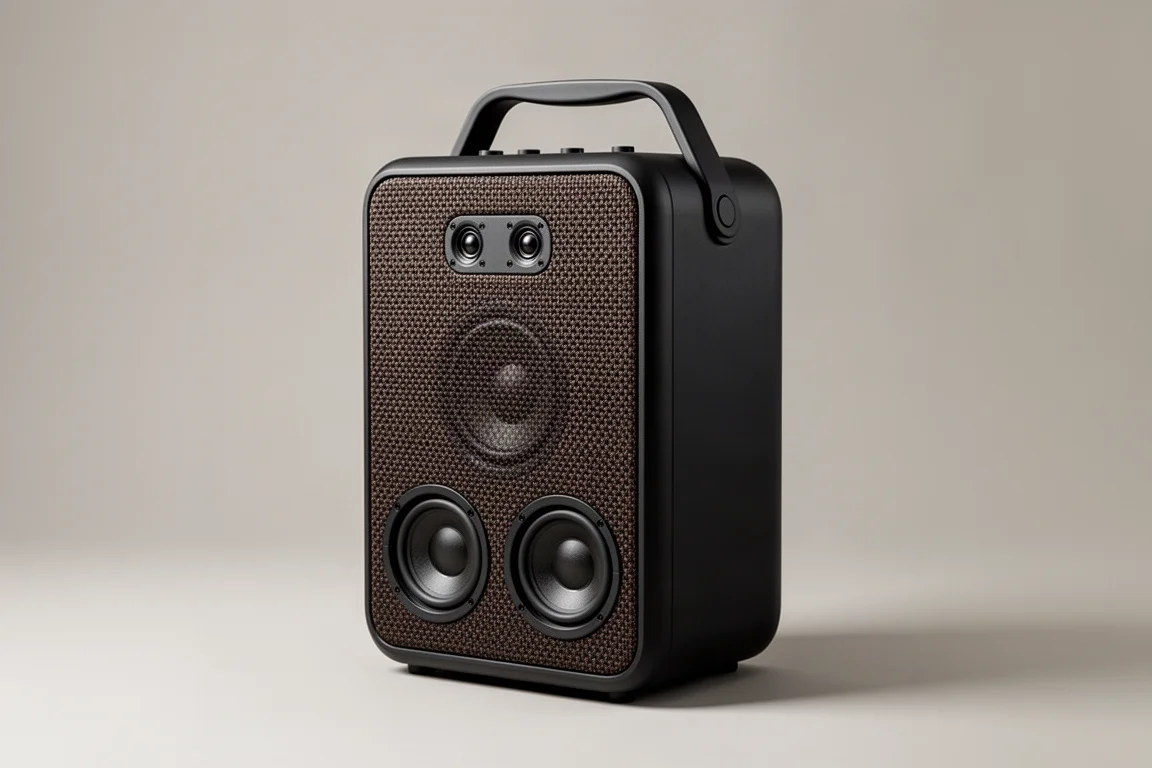
The Club 120 is the entry point to the range and the direct successor to the PartyBox 110. At 24 lb it is far easier to move than the larger models, and the foldable top handle both simplifies carrying and lets the speaker store flat.
Inside are two 5.25-inch woofers and two 2.25-inch tweeters driven by 160 W of amplifier power. That is close to the older 110 on paper, but the combination of AI Sound Boost and the updated driver arrangement gives the Club 120 noticeably better performance at higher volumes. Battery life is rated at 12 hours, and the swappable JBL Battery 200 pack pulls out from a rear flap without tools. A spare pack effectively doubles runtime, and a 10-minute fast charge adds roughly 80 minutes of playtime.
Connections include an aux-in, a USB port for audio from a drive or computer, and two quarter-inch inputs, one for a microphone and one for a second microphone or a guitar, each with its own gain control. These are consumer-friendly quarter-inch inputs rather than XLR, which covers most needs at this size.
Sound is fun and energetic, which is the right expectation for a party speaker at this size. Vocals come through clearly, and bass boost adds punch without muddying the low end. Placement matters: there is a pole mount on the bottom, and moving the speaker off the floor onto a stand, table, or countertop opens up the sound considerably. LED rings around the woofers add starry lights, light trails, and strobe effects that sync to the beat, all customizable in the app.
This is a natural fit for a small backyard, a deck, or an apartment patio. Buying two and running them in stereo improves the sound stage substantially and can outperform a single Stage 320 for less money.
JBL PartyBox Stage 320
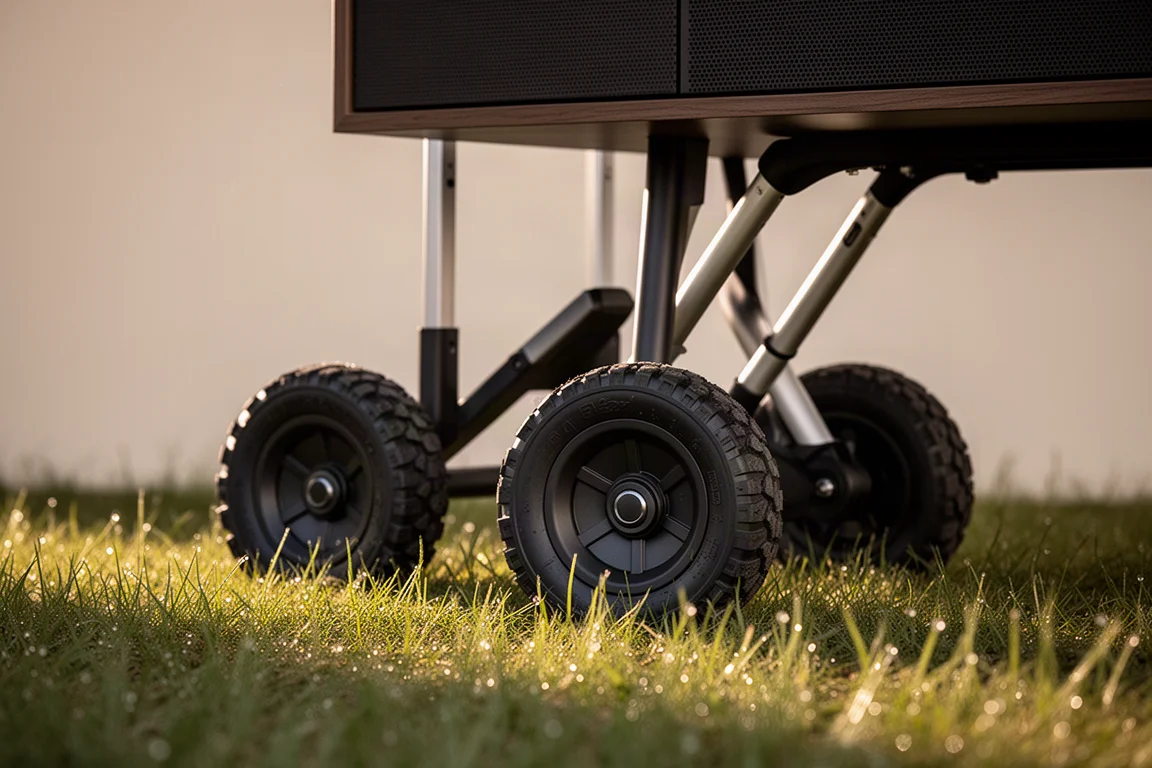
The Stage 320 replaces the PartyBox 310, and the design evolution is obvious when the two are side by side. The wider, sturdier wheelbase and the new telescopic handle make rolling it around easy, even over rougher ground. At 36 lb, that rolling design is genuinely useful.
Amplifier power stays at 240 W, with two 6.5-inch woofers and two 1-inch dome tweeters in a driver arrangement optimized for better dispersion.
Battery life is one of the biggest upgrades here: up to 18 hours on a JBL Battery 400 pack, with a 10-minute fast charge adding two full hours. JBL rates coverage for an area the size of a tennis court. That figure is generous, though outdoor listening confirms the Stage 320 fills a substantially larger space than a single Club 120.
The top panel includes volume knobs, a dedicated bass boost button, three assignable preset buttons for DJ effects or EQ presets, and bass, treble, and echo knobs, so the sound can be adjusted without reaching for a phone. The rear panel keeps two quarter-inch inputs for mic and guitar, plus aux-in and USB. There is a pole mount on the bottom, and the light show steps up from the Club 120 with a larger LED ring around each woofer and strobe effects along the top.
For many buyers this is the sweet spot in the range: loud enough for a full-size backyard party or a medium outdoor space, portable enough for a friend’s place or a park, and with battery life that rarely becomes a concern. The low end is tight and punchy rather than floor-shaking, and AI Sound Boost keeps it clean as volume climbs.
JBL PartyBox 520
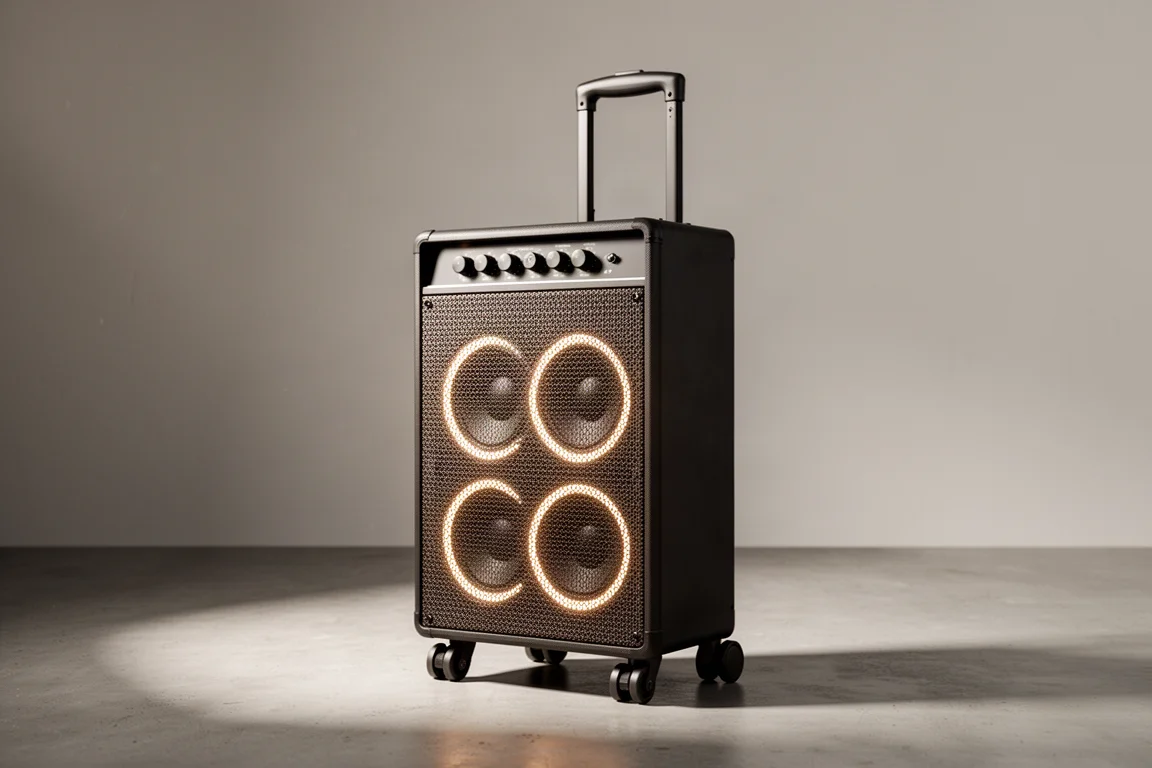
The 520 fills a gap the earlier lineup skipped, sitting between the battery-less 310 and 710 with serious output of its own. With 400 W of amplifier power, two 7.5-inch woofers, and two 1-inch tweeters, it is a clear step up in category. The jump from 6.5-inch to 7.5-inch woofers does not look dramatic on paper, but the low end is immediately more physical: where the Stage 320 is punchy and controlled, the 520 moves air that can be felt. It also crosses 105 dB of measured output, enough for a large backyard or a medium indoor event space.
At 56 lb it is hefty, but the sturdy telescopic handle and wheels mean one person can move it without help. There is a pole mount on the bottom. Battery life is rated at 15 hours on a JBL Battery 600 pack, and the same 10-minute fast charge adds two hours.
Connectivity is the notable upgrade over the Stage 320: dual XLR combo jacks replace the quarter-inch inputs, so a proper DJ mixer or professional-grade microphones can be connected directly. A USB-C port handles digital audio for cleaner sound from a laptop or phone. The light show matches the Stage 320 with dual light rings around the woofers and strobe effects, all controllable in the app.
Tuning is more balanced than the older 710, which was known for heavy bass. Bass lovers can still get there through the EQ and bass boost, but the default sound is cleaner and more versatile across genres, with a live-concert sense of energy and more authority in every part of the mix.
This is the model for regular larger parties, venue events, or anyone who wants the most powerful speaker in the range that is still reasonably portable. It sits at the crossover between a very good party speaker and something close to professional use.
JBL PartyBox 720
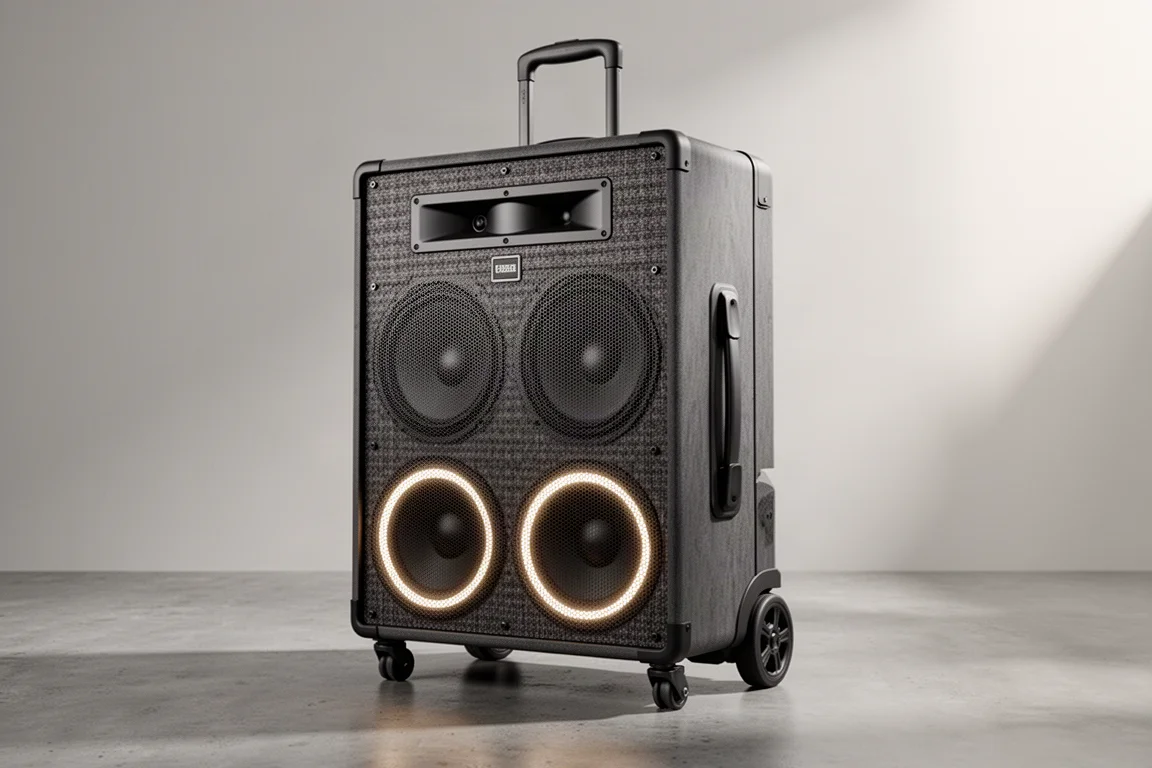
The 720 is the flagship of the battery-powered range and it fixes the main limitation of the 710, which had to stay plugged into a wall. With 800 W of amplifier power, two 9-inch woofers, and two 1.25-inch dome tweeters, it is a serious piece of equipment. The 9-inch woofers reach down to 32 Hz, so placement and bass EQ deserve some thought when neighbors are close.
At 68 lb, portability is handled with wider, more rugged wheels and an ergonomic integrated handle. It is not a speaker to toss in a hatchback on a whim, but rolling it from one part of a venue to another is manageable. Unlike the 710, it can genuinely run off grid.
Battery life is rated at 15 hours using two swappable JBL Battery 600 packs, both included in the box. The packs can be hot-swapped without interrupting the music, and a 10-minute fast charge adds two hours. JBL recommends running the 720 plugged in whenever an outlet is available, since that keeps the batteries topped off and allows the speaker to deliver its full 800 W. Output on battery alone is still substantial.
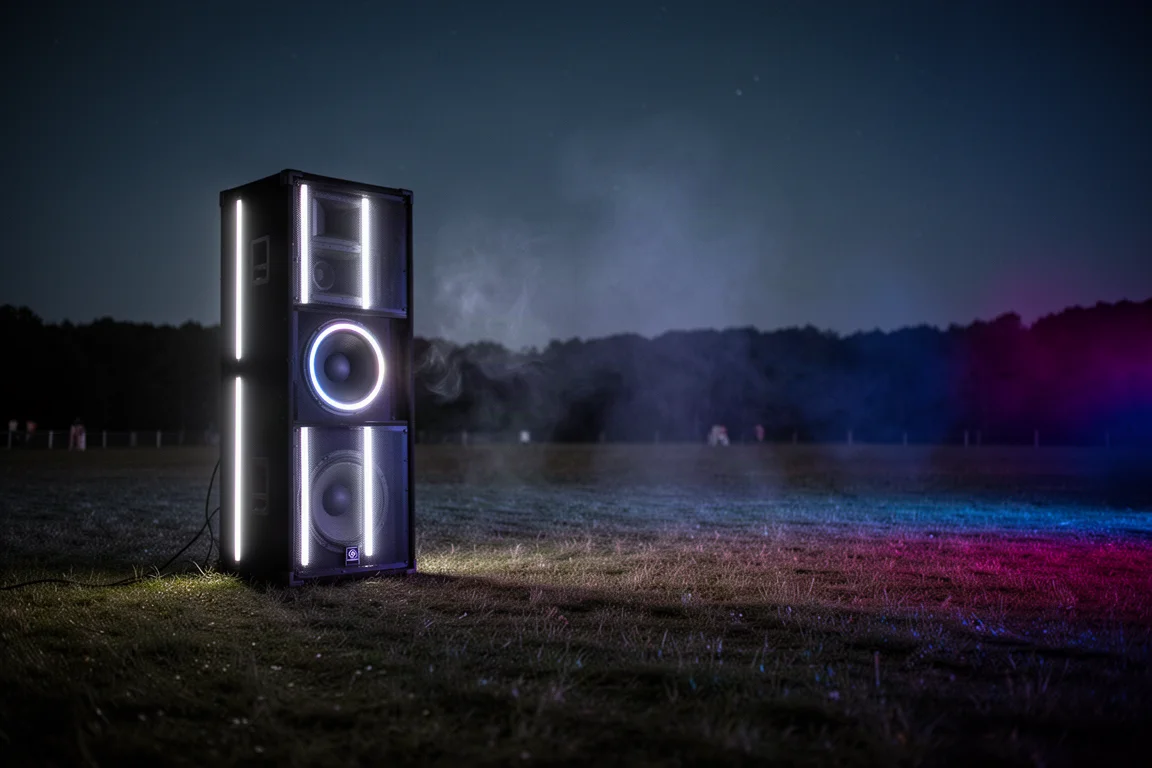
Connectivity mirrors the 520 with dual XLR combo inputs for microphones, a guitar, or a DJ console, plus a USB-C port for high-quality digital audio. Bluetooth 5.4 with Auracast handles wireless, and two 720s can be stereo paired for an extremely impressive setup. The light show is the most elaborate in the battery-powered range: LEDs around each woofer, light strips running up and down the sides of the grille, strobes on top, and additional RGB flashing lights behind the grille. In a dark room it creates an atmosphere on its own.
Sound quality is best described as authoritative. Every track has more room to breathe, low-end extension delivers subsonic bass that is felt in the floor and in the chest, and AI Sound Boost keeps it clean at every level. At over a thousand dollars it is a significant investment, though compared with renting or buying professional PA equipment for the same coverage area, the cost becomes easier to justify.
JBL PartyBox Encore 2 and Encore Essential 2
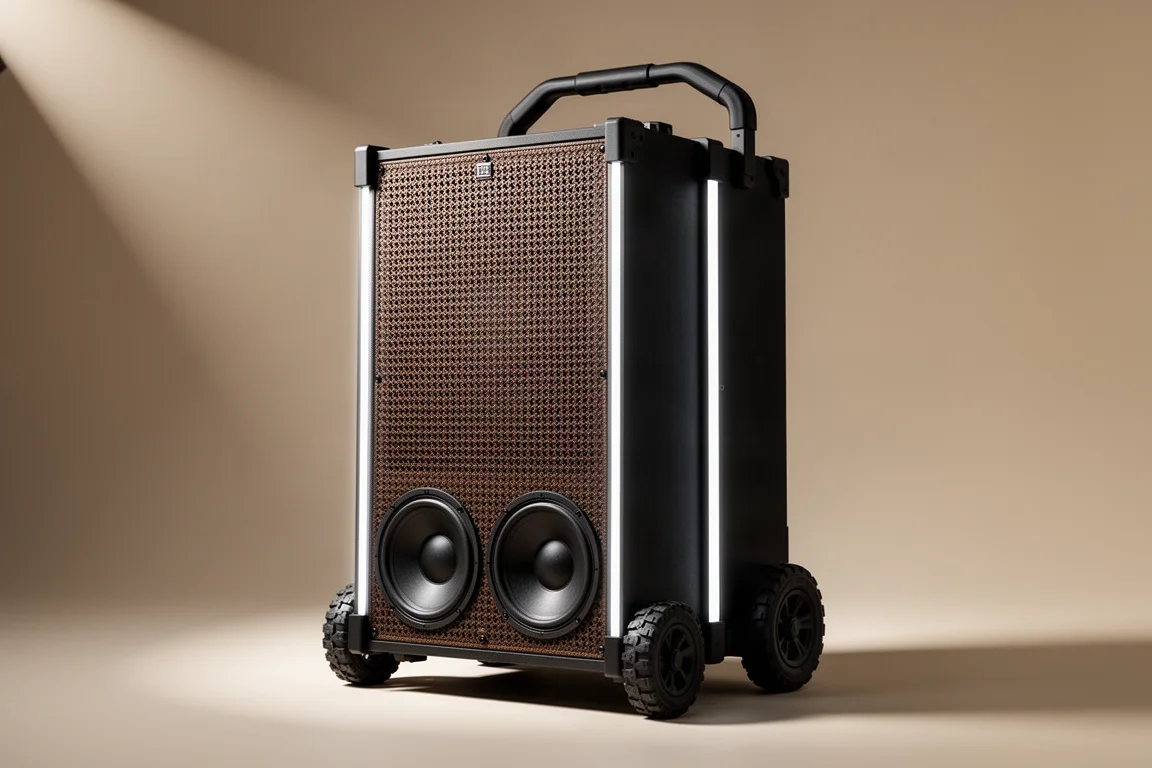
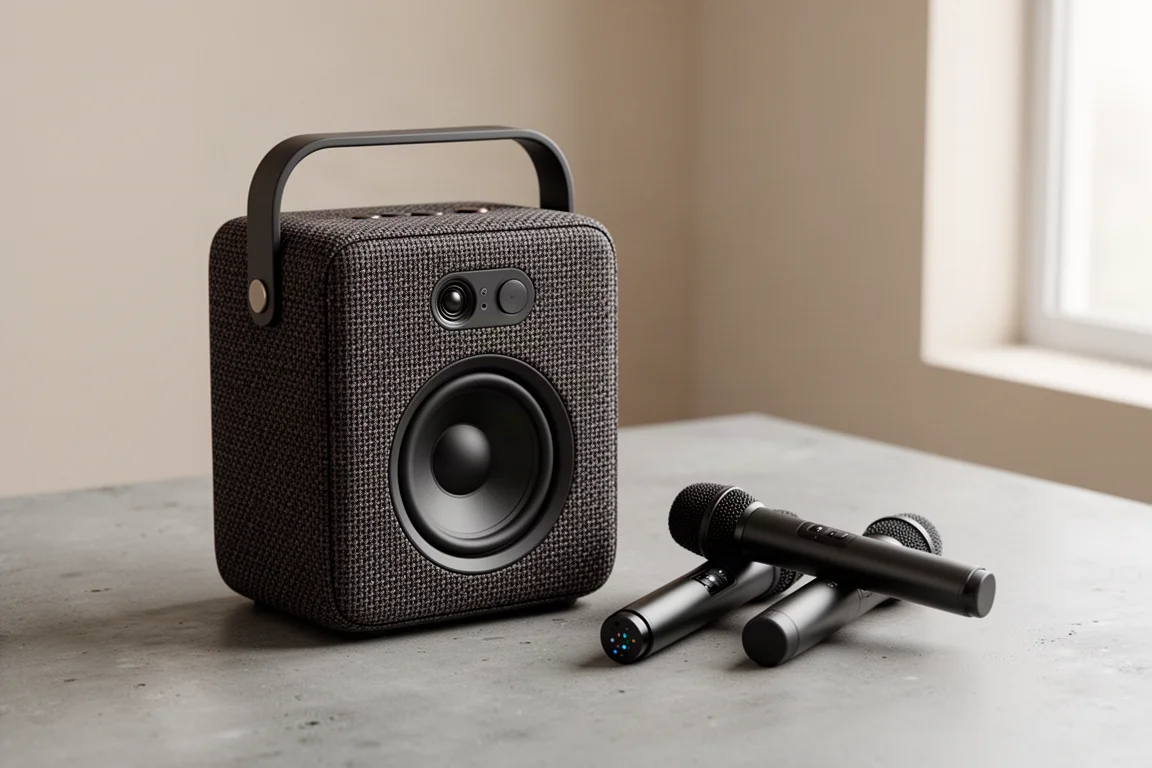
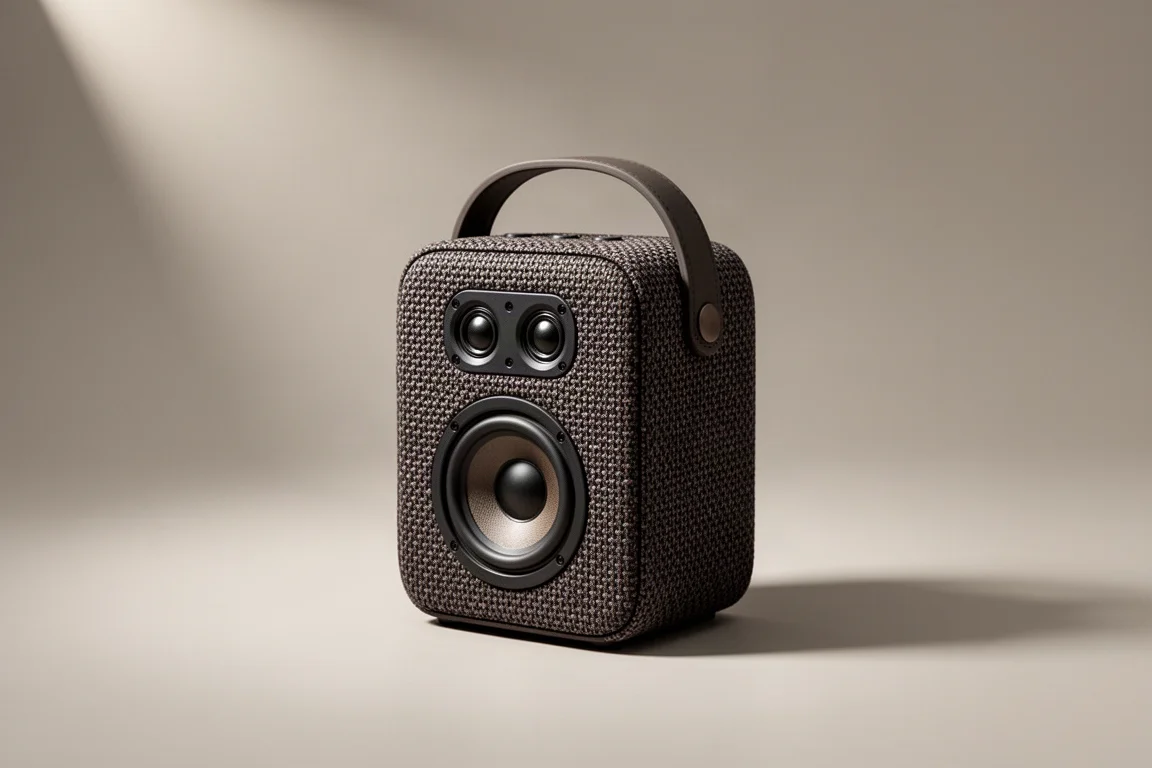
If the speakers above are more than you need, the Encore 2 and Encore Essential 2 are the most compact and affordable options in the current PartyBox lineup. Both use 100 W of amplifier power, a single 5.25-inch woofer, and two 20 mm tweeters, run for up to 15 hours on a charge, and support Auracast. They suit smaller gatherings, apartment balconies, or any space where the Club 120 would be overkill.
JBL PartyBox Encore 2
The Encore 2 is the fuller of the two packages. It includes two wireless microphones and adds a replaceable battery, which makes it the better pick for karaoke nights and for anyone who wants the option of extended runtime.
JBL PartyBox Encore Essential 2
The Encore Essential 2 keeps the same 100 W amplifier and driver layout without the bundled microphones or the replaceable battery. It is the simplest way into the lineup for small spaces and casual listening.
JBL PartyBox Ultimate
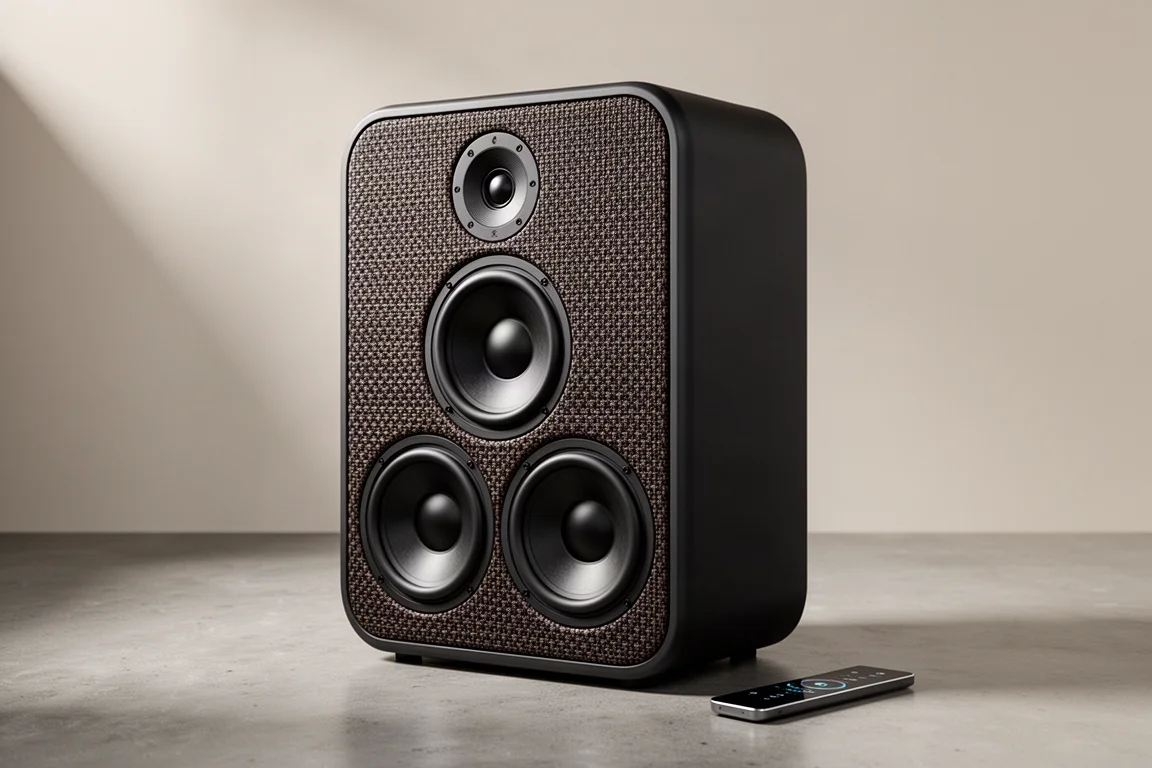
At the top of the range, the PartyBox Ultimate delivers 1,100 W of amplifier power through a true three-way system with dual 9-inch subwoofers, 4.5-inch midrange drivers, and 2.75-inch tweeters. It adds Wi-Fi streaming with Dolby Atmos support, a built-in self-tuning feature, and the JBL Party Pad touch controller for live DJ effects.
The major caveat is power: there is no battery, and it runs on AC only. That makes it a home or permanent installation speaker rather than something to carry to a park.
Buying Advice
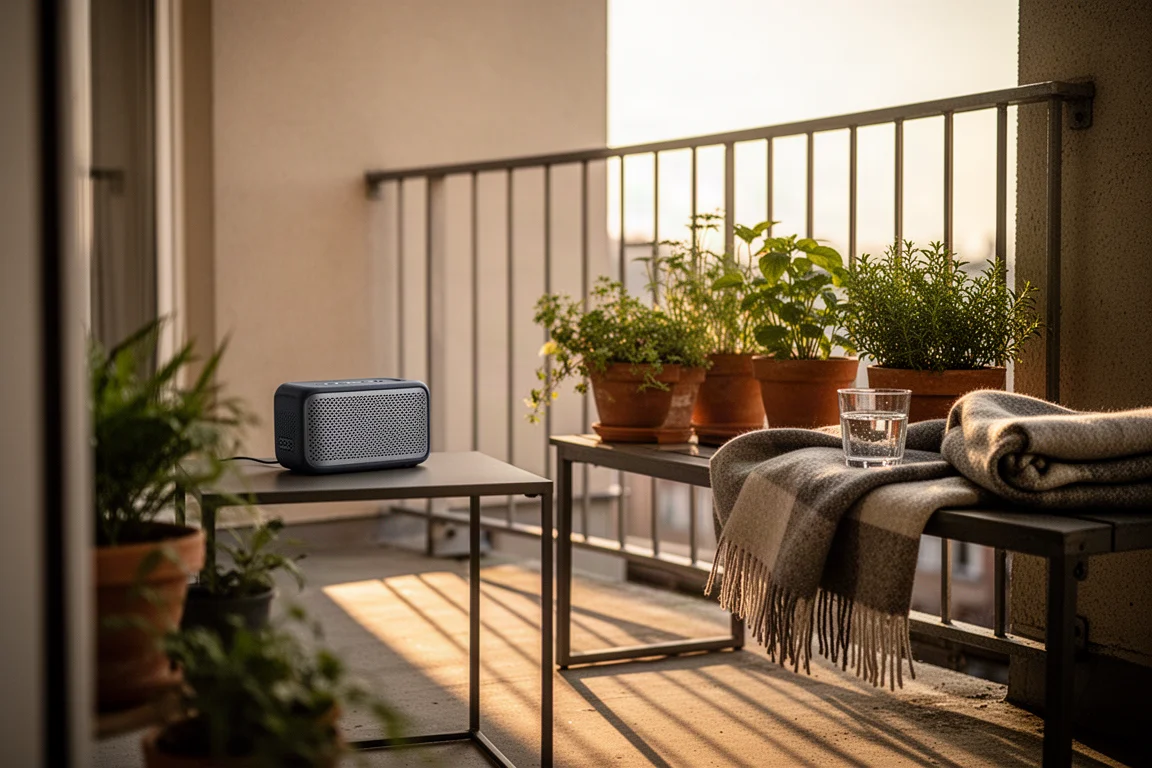
Matching the speaker to the space matters more than chasing the biggest number on a spec sheet. A Club 120, or a pair of them, handles a deck, patio, or small backyard comfortably, and two units in stereo usually beat a single larger speaker for the same money.
For a full-size backyard party or a medium outdoor space, the Stage 320 is the most balanced choice, with 18 hours of battery life and enough output to cover a crowd without a wall outlet nearby. Step up to the 520 when the low end needs to be felt rather than just heard, when dual XLR inputs and USB-C digital audio matter, or when the speaker will be used for regular larger events. The 720 is the pick for large outdoor spaces, festival-style setups, or venue use where maximum output and the deepest bass extension are the priority.
On the smaller end, the Encore 2 and Encore Essential 2 cover balconies and small gatherings, with the Encore 2 adding microphones and a replaceable battery. The Ultimate is a different proposition entirely: it is a mains-powered, high-output system for a home or a fixed installation, and its lack of a battery is the trade-off for its power and three-way design.
One practical note that applies across the range: every model except the Ultimate runs on swappable battery packs, so a spare pack is the simplest way to extend a long event. Keeping the port covers closed near water also protects the IPX4 rating.
Conclusion
This generation of PartyBox speakers is defined by three changes that make the whole lineup easier to live with: Auracast linking across models, AI Sound Boost for cleaner output at high volume, and swappable batteries that remove the old restriction of staying near an outlet. From the compact Encore models up to the 800 W PartyBox 720 and the mains-powered Ultimate, the range now covers small patios and large outdoor events with a clear step between each option. Choose by the size of the space, whether XLR inputs or USB-C audio are needed, and how much low-end extension matters, and the right model in the lineup becomes fairly easy to identify.
Further reading
Related Reviews
Party Speakers
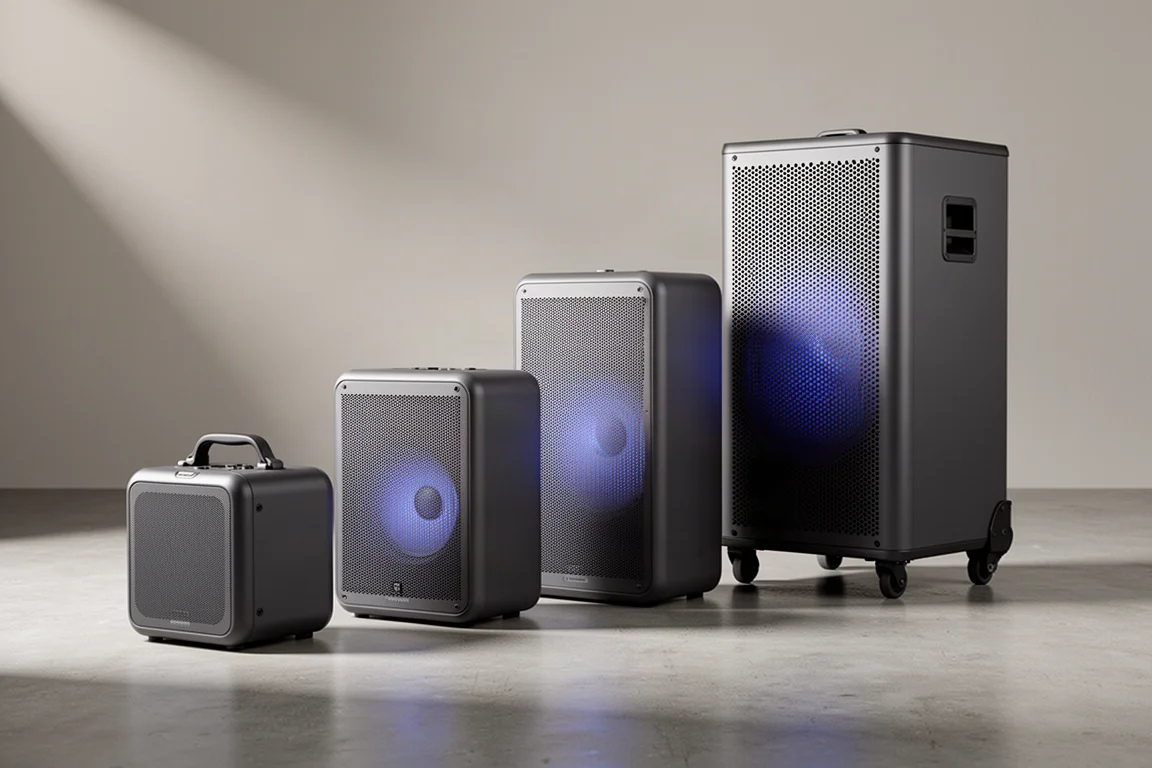
Best JBL PartyBox Speakers Compared: Encore Essential, 110, 310 and 710
A practical comparison of the four JBL PartyBox models, covering shared features, battery behaviour, inputs, and which size suits which kind of party.
Party Speakers
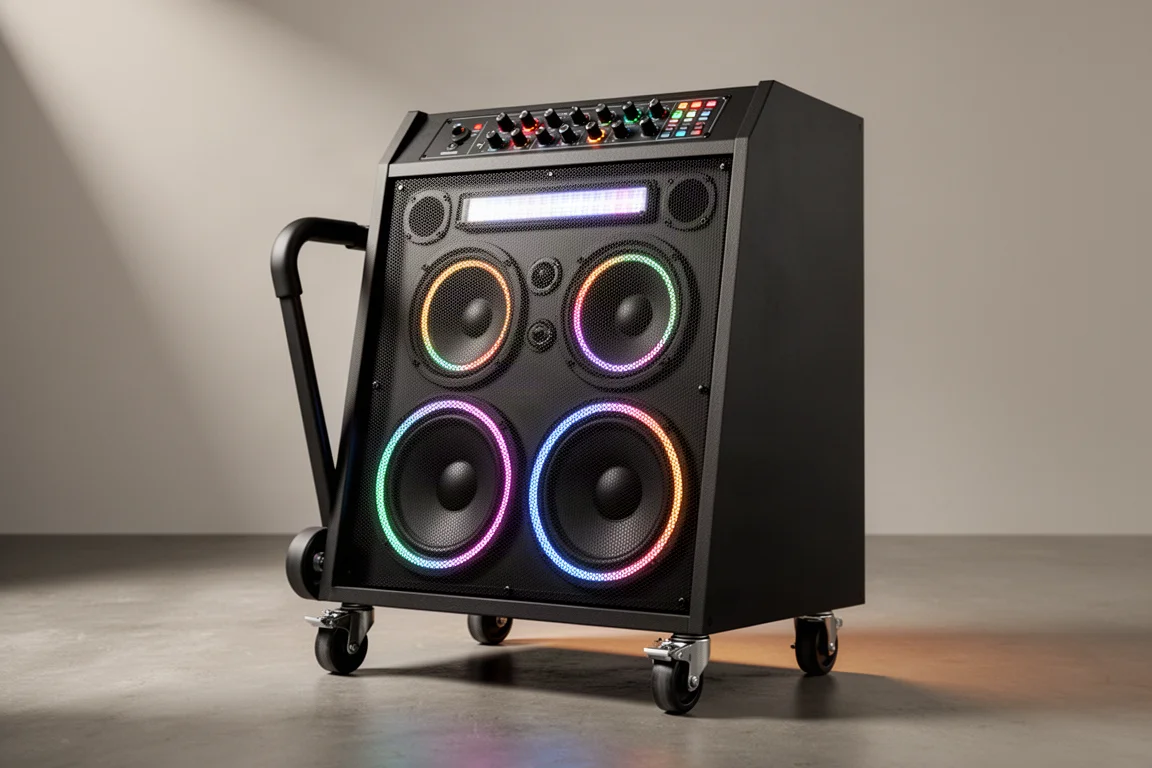
JBL PartyBox Ultimate Review: A 1,100-Watt Party Speaker You Roll Into Place
A flagship plug-in party speaker with wheels, karaoke inputs, Wi-Fi streaming, Dolby Atmos playback, and a built-in light show. Here is who it suits and what to check first.

Backpacking Gear
Building a 10 lb Base Weight: An Ultralight Backpacking Gear List
A practical walkthrough of the ultralight pieces behind a 10 lb base weight, from a 765 g pack and a roomy one-person tent to a full camp chair and a dependable water filter.