Party Speakers
Best JBL PartyBox Speakers Compared: Encore Essential, 110, 310 and 710
A practical comparison of the four JBL PartyBox models, covering shared features, battery behaviour, inputs, and which size suits which kind of party.
Introduction
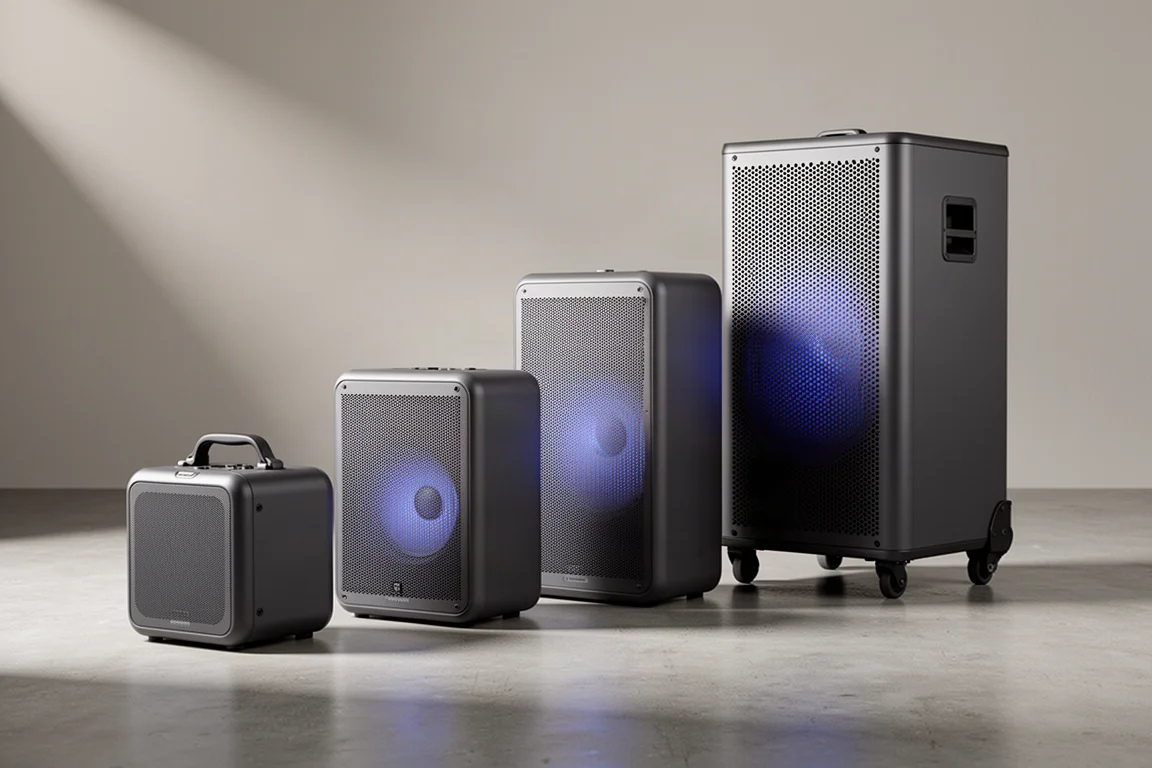
In the 1970s the Grateful Dead used more than 600 JBL speakers to build their Wall of Sound. The modern backyard equivalent is the JBL PartyBox line, a family of portable speakers built around loud output, RGB lighting, and microphone and guitar inputs. Four models sit at the centre of that range: the PartyBox Encore Essential, the PartyBox 110, the PartyBox 310, and the PartyBox 710.
They look similar in photos, but they are aimed at very different rooms and very different crowds. The smallest weighs 13 pounds and runs on a battery. The largest weighs 68 pounds, needs a wall outlet, and puts out 800 watts. This guide walks through what the four share, what separates them, and how to pick the one that fits the way you actually host.
What All Four JBL PartyBox Speakers Share
Every model in this group is built around the same core feature set, and that consistency is a large part of why the range is easy to shop.
True Wireless Stereo, or TWS, lets you pair two identical speakers as a left and right stereo pair. Setting them to stereo and placing them equidistant from the listener widens the soundstage noticeably, with vocals that sit between the two cabinets rather than in front of one. Only two speakers of the exact same model can be paired this way, and switching between party mode and TWS mode happens in the companion app. Party mode is the better choice when you want to spread volume across different areas instead of building a stereo image.
The app is also where the lighting lives. RGB and strobe effects on every model can be synced to your playlists, and the same app handles playback, settings updates, and battery status. Karaoke features, EQ adjustments, and DJ sound effects are available there as well.
Bluetooth 5.1 keeps input lag low enough that video sources such as laptops and tablets stay in sync with the audio, and two devices can be connected at once for collaborative playlist building.
All four carry an IPX4 water resistance rating, which covers light rain and splashes beside a pool. The rubber flap on the back needs to be closed to protect the input and output ports, and the rating is not a licence to let a speaker fall into the water.
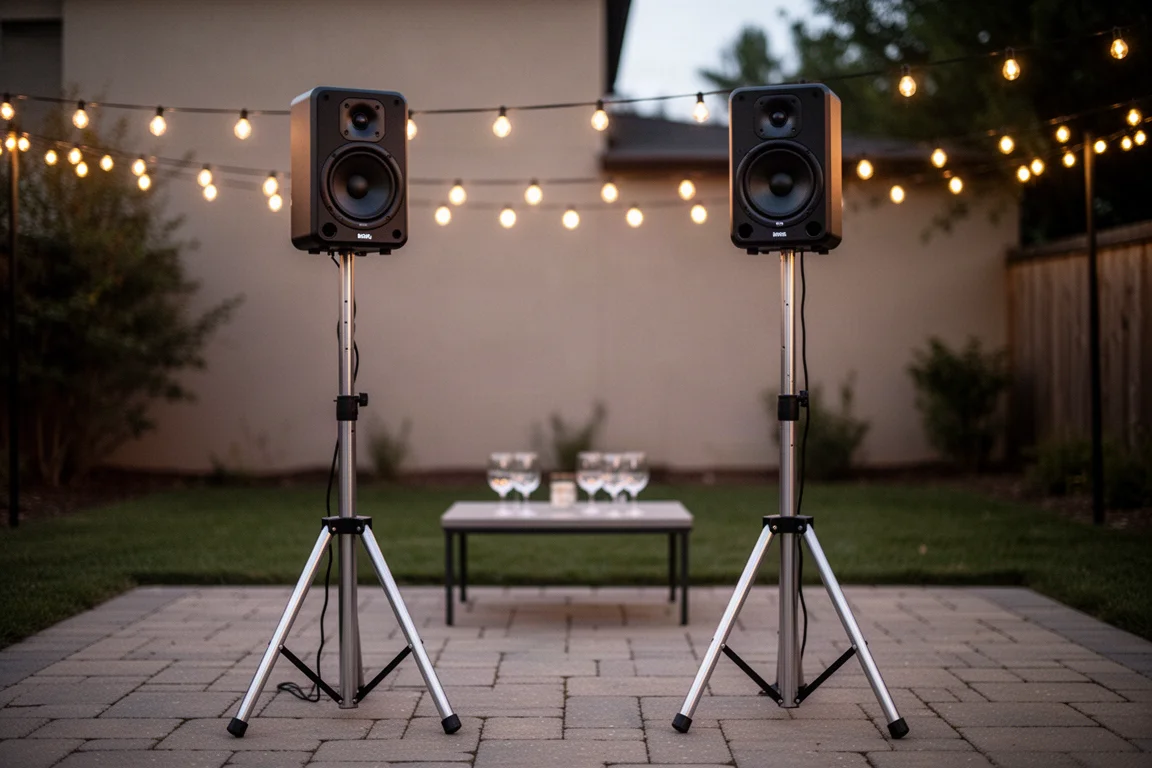
One placement tip applies across the range: these speakers sound best when raised closer to ear height. A table or countertop beats the ground, and the 110 and 310 both have standard mount holes on the bottom that accept a 36 millimetre speaker stand. The Encore Essential has no stand socket, but it pairs visually with stainless steel Foundation stands.
JBL PartyBox Encore Essential
The Encore Essential is the smallest speaker here at 13 pounds, roughly 11 by 13 by 12 inches, with a sturdy handle built into the top. Inside is a 100 watt system made up of one 5.25 inch woofer and two 1.75 inch tweeters, plus a rear-firing port that lets you push it against a wall to reinforce the low end.
JBL rates its 4,800 mAh battery at about six hours, with a 3.5 hour charge time. That six hour figure holds only with the light show off and bass boost disabled at around 50 percent volume. Run the lighting, toggle bass boost, and listen between 40 and 70 percent volume and you should expect closer to five hours.
Around the back, behind the rubber flap, there is a single quarter inch input for a microphone, an AUX port for a wired source, a 5 volt USB plug for charging a phone or playing from a USB device, and a TWS button for pairing a second unit. The microphone input is the feature that most clearly earns the PartyBox name. Its level is controlled by a dial below the port, with bass, treble, and echo adjustable in the app, which makes it useful for karaoke, for announcements at a gathering, or for a coach leading a session.
Controls on top cover play and pause, track skipping, power, and the bass boost function, and they are simple enough to use without looking down.
For a small backyard party or a trip to the park where everyone stays in one spot, the Encore Essential does the job. Buying two and running them in TWS is worth the extra spend for the wider stage and higher overall output.
JBL PartyBox 110
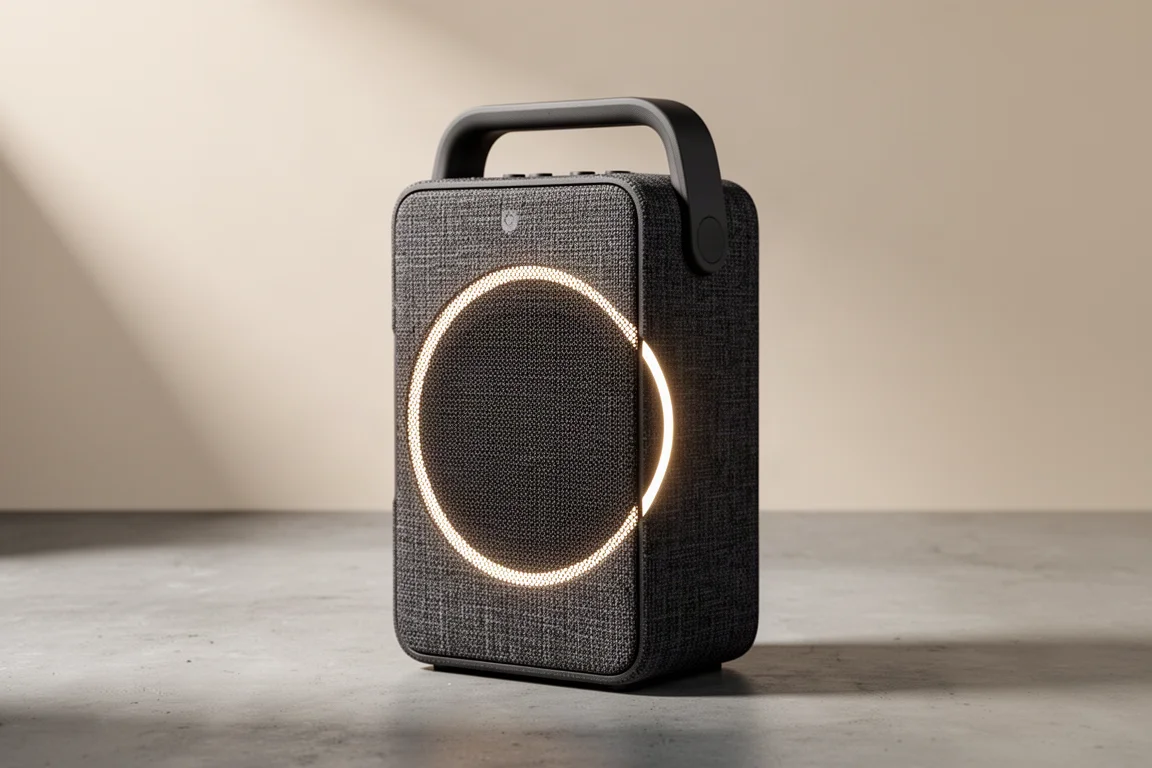
The 110 steps up in both size and sound at 23 pounds, and it adds a second woofer. Its 160 watt system uses two 5.25 inch woofers and two 2.25 inch tweeters. Instead of a top handle, transport is handled by a recessed grip on the back, and a second handle at the bottom lets you carry it on its side. The grip is less comfortable than the Encore Essential’s top handle, but the weight distribution keeps it manageable over short distances.
Two details stand out for placement. The cabinet sits at a slight upward angle when placed on the ground, aiming sound toward listeners, and heavy duty orange grips on each side let you lay it on its side while keeping it slightly elevated. There is also a shallow slot on top sized for a phone or tablet, which makes it easy for guests to walk over and change the music.
Battery capacity rises to 9,800 mAh with a rated 12 hours of playback. Real world figures land nearer 11 hours with the lights and bass boost off, and around 10 hours with lighting in use, which is still a long session by any standard.
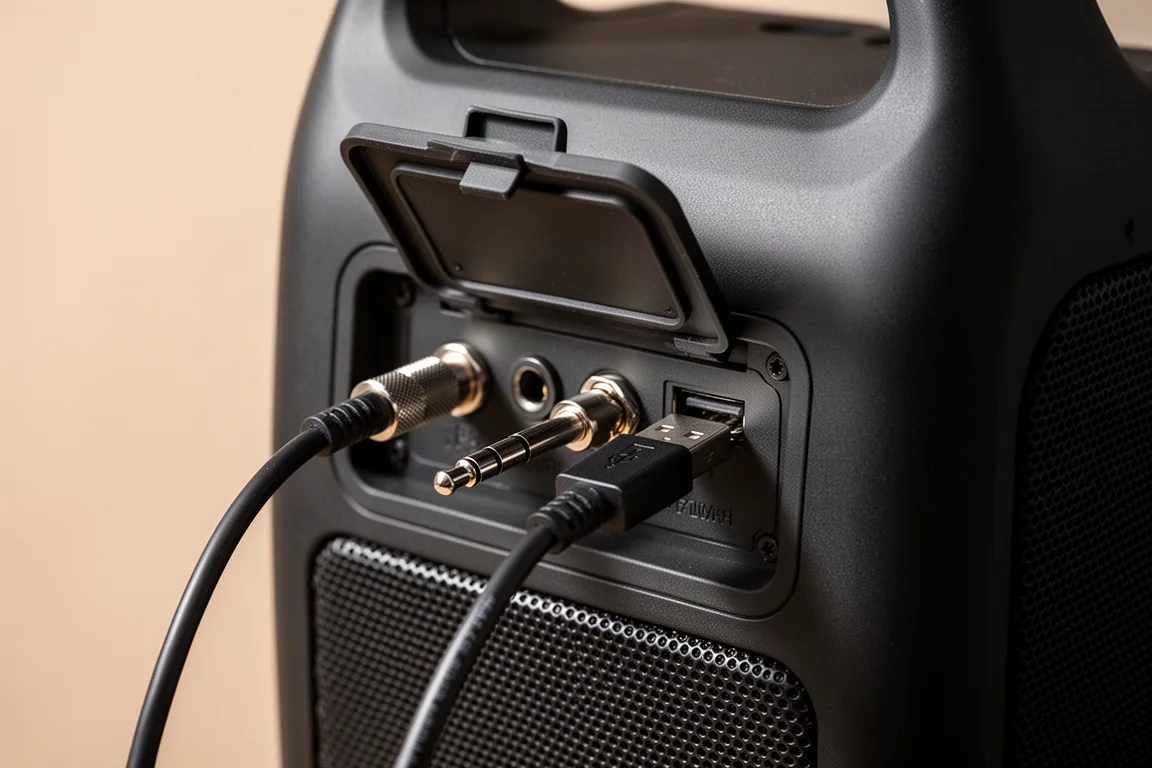
Connections match the Encore Essential and then go further. A second quarter inch input accepts another microphone or a guitar, with physical dials above each input for gain. For anyone learning guitar, playing along with familiar tracks through the same speaker is a genuinely useful setup. There is also an AUX output, which allows daisy chaining more than two PartyBox units with cables instead of pairing them wirelessly, so a very large stack is possible.
At high volume the 110 sounds noticeably more effortless than the Encore Essential. The extra woofer takes care of the lowest notes, which leaves the midrange clearer, and vocals come across as more lively with a fast, clean bass response. Worth knowing: two Encore Essentials paired in TWS on stands can sound a little better than a single 110. For a backyard party or a park trip where guests spread out, though, the 110 is the stronger single box choice.
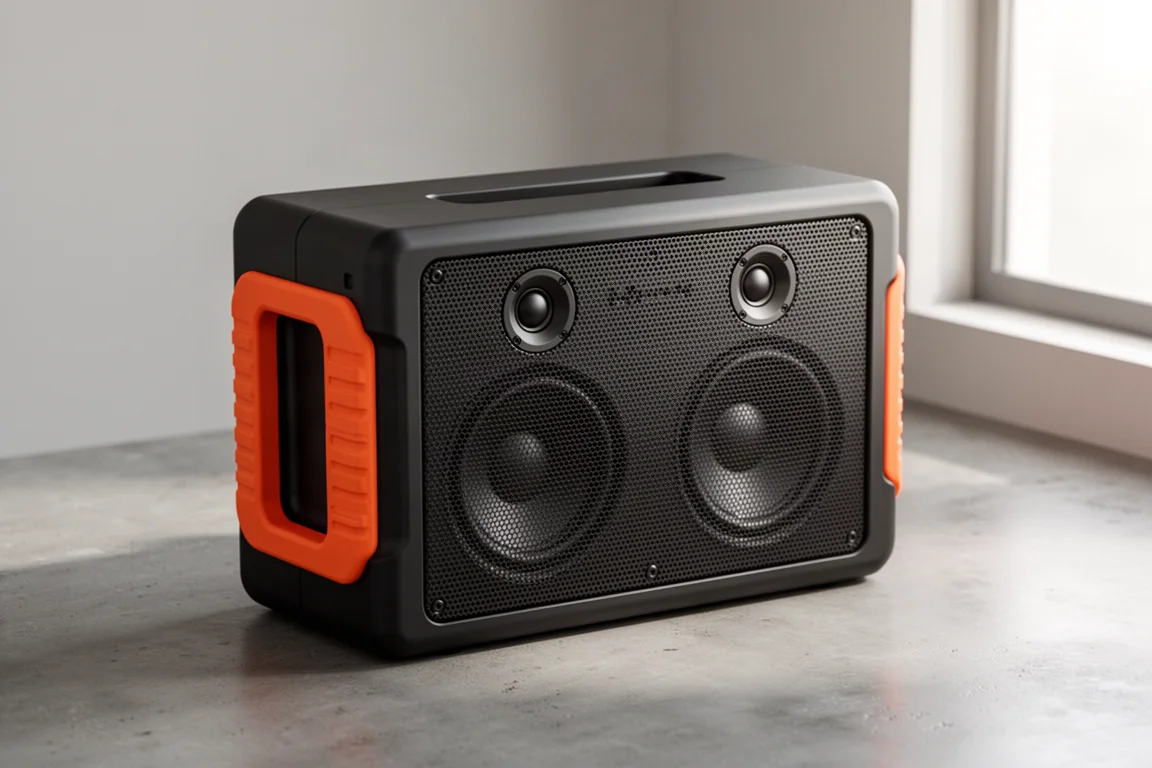
JBL PartyBox 310
The 310 is where the range starts to feel like serious equipment. It weighs 38 pounds, puts out 240 watts through two 6.5 inch woofers and two 2.5 inch tweeters, and moves on glide wheels with a telescopic handle, so it packs up and rolls away.
Its 20,000 mAh battery is rated at up to 18 hours and charges in about 3.5 hours. Testing at varying volumes with the light show on and off lands closer to 16 hours, which is a genuinely long runtime for a speaker this loud.
The top panel is the most complete in the group. A physical button changes the input, an LED indicator shows which one is selected, and three preset buttons trigger the DJ sound effects from the app. Bass, treble, and echo can be adjusted with physical buttons, without opening the app at all. A separate button indicates when a microphone or guitar is plugged in, and the 310 keeps every input and output found on the 110.
Output is the headline. Bass is tight and punchy rather than loose, and a single 310 will fill a large backyard with full sounding music. If your priority is filling a bigger space and making the music the centre of the event, this is the model to look at. It is loud enough that neighbours will notice.
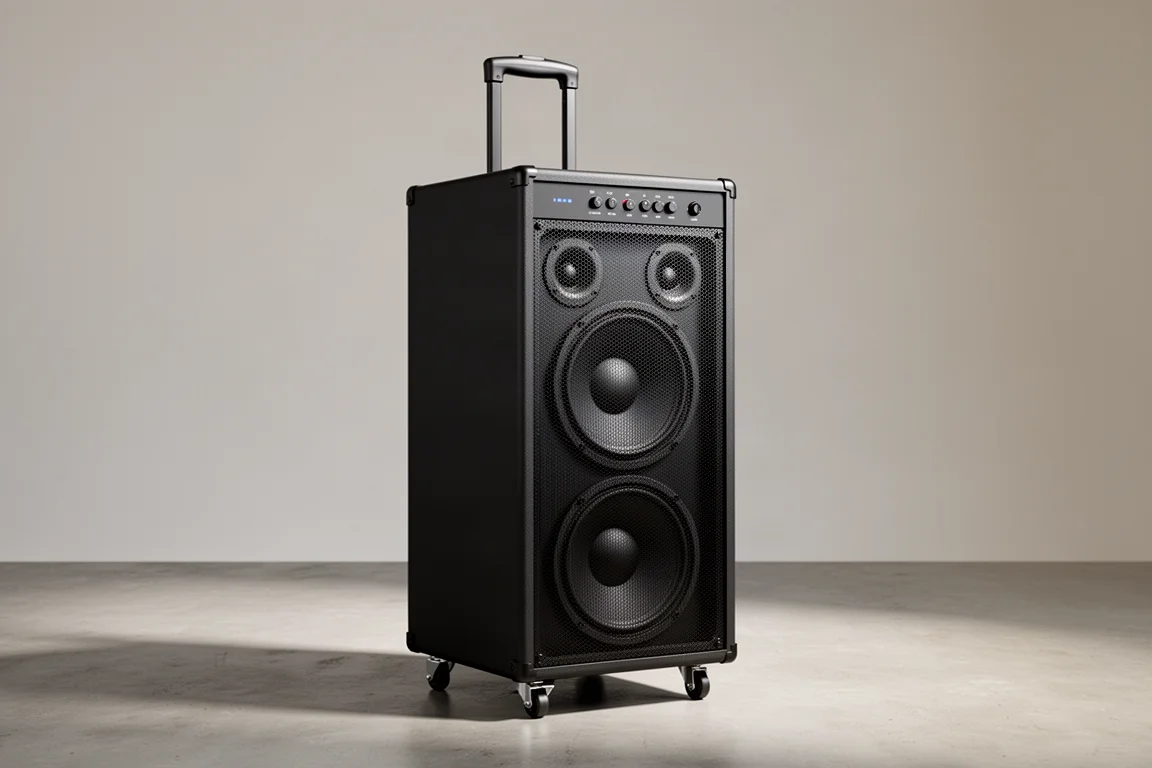
JBL PartyBox 710
The 710 is the flagship of this group: 68 pounds, 800 watts, and a driver complement of dual 2.75 inch tweeters and 8 inch woofers backed by a tuned bass reflex port. The result is a precise, very loud soundstage with subsonic low frequencies you feel as much as hear.
Two things separate it from the rest. First, it has no battery at all. Every other model here can be charged at home and unplugged for the park or the campsite, but the 710 is designed to stay plugged in, with wheels so it can be rolled out by the pool and back inside when needed. Second, the wheels are more rugged than the smooth glide casters on the 310, which suits the extra weight. There is no telescopic handle, but the taller cabinet puts the grab point within easy reach.
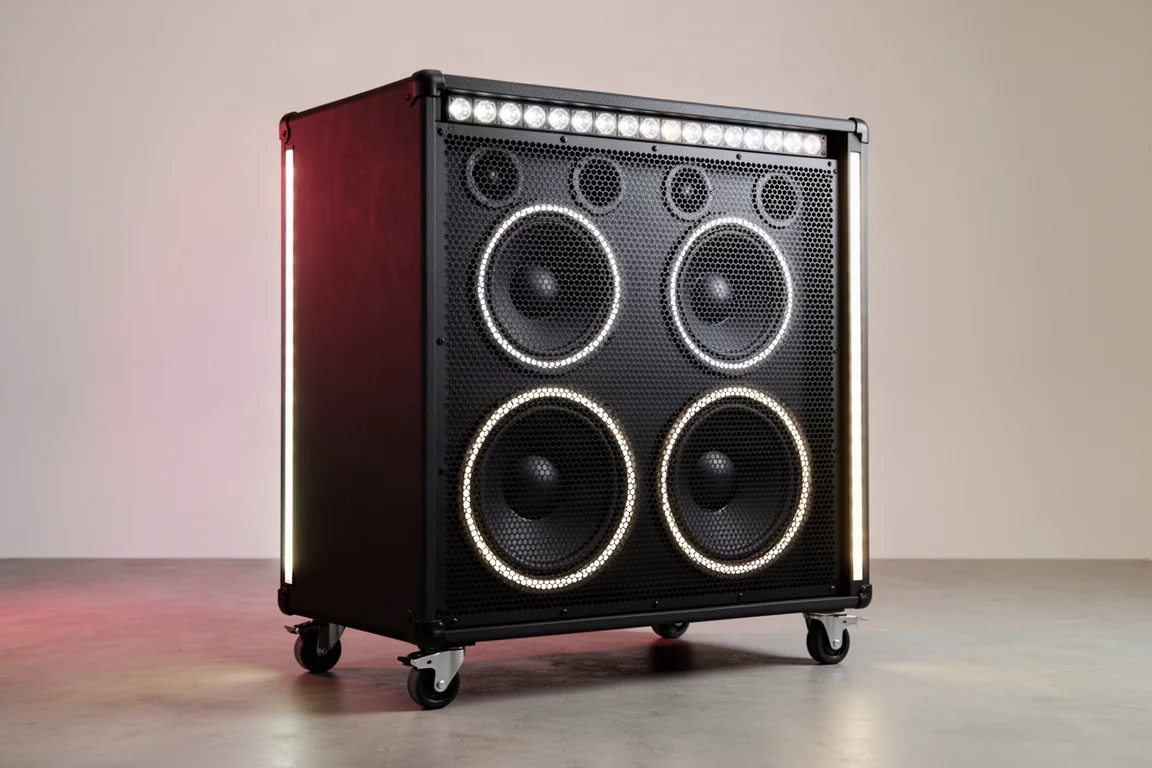
The light show is the most elaborate in the range. Ring-shaped RGB elements sit around each woofer, with additional interconnected lighting between them, strobe lights across the top, flashing RGB lights behind the grille, and RGB strips running down both sides.
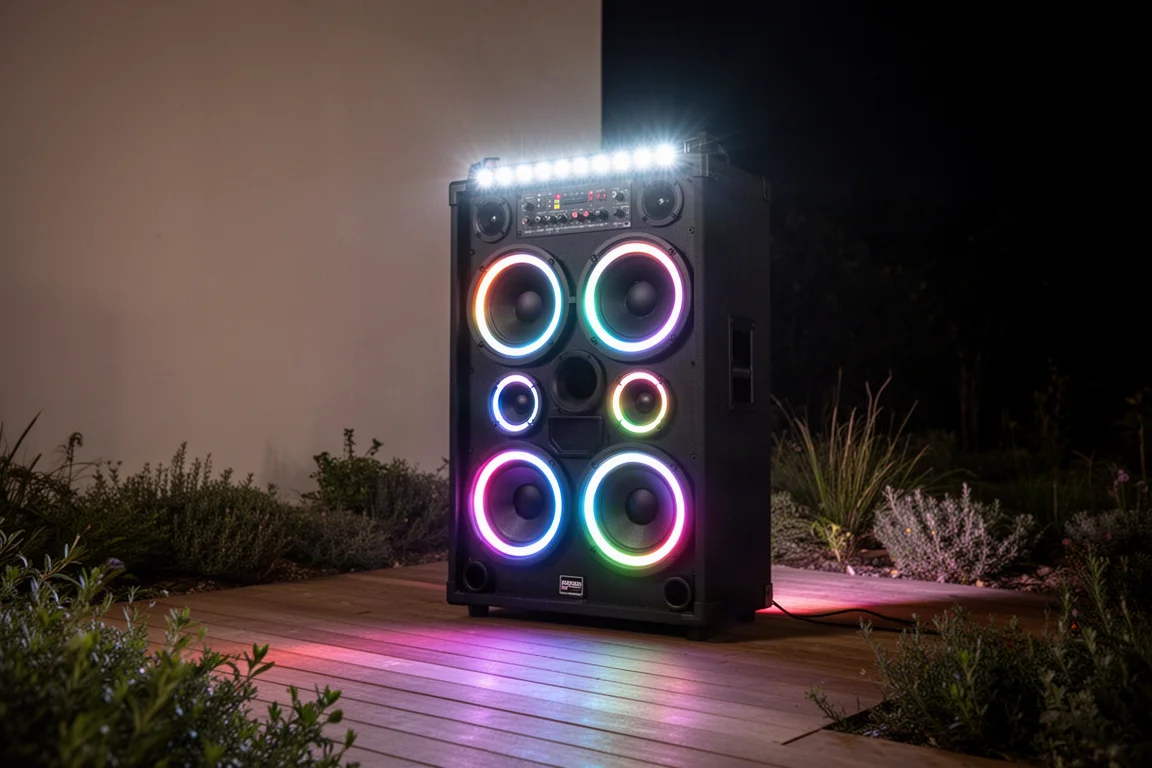
In sound quality it is the strongest of the four, and the difference is clearest in the lowest frequencies, where it reaches deeper than anything else in the line. Pairing two units creates a setup close to a real DJ rig, complete with synchronised lighting. It suits hosts who regularly entertain large groups, and it is capable enough to be considered for semi-professional use.
How to Choose the Right JBL PartyBox
Match the speaker to the space first. The Encore Essential covers a small gathering where guests stay close together. The 110 handles a backyard where people spread out, and adds guitar and second microphone inputs. The 310 is the pick for a large yard and a dance floor, and the 710 is for big crowds and hosts who want the most output and the most elaborate lighting.
Portability is the second filter. The Encore Essential and the 110 run on batteries and can go anywhere. The 310 also runs on battery and rolls on wheels. The 710 needs mains power, so it belongs where an outlet is always within reach.
Then think about inputs. If karaoke matters, any model works, since all four accept a microphone. If you play guitar or want two microphones, start at the 110. If you want to stack multiple cabinets into a very large system, the AUX output on the 110 and above is the practical route.
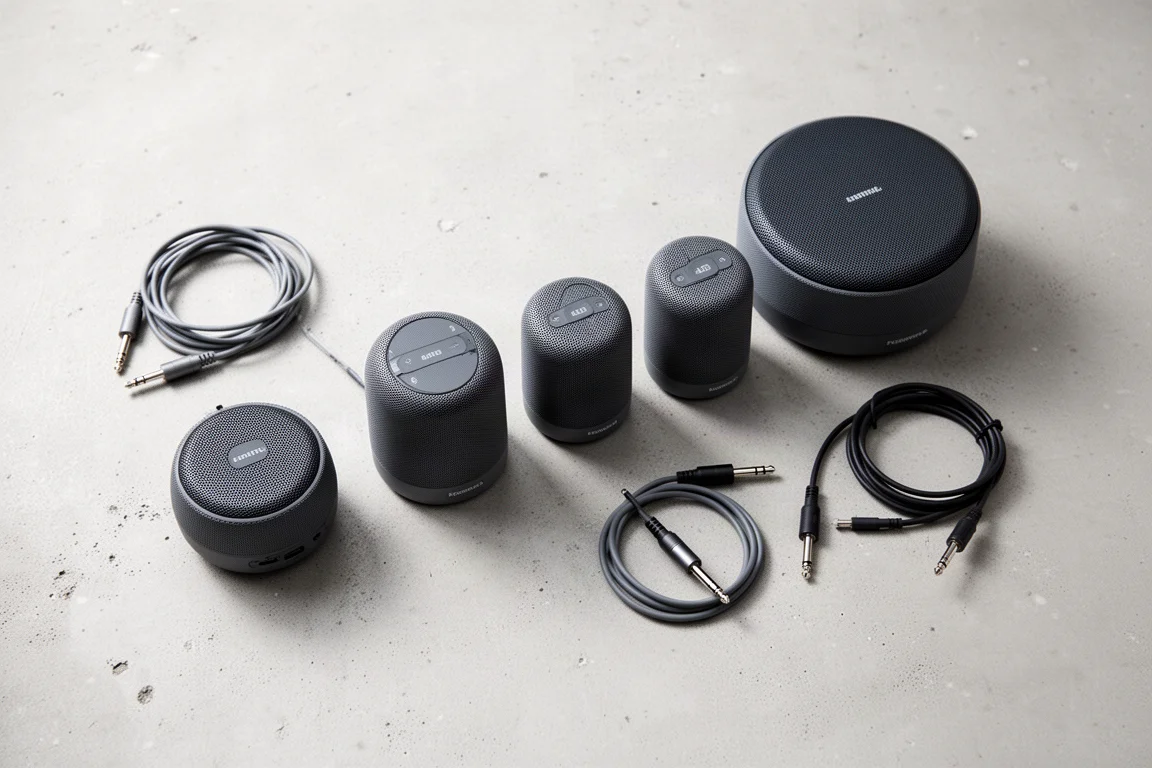
Battery expectations are worth setting honestly: rated figures assume modest volume with lighting and bass boost off. Turning on the light show and pushing volume will shorten runtime on every battery powered model here.
Conclusion
The four JBL PartyBox models cover a wider range than their similar looks suggest. The Encore Essential is the easiest to carry and the simplest to set up, the 110 adds a woofer and instrument inputs, the 310 brings wheels and a long battery, and the 710 delivers the most output and the most dramatic lighting at the cost of needing an outlet. Pick the one that matches your space, your power situation, and how much you want to carry, and the party side of the equation takes care of itself.
Further reading
Related Reviews
Party Speakers
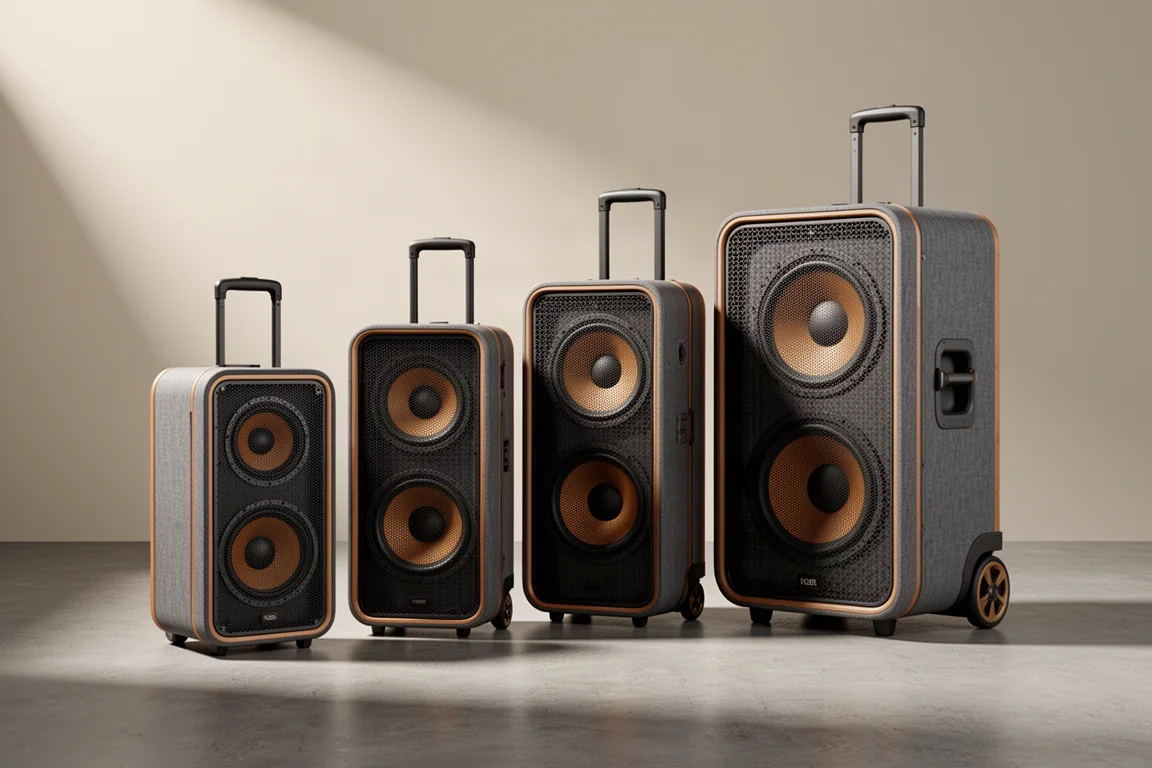
JBL PartyBox Lineup Guide 2026: Club 120, Stage 320, 520, 720 and More
A practical walk through the current JBL PartyBox range, from the compact Encore models to the 800 W PartyBox 720 and the mains-powered Ultimate.
Party Speakers
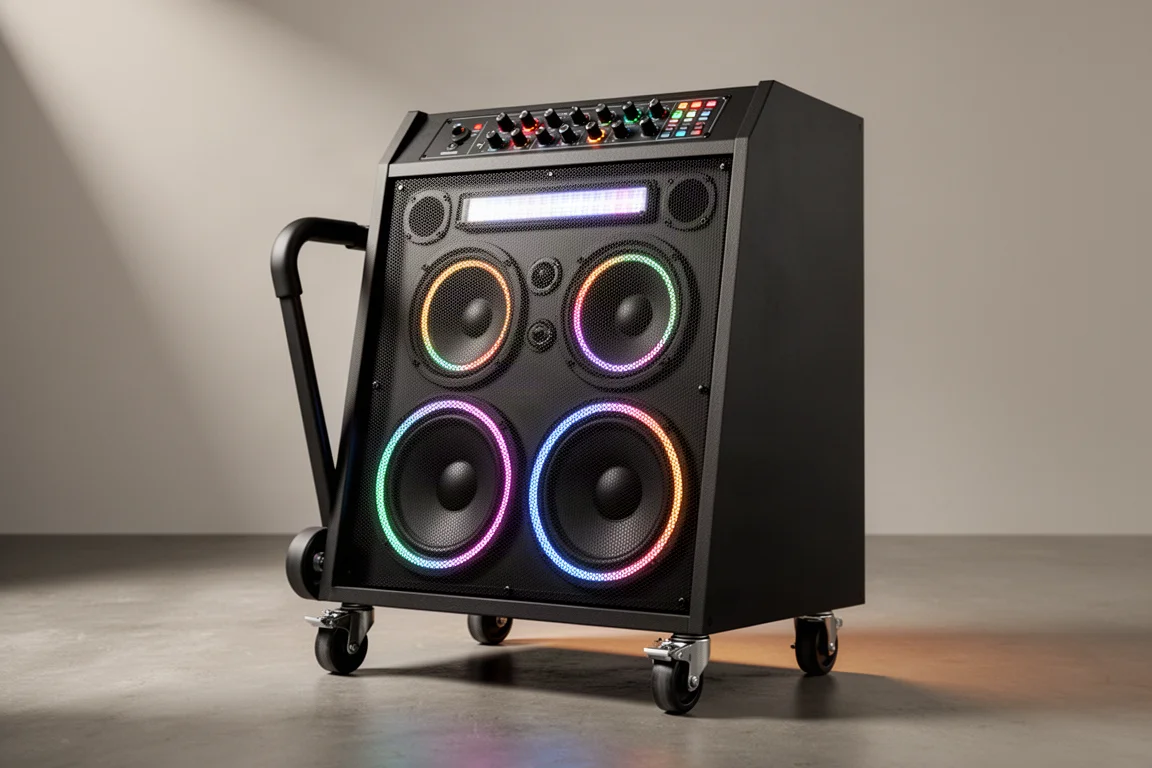
JBL PartyBox Ultimate Review: A 1,100-Watt Party Speaker You Roll Into Place
A flagship plug-in party speaker with wheels, karaoke inputs, Wi-Fi streaming, Dolby Atmos playback, and a built-in light show. Here is who it suits and what to check first.

Backpacking Gear
Building a 10 lb Base Weight: An Ultralight Backpacking Gear List
A practical walkthrough of the ultralight pieces behind a 10 lb base weight, from a 765 g pack and a roomy one-person tent to a full camp chair and a dependable water filter.