Portable Speakers
JBL Flip 7 Review: A Familiar Design With Meaningful Upgrades
The JBL Flip 7 keeps the Flip formula but adds Auracast, AI Sound Boost, lossless playback, IP68 waterproofing, and longer battery life. Here is what that means in practice.
Introduction
Nearly three and a half years after the JBL Flip 6, JBL has released the Flip 7, and it stays remarkably true to the formula. The new speaker looks almost identical to its predecessor at a glance, but under the fabric there are real upgrades: more output, longer battery life, Bluetooth 5.4, IP68 waterproofing, lossless audio over USB-C, and a new Auracast multi-speaker system that replaces Party Boost. The question is whether those changes add up to a genuine reason to buy, or even to upgrade from a Flip 6.
Who This Product Is For
The Flip 7 is aimed at anyone who wants a compact, rugged, go-anywhere Bluetooth speaker for patios, beach days, and backpacks. It is also squarely aimed at people who like to pair multiple JBL speakers together. One important caveat: Auracast does not work with older JBL speakers that use Party Boost. If you own a shelf of Flip 5 and Flip 6 units and love linking them, moving to the Flip 7 means starting a new ecosystem. If you are starting fresh, that compatibility break does not affect you at all, and Auracast pairing with new-generation JBL speakers is genuinely fast and simple.
Design: Familiar, With Small Smart Changes
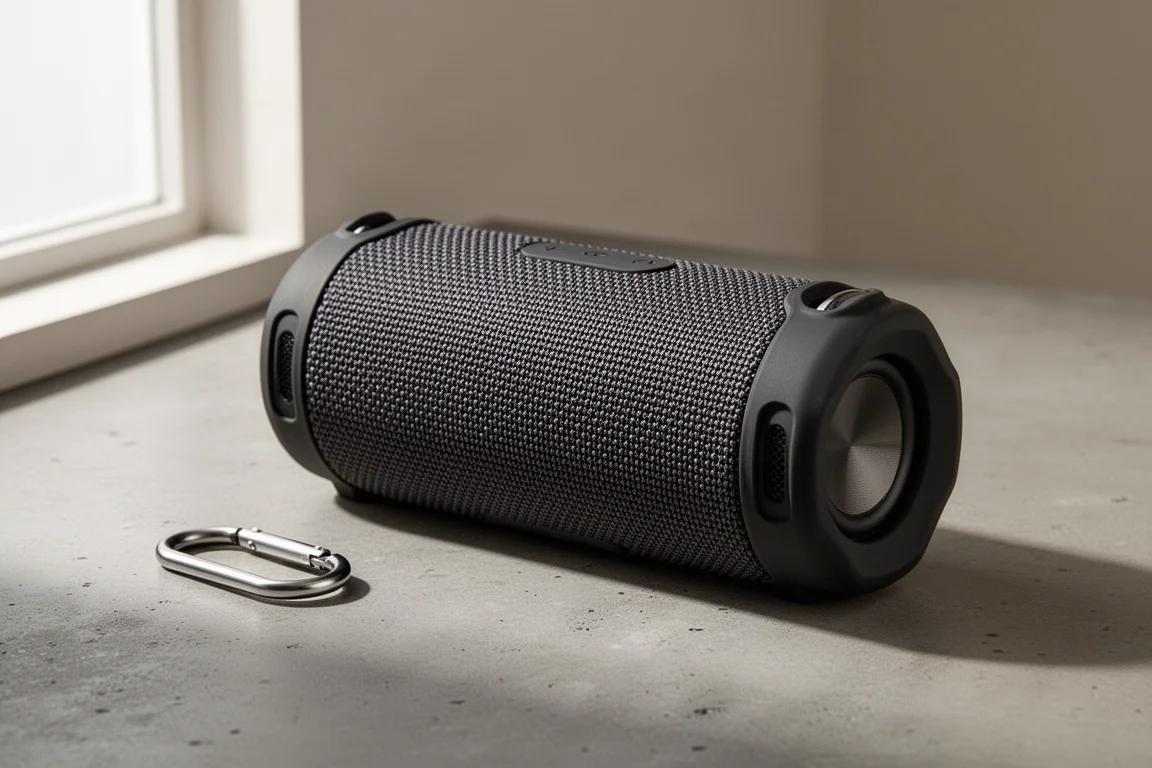
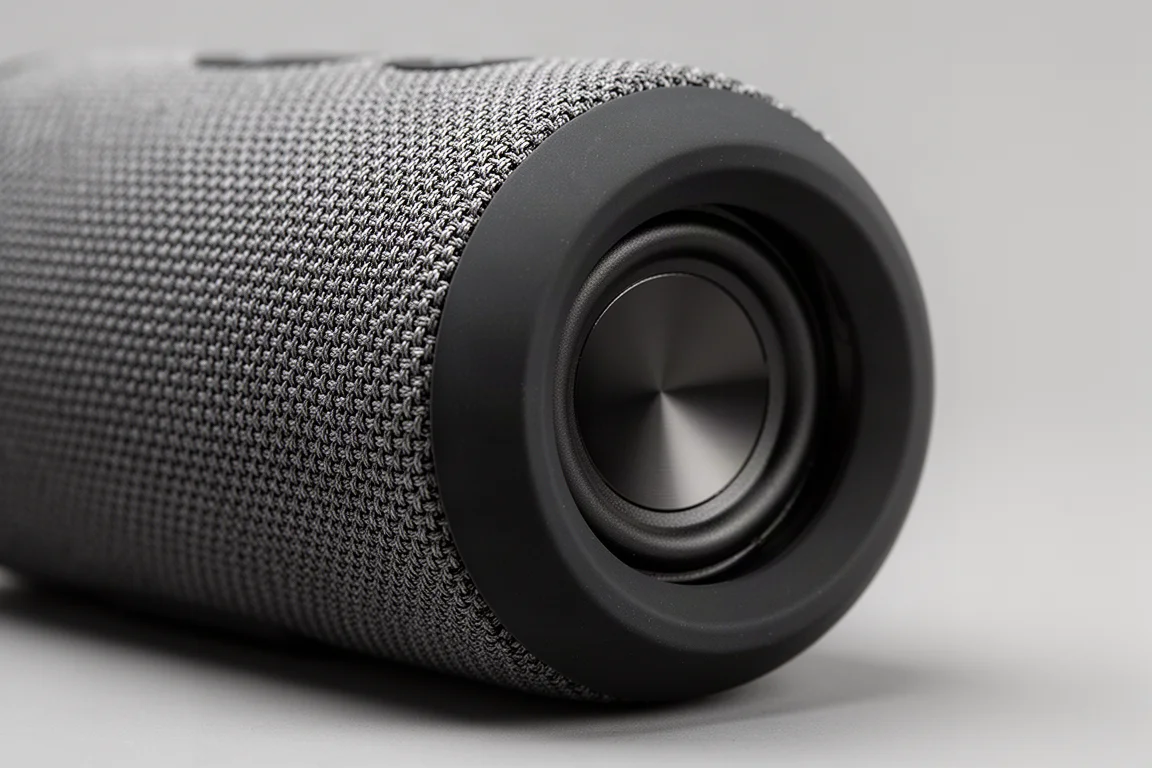
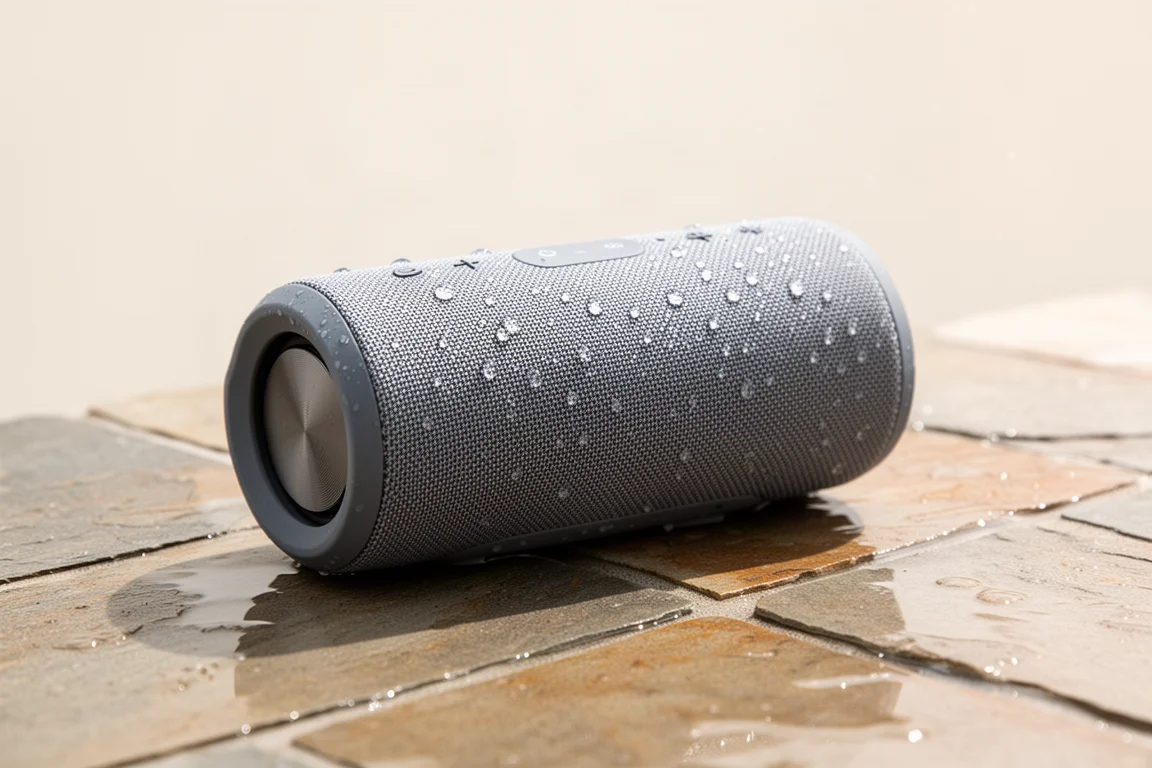
JBL found a design it is happy with and is sticking to it. The Flip 7 is wrapped in durable fabric mesh with sturdy rubber bumpers surrounding the dual passive radiators on each end. Differences from the Flip 6 are subtle: the Flip 7 now has four rubberized feet instead of three, and the button layout has been regrouped so the play, pause, track back, and track forward buttons sit together with the power, Bluetooth, and Auracast buttons just above, instead of being split around the speaker. It is a small change, but a genuinely useful one.
On the back you get a small Flip 7 logo, a battery indicator that is frustratingly difficult to read accurately, and a USB-C charging port with no rubber flap to keep dust out. A small rubber stopper underneath stops the speaker from rolling when laid flat.
Push-Lock Accessories and What’s in the Box
The Flip 7 introduces a push-lock accessory system compatible with future JBL accessories. Out of the box it includes a loop and a carabiner. The carabiner is the more practical of the two, making it easy to clip the speaker to a backpack. Pressing the small release button pops the attachment out, and accessories click securely into place. Also included are a user manual and warranty information, but no USB-C charging cable, so plan to use one you already own.
Sound: Slightly Deeper and More Refined
Inside, the Flip 7 is a mono speaker with one woofer, one tweeter, and two passive radiators. The tweeter has been redesigned with a dome shape, which JBL says gives higher frequencies a crisper sound. Interestingly, the transducers themselves are exactly the same size as the Flip 6: a 45 by 80 mm tweeter and a 16 mm woofer.
The output, however, has grown. The Flip 7 delivers 25 watts RMS to the woofer and 10 watts RMS to the tweeter, versus 20 and 10 on the Flip 6. The dynamic frequency response also widens slightly, from 63 Hz to 20 kHz on the Flip 6 to 60 Hz to 20 kHz on the Flip 7. In listening, the Flip 7 sounds slightly deeper and more refined than the Flip 6, with deeper lows and crisper mids and highs. It is not a night-and-day difference, but it is noticeable side by side, especially at higher volumes where the new AI Sound Boost feature analyzes music in real time for cleaner, more powerful bass at max output.
Battery Life: Real Improvement, One Catch
Both speakers share the same 3.6 V, 4,800 mAh lithium polymer battery, yet the Flip 7 claims about 14 hours of playtime versus roughly 12 on the Flip 6. In testing at 50% volume it comfortably reached 14 hours with roughly a quarter of the battery still showing, so the advertised figure is likely conservative.
The catch is the Playtime Boost feature in the app, which extends runtime by about two more hours but strips depth from the music in the process. It is hard to recommend, since the standard 14 hours is already excellent. Charging takes about two and a half hours over USB-C, and there is no quick charge system, which is a missed opportunity.
App and Connectivity: Auracast and a Better Equalizer
The JBL Portable app presents a clean, uncluttered layout. Alongside the JBL Signature preset, you get Chill, Energetic, Vocal, and a Custom option, and the Flip 7 upgrades the old three-band equalizer to a seven-band equalizer for much finer control over your preferred sound.
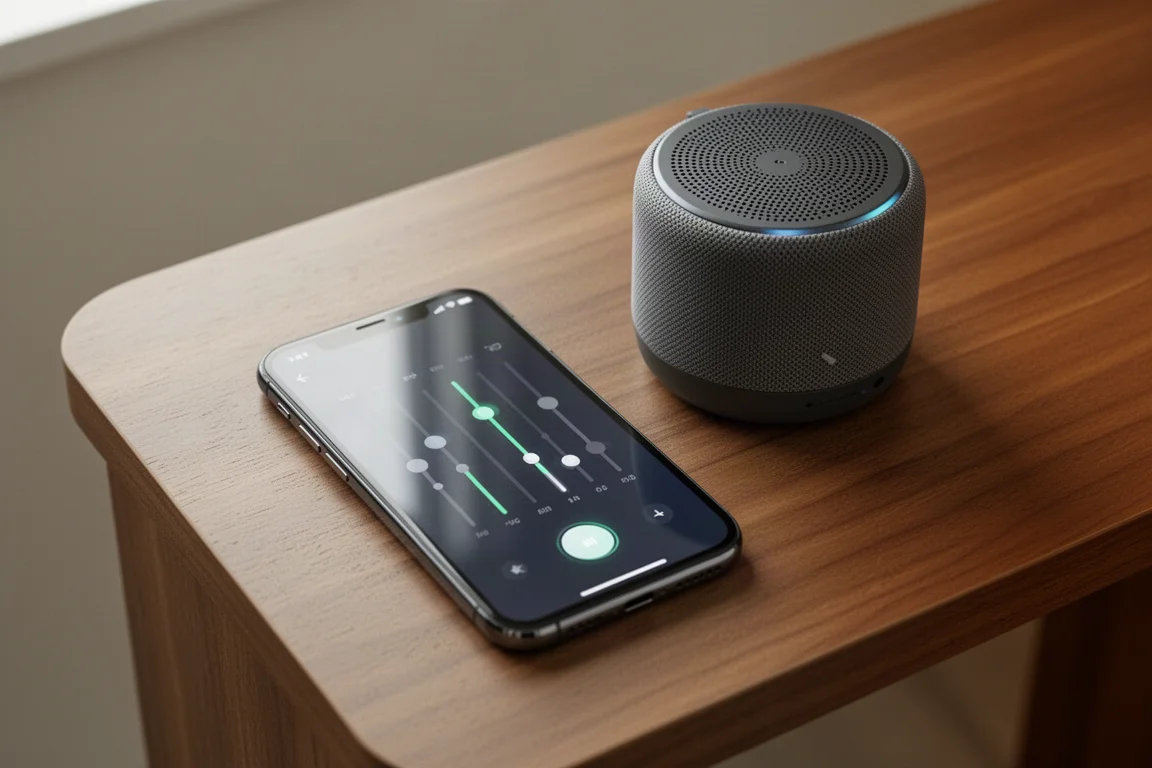
The bigger change is Auracast replacing Party Boost. Pairing is impressively quick: pairing the Flip 7 with a JBL Go 4 took only a few taps in the app. For true stereo with distinct left and right channels, however, you need a second Flip 7. Connectivity itself is strong, thanks to Bluetooth 5.4. On a 60-foot patio with clear line of sight, streaming stayed stable throughout; the connection only dropped when turning a corner indoors, which is normal for any Bluetooth speaker.
Lossless audio playback is another new trick. Plugged directly into a laptop or other source via USB-C, the Flip 7 can play lossless audio, provided your source is lossless too. Whether you care depends on how you use a portable speaker.
Waterproofing and Durability: Now IP68
The Flip 7 moves from IP67 to IP68. Both ratings mean fully dustproof, but the Flip 7 is submersible in up to six feet of water, double the three-foot rating of the Flip 6. It survived water testing without issue. One lingering disappointment: it still sinks, so a floating design remains on the wish list.
Things to Consider Before Buying
The headline tension is ecosystem versus hardware. The Flip 7 is the better speaker on nearly every metric, but if you already own several Party Boost-era JBL speakers, upgrading means those older units will not connect to Auracast. There is also no quick charging, no included USB-C cable, and the hard-to-read battery indicator carries over unchanged.
Buying Advice
The Flip 7 launched at $149.95, while the Flip 6 launched at $129.95 and now sells for around $99.95. If you want the latest technology, the choice is easy: Bluetooth 5.4, IP68, lossless playback, AI Sound Boost, more output, longer battery life, and the seven-band equalizer all favor the Flip 7. If you are heavily invested in older Party Boost speakers and do not care about having the newest features, the Flip 6 at its current price remains a solid value. For anyone starting fresh, the Flip 7 is the one to get.
Conclusion
The JBL Flip 7 is an iterative update done well. It keeps the durable, proven design while adding meaningful upgrades in sound, battery life, waterproofing, and connectivity. The Auracast transition is a mixed blessing for longtime JBL owners, but for new buyers it is a fast, convenient multi-speaker system. For most people shopping for a compact rugged speaker today, the Flip 7 is the better long-term pick.
Product link
View more details for JBL Flip 7
This product is mentioned in the review. Check the specifications, options, and compatibility before buying.
View more details for JBL Flip 7Further reading
Related Reviews
Portable Speakers
Brain X Review: Real Sub-Bass From a Truly Portable Speaker
A close look at the Brain X portable wireless speaker, its RAD driver design, its measured bass extension, its output and tuning, and the trade-offs worth knowing before you buy.
Portable Speakers
Devialet Mania Review: Portable Devialet Sound in the Brand's Smallest Form
The Devialet Mania brings the brand's sculptural design and deep bass to a battery-powered portable speaker with up to 10 hours of playback.
Portable Speakers
Sonos Move 2 Review: Stereo Sound, 24-Hour Battery, and a Refined Charging Base
A closer look at the Sonos Move 2, from its dual-tweeter stereo sound and 24-hour battery to the redesigned charging base, the connectivity upgrades, and the trade-offs worth knowing before you buy.