Portable Speakers
Brain X Review: Real Sub-Bass From a Truly Portable Speaker
A close look at the Brain X portable wireless speaker, its RAD driver design, its measured bass extension, its output and tuning, and the trade-offs worth knowing before you buy.
Introduction
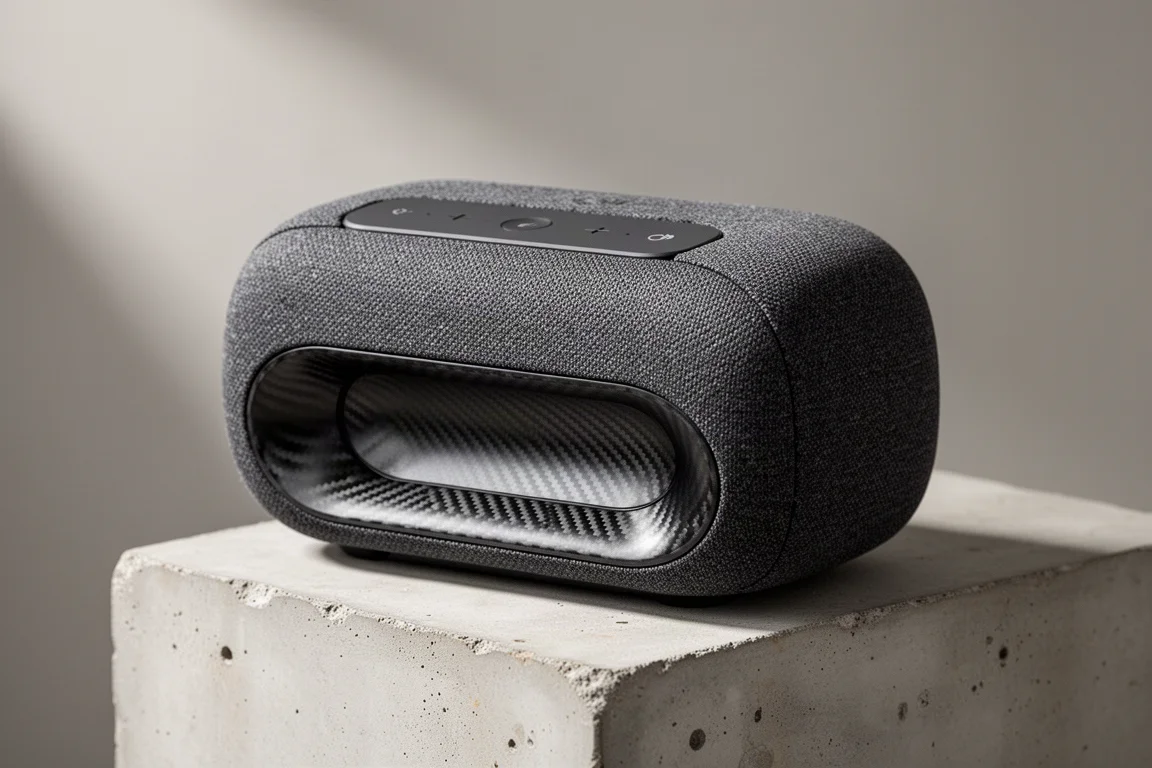
Portable wireless speakers usually ask you to accept a compromise. A small cabinet rarely produces deep bass, and a battery rarely has the power to force it out of a small cabinet anyway. The Brain X is a battery-powered wireless speaker that argues the compromise can be pushed much further than its size suggests, and it does so with a driver design the company calls the RAD, short for Repel and Attract Driver.
It sells for around $500, runs from an internal battery with a power brick used only for charging, and pairs with a companion app for EQ and multi-speaker setups. This review covers what the speaker actually claims, what independent measurements show, how it sounds, and where it fits in a real listening setup.
Who the Brain X Is For
The Brain X is aimed at listeners who want genuine low-frequency extension from something they can carry between rooms, or out onto a balcony or patio, without plugging into a wall. It suits small apartments, desktops, kitchens, and casual outdoor use, and it suits anyone who prefers balanced tuning over a boosted mid-bass hump that fakes weight without reaching low.
It is not a replacement for a high-end stereo pair or a serious bookshelf setup. Think of it as a portable speaker that behaves more like a small hi-fi component than a typical battery-powered box, and the appeal becomes clear.
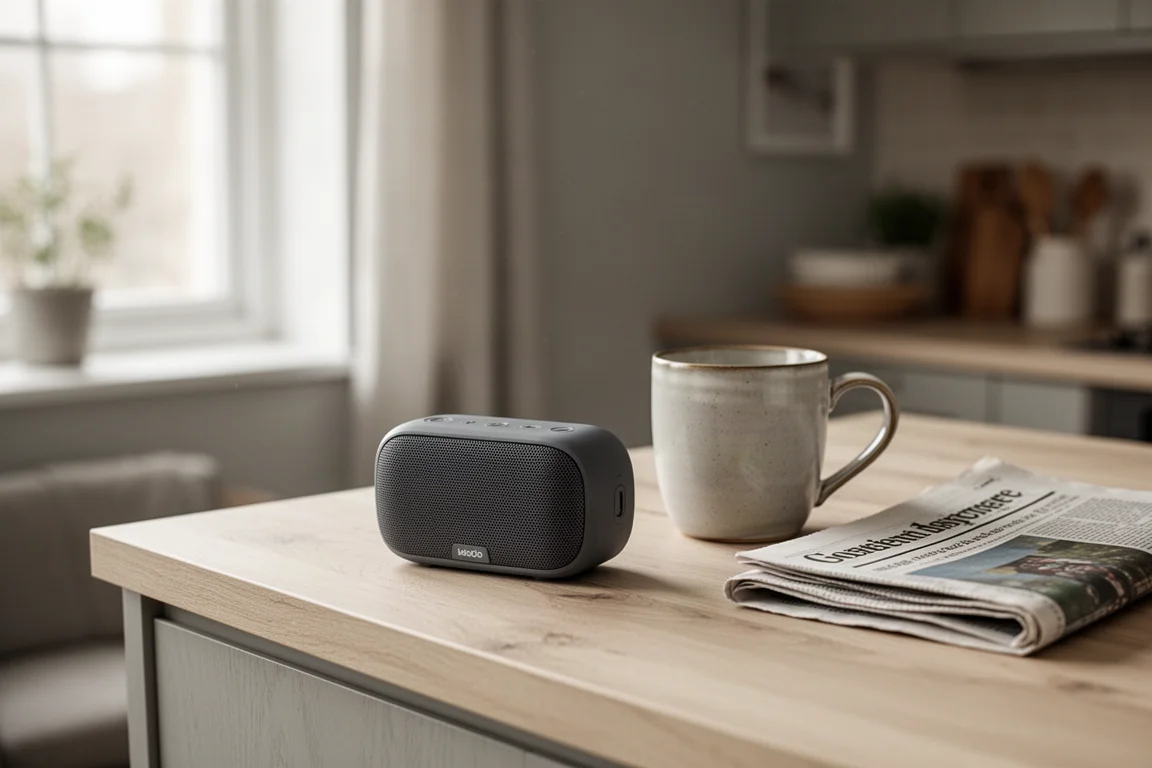
For buyers who mostly listen at low volume in a single room, the extra bass capability may be more than you need. For anyone who has been disappointed by portable speakers that roll off sharply below 100 Hz, that capability is the entire point.
Bass Extension: What the Measurements Show
The design question here is Hoffman’s Iron Law, the long-standing rule that a speaker designer can pick two of three things: a small cabinet, deep bass extension, and high sensitivity or output. The Brain X claims all three, with a stated bass extension down to 27.1 Hz.
Independent measurements add important context. The speaker does reach 27.1 Hz, but that figure is an F10 point, meaning it sits roughly 10 dB below the rest of the frequency response. The more useful F3 figure, where output is 3 dB down, lands at about 50 Hz. That is still a genuinely impressive number for a speaker this size. Plenty of full-size bookshelf speakers, and quite a few subwoofers with dedicated drivers, never reach it.
The real-world picture is better than the graph alone suggests. The woofer is downfiring and the enclosure is sealed, so placing the speaker on a solid surface in a room adds room gain. Depending on what it sits on, output below 50 Hz is effectively a given in normal use. Keep in mind that the subwoofer driver occupies only about one third of the cabinet. The rest of the volume is given over to the other drivers and the electronics.
Inside the RAD Driver
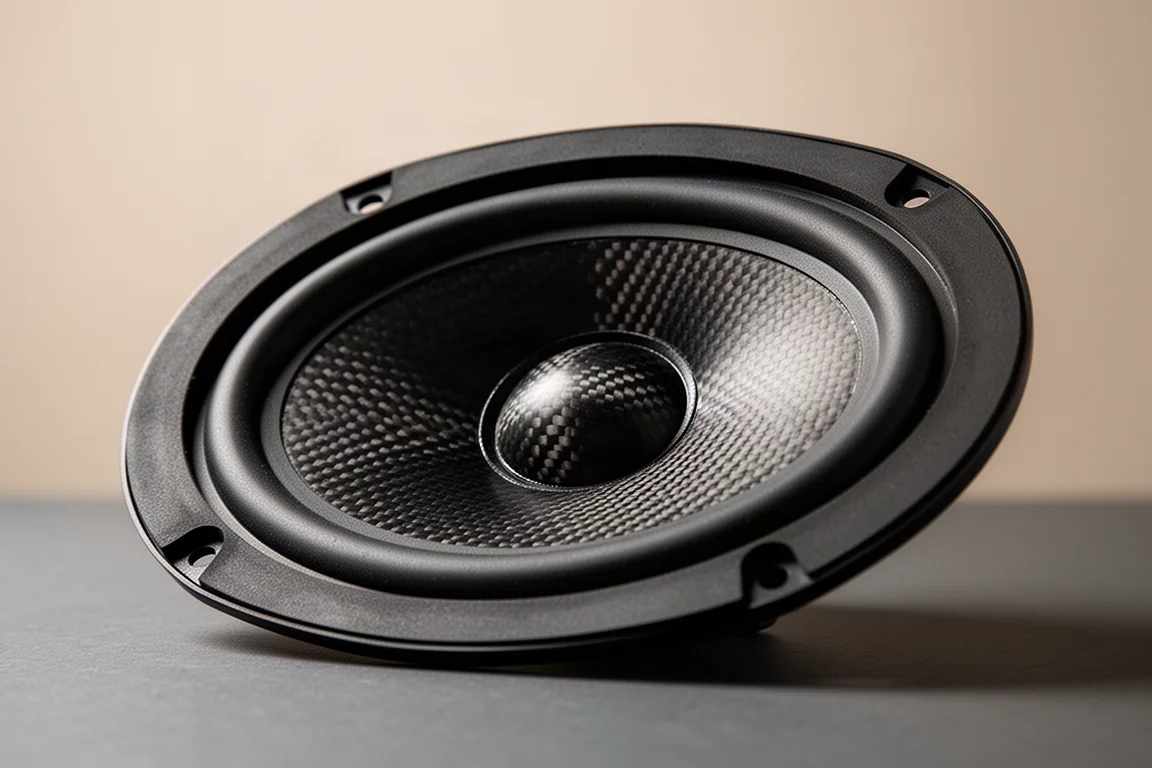
The RAD driver is proprietary to Brain X, and its shape is part of the story. It is oval rather than round, and it spans the entire bottom portion of the cabinet, giving it a radiating area roughly equivalent to an 8 inch woofer. That is a large driver for an enclosure this small, and it wears a carbon-weave finish.
The more interesting engineering is in the voice coil. Part of the voice coil has been removed, and a permanent magnet has been added to work against the internal air pressure inside the cabinet. In a conventional design, the driver spends a meaningful share of its power fighting that pressure as the cabinet compresses and expands. By cancelling those internal forces with the driver’s permanent magnet, the design allows a cabinet roughly ten times smaller to produce the same bass note, and it cuts the power the voice coil needs by about the same factor.
The numbers bear that out. The bass driver draws somewhere between 5 and 50 watts, while the combined output for the rest of the drivers reaches 200 watts. Brain X holds eight patents covering material science, driver technology, and resonance control. The result is not a speaker that has become magically efficient. It is a speaker whose driver wastes far less power fighting its own enclosure, which is a different and more interesting achievement.
That distinction matters when you compare it with speakers that rely on raw amplifier power to overcome inefficient drivers. Those designs typically need a wall socket. This one does not.
Output, Balance, and Sound Quality
Despite the small cabinet and the battery, the Brain X gets plenty loud, with output just under 100 dB SPL. That is more than enough for a room, a desk, or a small gathering, and it never feels strained in normal listening.
The tuning is the quieter strength. Independent measurements show a notably balanced response across the range, close to textbook rather than shaped to impress. The midrange and treble come across as natural, without the dips or lifted regions that make some wireless speakers sound odd or artificially detailed. Many bookshelf speakers costing considerably more do not manage this level of balance.
What you should not expect is a replacement for a proper stereo system. A dedicated hi-fi setup still has the advantage in scale and imaging. Against other wireless speakers, though, the gap is obvious, largely because the bass here is real low-frequency extension rather than a boost around 100 Hz that mimics weight.
Living With It: Connections, App, and Pairing
Everyday use is straightforward. The speaker supports AirPlay and Spotify among other wireless connections, and the companion app includes EQ controls, so you can add a little bass when you want it or trim it back in a smaller room. Out of the box the tuning is already balanced, so the EQ is a preference tool rather than a fix.
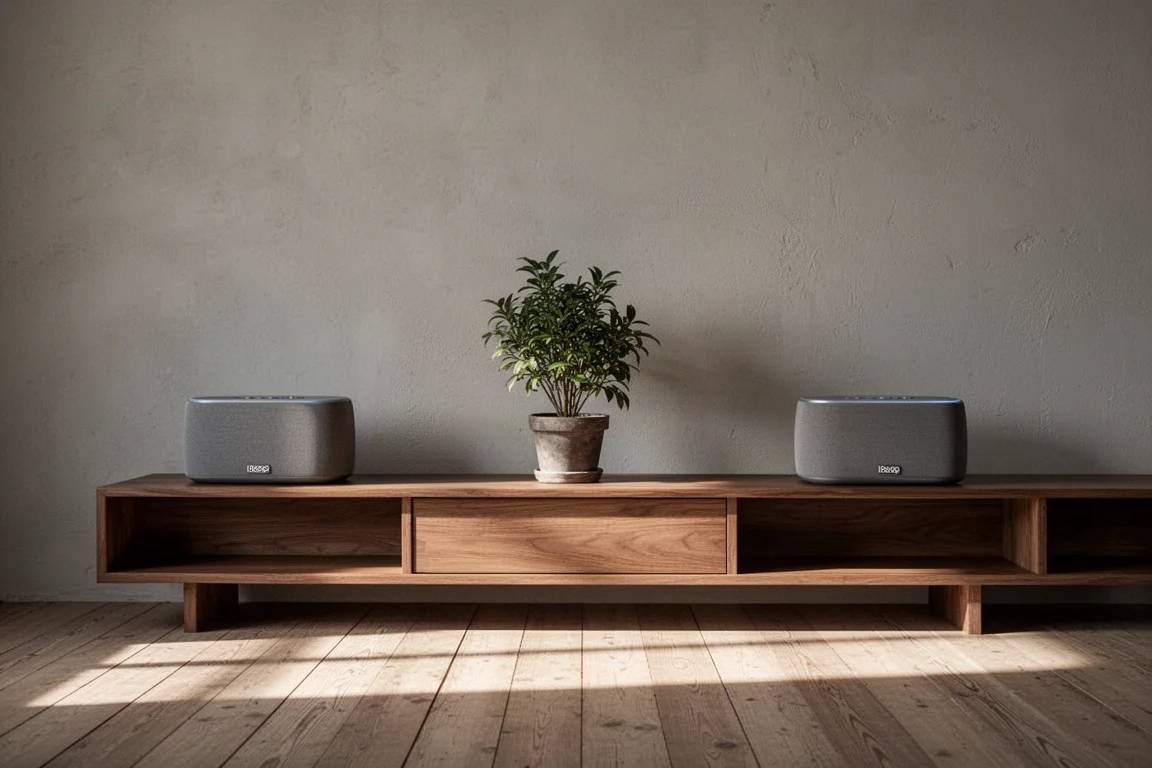
Two units can be paired as a left and right stereo pair, and up to eight can be linked in party mode. Stereo pairing is the more compelling option for anyone who cares about sound quality, and it is a sensible upgrade path if you start with one speaker and decide you want a wider image later.
Because the battery is internal, the speaker works entirely away from a wall outlet. The supplied power brick is for charging only, which is what makes the portability claim credible rather than nominal.
Things to Consider Before Buying
The headline 27.1 Hz figure deserves a caveat. It is an F10 measurement, so that last stretch of bass is roughly 10 dB below the rest of the response. The F3 point of about 50 Hz is the more honest description of what the speaker delivers, and it is still remarkable for the size.
Bass output also depends on placement. The downfiring woofer interacts with whatever surface it sits on, so a solid shelf, desk, or floor will give you more low end than a soft or resonant surface. Room gain works in your favour here, but it is worth experimenting with position rather than assuming the first spot you try is the best one.
Finally, at around $500 this is priced well above typical portable speakers. The engineering, the measured balance, and the true low-frequency extension are what you are paying for, and buyers who mainly want background music at moderate volume may not need that.
Buying Advice
If you want a portable speaker that reaches genuinely low without a power cable, the Brain X is a strong fit. It is small enough to move between rooms, loud enough for a room or a small gathering, and tuned in a way that rewards listening rather than showing off.
If you are buying for sound quality first, plan for two units and run them as a stereo pair. That configuration gets you the imaging and separation that a single box cannot provide, and it is a meaningful step up for a modest additional outlay.
If you are unsure, start with one and use the app EQ to tune it to your space. The speaker’s default balance means you are starting from a good baseline rather than correcting for a heavy-handed factory curve.
Conclusion
The Brain X does not break the laws of physics, and it does not need to. By addressing the efficiency of the driver itself rather than throwing power at the problem, it delivers a small, battery-powered speaker with bass extension that its size has no right to produce, along with output just under 100 dB SPL and a balanced, natural presentation.
For around $500, it stands out as one of the more convincing portable wireless speakers available, particularly for listeners who value real low-frequency extension and honest tuning over boosted bass. It will not replace a dedicated stereo, but as a portable speaker that behaves like something much larger, it earns a clear recommendation.
Product link
View more details for Brain X
This product is mentioned in the review. Check the specifications, options, and compatibility before buying.
View more details for Brain XFurther reading
Related Reviews

Portable Speakers
Devialet Mania Review: Portable Devialet Sound in the Brand's Smallest Form
The Devialet Mania brings the brand's sculptural design and deep bass to a battery-powered portable speaker with up to 10 hours of playback.
Portable Speakers
Sonos Move 2 Review: Stereo Sound, 24-Hour Battery, and a Refined Charging Base
A closer look at the Sonos Move 2, from its dual-tweeter stereo sound and 24-hour battery to the redesigned charging base, the connectivity upgrades, and the trade-offs worth knowing before you buy.
Portable Speakers
Soundcore Motion X600 Review: Five Drivers and Up-Firing Spatial Audio
A portable speaker with a stainless steel body, five drivers, 50 watts of amplification, and LDAC high-resolution decoding, plus the trade-offs worth knowing before you buy.