Portable Speakers
JBL Flip 6 Review: Worth the Upgrade Over the Flip 5?
A closer look at the JBL Flip 6, its new tweeter, Bluetooth 5.1, and IP67 rating, and whether it justifies stepping up from the Flip 5.
Introduction
The JBL Flip 6 arrives looking a lot like its predecessor, and that is largely the point. JBL kept the same size, shape, and form factor as the Flip 5 while refining the details and making a few genuinely meaningful upgrades under the fabric. The question is whether those changes add up to a speaker worth buying, and whether current Flip 5 owners should bother switching. After spending time with the Flip 6, comparing it directly with the Flip 5, here is how it shakes out.
What’s in the Box
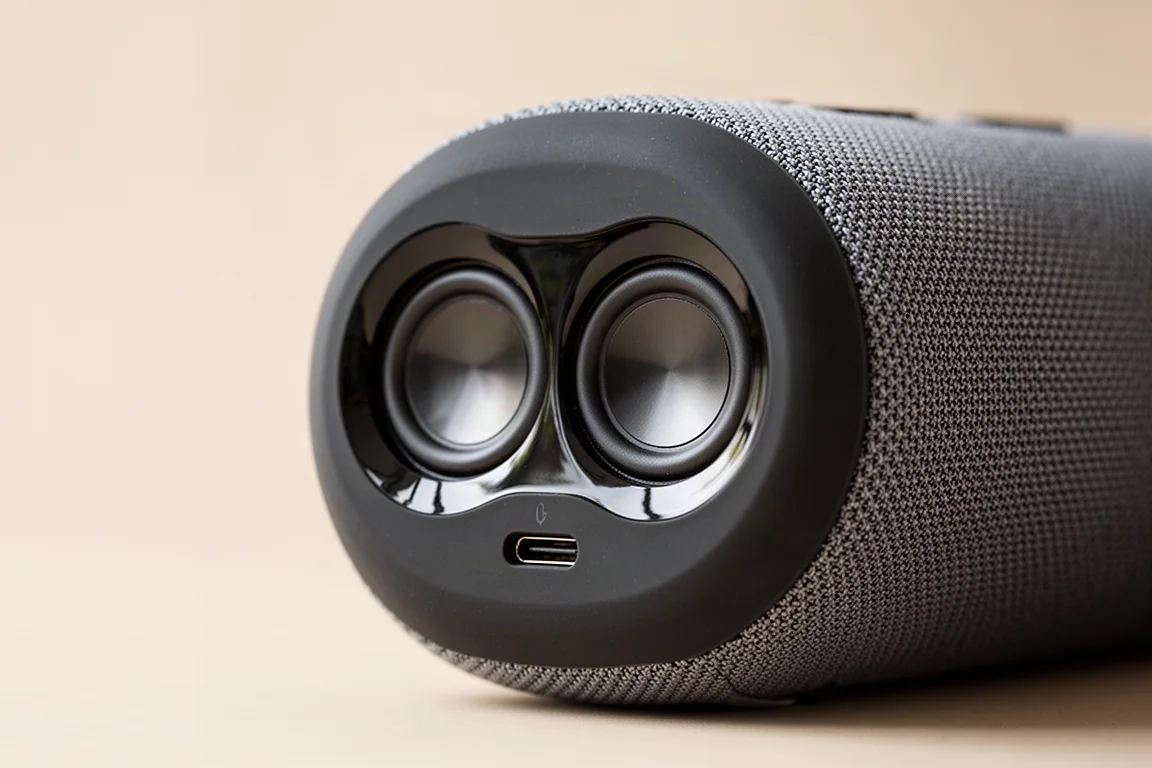
Inside the box you get the usual quick start guide and warranty information, plus a USB Type-C charging cable. Nothing unexpected, and nothing missing. The Type-C port is a welcome carryover, and it is now smarter about problems: if water or dirt gets into the port, the speaker will alert you before you try to charge it. That small safeguard matters for a speaker designed to live outdoors.
Design and Build
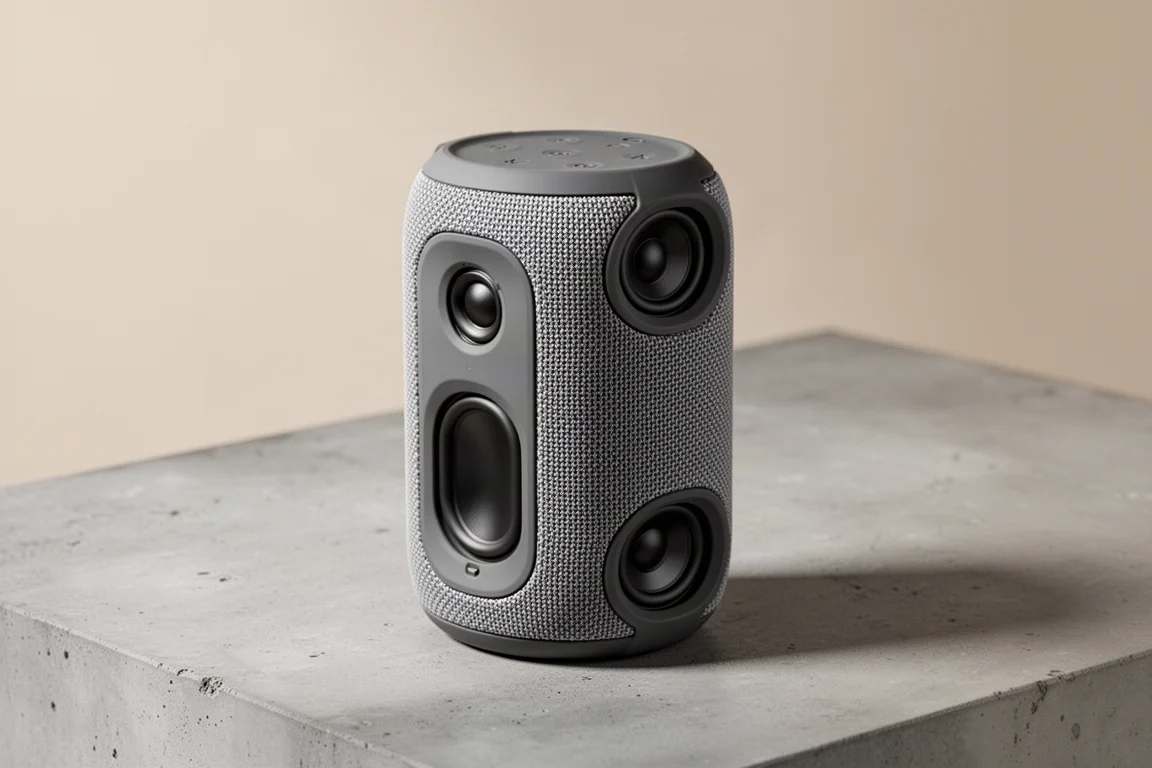
At a glance, the Flip 6 looks like a shrunken Charge 5. It keeps the same overall dimensions and cylindrical form as the Flip 5, wrapped in the same durable fabric mesh that gives both speakers their rugged feel. The changes are mostly aesthetic: the JBL logo is noticeably larger, the plastic piece surrounding the dual passive radiators has been slimmed down for a sleeker look, and the radiator end caps get a subtle redesign, one with a shiny finish and the other more monochrome with a small exclamation-point detail. The lanyard carries over too, now with a slider so you can tighten it to fit whatever you hang it from.
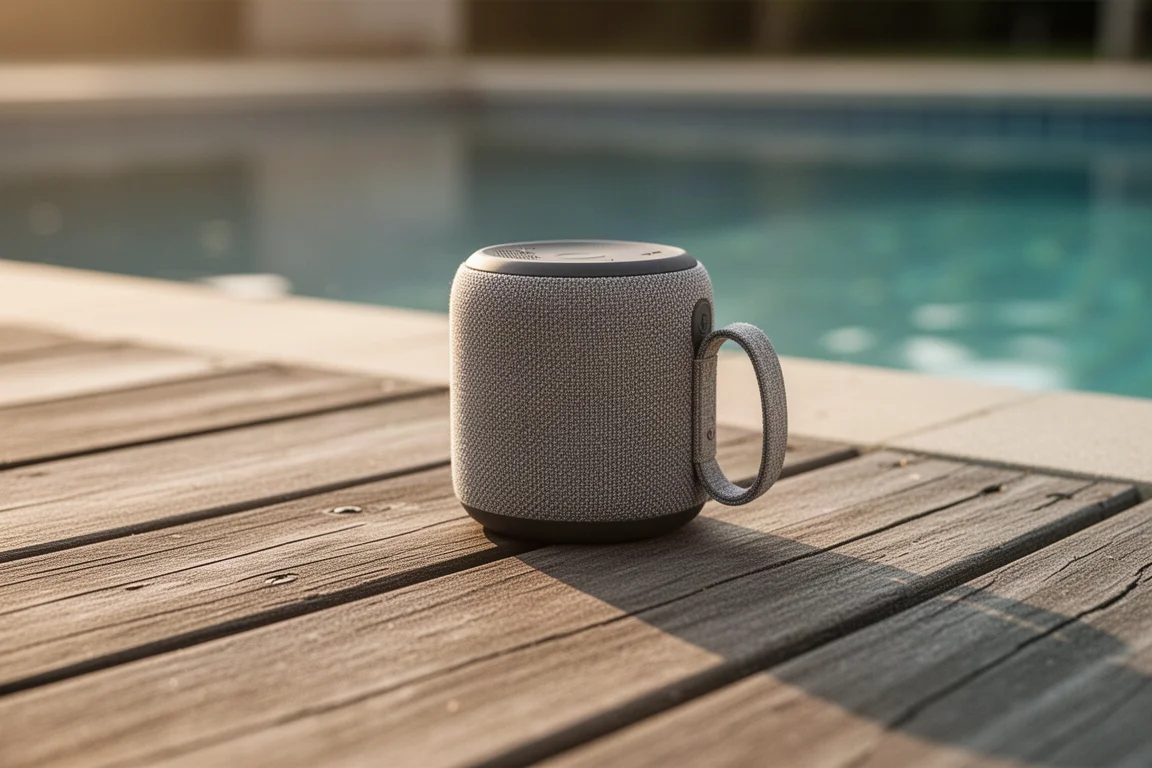
Available colors at launch include gray, teal, red, black, and blue. The button layout is identical to the Flip 5: PartyBoost, volume, and play/pause on one side, power, Bluetooth, and an LED battery indicator on the other.
Sound Quality
The headline change is the new tweeter. The Flip 6 keeps the same racetrack-shaped driver as the Flip 5, but the driver is now rated at 20 watts RMS alongside a 10 watt RMS tweeter. In practice, the mids and highs sound clearer and crisper than the Flip 5, especially around the 75 percent volume mark, and the tweeter is the main reason.
Out of the box, the bass is a bit of a letdown. It lacks the punchy impact you might expect, and it sounds much like the Flip 5 in that regard. The good news is the companion app includes a three-channel EQ covering bass, mids, and treble. Boosting the bass two notches helps noticeably, and dropping the treble slightly at higher volumes tames things further. At full volume, some distortion remains even after tweaking the EQ, though it improves over stock.
For rock, classical, and country, the Flip 6 sounds great. If your playlist leans heavily on hip hop and you want deep bass punch, this is not the speaker for that job; a Charge or Boombox model would serve you better.
Battery Life and Charging
Inside is a 3.6 volt, 4800 mAh lithium-ion polymer battery, rated for up to 12 hours of playtime on a two-and-a-half-hour charge. In testing at 50 percent volume, the speaker managed about seven hours, which is worth keeping in mind if you plan long sessions away from a charger.
One thing that has not changed: there is still no microphone. Just like the Flip 5, you cannot take phone calls through the Flip 6. If speakerphone calls matter to you, look elsewhere.
PartyBoost and Stereo Pairing
PartyBoost lets you connect up to 100 compatible JBL speakers together, including the Flip 6, Flip 5, Pulse 4, Charge 5, Xtreme 3, and Boombox 2, plus older Connect+ models. Pairing is straightforward through the app: turn on both speakers, search, tap the PartyBoost button, and they link up.
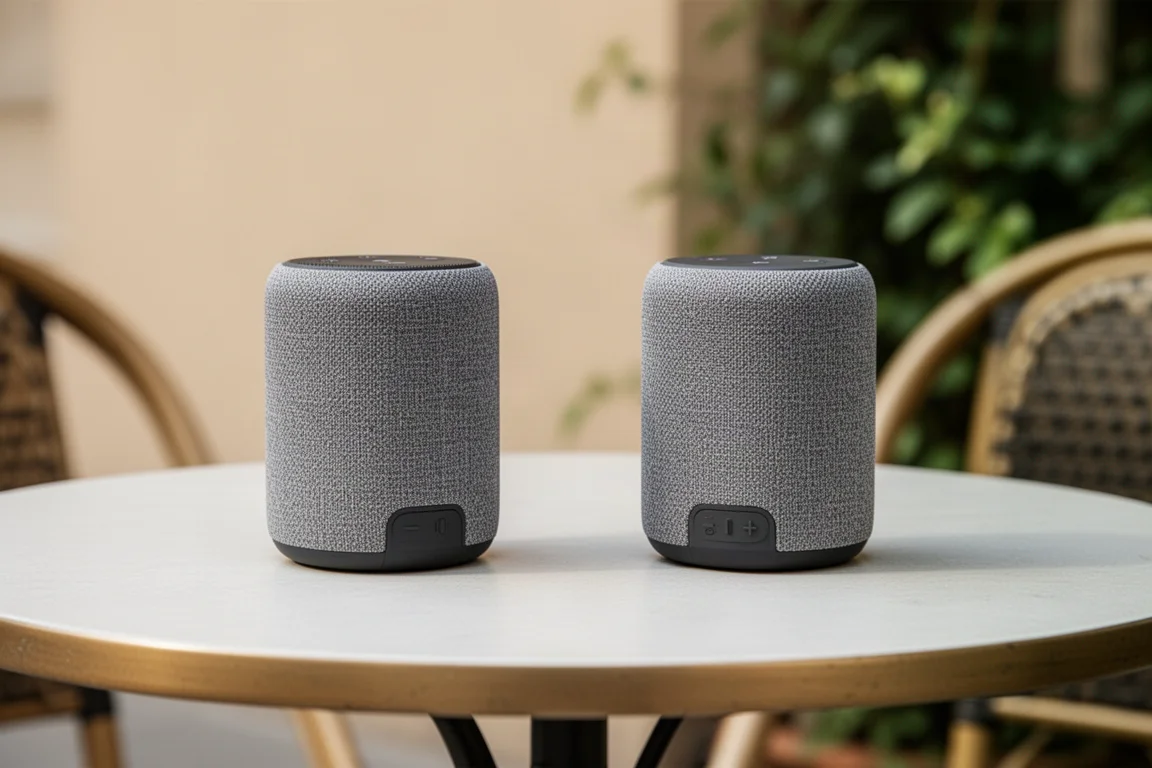
Stereo pairing has a quirk worth knowing. The app will tell you that stereo mode requires two of the same PartyBoost speakers, so pairing the Flip 6 and Flip 5 that way initially fails. The trick is to pair the Flip 6 to the app first, then connect the Flip 5 through the PartyBoost tab. Do it in that order and the two speakers work as proper left and right channels. It is a small detail, but it makes a real difference if you own both.
Should You Upgrade?
Here is the honest verdict. Reasons to step up from the Flip 5: Bluetooth 5.1 instead of 4.2 gives you a more stable connection and noticeably more range from your phone or tablet. The IP67 rating replaces the Flip 5’s IPX7, meaning the Flip 6 is fully dustproof as well as submersible in up to three feet of water, which matters for beach trips and camping. App control with the three-channel EQ is new, and the overall sound is slightly clearer and crisper.
Reasons to hold off: if you do not care about having the latest generation, the Flip 5 sounds nearly as good. Pricing makes this interesting. On JBL’s own site, both speakers were listed at the same $130 at the time of review, in which case the Flip 6 is the obvious pick. Elsewhere, the Flip 5 could be found for around $110, and the Flip 6 is expected to drop under $100 in time as the newer model settles into the market.
Conclusion
The JBL Flip 6 is a refined, durable, and very good-sounding portable speaker. The tweeter brings clearer mids and highs, Bluetooth 5.1 and IP67 are practical upgrades, and the app EQ helps compensate for the modest out-of-box bass. It is not a dramatic reinvention, and bass lovers should look at JBL’s larger models instead. But with the Flip 5 still widely available and the Flip 6 expected to fall below $100, the choice comes down to simple math: for everyone who wants the latest version, go with the Flip 6. For anyone happy with last year’s technology at a lower price, the Flip 5 remains a solid alternative.
Product link
View more details for JBL Flip 6
This product is mentioned in the review. Check the specifications, options, and compatibility before buying.
View more details for JBL Flip 6Further reading
Related Reviews
Portable Speakers
Brain X Review: Real Sub-Bass From a Truly Portable Speaker
A close look at the Brain X portable wireless speaker, its RAD driver design, its measured bass extension, its output and tuning, and the trade-offs worth knowing before you buy.
Portable Speakers
Devialet Mania Review: Portable Devialet Sound in the Brand's Smallest Form
The Devialet Mania brings the brand's sculptural design and deep bass to a battery-powered portable speaker with up to 10 hours of playback.
Portable Speakers
Sonos Move 2 Review: Stereo Sound, 24-Hour Battery, and a Refined Charging Base
A closer look at the Sonos Move 2, from its dual-tweeter stereo sound and 24-hour battery to the redesigned charging base, the connectivity upgrades, and the trade-offs worth knowing before you buy.