Portable Power Stations
Jackery Explorer 1500 Review: A 1488Wh Power Station Built for Truck Camping
A field-tested look at the Jackery Explorer 1500, covering its 1488Wh capacity, 1800W inverter, charging options, port layout, and cold-weather behavior.
Introduction
The Jackery Explorer 1500 is a portable power station built around a 1488 watt hour battery, an 1800 watt continuous inverter, and a 3600 watt surge rating. It weighs 33.1 pounds, measures 14 by 10.4 by 12.7 inches, and ships with a three year warranty. The unit has been used for months of truck camping, including a 4,000 mile road trip through the New Mexico and Utah desert, where it served as a central piece of an overland kit.

At $1,600, this is a considered purchase rather than an impulse buy, so the practical questions matter most: how quickly it charges, how long it runs real appliances, and where it makes compromises.
Who the Jackery Explorer 1500 Is For
This is a power station for people who want plug-and-play power without building a custom electrical system. Car camping, truck camping, overlanding, off-grid work, and emergency backup at home all sit comfortably inside its range. Because it uses a pure sine wave inverter, it can run most household appliances and charge most battery-powered devices without trouble.
The clearest example is refrigeration. Kept inside a vehicle and connected to a 12 volt DC outlet, the Explorer 1500 charges while the vehicle is being driven and simultaneously runs a compressor fridge. Depending on outside and cabin temperatures, a setup like that can keep a fridge running for roughly two weeks on a single charge.
Main Strengths: Build Quality, Weight, and Display
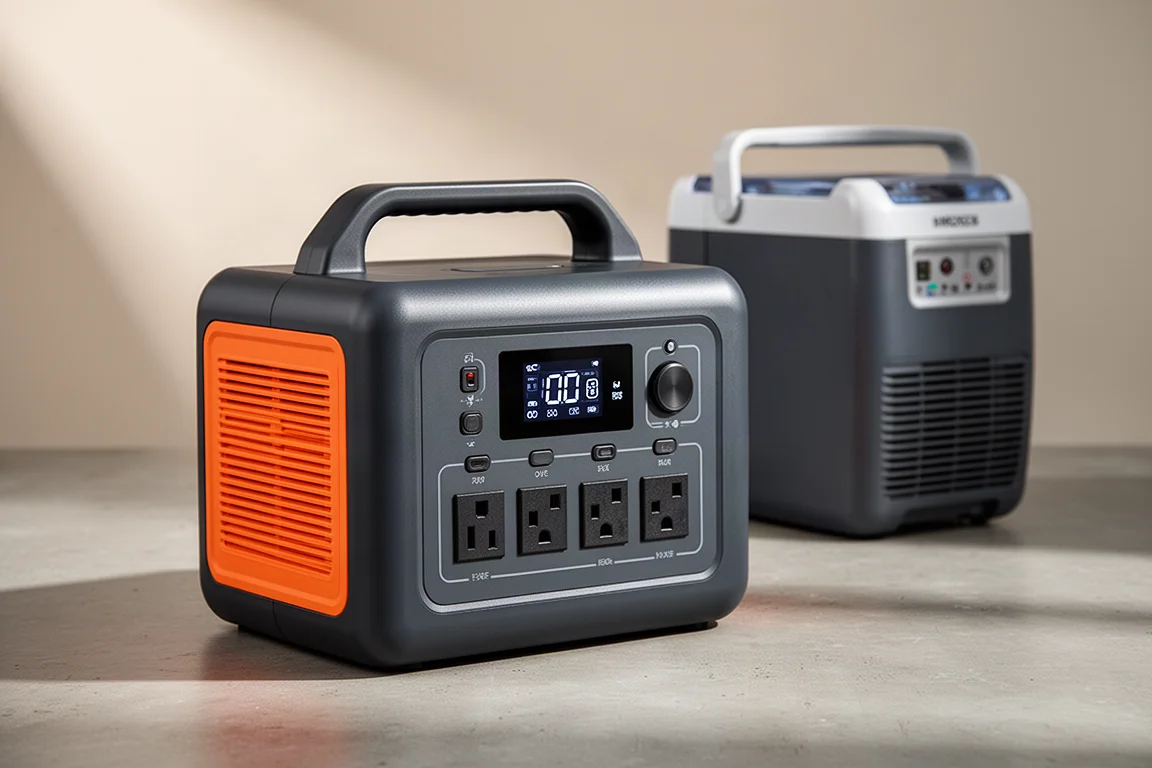
The fit and finish hold up well. The housing is plastic, but nothing about it feels cheap, and the unit reads as a durable, well-assembled piece of gear rather than a fragile accessory. At 33.1 pounds it is heavy, yet still manageable for one person to lift and reposition, which is reasonable for roughly 1500 watt hours of stored capacity.
The display is one of the better parts of the design. It is easy to read in daylight, it shows both input and output figures, and it estimates how long the battery will last based on the outputs currently in use. Each section has its own physical button, so the AC and DC sides are switched on individually and the screen immediately reflects the change.

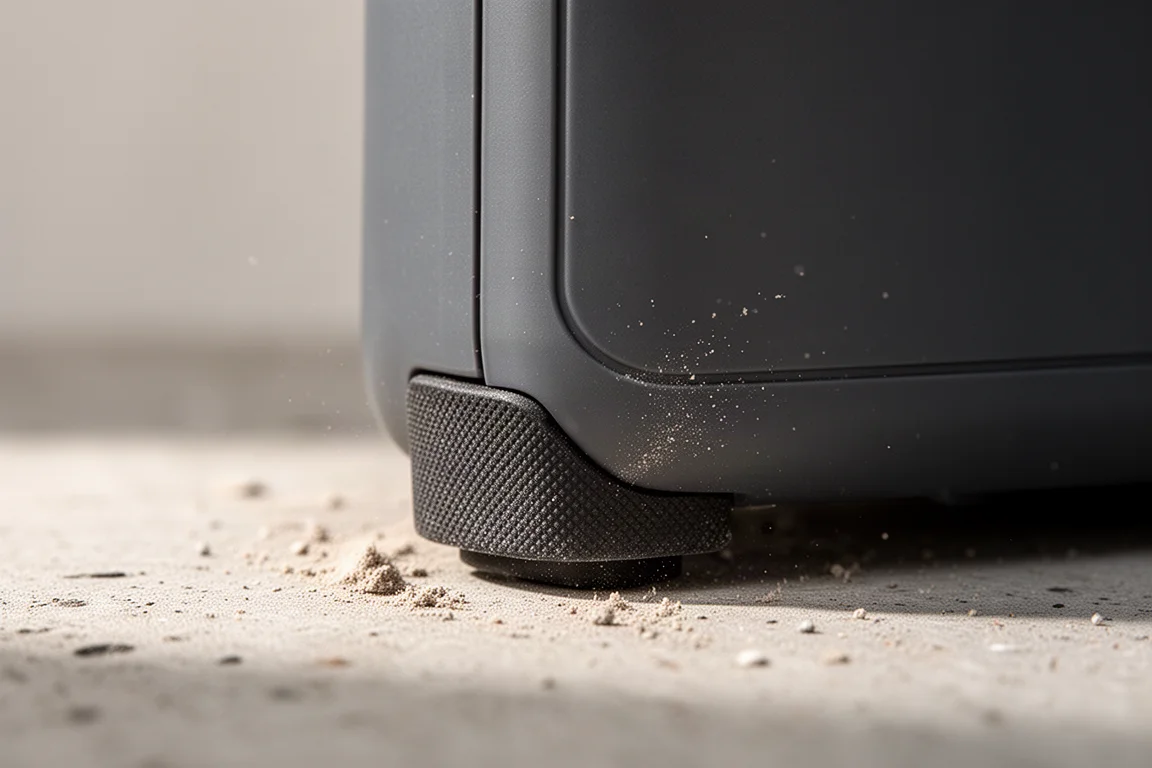
Physical controls are a meaningful long-term advantage. A touchscreen is pleasant to use, but if the screen fails, the unit stops working. With hardware buttons, a cracked or damaged display does not necessarily take the whole power station out of service. The Explorer 1500 also includes a built-in flashlight on the side, rubberized feet on the base, and orange ventilation panels on both flanks.
Main Strengths: Charging Flexibility and Quiet Operation
Two independent charging controllers make this unit unusually flexible. It can accept AC and solar input at the same time, or two AC bricks together, which shortens recharge times considerably. With the included 300 watt power brick, a full charge takes about six hours. Adding a second brick brings that down to roughly three and a half hours. The 12 volt car cable takes about 13 hours, two 100 watt solar panels take around nine and a half hours, and four panels paired with the two included parallel solar adapters take roughly four hours.
Those figures assume ideal conditions. Solar charging in particular depends heavily on where the unit is used. In cloudy, tree-covered regions, panel output rarely approaches the best-case numbers, while sunnier locations will get much closer. All ports on the Explorer 1500 are regulated, and the 12 volt DC input is tolerant of low-voltage sources: a vehicle outlet supplying only about six volts will still charge the unit, where some power stations require a full 12 or 24 volts.
The 1500 watt inverter covers roughly 80 percent of typical household appliances. The unit also stays quiet in normal use. When the AC section is switched on, the fan spins up and runs at a very low level, and it only becomes clearly audible under heavy loads such as a toaster.
Things to Consider Before Buying
Port selection is the most obvious limitation relative to the capacity on offer. There are three three-prong 110 volt AC outlets, two USB-A ports with Quick Charge 3.0, one USB-C power delivery port, and a 12 volt 10 amp cigarette lighter socket. For a station of this size, more USB-A ports, a second USB-C port, and additional AC outlets would be welcome. The AC outlets also sit close together, so a bulky adapter such as a camera battery charger can occupy the space of two sockets.
Cold weather behavior is the other thing to plan around. The operating range is 14 degrees to 104 degrees Fahrenheit. In practice, the unit continues to output power in cold conditions without issue, but it may refuse to accept a charge until it warms up, sometimes needing ambient temperatures near 40 degrees Fahrenheit before charging begins. That is normal for a large battery and worth remembering if the station lives in an unheated vehicle.
The battery cells are Panasonic 18650 cells, and the pack is rated for 500 cycles to 80 percent capacity. In the box you get the power station, a 300 watt power brick and plug, a cigarette lighter charging cable, two parallel solar adapters for running four panels, a neoprene case, a user manual, and a support card covering the warranty terms.
Buying Advice
The Explorer 1500 makes the most sense for buyers who want a self-contained power source rather than a DIY battery build. If the unit will live in a vehicle and run a fridge, charge camera gear, and handle occasional high-draw appliances, the combination of 1488 watt hours, an 1800 watt inverter, dual charging controllers, and a clear display lines up well with that job. The price is fair for the capacity and build quality on offer.
Two situations deserve extra thought before ordering. If several devices need to charge from USB at the same time, or if bulky AC plugs will be used together, the port count and spacing may become frustrating. And if solar is the primary charging method, local weather matters far more than panel wattage, so it is worth being realistic about how much sun the unit will actually see.

Buyers who mainly need quiet, simple, portable power for camping, overland travel, or home backup will find the trade-offs easy to live with. Those who need maximum outlet density or heavy simultaneous loads may prefer to compare against larger units in the same family.
Conclusion
The Jackery Explorer 1500 is a well-built, reliable power station with a readable display, physical controls, flexible dual-source charging, and enough inverter headroom for most everyday appliances. Its limitations are specific rather than fundamental: fewer ports than the capacity suggests, tightly spaced AC outlets, and a reluctance to charge in cold conditions until it warms up. For truck camping, overlanding, and emergency power, it is a strong, straightforward choice at a fair price for what it delivers.
Product link
View more details for Jackery Explorer 1500
This product is mentioned in the review. Check the specifications, options, and compatibility before buying.
View more details for Jackery Explorer 1500Further reading
Related Reviews

Portable Power Stations
Anker SOLIX F3000 Review: A Powerful Portable Power Station With a Few Design Quirks
The Anker SOLIX F3000 delivers strong performance, fast charging, and a competitive price, but a few design choices may give you pause.

Portable Power Stations
EcoFlow Delta 3 Series: Five New Power Stations Previewed
EcoFlow expands the Delta 3 lineup with five models, from the compact Classic to the flagship Ultra Plus. Here is what each one offers.
Portable Power Stations
Oscal Power Max 6000 Review: A Large Solar Generator With Real Trade-Offs
A week of off-grid use shows what the Oscal Power Max 6000 handles well, where it falls short, and when a fuel generator still makes more sense.